Why has the Yangtze River turned red?

Posted on behalf of Michele Catanzaro.

China's Yangtze River has taken on a russet hue.{credit}ChinaFotoPress via Getty Images{/credit}

A stretch of China’s mighty Yangtze River, near the city of Chongqing, has turned an alarming shade of red (International Business Times).

The cause of the colouring is still unclear. “One possible cause of the colouration may be suspended sediments, following heavy rains upstream”, says Hans Paerl, a marine and environmental scientist at the University of North Carolina in Chapel Hill. “This is common in large river systems such as the Yangtze, and southern China has had large rainfall events this summer,” he says.

Indeed, on 7 September the Chongqing Environmental Protection Agency noted on its website that a water-quality monitoring centre on the Yangtze had detected very high concentrations of silt in the river. The agency says that torrential rain in the upper Sichuan province caused huge amounts of silt to wash into the Yangtze. It also says that the water does not contain hazardous or noxious substances.

Scientists interviewed by Nature say that it is unlikely, although not impossible, that the colouring is a result of an algal bloom. Sudden growths of algae, fed by fertilizer run-off (a process known as eutrophication), can sometimes produce blooms of brownish diatom algae in rivers, says Sergi Sabater, a limnologist at the Catalan Institute of Water Research in Spain, who carries out research in river ecology. Such ‘red tides’ of algae are sometimes observed in warm, shallow and nutrient-rich seas. But in this case, “if it is a eutrophication event, then it is enormous”, says John Dearing, a physical geographer at the University of Southampton, UK, who has done research into the eutrophication of lakes on the lower Yangtze.

Dearing also notes that in December 2011, the Jian River in northern China turned red after dye pollution leaked into the river from a factory. “Cases of dye pollution are very, very common in China,” he says.

The 1.8-million-square-kilometre Yangtze basin constitutes 18.8% of China’s land area and accounts for 36.5% of China’s available fresh water, according to the ChangJiang Water Resources Commission (CWRC), the river basin authority.

According to a 2007 WWF report, it is among the world’s top ten rivers at risk of serious pollution. In May 2011, China’s state council admitted that the river ecosystem could potentially be harmed by the Three Gorges Dam, located in the Hubei province, downstream of Chongqing (New York Times).

This post was corrected on 12 September. The original version erroneously identified John Dearing as a limnologist.
Indigenous peoples play growing role in biodiversity protection

Posted on behalf of Brendan Borrell in Jeju, South Korea

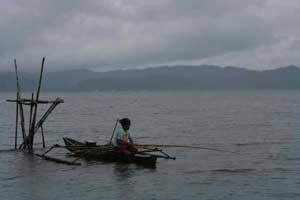
Community-based conservation in Papua, Indonesia.{credit}Brendan Borrell{/credit}

Community-based conservation is poised to take a starring role in the effort to meet global biodiversity targets. That’s one of the take-home messages of the first-ever Protected Planet Report, released on Friday 7 September by the United Nations Environment Programme World Conservation Monitoring Center (UNEP-WCMC).

The semi-annual report will track progress towards the 2020 Aichi Biodiversity Targets to protect 17% of the area in each of 823 terrestrial ecoregions, and 10% of the area in 232 marine ecoregions (see ‘World gets 2020 vision for conservation’ ). Although the new analysis concludes that the overall size of the protected area network has been approaching that scale, species living there are still not getting enough protection: only one-third of terrestrial ecoregions, and 13% of marine regions, pass muster, the report says.

But the report, unveiled at the IUCN World Conservation Congress, held from 6-15 September in Jeju, South Korea, also reveals a profound shift in the way protected areas are being managed around the world. In 1990, just 14% of protected areas allowed hunting and other sustainable uses of natural resources, but today that number has risen to 32%. At the same time, the amount of area managed exclusively by governments has declined from 96% to 77%, a trend reflecting the rise of community-based conservation and co-management schemes with indigenous peoples. “The protected area network is rapidly changing not only in its area, but in the different approaches to management,” says the report’s lead author, geographer Bastian Bertzky.

In fact, Bertzky says that indigenous reserves and sacred natural sites may be the key that enables countries to meet Aichi targets on such a short timeline. Only a fraction of such sites meet the requirements of the World Database on Protected Areas, which was used to compile the report, but they would still qualify under the terms of the Convention on Biological Diversity. His colleagues at UNEP-WCMC recently launched the Indigenous and Community Conserved Areas database, and these areas could double estimates of the amount of the land under some form of protection. “We still need to figure out how to include these areas in our global analysis,” he says.

Chile rolls out R&D tax credit to boost research

Posted on behalf of Michele Catanzaro.

Companies doing applied research in Chile are set to get a substantial tax credit, a move that the government hopes will encourage innovation and boost employment in science and technology.

Since 2008, businesses have been able to win tax rebates for investing in research collaborations with academic partners. From Friday, 7 September, they will be able to claim for in-house research as well, potentially reducing their tax bill by up to 35% of the amount the companies invest in research projects that are certified by the Chilean Economic Development Agency (CORFO).

The law also eliminates or relaxes limits on the total amount of tax relief available to companies, and it extends the types of spending that qualify to include intellectual-property costs and infrastructures cost. CORFO hopes to certify 100 contracts, tied to a research investment of US$20 million, by the end of 2013. “The economy must include more science in order to develop,” says Conrad von Igel, executive director of InnovaChile, an innovation programme run by CORFO.

The government hopes to increase the commercial contribution to science funding, which amounted to 38.7% of the national total in 2010, according to the Ibero-American and Inter-American Network of Science and Technology Indexes (RICYT).

The latest figures from RICYT show that in 2008, Chile spent about 0.39% of its gross domestic product on research and development (R&D), amounting to less than US$1 billion (see ‘Science at stake in Mexican election’ for a comparison of research investments across Latin America).

“The new law is welcome, because Chile’s investment in science is very low,” says Pablo Astudillo, a PhD student in molecular biology at the Catholic University of Chile in Santiago, and a spokesperson for More Science for Chile, a campaign group. “However, the law does not give a clear incentive to hire scientists,” he adds. “Chile is doing a lot to educate scientists, but is not offering enough jobs.”

“We must wait to see whether companies get excited by doing R&D,” says Jorge Babul, a biochemist at the University of Chile in Santiago and president of the Chilean Council of Scientific Societies. “In any case, we still need a really comprehensive R&D law that increases the number of scientists, and offers chances to Chilean scientists who have gone abroad,” he says.

Brazilian Congress waters down forest protection

Posted on behalf of Claudio Angelo

The text of Brazil’s controversial Forest Code went through what is likely to be its final convulsion on Wednesday 29 August, after years of debate about how the country should balance the interests of farmers and developers with the need to protect the country’s forests.

Although forest protection has been enshrined in Brazilian law since the 1960s, stricter enforcement of the rules in recent years had prompted complaints from landowners, who argued that the law was hampering the country’s development.

Last year, Brazil’s Senate passed the bill in a form that gave landowners more freedom to cut into native forest (see ‘Brazilian bill weakens Amazon protection’).

In May, the lower house of Brazil’s National Congress passed a version of the bill that was even more favourable to rural interests. As Nature reported at the time (see ‘Brazil set to cut forest protection’ ), that draft of the bill was set to:

scale back forest protections along rivers and hills, give state and local governments more authority over forests, and relieve landholders of the responsibility of reforesting illegally cleared land.

Environmentalists had hoped that President Dilma Rousseff would use her veto to tone down the bill and restore more protection for Brazil’s forests, and, to a degree, she did (see ‘President prunes forest reforms’).

That amended text, for example, stipulated that landowners must preserve or re-establish a minimum 30-meter wide corridor of forests along rivers (so-called riparian forest), in order to protect the water courses and preserve biodiversity. But the bill still needed final approval from Congress, which has strong representation from the agricultural lobby.

The congressional committee responsible for finalising the text has now reduced the width of those riparian corridors to 15 meters for medium-sized properties (farms as big as 1,500 hectares), and from 30 meters to 20 meters for larger farms. Farmers required to reforest those areas will also be allowed to use fruit trees as a surrogate for native forest cover.

The committee also reduced wetland protection in the Cerrado, the Central Brazilian savannah that harbours both the bulk of agricultural expansion and the headwaters of most of Brazil’s major rivers, where the rate of deforestation has been at least as high as in the Amazon forests. The commission changed the criteria for protection of a kind of wetland called vereda, allowing for those areas to be occupied by food production.

Renata Camargo, a policy advisor at Greenpeace, says that it is unlikely that the text will see further changes at the National Congress’ Lower Chamber, which should pass it in the next few days. The Senate is then expected to approve the text immediately afterwards, which would be the last step before the code becomes a fully-functioning law.

Brazilian Environment minister Izabella Teixeira said she was “saddened” by the final form of the Forest Code, adding that the text “lacks balance”. It is not yet clear if she will push for another veto to the bill. Watering down the presidential text was, however, considered by government allies as the only possible way of pushing the forest legislation forwards. Earlier this month, the agriculture caucus (bancada ruralista) threatened to ignore any protection of riparian forests along “intermittent” rivers, a move that would have left half of Brazilian waterways unprotected, according to environmentalists. “We’ve managed to prevent a total disaster”, says Jorge Viana, a senator from Rousseff’s Workers’ Party (PT).

The final text does limit deforestation along intermittent rivers’ banks, but it cuts protection to forests along smaller, “ephemeral”, creeks. According to Camargo, the definition of “ephemeral” is murky, which could open the way for more deforestation. “The bill was already bad enough. It only got worse,” she says. “What we saw was a motorcade of tractors in Congress, and the government said yes to that.”

Read more about the changing Amazon in Nature’s special collection.

High hopes for Brazilian science funding windfall

Posted on behalf of Claudio Angelo

Brazil’s Ministry of Science Technology and Innovation (MCTI) has unveiled a four-year, US$250 million fund to develop the country’s software industry, and put forward a proposal to funnel an additional $750 million into broader research and development work.

Announced this week, the plans are an attempt by Marco Antonio Raupp, Brazil’s science minister, to make up for the 22% ($850 million) cut to his office’s 2012 budget, which dismayed researchers earlier this year (see ‘Brazilian researchers protest budget cuts’).

They’re also another example of how Brazil’s research funding priorities have changed in recent years. The ministry added “innovation” to its name last year, and Raupp wants the country’s postgraduates, whose number has more than doubled over the past decade, to work more closely with industry.

According to Virgílio Almeida, national secretary for information technology (IT) policy, the new fund has four main goals. It should stimulate companies to develop software relevant to key Brazilian industries such as oil and gas extraction, or agriculture, as well as software useful to the government, enabling departments to ‘buy Brazilian’. It will also provide seed funding for software start-ups, and support efforts to attract foreign companies to site IT R&D centres in Brazil.

The second plan, called Brazilian Innovative Science, is still awaiting approval from President Dilma Rousseff. It aims to complement Science Without Borders, a federal programme which pays for science and enginneering students to study abroad  (see ‘Brazil promises 75,000 scholarships in science and technology’). The proposed programme would help to ensure that returning scholars apply their new-found skills, in funded research positions for example.

Those funds, however, are dwarfed by a national stimulus package announced by Rousseff last week, which will see the country spend about US$66 billion on transport infrastructure.  Unlike countries such as South Korea, France and the United States, which have used stimulus packages to invest in science and technology, Brazilian researchers have yet to benefit from their government’s stimulus plans.

Indian parliamentary panel slams GM crops

Posted on behalf of K. S. Jayaraman.

An Indian Parliamentary panel yesterday urged the government to halt all open-field trials of transgenic crops until it develops a better system of monitoring and oversight. The panel also called for a complete overhaul of the regulatory system, saying that it “reflects a pro-industry tilt”, and claiming that it is riddled with conflicts of interest.

In the 389-page report, the standing committee on agricultural research also demands a “thorough probe” into how permission was initially granted in 2009 to commercialize Bt brinjal (also known as aubergine, or eggplant) (see ‘Bt brinjal splits Indian cabinet’). The crop was developed by Pune-based Mahyco (Maharashtra Hybrid Company) in a joint venture with US seed giant Monsanto.

The committee said that it suspected a “collusion of the worst kind” behind the approval after it recorded a confession from the co-chairman of the Genetic Engineering Appraisal Committee that he was “getting calls” from industry and a minister to grant approval. The government intervened in 2010 to bar Bt brinjal cultivation (see ‘India’s transgenic aubergine in a stew’)

“After critically analysing the evidence for and against the transgenic agricultural crops”, the committee’s report said that research and development on transgenic agricultural crops “should only be done in strict containment, and field trials under any garb should be discontinued forthwith”. The committee said it was more than convinced that there are better options available for increasing food production and productivity than transgenic crops.

The panel also called for labelling of all genetically modified (GM) products and an “all-encompassing umbrella legislation focused on ensuring the bio-safety, biodiversity, human and livestock health”.

The report was unanimously adopted by the cross-party committee, and took almost 3 years to complete after examination of more than 1,400 documents and interviews with about 50 experts and civil society representatives.

Regarding Bt cotton — the first and only crop approved for cultivation in India before the Bt brinjal saga — the committee has demanded an explanation of how thousands of tonnes of Bt cotton-seed oil got into the food chain over the past decade. It also said that “after the euphoria of a few initial years, Bt cotton cultivation has only added to the miseries of the small and marginal farmers”.

That conclusion stands in stark contrast to a study published in the Proceedings of the National Academy of the Sciences last month (see ‘Genetically modified cotton gets high marks in India’).

As Nature reported:

“Smallholder farmers in central and southern India who planted genetically modified (GM) cotton achieve larger yields, greater profits and a higher living standard than those who grow conventional cotton.”

Kavitha Kuruganti, a member of the coalition for campaigning group GM Free India, welcomed the parliamentary report as “a historic, comprehensive and well-grounded document that vindicates the positions taken by many state governments which have disallowed GM crops, including field trials”. Kuruganti adds that “it is also a politically important statement, since 17 members are from the United Progressive Alliance, the ruling coalition”.

“In that sense, the government has to pay heed” to the recommendations, she says.

In another blow to GM proponents, the panel’s report came a day after Maharashtra state cancelled Mahyco’s licence to sell its Bt cotton seeds (see Deccan Herald). The ban comes in the wake of complaints about the company having supplied seeds of inferior quality, which allegedly aggravated the agrarian crises in rural Maharashtra and spurred suicides among farmers.

Indian monsoon disappoints

Posted on behalf of K. S. Jayaraman.

Indian meteorologists are under fire for having predicted a normal monsoon when the country is heading for a drought (see the Hindu).

The rains during the 4-month-long monsoon season (June to September) — accounting for more than 80% of India’s annual rainfall — are crucial for the agricultural economy. In April, the Indian Meteorological Department (IMD) predicted that the monsoon season would see normal or above-average rainfall. On 2 August, however, it confessed that more than half of India has received “deficient or scanty” rains, and that the monsoon rainfall for the entire country is likely to be 19.7% lower than normal.

“I admit this year we are going to go wrong!” Bhupendra Nath Goswami, director of Pune-based Indian Institute of Tropical Meteorology (IITM), whose seasonal prediction system was used by the IMD to make the forecast, tells Nature. “But blaming the meteorologists is not going to solve the problem,” he says. “You have to understand that regional climate like the monsoon has a potential limit on predictability due to the chaotic nature of the weather and climate system. Right now our models have skills significantly below this limit.”

Jayaraman Srinivasan, chairman of Divecha Centre of Climate Change at the Indian Institute of Science in Bangalore, agrees. “No forecasting centre in the world (American, European, Japanese or Indian) has been able to forecast monsoon rainfall accurately this year or in the past,” he says. “Hence the question to ask is, ‘what should scientists around the world do to improve the seasonal forecast of the monsoon rainfall?’” A similar question was posed in 2002, when the rainfall in July was 50% below normal (see ‘Climate model under fire as rains fail India’).

Srinivasan says that the accuracy of the forecast is hampered by uncertainties in conditions such as wind velocity, cloudiness and humidity. Gathering more data, using radars, for example, could reduce the errors, “but this will only improve the short-term forecast of less than one week”, he says. “The seasonal forecast will improve only if there is a dramatic improvement in our understanding of how clouds are born, grow and decay.”

New information about cloud processes provided by NASA’s TRMM (Tropical Rainfall Measuring Mission) and CLOUDSAT satellites has not yet “translated to tangible benefits for seasonal forecasting”, he says.

India’s Ministry of Earth Sciences recently launched a ‘Monsoon Mission’ to improve the prediction of Indian summer monsoon rainfall, says Goswami. The 5-year, US$75-million project aims to bring together researchers from “all relevant organizations and research institutes” and give them the best computational facilities to improve their meteorological models.

“Accurate prediction of monsoon rainfall may be as tough as finding the Higgs boson,” says Srinivasan, “and hence it will demand a large financial and human resource.”

FDA approves second weight-loss drug

The US Food and Drug Administration (FDA) yesterday approved the weight-loss drug Qsymia, made by drug company Vivus, of Mountain View, California. It is the second approval of an obesity medication in the past month.

Obesity drugs have had a long and chequered history, with trial after trial showing moderate — if any — benefits, and a host of side-effects, particularly heart problems.  In July 2010, the FDA had declined to approve Qsymia (when it was reviewed under its previous name Qnexa) on the basis that those risks outweighed the benefits of the treatment.

Then in October 2010, the agency delivered a similar verdict on Belviq (lorcaserin), which suppresses food cravings and is made by Arena Pharmaceuticals in Zofingen, Switzerland.

On 27 June, however, Arena tried again — and won, making it the first anti-obesity drug approved in the United States in 13 years. As we reported in ‘Weight-loss drug wins US approval’:

The FDA’s turnaround this week came after Arena performed echocardiograms in nearly 8,000 people to measure heart-valve function, which revealed that there was no increase in heart-valve abnormalities among those taking the drug. The firm has agreed to run six post-marketing studies, including a long-term cardiovascular trial, and patients with congestive heart failure are advised not to take the drug.

“I felt the benefits outweighed the risk,” says Ida Johnson Spruill, the consumer representative on the FDA advisory committee and a diabetes specialist at the Medical University of South Carolina in Charleston.

The FDA has clearly made a similar calculation in approving Qsymia. In a statement, the agency said that its use will be restricted to adults with a body mass index (BMI) of 30 or greater (classed as obese) or adults with a BMI of 27 or greater (overweight) who have at least one weight-related condition, such as high blood pressure (hypertension), type 2 diabetes, or high cholesterol (dyslipidemia). “Qsymia must not be used during pregnancy because it can cause harm to a fetus,” it added.

In randomized, placebo-controlled trials of about 3,700 obese and overweight patients, one year of treatment with Qsymia gave an average of 6.7–8.9% weight loss, depending on dosage. Two-thirds of patients taking the drug lost at least 5% of their body weight, compared to just one in five patients taking a placebo.

However, the FDA emphasized that:

Vivus Inc. will be required to conduct 10 postmarketing requirements, including a long-term cardiovascular outcomes trial to assess the effect of Qsymia on the risk for major adverse cardiac events such as heart attack and stroke.

As we wrote earlier this month in ‘Law spurs regulators to heed patients’ priorities’, the FDA’s risk–benefit calculations on drugs such as Qsymia and Belviq are expected to be made more explicit under a new system that should be rolled out by October 2013.

European research chief warns that austerity is hitting science excellence

Posted on behalf of Leigh Phillips.

The head of the European Research Council (ERC) has warned that national austerity programmes threaten research excellence in Spain and Ireland, and expressed fears that both young and experienced researchers will abandon the countries as a result of public spending cuts.

“Ireland was doing well in funding up until now, but I am worried this will disappear. Spain is the same. Spain had reached a good level, but now, with the cuts to funding, this will drop,” said ERC president Helga Nowotny at a press conference at the 2012 Euroscience Open Forum (ESOF) in Dublin. Nowotny was at ESOF to announce new initiatives on open access, and a partnership with the US National Science Foundation.

The ERC was established in 2007 as the first pan-European funding organization for frontier research, with peer-reviewed excellence the sole criterion for success.

Nowotny was responding to the fears voiced by high-profile Irish grantee and immunologist Luke O’Neill, who is also chair of the Immunity and Infection panel of the ERC. Unprompted, he told reporters that austerity is hitting Irish research hard: “Ireland is in real danger of slipping back. I worry about it a lot.” Continue reading

Global Science Gallery Network launches

Posted on behalf of Anthony King.

Dublin’s Science Gallery today launched a global network of galleries to take its model of science outreach around the world. Eight galleries will be created by 2020, joining with leading universities located in urban centres, as part of the Global Science Gallery Network. Their goal is to engage young adults with science, technology and innovation, with lively, interactive exhibitions.

The first of the network’s galleries outside Ireland will be located at King’s College London, director Michael John Gorman revealed today at the Euroscience Open Forum (ESOF2012) meeting in Dublin. Galleries are also planned for Singapore, Bangalore and Moscow.

The Science Gallery, located at Trinity College Dublin, has been serving a cocktail of science, art and design since 2008 to a youthful crowd who might otherwise avoid any contact with science. It represents a new approach to encouraging public engagement in science, says Gorman. “We talk about it as a particle accelerator for people. We bring people together from different disciplines and collide them. Interesting ideas then emerge,” he says.

The gallery model is light years away from the traditional museums of old. There are no permanent shows or stands — instead, new exhibitions such as its current ‘Hack the City’ run for just a few months (read Nature’s review). The target audience is 15–25 years old, neophytes who are beginning to make decisions about their futures. Previous exhibitions have covered water sustainability and nutrition.

The plan is to develop the next gallery at the Guy’s Hospital campus of King’s College. “The campus is a buzzy area, highly pedestrianized and close to the Tate Modern. So just like in Dublin, it will be a bridge between the university and the city,” Gorman enthuses.

Ideas for exhibitions spring from 50 creative individuals who make up a ‘Leonardo group’. “We get scientists to collaborate with designers and artists,” Gorman added.

Scientists in Trinity College Dublin have set up their own labs inside the gallery during some of the exhibitions, such as a run of public psychology experiments. The gallery’s café has become a favourite meeting place for students, researchers and anyone else who strolls by, and exhibitions charge no entry fee.

The network will allow exhibitions designed in one city to go on global tours of its sister galleries. Dublin’s ‘Biorhythm: Music and the Body’ exhibition went to New York last summer, for example, and will hit Singapore later this year.

Luke O’Neill, an immunologist at Trinity, says that he was initially sceptical that art and science could mix in this way, but is now an enthusiastic convert. “We ran an exhibition called ‘Infectious’, and it convinced me this is the way to go. They were able to cleverly illustrate immunology and infectious disease. One example is that they had beautiful crystals of HIV and flu viruses, as works of art. That really catches people’s imaginations,” he says.