Stem-cell fraud makes for box office success

Posted on behalf of David Cyranoski and Soo Bin Park

Fictionalized film follows fabricated findings

Stem cell fraudster faces down the journalist who debunks him in the film sweeping Korean cinemas.

Stem-cell fraudster faces down the journalist who debunks him in the film sweeping Korean cinemas.{credit}Wannabe Fun{/credit}

A movie based on the Woo Suk Hwang cloning scandal drew more than 100,000 viewers on its opening day (2 October) and has been topping box office sales in South Korea since then. With some of the country’s biggest stars, it has made a blockbuster out of a dismal episode in South Korean stem-cell research — and revealed the enduring tension surrounding it.

The movie, Whistleblower, shines a sympathetic light on Woo Suk Hwang, the professor who in 2004 and 2005 claimed to have created stem-cell lines from cloned human embryos. The achievement would have provided a means to make cells genetically identical to a patient’s own, and able to form almost any type of cell in the body. But hopes were shattered when Hwang’s claims turned out to be based on fraudulent data and unethical procurement of eggs. The whistleblower who revealed the fraud says the new movie strays far from reality.

“This topic is sensitive, so I was hesitant when I got the first offer,” said director Yim Soon-rye at the premiere on 16 September in Seoul. “I wanted to portray him [Lee Jang-hwan, Hwang’s character in the film] as a character who faces a very human problem, and to show there is room to understand his actions.”  Although clearly inspired by the real-life events surrounding Hwang and his cloning claims, the film does not aim to be a true representation of events, but a ‘restructured fiction’ created for a movie audience.

The movie broadly traces the scandal as it actually unravelled, tracing the process through which the stem-cell claims were debunked. Some changes are made, apparently for dramatic effect: Snuppy, the Afghan hound produced by cloning in Hwang’s laboratory, was converted into Molly, also an Afghan hound, but one with cancer. When Lee sees the writing on the wall, he is shown going to a Buddhist temple where he rubs Molly’s fur, saying “I came too far … I missed my chance to stop.”

Yim says he wanted the fraudster “to be interpreted multi-dimensionally, rather than as a simple fraud or evil person”.

But rather than the scientists, Yim put the perseverance of the reporter at the centre of the film, and ends up skewing relevant facts, says Young-Joon Ryu, the real whistleblower. Ryu, who had been a key figure in Hwang’s laboratory, says his own contributions and those of online bloggers were credited to the reporter. (The discovery that Hwang had unethically procured eggs, first reported in Nature, was also credited to the reporter.)

The film has refuelled anger in some Hwang supporters who believe, despite evidence to the contrary, that Hwang did have human-cloning capabilities and that the scandal deprived the country of a star scientist. They are back online calling Ryu a betrayer.

Ryu understands that a movie might emphasize “fast action, dramatic conflicts and famous actors” to increase box office revenues. But having suffered through one perversion of the truth as Hwang made his original claims, watching the film he says that he felt was witnessing another.

Blaze leaves Naples science museum in ashes

Posted on behalf of Nicola Nosengo.

A fire broke out on Monday night at Città della Scienza, an  interactive science museum and conference centre in Naples, Italy, destroying most of the complex.

No injuries were reported, but the damage was said to be devastating. The fire broke out at around 9:30 p.m. local time and raged on most of the night before firefighters finally managed to stop it.

Four of the five halls that make up the 12,000-square-metre museum, built on a former industrial site, were destroyed by the fire. Only one hall used as a theatre and conference centre withstood the flames.

“The damage is immense,” the museum’s director, Luigi Amodio, told Nature. “The interactive scientific museum has been entirely destroyed — both the buildings and the exhibits. The fire broke out last night and propagated very quickly. We are waiting for the results of the investigation to understand what caused it.”

Investigators are considering both the possibility of an accident and that of arson. The mayor of Naples, Luigi De Magistris, told the Italian news agency ANSA that he thinks there is “a criminal hand” behind the fire. “I don’t know what information he has,” says Amodio. “I prefer to wait to hear what the investigators say.”

With about 160 employees and averaging 350,000 visitors a year, the Città della Scienza (City of Science) has been Italy’s largest science centre, modelled after Paris’s Cité des Sciences. It comprised a planetary, a collection of interactive scientific exhibits and temporary exhibitions.

The project began in the 1990s as part of the reclamation and redevelopment of a former steel factory in the western part of Naples, and the centre has been open to the public since 2001.

In recent years, the museum had been facing funding problems, making it increasingly difficult for it to stay in operation. Amodio says that he and the rest of the staff hope to rebuild the museum, either on the same site or in a nearby building. “We want to continue our work, but we’ll have to see where and when.”

Information takes the (book) prize

A study of the information contained in everything from African drumming to Wikipedia has won the Royal Society Winton Prize for Science Books.

Jocelyn Bell Burnell, physicist and chairwoman of the judges for the prize, said of James Gleick’s The Information: “It is one of those very rare books that provide a completely new framework for understanding the world around us. It was a privilege to read.”

In his review in Nature, Thomas Misa, director of the Charles Babbage Institute at the University of Minnesota in Minneapolis, writes:

[Gleick] highlights the great surge of classifying and calculating often labelled as the industrial and scientific revolutions, and he profiles leading theorists, notably US mathematician Claude Shannon. Gleick acknowledges that the concept of information and its impacts are difficult to grasp, yet explains our fascination with seeing information as the driver of just about everything.

In another review, Nature’s former head of press Ruth Francis notes that the book was “a captivating and thought-provoking read”.

The full shortlist for the prize, and the reviews of them in Nature, consists of:

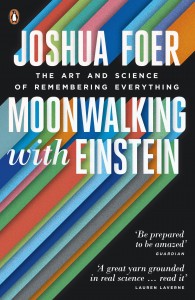
Moonwalking with Einstein by Joshua Foer
Nature review by Larry R. Squire, professor of psychiatry, neurosciences and psychology at the University of California, San Diego.
Review by Ruth Francis.

My Beautiful Genome by Lone Frank
Nature ‘books in brief’ review.
Review by Ruth Francis.

The Information by James Gleick

The Hidden Reality by Brian Greene
Nature review by George Ellis, professor emeritus of applied mathematics at the University of Cape Town, South Africa.
Review by Ruth Francis.

The Better Angels of Our Nature by Steven Pinker
Decline of violence: Taming the devil within us — an article by Steven Pinker adapted from his book.
Nature review by Martin Daly, professor of psychology, McMaster University, Ontario.
Review by Ruth Francis.

The Viral Storm by Nathan Wolfe
Nature review by Edward C. Holmes, a professor in the Department of Biology, Pennsylvania State University.
Review by Ruth Francis.

Ruth’s Reviews – The Information

Ruth Francis, Nature’s former head of press, is reading the shortlist of the Royal Society Winton prize for science books at a rate of one a week. She’s done it before. Will she succeed this year? The winner of the prize will be announced on 26 November.

We live in an age of information. We worry about information overload. How did we get here? Is this fretfulness new? James Gleick’s The Information is an ambitious look at the history of information, from the development of logic and language to the age of cyberspace.

Gleick investigates how humankind has travelled, over the centuries, from the effort taken to convey a single message – say, by announcing the fall of Troy by burning beacons along a pre-designated route – to the ease with which we convey big data today.

“The invention of writing catalyzed logic, by making it possible to reason about reasoning.” The explanation of this process early in the book is complex, particularly in the philosophical ideas described. But this may be the point: humankind has come a long way and so much of the information around us is taken for granted that we rarely stop and think about where it all began.

The Information truly came to life for me in telling the stories of the people behind the inventions and ideas – particularly in the time of Charles Babbage and Ada Lovelace. It is more complex in its illustrations of some of the quirkier inventions along the way. Many of these, such as the early attempts at transmitting a message across long distance at speed, sounded fascinating, but I could have done with some diagrams to help explain them.

Society’s reactions to new technology are charted. It is charming to read the excitement and fear these advances engender. The excitement of being able to send text at speed was met by a fear that this would mean the death of newspapers. One journalist is quoted, worrying that “intelligence, thus hastily gathered, and transmitted, has also its drawbacks, and is not so trustworthy as the news which starts later and travels slower”. This will sound familiar to anyone concerned with the rise of the internet and citizen reporting today.

The later chapters were easier for me, summarizing in many ways the zeitgeist of our age, though the comparisons to the past are exposed by what we have read before.

Information fatigue? Far from it. This is a captivating and thought-provoking read.

Ruth’s Reviews – The Better Angels Of Our Nature

Ruth Francis, Nature’s former head of press, is reading the shortlist of the Royal Society Winton prize for science books at a rate of one a week. She’s done it before. Will she succeed this year? The winner of the prize will be announced on 26 November.

“This book is about what may be the most important thing that has ever happened in human history.’” So begins Steven Pinker’s latest tome: The Better Angels of Our Nature.

Pinker’s objective is to persuade the reader that, contrary to what we may instinctively feel, violence has declined over time. Appropriately, given his belief in the subject’s importance, he leaves no stone unturned.

Referencing the Bible, the Iliad and other historical texts, he presents body counts from previous centuries that far outdo those of the last hundred years. We are reminded of the origin of the phrase ‘whipping boy’ — a child who was physically reprimanded for the misdeeds of a prince — and of the reference to crucifixion in the word ‘excruciating’ . Our attention is called to the original, non-Disney versions of Grimm’s fairy tales and Mother Goose’s nursery rhymes — gory, cautionary stories that terrify the young reader. And this is simply scene-setting for his argument.

In contrast to Bret Easton Ellis’s novel American Psycho, which sets out to bore the reader with lists of materialism so sterile you yearn for the next act of brutality, Pinker’s lists of acts of brutality over time and across cultures leave you relieved when the text turns to academic argument. Then, we are run through the causes of reducing violence over time: the effect of government and centralized law, ‘people power’ affecting change and the acceptance of morals filtering down through societies and becoming the norm. Pinker even cites the decline of violent childhood games as a factor — nowadays these are deemed inappropriate, but in our past, channeling aggressive impulses in such a manner was the norm.

The later chapters take on our own nature, and this is less convincing ground. We are, he argues, wired for violence, even if we do not commit such acts. He also proposes that interwoven in our character are traits that encourage us to avoid violence.

The sheer volume of evidence in the earlier sections of the book is convincing, but the later cognitive psychology held less weight for me, and these chapters seem almost rushed in comparison to what has gone before.

Nevertheless, his central argument is convincing and this is a riveting read, although perhaps not one you would add to your summer holiday book list.

Ruth’s Reviews – The Hidden Reality

Ruth Francis, Nature’s former head of press, is reading the shortlist of the Royal Society Winton prize for science books at a rate of one a week. She’s done it before. Will she succeed this year? The winner of the prize will be announced on 26 November.

In the introduction to The Hidden Reality, Brian Greene asserts he is going to “briefly remind you of the features of quantum mechanics, then focus on its most formidable problem”. For anyone who needs not reminding, but informing, of the features of quantum mechanics, this may be an intimidating declaration. It would be a shame to let this put you off.

The book tackles some of the most challenging ideas in theoretical physics; each chapter explains a different take on the idea that there are other realities. Interwoven into the fabric of each chapter are Einstein and his theories. These serve as a foundation onto which newer theories or models are built.

Luckily the reader needs no grasp of the mathematics or physics involved. Greene’s analogies are helpful — although early on, his use of filing a tax return may have turned this reader off (as my accountant brother will attest, the tax return is not something that draws me in). Happily we are soon asked to imagine a deck of cards shuffled in only a finite number of orders, and later ‘South Park’ character Eric Cartman’s energy changing as he climbs then rolls down a slope.

There are too many beautiful, astounding metaphors to mention them all, but the right amount of matter described as a single raindrop of energy in every Earth-sized volume, or a region of space the size of a pea being stretched to the size of the Universe to illustrate an incomprehensibly large number, are two that stood out for me.

Many books on theoretical physics or similarly complex fields provide a confusing — though of course ultimately finite — array of analogies. Brian Greene demonstrates his uncluttered thinking in this volume, and to me this is his triumph. The analogies illuminate the dark recesses of multiverses, and though I had to grapple, and admit defeat with some ideas, by the end of each chapter the ideas are pulled together.

If his aim is that “when you leave this book, your sense of what might be — your perspective on how the boundaries of reality may one day be redrawn […] — will be far more rich and vivid”, he goes a long way towards achieving that — though I’m not confident that I would be able to explain the details.

Ruth’s Reviews – My Beautiful Genome

Ruth Francis, Nature’s head of press, is reading the shortlist of the Royal Society Winton prize for science books at a rate of one a week. She’s done it before. Will she succeed this year? The winner of the prize will be announced on 26 November.

Frank by name and frank by nature; My Beautiful Genome begins with the quirky and honest unveiling of a forceful personality and a family history of depression.

But for all of its exploration of the author’s own traits, this could just as aptly be named ‘Our Beautiful Genomes’. Personal genomics has a long way to go before it achieves its promise and becomes particularly insightful to any individual. As Lone Frank discovers on her adventures through her own genetic make up, it is not yet beneficial to look at individual dimensions. We may assess a population, or get an overview of a person, but can we learn anything specific that we did not already know through experience?

Frank derives a sense of satisfaction at finding a genetic basis for her lack of agreeableness, or propensity to irritation with others. But of course, she was already aware of her foibles and stated them outright in the opening pages. Tests for specific gene variants of BDNF which can affect how women handle stress – and SERT – which is linked with depression – again validate something she already knew.

It is clear that genomics is a fast moving and rapidly expanding field. Like its subject matter, the book quickly becomes technical, covering a lot of ground in the early chapters, presumably in order to bring the reader up to speed.

The fact that many studies flagged as embryonic in these early passages have now been published, such as the 1,000 genomes study from the 1000 Genomes Project, that appeared this very week in Nature, is testament to the pace of research. But even as a relatively well-versed reader, I found the level of detail hard-going.

The writing style is direct and confident. The reader is treated with an intellectual respect that is both flattering and educational. One weakness though, is in the interviews. Frank paints vivid pictures of her subjects, and their surroundings. She seems insightful and reads them well, but reproduces interviews almost verbatim, which I found frustrating given her talents in summarising complex information elsewhere. Perhaps this is a direct result of her personality test scores: high in openness and empathy, but low on agreeableness and compliance. Nevertheless this is a captivating, instructional, and enjoyable read.

Ruth’s Reviews – Moonwalking with Einstein

Ruth Francis, Nature’s head of press, is reading the shortlist of the Royal Society Winton prize for science books at a rate of one a week. She’s done it before. Will she succeed this year? The winner of the prize will be announced on 26 November.

Humans, it seems, have always fretted about memory. Socrates worried that writing would be detrimental to memory. In the fifteenth century the Gutenberg press meant more access to books and less need to remember for ourselves. Today fact-checking via the internet is at our fingertips around the clock.

Joshua Foer’s Moonwalking with Einstein is an exploration of memory in which we meet extreme examples — people with extraordinary abilities to remember, and others who can only forget. Ultimately, however, it is the story of one man’s journey from average forgetfulness to competitor in the USA Memory Championship.

“What had begun as an exercise in participatory journalism had become an obsession,” writes Foer. “I had set out simply to learn what the strange world of the memory circuit was all about and find out if memory was indeed improvable.”

And it makes for participatory reading. I could not help but test some of the techniques he encountered during his year of obsession. At a recent party I was better able to remember names thanks to just one of the suggestions — to associate a new name with someone you already know with the same name.

Foer starts out as a reporter, writing about mental athletes, but he is quickly sucked into their sphere. He is taken under the wing of a British competitor, Ed, and becomes submersed in his world, with the ultimate aim of winning the USA Memory Championship the next year. En route he meets famous case studies and the scientists who worked with them, and becomes a case study in memory research in his own right.

In some ways I found the tales of famous savants, synaesthetes and memory miracles more immersive than Foer’s own journey. This isn’t to say that his own exploration is not engaging, but these one-offs are fascinating, and each gives us insight into how our own memories are processed.

These self-proclaimed Knights of Learning live in a strange world, almost entirely devoid of women, and I was glad someone else did the legwork so I could stand on the sidelines and cheer — without having to participate myself.

Ruth’s Reviews: The Viral Storm

Ruth Francis, Nature’s head of press, is reading the shortlist of the Royal Society Winton prize for science books at a rate of one a week. She’s done it before. Will she succeed this year? The winner of the prize will be announced on 26 November.

Its opening passage describes an emerging virus in rural Thailand in 2003, the now-notorious avian influenza, H5N1. From here The Viral Storm takes the reader back in time to humankind’s beginnings, and at least twice around the globe, tracking events leading to current conditions, which we learn are perfect for a new pandemic.

Microbes are all around us and have been throughout our history. Some are helpful, others harmful. Over time, our interactions with animals, through hunting and domestication, have allowed some to jump between species. Our world, reduced in size by global travel, creates new routes and greater speeds for bugs. And medicine, helpful as it is, provides transplants, injections and other short cuts for disease agents to develop and spread.

Nathan Wolfe’s captivating read weaves the intertwined tales of viruses and humans as we have co-evolved. His own research has taken him to far-flung regions, and his anecdotes provide accessible entry points to often complex biology. He introduces his global network of colleagues with warmth and respect and observes their research with interest.

Considering the subject, this is a calm, clear and non-hysterical read. We feel confident in the hands of Wolfe and his collaborators; although it is clear there is a lot that is unknown as they continue their search for unknown threats.

Reading the majority of this aboard a plane, I couldn’t help but contemplate the world around me with a different perspective. Things we take for granted offer benefits to these opportunists. Wolfe himself says that he is often asked how he mitigates his own risk of infection, and his advice did not fall on deaf ears.

The closing predicts an optimistic future, however, with geeks tracking data, using global networks and new technology to try to stay a step ahead in this potentially deadly game. We should be doing a better job, he says, but Wolfe is hopeful that we will someday be capable of catching pandemics and stopping them before they take hold.

Epigenetics inspires philosophical experiments

An artist's conception of epigenetic cloning{credit}Jonathon Keats{/credit}

The man in the bow tie says he can transform you into anyone you want. At the Modernism Gallery in San Francisco, California, conceptual artist Jonathon Keats is applying his ‘experimental philosophy’ to epigenetics, one of the hottest and most rapidly advancing fields in biology. The art exhibit opened this weekend.

Billing himself as a ‘dispensing epigeneticist’, Keats explained the logic behind his services: organisms are similar genetically. It’s epigenetics — control over how genes are turned on and off — that matters, and gene expression is determined by the environment. Therefore, by simulating key environmental factors, one can perform what Keats calls epigenetic cloning, a transformation without handling any DNA.

Instead, says Keats, transformations will be performed through concentrated exposure to select pollutants, electrical simulation of emotional crises and appropriately altered diets. George Washington, for example, ate a lot of salted fish, so an epigenetic cloning regime would include high exposure to sodium and omega-3 fatty acids. Keats is also working to epigenetically clone Barack Obama and Lady Gaga starting from Baker’s yeast. Although he does not expect the cloned cultures to physically resemble their counterparts, he suspects that other similarities will emerge.

Keats’s specialty is dressing the absurd in scientific trappings to prompt thinking. He pushes emerging concepts to extremes and sees what they collide with. An earlier project attempted to classify god phylogenetically. Keats reasoned that the world’s divinities probably formed their own taxonomic domain, but wondered whether it was most closely related to Archaea, Bacteria or Eukarya. (Experiments compared how much fruitflies and microbes proliferated during exposure to a variety of sacred music or a control treatment of talk radio; results suggested that Divinea is most closely related to cyanobacteria, or blue-green algae.)

Keats does not prescribe what lessons viewers are to draw from his exhibit. Perhaps they are to reassess concepts of nature, nurture and destiny. Or perhaps he wants to paint a scientific veneer onto risible concepts and so prompt people to separate the cutting edge from the ridiculous. Whatever the intention, the exhibit certainly was introducing attendees to new ideas. Only a minority said they had heard of epigenetics before learning about it from the exhibit.

One visitor had already made the conceptual leap from epigenetic cloning to hybridization. She described her own recipe for a new self. “I’d like to be one-third Madam Pompadour, one-third Queen Elizabeth and a smattering of Jonathon Keats.”