Buddhist ‘Iron Man’ found by Nazis is from space

{credit}Elmar Buchner{/credit}

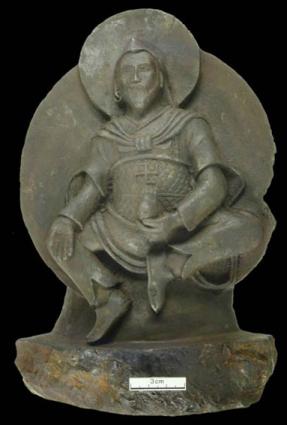
A Buddhist statue brought to Germany from Tibet by a Nazi-backed expedition has been confirmed as having an extraterrestrial origin.

Known as the ‘iron man’, the 24-centimetre-high sculpture may represent the god Vaiśravaṇa and was likely created from a piece of the Chinga meteorite that was strewn across the border region between Russia and Mongolia between 10,000 and 20,000 years ago, according to Elmar Buchner, of the University of Stuttgart in Germany, and his colleagues.

In a paper published in Metoritics and Planetary Science, the team reports their analysis of the iron, nickel, cobalt and trace elements of a sample from the statue, as well as its structure. They found that the geochemistry of the artefact is a match for values known from fragments of the Chinga meteorite. The piece turned into the ‘iron man’ would be the third largest known from that fall.

Given the extreme hardness of the meteorite — “basically an inappropriate material for producing sculptures” the paper notes — the artist or artists who created it may have known their material was special, the researchers say. Buchner suggests that it could have been produced by the 11th century Bon Ben [Corrected 27/9] culture, but the exact origin and age of the statue — as opposed to the meteorite it is made from — is still unknown. It is thought to have been brought to Germany by a Nazi-backed expedition to Tibet in 1938–39. The swastika symbol on the piece — a version of which was adopted by the Nazi party — may have encouraged the 1938 expedition to take it back with them.

“While the first debris was officially discovered in 1913 by gold prospectors, we believe that this individual meteorite fragment was collected many centuries before,” said Buchner in a statement. “The Iron Man statue is the only known illustration of a human figure to be carved into a meteorite.”

Although this item may be the only known human figure carved into a rock fallen to Earth, other meteorites have also been used by many religions across the world. A 15-tonne example in North America called the Willamette meteorite is sacred to some native Americans, and some have suggested that the Black Stone in the Kaaba in Mecca is a meteorite.

Global Science Gallery Network launches

Posted on behalf of Anthony King.

Dublin’s Science Gallery today launched a global network of galleries to take its model of science outreach around the world. Eight galleries will be created by 2020, joining with leading universities located in urban centres, as part of the Global Science Gallery Network. Their goal is to engage young adults with science, technology and innovation, with lively, interactive exhibitions.

The first of the network’s galleries outside Ireland will be located at King’s College London, director Michael John Gorman revealed today at the Euroscience Open Forum (ESOF2012) meeting in Dublin. Galleries are also planned for Singapore, Bangalore and Moscow.

The Science Gallery, located at Trinity College Dublin, has been serving a cocktail of science, art and design since 2008 to a youthful crowd who might otherwise avoid any contact with science. It represents a new approach to encouraging public engagement in science, says Gorman. “We talk about it as a particle accelerator for people. We bring people together from different disciplines and collide them. Interesting ideas then emerge,” he says.

The gallery model is light years away from the traditional museums of old. There are no permanent shows or stands — instead, new exhibitions such as its current ‘Hack the City’ run for just a few months (read Nature’s review). The target audience is 15–25 years old, neophytes who are beginning to make decisions about their futures. Previous exhibitions have covered water sustainability and nutrition.

The plan is to develop the next gallery at the Guy’s Hospital campus of King’s College. “The campus is a buzzy area, highly pedestrianized and close to the Tate Modern. So just like in Dublin, it will be a bridge between the university and the city,” Gorman enthuses.

Ideas for exhibitions spring from 50 creative individuals who make up a ‘Leonardo group’. “We get scientists to collaborate with designers and artists,” Gorman added.

Scientists in Trinity College Dublin have set up their own labs inside the gallery during some of the exhibitions, such as a run of public psychology experiments. The gallery’s café has become a favourite meeting place for students, researchers and anyone else who strolls by, and exhibitions charge no entry fee.

The network will allow exhibitions designed in one city to go on global tours of its sister galleries. Dublin’s ‘Biorhythm: Music and the Body’ exhibition went to New York last summer, for example, and will hit Singapore later this year.

Luke O’Neill, an immunologist at Trinity, says that he was initially sceptical that art and science could mix in this way, but is now an enthusiastic convert. “We ran an exhibition called ‘Infectious’, and it convinced me this is the way to go. They were able to cleverly illustrate immunology and infectious disease. One example is that they had beautiful crystals of HIV and flu viruses, as works of art. That really catches people’s imaginations,” he says.

How a German christened America

The American continent might have been named ‘Columbia’, after Christopher Columbus, were it not for a sixteenth-century German cartographer, Martin Waldseemüller.

On a global map produced in 1507, Waldseemüller famously dubbed the New World ‘America’ — in honour of the Italian navigator Amerigo Vespucci, whom he mistook as having discovered the continent. In 2007, the German Chancellor Angela Merkel presented the precious, three-square-metre wall map to the Library of Congress in Washington DC. 

But today librarians at the Ludwig Maximilian University (LMU) of Munich, Germany, announced that they have just discovered, between the pages of an otherwise unremarkable antique geometry book, a different version of that map (picture), also printed in 1507. It is one of the very few surviving ‘globe-segment’ maps, of which 100 or so may have been produced in Waldseemüller’s workshop in the monastery of Saint-Dié-des-Vosges in Alsace (now part of France). Only four copies were previously known to researchers — one is now in Minneapolis, Minnesota; two are in Germany and the fourth was sold at auction in 2005, for US$1 million.

Segment maps were important for the dissemination of the still-rudimentary geographical knowledge during the sixteenth century. The chance finding in Munich depicts the world in 12 individual segments on a single sheet, which can be arranged to form a small globe.

The three right-most wedges show a small boomerang-shaped landmass, labelled ‘America’, placed in the middle of a large ocean.

By the early nineteenth century, Waldseemüller’s groundbreaking cartographic work had fallen into obscurity. The map appears to have been stored away around 200 years ago by librarians who had no idea of its significance.

“Even in our digital age, originals have lost none of their significance and unique fascination,” says Klaus-Rainer Brintzinger, the director of the LMU library. Yet his team is working hard to make the map accessible to the public — in time for the US Independence Day celebration on 4 July — in digital form.

Images: LMU

Wellcome Image Award celebrates the small — not for the squeamish

This composite of two pictures shows the vascular system of a developing chicken, imaged by injecting fluorescent dextran into the embryo.{credit}Vincent Pasque, University of Cambridge {/credit}

Chicken embryos, a forest of micro-needles, and a rather gory brain picture — welcome to this year’s Wellcome Image Awards.

Catherine Draycott, one of the award judges, says the 16 images that made the final cut and are now on display in London were chosen for their scientific and technical merit as much as for their aesthetic appeal. “They offer people a chance to get closer to science and research and see it in a different way, as a source of beauty as well as providing important information about ourselves and the world around us,” said Draycott, head of Wellcome Images, in a statement.

Here are the five the Nature News team liked most. Be warned: the winning image below may tick the ‘eww’ box for as many people as it ticks the ‘beautiful image’ box for.

Wellcome Image Awards 2012 is at the Wellcome Collection, London, until 31 December.

Continue reading

Ray Bradbury, 1920–2012

Ray Bradbury, author of the science-fiction classics The Martian Chronicles and Fahrenheit 451, among other works, died today in Los Angeles after a lengthy illness, the Los Angeles Times reports. He was 91.

Golden-eyed Martians, supernatural carnies and secret book lovers in a society hostile to the printed word were all inhabitants of Bradbury’s rich and imaginative universe. And although the dreamlike quality of his prose often left reality far behind, the author’s penchant for tapping the wonder that underlies the scientific enterprise — and blending it with the uneasiness created by the accelerating pace of technological change — won him many fans among scientists and scientists-to-be, from the 1940s on.

A recipient of the US National Medal of Arts, Bradbury managed to transcend the rockets-and-rayguns style of science-fiction prose that characterized his era with works that held resonance in popular culture long after the science depicted in them had moved on. Bradbury will be remembered for holding up a futuristic mirror to civilization and asking how science and technology shape human identity.  In doing so, he put his readers in a position not unlike that of the family that appears in the final scene of The Martian Chronicles: traipsing across a deserted Mars, the Earthlings peer down into an ancient canal and finally see the elusive ‘Martians’ looking back at them — in the form of their own reflections.

Numerous tributes have appeared online today. In this interview for The Paris Review, Bradbury discusses his work and influences.

Van Gogh, Picasso, Pollock, and … Serratia marcescens?

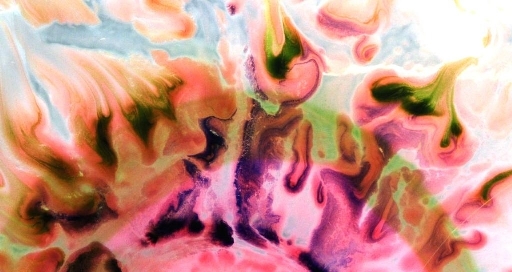
Although they can’t pick up a brush, bacteria have created their own painting for the first time.

Simon Park, a microbiologist at the University of Surrey, notes that many people – including Alexander Fleming – have painted with bacteria. But now, in collaboration with watercolourist Sarah Roberts, he says the bacteria themselves have been turned into painters.

bacteria paint two.JPG

“We prepared a standard agar plate, about 20cm by 20cm,” he explains. “Sarah chose some pigments – some of which she thought might be toxic, some of which she thought the bacteria might like and painted circles on the agar. Then we inoculated the agar with a red pigmented bacteria and incubated it overnight.”

The result was the image you see above. As the Serratia marcescens bacteria (the red colour) grew, they moved over the surface and “picked up the paint [the other colours] and moved it around according to their own ‘desires or whims’”, says Park.

The result makes visible some of the results of the bacteria’s movement, swarming, communication and even coordinated behaviour.

Park says he hopes this – and other outreach work – will help the public understanding of bacteria.

“I sit in a laboratory and work with what I think are some of the most wonderful things out there, but the public all they ever see of bacteria are the horror stories when people are selling bleach. They very rarely look at the good side,” he told Nature.

Image: Park / Roberts / S. marcescens

A Picasso fetches £13.5 million for obesity research

picasso240.jpgA Pablo Picasso painting donated to an Australian university has sold for £13.5 million at auction. The proceeds will benefit obesity, diabetes and cardiovascular research at the University of Sydney.
From our previous blog post announcing the sale:

The work depicts his lover Marie-Thérèse Walter, whom he met in 1927 when she was 17 and he 45. The painting was snatched up by art collector Walter P. Chrysler Jr., son of the automobile tycoon, before being sold to the anonymous donor. Christie’s puts its value at £9 million to £12 million (US$14 million to $18 million).

It is not clear why the donor picked the University of Sydney as the beneficiary for the Picasso, or why diabetes, obesity and heart research was chosen to benefit. In a statement, the university’s vice chancellor Michael Spence said the proceeds “will create multiple endowed chairs across several disciplines within a new multidisciplinary University centre dedicated to research into obesity, diabetes and cardiovascular disease”.

Image courtesy of Christie’s

Picasso painting proceeds donated to obesity research

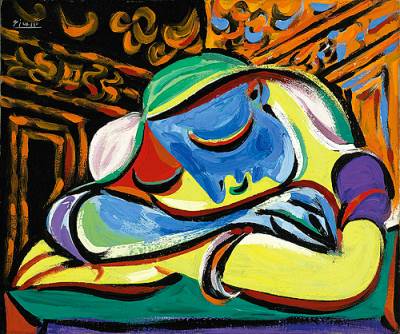
picasso400.jpgA vibrant Pablo Picasso canvas depicting the artist’s young lover is expected to fetch up to £12 million at auction, with proceeds benefiting diabetes, obesity and heart research.
An anonymous American collector donated the painting to the University of Sydney, Australia, last year, and yesterday it announced plans to sell the painting with the auction house Christie’s.

Picasso painted Jeune fille endormie in 1935. The work depicts his lover Marie-Thérèse Walter, whom he met in 1927 when she was 17 and he 45. The painting was snatched up by art collector Walter P. Chrysler Jr., son of the automobile tycoon, before being sold to the anonymous donor. Christie’s puts its value at £9 million to £12 million (US$14 million to $18 million).

It is not clear why the donor picked the University of Sydney as the beneficiary for the Picasso, or why diabetes, obesity and heart research was chosen to benefit. In a statement, the university’s vice chancellor Michael Spence said the proceeds “will create multiple endowed chairs across several disciplines within a new multidisciplinary University centre dedicated to research into obesity, diabetes and cardiovascular disease”.

Image courtesy Christie’s

The Art of Conservation

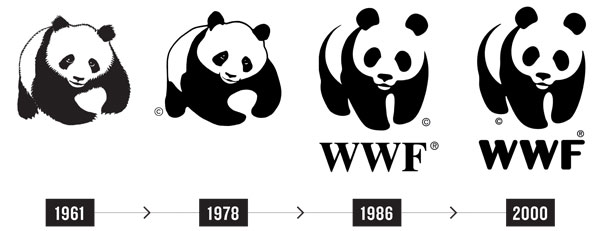
A Comment piece by Henry Nicholls in this week’s Nature charts how conservation brands have gone from homespun, anatomically accurate, single-species creations to stylized, abstract, frequently global images. This is a direct reflection of the conservation movement’s journey from a single- to a multi-species focus, with organizations increasingly operating at the level of habitats, ecosystems and the planet. It also reflects the increasing reliance on design and advertising agencies as the charities have moved from backroom to boardroom operations.

472287a-i1.0.jpg

Nicholls has produced a dipity timeline to illustrate the brand evolution he traces, set so that anyone can add a new event. So if you work for (or are a member of) a conservation organization not covered please feel free to add to the timeline.

Image: WWF

Bat fellatio and slime molds take 2010 IgNobels

It’s that time of year, when a few elite scientists are recognized for years of hard work tackling the great problems of the day. Yes, IgNobel season is upon us.

Unlike the Nobel Awards, which will be divvied out on successive days next week beginning with Medicine and Physiology on Monday, the Igs will be awarded in a single ceremony tonight at Harvard University in Cambridge, Massachusetts. You can watch a webcast of the live ceremony here.

If you’re short on time and only looking for something to talk about at the pub or to procrastinate working on a grant application, here’s a quick rundown of this year’s winners. Highlights include an adaptive explanation for bat fellatio, rollercoaster rides that treat asthma, and the urban planning skills of slime molds.

Engineering – Karina Acevedo-Whitehouse and Agnes Rocha-Gosselin of the Zoological Society of London, UK, and Diane Gendron of Instituto Politecnico Nacional, Baja California Sur, Mexico, for perfecting a method to collect whale snot, using a remote-control helicopter.

Medicine – Simon Rietveld of the University of Amsterdam, The Netherlands, and Ilja van Beest of Tilburg University, The Netherlands, for discovering that symptoms of asthma can be treated with a roller-coaster ride.

Transportation – Toshiyuki Nakagaki, Atsushi Tero, Seiji Takagi, Tetsu Saigusa, Kentaro Ito, Kenji Yumiki, Ryo Kobayashi of Japan, and Dan Bebber, Mark Fricker of the UK, for using slime mold to determine the optimal routes for railroad tracks.

Physics – Lianne Parkin, Sheila Williams, and Patricia Priest of the University of Otago, New Zealand, for demonstrating that, on icy footpaths in wintertime, people slip and fall less often if they wear socks on the outside of their shoes.

Peace – Richard Stephens, John Atkins, and Andrew Kingston of Keele University, UK, for confirming the widely held belief that swearing relieves pain.

Public Health – Manuel Barbeito, Charles Mathews, and Larry Taylor of the Industrial Health and Safety Office, Fort Detrick, Maryland, USA, for determining by experiment that microbes cling to bearded scientists.

Chemistry – Eric Adams of MIT, Scott Socolofsky of Texas A&M University, Stephen Masutani of the University of Hawaii, and BP for disproving the old belief that oil and water don’t mix.

Management – Alessandro Pluchino, Andrea Rapisarda, and Cesare Garofalo of the University of Catania, Italy, for demonstrating mathematically that organizations would become more efficient if they promoted people at random.