Energy outlook sees continuing dominance of fossil fuels

Just as the United States and China agreed on a landmark deal to curb greenhouse-gas emissions, the world’s leading energy think tank says that demand for fossil fuels is likely to keep growing for at least another 20 years.
WEO2014

{credit}IEA{/credit}

In its latest World Energy Outlook, released on 12 November, the Paris-based International Energy Agency (IEA) estimates that global consumption of primary energy — the energy contained in raw fossil fuels — will increase by 37% by 2040, driven mostly by growing demand in Asia, Africa, the Middle East and Latin America.

Crude-oil consumption is expected to rise from the current 90 million barrels a day to 104 million barrels a day, but demand for oil will plateau by 2040, according to IEA scenarios. Coal demand will already peak in the 2020s, thanks to efforts such as China’s to reduce air pollution and carbon emissions. But the demand for natural gas, the only fossil fuel that in the IEA’s scenarios is still growing after 2040, will rise by more than half, the report says.

The output from US shale projects, which has been booming — propelling the country to become the world’s largest producer of oil and gas — is expected to decline in the 2020s, the IEA says. Even so, there are sufficient untapped resources to meet the growth in consumption. And despite a recent slump in the prices of oil and gas, the IEA warns that rising tensions in parts of the Middle East and in Ukraine pose incalculable threats to global energy security.

“A well-supplied oil market in the short-term should not disguise the challenges that lie ahead, as the world is set to rely more heavily on a relatively small number of producing countries,” the IEA’s chief economist Fatih Birol said when the report was released in London. “The apparent breathing space provided by rising output in the Americas over the next decade provides little reassurance.”

Widespread safety concerns over the use of nuclear power mean that few countries — including China, India, Korea and Russia — are planning to increase their installed nuclear capacity. Nearly 200 of the 434 reactors that were operational at the end of 2013 are set to be retired in the period to 2040. Germany and other countries that decided after the Fukushima-Daiichi accident in 2011 to phase out nuclear power altogether are facing the challenge of addressing the resulting shortfall in electricity generation.

No country has as yet found a long-term solution to the problem of disposing of radioactive waste, the IEA notes.

The IEA reckons that renewable sources — mainly wind and solar — will provide nearly half of the global increase in power generation to 2040. By then, low-carbon sources, including nuclear, are expected to supply about a quarter of the global energy consumption.

However, the IEA  also predicts that between now and 2040 the world will add 1 trillion tonnes of carbon dioxide to the atmosphere — using up the budget that climate scientists say can give the world a reasonable chance to limit the rise in global average temperatures to 2˚C or less.

That calculation will sound cynical to more than half a billion people in sub-Saharan Africa — the regional focus of the report — who live without access to modern energy. Africa’s poorest suffer in fact the most extreme form of energy insecurity in the world, says the IEA.


European Commission: Tar sands no dirtier than other fuels

The European Commission has backed down from plans to label fuels derived from tar sands as more polluting than other fuels.

oil-sands-1aThe move, which EU member states must yet approve, could ease the importation of oil extracted from Canadian tar soils. But environmental groups say it is a blow to Europe’s climate protection targets.

Thanks to Alberta’s extensive tar sands, Canada holds the world’s second largest oil reserves, after Saudi Arabia. But the extraction of oil from tar sands uses considerably more energy and water than conventional oil mining.

The EU’s Fuel Quality Directive requires fuel suppliers to reduce greenhouse gas emissions from vehicle fuels by 6% by 2020.

In 2011, Brussels had proposed to restrict the use of fuel derived from tar sands by revising the directive to classify tar sands as 20% more carbon intensive – in terms of carbon dioxide emissions per unit energy – than other fuel sources. But the following year the European Commission’s proposal was voted down by member states concerned over Canada’s threat to take the issue to the World Trade Organization.

The Commission’s new proposal, released on October 7, requires fuel suppliers to report an average carbon intensity of different fuel types over their lifecycle.

“At this time, the proposed methodology should not require the differentiation of the greenhouse gas intensity of fuel on the basis of the source of the raw material as this would affect current investments in certain refineries in the Union,” the proposed text reads.

“It is no secret that our initial proposal could not go through due to resistance faced in some Member States,” Connie Hedegaard, the EU’s Climate Commissioner, said in a statement.

“However, the Commission is today giving this another push, to try and ensure that in the future, there will be a methodology and thus an incentive to choose less polluting fuels over more polluting ones like for example oil sands.”

Canada has only just begun to ship tar oil to European refineries, but Canadian oil producers hope to increase their market share in the region as EU countries seek to become less dependent on supplies from Russia and the Middle East.

Sea-ice trends are poles apart

Arctic sea ice

{credit}National Snow and Ice Data Center{/credit}

Sea-ice cover in the Arctic Ocean last week dropped to an annual minimum 5.02 million square kilometres, according to satellite observations by the National Snow and Ice Data Center in Boulder, Colorado.

This year’s minimum is the sixth lowest since satellite measurements began in 1979. Arctic sea-ice cover on 17 September was 1.61 million square kilometres higher than the record low extent observed in September 2012, but still 1.20 million square kilometres below the 1981–2010 average.

This year, a sliver of open water from the Laptev Sea off the coast Siberia extended the farthest north that open ocean has reached since the late 1970s.

Meanwhile, sea ice around Antarctica has exceeded the record maximum extent set last year. For the first time in the 35-year satellite era, Antarctic sea ice now covers more than 20 million square kilometres — an area almost the size of North America — and may still be growing.

Ahead of UN summit, chances dwindle to keep warming at bay

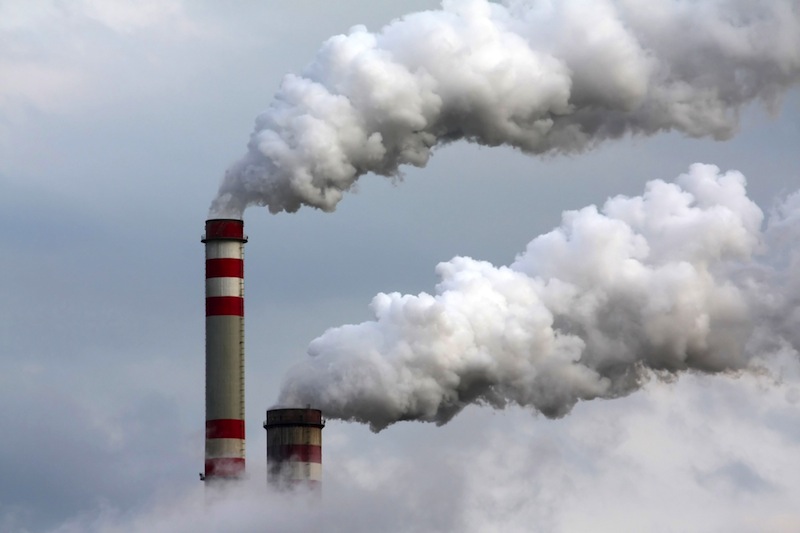
smokestacks

Credit: Martin Muránsky/Shutterstock.com

Despite a slowdown in recent years in the rate of global warming, the world remains on a path to substantial and potentially disruptive climate change.

Global carbon dioxide emissions from the burning of fossil fuels and the production of cement reached a record high of 36.1 billion tonnes in 2013, and are now more than 60% above the level of 1990, when the Intergovernmental Panel on Climate Change (IPCC)  released its first report. Compared to 2012, emissions grew by 2.3% last year and are likely to increase by a further 2.5% in 2014.

The new figures were released on 21 September by the Global Carbon Budget, a group that regularly analyses changes in carbon sources and sinks.

CO2 emissions continue to track the high-end scenarios used by the IPCC in its latest report to project the magnitude of global warming. Without sustained mitigation measures — including capturing and storing the carbon produced by power stations — the world is likely to warm by 3.2–5.4 °C above pre-industrial levels by the end of the century.

“It is getting increasingly unlikely that global warming can be kept below 2 °C,” says Glen Peters, a climate scientists at the Center for International Climate and Environmental Research in Oslo. “In any case, the challenge is getting bigger every year and might be unachievable without our betting on negative emissions.”

The dire outlook — detailed in a package of research articles and commentaries in Nature Geoscience and Nature Climate Change — comes on the eve of a climate summit convened by the United Nations on 23 September in New York. At the meeting, world leaders aim to prepare the ground for an international greenhouse-gas reduction agreement to be signed next year.

“Governments say they agree with the 2 °C target but the urgency of action hasn’t really sunk in,” says Corinne Le Quéré, a climate scientist at the University of East Anglia in Norwich, UK, and a co-author of the studies. “We have already used up two-thirds of the fossil fuels we can afford to burn if we want to have a reasonable chance to stay below 2 °C warming. At the rate at which CO2 currently accumulates in the atmosphere, the remaining emissions budget will be exhausted in 30 years.”

When the latest set of IPCC emissions scenarios were developed about ten years ago, many experts had expected the ‘carbon intensity’ of the world economy’s to decrease by 2% to 4.5% per year. But that has not happened — mainly owing to China’s continued reliance on coal as the main energy source for its growing economy, the actual decline in the amount of fossil fuel used to produce 1% of global gross domestic product was merely about 1%. Given current projections of global economic growth, emissions are unlikely to peak and reverse any time soon in the absence of more stringent energy policies.

Despite its increased efforts to reduce pollution, China surpassed the United States as the world’s largest emitter of CO2 in 2007 and is now emitting more than the US and the European Union combined. China’s pro capita emissions are still not as high as those in the US, but in 2013 they were higher than the EU’s. Together, the three regions account for more than half of worldwide emissions.


Western Australian agency lets sharks off the hook

Western Australia’s Environmental Protection Agency (EPA) has halted the controversial culling of sharks off Western Australia, citing “too much uncertainty” about the impact on marine fauna.

Following a series of fatal attacks on swimmers and surfers, state authorities said last year that shark populations off affected beaches and coastlines would be deliberately reduced. The plan caused an outcry among ecologists and marine conservationists. Scientists were particularly concerned about Western Australia’s vulnerable population of great white shark (Carcharodon carcharias).

The Western Australian Shark Hazard Mitigation Drum Line Program was a plan to aggressively hunt sharks from 2014 until at least 2017. Earlier this year, 170 sharks — none of them white sharks, according to reports — were caught and killed by means of baited hooks attached to floats.

But following an expert examination, the EPA has now concluded that the programme should be discontinued.

“After careful deliberation, the EPA has concluded that there is a high degree of scientific uncertainty as to whether the proposal can meet our objective for Marine Fauna,” the agency says in a statement released on 11 September.

“At this stage, the available information and evidence does not provide the EPA with a high level of confidence. In view of these uncertainties, the EPA has adopted a cautious approach by recommending against the proposal.”

The government of Western Australia has two weeks to appeal the decision. The state’s premier, Colin Barnett, said to reporters that an appeal was unlikely.


Rise in greenhouse-gas concentrations continues at alarming rate

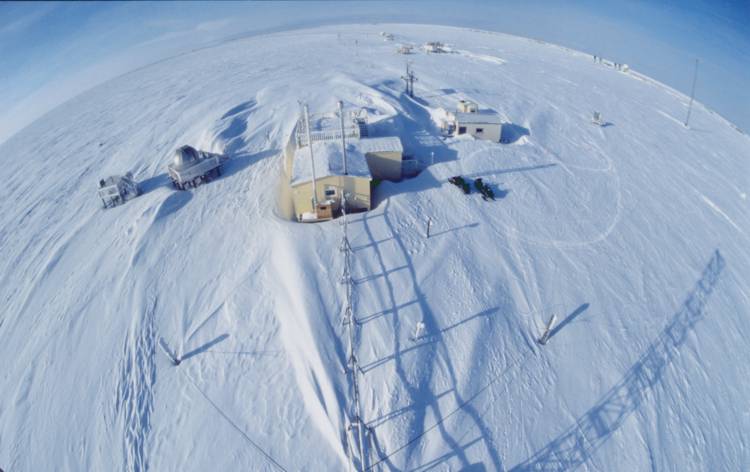
brwlarge

A US atmospheric observatory in Barrow, Alaska, is part of a global network that monitors carbon-dioxide concentrations.
Credit: NOAA

The carbon dioxide concentration in the atmosphere increased in 2013 at the fastest rate in almost 30 years, spurring concerns about global warming ahead of a United Nations climate summit later this month.

According to the annual Greenhouse Gas Bulletin of the World Meteorological Organization (WMO), released on 9 September, the average amount of CO2 in the atmosphere reached 396.0 parts per million in 2013 — 2.9 parts per million above the 2012 level. This is the largest annual increase since 1984. Averaged over an entire year, the global annual CO2 concentration is now expected to pass the symbolic threshold of 400 parts per million in 2015 or 2016.

The report is based on observations from the WMO’s Global Atmosphere Watch network. Preliminary data suggest that reduced CO2 uptake by plants and soils might add to the worrying increase in atmospheric CO2 concentrations resulting from fossil fuel burning.

Atmospheric methane, the second most important long-lived greenhouse gas, also reached a new high of about 1,824 parts per billion last year, mostly due to increased emissions from cattle breeding, rice farming, fossil fuel mining, landfills and biomass burning.

Between 1990 and 2013, radiative forcing by long-lived greenhouse gases — the main cause of global warming — has increased by 34%, according to the WMO report.

The question remains, however, of why the rise in global mean temperatures near the surface has apparently slowed, after a series of exceptionally warm years in the 1990s. Scientists have suggested a number of possible explanations for the global warming pause. According to the latest hypothesis, regularly occurring changes in circulation patterns in the Atlantic and Southern Ocean may have caused an increased volume of relatively warm water to sink to the depth of the ocean, thus reducing the amount of ocean heat escaping to the atmosphere.

The world’s oceans take up one-fourth or so of CO2 emitted into the atmosphere. As emissions have been steadily rising for decades, the corresponding changes in ocean chemistry are dramatic: the current rate of ocean acidification seems to have been unprecedented in at least over the last 300 million years, according to an analysis included in the WMO report.

World leaders are set to discuss steps to reduce greenhouse gas emission at the United Nations climate summit on 23 September in New York.

IPCC report calls for climate mitigation action now, not later

The world is heading towards possibly dangerous levels of global warming despite increasing efforts to promote the transition to a low-carbon economy, the Intergovernmental Panel on Climate Change (IPCC) warns in its latest report today.

As the concentration of greenhouse gases in the atmosphere continues to rise to unprecedented levels, the groups says only major institutional and technological change will give the world a better than even chance of staying below 2C warming – the widely accepted threshold to dangerous climate change. Stabilizing greenhouse gas concentrations at 450 parts per million CO2 equivalent – a level which scientists think is needed to limit warming to 2C – will require a three to four-fold increase in the share of low-carbon energies, such as renewables and nuclear, in the global power mix. Improvements in energy efficiency and, possibly, the use of carbon capture and storage technology will be needed to assist the process, the IPCC says.

The report was produced by the IPCC’s Working Group III, which has been tasked with looking into the mitigation of climate change. Its 33-page Summary for Policymakers was approved, line by line, by hundreds of IPCC authors and representatives of 195 governments over the past week in Berlin. Launching the report at a presentation in the city, Ottmar Edenhofer, the co-chair of the working group, admitted the discussions were at times nerve-rackingly tense.

To assess the options, costs and possible adverse side-effects of different pathways to stabilizing emissions at safe levels, the 235 lead authors of the report analysed close to 1,200 scenarios of socioeconomic development and cited almost 10,000 scientific papers. The resulting work, although phrased in rather technical language, is unambiguous in its message that the challenge of climate change is mounting as time proceeds.

“Global emissions have increased despite the recent economic crisis and remarkable mitigation efforts by some countries,” Edenhofer says. “Economic growth and population growth have outpaced improvements in energy efficiency – and since the turn of the century coal has become competitive again in many parts of the world.”

The report makes clear that it would be wise to act now rather than later. But, in line with the IPCC’s mandate to be policy-neutral, it includes no specific recommendations as to the energy and related policies that individual countries should follow.

“Substantial investment in clean energies is needed in all sectors of the global economy, including in some parts of the world in nuclear power,” says Edenhofer. “But it would be inappropriate for the IPCC to prescribe reduction targets or energy policies to specific countries.”

Doing nothing is not an option, he says. In a business-as-usual scenario run without meaningful mitigation policies, greenhouse gas concentrations double by the end of the century, the working group found. This would result in global warming of 4C to 5C above the pre-industrial (1750) level with possibly dramatic consequences on natural systems and human welfare.

Mitigating climate change would lead to a roughly 5% reduction in global consumption, according to the report. But, says Edenhofer, this does not mean that the world has to sacrifice economic growth. In fact, the group found that action to keep temperature rises at bay would reduce global economic growth by no more than 0.06% per year. This figure excludes the benefits of climate mitigation, such as from better air quality and health, which are thought to lower the actual costs of mitigation.

The full report outlines in great detail over 16 chapters the emission reduction potential of sectors including energy production and use, industry, transport and building and land use, and describes how mitigation efforts in one sector determine the needs in others. The IPCC has also assessed the potential of carbon capture and storage technology, which it says would be essential for achieving low-stabilization targets. More ambitious geoengineering possibilities, such as proposals to deliberately reduce the amount of sunlight reaching the Earth’s surface, have not been assessed in the report.

“There is a whole portfolio of mitigation options that can be combined in ways that meet the political priorities of individual countries,” says Edenhofer. “The means to tackle the problem exist, but we need to use them.”

Effective climate mitigation, adds Rajendra Pachauri, the chairman of the IPCC, will not be achieved if individual nations and agents advance their own interests independently. Nations hope to agree on binding emission reduction targets at a United Nations climate meeting in 2015 in Paris.

Delaying action is getting increasingly risky and will only lead to tougher requirements and higher costs at a later stage, says Pachauri.

“We haven’t done nearly enough yet,” he says. “A high-speed mitigation train needs to leave the station soon and all of global society needs to get on board.”


Strong earthquake hits northern Chile

Chile declared three regions to be disaster areas after a powerful earthquake killed at least five people in northern Chile.

Chile earthquakes

{credit}GFZ German Research Centre for Geosciences{/credit}

The magnitude-8.2 quake stuck at 20:46 local time (23:46 GMT) about 100 kilometres northwest of the city of Iquique on Chile’s Pacific coast, according to the US Geological Survey.

Following an initial tsunami alert, thousands are reported to have fled to higher grounds.

A major tsunami is not expected to strike the Hawaiian archipelago, according to the US National Tsunami Warning Center. But swimmers and boaters in Hawaii are warned of sea-level changes and strong currents.

The earthquake struck in the ‘seismic gap’ of northern Chile, where the last major quake had occurred in 1877. The location and mechanism of the quake are consistent with slip on the plate boundary between two major tectonic plates in South America, according to the US Geological Survey. Seismologists had expected a quake to occur in that region after a series of smaller tremors in recent weeks.

WHO doubles estimates of air pollution’s health toll

The World Health Organization has singled out air pollution as the number one environmental health risk in the world. In 2012, more than 7 million people worldwide died as result of exposure to either indoor or outdoor air pollution — one of every eight deaths — the Geneva-based organization warns in a report released today.

The death toll, calculated on the basis of a global analysis of pollution-related health risks and mortality across all ages in rural and urban areas, more than double previous estimates.

Low- and middle-income countries in the WHO’s South-East Asia and Western Pacific Regions — the latter including China, the Philippines and Vietnam — bear the main share of the burden. In 2012, around 3.3 million deaths in those regions were related to indoor air pollution and a further 2.6 million to outdoor air pollution, according to the WHO report.

Heart disease, stroke, lung cancer and acute respiratory infections in children are among the most common diseases linked to air pollution, it says.

Leaky coal and wood stoves are the main cause for widespread indoor air pollution in poor countries. Women and children who stay at home and breathe in smoke and soot are most at risk, says Flavia Bustreo, the WHO’s assistant director-general for family, women and children’s health.

“Cleaning up the air we breathe prevents non-communicable diseases as well as reduces disease risks among women and vulnerable groups, including children and the elderly,” she says.

The WHO says that it will later this year release indoor air quality guidelines on household fuel combustion. It will also publish new country-by-country data on exposure to outdoor and indoor air pollution and updated air quality measurements from 1,600 cities across the globe.

WMO: “No standstill in global warming”

The past year was the sixth warmest year on record since temperature records began in 1850. Global average surface temperature in 2013 was 14.5–0.50 °C above the 1961–1990 average and 0.03 °C above the 2001–2010 average, the Geneva-based World Meteorological Organization (WMO) reports in its latest statement of the status of the global climate, released today.

For its annual assessment, the WMO, a United Nations agency, uses the average of three independent global temperature data sets maintained by the UK Met Office, the US National Oceanic and Atmospheric Administration and NASA’s Goddard Institute for Space Studies, based in Greenbelt, Maryland.

With 13 of the 14 warmest years on record having occurred in the 21st century, there is no indication that global warming has stopped, says the report. Although the rise in air temperatures has slowed in recent years, heat continues to be trapped in the oceans, which take up more than 90% of the excess energy that reflects back to the surface as greenhouse gases accumulate in the atmosphere, says the report. Atmospheric greenhouse-gas concentrations reached new record highs last year and are now more than 40% above pre-industrial levels, and carbon dioxide in particular is now crossing the symbolic threshold of 400 parts per million.

Temperatures last year were particularly high in parts of the southern hemisphere, the report says, with Australia having experienced its hottest and Argentina its second-hottest year on record. A comparison of climate-simulation runs with and without elevated greenhouse-gas concentrations — made by scientists at the University of Melbourne and included in the WMO report — suggests that the record-warm Australian summer was about five times as likely as it would have been in a climate unaltered by human activity.

In the northern hemisphere, the prevailing negative mode of the Arctic Oscillation, a large-scale mechanism of natural climate variability, brought lower-than-average spring temperatures to parts of the United States, western Europe, Russia and Japan.

Global precipitation during 2013 equalled the 1961–1990 average of 1,033 millimetres. Even so, severe drought conditions hit Australia, southern Africa and parts of South America and China.