World’s first ‘clean coal’ commercial power plant opens in Canada

Boundary Dam for web

The Boundary Dam Power Station.
{credit}SaskPower{/credit}

The world’s first commercial coal-fired power plant that can capture its carbon dioxide emissions officially launched today in Canada — marking a milestone for ‘clean coal’ technology.

The Boundary Dam project, in Saskatchewan, aims to capture and sell around 1 million tonnes of carbon dioxide a year — up to 90% of the emissions of one of its refitted power units — to oil company Cenovus Energy, which will pipe the compressed gas deep underground to flush out stubborn oil reserves. Unsold gas will be hived off to the Aquistore research project.  (If you’re curious to know what a carbon capture facility looks like, SaskPower provides a virtual tour of the power station.)

As noted in a Nature article about the scheme in April, carbon-dioxide capture and storage (CCS) technology doesn’t come cheap. The Boundary Dam refit will cost Can$1.3 billion (US$1.2 billion), has depended on $240 million in government subsidies, and SaskPower — the sole electricity supplier in the province — hopes that regulators will grant it a 15.5% increase on electricity prices over the next three years. But the hope is that engineers can learn from the experience how to install the technology at lower cost.

The Canadian project is just the first of what will need to be thousands of clean coal plants by 2050 to put a significant dent in emissions. (Coal-burning alone produced 15 billion tonnes of CO2 worldwide in 2012, 43% of the world’s total). On current timetables, the world is nowhere close to achieving this: the technology is just too expensive, and so far there’s been no political will to tax fossil fuels on the basis of their emissions, which would be an incentive for clean coal.

In 2009, the IEA published a road map calling for 100 large CCS projects by 2020, but in July 2013, with projects failing to materialize, it downgraded that to just 30. And even that is ambitious.

Still, one has to start somewhere. Around a dozen projects are already storing carbon dioxide at the million-tonne scale, mostly extracted from natural-gas processing plants, and the Saskatchewan ribbon-cutting today marks the first time that a commercial, grid-connected coal plant has adopted the technology. A newly built advanced coal plant in Kemper County, Mississippi, designed to store 3.5 million tonnes of carbon dioxide annually, was to open this year but has been delayed to 2015.
Schön loses last appeal against PhD revocation

schon

Jan Hendrik Schön
{credit}Materials Research Society{/credit}

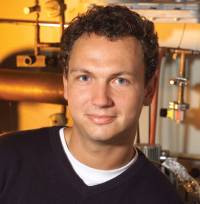
The German Federal Constitutional Court in Karlsruhe has confirmed on 1 October that the University of Constance was within its rights to revoke the PhD thesis of physicist Jan Hendrik Schön, who was dismissed in 2002 from Bell laboratories in Murray Hill, New Jersey, for falsifying research results.

Schön was still in his early 30s when he was dismissed after being found guilty of 16 counts of scientific misconduct.

He had worked in nanotechnology and had been considered a star scientist, able to create transistors out of single molecules. He published numerous papers in rapid succession in high-profile journals, including Nature and Science.

Two years later, following local investigations in Germany, the University of Constance decided in to revoke the PhD it had awarded to Schön in 1998. The university said that although it had no evidence that Schön engaged in wrongdoing during his PhD work, he no longer merited the degree because he had brought science into disrepute.

Schön has appealed that decision through different courts, and in 2010 a court in Freiburg ruled that he should get to keep his graduate degree. But the Federal Constitutional Court has the last word, and the university’s decision stands.


Prime numbers, black carbon and nanomaterials win 2014 MacArthur ‘genius grants’

Yitang Zhang, a mathematician who recently emerged from obscurity when he partly solved a long-standing puzzle in number theory, is one of the 2014 fellows of the John D. & Catherine T. MacArthur Foundation.

The awards, commonly known as ‘genius grants’, were announced on 17 September. Each comes with a no-strings-attached US$625,000 stipend paid out over five years.

Zhang, a mathematician at the University of New Hampshire in Durham, was honored for his work on prime numbers, whole numbers that are divisible only by 1 or themselves. In April 2013 he published a partial solution to a 2,300-year-old question: how many ‘twin primes’ — or pairs of prime numbers separated by two, such as 41 and 43 — exist.

The twin-prime conjecture, often attributed to the Greek mathematician Euclid of Alexandria, posits that there is an infinite number of such pairs. But mathematicians have not been able to prove that the conjecture is true.

Zhang’s work has narrowed the problem, however. In his 2013 proof, Zhang showed that there are infinitely many prime pairs that are less than 70 million units apart.

Other science and maths-related winners of this year’s fellowships are listed below.

Danielle Bassett, a physicist at the University of Pennsylvania in Philadelphia, studies the organizational principles at work in the brain, and how connections within the organ change over time and under stress. Her research, which draws on network science, has revealed that people with more ‘flexible’ brains — those that can easily make new connections — are better at learning new information.

Tami Bond, an environmental engineer at the University of Illinois, Urbana-Champaign, studies the effects of sooty ‘black carbon’ on climate and human health. Bond, who led the most comprehensive study to date of black carbon’s environmental effects, has found that the pollutant is second only to carbon dioxide in terms of its warming impact.

Jennifer Eberhardt, a social psychologist at Stanford University in California, studies the effects of racial bias on the criminal-justice system in the United States. Her analyses have shown, for example, that black defendants with stereotypical ‘black’ features are more likely to receive the death penalty in cases where victims are white.

Craig Gentry, a computer scientist at the IBM Thomas J. Watson Research Center in Yorktown Heights, New York, has shown that encrypted data can be manipulated without being decrypted, and that programs themselves can be encrypted and still function.

Mark Hersam, a materials scientist at Northwestern University in Evanston, Illinois, is developing nanomaterials for a range of uses, such as solar cells and batteries, information technology and biotechnology.

Pamela Long, an historian of science based in Washington DC, has examined intersections between the arts and sciences and issues of authorship and intellectual property. She is now at work on a book tracing the development of engineering in 16th-century Rome.

Jacob Lurie, a mathematician at Harvard University in Cambridge, Massachusetts, studies derived algebraic geometry. “With an entire generation of young theorists currently being trained on Lurie’s new foundations, his greatest impact is yet to come,” the MacArthur Foundation said in its award announcement. In June, Lurie was named a winner of the inaugural $3-million Breakthrough Prize in Mathematics.


Indian Ocean signal was not crash of flight MH370

Posted on behalf of Declan Butler.

nature-MH370map-050914.jpg

Hopes have faded that hydroacoustic signals picked up on the floor of the Indian Ocean might help to locate the Malaysian Airlines flight MH370 airliner that disappeared in March. Data from an additional sensor suggest that the signal probably resulted from geological activity and not the sound of an aircraft crashing into the ocean’s surface.

In June, Australian scientists had reported that sensitive microphones off the Australian coast had detected a distinctive signal at 01:30 coordinated universal time (UTC) on 8 March, around the time satellites lost contact with the Boeing 777 airliner.

The initially reported signals were discovered by an ocean acoustics group at Curtin University’s Centre for Marine Science and Technology in Perth, Australia. They were studying data from an acoustic station in Perth Canyon, about 40 kilometres west of Rottnest Island off the country’s west coast (see ‘Sound clue in hunt for MH370′).

That station is one of six belonging to Australia’s Integrated Marine Observing System (IMOS). The team then confirmed the signal using data from the Cape Leeuwin acoustic station, operated by the Comprehensive Nuclear-Test-Ban Treaty Organization (CTBTO) southwest of Australia. This gave a rough fix on the location of the origin of the sound as somewhere along a strip in the northwest of the Indian Ocean (see ‘Lost trail’).

On 3 September the researchers recovered data from another IMOS station at Scott Reef, off northwestern Australia. It contains a signal at 01:32:49 UTC that the researchers believe could correspond to the sound event they had detected earlier. Combining the data gave a fix on the location of the sound as the geologically active Carlsberg Ridge, midway between the Horn of Africa and India.

The sound signal also had a low amplitude tail, and taken together these two findings suggest that the event was geological — caused, for example, by an earthquake, underwater landslide or volcanic eruption, says Alec Duncan, a scientist in the Curtin University group.

Baby steps towards rescue of Human Brain Project

HBP

{credit}Human Brain Project{/credit}

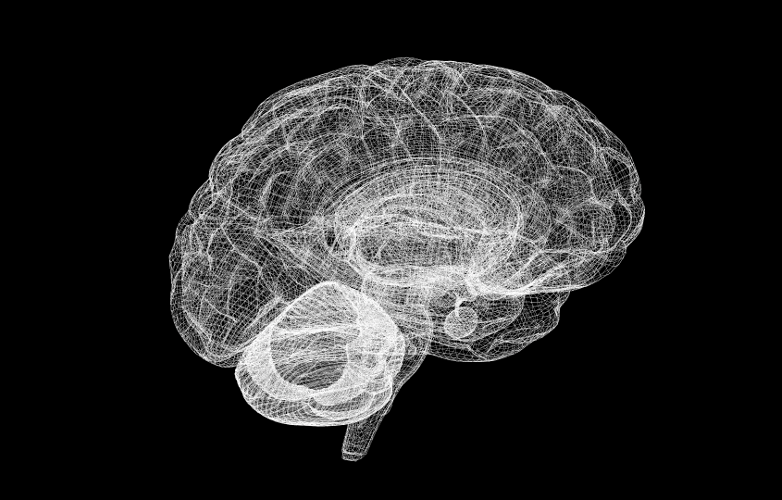
Cautious efforts to restore unity to the billion-euro Human Brain Project have begun. Both the European Commission and the project’s leaders have now responded to a scorching open letter in which angry neuroscientists condemn the flagship project, and pledge to boycott it.

Signed by 156 top neuroscientists, including many research institute directors in Europe, the letter was sent on 7 July to the European Commission, which is funding the project’s first phase. The letter’s authors express concern about both the scientific approach in the neuroscience arm of the project, which aims to simulate brain function in supercomputers, and the general project management.

The authors make a series of demands for changes that they say are needed to make the management and governance of the Human Brain Project more transparent and representative of the scientific views of the whole community. Since the letter was sent, a further 408 neuroscientists have added their signatures.

On 10 July, the European Commission sent a bland statement to Nature,  stating that “it is too early to draw conclusions on the success or failure of the project”, given that it has only been running for nine months. The Commission’s response also says that a “divergence of views” is not unusual in large-scale projects, particularly at their beginnings and that the Commission will “continue to engage with all partners in this ambitious project”.

However, on the same day, officials met with some of the letter’s organizers for what were, according to a cautious source, “the beginnings of discussions of some of the issues”.

Later that day the leaders of the Human Brain Project published a four-page statement acknowledging that “the signatories have important concerns about the project”. The document gives no revealing details of how these concerns are likely to be addressed, but does refer to an evolution of governance as the project moves into its next phase.


The decline and fall of Microsoft Academic Search

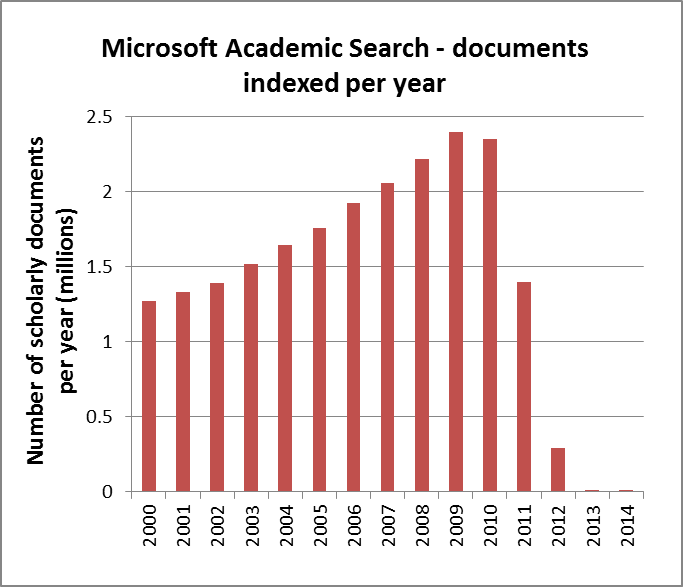
Five years after it launched, Microsoft’s free scholarly search engine has fallen into shabby disrepair, failing to track even a fraction of papers published since 2011. But the team behind the product says that they are shifting their focus to a yet-to-be-released, next-generation version of the service.

A few years ago, Microsoft Academic Search (MAS) was vying with Google Scholar to be the web’s pre-eminent free scholarly search engine. Both products indexed tens of millions of scholarly documents, tracked their citations, and made profile pages for academics. MAS, which seemed to be envisaged as a research project as well as a free tool, seemed to have the edge on some features — visualizing connections between research fields, for instance. The stage was set for bibliometric battle.

But the competition never happened.  A team of Spanish researchers who study science communication at the University of Granada, led by Emilio Delgado López-Cózar, decided to compare Google Scholar and MAS. They discovered — to their surprise — that Microsoft’s product had been failing to efficiently index scholarly documents since around 2011. (Last year, it captured only 8,000-odd documents.) “Is Microsoft Academic Search dead?” they asked in a working paper published on the arXiv preprint server on 28 April.

Others had noticed the issue too, judging from complaints left on the service’s message board last year, to which the only answer given was that the company was “actively working on indexing additional content”.

A phoenix may be rising from the ashes. Asked about the collapse, a spokesperson for Microsoft Research declined to address the problem directly, writing in an e-mail:

“Microsoft Academic Search (MAS) continues as a research project within Microsoft Research. Over the years, we have used the service as a mechanism to explore various challenges related to searching scholarly works, including author disambiguation, relative influence of publications, and graphs of related authors.”

But, he added:

“In parallel, Microsoft Research began an initiative on a next-generation version of MAS, which focuses on enhancing the user experience and evolving it from a research project to an integrated offering within Microsoft’s services portfolio.  During this transition, Microsoft has maintained the features, functionality, and the ability for third parties to enter new and updated content into the existing search engine, but the majority of our focus has now shifted to this new initiative.”

He later clarified that the new version, yet to be released, would remain free. At one stage, the company had wondered whether to “evolve the service through third-party collaborators”, he said, but in the end decided to keep the product within Microsoft. The Spanish team notes that the lack of fuss about MAS’s sudden decline suggests not many people were actually using it.

Indeed, Google Scholar has far outstripped MAS by now.  It can find about 99.3 million, or 87%, of an estimated 114 million English-language scholarly documents on the web, according to an estimate published last week by Lee Giles and Madian Khabsa at Pennsylvania State University at University Park (PLOS ONE 9, e93949; 2014). ‘Documents’ include books, technical reports and other grey literature, and the computer scientists estimated the number by combining results from Google Scholar and MAS.

At least 24% are freely available, they added. In a score of well-known journals (those classified as ‘multidisciplinary’ under MAS, which includes not only Nature, Science, Proceedings of the National Academy of Sciences and PLOS ONE  but also Nano Letters, Journal of Applied Meteorology, Journal of the Royal Society Interface and others), 43%  are free, give or take an estimate error of 10%.

Even Google Scholar has its weaknesses, however, the team notes. One is that it doesn’t provide an automated way for computer programs to make searches in the tool through an application programmable interface (API), so searches must be made by hand. It was only by using MAS’s API that the team could download and randomly sample documents for their survey. And of course, quantity is not necessarily quality: Google Scholar indexes more documents than do subscription products such as Thomson Reuters’ Web of Science or Elsevier’s Scopus databases — but it may not yet match their reliability.

Cutting-edge research submersible lost at sea

Nereus

Nereus carried out missions in the deepest parts of the oceans, where pressure can be as great as 16,000 pounds per square inch.
{credit}WHOI Advanced Imaging and Visualization Lab{/credit}

Ocean researchers are mourning one of the most advanced craft they could use to probe the mysteries of the deep, with the loss over the weekend of Nereus.

Operated by the Woods Hole Oceanographic Institution (WHOI) in Massachusetts, Nereus could either be controlled remotely by scientists as it descended thousands of metres into the sea, or it could be dispatched to autonomously swim the depths.

On 10 May the unmanned vehicle was exploring the Kermadec Trench off New Zealand when it was lost 9,990 metres under water. Staff on the ship Thomas G. Thompson, which was operating Nereus, later recovered debris from the submersible floating on the surface. It is possible that one of the ceramic spheres that gave the craft buoyancy imploded under the pressure of thousands of metres of water.

“Nereus helped us explore places we’ve never seen before and ask questions we never thought to ask,” said WHOI biologist Timothy Shank in a statement.

Nereus cost more than US$8 million to build, and had been in operation since its first sea trials in 2009.

“It was a one-of-a-kind vehicle that even during its brief life. It brought us amazing insights into the unexplored deep ocean, addressing some of the most fundamental scientific problems of our time about life on Earth,” said Shank.

UK budget sees boosts for data science, graphene and cell therapy

British scientists already know that their public funding for the next two years is frozen at £4.6 billion (US$7.6 billion) annually (as it has been since 2010, which for the nation’s seven research-grants agencies has meant a 10% cut in real terms over the past three years), so they did not expect anything transformative from today’s budget.

Right on cue, UK chancellor George Osborne continued his trend of throwing small crumbs of funding to science and technology — £222 million additional cash over the next five years — while at the same time failing to announce either long-term support for basic science or a strategy to develop UK industrial research, both of which are sorely needed, say science-policy experts.

The budget “follows the usual pattern,” tweeted Kieron Flanagan, who studies science policy at Manchester Business School, “a few small science and technology announcements given the name ‘institute’ or ‘centre’ to make them seem significant.”

“More than individual funding for ‘announceable’ projects we need a long-term funding pipeline and a strategy for investment in research to instil confidence in the security of our research ecosystem,” added Lesley Yellowlees, the president of the Royal Society of Chemistry.

Osborne said the government would provide £42 million over the next five years for a national institute, named after British computer scientist Alan Turing, which would study ‘big data’.  He also announced £55 million over five years for a centre aimed at large-scale manufacturing of cell therapies for late-stage clinical trials, and £19 million to provide small companies with access to equipment for research and development of products based on graphene, the material for which UK-based researchers Andre Geim and Kostya Novoselov won the 2010 Nobel Prize in physics. (The institutes are ‘Catapult’ centres, which are loosely modelled on Germany’s Fraunhofer Institutes and have the aim of stimulating links between universities and businesses.)

“We should break the habit of a lifetime and commercially develop [graphene] in Britain,” Osborne added. The United Kingdom and Europe have far fewer patents on the material than Asia and the United States, although a 10-year, €1-billion European push to commercialize graphene is bidding to change that, and the United Kingdom has already plunged £38 million into a National Graphene Institute at the University of Manchester.

These three fields — big data, regenerative medicine and graphene — are all areas that Osborne and science minister David Willetts have picked out repeatedly in speeches over the past 18 months as technologies in which the United Kingdom can be world leading.

Osborne also announced an extra £106 million for around 20 additional doctoral training centres — university-based hubs in which PhD students are taught in cohorts and given extra courses in networking, business and industrial development. In the United Kingdom, these centres are rapidly eclipsing conventional project grant PhDs, where students train under the wing of one academic research group.

In the big picture, UK spending on research and development as a proportion of its economy is around 1.7%, well below the European average, although the country punches far above its weight  in terms of top-cited research papers.

“The last four years of a flat cash science budget is biting scientists and engineers and squeezing universities,” said Sarah Main, the director of the London-based Campaign for Science and Engineering. By its calculations, the total research budget — including not just research grants, but also a boost to spending on buildings and facilities — will rise from £5.4 billion in 2010 to £5.9 billion in 2015. (In 2010, the government slashed spending on buildings and facilities, the ‘capital’ part of the science budget, by 40%, a reduction which it has subsequently redressed.)

The government is expected to announce a more comprehensive science and innovation strategy in the autumn — though this might be short-lived, as national elections are set for 2015.

India’s heavy-lift rocket passes crucial test

Posted on behalf of Sanjay Kumar.

With the successful liftoff of a Geo-Synchronous Launch Vehicle (GSLV) D 5 yesterday, India became the sixth nation to possess cryogenic propulsion rocket technology. The 415-tonne rocket successfully injected a 2-tonne communications satellite into the intended geosynchronous orbit, the Indian Space Research Organization (ISRO) has announced.

Cryogenic engines burn liquid oxygen and hydrogen, which liquefy at ‒183 °C and ‒253 °C respectively, and provide more thrust per kilogram of propellant, compared to room-temperature liquid fuels such as hydrazine or to solid fuels. The only countries that had the technology so far were the US, Russia, France, Japan and China.

Cryogenic technology is required for putting heavy payloads into orbit, and its lack had been ISRO’s proverbial Achilles’ heel for more than two decades, denting its capabilities.

In January 1991 India signed an agreement with the erstwhile Soviet Union to acquire cryogenic engines and also transfer technology. With the break-up of the Soviet Union later that year, and under pressure from the US, which alleged the sale would violate the Missile Technology Control Regime, the Russian government reneged on it promise of technology transfer while agreeing to provide seven cryogenic engines.

India was then forced to develop its own cryogenic technology, but its journey has been quite turbulent.

Since its first experimental launch in 2001, the GSLV has faced four failures in seven launches. In April 2010, a GSLV fitted with an indigenously built cryogenic upper stage and carrying an experimental communications satellite went off course and fell into the Indian Ocean. In August 2013, a scheduled launch was abruptly cancelled just few hours before lift-off, when a leak was detected in the hydrazine fuel system of the rocket’s second stage.

India’s cryogenic technology programme also took center stage in a high-profile scandal when leading scientists S. Nambi Narayan and D. Sasikumaran were arrested in 1994 on espionage charges. Nambi Narayan was later exonerated.

With GSLV D5’s success, India will now be able to launch its heavy satellites at a fraction of the price other space agencies charge for launches. The technology will also come handy for the country’s lunar mission Chandrayaan-2, as well as for future manned space flights.


Cutting-edge UK science facilities going unused

Scientific instruments that cost millions of pounds are standing idle in the UK because of a lack of money to run them, a new parliamentary report has revealed. There is a “damaging disconnect” between funding to build new facilities and the funding to actually run them, it concluded. This includes spending nearly £40 million on high performance computers, without budgeting for the electricity they use.

The report’s authors, a cross-party group of politicians in the House of Lords, are demanding that the government review its funding for large scientific infrastructure sites after conducting a wide ranging inquiry into the subject.

The House of Lords Science and Technology Committee cites examples such as the ISIS site in Oxfordshire, which produces beams of neutrons and muons that researchers use to probe the properties of materials. It has recently been operating for 120 days per year, down from a previous level of 180 days, despite only marginal cost saving from such truncated hours.

In evidence to the inquiry John Womersley, chief executive of the Science and Technology Facilities Council which oversees much of the UK’s government-owned science infrastructure, said: “It has been difficult to invest in the routine maintenance and upkeep of existing facilities, because [government] ministers very naturally are interested in new initiatives and transformative change in entirely new projects.”

Another example cited by the committee are the high performance computers at the Hartree Centre near Manchester. These were set up in 2012 with £37.5 million of government funding but the government has not provided enough money to run them, according to the committee’s report. Womersley told the committee that running the new computers at the Hartree Centre had come with “a significant electricity bill that we had not anticipated”.

In their report — released today — the committee says: “There is substantial evidence of a damaging disconnect between capital investment and the funding for operational costs.” They recommend that capital investment and operational funding should be “tied together in one sustainable package”.

The committee says it is broadly positive about the country’s science infrastructure, but its chair Lord Krebs notes that poor long-term planning places at risk the current excellent reputation of sites like ISIS. “The lack of a strategy and an investment plan risks the UK’s place at the forefront of scientific research,” he said in a statement.