WHO plans for millions of doses of Ebola vaccine by 2015

Posted on behalf of Declan Butler.

The World Health Organization (WHO) announced plans on 24 October to produce millions of doses of two experimental Ebola vaccines by the end of 2015.
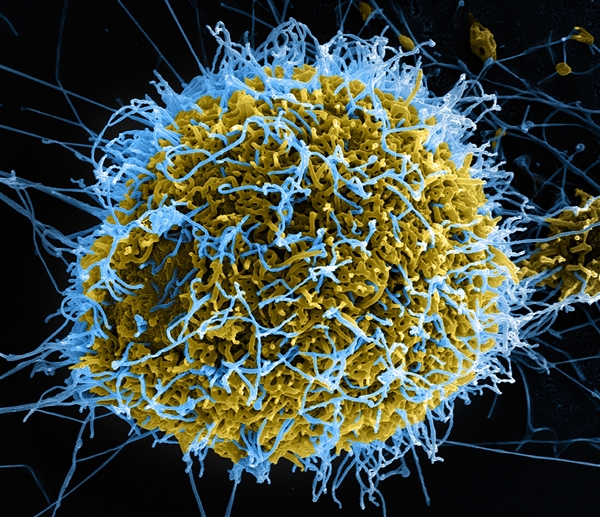
The Ebola virus has caused about 5,000 deaths in West Africa during the current epidemic.

The Ebola virus has caused about 5,000 deaths in West Africa during the current epidemic.{credit}US NIAID{/credit}

Hundreds of thousands of doses should be available to help affected countries before the end of June, the WHO said at the conclusion of a meeting in Geneva, Switzerland. Vaccine makers, high-level government representatives and regulatory and other bodies gathered to discuss the design and timing of planned clinical trials, as well as issues of supply and funding for mass vaccination programmes.

Phase I trials of two vaccine candidates have started, and as many as five other vaccines could begin testing by 2015, says Marie-Paul Kieny, WHO assistant director-general for health systems and innovation.

As of 19 October, Ebola had infected almost 10,000 people in Sierra Leone, Liberia and Guinea and killed around 5,000 of them, the WHO estimates. The true figures are probably higher, as many cases go unreported. With no end to the epidemic yet in sight, a working vaccine could be a game changer.

First clinical trials under way

The two vaccines whose production will be increased are already in early-stage testing in healthy volunteers. One is a chimpanzee adenovirus vaccine containing a surface Ebola protein (ChAd3), developed by the US National Institute of Allergy and Infectious Diseases and drug giant GlaxoSmithKline (GSK). It is being tested in the United States, the United Kingdom and Mali.

The other is a recombinant vesicular stomatitis virus (rVSV) vaccine, developed by the Public Health Agency of Canada and licensed to NewLink Genetics in Ames, Iowa. It is being tested in the United States, with plans to start trials soon in Europe and Africa.

These phase I trials will assess the vaccines’ safety and whether they elicit levels of immune response that have been shown to confer protection in non-human primates. The trials will also assess the dose needed to generate sufficient immune response, which in turn helps to determine how quickly manufacturers can produce doses.

A third candidate is a two-vaccine regimen: one developed by US pharmaceutical company Johnson and Johnson and the US National Institute of Allergy and Infectious Diseases, and another by Bavarian Nordic, a biotechnology company based in Denmark. It will begin phase I testing in the United States and Europe in January. Johnson and Johnson announced on 22 October that it would spend up to US$200 million to fast track the vaccine’s development; it plans to produce more than 1 million doses in 2015, with 250,000 available by May.

Advanced testing

The first phase II and III trials, to test efficacy as well as safety, are set to start in Liberia in December and in Sierra Leone in January. The current plan is to test both the GSK and NewLink vaccines simultaneously, but that could change depending on the results of the ongoing phase I trials. Data from the phase II and III tests are expected by April, Kieny says.

The ‘three-arm’ Liberia trial would test and compare the safety and effectiveness of the two vaccines against each other and a placebo. Each vaccine would be tested on 10,000 subjects, with an equal number of subjects given placebo. This allows researchers to obtain quick, reliable data on how well the vaccines work.

A ‘stepped-wedge’ randomized trial in Sierra Leone would give subjects vaccine sequentially, with no group given a placebo. This is useful for testing products that are expected to benefit patients, and products that are in short supply.

No trial design has yet been fixed for Guinea, where a lack of infrastructure has precluded early testing. If the Liberia and Sierra Leone trials show that the vaccines works and is safe, subsequent trials in Guinea would be used to answer follow-up questions.

Ethical and practical considerations

The Sierra Leone trial will enrol at least 8,000 health-care workers, and other frontline responders, such as ambulance drivers and burial workers. The Liberia trial might include health-care workers, but these would not be the primary study population, Kieny says.

Any decision to give a placebo to health-care and other frontline workers will be controversial; many consider it to be unethical, given these individuals’ work caring for Ebola patients, and the risks that they face in doing so.

Mass vaccinations are usually only carried out after years of trials to accumulate full safety and efficacy data. The proposed timeline for Ebola vaccine development is therefore unprecedented.

If existing public-health interventions to control Ebola outbreaks begin to slow the epidemic, the need for mass vaccination will lessen, Kieny says. But if the epidemic continues to expand, the WHO could consider expanding vaccination programmes.

In the meantime, the WHO and its partners are considering how best to engage with communities to prepare for vaccination programmes. Another issue is simply determining how to keep vaccine at –80 degrees Celsius, the temperature needed to maintain its efficacy. This will require specialized refrigerators and the establishment of cold supply chains to affected areas.

Also to be determined is who will pay for mass vaccination. Kieny says simply that “money will not be an issue”. Aid groups and governments have begun to pledge support for such efforts. Médecins Sans Frontières (MSF, also known as Doctors Without Borders) has said that it will create a fund for Ebola vaccination, and the European Union has committed €200 million (US$255 million). The Gavi vaccine alliance, the main sponsor of routine vaccinations in low-income countries, is also looking at how it could bring its vast resources and experience to the table. It will put a plan to its board in December as to what role it could have in any Ebola mass vaccination.
Outbreak of great quakes underscores Cascadia risk

Posted on behalf of Alexandra Witze.

The 18 great earthquakes that have struck Earth in the past decade hold ominous lessons for western North America, a top seismologist has warned. Many of these large quakes — including the 2004 Sumatra quake that spawned the Indian Ocean tsunami, and the 2011 Tohoku disaster in Japan — were surprisingly different from one another despite their similar geologic settings.

That variety implies that almost any scenario is possible in another part of the Pacific Rim where quake risk is thought to be high — along the Cascadia subduction zone offshore of Washington, Oregon, and other parts of the western United States and Canada.

“We do not fully understand the limits of what can happen,” says Thorne Lay, a seismologist at the University of California, Santa Cruz. “We have to be broadly prepared to respond.”

Lay spoke on 21 October at the Geological Society of America meeting in Vancouver, Canada, a city on the front lines of Cascadia earthquake risk.

The last great quake in the region happened in 1700. Conventional wisdom holds that the next one, perhaps as large as magnitude 9, could strike at any time in the next several hundred years. Geologically speaking, Cascadia is a classic subduction zone, where one plate of Earth’s crust plunges beneath another, building up stress and occasionally relieving it in large earthquakes.

The recent spate of great subduction-zone quakes, of magnitude 8 or larger, began with the 2004 Sumatra earthquake. On average, each year since then has brought 1.8 great quakes, more than twice the rate of the previous century.

In large part, they happened where and when seismologists expected them. “The quakes are basically filling in a deficiency of activity,” Lay says. But their details have been surprising.

The 2004 Sumatra quake, for instance, ruptured unexpected portions of a subduction zone off Indonesia, where the fault zone bends as opposed to running straight. That implies that areas in Cascadia with unusual geometry might also be at risk, Lay says.

In 2007, in Peru, a major earthquake began to happen, then essentially stopped for 60 seconds before picking up again and eventually generating a large tsunami. That start-stop-start pattern raises challenges for Cascadia because seismologists are trying to develop an accurate earthquake early warning system there.

And in April 2014, a Chilean quake ruptured a far shorter portion of a subduction zone than scientists had expected. That suggests that researchers can’t be complacent about thinking they know which parts of Cascadia might break, Lay says. (The worst-case scenario for Cascadia involves a rupture of approximately 1,000 kilometres.)

That’s not to say scientists aren’t preparing. The recently launched M9 project, coordinated out of the University of Washington in Seattle, aims to help officials cope with the risk of a great Cascadia quake. At the Vancouver meeting, Arthur Frankel of the US Geological Survey in Seattle showed early results of calculations of where the ground might shake the most. Enclosed basins, like Seattle, amplify the shaking, he reported.

Geologists face off over Yukon frontier

Posted on behalf of Alexandra Witze. 

The walls of the Geological Survey of Canada’s Vancouver office are, not surprisingly, plastered with maps. There’s one of the country of Canada, one of the province of British Columbia, and even a circumpolar Arctic map centered on the North Pole.

IMG_1626

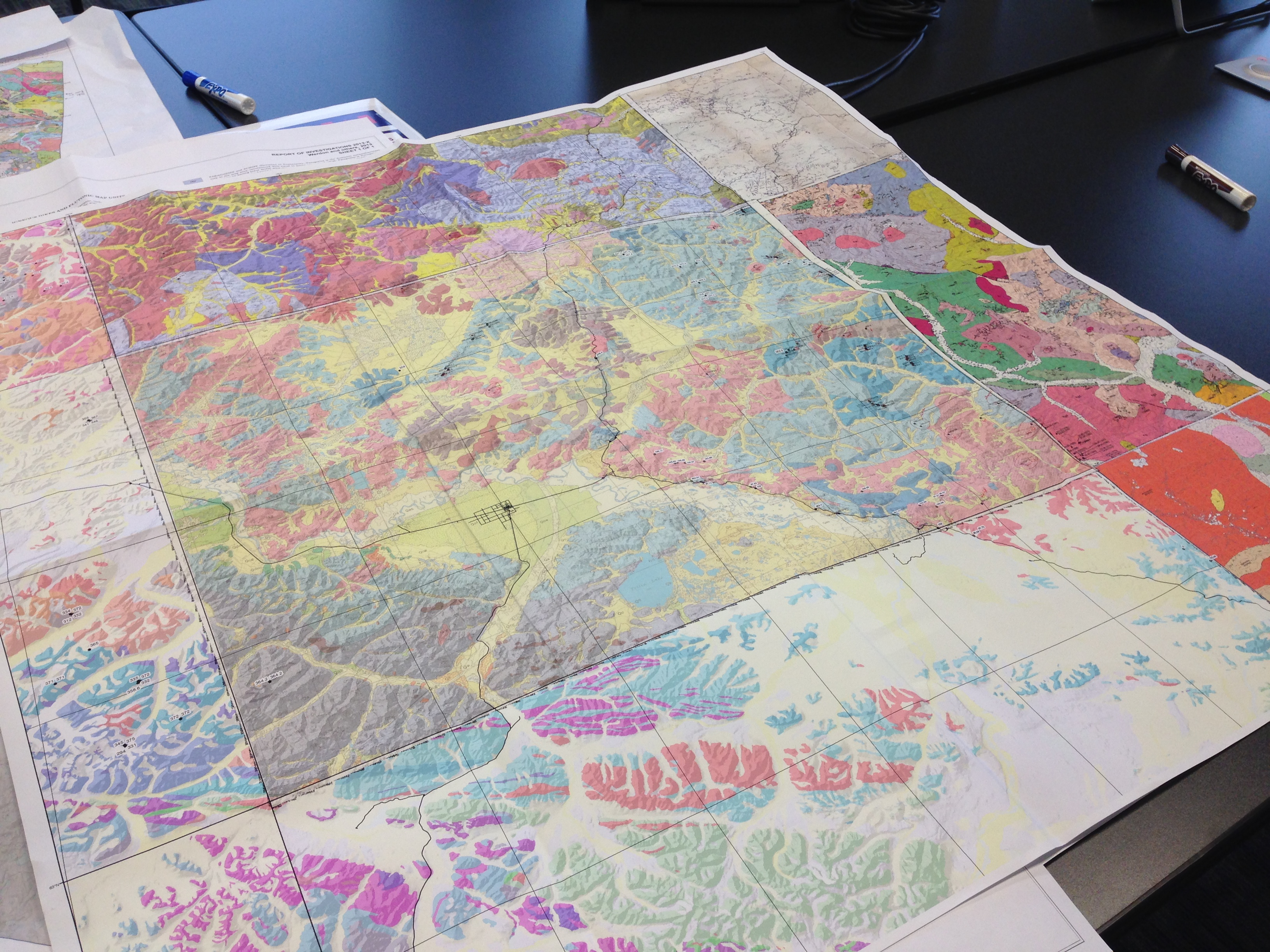
The Klondike schist of Canada (shown in green) stops at the border with the United States. {credit}Alexandra Witze{/credit}

All display that distinctive rainbow mélange so typical of professional geologic maps. Each major rock formation is represented by its own colour, so that pinks and purples and yellows swirl in great stretches representing mountain ranges, coastal plains, and every conceivable landscape in between.

But lying on the table of the survey’s main conference room is a much more problematic map. It shows part of the far northern boundary between the United States and Canada, along a stretch between Alaska and the Yukon territory. And the two sides, on either side of the international border, do not match.

It’s not a question of Canada using one set of colours for its map and the United States using another. The geology simply does not line up. To the east, Canadian mappers have sketched a formation called the Klondike schist, which is associated with the gold-rich rocks that fueled the Klondike gold rush in the late 1890s. To the west, US maps show nothing like it.

“We don’t know why,” says Jamey Jones, a geologist with the US Geological Survey (USGS) in Anchorage, Alaska. “We have got to figure out why these aren’t matching.”

He and two dozen scientists from both sides of the border — but clad equally in plaid shirts and hiking boots — met in Vancouver on 20 October to try to hammer out the discrepancies. For two hours they compared mapping strategies, laid out who needed to explore what next, and swapped tips about the best ways to get helicopters in the region.

The last frontier

At one level, the differing maps are a relatively minor academic point to sort out. Such glitches are fairly common whenever geologists have to match one ‘quadrangle’ mapped from one era or with one technique against another from a different time. And it’s not unusual for geology to not quite line up across international borders.

But American and Canadian geologists have reconciled their maps along nearly the entire northern stretch where Alaska and the Yukon meet, says Frederic “Ric” Wilson, a geologist with the USGS in Anchorage. This last bit is the only one that does not match — and it may well be because the Canadian maps are four years old, while the American ones are four decades old.

The US maps stretch back to the days of legendary geologist Helen Foster, who mapped large parts of Alaska after making her name as a post-war military geologist in former Japanese territories. “With her, you walked every single ridge,” recalls Wilson. “Every single ridge.”

All that walking produced maps of huge stretches of the remote Alaskan landscape. They include the 1970 quadrangle map now in question, which abuts a much newer Canadian quadrangle to the east. Together the maps span part of a massive geological feature known as the Yukon-Tanana Terrane, a collection of rocks caught up in the mighty smearing crush where the Pacific crustal plate collides against North America.

The Canadian side of the map is in good shape. Prompted in part by intense mining interest, geologists there have mapped the Klondike in modern detail.  “I’m willing to integrate any piece of data that comes in,” says Mo Colpron, a geologist with the Yukon Geological Survey. “If you guys come up with things that affect how our side of the border works, then we can sit down and talk and try to mesh it.”

That leaves the burden of work on the US side, to update the Foster maps. “The reconciliation project is what it’s called,” says Rick Saltus, a geologist with the USGS in Denver, Colorado, who served as meeting emcee. “We’re taking a three-year look at cross-border tectonic connections, because things look a little different from one side to the other.”

This summer, Jones and his colleagues hired a helicopter to take them everywhere the Foster maps ran up against the Klondike formation. “We’ve seen a lot of rocks we didn’t anticipate seeing,” he says. That data will go into the new and improved US maps.

There is, however, only so much scientists can do. Citing border regulations, Jones says, the helicopter pilot was unwilling to take them just a tiny bit over into Canada so they could see the geology on the Yukon side.

End of the road for rogue stem-cell therapy in Italy

Posted on behalf of Alison Abbott.

The Italian health minister Beatrice Lorenzin declared on 2 October that her government will not support a clinical trial of a controversial stem cell therapy that it promised last year.

Her statement, based on conclusions of an expert committee,  draws a line under a bitter two-year  row between the therapy’s inventor Davide Vannoni — who proclaimed it a cure-all and achieved an unlikely political influence — and Italian scientists and health-agency officials who declared it ineffective and possibly dangerous.

At the height of the row, hundreds of patients and their relative  took to the streets in Rome and other cities in support of Vannoni and his Stamina Foundation. The affair dominated headlines.

A committee of experts concluded in October last year that the treatment was phoney, but in December a court ruled that committee illegally biased. Lorenzin established a new committee earlier this year which has now drawn the same conclusion as its predecessor.

The Stamina Foundation is estimated to have treated well over eighty seriously ill people since 2007, mostly children.

UN Security Council says Ebola is security threat

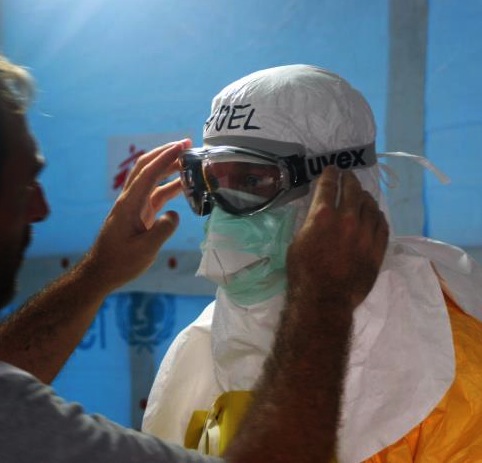
The Ebola outbreak in West Africa is “a threat to international peace and security”, the United Nations (UN) Security Council said on 18 September, in a resolution calling for a massive increase in the resources devoted to stemming the virus’s spread.

EbolaMask

{credit}Centers for Disease Control and Prevention{/credit}

The council is asking countries to send supplies and medical personnel to Liberia, Guinea and Sierra Leone, and seeks to loosen travel restrictions that have hampered outbreak response in those countries. The unusual resolution was co-sponsored by 131 nations and approved at the first emergency council meeting organized in response to a health crisis.

More than 5,300 people are thought to have been infected with Ebola during the current epidemic, and more than 2,600 have died, according to the World Health Organization (WHO) in Geneva, Switzerland.

The pace of the disease’s spread seems to be increasing, with the number of Ebola cases now doubling every three weeks, UN secretary general Ban Ki-moon told the council. “The gravity and scale of the situation now require a level of international action unprecedented for a health emergency,” he said.

WHO director-general Margaret Chan sounded a similarly dire warning. “This is likely the greatest peace-time challenge that the United Nations and its agencies have ever faced,” Chan told the security council.

The UN estimates that an effective response to the Ebola outbreak will cost nearly US$1 billion, double the $490 million figure put forth by the WHO on 28 August. The United States has promised a major influx of resources, with US President Barack Obama announcing on 16 September that he would send 3,000 military personnel and spend roughly $750 million to aid the Ebola fight.

US Congress approves stopgap funding bill

8531546523_b9f1ac7440_z

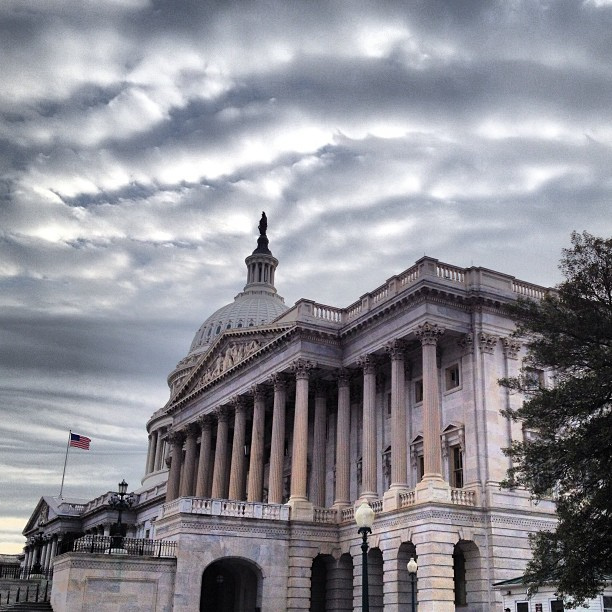
The US Congress may consider approving a final 2015 budget in November. {credit}Architect of the Capitol{/credit}

The US Senate passed a stopgap spending bill on 18 September that includes US$88 million to fight the Ebola outbreak in West Africa.

The bill, endorsed by the House of Representatives on 17 September, now heads to US President Barack Obama, who is expected to sign it into law. The legislation would fund government operations from 1 October — when the 2015 fiscal year begins — until 11 December.

Under the plan, the US Centers for Disease Control and Prevention would receive $30 million to send more health workers and resources to countries affected by the Ebola outbreak; the agency said earlier this week that it has roughly 100 personnel in Africa working on Ebola response. The Biomedical Advanced Research and Development Authority would receive $58 million to fund the development of the promising antibody cocktail known as ZMapp, made by Mapp Pharmaceutical in San Diego, California, and two vaccines against Ebola produced by the US National Institutes of Health and NewLink Genetics of Ames, Iowa.

The funding is a small fraction of the 3,000 military personnel and roughly $750 million that Obama has committed to the Ebola fight. The disease is thought to have infected more than 5,300 people and has killed more than 2,600, according to the World Health Organization in Geneva, Switzerland.

The temporary funding measure would essentially hold US agencies’ budgets flat at 2014 levels. A more permanent 2015 spending plan will have to wait until Congress returns to work after the federal election on 4 November.

Below are the funding levels that key US science agencies received in 2014, plus the funding levels proposed in 2015 House and Senate spending bills, and the estimated fiscal 2015 funding included in the stopgap measure approved on 18 September.

Agency 2014 funding level (US$ millions)
2015 House proposal 2015 Senate proposal 2015 stopgap measure (estimated, US$ millions)
National Institutes of Health 30,003 N/A N/A 30,003
Centers for Disease Control and Prevention 5,882 N/A N/A 5,912
Food and Drug Administration 2,640* 2,574 2,588 2,640
National Science Foundation 7,172 7,404 7,255 7,172
NASA (science) 5,151 5,193 5,200 5,151
Department of Energy Office of Science 5,066 5,071 N/A 5,066
Environmental Protection Agency 8,200 7,483 N/A 8,200
National Oceanic and Atmospheric Administration 5,314 5,325 5,420 5,314
US Geological Survey 1,032 1,035 N/A 1,032

* Includes one-time transfer of $79 million in user fees.

Additional reporting by Sara Reardon. 

Prime numbers, black carbon and nanomaterials win 2014 MacArthur ‘genius grants’

Yitang Zhang, a mathematician who recently emerged from obscurity when he partly solved a long-standing puzzle in number theory, is one of the 2014 fellows of the John D. & Catherine T. MacArthur Foundation.

The awards, commonly known as ‘genius grants’, were announced on 17 September. Each comes with a no-strings-attached US$625,000 stipend paid out over five years.

Zhang, a mathematician at the University of New Hampshire in Durham, was honored for his work on prime numbers, whole numbers that are divisible only by 1 or themselves. In April 2013 he published a partial solution to a 2,300-year-old question: how many ‘twin primes’ — or pairs of prime numbers separated by two, such as 41 and 43 — exist.

The twin-prime conjecture, often attributed to the Greek mathematician Euclid of Alexandria, posits that there is an infinite number of such pairs. But mathematicians have not been able to prove that the conjecture is true.

Zhang’s work has narrowed the problem, however. In his 2013 proof, Zhang showed that there are infinitely many prime pairs that are less than 70 million units apart.

Other science and maths-related winners of this year’s fellowships are listed below.

Danielle Bassett, a physicist at the University of Pennsylvania in Philadelphia, studies the organizational principles at work in the brain, and how connections within the organ change over time and under stress. Her research, which draws on network science, has revealed that people with more ‘flexible’ brains — those that can easily make new connections — are better at learning new information.

Tami Bond, an environmental engineer at the University of Illinois, Urbana-Champaign, studies the effects of sooty ‘black carbon’ on climate and human health. Bond, who led the most comprehensive study to date of black carbon’s environmental effects, has found that the pollutant is second only to carbon dioxide in terms of its warming impact.

Jennifer Eberhardt, a social psychologist at Stanford University in California, studies the effects of racial bias on the criminal-justice system in the United States. Her analyses have shown, for example, that black defendants with stereotypical ‘black’ features are more likely to receive the death penalty in cases where victims are white.

Craig Gentry, a computer scientist at the IBM Thomas J. Watson Research Center in Yorktown Heights, New York, has shown that encrypted data can be manipulated without being decrypted, and that programs themselves can be encrypted and still function.

Mark Hersam, a materials scientist at Northwestern University in Evanston, Illinois, is developing nanomaterials for a range of uses, such as solar cells and batteries, information technology and biotechnology.

Pamela Long, an historian of science based in Washington DC, has examined intersections between the arts and sciences and issues of authorship and intellectual property. She is now at work on a book tracing the development of engineering in 16th-century Rome.

Jacob Lurie, a mathematician at Harvard University in Cambridge, Massachusetts, studies derived algebraic geometry. “With an entire generation of young theorists currently being trained on Lurie’s new foundations, his greatest impact is yet to come,” the MacArthur Foundation said in its award announcement. In June, Lurie was named a winner of the inaugural $3-million Breakthrough Prize in Mathematics.


Lasker Award goes to breast-cancer researcher

Posted on behalf of Mark Zastrow. 

The 2014 Albert Lasker Special Achievement Award has been awarded to the geneticist Mary-Claire King. King, of the University of Washington in Seattle, is the leader of the team that discovered the BRCA genes, mutations in which are linked to breast cancer. King’s team found that the 10% of women affected by such mutations have nearly an 80% chance of developing breast cancer. The rush to develop tests for the mutations triggered a legal dispute in the United States that ended with a US Supreme Court ruling prohibiting the patenting of naturally occurring genes.

King was also recognized for her contributions to human rights in developing DNA analysis to prove genetic relationships. These have have been used to find the ‘lost children’ of Argentina — who were kidnapped and separated from their biological families as infants — and to identify the remains of soldiers missing in action and of disaster victims.

Other winners of this year’s Lasker awards, often referred to as ‘the American Nobels’, include molecular biologists Kazutoshi Mori of Kyoto University in Japan and Peter Walter of the University of California in San Francisco, in the category of basic medical research. They independently uncovered how cells correct proteins that are improperly folded by activating the transcription of certain genes.

The winners for clinical medical research were neurologists Alim Louis Benabid of Joseph Fourier University in Grenoble, France, and Mahlon R. DeLong of the Emory University School of Medicine in Atlanta, Georgia, for their work in high-frequency deep-brain stimulation. By targeting an area of the brain involved in motor functions called the subthalamic nucleus, they found the technique could be used to treat those with Parkinson’s disease to alleviate tremors and motor problems.

NIH finds forgotten ricin during lab sweep

A laboratory sweep at the US National Institutes of Health (NIH) has turned up forgotten stores of the toxin ricin and four pathogens, according to a 5 September agency memo.

The agency undertook the search after discovering improperly stored vials of deadly smallpox virus in a refrigerator at its Bethesda, Maryland, campus in July. That news came just weeks after the US Centers for Disease Control and Prevention (CDC) said that employees at one of its labs in Atlanta, Georgia, were potentially exposed to anthrax because they did not follow established safety guidelines. And in March, CDC employees shipped samples of the dangerous H5N1 influenza virus to another government laboratory without taking proper precautions.

The NIH says that its lab-safety sweeps revealed small amounts of improperly stored ricin and pathogens that cause tularemia, plague, botulism and the tropical disease melioidosis. All five substances are classified as ‘select agents’ — pathogens and toxins that the US government considers to pose a severe threat to public health and safety.

The ricin was discovered in a historical sample collection dating from 1914 and may be 85–100 years old, the agency memo says.

“All of the agents were found in sealed and intact containers and there were no personnel exposures associated with the storage or discovery of these vials or samples,” NIH director Francis Collins said in the memo. Collins added that the agents were reported to the CDC and destroyed.

Meanwhile, the US Food and Drug Administration said on 5 September that it had found improperly stored samples of Staphylococcus enterotoxin, a pathogen that can cause food poisoning. The discovery was first reported by the Associated Press.


Philanthropists aid Keeling curve

The iconic ‘Keeling curve’, a 56-year record of rising atmospheric carbon dioxide levels, will continue with support from American philanthropists Eric and Wendy Schmidt. A five-year, US$500,000 grant, announced on 3 September, will help ease funding pressure on the greenhouse-gas monitoring effort run by researchers at the Scripps Institution of Oceanography in La Jolla, California. 

The measurements were started at Mauna Loa, Hawaii, in 1958 by Charles Keeling. His son, Ralph, a geochemist at Scripps, now runs an expanded monitoring programme that tracks atmospheric CO2 and oxygen. In July 2013, when Keeling’s funding from US government agencies was in doubt, the scientist launched a ‘crowdfunding’ campaign to support his work.

That raised about $20,000, Keeling says, enough to keep programme staff on his payroll during lean months earlier this year. The new Schmidt grant will allow the Scripps team to chip away at a years-long backlog of air samples to measure changes in the ratio of carbon isotopes, which provides information about manmade sources of CO2. And Keeling’s pioneering oxygen-monitoring programme, which helps researchers to calculate how much CO2 is being absorbed by oceans and plants, has received roughly $400,000 from the US National Oceanic and Atmospheric Administration (NOAA).

“The [financial] need now is not the same as it was eight months ago,” Keeling says.

Keeling has documented a decrease in oxygen levels that is due to fossil-fuel combustion, which uses up oxygen and releases CO2. By accounting for both CO2 and oxygen levels in the atmosphere, scientists have calculated that oceans and plants each absorb roughly one-quarter of humanity’s CO2 emissions, leaving half to build up in the atmosphere.

While NOAA maintains its own atmospheric CO2 record, it does not track atmospheric oxygen, says Jim Butler, director of the agency’s Global Monitoring Division in Boulder, Colorado. “Ralph is one of the few people in the world who do this,” he says. “He has the longest ongoing record. We intend to continue funding this programme.”