Data Matters: Interview with Ben Lehner

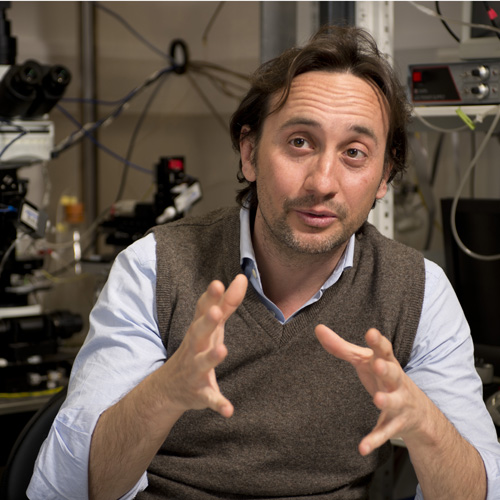
Ben Lehner

{credit}Ben Lehner{/credit}

Ben Lehner is a group leader at the EMBL/CRG Systems Biology Research Unit, in Barcelona, Spain.

Could you briefly introduce your own research?

My lab works on genetics, essentially. It’s a mixture of producing our own data, and using other people’s data. We’re a combined wet and dry lab, and we work with organisms and data from bacteria, through yeast, worms, all the way up to human clinical genetic data.

Broadly, how open do you think the human genomics community has been to sharing data?

I think there is a cultural history here that’s important. You can divide the human genomics community into two groups. Continue reading

Data Matters: Interview with Michael Milham

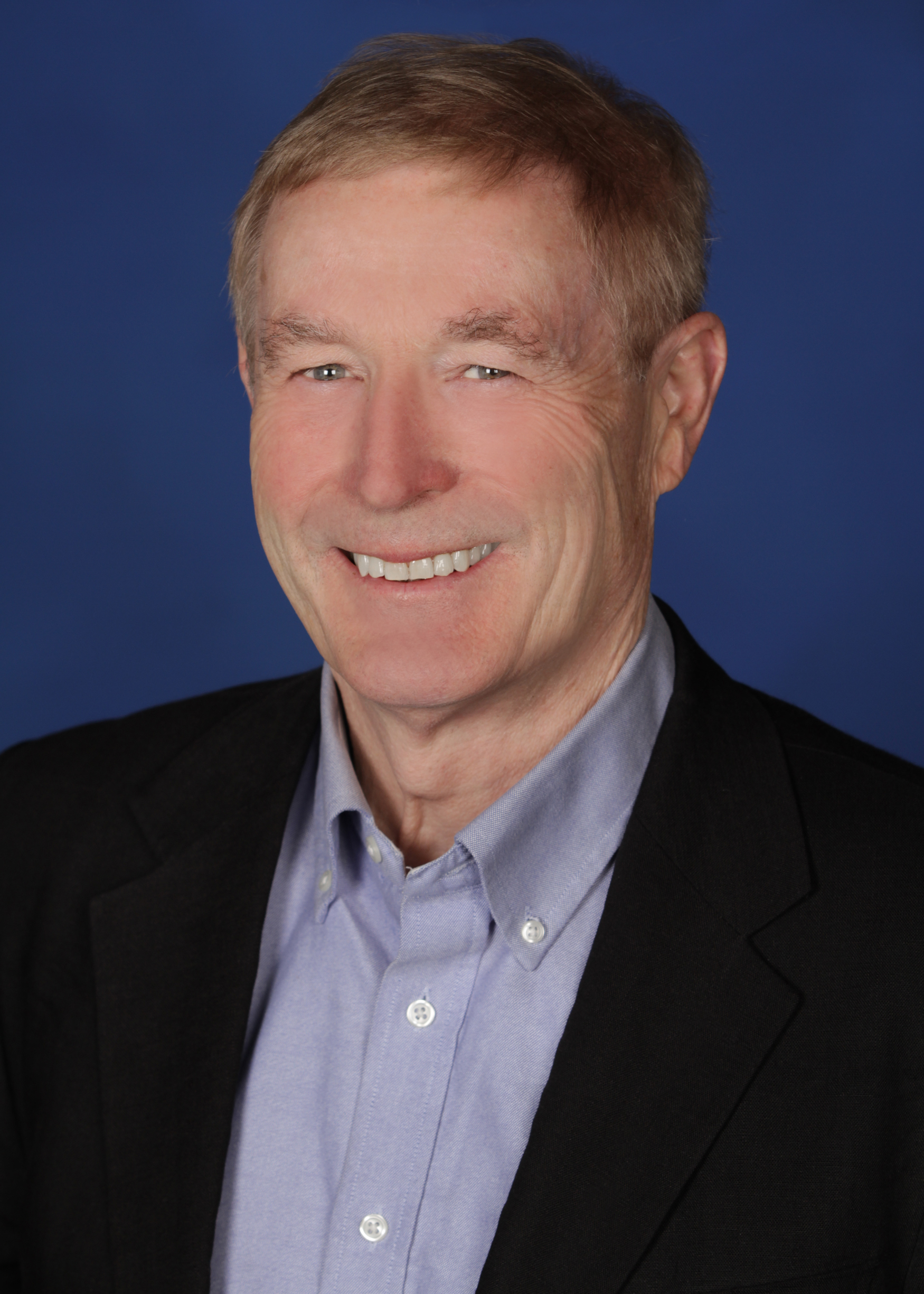
milham_bioMichael P. Milham, MD, PhD, is an internationally recognized neuroscience researcher, clinician, and the founding director of the Center for the Developing Brain at the Child Mind Institute.

You have helped found and organize several major brain imaging data sharing projects, starting with the 1000 Functional Connectomes Project. Could you tell us a bit about how these projects got started?

That actually brings up a funny memory – back in 2008, myself and some colleagues had just had a paper accepted, which focused on establishing the test-retest reliability resting-state after MRI in the journal Cerebral Cortex. At that point I was in San Francisco, and went for a truly bizarre hair cutting experience.

As I walked out the door of the barbers, I rang my colleague Zarrar Shehzad and mentioned that we should start looking across imaging sites. Zarrar, a talented Research Assistant of mine at the time, asked “why would I do that?” My response was “you’re right! It’s not your thing”. I then called Bharat Biswal, a friend and colleague, who helped to found resting state fMRI – he was very excited to give it a try. Continue reading

Data Matters: Interview with Anne Schöler

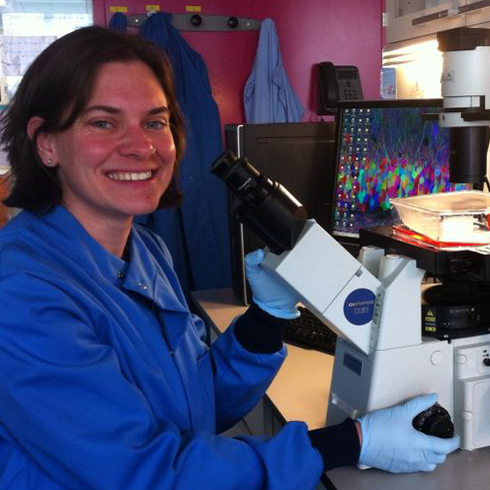
AnneScholerAnne Schöler is a post-doctoral fellow at the Helmholtz Zentrum in Munich in the Research Unit of Environmental Genomics.

Which broad research field do you call home?

I would consider myself a geneticist, so I am interested in the genomes of organisms on earth. I started out on mammalian genomics and recently moved to environmental genomics.

Which environment are you looking at?

I am particularly interested in soil, one of the most complex environments on earth. Continue reading

Data Matters: Interview with Marco Tripodi

MarcoTripodiMarco Tripodi is a Principal Investigator at the Medical Research Council in Cambridge, UK, heading a research group in Neurobiology.

In a few words, what is your field of research and what are you working on?

We try to understand how neural circuits control movement and in particular directional movement towards a particular target. For example, if you see on a table a cup of tea that you want to drink you need to coordinate the position of this particular target with the correct motor-routine to reach that target. This requires to combine the awareness of the location with the motor control to reach that particular point in space. Continue reading

Data Matters: Interview with Tony Hey

Tony Hey photoTony Hey is the Vice President of Microsoft Research Connections

What are the data practices in your field?

My job at Microsoft Research is to connect external scientific researchers with some of our researchers at Microsoft so they can solve big data scientific problems that people care about by applying advanced computing technologies. The programme covers the world, every continent except Antarctica, and it really is all about data and the fact that the scale of data has changed the way we do science. We’re in a new stage of doing science, which is data intensive. It’s often distributed; you have to get data sets from different places and put it together. Continue reading

Data Matters: Interview with Anne Guex

AnneGuexAnne Géraldine Guex is a post-doctoral fellow at Imperial College London researching nano-materials.

In a few words, what are you working on?

I work in the field of tissue engineering. My research focus is on the development of polymer scaffolds that are then used as substrates in cell cultures. We are trying to combine these biocompatible scaffolds and cells to produce in vitro engineered tissues that can be implanted to regenerate or substitute diseased or lost tissue (muscle, bone, cartilage) in a patient. Continue reading

Data Matters: Interview with Isaac Kohane

Isaac Kohane is a Professor of Pediatrics and Health Sciences and Technology at Harvard Medical School, USA.

What are the current data sharing practices in your field?

I work in the multidisciplinary field of bioinformatics, making use of large clinical and genomic datasets to identify signifiers for a variety of conditions with genetic links: autism, major depression, rheumatoid arthritis, type 2 diabetes. Genetics has been amongst the leaders for the sharing of data, although historically clinical data has not been aggregated and shared to the same extent. Continue reading

Data Matters: Interview with Gavin Simpson

gavin-simpsonGavin Simpson is a Quantitative Environmental Scientist at the Institute of Environmental Change and Society, University of Regina, Canada.

How open has your field traditionally been in the sharing of data?

As far as ecology goes in general I don’t think we’ve been very good at sharing data; we haven’t been very open in the way that we share data. There are a lot of people who collaborate on datasets and do things in private, but little in the open. There are a few big exceptions, things like the Breeding Birds Survey and a few other larger datasets, but they’re the exceptions rather than the rule. It’s changing, there’s been a movement towards making more and more data freely and openly available, but I think it’s still very much lagging behind open access in preparing journal articles. Continue reading

Data Matters: Interview with Stephen Friend

Dr Steven FriendStephen Friend is the President, Co-Founder, and Director of Sage Bionetworks, USA.

How open has biomedical research been to the open sharing of data?

Totally unopen. Compare the culture of biomedical research with the cultures around synthetic biology, around model organisms, and around the generation of genomic data. These are three examples where particular leaders in each of those fields have driven a large amount of sharing and open collaboration that is orders of magnitude more open than biomedical research. In biomedical research there are individuals who work for five to ten years to develop a cohort, which they then believe is their cohort, it’s not anyone else’s, it’s theirs, and they have the right till the last post doc leaves their lab, to not let others look at the data until they get authorship on a paper. Continue reading

Data Matters: Interview with Mike Huerta

Mike_HuertaMike Huerta is the Associate Director of the US National Library of Medicine, National Institutes of Health, USA.

What are the data sharing practices in your field at the moment?

At the moment in biomedical research it’s a hodgepodge. There are some broad policies across all of NIH for example, and there are policies that pertain to research funded by particular foundations, but there is no single policy. There are areas of biomedical research, such as genomics, that have a rich history and an active data sharing policy, and there are some particular initiatives, or projects that NIH is funding, that have requirements for data sharing, for example, the Human Connectome Project and the Alzheimer’s Disease Neuroimaging Initiative. But there is increasing interest across much of federal government in how to increase access to the results of research. For example, a memo came from the Office of Science and Technology Policy in February 2013 asking agencies that fund significant amounts of research for plans to increase access to both data and publications. In the not too distant future, in response to such policy initiatives, increasing technical capabilities to share, recognition of the importance of data sharing from the scientific perspective, and changes in the expectations and perspectives of society, we’re going to see a big increase in data sharing in biomedical research and other kinds of scientific research as well. Continue reading