Blade Runner 2049: a dystopian masterwork

Posted on behalf of Elizabeth Gibney
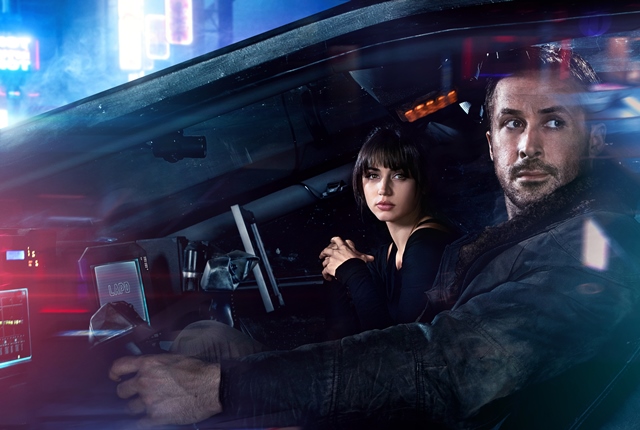
Ryan Gosling as K and Ana d x as Joi in Blade Runner 2049.

Ryan Gosling as K and Ana de Armas as Joi in Blade Runner 2049.{credit}Sony Pictures{/credit}

If director Denis Villeneuve was daunted by creating a sequel to the 1982 cult noir Blade Runner, it doesn’t show. The themes running through his Blade Runner 2049 feel more poignant than ever, the Los Angeles rain falls even harder, and it packs as much of a cinematic punch.

Villeneuve – fresh from his sci-fi success with Arrival in 2016 – has reimagined a world first brought to life by Ridley Scott. Thirty years on, the LA of Blade Runner 2049 is still grimy, bleak and sodden. Neon lights continue to flash and splutter, but now building-high advertisement holograms also shimmer alluringly. Replicants, as the bioengineered humanoids are known, remain enslaved.

The story centres on Officer K (Ryan Gosling), a blade runner — a cop tasked with ‘retiring’ replicants. In the original, loosely based on Philip K. Dick’s novel Do Androids Dream of Electric Sheep?, Harrison Ford plays Rick Deckard, a jaded predecessor of K, whose mission is to hunt down replicants escaped from off-world colonies. His interaction with them eventually prompts questions about the very premise of his job and his very identity. In 2049, replicants are now the bread and butter of the Earth-bound workforce, a new breed engineered by a new corporation. Under orders from his superior Lieutenant Joshi (a condescending but not entirely unsympathetic character, played by the excellent Robin Wright), K must find and terminate the older rogue models still hiding out.
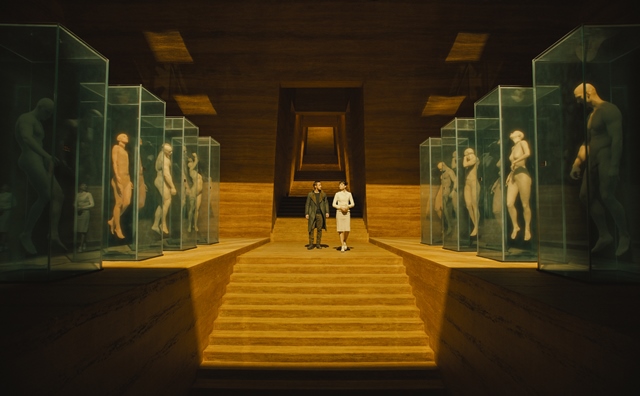
K and xxx (xxx)

K and Luv (Sylvia Hoeks) at the headquarters of the film’s hyper-ambitious bioengineering corporation.{credit}Sony Pictures{/credit}

Where Deckard was burnt-out and moody, K is a stoic and obedient, if lonely, worker – until an investigation brings about a discovery that leads him off course. Gosling does understated very well, shimmering with emotion that only begrudgingly breaks the surface. Ana de Armas is heart-breaking as his unconventional live-in companion; and Sylvia Hoeks makes for a terrifying foe. The dystopian world in which the film is based is rich with remarkable attention to detail. Fans will be thrilled to see Ford pop up for the finale as a grizzled, ageing Deckard.

The original Blade Runner brought to life Dick’s Voight-Kampf test, a form of Turing test designed to catch out androids by probing their biological response to questions that should trigger empathy, an idea that went on to inspire the wider sci-fi genre. In the wake of recent sci-fi successes such as Spike Jonze’s Her (2013), Alex Garland’s Ex-Machina (2014; reviewed here), HBO’s Westworld and the British series Humans, today’s viewers could be forgiven for becoming inured to shows that ask where artificial intelligence ends and humans begin. But Blade Runner 2049 manages to tread fresh ground. K’s modus operandi is a simple iris scan of replicants, but the film finds new ways to probe the question, through themes of morality and identity, and the roles of memory and soul.

Environmental dystopia figures large in the film.

Environmental dystopia figures large in the film.{credit}Sony Pictures{/credit}

Blade Runner 2049 also burns with an environmental message far more glaring than in the 1982 film. The sequel takes the audience beyond LA to sneak a glimpse at a hellish wreck of a planet. Set in the aftermath of a nuclear war, the symptoms of a species sliding into oblivion are everywhere, with a haywire climate, city-sized rubbish dumps and a sea wall of epic proportions. As noted by Gosling in an interview with Wired: The power of science fiction, and what’s positive about it, is that you’re able to experience the worst-case scenario without actually having to live it.” Villeneuve has brought us a terrifyingly realistic version of civilisation’s possible future.

The film has garnered wide-spread acclaim, and deservedly so. Almost every scene is a visual masterpiece, teasing the viewers with shadows and tricks of the light, as well as breath-taking landscapes. Its haunting score pounds like an irregular heartbeat, reminiscent of the equally powerful soundtrack to 2001: A Space Odyssey. These go a long way to making the film as nail-biting as it is contemplative and spare. But Blade Runner 2049 is ultimately a work of art, and at a whopping 2 hours 43 minute run time, made for people who love cinema, not those after a cheap thrill.

Elizabeth Gibney is a senior reporter on physics for Nature based in London. She tweets at @lizziegibney.

Blade Runner 2049 is on general release.


For Nature’s full coverage of science in culture, visit www.nature.com/news/booksandarts.
Artist of the animatronic

3Q: Giles Walker

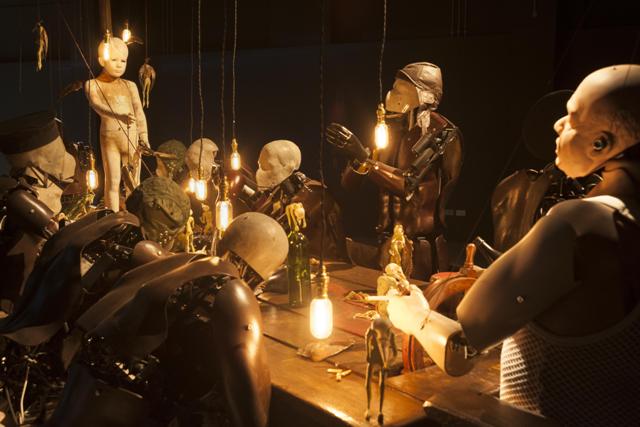
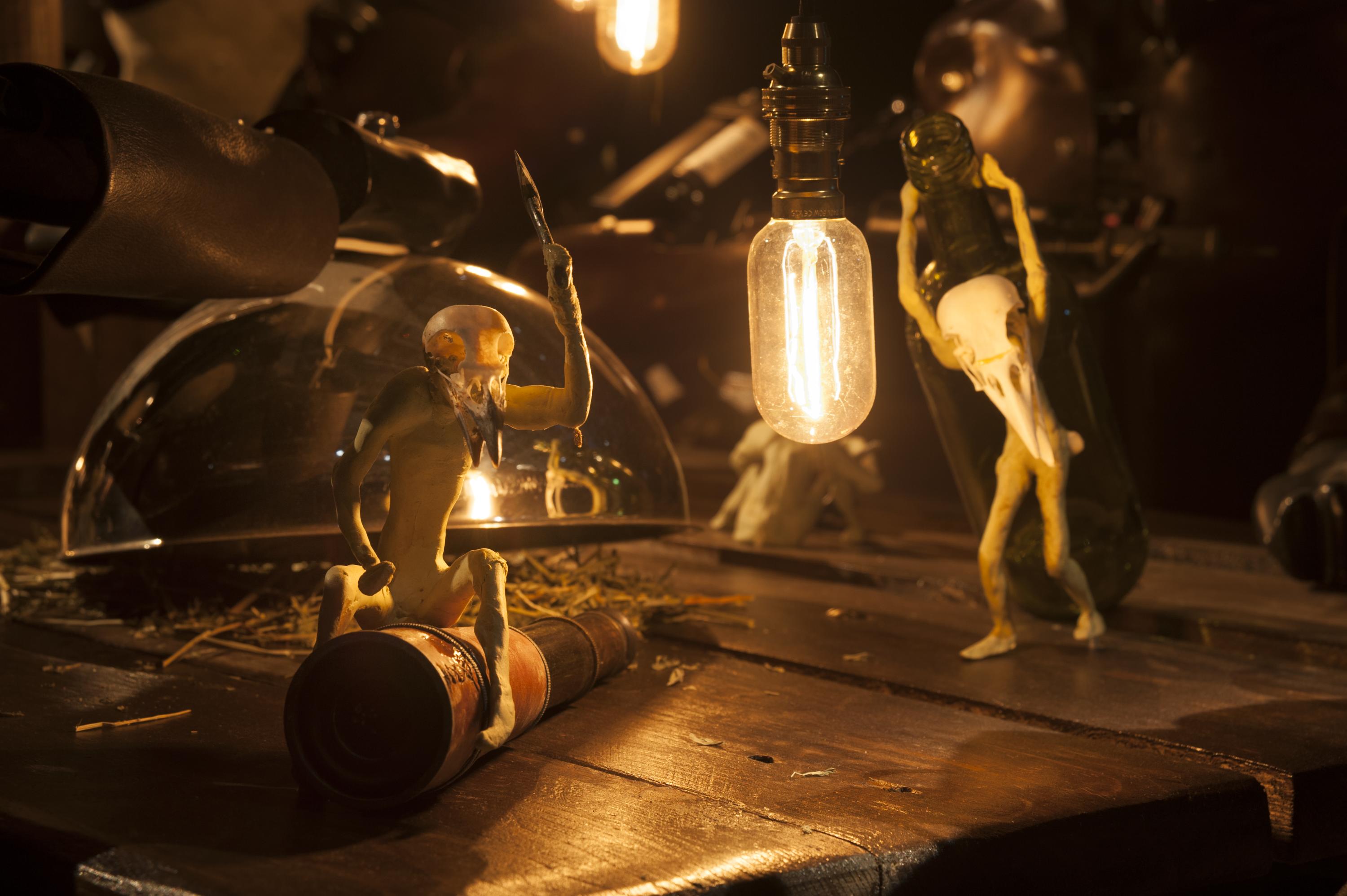
The Last Supper, Giles Walker's art installation at the London Science Museum's Robots show (multimedia).

The Last Supper, Giles Walker’s art installation at the London Science Museum’s Robots show (multimedia).{credit}Giles Walker © The Board of Trustees of the Science Museum{/credit}

Not all roboticists are scientists or engineers. Giles Walker, an artist in Brixton, south London, specialises in turning scrap metal into animatronic sculptures — ‘art robots’ that do not involve AI. Walker uses low-tech, unashamedly cheap technologies to animate artbots: car windscreen wiper motors for big clumsy movements, radio-control servos for delicate ones, coordinated via a communications protocol used in theatre lighting. His replica of the 1928 talking tin man Eric is a star of the London Science Museum’s Robots exhibition (reviewed here). Another of Walker’s works on display there, The Last Supper, enters darker territory. This animatronic ‘ensemble piece’ involves 12 mechanical figures sitting around a table. The figures — many with faces that are humanoid, yet smoothly featureless — talk about sin and forgiveness. A doll-like sculpture of a naked child backed by a cross stands on the table. It’s a bizarre scene, packed with a sense of foreboding. Here, Walker explains what’s important when building a robot for art’s sake — and what makes it all worthwhile.

What sets animatronic figures apart?

Everyone immediately likes mechanical or kinetic art. People are drawn to moving things. If they see them as a robot, they are even more drawn. Robots appeal because they have such cult status already: old ones, because you see a relatively naive picture of the future held by people of the past; new ones, because they offer a glimpse into the future that may be just as naive. And I think attempts at replicating humans, whether in Frankenstein or a robot, have always fascinated people.

Detail, The Last Supper.

Detail, The Last Supper.{credit}Giles Walker © The Board of Trustees of the Science Museum{/credit}

What are your criteria for your mechanical figures?

You see these robots coming out of Japan. Mine, by comparison, are very low budget. You can only afford a certain number of motions, so you think about movements that say the most about the character you are trying to portray. They don’t look human, but they behave in a human way. It could be through just a telephone or handbag — I give them a human trait that is instantly recognisable. The characters I create always tend to have fallen through the safety net of society. I built a ‘homeless’ character (Outside the Box) a few weeks ago to make a point. Few pay attention to a homeless person; the irony is that everyone pays attention to a homeless robot. I crafted it so that when people walked past, it told its stories. I didn’t fashion it like a Hollywood cliché.

Giles Walker.

Giles Walker.

There is an idea of robots as utopian, but that is not quite true. Funding for robotic development mainly comes from the arms trade or medical science, either to make us kill each other more efficiently — drones, Big Dog — or to help make us live longer, using nanotechnology, robot-assisted da Vinci surgery or exoskeletons. Such advances make you wonder whether have we really developed as a species or are just cancelling ourselves out. My machines are not positive icons of the future. They will not improve our lives by being a more efficient workforce, freeing up more leisure time for the working man. They are lost ‘souls’, redundant, the technological remnants society has discarded on its accelerating trajectory. Most of my sculptures, including those in  The Last Supper, smoke. Robots aren’t supposed to smoke. The juxtaposition of having a mechanical figure show, perhaps, a human weakness creates an opportunity to hold a mirror up to our own species and play with its eccentricities.

Are there surprises when your creations ‘come to life’?

It’s the best moment. You build them to formula – one elbow move tends to be the same as any other. But when you first see all the joints moving at the same time, that’s the peak. If you make it do a certain move, it encapsulates everything that you have been trying to say with that character. That’s the buzz, that’s what you do it for. You fire it up for the first time, and it will have this nervous tic in its neck, and it’s like, yes! Then you can start fine-tuning it.

Interview by Celeste Biever, Nature’s chief news and features editor. She tweets at @celestebiever. Robots runs at London’s Science Museum until 3 September. The Last Supper shows there until 29 May. (View the installation in action here.)


For Nature’s full coverage of science in culture, visit www.nature.com/news/booksandarts.
From tin men to Terminator: Robots reviewed

Posted on behalf of Celeste Biever

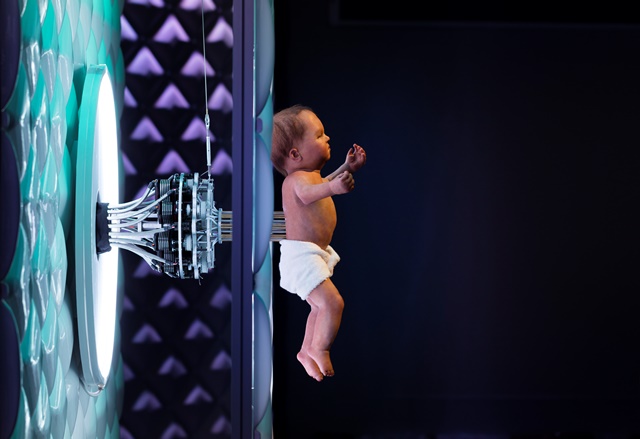
Animatronic baby, John Nolan Studio

Animatronic baby, John Nolan Studio.{credit}Plastiques Photography, courtesy of the Science Museum{/credit}

The baby’s skin looks soft and its hair downy as it blinks and stretches out its arms. Then I spot the plug and mass of wires protruding from its back.

Brainchild of London-based John Nolan Studio, the animatronic infant is a fitting start to the blockbuster Robots exhibition at London’s Science Museum. Its impressively comprehensive array of automatons is a reminder both of machine-like qualities in people, and of the challenges of imitating humans in mechanical form.

Historical automata crowd the first section, ‘Marvel’. A small, hand-carved mechanical monk from the 1560s was crafted to walk and beat its breast in contrition. Is this really a robot? Yes, says chief curator Ben Russell, who has long pondered this question: “A robot is a machine that looks life-like or behaves in life-like ways.” This summary proved a tough but useful curatorial filter, he says.

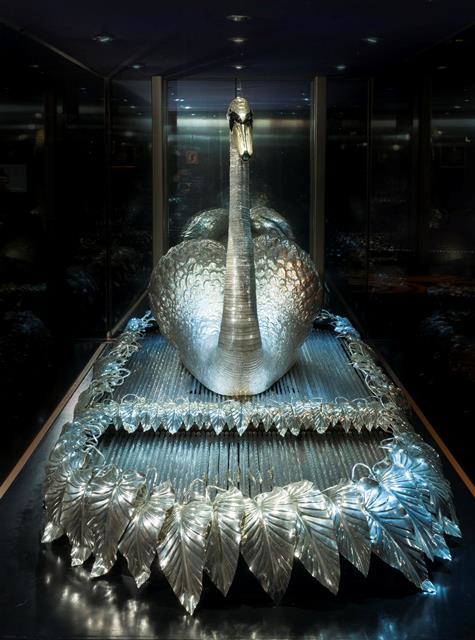
Clockwork 'Silver Swan', John Joseph Merlin, 1773.

Clockwork ‘Silver Swan’, John Joseph Merlin, 1773.{credit}The Board of Trustees of the Science Museum{/credit}

Another highlight here is the Silver Swan, a life-sized clockwork bird on a glass pool crafted in 1773 by Belgian inventor and instrument-maker John Joseph Merlin, whose work inspired Charles Babbage. (The automaton is on loan from the Bowes Museum in county Durham, northern England.) In his 1869 travelogue The Innocents Abroad, American writer Mark Twain noted the avian wonder ‘swimming’ as “comfortably and unconcernedly as if he had been born in a morass instead of a jeweller’s shop”. The lifelike movements of its serpentine neck still impress – but visitors beware: to preserve the delicate machine, it will only play at certain times.

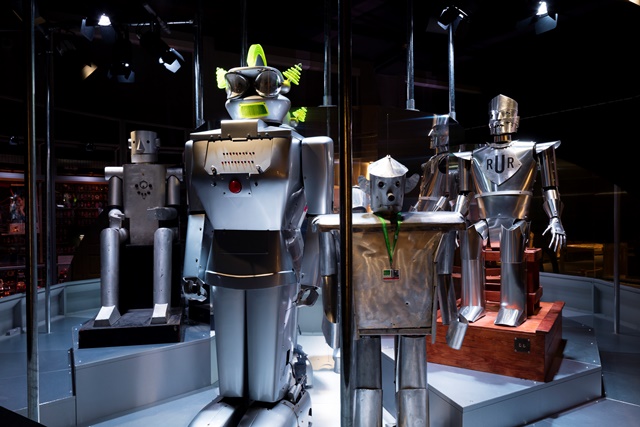
Classic twentieth-century robots Sitting Robot, Cygan, George and Eric (left to right).

Classic twentieth-century robots Sitting Robot, Cygan, George and Eric (left to right).{credit}Plastiques Photography, courtesy of the Science Museum.{/credit}

A clutch of robots classiques includes an impressive collection of dumb but engaging tin-giants dating back to the 1920s. Eric is arguably the star. The replica we see was commissioned for the exhibition and paid for by a Kickstarter campaign. Amateur engineer William Richards and mechanic Alan Reffell built the original Eric in 1928 for the annual Society of Model Engineers exhibition in London, where it a gave a speech as a stand-in for the Duke of York. Its feet bolted to a 12-volt electric motor, Eric could also stand, sit down and move its arms.

As I gaze at a Terminator from 2009 film Terminator Salvation, I’m reminded of how popular culture, as well as science and engineering, shaped the modern concept of a robot. The intimidating android “had to be there”, says Russell. “This is what people think a robot is like.”  Another delight for aficionados is a 1923 first-edition copy of Czech writer Karel Čapek’s play R.U.R. (Rossum’s Universal Robots), which coined the word ‘robot’.

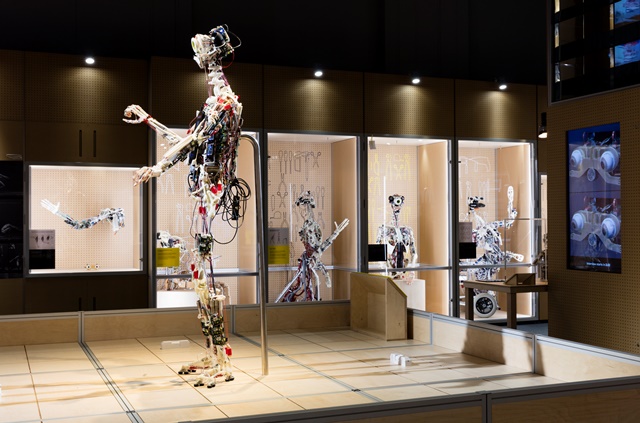
ECCEROBOT, Rob Knight and Owen Holland, 2004-2011.

ECCEROBOT, Rob Knight and Owen Holland, 2004-2011.{credit}Plastiques Photography, courtesy of the Science Museum.{/credit}

It’s one thing to dream, quite another to construct. The reality check is a gaggle of bots from a range of top labs — experiments shedding light on what it means to be human. Here are multiple versions of the life-sized ECCEROBOT (Embodied Cognition in a Compliantly Engineered Robot), each a skeletal display of tendons and bones. Built by robotics engineer Rob Knight, cognitive roboticist Owen Holland and the ECCEROBOT Consortium between 2004 and 2011, the series explores embodied cognition: how the structure of the human body shapes the evolution of intelligence and consciousness.

Juxtaposing several attempts at creating bipeds, this section also showcases the joy of tinkering. Honda’s well-resourced P2, unveiled in 1996, was the first full-bodied robot to walk on two legs. It stands next to the Shadow Biped — a pair of legs snaked through with wires and gauges, developed by inventor Richard Greenhill and other members of the Shadow Robot Project Group in a London attic from 1987 to 1997. (It managed a few wobbling steps.) The group evolved into the Shadow Robot Company, makers of the dexterous robotic hand on display.

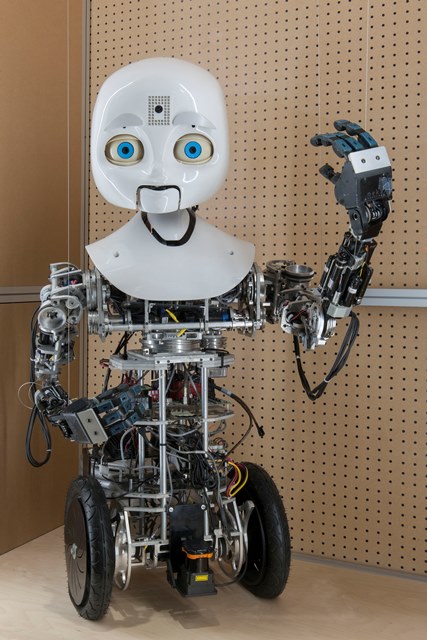
Nexi, Cynthia Breazeal, 2008.

Nexi, Cynthia Breazeal, 2008.{credit}The Board of Trustees of the Science Museum.{/credit}

The show’s research chops are also evident in the inclusion of Cog, the Massachusetts Institute of Technology project led by robotics pioneer Rodney Brooks that ended in 2003. The exhibit only features Cog’s head – a mess of wires and metal. While it’s not visually arresting, I was thrilled to see Cog: it was built to address the fascinating, once radical, question of whether human level intelligence could emerge from physical interactions with the environment, without any higher-level programming.

The emerging field of human-robot interaction gets a look-in with Inkha, built by Matthew Walker and Peter Longyear at King’s College London. A pair of bulbous eyes and rubbery lips attached to a metal frame, it served as a receptionist at King’s between 2003 and 2014. And the freakish, blue-eyed Nexi was built in 2008 by human-robot interaction pioneer Cynthia Breazeal of MIT. Through its ability to carefully control movements such as face-touching, Nexi was used to study the role of non-verbal communication.

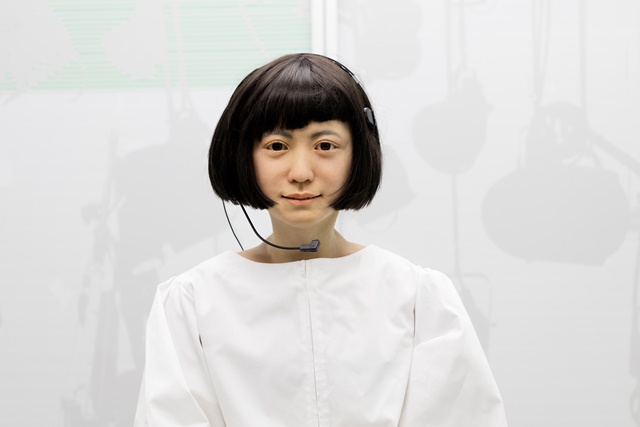
Robot child Kodomoroid, Hiroshi Ishiguro Laboratories.

Robot child Kodomoroid, Hiroshi Ishiguro Laboratories.{credit}Plastiques Photography, courtesy of the Science Museum.{/credit}

Today, of course, robots have escaped the lab, showing up in factories, homes and even clinics.  As I trek through the last room, a corridor lined with a range of humanoids already out in the real world, I ponder how robots will evolve next. Will they become ever more realistic, like the alarmingly life-like robot child Kodomoroid? Its creators at Hiroshi Ishiguro Laboratories in Japan have used such ‘geminoids’ — android ‘twins’ of real individuals — to monitor reactions when compared with the human originals. Robo-toddler Kaspar, by contrast, makes a virtue of robotic limitations. Its creators at the University of Hertfordshire are examining how children with autism,  who can be overwhelmed by diverse facial expressions, react to Kaspar’s much simpler, carefully controlled mannerisms.

This is a timely show, in a society now grappling with the implications of the robot invasion, enabled by speedily evolving, hyper-sophisticated machines. It does a beautiful job of demonstrating robotics’ embarrassment of riches and how humanity got here, powered at first by belief, then dreams and most recently hardcore research and engineering. The question that scientists, engineers, consumers and industry now have to answer is: where do we point this formidable engine?

Celeste Biever is Nature’s chief news and features editor. She tweets at @celestebiever.

Robots runs at London’s Science Museum from 8 February to 3 September.


For Nature’s full coverage of science in culture, visit www.nature.com/news/booksandarts.
Robots I have known

Posted on behalf of Celeste Biever

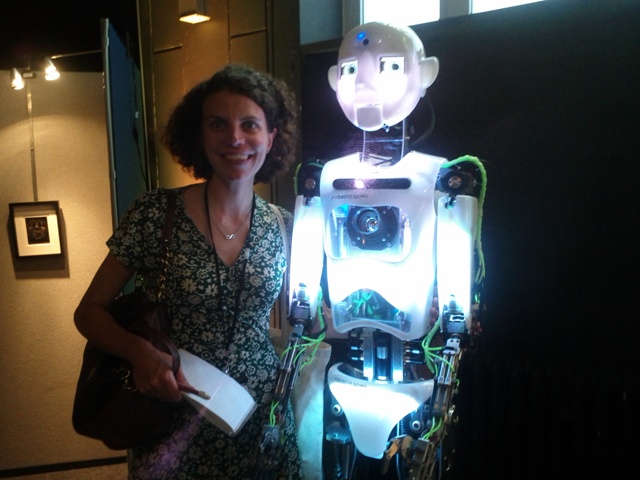
Bonding with RoboThespian at London's Science Museum.

Bonding with RoboThespian at London’s Science Museum.

You remember your first robot – at least, if you are as fixated on them as I am. A recent review of three books that explore the implications of artificial intelligence took me back to 2006 — and the machine that lit my obsession. It wasn’t pretty or even cute, though many automatons are. It was creepy: a four-legged metal crawler that could figure out how to limp if one of its legs was shortened.

At the time, I was a technology reporter for New Scientist with an assignment to write a news story about the quadruped. In order to limp, the robot first had to detect that something had changed. To do this, it maintained a software version of itself, which it constantly compared with the position of its real physical body. When the two no longer matched, it knew it had to modify its gait to cope with its new shape.

It seemed neat, even potentially useful, but not the stuff of philosophy — until a computational biologist I spoke to cast the machine in a new light. Because the robot built a model of itself that was distinct from its real physical body, he suggested that its creators had – perhaps inadvertently – given it a sense of self. With at least the semblance of an inner experience, he said, the robot provided a glimmer of what consciousness could look like in a machine. That was it. My world shifted, I understood the power of robots and I was hooked.

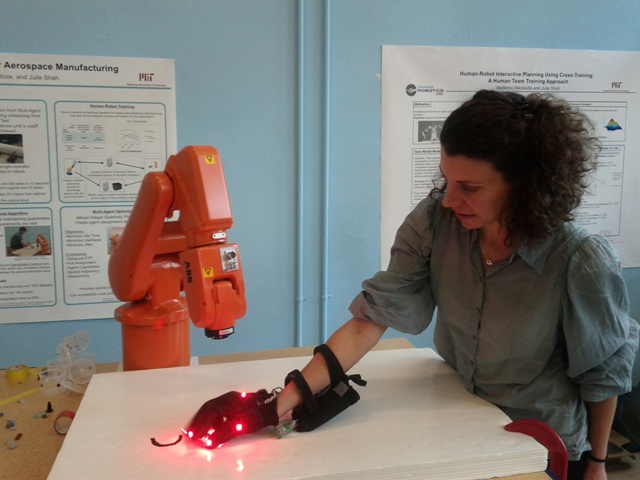
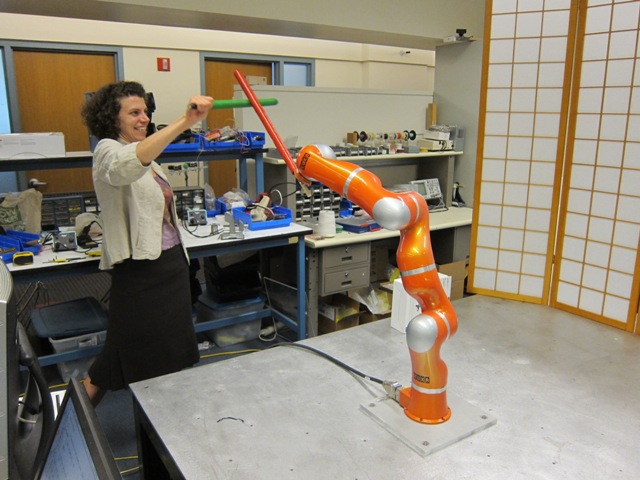
Trading places with Abbie the robot arm at Massachusetts Institute of Technology.

Trading places with robot arm Abbie at Massachusetts Institute of Technology.

Until then, I had regarded them as either gimmicks that disappointed or cold, destructive Terminators. The crawler represented a third option: a way to figure out how humans work.

My next discovery was Nico, a metal skeleton that could recognise its reflection in a mirror. Dressed in a sweatshirt and baseball cap, he did this in a similar way to the crawler: he compared what he saw in the mirror to the movement commands he had just sent to his body, and looked for a match.

Nico didn’t really recognise himself. He just reproduced the behaviour – or so many biologists I spoke to insisted. But the Turing test challenges us to consider what the difference would be between behaviour that seems human and that of a real human. And undeniably, Nico classified his own reflection differently from the sight of anyone else.

Nico set me on a roll. Weekly news meetings became a sport in which I competed with biology reporters to discover beings that chipped away at what it means to be human. Scrub jays are birds clever enough to move their food stores to trick potential pilferers, but I discovered a furry robot that passed a test for theory of mind and a wheeled rover that deceived its opponent to play hide-and-seek.

Sparring with Jedibot at Stanford University in California.

Sparring with Jedibot at Stanford University in California.

These synthetic creatures had a crucial selling point: people had programmed them and so understood how they worked, making them the ultimate tool for discovering whether simple rules can produce complex behaviours. Unlike animals, with robots you know exactly what your psychological ingredients are.

My passion led me to shake hands with a knee-high pearly white humanoid as it stepped off the red carpet at the Robot Film Festival (in TriBeCa, New York, in 2011 – I was a judge). I fenced with an orange robot arm, Jedibot. And I mentally ‘traded places’ with another orange robot arm, Abbie, as we worked together to insert screws into a tabletop. The point was to see if the switch improved our ability to collaborate, a psychological trick that is known to work with human-only teams.

Throughout these adventures, my feelings towards robots have often dramatically differed from many others’. Elon Musk and Stephen Hawking, for instance, are among those who have recently warned that the creation of artificial intelligence is risky because of the potential to create Terminator-style killing machines. There’s also the fear, fashionable right now, that robots are on the brink of making human jobs redundant, leaving us with nothing useful left to do.

Perhaps I should be more afraid. But I can’t help but think of one further entry in my robot diary: there is a piece of software that falls for the same optical illusion as people. Trained to estimate the lightness of a pixel based on examples of images it had seen, the program classified grey regions of an image as darker when placed on a white background and lighter when on a black one. This highlights the main reason I don’t fear robots: if you believe that we humans are just complex machines — and I do — aren’t we on some level just one big happy family?

Celeste Biever is Nature’s chief news editor. She tweets at @celestebiever.


For Nature’s full coverage of science in culture, visit www.nature.com/news/booksandarts.