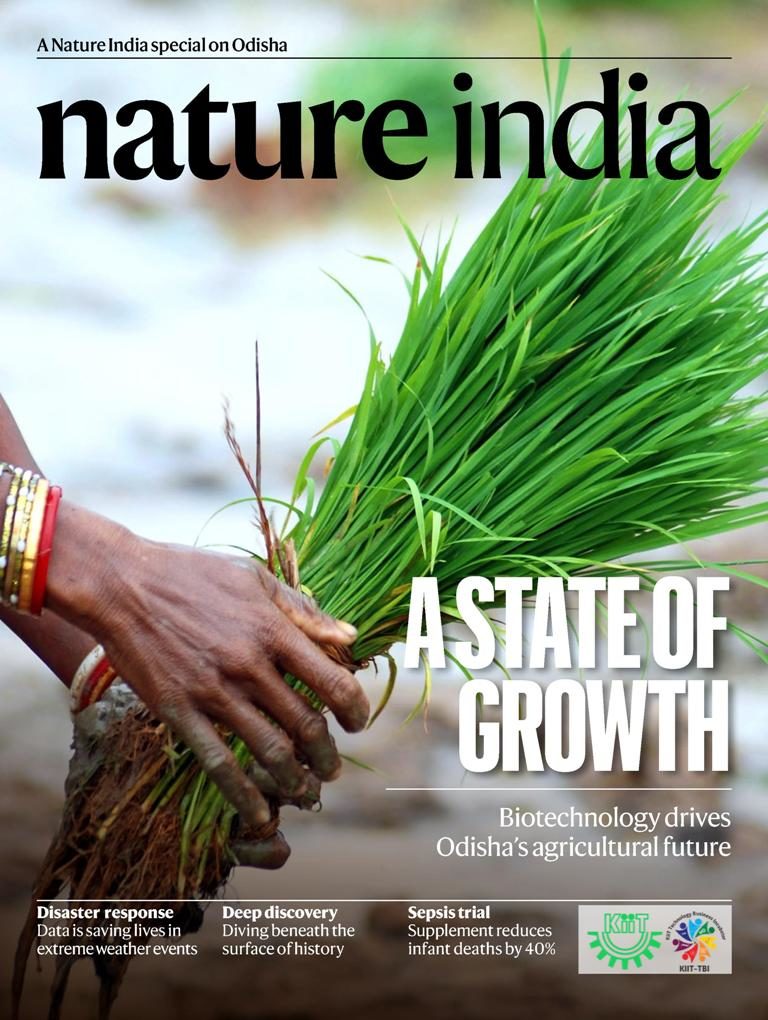
A state known for its heritage, culture and disaster management, and as an emerging hub of scholarship and research, Odisha is making its mark. This special issue captures the aspirations of and challenges for the eastern Indian state in becoming the next national science hub.
Odisha is home to a number of large national institutes and laboratories – the Indian Institute of Technology, the Institute of Life Sciences, the Institute of Minerals and Material Technology, the Regional Medical Research Centre, the National Institute of Science Education and Research, National Rice Research Institute, the Central Institute of Freshwater Aquaculture and the All India Institute of Medical Sciences. The state government-run Utkal University and the Orissa University of Agriculture and Technology in capital Bhubaneswar add to its scholarly might. Private education conglomerates such as the Kalinga Institute of Industrial Technology University and the L V Prasad Eye Institute are helping produce a sizeable scientific workforce.
The entrepreneurship and innovation scene is warming up with a number of technology business incubators setting up shop in the state. A biotechnology cluster is also on the cards. The Odisha special issue takes a close look at this growth of innovation and technology in the state’s science.
Odisha’s 460km coastline and a hot, humid agro-climate, have endowed it with rich fisheries and paddy cultivation resources. The state’s scientific legacy in both aquaculture and rice research have benefitted from these. We examine the results of years of rice and fish breeding that Odisha has gifted to the world. The state’s proximity to the Bay of Bengal and high summer temperatures have also brought severe cyclones, floods and heat waves. We investigate how Odisha is setting an example in using science and technology to cope with such extreme weather phenomena.
Odisha’s rich culture and history draws international attention. Its many temples, monuments, ancient palm leaf manuscripts, paintings, and excavations are keenly researched by archaeologists, leading to innovative conservation methods to preserve Odisha’s past.
We analyse the traditional and modern methods being deployed by scientists, and focus on another rich historical source – shipwrecks – revealing fascinating stories of historic naval wars off the coast of Odisha.
India’s science and technology is well entrenched in metro areas, with institute clusters like those in Bengaluru, Hyderabad, Mumbai, Pune, the national capital region of Delhi, and Kolkata. Smaller, second-tier cities like Bhubaneswar are gearing up to the cluster approach, and are poised to contribute to the research and innovation scene. The Odisha special issue is an attempt to shine a light on one such state. In the near future, Nature India’s regional spotlights will chronicle more such emerging hubs of science in the country.
The Nature India special issue on Odisha is free to download here.
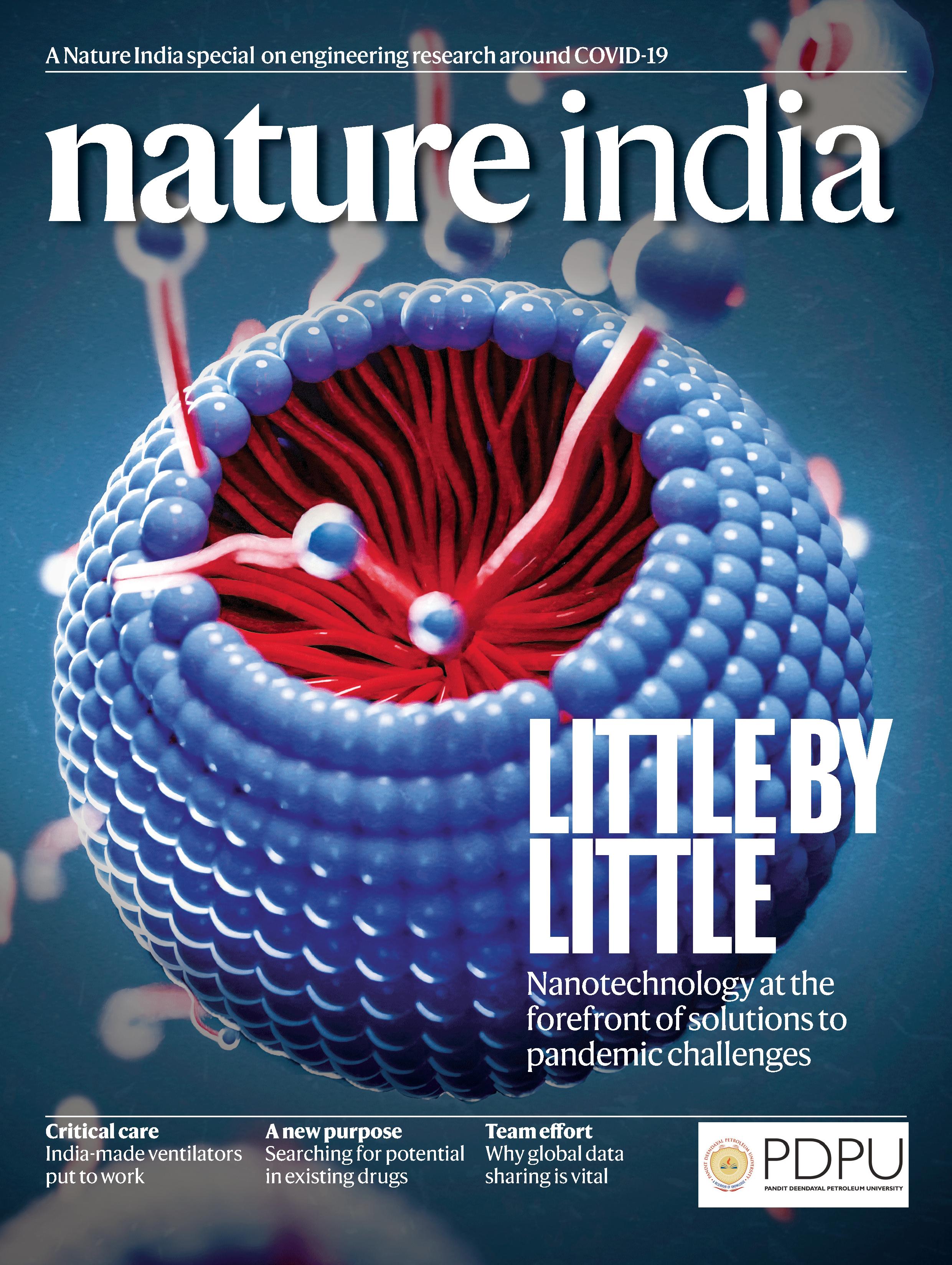
Very early on it became clear that the COVID-19 pandemic was not just a challenge for scientists and medical professionals. Almost a year into the coronavirus’s rampage across the world, there’s no doubt about the long-term impact that SARS-CoV-2 will continue to have on every facet of human life — from healthcare to education, social interaction, businesses, environmental concerns, and political processes.
India’s large population, governance, and creaky healthcare infrastructure have traditionally hampered the quick and smooth roll out of public health interventions. With this pandemic, it wasn’t any different. Nature Indiacovered the evolution of the crisis from several angles, going beyond the strict remit of science. Our coverage embraced a new normal in these unprecedented times. We looked at the physical and biological aspects of the virus extensively, and also published stories of how India, with its 1.2 billion-strong population, was responding to the health emergency. This resulted in Nature India’s first special issue on the COVID-19 crisis, published in June 2020.
Coping with a major public health catastrophe lies not just in vaccines and treatments, but also technologies that the world’s scientists quickly geared up to invent or repurpose. Within months of the novel coronavirus’ spread we saw the development of new ventilators, rapid antigen tests, personal protection equipment, and sanitization apparatus.
Nature India’s second COVID-19 special, focuses on such engineering and technology solutions being tested and deployed. We take a look at front-runners in nanomaterial design that are helping advanced antiviral and antibacterial therapies; the state-of-the-art in critical care ventilators and how in-silico docking studies are bringing new drug molecules.
The issue presents a selection of commentaries published in various Nature research journals highlighting the use of artificial intelligence tools and machine learning in scaling approaches for data, model and code sharing, and in adapting results to local conditions. Nanotechnology is offering hope in antimicrobial and antiviral formulations, and highly sensitive biosensors and detection platforms.
We ask whether nanoscientists can take better advantage of technology and automation in their laboratories to reveal new information about COVID-19. A host of reverse-engineered commercial medical equipment and devices for healthcare workers have flooded the market. While these ‘low-tech’ solutions are welcome for resource poor countries such as India, we argue that for real impact, they must affiliate to approved designs. We also shine a light on pandemic-fighting photonics tools (X-ray imaging and ultraviolet sterilization), the strengths and ethical questions around smartphone surveillance of the pandemic, and discuss why it is important for governments to implement public health measures aided by technology.
At the end of a trying year, we hope these new perspectives bring additional hope in efforts to tame the novel coronavirus.
The Nature India COVID-19 Engineering Solutions special issue is free to download here.
Rural communities grappling with livelihood issues and looking for support for farming activities are increasingly embracing technology for survival. Jayashree Balasubramanian, who heads communication at the M S Swaminathan Research Foundation (MSSRF) in Chennai, talks of her experience with farmers attending virtual ‘plant clinics’.
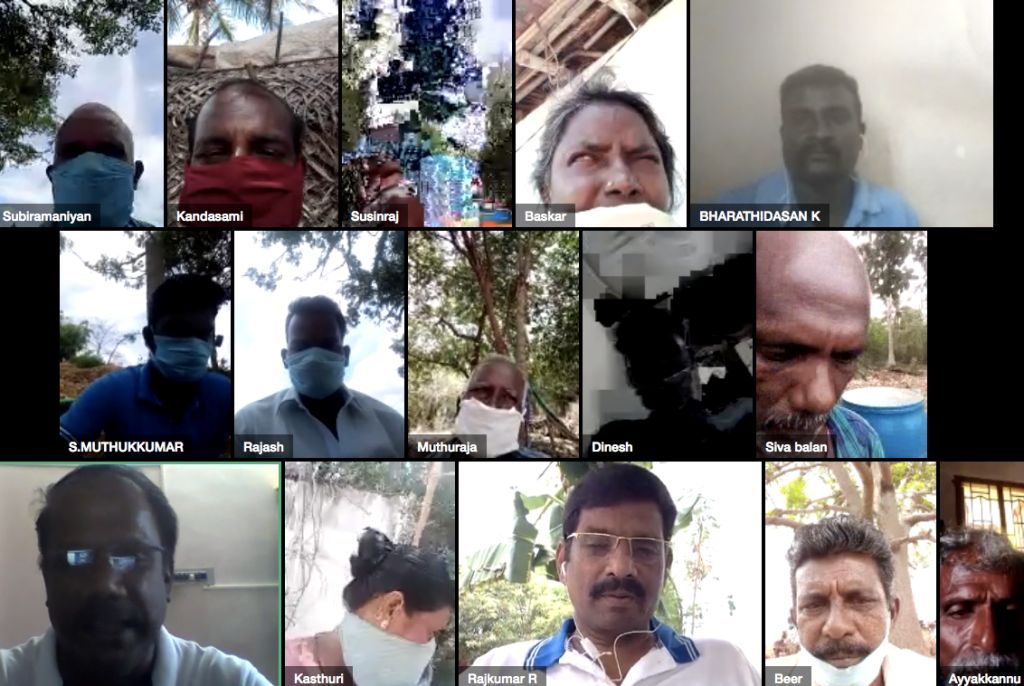
A virtual ‘plant clinic’ in progress.{credit}MSSRF{/credit}
It’s a Friday morning and Lakshmi, a farmer who grows paddy, maize and finger millet in central Tamil Nadu, is peering into her phone camera adjusting the webinar settings. From behind her, the top of her toddler’s head pops up on the screen as she navigates her way around the virtual ‘plant clinic’. “I can’t hear you sir, please unmute yourself,” Laxmi says several times in Tamil before the expert on the other side heeds.
‘Unmute’, ‘webinar’, ‘share video’, ‘chat message’ – the Tamil conversation is peppered with these English phrases. The e-plant clinic session is one of the ways in which farmers are getting technical advice and support amidst the world’s largest lockdown that India imposed in the last week of March 2020 to check the spread of the novel coronavirus.
Soon, 39 other farmers crowd up every inch of her phone’s screen. Many of these farmers are holding samples of pests or diseases that have affected their plants. Two ‘plant doctors’ are advising them online in this three-hour session. Some farmers are in their picturesque farms with mobile phones ready to zoom into on-site problems they need advice on.
During the ongoing lockdown, a survey found 227 million internet users in rural India, 10 per cent more than urban India. The increased use of internet at this time is opportune for the rural community grappling with livelihood issues and looking for technical support for farming activities.
Global farming communities have long advocated the use of Information and Communication Technology (ICT) to empower farmers suggesting it may improve farmers’ livelihoods by as much as 500 per cent. The usual bottlenecks – lack of technology access, good connectivity, devices or capacity – suddenly seem to have eased under the pressure of the novel coronavirus crisis. The crucial need to connect is transforming how rural communities and holders of farming knowledge are working around these challenges.
For instance, the plant clinic which Laxmi sometimes attends alongside approximately 25 farmers every week, is rigged up in a physical venue and advertised beforehand so that farmers come prepared with their pest-disease affected plants to consult plant doctors. It also arms them against using any unscientific applications that may cause long-term damage to the soil or plants. A study by MSSRF found that e-clinics cost less than half of what a physical plant clinic would.
A farmer holding up a sample for the plant doctors to see.{credit}MSSRF{/credit}
Even before the pandemic struck, farmers have been part of such efforts where support is provided on phone or social media. “During the lockdown, farmers started video-calling us, and we realised their need for visual connection and advice,” says Ramasamy Rajkumar, who coordinates efforts across 150 villages in India since 2012. The first webinar on 16 April 2020 saw 82 farmers joining in. “It meant that this was a format we should continue,” he says. While physical clinics build knowledge and capacity, the virtual clinics are building technology skill and mutual support.
Losses from pests or disease attacks can have a devastating effect on crops causing huge damage. The Food and Agriculture Organisation (FAO) estimates that pest attacks account for 40 per cent of all yield losses prompting the United Nations designate 2020 as the International Year of Plant Health.
Since the beginning of the lockdown, MSSRF has conducted five webinars in three states of India. They have not been without their fun moments. Farmer Kandasamy from Ramasamypuram, had multiple queries and also brought in a neighbouring farmer who had a volley of questions needing resolution. Subramanian, a farmer from Aayavayal helped himself merrily to a snack as he waited for his turn. Meanwhile, Muhammed Andakkulam altered his user name to ‘Beer’, to symbolically reflect reopening of liquor shops in his state of Tamil Nadu. The plant doctors patiently go through each query, sharing their recommendations in the chat box and promising support later on the phone.
Sometimes rural callers also glitch out but resurface miraculously and complete the call, to the envy of urban bandwith-squeezed callers. Most stay connected even after their query is answered, listening to other recommendations on a variety of crops from paddy to brinjal and black gram to coconut.
The farmers’ questions range from concerns over yellowing of groundnut leaves, discolouring of jasmine flowers, white-coloured pests on coconut tree leaves and withering of banana leaves. The common pests they report during the lockdown are whiteflies, thrips, aphids and green leafhoppers.
Purshothaman Senthilkumar, a plant doctor in the Pudukkottai district of Tamil Nadu, says the small farmers are facing issues in marketing their yields and report up to 40 per cent losses. “Those who did not have adequate labour to harvest have seen up to 20 per cent losses in the field,” he says. Seasonal pests and diseases have been compounded by shortage of labourers, maintenance, shop closures and non-availability of expert guidance.
E-plant clinics have not only been about technology and technical guidance, but also about moral support for the farming communities.
“We are points of order in a disordered universe. This is an expression of how we feel about being ruled by physics in all our emotions and reactions. It’s how we interpret, describe and live our lives within this system.”
Artist or scientist? These are the words of curator Caroline Wiseman, whose brainchild “Alive in the Universe” found a home at the world’s longest standing contemporary art fair in Venice yesterday. It is a month-long exhibition that seeks to interpret what life is, and rather than reduce it to an equation, surround the viewer with an experience of what that means.
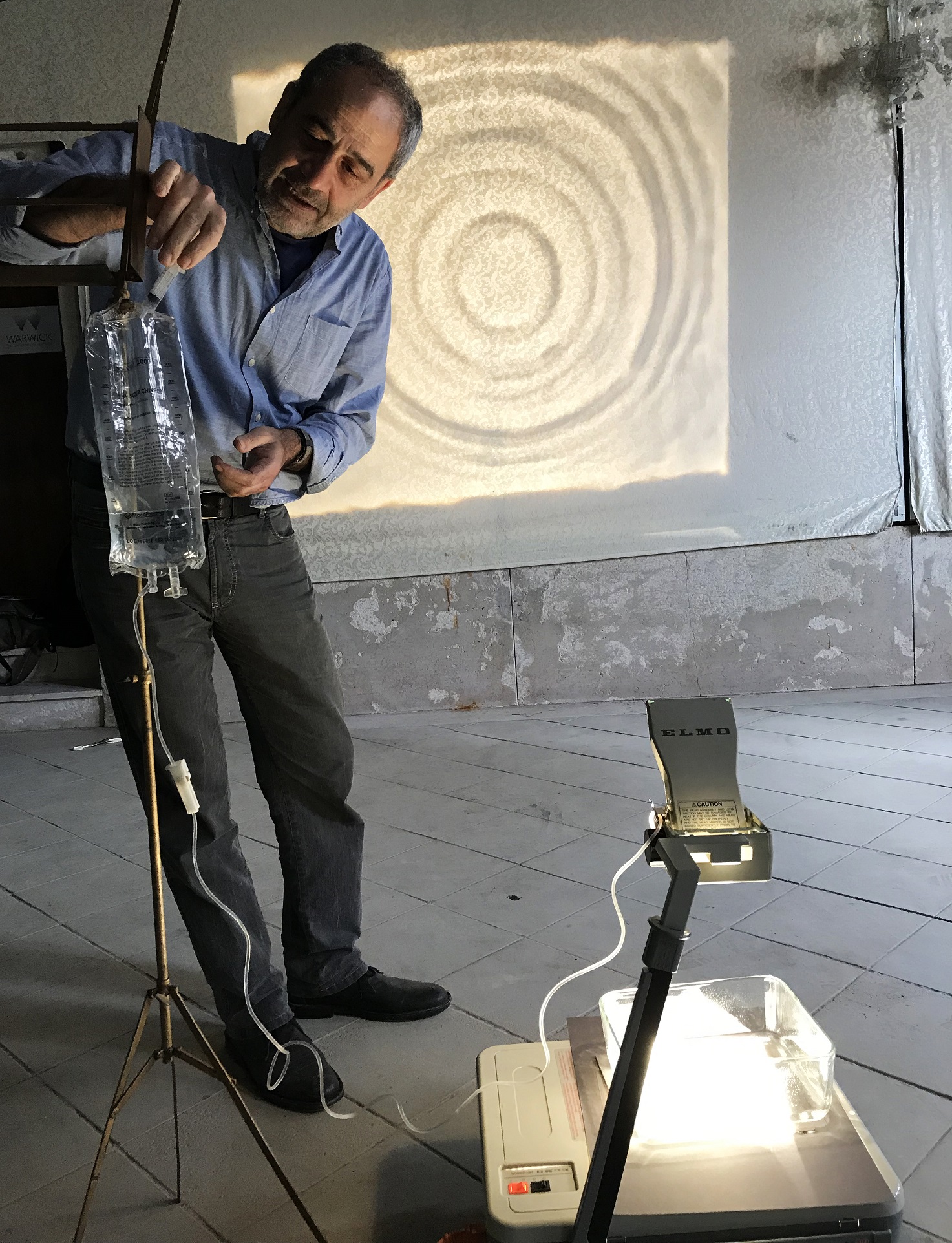
Opening the show is Syrian-born Issam Kourbaj. His three-piece installation is made up of a video of burnt matches, 98 boats made of recycled material and an IV drip. It juxtaposes the energies of fire and water, the flow of death and life, the struggle of a people between the two and the flow of time with the flow of migrants.
“Are we aware of the threads of our lives? I am putting the viewer in a place where many senses are being revisited. Each material sends new signals of information.”
Collaborating alongside him is Ruth Padel, a British poet whose book The Mara Crossing (2012) elucidates detailed comparisons in the way life organizes itself. Whether in cell biology, ornithology or human history, it is with the passage of migration that life begins, she says.
“There are two main reasons cells migrate in our bodies: One to create a new life, and two to defend the body –if we get a new cut the corpuscles and others rush to the site of trauma,” she explains. There’s an interesting parallel to be drawn with people migrating – a vigorous society is constantly replenished by the outside. Human civilization began with migration out of Africa. The first cell arrived on the planet, whether from the sea or outer space, and it colonized other places. The first great land migrants were trees. DNA from the oldest oak trees in Britain shows they came from the Spanish peninsula.”
Living things migrate because life becomes impossible or there’s a desire to make a better life. Birds in or near the Arctic get too cold and fly south. When the south becomes too crowded and they need to breed they return to the Arctic where there are lots of insects – a protein-rich diet for their offspring. It’s a bit heartbreaking but if you overlay the maps of bird migration routes and human migration routes across the Mediterranean, it’s the same. They take the passages where water is smallest – the straits of Gibraltar, or through Sicily, Malta.
Venice, Ruth says, represents the wasp waist of information flow between north and south in history. Both she and Kourbaj will find new resonance for their work in the interconnectivity of the space around them. “My interest will be in the relationship of my work to the water, and to the tourist boats and the gondola boats,” says Kourbaj, “in scale and in meaning, and in contradictions, they will have a new charge.”
For Wiseman, this too is interesting: “What I am trying to do through creativity is put order into things. The more I thought about what this order could be, the more I found that it is the life force, it is evolution.”
Life seems coupled to flow, movement, change, transformation: information in whatever form – the passage of energy, the replication of DNA within biological cells, to animal migrations and the organization of human societies.
Many scientists embrace the artistic medium to infuse new ideas into their scientific works. With science-art collaborations, both artists and scientists challenge their ways of thinking as well as the process of artistic and scientific inquiry. Can art hold a mirror to science? Can it help frame and answer uncomfortable questions about science: its practice and its impact on society? Do artistic practices inform science? In short, does art aid evidence?
Nature India’s blog series ‘SciArt Scribbles’ will try to answer some of these questions through the works of some brilliant Indian scientists and artists working at this novel intersection that offers limitless possibilities. You can follow this online conversation with #SciArtscribbles .
Mukund Thattai, a physicist practicing biology at the National Centre for Biological Sciences (NCBS), talks to us about bio-art and how some bio-artists from Bangalore are challenging scientists’ new-found power to edit life.
Mukund Thattai
Genetically enhanced humans have long been a staple of science fiction. He Jiankui’s announcement in November 2018 of the birth the world’s first genome-edited babies drew flak for flouting ethical norms governing the use of genome editing technologies. This wasn’t the first time scientists had used the DNA cutting-and-pasting tool known as CRISPR to modify genes in embryos. It was, however, the first time such embryos had been implanted and brought to term in their mothers’ womb. The modifications introduced into the twins’ genomes confer no medical benefit, and may even cause harm. It is an irreversible human tragedy: the baby girls, who never asked for this, will spend the rest of their lives as scientific specimens.
Nevertheless, genome editing is here to stay. Will we learn how to use this technology responsibly?
This is the central question that animates iGEM, the International Genetically Engineered Machines Competition. Inspired by the Massachusetts Institute of Technology (MIT) robotics competitions, iGEM looks at a future in which engineering and biology are indistinguishable. What would happen if we could build new types of cells?
I was at MIT in the early 2000s when iGEM was founded. Though I was doing a PhD in the physics department, I’d grown fascinated with biology. Across campus in the computer science department, Tom Knight and Drew Endy were thinking about how to bring notions of abstraction and design to biological engineering. In 2003, they threw out an inspiring challenge to MIT undergrads: could they engineer bacteria that would blink like Christmas lights? The very next year, undergrads from five US universities tried their hand at engineering cells. In 2005, 13 undergrad teams from the US, Canada, the UK, and Switzerland participated in the first international iGEM at MIT, in what has now become an annual jamboree of creations for student teams from around the world.
Science with a dose of fantasy
iGEMmers think of cells as computers, running an operating system that provides basic functions such as the ability to replicate DNA, translate genes into proteins, and convert nutrients into energy. Designer genes are like applications running on top of the operating system. iGEM teams remix components known as BioBricks, an enormous collection of DNA-based “standard biological parts” that give cells new chemical and physical abilities. Over the years iGEM has featured applications that allow cells to keep time, store a digital bit of information, sense toxic chemicals, and carry out basic computations.
The ethos of iGEM, and indeed of the entire synthetic biology community, has always included a culture of openness, sharing, and excitement for science, coupled with rigorous engineering and ethical practice. In the early 2000s, iGEM embodied a bracing and idealistic vision of our biological future, with a dose of fantasy. At the time our actual ability to manipulate genomes was rather limited. With the advent of CRISPR, this has now changed.
From 2012 to 2014 He Jiankui was the leader of the Southern University of Science and Technology (SUSTC) iGEM team. In December 2018, the iGEM Foundation released this statement: “We are stunned and disappointed by Dr. He’s actions, particularly as a former iGEM team leader. Conducting human genome engineering – and further, doing so without proper research or backing from the broader scientific community – is a clear violation of iGEM’s standards as well as those of the scientific community at large. Had this project been proposed within the iGEM competition, it would have been disqualified for violating iGEM’s policies.”
The power of genome editing is rapidly outpacing our ability to predict its effects or regulate its practice. To deal with this monumental challenge, biologists will need to go far beyond the routine laboratory spaces in which they operate. They will need to partner with historians, social scientists, ethicists and artists. An energetic collective of bio-artists is leading the charge.
Making bacteria that evoke petrichor
In 2009, a group of art students from Bangalore stood before the iGEM judging panel describing an unusual summer project: to construct bacteria that would synthesise geosmin, the substance responsible for the evocative smell of the first monsoon rains. The team’s presentation documented their journey of discovery, as they learned the language and techniques of the life sciences and explored its cultural, ethical, and aesthetic implications. As one of their team leaders, I sat nervously in the back row. My nervousness evaporated when we received thunderous applause from a packed hall. One of the iGEM judges declared: “This changes the way I think about synthetic biology.”
Here’s a little back story to this extraordinary scene.
In 2004, I relocated from MIT to India to set up a synthetic biology lab at the NCBS in Bangalore. Reshma Shetty, an MIT graduate student working with Drew Endy, and I discussed how to put together an iGEM team from India. In the summer of 2006 I ran an open workshop called “A crash course in designer biological networks” to overwhelming response. We assembled an NCBS student team that brainstormed on the kinds of “genetic circuits” that could be built. We zeroed in on one old classic idea: teaching cells to blink. But then we confronted the messiness of biology: all the circuits we built expressed the right proteins and seemed to be correctly assembled, but did not do what they were supposed to.
The team went to MIT as the first from India, and competed with 31 others, only to report three negative results. These were later published in a paper which (to my great surprise) has actually been cited! (In 2012 Navneet Rai, a student guided by K.V. Venkatesh at IIT Bombay and me, finally succeeded in making blinking cells as part of his PhD research).
The iGEM atmosphere was electric, and each one of us came away with a lifelong memory of being present at the start of something big.
Next year, with help from a summer research fellows programme at Indian Academy of Sciences, I assembled a team of six undergraduate students from six Indian institutions. Our project was a proof of principle: “How to build and test a genetically engineered machine in six weeks”. 2008 saw a group of IIT Madras students mentored by their professor Guhan Jayaraman, raise funds with institute alumnus and biotech entrepreneur Shrikumar Suryanarayanan. The team was judged as having the “Best Foundational Advance” at iGEM 2008, and got a special prize for the “Best Engineered BioBrick device”. Many members of this team went on to co-found, with Suryanarayanan, the biotech company Sea6 Energy.
Later IIT Madras iGEM teams have also had great success: the 2011 team was awarded the “Best New BioBrick Part” for a light-induced pump, and in 2013 it received the award for “Best Human Practices”. Since iGEM 2009, which involved 100 teams from 25 countries, multiple teams from India have made consistent appearances each year. Credit for this goes to iGEM mentors across the country, and also to India’s Department of Biotechnology, which encourages and supports the teams through the Indian Biological Engineering Competition (iBEC).
Breaking boundaries
At iGEM 2009, we broke many boundaries.
I had just started working with Yashas Shetty from the Srishti Institute of Art, Design and Technology in Bangalore. Yashas combines art and technology, pushing the boundaries of synthesis and sensation. He wondered whether a living piece of art would be an appropriate iGEM project, something that could provoke and inspire people to think about biology. He then narrowed down the problem, asking: “Could we make a biological device that can influence human emotions?” Out of this was born the “Smell of Rain” project. Yashas and his students landed up in my lab, where they learned molecular biology under Navneet’s experienced stewardship, and formally signed up as iGEM contenders. Describing themselves as “outsiders” in a competition dominated by engineers and scientists, the very existence of the team was a unique experiment in art-science collaboration.
It marked the beginning of an unusual and fruitful collaboration between NCBS and Srishti, under the provocative name ArtScienceBangalore. Building on their “Smell of Rain” success, in 2010 the students imagined a “post-natural ecology” exploring the interactions of genetically-engineered bacteria and worms on a petri-dish, in collaboration with Sandhya Koushika and her student Sunaina Surana at NCBS.
In 2011 the team went even further with their project “Searching for the ubiquitous genetically engineered machine”. They imagined a far future in which bioengineered cells from iGEM covered the planet. How could we tell what was natural and what was artificial then, if we did not establish a baseline today? The students sampled ecosystems across the state of Karnataka, including urban, rural, and forest areas, and used a sensitive method called PCR to search for any evidence of BioBricks in the environment. They did not find any, implying that any future BioBricks in the wild must come from human activity. This foundational effort was awarded the “Best Human Practices Advance”, with the judges particularly praising the role of art-science engagement.
These ArtScienceBangalore projects have gone on to win honourable mentions at the prestigious Prix Ars Electronica prizes, and are currently displayed at the Science Gallery in Dublin.
Does science belong just to scientists?
The idea that artists should be taught molecular biology strikes some scientists as frivolous, and appears to others as dangerous. Is it a worthy use of genetic engineering to make bacteria that can evoke the smell of rain? Why should non-scientists – “outsiders” – be trusted with these hard-won powers? But by the same token, it is reasonable to ask why scientists should be trusted with these very powers.
Scientists and inventors have used genetic engineering to probe the inner workings of cells, as well as to create new medicines, cure diseases and improve crops. The combined benefit of these activities to humanity has been tremendous. In this backdop, cases like He Jiankui’s are an aberration. Nevertheless, the genome-edited baby controversy is a critical opportunity to move the conversation forward.
It is the responsibility of the scientific community to continually earn society’s trust. In this ongoing process, artists have a unique role as observers of the human condition. Bio-artists push the limits of what can be done using the tools of science. They do this to provoke, to make us uncomfortable, to make us think. They do this now, today, so we are forced to imagine and prepare for what might happen in the future.
[Mukund Thattai is at the Simons Centre for the Study of Living Machines, National Centre for Biological Sciences, Bangalore. He can be contacted at thattai@ncbs.res.in.]
Ayushi is an undergraduate microbiology student at Amity University, Noida, Uttar Pradesh. Her interest in what makes life tick made her fall in love with bacteria and astrobiology, and her passion for making scientific research more efficient and accessible led her to explore bioinformatics. She has been a part of research projects investigating nanoparticle-plant interactions, transgenic algae, and bacteria-algae associations.
Recently, an economist friend told me that “scientific inquiry is inherently cursed.” At first I was offended. But I had to agree after he elaborated further – science today suffers from something economists enigmatically call the “winner’s curse”.
The first scientific journals were print editions — something akin to a printed memo — circulated among researchers to update them of the findings of others in the field. To submit a paper for publication, only the observations required to prove results needed to be included in a manuscript, and rightly so: if every paper included every shred of data, journals would run into thousands of pages. This means, though, that what was communicated to the scientific community was only a fraction of what could have been communicated: only the observations that were ‘winners’ – the ones which best supported a result – would be presented, and the others would be effectively relegated to obscurity. Although we’re not limited by paper and page counts today, the same pattern of data use continues. This leads us to the problem of the winner’s curse: by the process of selection, the ‘winning’ observation oversells itself.
In economics, the winner’s curse refers to situations in auctions where the winner tends to overpay, because the actual value of the product is the average of the bids, not the highest bid. In scientific research, the curse takes hold in scientists who aim for publication in the most selective journals, with the most impressive results being favored. This ignores all the other results — the ones which weren’t so impressive — while giving disproportionate importance to the ‘winning result’.
The problem with this phenomenon isn’t immediately evident — isn’t the result what actually matters? The data is, after all, just a tool, necessary only to prove what’s important — the conclusion. In looking for conclusions in data, however, researchers can forget to ask: “does the conclusion effectively justify my repeated sampling of the real world?” In other words, is reality accurately reflected by the dataset presented? All the observations we take, whether they are inconclusive, negative, or ‘winners’, represent an analysis of the natural world. By only reporting the ones that work, the other sampling efforts cannot be used by anyone else. This process confers on a small, selected number of observations the authority to predict an unpredictable future! Back in the auction house, this would mean the value of the product is set only by the winning bid. When we report only the best set of data, we are relegating the less impressive observations to obscurity, even though these also represent an analysis of the real world, with real potential to inform.
So what does this mean for us? How should scientists avoid falling into the trap of the winner’s curse? One way would be to save, store and share all data — not just positive results. We are only human. By making our data openly accessible, we can avoid internal inconsistencies. The smallest of mistakes would be corrected by fresh eyes poring over the very same data.
Ayushi Sood
More importantly, open data could prove to be a shot in the arm for scientific inquiry as a whole. What data I find important may be perfect for my study, yet a small cluster of ignored numbers in my dataset could lead to a breakthrough for someone else, possibly in a way that I could never have imagined! Gene expression data in cancer cells could provide insights into cell signaling pathways in neurodegenerative disorders. Algal bloom observations in polluted lakes could help in effective biomass production for algal biofuel. The analysis and application of open data could usher in a new age of scientific connectivity, with the available knowledge transcending traditional discipline boundaries in way never seen before.
Well, if it’s so good, why hasn’t open data been the norm since science began? We come back to the thousand-page journal here — the question wasn’t of why not, but of how. Transmitting every single byte of data through papers and talks was impossible before the advent of computers and the emergence of the internet in the 1990s. In 2017, however, we have the tools at our disposal to store, parse, organize and retrieve every single digit. The burgeoning field of data science and analysis is ours to exploit, just waiting to script the next scientific success story.
So, I have to hand it to the economists on this one — the winner’s curse is alive and kicking in science. But, like any good scientist, I’m thinking of solutions, and every clue suggests that open data, accessibility and collaboration could be just the spell that breaks this curse.
In this guest post, Navi Radjou draws from his experience at a hands-on education and problem-solving school in Mumbai. He points out that France’s strong science and engineering capabilities, combined with the Indian concept of jugaad, or frugal ingenuity, could help solve problems that threaten all of humanity.
Navi Radjou
A recent Gallup International Association poll rates French President Emmanuel Macron and Indian Prime Minister Narendra Modi as the two of the most favoured world leaders. They have a historic opportunity to use their huge popularity and goodwill at home and abroad to heal our fractured world. They can do so by bolstering co-innovation between India and France — through top-down R&D partnerships such as the International Solar Alliance as well as bottom-up collaborative initiatives like the STEAM School.
By bringing together Indian and French engineers, scientists, entrepreneurs, designers, artists and business leaders, the two countries can create solutions to what I call “problems without borders”: social inequality, global warming, chronic diseases, water and food scarcity.
In December 2017, I attended the Indo-French STEAM School in Mumbai — which shows how co-innovation can have a major positive impact worldwide. The 10-day programme was co-organized, like every year, by the French Embassy in India, the Paris-based Center for Research and Interdisciplinarity, and Maker’s Asylum, a community space in Mumbai. The programme enables STEAM (Science, Technology, Engineering, Art, and Math) education through hands-on problem-solving based on the UN’s Sustainable Development Goals (SDGs).
100 participants, mostly from France and India — architects, designers, artists, engineers, academics, and students — formed 19 teams to design a product each to tackle one of five specific SDGs in the Indian context: health, education, water/sanitation, energy, and sustainable cities. Over the course of the programme, the participants developed working prototypes of their products.
Participants at the STEAM School 2017
These four products I liked best harnessed frugal innovation to devise simple and cost-effective solutions to major socio-economic and ecological problems:
BAT: a low-cost wrist-wearable to aid the visually impaired. According to a Lancet study, 36 million people in the world are blind, a number set to increase to 115 million by 2050. In India alone, 8.8 million citizens suffer from blindness and nearly 48 million have moderate and severe vision impairment, the largest number for any country. BAT, fitted with a Six Axis feedback mechanism, can make life easier for such people while they navigate public spaces, by vibrating to alert them of obstacles.
The SADA Kit: A portable solution to prevent water-borne health epidemics caused by open-air defecation in rural India. 2.5 billion in the world still lack access to toilets. 300 million Indian women and girls are affected by it. The kit aims to improve the health, safety, and dignity of these women. It comprises of a lightweight portable toilet with a pop-up privacy shield, a waste disposal bag, a small wearable light and whistle, soap, and sanitary pads for women.
BIJLI: a low-cost energy generation device that can be retrofitted to bicycles. It transforms kinetic energy from the wheels into electric energy that can be stored in a battery pack or can be used to charge small electronic gadgets like mobile phones. The device can be used on the go or while the bicycle is stationary. Distributed energy solutions like BIJLI can be a boon for the 300 million Indians who live with little or no electricity today.
WASTED: a smart waste segregation bin that helps spread awareness of how much waste we generate. By turning the process of segregation into a game and connecting sensors in the actual bin to an app, it enables users to track and compare waste statistics with friends and neighbors. The idea is to “nudge” people and societies towards zero waste. India generates over 100,000 metric tons of solid waste each day, higher than any other country. The Ellen MacArthur Foundation estimates that by adopting the circular economy principles—through reuse and recycling of waste and resources—India could reap $624 billion in annual benefits in 2050 and cut greenhouse gas emissions by 44%.
“The goal of STEAM School isn’t to solve the SDGs in 10 days, but to teach how to solve them,” says Vaibhav Chhabra, founder of Maker’s Asylum. “STEAM also teaches empathy and tolerance to participants. They learn to transcend their differences, respect each other, and find unity in a shared purpose. They become globally-conscious problem-solvers.”
Vaibhav is right. I interacted with French students from CRI, EM Lyon Business School, and Institut Mines-Télécom at STEAM School, who had developed greater respect for India and its culture by working together with Indians. A Hindi saying captures the power of such synergies: Ek Aur Ek Gyarah Hote Hain, or One and One Equals Eleven. France’s strong science and engineering capabilities, combined with the Indian concept of jugaad, or frugal ingenuity, could help us solve problems that threaten all of humanity.
As a French-Indian, I am thrilled to be part of this process. I left India in 1989 to study in France. During the 80s and 90s, France and India were relatively closed to the outside world. Cooperation between both countries was also limited. I long dreamed of a day when India and France would team up to create solutions without borders. Now my dream is finally coming true.
The theme of the World Economic Forum Annual Meeting 2018 in Davos was “Creating a Shared Future in a Fractured World.” You can’t fix a fractured and conflict-ridden world with the competitive zero-sum mindset that has long dominated world affairs. Instead, it’s time to adopt the cooperative “1+1=11” formula. Macron and Modi can show the way.
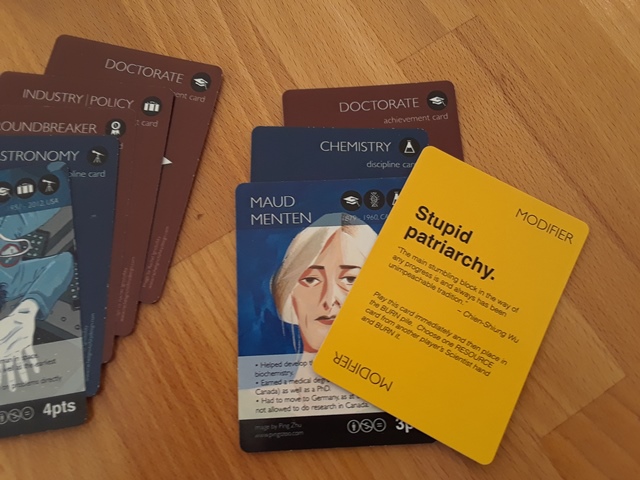
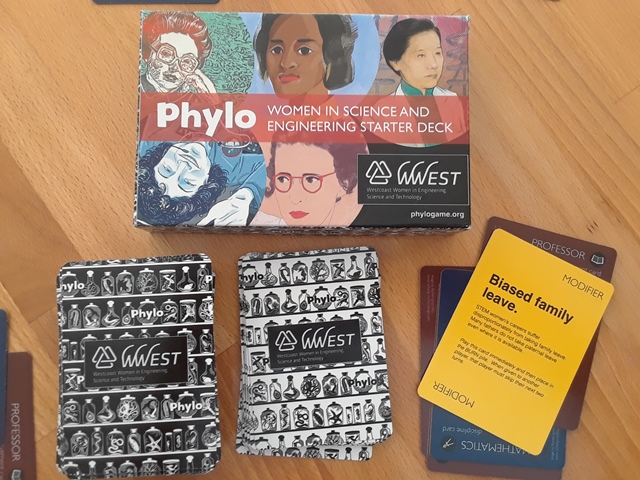
The card deck featuring women in science and engineering.{credit}Nicola Jones{/credit}
The player on my left has the biochemist Maud Menten’s career well on track. Suddenly another player slaps a “stupid patriarchy” card on Menten’s head, and she has to earn her doctorate all over again. So goes a novel card game devoted to women in science and engineering, designed to highlight these unsung researchers and the barriers and boons that women in these fields experience.
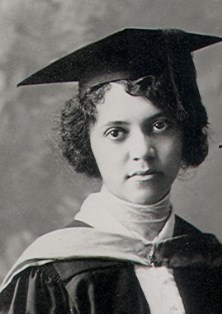
Alice Ball, the chemist who isolated an early effective treatment for leprosy.{credit}University of Hawaii{/credit}
Menten (1879-1960) was one of the first women in Canada to earn a medical degree atop her PhD. But at the time women weren’t allowed to do research at Canadian universities; she had to conduct her famous work on enzyme kinetics in the United States and Germany. Menten is one of 21 pioneering women scientists, mostly from North America, featured in the game — the latest in a series that began in 2000 with a biodiversity game called Phylo. The card deck was developed by an innovative science outreach programme at Vancouver’s University of British Columbia (UBC), in collaboration with Westcoast Women in Engineering, Science and Technology (WWEST) at Burnaby’s Simon Fraser University (SFU). Players complete researchers’ careers by collecting cards for achievements such as degrees, and try to avoid setbacks — such as the “tokenism” card, which wipes a scientist in play off the table.
“These are my favourites,” says computer engineer and WWEST chair Lesley Shannon, pointing to Alice Ball and Hedy Lamarr. Ball (1892-1916), the first woman and African-American Masters graduate from the University of Hawaii, developed a critical leprosy treatment. After her early death, university president Arthur Dean took credit for her work. Hollywood star Lamarr (1914-2000) co-invented frequency technologies used in WiFi and beyond.
Hollywood star Hedy Lamarr co-invented key frequency technologies.{credit}MGM{/credit}
Shannon and I put the game through its paces with three researchers from SFU: applied ecologist Anne Salomon, glaciologist Gwenn Flowers and physicist Sarah Johnson. We try to figure out the best strategies and which cards to play: scientists with more complex careers are worth more points. Completing the challenging career of a woman of colour nets a bonus point. Modifier cards can help as well as hinder progress: “mentors are awesome”, for example, gives a player a boost via an extra card.
The discussion provoked by the game is as interesting as the action. Sighs of recognition greet the setback card “ways of the Queen Bee”, which marks how women scientists sometimes undermine female colleagues. “I’ve been there,” says Shannon. Johnson counters: “I haven’t experienced this — perhaps because I haven’t had many female colleagues.”
Some have positive stories to tell: Salomon recalls one senior female mentor who offered to review her grant requests, in the name of building up a “good old girls’ club”. Since, she has tried to pay that idea forwards, helping more women to be invited onto panels or keynote lectures, get funding and publish. “We retain the rigour of peer review,” she says, “but that back door works to even the balance.”
Although women have, since the 1990s, earned about half of US science and engineering undergraduate degrees, as of a 2011 study they still held fewer than 25% of STEM jobs, were paid 86 cents on the dollar, and were seriously under-represented in degrees for fields like engineering. A recent study in Science showed that girls tend to think less of their intellectual abilities as early as age six. When 96 children were told a story about a “really, really smart” adult and asked to pick a face to match the story, for example, 5-year-old boys and girls both picked someone of their own gender about 70% of the time. But among 6- and 7-year-old girls, this percentage dropped to about half. More role models are among the many fixes proposed to shift the entrenched bias.
{credit}Nicola Jones{/credit}
WWEST’s mission is to help reverse such trends, in part by funding outreach projects. So when David Ng — who handles educational outreach for UBC’s Michael Smith Laboratories — approached them with the idea for the game in 2015, it was a good fit. Ng’s initiatives have included literary science magazine Science Creative Quarterly and other card sets (such as Phylo).
The games are crowd-sourced; anyone can invent one, or contribute to one, and the sets are available to download for free. “If you play it, you start to get at least an inkling of the challenges around gender equity,” says Ng. “This is just a starter deck. Hopefully people will add to it.”
While aimed at pre-teens, when Shannon says many girls begin to turn away from science, the appeal of the women-in-science game is broader. Some of the harsher modifier cards (such as one that reads “mistaken for a janitor”) could, note Shannon and Ng, be removed from the game for more-impressionable age groups.
Mid-game, Johnson looks at the cards on the table and comments: “They’re all overachievers”. These women, she notes, had to be smarter and work harder to get the same recognition as male scientists — echoing her own undergraduate experience. “All of the female physics majors I knew were A students. This was not true of the men,” she says. That’s just one thing this worthy game aims to reverse.
Nicola Jones is a freelance science writer and editor living in Pemberton, British Columbia.
It stands there trapped in a frosty cage: a 30-year-old snowman in a state of bliss, its currant-shaped eyes peering out over a lopsided grin in a face dotted with frozen florets.
The glass-fronted aluminum cooler currently sits at the San Francisco Museum of Modern Art. Above the sculpture, entitled simply Snowman, the understorey citizens of a redwood forest sway in the United States’ largest living wall. The tensions are inescapable: snow, a natural process, in a totemic form, in a machined box, surviving on electricity, juxtaposed against an artificial ecosystem. The installation is a brilliant encapsulation of our mixed-up global environment now — from polar melt to green cities.
Snowman was constructed in 1987 by Swiss artistic duo Peter Fischli and David Weiss for the Römerbrücke power plant in Saarbrücken, Germany. Toying with the idea that human enterprise could prolong an inherently transient existence, they crafted a technically fascinating sculpture. Its scaffolding is, as Fischli puts it, a “skinny snowman” constructed from copper. Under controlled humidity and temperature, the snowman grows and shrinks and alters itself – one day the eyes narrower, the next a different twist to the smile. The snow also alters the chamber’s microclimate; technicians adjust the dials to prevent a runaway snowman.
It’s not all fun and games and engineering. The snowman’s remarkable longevity and technical underpinnings provoke reflections on our climate, and the possibility that we too may be forced to control our own environment.
What of the Paris Agreement’s ambitious goal of keeping global warming to no more than 1.5 ⁰C? Doing so, without geoengineering, looks almost impossibly optimistic. With geoengineering, we will become the snowman, our climatic stability reliant on fiddling with dials. Only this time the outcome is uncertain and fraught with ethical dilemmas, ranging from disrupted monsoons to a rain of metallic nanoparticles.
Snowman would perish without electricity, as its intentionally obvious, preposterously long power cord reminds. Yet its built-in grin fizzes with joy. There is, after all, always the next installation. What of our own shrinking cryosphere, much of which is in rapid retreat? Technically, we can probably prevent the loss of the biggest chunks of ice, such as the Greenland and West Antarctic Ice Sheets. But I doubt that we’ll be feeling blissed-out about it.
Michael White is senior editor in physical sciences at Nature. He tweets at @MWClimateSci.
Snowman by Peter Fischli and David Weiss is on view at the San Francisco Museum of Modern Art through March 2018.
For Nature’s full coverage of science in culture, visit www.nature.com/news/booksandarts.
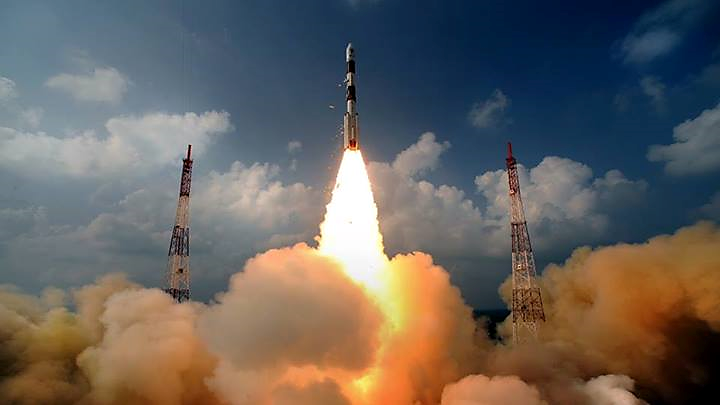
The Polar Satellite Launch Vehicle of the Indian Space Research Organisation, which carried the Mars Orbiter Mission satellite Mangalyaan. The payload included instruments developed by Dutta and her team.{credit}ISRO{/credit}
3Q: Moumita Dutta
A physicist at the Indian Space Research Organisation’s Space Applications Centre, Moumita Dutta was part of the team that put a probe into Mars orbit in 2014.The instruments they designed for the Mangalyaan are still beaming back data. Now India is gearing up for its third planetary mission in 2018 — Chandrayaan-2, a return to the Moon. As Dutta prepares to take part in the London Science Museum’s Illuminating India events, she talks about the lure of optics, the challenge of crafting super-light sensors,and the rise in Indian women entering space science.
Tell me about your work with the Indian Space Research Organisation (ISRO).
Moumitta Dutta.
In my childhood I had dreamed about space, aliens, the Universe, the stars – particularly the aliens! But I didn’t think I would be involved in space science. I became interested in physics when I saw the magnificent colours coming out of a prism in an experiment at school. I ended up doing a master’s in applied physics, specialising in optics. Then one morning in 2004 I read in the local newspaper that India was preparing for its first lunar mission, and I thought ‘What a phenomenal thing’. From that moment on I wanted to join the ISRO. A year and a half later, I did, ending up working on two sensors that would fly on the Chandrayaan-1 project [India’s first lunar mission, which launched in 2008 and found evidence of water before losing contact with Earth.] My base is the Space Applications Centre in Ahmedabad, mainly working on optical sensors for studying Earth and for planetary missions. For India’s 2018 lunar mission, Chandrayaan-2, we will use advanced versions of the sensors flown in the last mission, carrying out a very detailed study of the lunar surface and mineralogical mapping. There will be an orbiter, a lander and a rover, with mounted instruments to carry out experiments on the surface.
Mangalyaan launched just 18 months from its conception, costing a relatively low US$75 million. What challenges did you face in building its sensors?
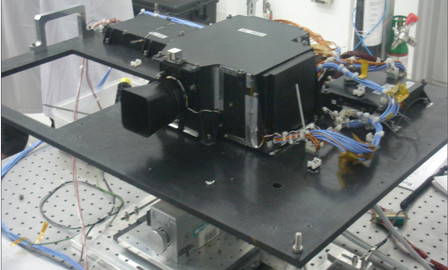
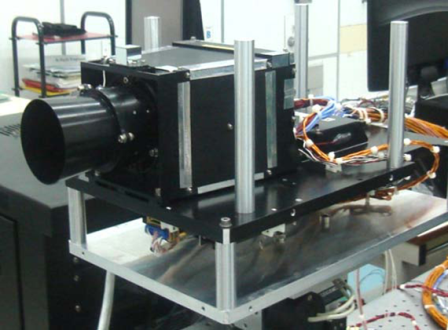
All the sensors were designed in India: a colour camera, an infrared spectrometer generating a thermal map of the Martian surface and a methane sensor. We had 15 months or so to develop them. The main challenge was to make them very compact, lightweight and low-power, because the mission was to be launched with minimum fuel. We fought for every gram. The sensors were all first of a kind, and to develop them quickly we had to use off-the-shelf — rather than space-qualified — components, then test each under extreme conditions. The team of almost 500 engineers working across the centres on the mission worked day and night. I feel like people worked from their heart and no one cared about the clock. The mindset was that they were working for our country, and the mission had to be successful. When we received the first signal after the spacecraft was captured into Mars orbit, a wave of joy spread across the country. The project team members became the superstars of India, with people even holding their pictures on placards, like film stars. Eagerness about Indian space research has rocketed. Three years on, the orbiter still transmits data from all the sensors, which we are analysing today.
Methane sensor for Mangalyaan.{credit}Space Application Centre, ISRO{/credit}
Colour camera for Mangalyaan.{credit}Space Application Centre, ISRO{/credit}
Is space science in India welcoming women?
In the past few years we have seen a significant increase in the number of women joining Indian space science: right now, they constitute 20% or 25% of ISRO. The organisation is always ready to welcome women. As a government body, we get a minimum of six months’ maternity leave, for example, and women are given equal responsibilities. I feel like it’s not about whether someone is a man or woman, it is all about how they can handle the challenges. Now, whenever I give a talk and a small girl comes up to me and says, “I want to work for ISRO, I want to be an astronaut,” I feel wonderful. Women scientists of ISRO have also featured in the media, including Vogue India; and when our work is recognised, we represent the contributions of all the women involved. That is the best part of it.
Interview by Elizabeth Gibney, a senior reporter for Nature based in London. This interview was edited for brevity and clarity.