Life = matter + information. Or does it?

This is a guest post by Sarah Hiddleston 
{credit}Eileen Haring Woods{/credit}

“We are points of order in a disordered universe. This is an expression of how we feel about being ruled by physics in all our emotions and reactions. It’s how we interpret, describe and live our lives within this system.”

Artist or scientist? These are the words of curator Caroline Wiseman, whose brainchild “Alive in the Universe” found a home at the world’s longest standing contemporary art fair in Venice yesterday. It is a month-long exhibition that seeks to interpret what life is, and rather than reduce it to an equation, surround the viewer with an experience of what that means.

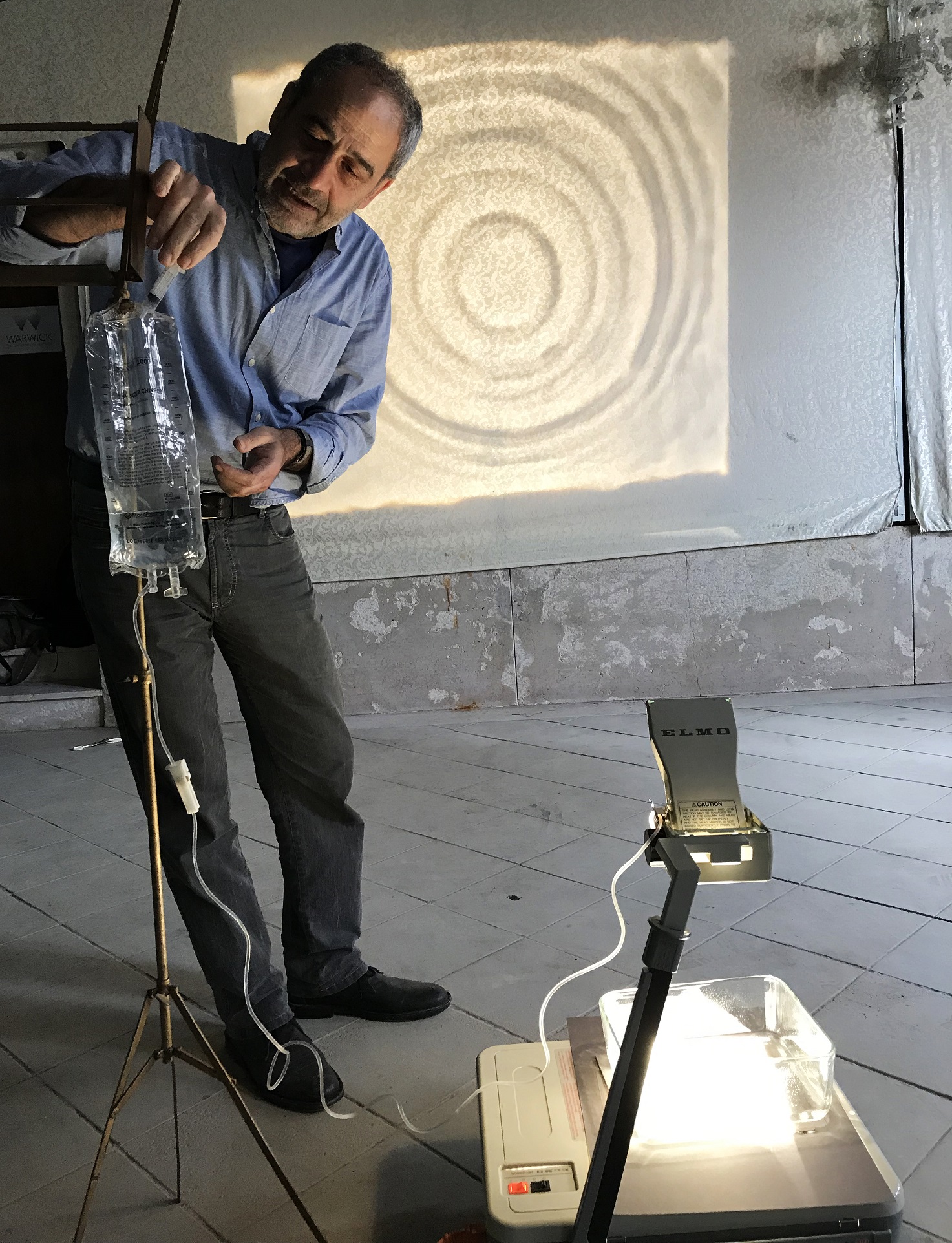
Opening the show is Syrian-born Issam Kourbaj. His three-piece installation is made up of a video of burnt matches, 98 boats made of recycled material and an IV drip. It juxtaposes the energies of fire and water, the flow of death and life, the struggle of a people between the two and the flow of time with the flow of migrants.

“Are we aware of the threads of our lives? I am putting the viewer in a place where many senses are being revisited. Each material sends new signals of information.”

Collaborating alongside him is Ruth Padel, a British poet whose book The Mara Crossing (2012) elucidates detailed comparisons in the way life organizes itself. Whether in cell biology, ornithology or human history, it is with the passage of migration that life begins, she says.

“There are two main reasons cells migrate in our bodies: One to create a new life, and two to defend the body –if we get a new cut the corpuscles and others rush to the site of trauma,” she explains. There’s an interesting parallel to be drawn with people migrating – a vigorous society is constantly replenished by the outside. Human civilization began with migration out of Africa. The first cell arrived on the planet, whether from the sea or outer space, and it colonized other places. The first great land migrants were trees. DNA from the oldest oak trees in Britain shows they came from the Spanish peninsula.”

Living things migrate because life becomes impossible or there’s a desire to make a better life. Birds in or near the Arctic get too cold and fly south. When the south becomes too crowded and they need to breed they return to the Arctic where there are lots of insects –  a protein-rich diet for their offspring. It’s a bit heartbreaking but if you overlay the maps of bird migration routes and human migration routes across the Mediterranean, it’s the same. They take the passages where water is smallest – the straits of Gibraltar, or through Sicily, Malta.

Venice, Ruth says, represents the wasp waist of information flow between north and south in history. Both she and Kourbaj will find new resonance for their work in the interconnectivity of the space around them. “My interest will be in the relationship of my work to the water, and to the tourist boats and the gondola boats,” says Kourbaj, “in scale and in meaning, and in contradictions, they will have a new charge.”

For Wiseman, this too is interesting: “What I am trying to do through creativity is put order into things. The more I thought about what this order could be, the more I found that it is the life force, it is evolution.”

Life seems coupled to flow, movement, change, transformation: information in whatever form – the passage of energy, the replication of DNA within biological cells, to animal migrations and the organization of human societies.


You can watch a video about Kourbaj’s work here: https://www.youtube.com/watch?v=vpUOx-wTUz4

So you want to be a better writer?

{credit}Credit:Pixabay{/credit}

This is a guest post by Lea Gagnon, an Editorial Development Advisor in Nature Research

Welcome to the first of a series of tips from the Nature Research Academies to help researchers navigate the academic landscape. In this competitive landscape where no research is complete without publication, researchers are pressured to publish scientific articles. However, writing a paper in academic English presents many challenges, especially for non-native speakers. In this blogpost, we will introduce the three writing principles that good writers use to reach their readers better.

The first principle is called the cognitive load theory and refers to how much new information readers can process. Science is already complex. Scientists need to be concise and avoid unnecessary words. Therefore, short sentences of 10 to 20 words are better than long-winding sentences. Similarly, expressing one single idea per sentence ensures optimal understanding. If you give too much information at once, you risk confusing and losing your readers. If you limit the information, and carefully select strong words to concisely express your idea, the reader is more likely to understand. Although varying sentence length can make a text more dynamic and exciting, previous research1 has shown that comprehension level increases when sentence length decreases. A 50-word long sentence allows only 50% comprehension, whereas 20- and 10-word long sentences raise it to 80% and 95%, respectively.

The second principle is cognitive bias, which describes the tendency for authors to assume that their readers know as much as they themselves do. Specialists should keep in mind who their audiences are, and put information within context to make it easier to be understood. For example, defining ideas and theories in the introduction increases clarity for newer researchers or those from outside the field. Avoiding subjective (e.g. interestingly, surprisingly) and complex (e.g. “to ascertain” instead of “to test”) words reduces ambiguity. Using more active voice (e.g. “I write a paper”) instead of passive voice (e.g. “the paper was written by me”) makes a text simpler, more engaging and easier to read.

The last principle refers to the readers’ expectations – or the logical flow of information. Logically structuring a text involves introducing an idea, developing it and highlighting its importance. The topic position at the beginning of a sentence introduces an idea whereas the stress position at the end emphasizes its importance. A nice logical flow can be maintained with the signposting technique that good communicators often use to guide their readers. Signposting consists of placing keywords in the stress position of the first sentence in order to introduce the topic position in the following sentence:

  1. The treatment efficacy is promising, but the side effects are serious. This treatment will be used clinically to fight the infection.
  2. The side effects are serious, but the treatment efficacy is promising. This treatment will be used clinically to fight the infection.  

In the examples above, the second option uses signposting effectively and has a better logical flow between the two sentences than the first option. Signposting is also beneficial for linking paragraphs together, where key sentences at the beginning or the end of paragraphs replace keywords.

In conclusion, these three learning principles can be summarized into three reminders for researchers: conciseness, clarity and logic. By writing articles effectively this way, researchers increase their chance of publication and their readers’ comprehension.


References:

  1. Miller G.A. & Selfridge J.A. (1950) The Journal of American Psychology 63(2):176-185.

Gold motifs from Tutankhamun’s tomb hint at Levantine influence

Photographer: Christian Eckmann

Photographer: Christian Eckmann{credit}RGZM, DAI Cairo and University of Tübingen{/credit}

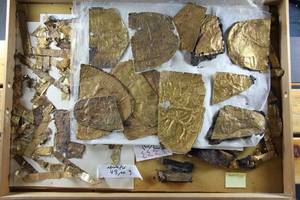
Tutankhamun’s tomb is the gift that keeps on giving, it seems, as archaeologists continue to uncover new “treasures” after examining, for the first time, embossed gold applications on artifacts recovered from the famed tomb.

The objects, along with the tomb itself, were previously unearthed by English archaeologist Howard Carter in 1922 and, for decades, had been stowed away in the Egyptian Museum. Now, archaeologists from Tübingen University have painstakingly restored and analyzed the motifs adorning the tomb a century after the historical discovery. And according to their observations, the art on the motifs – images of battling animals and goats – is foreign to Egypt and betrays strong Middle Eastern, specifically levantine, aesthetic influence.

“Presumably these motifs, which were once developed in Mesopotamia, made their way to the Mediterranean region and Egypt via Syria,” says Peter Pfälzner, leader of the team of archaeologists and conservators. According to the lead archaeologist, the images from the Pharaoh’s tomb resemble those previously found on a tomb in the Syrian Royal city of Qatna, discovered during a dig in 2002.

“This again shows the great role that ancient Syria played in the dissemination of culture during the Bronze Age.”

The next step, says Pfälzner, lies in solving the riddle of how the foreign motifs came to be adopted in Egypt to begin with.

Cuneiform clay tablets discovered in Kurdistan

The tablets are valuable and could reveal insights into Bronze age Iraq.

The tablets are valuable and could reveal insights into Bronze age Iraq.{credit}Peter Pfälzner, University of Tübingen{/credit}

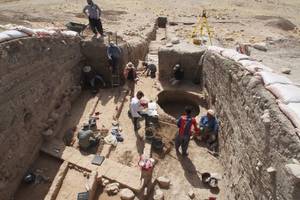
University of Tübingen archaeologists unearthed 93 clay tablets adorned with cuneiform pictograms, an early Sumerian writing system, in the Kurdish region of northern Iraq. The archive dates back to 1250 BCE.

The tablets were dug out of Bassetki, an ancient Bronze-age site which was only discovered in 2013, and whose location lay along busy trade routes from Mesopotamia to Anatolia and Syria.

“Bassetki was of key significance on important trade routes,” Peter Pfälzner, lead archaeologist, says of the discovery. “Our finds provide evidence that this early urban center in northern Mesopotamia was settled almost continuously from approximately 3000 to 600 BCE.”

A big chunk of tablets had been deposited in a ceramic pot, probably used for storage, in a room inside a destroyed Assyrian building.

“The vessels may have been hidden this way shortly after the surrounding building was destroyed. Perhaps the information inside it was meant to be protected and preserved for posterity,” says Pfälzner.

A fragment of the clay tablet contains mentions of a temple to the ancient goddess Gula. However, the scientists believe it might be too early to rule whether they’re looking at legal, or religious text.

The researchers will begin translating the text in Germany, which they say will be challenging, time-consuming and intense since many of the tablets are either unbaked or badly worn.

Blood on the lab bench

Scientists in Qatar have taken research into organ development one more step into the future by expanding the potential for creating personalized blood and heart tissue in the lab.

The scientists, under the lead of Arash Rafii Tabrizi at Weill Cornell Medicine – Qatar, have postulated that endothelial cells, which line the walls of blood vessels, are a vehicle for organ development. “Different organs have different endothelial cells that express different and specific factors called angiocrine factors that lead to the development and function of the organ,” explains Tabrizi.

In order to test this, the scientists forced the expression of said transcription vectors in the lab. Twenty days later, the cells multiplied and differentiated into the building blocks of blood cells: hematopietic stem cells. These are the basis for cells such as red and white blood cells and platelets.

“If you have leukemia, for example, we would retrieve your endothelial cells and we could transform that into blood. It would be an unlimited personal source of blood for each individual,” says Tabrizi.

In addition to blood, the researchers paired endothelial cells with heart muscle cells to create more muscle cells, that beat together rhythmically, in a petri dish.

The scientists maintain, however, that it’s too early to make any sweeping assumptions about the reliability of results, not until the tests move into the animal and human trial phases.

Read more about what the scientists have termed a breakthrough discovery here.


Probing a new algae species for clues into plant adaptation

An investigation of the genome and phenome of a green alga called Chloroidium sp. UTEX 3007 has revealed, for the first time, certain adaptive traits that help algae acclimate to desert environments.

But what sets apart this new species, which scientists at the New York University Abu Dhabi (NYUAD) have discovered and sequenced, from other types of green algae?

Nature Middle East talks to Kourosh Salehi-Ashtiani, associate professor of biology and managing director at the Center for Genomics and Systems Biology at NYUAD, to find out.

Nature Middle East: What does your new study add to the body of knowledge that we have of green microalgae?

Kourosh Salehi-Ashtiani: Green microalgae or Chlorophyta live in myriad forms and are believed to be the progenitors of land plants. Many scientists around the globe are involved in active research programs to understand the ecological roles of these organisms as well as to utilize them for biotechnology. Despite the importance of micro-algae, relatively few species have been profiled at the genomic and phenomic levels.

These species are mostly from temperate zones, with very little information available on any alga from the subtropical geographies, such as the environment of the United Arab Emirates (UAE). Our study, however, sets a new standard for understanding the biology of micro-algae, and how Chloroidium has evolved to cope with the environmental challenges unique to the region.

NME: Was there anything particularly surprising about Chloroidium?

KSA: Yes. Its ability to thrive on both freshwater and high-salinity growth media and its ability to assimilate an array of uncommon carbon compounds for heterotrophic growth [which is growth through an energy pathway in which an organism that cannot manufacture its own food uses sunlight or inorganic compounds to produce carbohydrates, proteins and fats from carbon dioxide, in order to survive].

NME: Can you tell me more about your comparative study of Chloroidium and land plants?

KSA: Our phenomic and genomic data suggests that Chloroidium has a close relationship with higher plants and may live an intermittent epiphytic lifestyle, in other words, it may live on the surface of plants when such an opportunity arises. We show the Chloroidium is able to uptake many different sugars. Now, if you think where an alga is likely to find sources of sugar, plant and plant material become the most obvious candidates.

NME: In your paper you mention that Chloroidium harbors “unique protein families involved in osmotic stress tolerance and saccharide metabolism,” would you mind explaining this to our readers?

KSA: It is known that many organisms, when faced with increased osmolarity or typically high salt concentrations, they start to accumulate sugars internally. The Chloroidium’s genome contains unique genes implicated in the accumulation and breakdown of uncommon sugars. It hasn’t been previously known how organisms accumulate and break down these sugars; our study clarifies this.

NME: What are some of the future applications of your findings now that we have this new species, with a robust and flexible biology, especially with regards to conservation and understanding the effects of climate change?

KSA: In light of the environmental hazards befalling much of Southeast Asia that have been caused, at least partly, by razing high-biodiversity rainforests to cultivate oil palm, we chose to particularly emphasize Chloroidium’s ability to accumulate palm-like oil. The fatty acid profiles of oil palm or Elaies guiensis and Chloroidium are virtually identical.

NME: So this discovery may, in the future, help in providing an alternative to palm oil?

KSA: Definitely. Cultivation of oil palm has been associated with deforestation, if not devastation of rainforests in Southeast Asia. It’s why many European countries are banning the use of oil palm in their products. We think this alga may provide an environmentally-friendly alternative to cultivation of oil palms once further developed.

The origins of cats

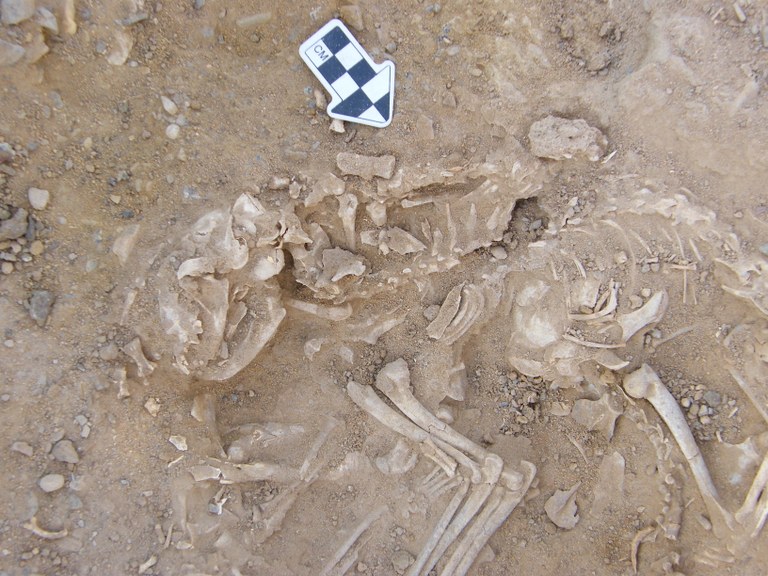
One of the cat skeletons excavated from a site in Egypt.

One of the cat skeletons excavated from a site in Egypt.{credit}© Hierakonpolis Expedition{/credit}

A new study reveals some fascinating insights into the origin story of the cat, arguably the internet’s most favorite creature and a cherished companion to countless humans.

Paleogeneticist Claudio Ottoni and his peers from KU Leuven and the Royal Belgian Institute of Natural Sciences have been collecting DNA from several archaeological sites in an attempt to track down the origins and trace the ancient journeys of the domestic cat.

The scientists unearthed over 200 cat skeletons from sites in Africa, Europe and the Near East and scrutinized DNA from feline skin, hair, bones and teeth that date back to between 100 and 9,000 years ago.

The result? A revelation about how cats dispersed in the ancient world. According to the study, the domestic cat we know today originated in ancient Egypt and the Near East.

Back then, the cats had stripes, not spots – the latter cropped up during the Middle Ages, but not before. The Middle Ages is also when the cat’s coat color had started to become variant.

The ancient felines were domesticated some 10,000 years ago, mostly by farmers wishing to chase away rodents from their fields. When the farmers moved, the cats moved with them. They also spread across the old world through trade, hopping on ships to protect stocks from vermin, and jumping from one port to the next, eventually covering long distances, and traveling far and wide. Now, the domestic cat is present on all continents except Antarctica.

The cats can all be traced back to one Felis silvestris, also known as the African wildcat, originally a feral, territorial and solitary hunter. Both the Near Eastern and Egyptian populations of Felis silvestris, according to the study, contributed to the gene pool of the domestic cat at different historical times.


Prescription drugs overused and abused in the Mideast

It turns out that, in the Middle East, getting access to prescription medications for serious ailments, in the absence of supervision, can sometimes be as easy as picking up an over-the-counter medicine for a headache or the common cold, or so claims a new review published in Pharmacology Research & Perspectives.

In theory, the regulations separating access to either brand of medication is there. In practice, the review cites a “massive problem” of self-medication misuse in the region, particularly with prescription medication, one that eventually leads to greater health risks among patients, including drug dependency and addiction.

Drugs that are used recklessly or sometimes abused by Middle Eastern patients include codeine containing products, topical anesthetics, topical corticosteroids, antimalarial, and antibiotics. According to the review, which looked at 72 papers published on the subject between 1990 and 2015, self-medication medicine misuse cannot always be exactly quantified in the region but it seems widespread.

Some of the statistics that the review highlights are quite jarring.

For instance, 73.9% of the Sudanese population have reportedly used antibiotics or antimalarials without a prescription. Equally alarming trends have been observed in Syria, Yemen, Jordan, Tunisia, Egypt and the UAE, with drugs such as amoxicillin or ampicillin being dispensed freely. According to the review, most patients self-medicating on antibioitcs did not even follow through the full course of the medications and took them for less than three days.

Many of the patients follow the advice of relatives, or have a drug prescribed to them by a doctor over the phone. As well, some pharmacists play a role. “People tended to select medication based mainly on advice received from community pharmacists,” says one of the studies cited.

One study said that the majority of the 200 pharmacies under scrutiny in Syria had sold antibiotics without prescription, and in Saudi Arabia, only a single pharmacy had refused to release the medication without a doctor’s prescription.

As well as stacking prescription medications for future use, Middle Eastern patients often used them inappropriately; it’s not uncommon for many to pop antibiotics to treat illnesses unrelated to bacterial infections, for instance, or with incorrect dosages for inappropriate period of time, according to the review.

How global warming controls plankton populations

A survey of the seas by the King Abdullah University of Science and Technology (KAUST), Saudi Arabia, has enabled scientists to come up with a predictive model of how planktonic heterotrophic prokaryotes – simple marine organisms that process most organic matter in the ocean – are affected by global warming.

Although small, plankton populations make up the largest living biomass in the ocean.

During an expedition in 2010, the scientists looked at plankton across subtropical and tropical waters of the Atlantic, Indian and Pacific Oceans. They scrutinized three factors: resource availability, mortality rates and temperature. They also looked at the viruses and microbes that either live off or kill off plankton.

Team leader Xose Anxelu G. Moran, associate professor of marine science at KAUST, and his peers from Saudi Arabia, Spain and Sweden, wanted to know what influenced plankton abundance and metabolism, and how this can help researchers predict the future role of the microbial populations in a changing ocean plagued by warmer temperatures and diminishing nutrients – thanks to climate change.

They found out that the effect of rising temperature on plankton is not uniform – populations living near the equator, for instance, are not as affected as those near the poles. The impact of global warming on marine microbes is more intense at higher latitudes, according to the study.

When there’s an abundance of viruses that eventually diminish the organism’s populations, temperature’s role becomes limited, the study adds. The same happens when there’s a decrease in nutrients; the water’s rising temperature almost becomes irrelevant. It’s why the scientists conclude that temperature only becomes a dominant factor when plankton are neither controlled by poor resources nor viral attacks.

As well, the study notes that a 1°C ocean warming will increase the biomass of plankton only in waters with more than 26°C of mean annual surface temperature.

Weird birds

Egyptian vultures exhibit strange mud-coloring rituals.

Egyptian vultures exhibit strange mud-coloring rituals.{credit}Manuel de la Riva{/credit}

Scientists have discovered that Egyptian vultures engage in a peculiar “mudding” ritual that is one among a set of unique behaviors that not only distinguish the vultures from other birds of prey, but also, quite frankly, make them look a little “weird” in comparison.

In a new research paper in the journal Ecology, scientists Thijs van Overveld, Manuel de la Riva and José Antonio Donázar of the Estación Biológica de Doñana, Sevilla, Spain, describe the coloring ritual in detail, opining that the behaviour, where the birds dip their heads, necks and even chest in red soil, essentially bathing their upper bodies in mud, might represent a complex communication technique through which the birds relay social information.

Nature Middle East chats with Overveld about the intriguing mud bathing ritual, and what it tells us about the North African birds.

NME: What does knowing about this coloring ritual add to the body of knowledge we have about the bird?

Overveld: The situation of Egyptian vulture is not very good, and currently classified as critically endangered, so few birds are left and we actually know very little about their behaviour. What we do know is that the Egyptian vultures are among the most peculiar birds worldwide. The vulture has a unique behavioural reportoire, such as stone throwing to open eggs; it also eats excrement of ungulates which turns their face into yellow.

Our work adds a new, and unusual behaviour to their behavioural reportoire, which so far has only been described in its close relative, the Bearded vulture.

NME: What are some of the observations that you have made about the birds?

Overveld: These birds have a far more complex social life than previously assumed. Since these birds are non-vocal, we don’t rule out that mud bathing may be used to signal certain social information.

The most intriguing part of the painting behavior is the amount of individual variation.

I have been repeating the experiments in the last week, and the interest in the mud (and disinterest) is striking. We are just at the beginning of our work, so it is difficult to give a clear answer. We can rule out some options like social status, for instance; sanitary benefits also seem unlikely because some birds don’t use mud when it’s in front of them, but we cannot give an answer to why they do it.

NME: Is it as strange as it sounds? Is it atypical in any way?

Overveld: The bird is clearly a special case among birds generally, but most interesting, it’s a vulture that is general regarded as a filthy animal. This has been quite different in the past, given that many societies treat them as sacred animals. As you know, they have been providing essential ecosystem services by eating dead animals and thereby avoiding the spread of diseases.

The significance of our work is two-fold, we decsribe a behaviour that may tell us more about how [the birds] live and their adaptations, while meanwhile, we show that a highly threatened bird – with remarkable behaviors unique among birds worldwide – is disappearing.

NME: How does the coloring happen? What do the birds do exactly?

Overveld: When birds notice red mud, something happens. Some birds can stare or gaze at the mud for 20 minutes, only to scratch the mud and leave. Others step in the bowl and start to scratch, look at it very carefully and then typically swipe both sides of the head and neck in the mud.

The most important thing of our experiment is that we show birds get dirty on purpose. Some start with a bath in clear water and then go all the way in red mud.

The questions is why do some birds want to become so dirty, and why is it as if some birds look [like they’re about] to take the most important decision in their life before swiping their head [in the mud].

Currently we are describing in more detail the behaviour during different parts of the year in combination with experimental work to figure out whether they may signal other social cues we yet don’t know. They have a more social complex life than previously acknowledged so we currently don’t rule out any option.

The world finally has recorded the strange mud bathing rituals of the Egyptian vultures.

Scientists have finally recorded the strange mud bathing rituals of Egyptian vultures.{credit}Thijs van Overveld{/credit}

If you’re curious about how Egyptian vultures bathe in mud, and would like to see the ritual in action, check out the following videos, courtesy of Overveld and colleagues: Video 1, Video 2, Video 3. According to the researchers, the videos are the first ever recordings of this specific mudding behavior.