About Mohammed Yahia

I am the editor of Nature Middle East, a dedicated portal from the publishers of Nature that covers research and science news from the Arab world.

Life = matter + information. Or does it?

This is a guest post by Sarah Hiddleston 
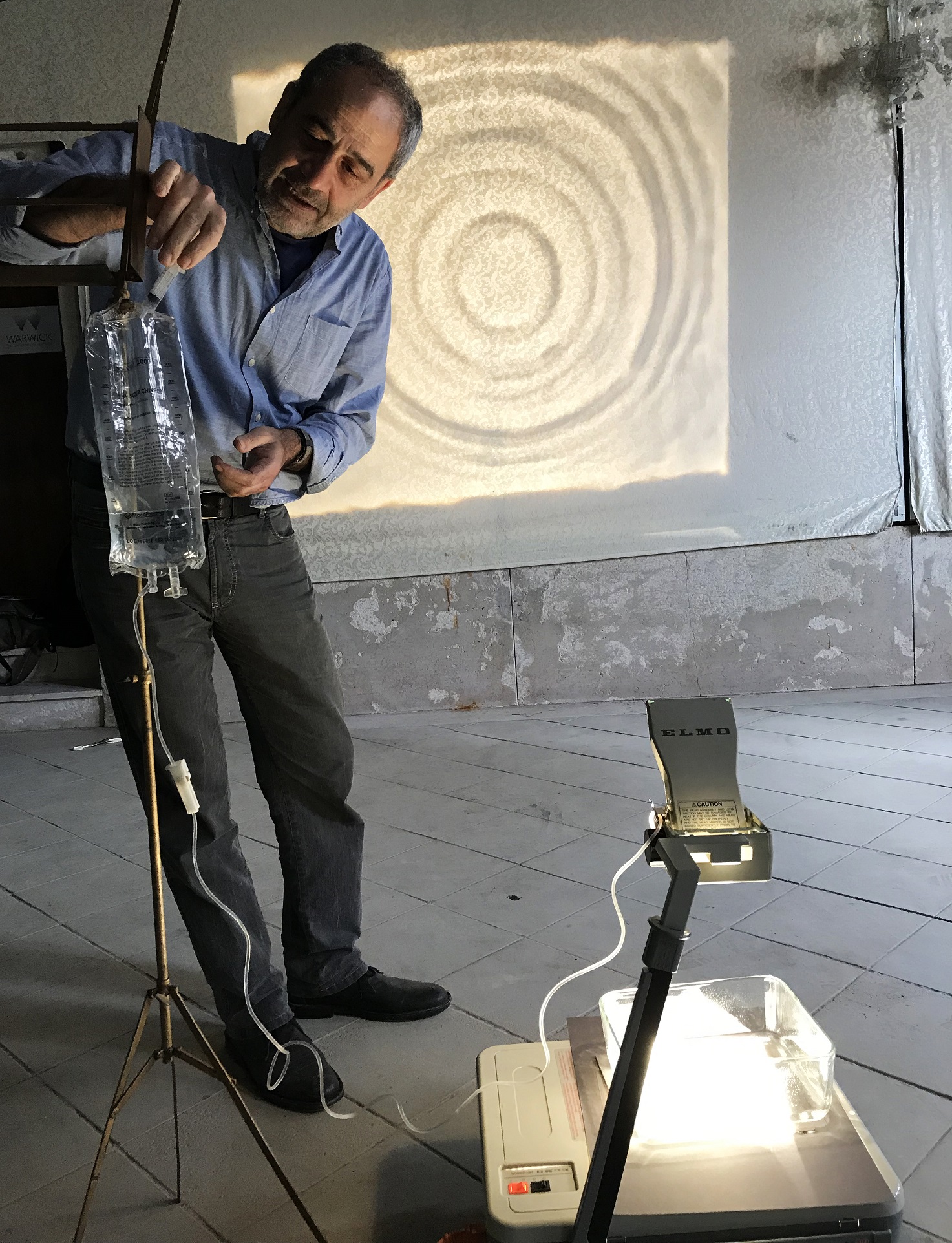
{credit}Eileen Haring Woods{/credit}

“We are points of order in a disordered universe. This is an expression of how we feel about being ruled by physics in all our emotions and reactions. It’s how we interpret, describe and live our lives within this system.”

Artist or scientist? These are the words of curator Caroline Wiseman, whose brainchild “Alive in the Universe” found a home at the world’s longest standing contemporary art fair in Venice yesterday. It is a month-long exhibition that seeks to interpret what life is, and rather than reduce it to an equation, surround the viewer with an experience of what that means.

Opening the show is Syrian-born Issam Kourbaj. His three-piece installation is made up of a video of burnt matches, 98 boats made of recycled material and an IV drip. It juxtaposes the energies of fire and water, the flow of death and life, the struggle of a people between the two and the flow of time with the flow of migrants.

“Are we aware of the threads of our lives? I am putting the viewer in a place where many senses are being revisited. Each material sends new signals of information.”

Collaborating alongside him is Ruth Padel, a British poet whose book The Mara Crossing (2012) elucidates detailed comparisons in the way life organizes itself. Whether in cell biology, ornithology or human history, it is with the passage of migration that life begins, she says.

“There are two main reasons cells migrate in our bodies: One to create a new life, and two to defend the body –if we get a new cut the corpuscles and others rush to the site of trauma,” she explains. There’s an interesting parallel to be drawn with people migrating – a vigorous society is constantly replenished by the outside. Human civilization began with migration out of Africa. The first cell arrived on the planet, whether from the sea or outer space, and it colonized other places. The first great land migrants were trees. DNA from the oldest oak trees in Britain shows they came from the Spanish peninsula.”

Living things migrate because life becomes impossible or there’s a desire to make a better life. Birds in or near the Arctic get too cold and fly south. When the south becomes too crowded and they need to breed they return to the Arctic where there are lots of insects –  a protein-rich diet for their offspring. It’s a bit heartbreaking but if you overlay the maps of bird migration routes and human migration routes across the Mediterranean, it’s the same. They take the passages where water is smallest – the straits of Gibraltar, or through Sicily, Malta.

Venice, Ruth says, represents the wasp waist of information flow between north and south in history. Both she and Kourbaj will find new resonance for their work in the interconnectivity of the space around them. “My interest will be in the relationship of my work to the water, and to the tourist boats and the gondola boats,” says Kourbaj, “in scale and in meaning, and in contradictions, they will have a new charge.”

For Wiseman, this too is interesting: “What I am trying to do through creativity is put order into things. The more I thought about what this order could be, the more I found that it is the life force, it is evolution.”

Life seems coupled to flow, movement, change, transformation: information in whatever form – the passage of energy, the replication of DNA within biological cells, to animal migrations and the organization of human societies.


You can watch a video about Kourbaj’s work here: https://www.youtube.com/watch?v=vpUOx-wTUz4

Alive in the universe

This is a guest post by Sarah Hiddleston 

Nature Middle East has an exciting contribution to the grande dame of art events –The Venice Biennale. For more than 120 years the Biennale has attracted hundreds of thousands of visitors to the floating city, whose sweeping squares, crumbling palazzos and beautiful churches play host to the world’s foremost cutting-edge creative minds. Now in its 58th iteration, it takes as its theme May you live in interesting times and promises to be a showcase of what its artistic director Ralph Rugoff describes as “art’s potential for looking into things that we do not already know”.

Nature Middle East’s film-short charts the contribution of Syrian artist Issam Kourbaj as he examines the nature of reality, life, death, migration and the passage of time. Together with the British poet Ruth Padel, Kourbaj will open a 28-day exhibition entitled Alive in the Universe with a three-piece performance installation at the Palazzo Pesaro Papafava on May 8. The film, shot last year in Kourbaj’s studio in Cambridge, will be shown alongside the installation.

Alive in the Universe is a creative take on the wonder and anguish of existence including some of the most perplexing questions in science. Masterminded by co-curators Caroline Wiseman and David Baldry, it was inspired by Albert Einstein’s dictum that “art is the expression of the profoundest thoughts in the simplest way”. The exhibition seeks to challenge and deepen our understanding of life and death, gender and procreation, the cosmos, water, dark matter, technology and time among others.

Watch: the video  https://www.youtube.com/watch?v=vpUOx-wTUz4

So you want to be a better writer?

{credit}Credit:Pixabay{/credit}

This is a guest post by Lea Gagnon, an Editorial Development Advisor in Nature Research

Welcome to the first of a series of tips from the Nature Research Academies to help researchers navigate the academic landscape. In this competitive landscape where no research is complete without publication, researchers are pressured to publish scientific articles. However, writing a paper in academic English presents many challenges, especially for non-native speakers. In this blogpost, we will introduce the three writing principles that good writers use to reach their readers better.

The first principle is called the cognitive load theory and refers to how much new information readers can process. Science is already complex. Scientists need to be concise and avoid unnecessary words. Therefore, short sentences of 10 to 20 words are better than long-winding sentences. Similarly, expressing one single idea per sentence ensures optimal understanding. If you give too much information at once, you risk confusing and losing your readers. If you limit the information, and carefully select strong words to concisely express your idea, the reader is more likely to understand. Although varying sentence length can make a text more dynamic and exciting, previous research1 has shown that comprehension level increases when sentence length decreases. A 50-word long sentence allows only 50% comprehension, whereas 20- and 10-word long sentences raise it to 80% and 95%, respectively.

The second principle is cognitive bias, which describes the tendency for authors to assume that their readers know as much as they themselves do. Specialists should keep in mind who their audiences are, and put information within context to make it easier to be understood. For example, defining ideas and theories in the introduction increases clarity for newer researchers or those from outside the field. Avoiding subjective (e.g. interestingly, surprisingly) and complex (e.g. “to ascertain” instead of “to test”) words reduces ambiguity. Using more active voice (e.g. “I write a paper”) instead of passive voice (e.g. “the paper was written by me”) makes a text simpler, more engaging and easier to read.

The last principle refers to the readers’ expectations – or the logical flow of information. Logically structuring a text involves introducing an idea, developing it and highlighting its importance. The topic position at the beginning of a sentence introduces an idea whereas the stress position at the end emphasizes its importance. A nice logical flow can be maintained with the signposting technique that good communicators often use to guide their readers. Signposting consists of placing keywords in the stress position of the first sentence in order to introduce the topic position in the following sentence:

  1. The treatment efficacy is promising, but the side effects are serious. This treatment will be used clinically to fight the infection.
  2. The side effects are serious, but the treatment efficacy is promising. This treatment will be used clinically to fight the infection.  

In the examples above, the second option uses signposting effectively and has a better logical flow between the two sentences than the first option. Signposting is also beneficial for linking paragraphs together, where key sentences at the beginning or the end of paragraphs replace keywords.

In conclusion, these three learning principles can be summarized into three reminders for researchers: conciseness, clarity and logic. By writing articles effectively this way, researchers increase their chance of publication and their readers’ comprehension.


References:

  1. Miller G.A. & Selfridge J.A. (1950) The Journal of American Psychology 63(2):176-185.

Without proper education, can we innovate?

20160414_165520~3What are the two biggest challenges to development and innovation facing the world today?

It was a question posed to a panel of speakers from developed and developing countries at the Biovision Alexandria 2016 conference currently happening in Alexandria, Egypt.

Education was singled out as the greatest threat, especially in the developing world.

“ICT [Information and communication technology] is the glue that holds innovation together,” said William Saito, the special adviser to the Prime Minister Cabinet in Japan. “It allows cross pollination across disciplines.”

Education is still based on rote-learning, but there’s an urgent need to shift to inquiry-based education at schools; methods that encourage children to develop the learning process themselves, argued Mohamed Hassan, the co-chair of the Inter Academy Partnership in Italy.

The smartphone boom happening in the developing world gives millions of young people access to the Internet every year; it’s the greatest disruption to this decades old style of teaching, he added. Knowledge is now at the fingertips of young people, and traditional education may be vastly transformed within the next decade due to that, he opined.

This rapidly changing world comes with its own challenges, however.

“We are not repairing children for a vastly changing world,” said Jason Blackstock, head of the Science, Technology, Engineering, and Public Policy Department at the University College London, UK.

Some reports suggest that when the toddlers of today grow up, 60% of the jobs present now – and which education is preparing them for – will have disappeared, said Saito. That means we need a paradigm shift in education where failure is not shunned.

We need to create a culture of tolerance of failure, teaching young people that it is normal to fail a few times to truly innovate, he said. “There’s a real opportunity to bring students into the real world and to bring the real world into labs.”

John Kilama, the chairman of the Innovators for Africa Development, Inc. in the US, warned however that these changes require governments that can create an atmosphere that would facilitate change, otherwise “a lot of young people will leave to other countries that can support their hopes and dreams.”

Clearly, the future for the developing world depends on the ability of nations to create enabling environments – ones that allow young people an education that enables critical thinking, entrepreneur training and ICT tools to make use of. It also depends, as well, on policymakers with the proper foresight and a genuine interest in promoting development in a global world.

Last coral standing

This is a guest post by Nature Middle East writer Louise Sarant.

The Red Sea coral reefs are among the most resilient coral systems in the world.

The Red Sea coral reefs are among the most resilient coral systems in the world.

Some 70 million years ago, Africa and Arabia parted to give birth to the Red Sea valley – a thriving, yet highly stressful environment for the thousands species of corals, fish and macrophytes which inhabit its waters.

The Red Sea’s salinity is currently at 40 parts per thousand; in simple terms, that’s 40 Kg of salt for every 1000 litres of water, substantially higher than the Mediterranean Sea’s 35 parts per thousand.

The water temperature of the Red Sea also ranks among the highest in the world and is believed to warm faster than the world average, according to a study by the King Abdullah University of Science and Technology (KAUST) in 2011. The researchers found that the Red Sea waters have warmed by up by to 0.7°C since 1994, in contrast to the global ocean temperatures which rose by 0.5°C.

The water’s high salinity and temperature have created a difficult environment for its biota, particularly for its plentiful coral reefs. But against all odds, they seem to be faring better in light of climate change than other corals worldwide. They continue to build extensive reef systems up and down the Red Sea’s  coasts, somehow adapting to those harsh conditions.

“If you were to take a coral from the Great Barrier Reef today and drop it into the Red Sea, I would be surprised if that coral lasted a month,” says Michael Berumen, a marine biologist at KAUST.

This does not mean that the Red Sea corals are and will be immune to the various expected climate change impacts.

“While there is no such thing as an unimpacted ecosystem today, the Red Sea is still considered a thriving ecosystem,” says Gustav Paulay, marine invertebrate curator at the Florida Museum of Nature History. “There is bleaching and there is mortality, but when you dive in the Red Sea you don’t lament not being there a couple decades ago.”

Berumen is convinced the Red Sea will eventually bear the brunt of climate change, but it has a remarkable advantage. “What matters here is the starting point, the relative difference between the Red Sea and other reefs living in different conditions.”

Right now, marine biologists are trying to figure out what are the ecological or genetic mechanisms that allow Red Sea corals to survive in harsh conditions that corals in Australia, the Maldives or the Seychelles cannot withstand.

“Because the Red Sea is already so much warmer, it is possible that what we are looking at now are the conditions in which reefs in other parts of the world will have to deal with in the not too distant future,” says Berumen.

Understanding the adaptation mechanisms and higher tolerance of the Red Sea corals could change conservation mechanisms of corals worldwide.

Scientists have identified a few conditions which partly explain the resilience of Red Sea corals. “There are very little runoffs, coupled with a very low population density,” says Paulay, who adds that with the very few service runoffs, the pollution does not get very far into the sea.

Since the Red Sea is already warm, a small rise in temperature would be significant but manageable. The Red Sea is low on nutrients and offers little to sustain life. This has forced Red Sea species to find survival strategies, so they end up being sturdier and more resistant. Paulay also views the complex political situation in most coastal countries around the Red Sea as a protective measure. “If people are not letting other people go there, then nature is protected,” he says.

According to Paulay, corals can adapt to gradual change in temperature, but the problem with global warming is that the change is too fast.

Deep-sea corals in the Red Sea, which live in depths between 200 and 800 m, have adapted to warmer waters by reducing their living surface area which in turn limits their metabolic requirements.

Berumen explains that you can occasionally see similar responses with shallow water corals, which can sacrifice 90% of their colony and focus on a single small area, hoping to survive.

“These animals are far more complex and capable than most people give them credit for, and we have a lot left to learn,” concludes Berumen.

Check out Nature Middle East‘s special series on the curious case of Middle East’s coral reefs here

Image credit: Tane Sinclair-Taylor/ Red Sea Research Center/ KAUST

Safekeeping Syria’s plant genetic heritage

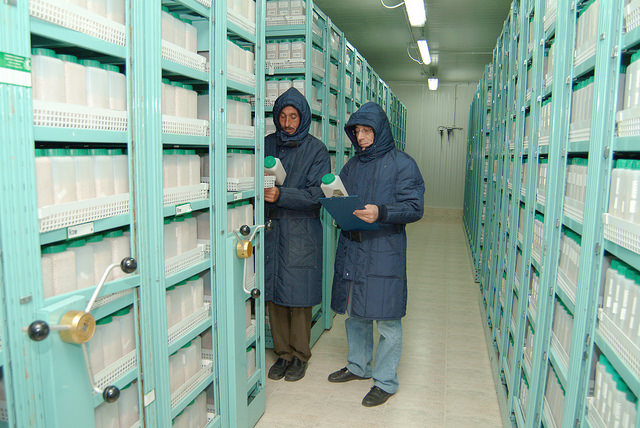
The gene bank in Tel Hadya, Syria

The gene bank in Tel Hadya, Syria{credit}ICARDA{/credit}

The war in Syria has left nothing untouched, including researchers unaffiliated to any of the fighting parties. In September 2012, the International Center for Agricultural Research in the Dry Areas (ICARDA) based in Aleppo, Syria, had to move all its international staff out of Syria as the fighting intensified. After looting and attacks on the premises, the research institute had to move a lot of sensitive equipment to hide them in rented houses, before they eventually had to evacuate and move all the operation to neighbouring Lebanon in the same year.

Before leaving the country, and to safe keep over 110,000 genetic samples for crops that were stored in ICARDA’s gene bank in Aleppo, the researchers started to send copies of all the gene accessions stored to the Svalbard gene bank in Norway, a secure ‘Doomsday’ gene bank near the North Pole designed to protect genetic material in case of a nuclear attack or devastating natural disaster. In March 2015, the organization received the Gregor Mendel Innovation Prize for managing this monumental task.

So far, genetic material has only ever gone into the vault. Last week marked the first time genetic material came out, when ICARDA requested copies of some of the samples they it had sent there for safekeeping, to fulfill requests from farmers and agricultural organizations that it works with.

“Until recently we were using and dispatching bulk seeds of these genetic materials to meet requests from Aleppo in spite of the tough security situation.” said Mahmoud Solh, ICARDA’s director general. “ICARDA requested some of its stored material in Svalbard in order to reconstitute the active collection in both Morocco and Lebanon in large bulks to meet requests for germplasm from the collections we have to meet the challenges facing dry areas globally.”

Since its formation, ICARDA has been working with developing countries, especially those in desert and arid areas, to help national programmes and individual farmers increase their yield by providing them with drought and pest resistant variants of staple crops like wheat, barley, lentil, chickpea, faba bean and peas.

Once we multiply these varieties, ICARDA will return part of it to Svalbard as another duplicated set,” adds Solh.

More bad news were reported for ICARDA yesterday, when news started to spread that Russian airstrikes near Aleppo may have destroyed the gene bank that the organization left behind in the war-torn country. However, the few ICARDA staff still in Syria confirmed that the bank was safe and unaffected.

Hepatitis C: Training for journalists

Hepatitis viruses under an electron microscope

Hepatitis viruses under an electron microscope{credit}Image courtesy of U.S. Centers for Disease Control and Prevention{/credit}

Nearly 2.5% of people in the world is estimated to be infected with Hepatitis C – that’s a whopping 150 million people. And it’s more than most other infectious diseases, yet many people know little to nothing about the disease.

In addition to limited awareness of a disease that kills millions yearly, Hepatitis C receives narrow media coverage.

But for reporters to be able to cover the disease, properly, journalists need to know more about the virus and the disease. What are the different genotypes? Which new medications are there? Why is the disease burden so high around the world?

To mark World Hepatitis Day, the World Federation of Science Journalists (WFSJ) is launching a new online portal to educate and support journalists who are covering viral hepatitis all over the world. The portal should give reporters the appropriate tools, data sets and education to accurately cover the killer virus.

To produce this education plan, a steering committee of science journalists from around the world came together with experts, researchers, clinicians and patient advocacy groups representatives to identify the most important topics to cover; ranging from the global disease burden and its risks to health policy and the rapidly evolving hepatitis treatment landscape. I was part of this committee which met twice, then worked together online, to build the training programme.

The material is packaged into modules made available freely online, with each covering hepatitis C from a specific angle. Together they offer journalists different ways to tell the hepatitis C story.

Hepatitis C has been around for so long that it suffers from the same predicament that a condition like HIV/AIDS does: people feel it’s an old story that they don’t know how to keep telling.

But there is so much happening in the hepatitis C landscape to make the story both very fresh and very important. Through this portal, journalists will find tips on how to address said story, in a way that suits their community.

The portal’s steering committee worked on coming up with fresh angles and the portal is expected, still, to help journalists tie loose threads; for example, reporters on the virus should be able to explore questions related to drug policy, commercial use of hepatitis C drugs, accessibility and reach.

The portal also offers a database of experts, policymakers, researchers, clinicians and patient advocacy groups from around the world, with contact information readily available to all visitors of the portal. The experts speak different languages to suit the needs of journalists globally.

The second part of the programme will see the WFSJ use the material online to host face-to-face workshops for journalists on the ground in countries and regions where hepatitis C is most prevalent, such as Egypt and Pakistan.

The workshops will be held in several regions and in different languages to make sure that as many people as possible can benefit from them. In addition to field workshops, the portal will offer a series of online webinars by award-winning science journalists.

Hepatitis C may increase cancer rates

Infection with hepatitis C virus has long been linked to an increase in the rate of liver cancer, but new research suggests that it may also increase the risk of other types of cancer as well.

Hepatitis C is associated with non-Hodgkin’s lymphoma, renal, prostate and liver cancer. But the researchers also looked at other types of cancer, such as head and neck, esophagus, stomach, colon, pancreas and lung. The retrospective study looked at a group of patients in the US with our without hepatitis C and compared the incidence of cancers between the two groups. Overall, the study included 145,210 patient years in the HCV cohort, and 13,948,826 patient years were included in the non-HCV cohort.

The patients with hepatitis C were more likely to develop cancers during their lifetime – with the rate being 2.5 times higher than the group without the virus. Even when liver cancer was excluded, the rate was almost 2 times higher in the patients with HCV.

“These findings certainly point to the suggestion that hepatitis C may be associated with an increased risk of cancer. However, the findings must be interpreted with caution, as the study also showed that confounding factors such as alcohol abuse, tobacco, obesity, and diabetes modified the results,”  said Lisa Nyberg from Kaiser Permanente, Southern California, who is the senior author of the study.

Laurent Castera, Vice-Secretary, European Association for the Study of the Liver, commented: “This data adds to the evidence bank linking hepatitis C with an increased risk of cancer, and highlights that there is still a long way to go in order to fully understand this complex and devastating disease.”

Hepatitis C is endemic in several states in the Middle East, with Egypt home to the largest percentage in the world at ~13%. The disease is also prevalent in Morocco, Qatar, United Arab Emirates and Jordan. In many states it is driven by poor infection control in the healthcare system, but in the richer Gulf states the virus is more widespread among the immigrant worker communities.

ICARDA saves gene bank

The gene bank in Tel Hadya, Syria

The gene bank in Tel Hadya, Syria{credit}ICARDA{/credit}

Shortly after the uprising in Syria deteriorated into civil war, the International Center for Agricultural Research in the Dry Areas (ICARDA) started facing major problems that threatened the survival of the research centre. Looters repeatedly attacked the main facility in Aleppo and stole computers and equipment before staff had to be evacuated to other ICARDA facilities in neighbouring countries.

Last week, ICARDA received the Gregor Mendel Innovation Prize for managing to save all the samples that were stored in its gene bank, one of the most important agricultural gene banks in the world.

““Over the years, ICARDA had managed to safety-duplicate most of its gene bank collections outside Syria. When the conflict there escalated, we sped up the duplication and now have secured 100% of the germplasm collection outside Syria,” said Mahmoud Solh, the director of ICARDA, in a statement released.

The gene bank at ICARDA’s Syrian research centre were particularly important because they carried samples of wild relatives of many of the crops that are widely cultivated today, such as bread wheat, barley, lentil and faba beans. These wild crops carry important genes that have allowed them to adapt to different habitats and challenges, such as droughts, pests and diseases. Domesticated plants may have lost these genes throughout the years, so the gene banks acts as reservoirs that breeders can use to breed new strains to combat new challenges as they arise.

The Fertile Crescent, where agriculture is thought to have originated, is rich with these unique wild crops. Scientists are worried these may be lost in the conflicts across the region. ICARDA had previously rescued and safety-duplicated germplasm collections from Afghanistan and Iraq when the wars there erupted. Now, along with the samples collected in Syria, these are being duplicated elsewhere, with 80% of ICARDA’s collection already duplicated in Svalbard Seed Vault in Norway.

“The efforts of Mahmoud Solh and his teams are valuable not only for plant breeders who are highly dependent on diversity to improve agricultural varieties but also for following generations who benefit from drought tolerant and disease and pest resistant crops” justifies Peter Harry Carstensen, president of the Gregor Mendel Foundation.

UAE bars outspoken NYU professor

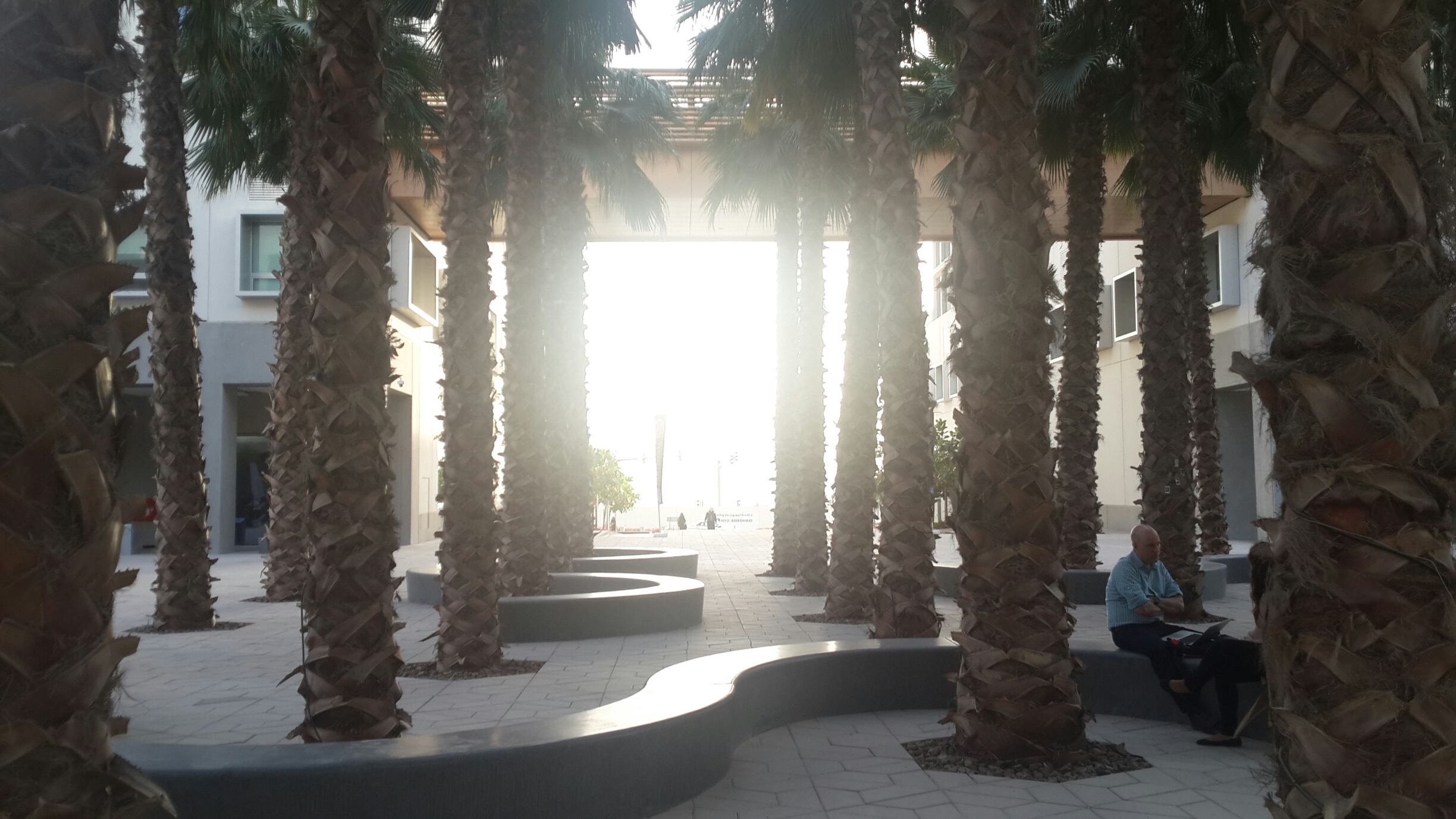
Students and faculty moved into the new permanent campus on Saadiyat island in 2014

Students and faculty moved into the new permanent campus on Saadiyat Island in 2014

A professor from New York University has been barred from travelling to the United Arab Emirates for his outspoken remarks against the country’s labour laws for migrant workers.

According to The New York Times, Andrew Ross, a professor at New York University specialised in teaching about labour issues, was in the airport on his way to spend his spring break at New York University Abu Dhabi conducting research into labour issues of migrant workers. He was stopped there and informed he is not allowed into the Gulf state.

New York University Abu Dhabi (NYUAD) is a satellite campus of the university in New York, which also has another similar campus in Shanghai, China. NYUAD has just recently moved into its new campus on Saadiyat Island in Abu Dhabi, a luxurious project that will also house offshoot branches of the Louvre and Guggenheim museums.

Ross has in the past been openly critical of the Emirates’ treatment of migrant workers, including those that worked on building New York University Abu Dhabi’s sprawling new campus in one of the most expensive areas of the emirate.

The UAE authorities have said Ross was not allowed to enter the country for security reasons. However, he suspects it is because of the stance he has taken against the country’s labour laws – sparking debates on academic freedom in offshore campuses of Western universities.

In an email sent to The Times, NYU spokesman John Beckman said that NYU faculty and students have had “zero infringements” on academic freedom and were allowed to travel freely between the campuses. But, he adds that “regardless of where NYU or any other university operates, it is the government that controls visa and immigration policy, and not the university.”