About Mohammed Yahia

I am the editor of Nature Middle East, a dedicated portal from the publishers of Nature that covers research and science news from the Arab world.

Whale sharks aggregating in Arabian Gulf

whale sharks ARC14

{credit}Mohammed Yahia{/credit}

A few months ago, researchers from the King Abdullah University of Science and Technology discovered a gathering site for whale sharks off the Saudi Arabian Red Sea coast. But that was not the first such site discovered in the relatively warmer waters of the Middle East.

For years, workers in offshore oil rigs in Al Shaheen, the largest offshore oil field in Qatar, have noticed whale sharks aggregating around the platforms. When one of the workers took a picture of dozens of whale sharks swimming around the platform, it ended in the formation of the Qatar Whale Shark Project by the ministry of environment to study the patterns and habits of these vulnerable species.

“In the beginning we had no clue when and where to find the sharks so we had the offshore workers report sightings to us,” said Steffen Sanvig Bach from the Maersk Oil Research and Technology Centre, which has joined the Qatari Ministry of Environment’s research effort.

Later, they started attaching tracking devices to the whales to try to monitor their habits and movements. “Sometimes we saw over a hundred of them in a group. They start to appear in April, peak in the summer months and disappear in October, said Bach. “We don’t really know where they go after October, they simply disappear and we can’t know where they go except if they are close to the surface. They just return every year in April.”

Whale sharks (Rhincodon Typus) are the biggest fish in the world, with reports of individuals over 20 tonnes in weight. The whale sharks that aggregate at the Al Shaheen location are mostly juvenile, however. The average age of the fish found there is around six.  Whale sharks can live up to 60-100 years, and are only mature and sexually active by the age of 30.

Aggregate sites are often important spots to understand the fish and plan for conservation efforts. “We have identified over 300 whale sharks in the Arabian Gulf and will continue to monitor, but it would take us five years to know the final count and determine if they are decreasing or not.”

But why are these young whale sharks gathering in this location? The researchers have several theories why the fish love this place. The site is rich in tuna mackerel, whose eggs is a favourite food for the whale sharks. The site contains a large amount of these fish, who make their home in the artificial reef created by the offshore rigs.

This is coupled by the warmer waters of the Arabian Gulf, which Bach thinks creates a favourable habitat for the whale sharks. “The area is probably a good feeding spot for them because the water is warm, there’s plenty of prey to feed on and no predators. This is particularly important because these are relatively young fish,” he added.

During Qatar’s Annual Research Conference (ARC14), Bach discussed his the new technologies his team are using to learn more about the fish that aggregate at Al Shaheen every summer, before disappearing again. One such technology they are now using is eDNA, where they take a sample of water and study it to identify all the species that interacted with that sample recently.

What we can do to fight a diabetes pandemic

On World Diabetes Day, the head of medical core facilities and research platforms at the King Abdullah International Medical Research Center in Saudi Arabia Mohamed Boudjelal writes to Nature Middle East’s House of Wisdom about the region’s type 2 diabetes nightmare, and what could be done, on the individual level, to prevent or at least ease the blow of the yet incurable disease.

World Diabetes Day logoDiabetes is a global issue that strains both the societies it’s rampant within, and the economies that these societies rely on. This is especially true in developing regions like the Middle East and North Africa (MENA).

According to popular projections, the number of diseased persons worldwide may reach 200 million by 2020. The International Diabetes Federation estimates that by 2035, the MENA region alone will be home to 68 million diabetes cases. As it stands, nearly 35 million are already suffering from the disease across MENA and millions remain undiagnosed.

There are two type of diabetes: type 1 which results from the insufficient secretion of insulin in the body and type 2 diabetes which occurs due to some bodies’ insensitivity towards insulin. Type 2 is more widespread, and is intimately linked to changes in our modern lifestyles.

What causes type 2 diabetes?

Obesity, defined by having a body mass index of 30 kg/cm2 or higher, predisposes to type 2 diabetes , which is mainly characterized by the resistance of the body to burn excess energy and instead gain weight in the form of fat. 

Obese people usually carry the excess weight unevenly throughout the body; usually they have central adiposity in the abdomen. Estimates in the Arab world show that over 30% of the population are obese, measured by waist-hip ratio, and females in particular show a significantly higher prevalence of central obesity than males.

This rampant weight gain in the Arab population is, in some instances, culturally desired. But lately it is more likely to be a direct consequence of unhealthy lifestyle changes that eventually lead to dysfunction and more lethargy. In my opinion, the recent spread of this pandemic was aggravated by the abandonment of a traditional lifestyle – one that used to encourage activity and healthy eating.

In the last few decades, nighttime entertainment changed the way our societies eat and sleep – essentially messing up the body’s biological clock which governs most of its physiological processes. The molecular clock is composed of central and peripheral clocks; the central clock, found in the brain, gets synchronised, sensing the day and night via light captured through the retina. As a consequence, the brain would send signals; channeling melatonin or cortisol to the peripheral organs, to tell them if it is day or night, and in turn the organs would switch on or off their biological processes depending on these signals. Some processes are supposed to function only during the day or during the night.

This cycle regulates the timing of hormone secretion, heart rate, blood pressure, cell cycle, metabolism, and energy burning. For example, DNA repair usually happens during the night while cell division occurs during the day; inflammatory factors are secreted in early morning as the cortisol level in the body is at its lowest. That is why asthmatic and rheumatoid patients suffer more in the early morning.

The continuous perturbation, however, of the body’s biological clock leads to diseases and/or worsen their condition – and it is one of the causes of obesity, since it is why people start eating more during the night when the metabolism is low. On top of that, fast food lovers consume a lot of fat and artificial ingredients leading to obesity and higher levels of insulin secretion.

The cure? It’s partly personal!

Diabetes is not yet curable but could be preventable, and preventing obesity is the first step.

Resisting the side effects of urbanization and avoiding a fast food lifestyle (and what it entails) should be the focus of individuals.

Policymakers should also lend a hand by regulating the life of Arab world populations to a degree: for instance, shops should not stay open late unless there is a necessity to encourage early sleep. Such a small step may on the long run help protect our biological clocks.

Education and the media should play a significant role in raising awareness about healthy eating and sports. Small tips, like teaching people to eat and stop when they are no longer hungry as opposed to when they’re stomach-full, can make a difference. Such campaigns should target schools, mosques, colleges and places frequented by young adults.

In sum the solution is not only in the hands of governments, but every single one of us. So there is an urgent need for each and every one to review their lifestyle choices, and determine how to make positive changes.


Mohamed Boudjelal is the head of Medical Research Core Facility and Platforms King Abdullah International Medical Research Center, National Guard Health Affairs. Email: boudjelalmo@ngha.med.sa

Ancient Egyptian artwork tells of extinction

Carved rows of animals, including elephants, lions, a giraffe, and sheep, cover both sides of the ivory handle of a ritual knife from the Predynastic Period in Egypt.

Carved rows of animals, including elephants, lions, a giraffe, and sheep, cover both sides of the ivory handle of a ritual knife from the Predynastic Period in Egypt.{credit}Charles Edwin Wilbour Fund, Brooklyn Museum{/credit}

Around 6,000 years ago, Egypt was home to 37 large-bodied mammals, including lions, elephants, giraffes and oryx. Today, however, only eight of these remain.

While the Nile Valley region north of Aswan today is mostly made up of a hot, arid desert today with very little vegetation, it was very different back then. It was cooler, wetter and probably covered with lush vegetation driven by monsoonal rains which made it a much better habitat for the mammals.

The sharp decline of mammals over the years was not random, however, according to research published in PNAS. The paper suggests that the decline that occurred over the past 6,000 years was coupled with a drying climate and the rise of human settlements in the region.

“The trajectory of extinctions over 6,000 years of Egyptian history is a window into the influence that both climatic and anthropogenic impacts have on animal communities,” write the authors in the paper.

Ancient Egyptian artwork depicted on monuments and tools that were radiocarboned helped the researchers trace the changes in the animal populations. For example, depictions or lions in artwork up to the Second Dynasty (~4,645 years ago) show a long-maned lion, while latter depictions after that and up to the Twentieth Dynasty (~2,430 years ago) show a short-maned lion instead, which are two separate subspecies.

The increased extinction of species led to a decline in the stability of animal communities around the Nile Valley. When one species in a rich ecosystem disappears the effect is less pronounced, but with fewer numbers of species remaining, it becomes much more profound, shifting the prey-predator ratio in the region.

The researchers identified three episodes of extinction over the past 6,000 years, the most recent one 100 years ago and coinciding with the rise of industrialisation in Egypt. Three of the other drops in animal populations were coupled with periods of sharp increase in aridity with the earliest 5,000 years ago.

During these events, smaller herbivores, such as gazelles, started to decline sharply. These species are important for the ecosystem since many different predators prey on them. Their decline and eventual disappearance can lead to further decline in the populations of predators, such as lions and wild dogs.

While the authors point out that the actual cause of extinction of any single species cannot be identified, they suggested three scenarios that may have caused the decline. The first suggests that herbivores may have declined due to human overkill as Egyptians shifted to agriculture and supported it through hunting. The second scenario suggests that competition for habitats from humans who wanted to move to the floodplains for agriculture could have pushed out the animals there and reduced the available resources to them. The final scenario suggests that the climatic changes during that period may have affected both the herbivores and the carnivores populations.

Groundwater depletion is accelerating

ENERGY ISSUES

{credit}GETTY{/credit}

Global groundwater depletion is growing year by year, reaching 113,000 million cubic metres per year in the past decade – twice as high as the rate between 1960 and 2000.

Using a global water model system, hydrologist Petra Döll from the Goethe University Frankfurt and her colleagues calculated the most reliable estimate to date of the rate of groundwater depletion especially in dry regions of the world.

The bulk of that water is being used for crop irrigation. Only 10% is used for industry and drinking, with the rest going to farming. In dry areas in particular, the amount of water drained from underground reservoirs for use often exceeds the rate it is being replenished, which could eventually cause them to dry up.

In the Middle East, Saudi Arabia and Iran are the two countries with the highest rates of groundwater depletion.

In the Arabian Peninsula and Libya, Egypt, Israel, Mali, Mozambique and Mongolia, at least 30% of the underground water also came from non-renewable sources. This unsustainable use can further increase water scarcity in the future.

However, Döll points out that her estimates, while showing an increase in underground water depletion, are not as bad as was previously expected. She suggests this is because farmers in dry regions are using less water for irrigation than normal irrigation amounts.

“By comparing the modelled and measured values of groundwater depletion, we were able for the first time to show on a global scale that farmers irrigate more sparingly in regions where groundwater reservoirs are being depleted. They only use about 70% of the optimal irrigation amounts,” explained Döll.

But the researchers point out that model still contains several uncertainties. For example, the groundwater depletion in Saudi Arabia is equal to the independent estimate if optimal irrigation is assumed, while in the Nubian Sandstone Aquifer System the depletion fits best with the reduced irrigation scenario suggested.

UAE unveils its Mars exploration amibitions

29982

{credit}PHOTODISC{/credit}

The United Arab Emirates yesterday announced its plan to create the country’s space agency and to send its first unmanned exploration probe to Mars by 2021. Mohammed bin Rashid Al Maktoum, vice-president of UAE and monarch of Dubai, said that the country has already raised 20 billion dirham (~US$5.44 billion) for the agency, which will be responsible for all of space exploration activities in the country as well as developing the technologies needed.

“The more than 60 million kilometres journey to Mars will mark UAE out as one of few countries with space programmes to explore the Red Planet,” said Al Maktoum in a released statement.

If the UAE can pull this off, it would be an impressive feat, and a very ambitious endeavour in general. “They will succeed, because they will make sure they get the right people and the right collaborations,” comments Nidhal Guessoum, associate dean of the College of Arts and Sciences at the American University of Sharjah, UAE.

Is it realistic to make the trip in just seven years from now? Maybe not. It is very hard to land a mission on Mars, even for veteran space nations like Russia. The United States is the only country so far that has landed a rover on the surface of our closest planet. But that is really besides the point. Whether they get to Mars by 2021 or not may not be that important. In fact, it’s the journey to that ambitious aim that is particularly interesting, and how the UAE will work for it.

This is a true chance for the UAE to change its international image. Everyone knows Dubai as a luxurious shopping city with the largest skyscrapers and the biggest malls. But this is a chance for the country to change its international image and become known as a science-producing country. “What I’m excited about is that this is the kind of great project that will now entice young people and will be associated with the UAE,” adds Guessoum.

It is also a chance to create a true sense of excitement about science in the rich Gulf state. Arabs have a rich history of astronomy that they are particularly proud of, but that was lost over the years. This is a chance to rekindle that. It can inspire young people to be interested in space and science again and can drive research and high-tech industry, much like NASA’s mission to the moon did for the US in the 1960’s.

While the UAE is rich enough to be able to import much of the expertise and technologies it needs, this is also a chance for the country to use this target to drive local research. It can promote education, international collaborations and attract world-class expertise who would be interested in working as part of this target.

“Our region is a cradle of great civilizations. Given the right tools, Arabs, once again, can deliver new scientific contributions to humanity,” said Al Maktoum in his statement. That vision is the most important part of the country’s announcement, and it’s more important than whether they would actually be able to land a research probe on Mars in 2021. And if they do, then that will be the next phase of the research boost that the project can offer the UAE and the region in general.

Identifying MERS-related changes by CT

A team of researchers in Saudi Arabia have identified certain airspace changes in patients with the Middle East respiratory syndrome coronavirus (MERS-CoV) infection,  by studying CT scans from seven hospitalized patients.

The changes “were more in the form ground-glass opacities than that of consolidation,” says lead author Amr Ajlan, a radiologist at the King Abdulaziz  University, Saudi Arabia. These changes are not distinctive to MERS-CoV infections only, but the patients also showed changes suggestive of an organizing pneumonia pattern.

The team of researchers studied patients ranging from 19 to 83 years of age, with a median age of 50 – all of whom were hospitalized and showing symptoms of the disease, such as coughing, fever and dyspnea. “These findings are useful in the context of acute viral illness in individuals living in or traveling from regions with a known MERS outbreak,” explains Ajlan.

He quickly adds, however, that CT should not be considered a screening tool for the disease, but that diagnosing and managing patients should continue to depend on the clinical and laboratory pictures instead. “We investigated only a small number of confirmed MERS patients, a fact that prevents us from reaching conclusions regarding the diagnostic performance of CT in evaluating MERS.” All the investigated patients were already hospitalized showing clear symptoms as well, which means the team has not assessed asymptomatic patients or ones with mild symptoms.

“With regards to imaging, the more available, cheap and commonly performed chest X-ray is practically more valuable in investigating MERS cases,” he adds.

The study appeared ahead of print online in the American Journal of Roentgenology.

University election law scrapped in Egypt

Cairo University

Cairo University

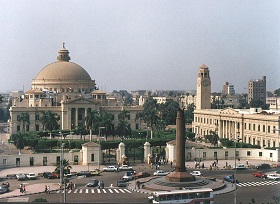
Egyptian President Abdel-Fattah El-Sisi has introduced amendments to the university law on Tuesday to mandate that university presidents, deans and heads would be directly appointed by the president.

Prior to the 2011 revolution, all the heads of universities were appointed by the president. But after mass protests from students and faculty members following the revolution the law was changed, introducing elections amount faculty members for these  top positions. The presidential decree, issues last Tuesday, is seen by many as a reversal to pre-2011 control of universities.

Now, the minister of higher education will form a committee to suggest three names for each position, and these will then be passed on to the president to make the final selection. The appointment will be for four years and is renewable, according to the Arabic language local Al-Ahram newspaper.

The president can also dismiss the heads of universities and faculties before their four-year period is over, following the advice of the Supreme Council of Universities.

The presidential decree has angered several faculty members, who see this as a return to autocratic control of universities and their campuses.

Hany El-Husseiny, a founding member a founding member of the 9 March Movement for the Independence of Universities, told Al-Ahram Online that the decree shows that the current regime is committed to adopt a dictatorship and reject democracy, adding that the faculty members will not accept it and will not be silenced.

The 9 March Movement was created in 2005 to fight for academic independence and an end to police interference on campus, and includes several prominent researchers and professors from different disciplines and different universities.

The past year has seen a sharp increase in violence in university campuses, leading to the death and arrest of several students. Ever since the popularly-backed coup in 30 June 2013 that deposed of then President Mohamed Morsi, students that oppose the coup have held protests on campuses that were often violently dispersed by police interference.

Some faculty members have welcomed the decree, hoping it will bring stability in universities and remove supports of the Muslim Brotherhood, which was recently deemed a terrorist organization by the Egyptian government, from top leadership positions in universities.

Do we need science media centres in the Arab world?

A talk about the negative effects that science media centres are having on science journalism is almost an obligatory session at any meeting of science journalists or science communicators, and the 13th International Public Communication of Science and Technology (PCST 2014) was no exception.

Science media centres can often become PR centres, deceive journalists and can contribute to churnalism, where journalists try to put out a large number of stories that involve little research and are of low quality.

There are no science media centres in any country in the Arab world, for better or for worse. I would sometimes argue that we should start setting some up, especially in countries that are increasing their science output, in order to promote more and higher quality of science journalism.

But a panel discussion at PCST 2014 about science media centres in the United Kingdom, argued how effective science media centres can really be.

“The problem is science media centres often don’t promote science, but promote corporate-funded controversial science,” says David Miller, a professor of sociology at University of Bath, United Kingdom.. In a study he presented during the session, he showed that science media centres were communicating very little public health, which may be relevant to the community. Most of their coverage was of controversial science topics such as stem cell research or genetically-modified organisms (GMO), which are issues important to corporates.

Connie St. Louis, director of the MA in Science Journalism at City University, London, argues that in the developing world, where most science research is government-funded, it can lead to the government practicing more censorship on media.

Based on the problems of science media centres, the speakers suggested that anyone setting up a new one need approach it differently:

1)    they should emphasize transparency with the budget and make sure they are independent, which is ultimately In the long-term interest of science since it will be seen as promoting scrutiny;

2)    Tailor them to the interests of journalists and make sure they work in the interest of journalism, not promotion of science;

3)    Science  journalists should be more involved in the governance of science media centres

A different model

St. Louis suggests that an alternative model to the current science media centres could have much better results. “I would close down science media centres and urge the governments to use the money to fund science journalists to do better investigative journalism.”

Andy Williams, from Cardiff University’s School of Journalism, Media and Cultural Studies, suggests that such an institute should be run by science journalists, who would know how to best tailor it to the needs of their fellow colleagues.

Miller suggests that this kind of initiative would have to be quite different from the current model – arguably a different sort of phenomenon altogether –  in that these new institutes would need to be insulated from corporate funding, and could thus also encourage investigative reporting of both sides of controversies.

Such an institute could, ultimately, be much more beneficial for developing countries eager to enhance their science coverage than the current science media centre model prevalent in the West.

Under the microscope: Women & science

Pursuing a science career in the Arab world is challenging, but women embarking on this path may face more hurdles than their male peers.

Why are there very few models of women scientist that young researchers can aspire to? Why do women hardly ever land top managerial jobs in universities and research centres?

On 27 March, 2014, and as part of Egypt’s Science Month, Nature Middle East and Nature magazine’s Arabic Edition hosted a panel discussion with four prominent women researchers, at the American University in Cairo, to explore the issues women in the science industry face, and look at success stories.

The panel included Nagwa El-Badri, the department chair of biomedical sciences at Zewail University of Science and Technology, Rania Siam, the chair of the department of biology at the AUC, Rehab Abdallah, a research assistant at AUC and Sara Serag El Deen, an AUC graduate studying for her PhD in Harvard University.

You can watch the full event now on our YouTube channel, and join in the discussion in the comments below. Do you agree that women scientists in the Arab world face more obstacles than men? And if so, then how do you propose we solve this?

You are currently viewing a placeholder content from YouTube. To access the actual content, click the button below. Please note that doing so will share data with third-party providers.

More Information

New agricultural trends to feed the world

This is a guest blogpost by Youssef Mansour, a young researcher currently interning at Nature Middle East.

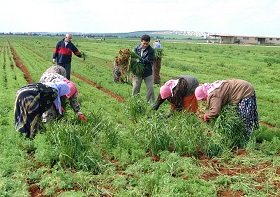
Scientists are struggling to come up with new technologies to feed ever increasing populations around the world.

Scientists are struggling to come up with new technologies to feed ever increasing populations around the world.{credit}ICARDA{/credit}

The agriculture sector needs to double food production by 2050 to meet growing global populations – a tremendous feat considering the challenges posed by climate change, water shortage and how the increase in farming land is not catching up with demand. That’s why scientists are up to their ears looking for ways to sustainably increase production of crops capable of withstanding different environmental stresses.

At the BioVision Alexandria 2014 meeting last week, a group of leading agriculture scientists showcased new trends in agriculture that attempt to address the rising food needs of the next 100 years.

Classic approaches aimed at producing stress-resistant crops such as breeding programmes and genetic engineering “have not yielded the results that people had hoped over the years” says Rusty Rodriguez, CEO of Adaptive Symbiotic Technologies, a biotechnology company focused on agriculture research. These approaches are reductionist and focus on plants only, ignoring the fact that all plant and animal life partner with microorganisms for mutual benefit, he says.

Rodriguez introduced a new trend named symbiogenics, a technology that harnesses the impact that fungi that inhabit plants internally have on their ability to tolerate stresses.

In an experiment back in 2002, he found that symbiotic plants with a particular fungus close to a hot spring at Yellowstone National Park could tolerate temperatures up to 65°C. Neither the fungus nor the plant could withstand such high temperatures alone, but they developed a heat resistance when they partner up.

The Middle East is one of the most water insecure regions in the world, with water availability per person averaging 1,200m3 per person per year – less than a fifth of the global availability per person. Additionally, it is expected to heat up faster than most other regions, with an expected 6°C increase by the end of the century over the Levant region. The region faces numerous challenges for food security, such as the lack of investment in agricultural research and development, inadequate policies and the lack of social and economic stability in the region, points out Mahmoud Solh, director-general of ICARDA.

“We have seen people working on very important things but separate from one another. It seems to me that the problems are so severe [in the Middle East], that this is the perfect location to look at the convergence of these technologies,” says Rodriguez. “We [can] use engineering to get the plant to talk to us. Then we use microorganisms, maybe some genetic engineering, maybe some synthetic biology to modulate what’s going on inside the plant, so when it tells us something is wrong, we know how to fix it.”

Other approaches

A major goal of modern agriculture is to be able to bring across the symbiotic nitrogen fixing bacteria associated with legumes to cereals such as maize, wheat and rice.

This would optimize the use of nitrogen for increasing crop production while decreasing the exposure of the environment and humans to synthetic fertilizers.

Experiments conducted by Edward Cocking, director of the Centre for Crop Nitrogen Fixation at Nottingham University, have shown that introducing a low number of a non-nodulating nitrogen fixing bacteria called Gluconacetobacter diazotrophicus has been found to significantly inhabit the root meristem and exhibited “progressive systemic plant colonization”.

The bacteria, which localizes in vesicles in the cytoplasm of plant roots and shoots, were found to express nitrogenase genes that produce enzymes responsible for formation of ammonia from hydrogen and nitrogen gas. Presently, work is geared towards determining how far these non-nodular bacteria can fix nitrogen in cereals. Field studies run under various environmental conditions would then show how much synthetic nitrogen fertilizers could be lifted.

Separately, a different approach that was pieced together in the 1980s in Madagascar by Henri de Laulanié increases rice productivity by modifying farming techniques to decrease agrochemical inputs and increase yield from the same genetic variants, explains Norman Uphoff, professor of Government and International Agriculture at Cornell University

The System of rice intensification (SRI) is emerging as a new paradigm for sustainable intensification of various crops, and many farmers in developing countries are already spearheading a movement to apply the same practices to other crops.

In the Middle East, “there is no silver bullet that will be able to solve the problems of dry areas,” Solh says. He believes an integration of strategies that optimizes the use of natural resources and utilizes genetically-modified crops, as well as the implementation of policies that promote sustainable agriculture, is the way forward.