Life = matter + information. Or does it?

This is a guest post by Sarah Hiddleston 

{credit}Eileen Haring Woods{/credit}

“We are points of order in a disordered universe. This is an expression of how we feel about being ruled by physics in all our emotions and reactions. It’s how we interpret, describe and live our lives within this system.”

Artist or scientist? These are the words of curator Caroline Wiseman, whose brainchild “Alive in the Universe” found a home at the world’s longest standing contemporary art fair in Venice yesterday. It is a month-long exhibition that seeks to interpret what life is, and rather than reduce it to an equation, surround the viewer with an experience of what that means.

Opening the show is Syrian-born Issam Kourbaj. His three-piece installation is made up of a video of burnt matches, 98 boats made of recycled material and an IV drip. It juxtaposes the energies of fire and water, the flow of death and life, the struggle of a people between the two and the flow of time with the flow of migrants.

“Are we aware of the threads of our lives? I am putting the viewer in a place where many senses are being revisited. Each material sends new signals of information.”

Collaborating alongside him is Ruth Padel, a British poet whose book The Mara Crossing (2012) elucidates detailed comparisons in the way life organizes itself. Whether in cell biology, ornithology or human history, it is with the passage of migration that life begins, she says.

“There are two main reasons cells migrate in our bodies: One to create a new life, and two to defend the body –if we get a new cut the corpuscles and others rush to the site of trauma,” she explains. There’s an interesting parallel to be drawn with people migrating – a vigorous society is constantly replenished by the outside. Human civilization began with migration out of Africa. The first cell arrived on the planet, whether from the sea or outer space, and it colonized other places. The first great land migrants were trees. DNA from the oldest oak trees in Britain shows they came from the Spanish peninsula.”

Living things migrate because life becomes impossible or there’s a desire to make a better life. Birds in or near the Arctic get too cold and fly south. When the south becomes too crowded and they need to breed they return to the Arctic where there are lots of insects –  a protein-rich diet for their offspring. It’s a bit heartbreaking but if you overlay the maps of bird migration routes and human migration routes across the Mediterranean, it’s the same. They take the passages where water is smallest – the straits of Gibraltar, or through Sicily, Malta.

Venice, Ruth says, represents the wasp waist of information flow between north and south in history. Both she and Kourbaj will find new resonance for their work in the interconnectivity of the space around them. “My interest will be in the relationship of my work to the water, and to the tourist boats and the gondola boats,” says Kourbaj, “in scale and in meaning, and in contradictions, they will have a new charge.”

For Wiseman, this too is interesting: “What I am trying to do through creativity is put order into things. The more I thought about what this order could be, the more I found that it is the life force, it is evolution.”

Life seems coupled to flow, movement, change, transformation: information in whatever form – the passage of energy, the replication of DNA within biological cells, to animal migrations and the organization of human societies.


You can watch a video about Kourbaj’s work here: https://www.youtube.com/watch?v=vpUOx-wTUz4

So you want to be a better writer?

{credit}Credit:Pixabay{/credit}

This is a guest post by Lea Gagnon, an Editorial Development Advisor in Nature Research

Welcome to the first of a series of tips from the Nature Research Academies to help researchers navigate the academic landscape. In this competitive landscape where no research is complete without publication, researchers are pressured to publish scientific articles. However, writing a paper in academic English presents many challenges, especially for non-native speakers. In this blogpost, we will introduce the three writing principles that good writers use to reach their readers better.

The first principle is called the cognitive load theory and refers to how much new information readers can process. Science is already complex. Scientists need to be concise and avoid unnecessary words. Therefore, short sentences of 10 to 20 words are better than long-winding sentences. Similarly, expressing one single idea per sentence ensures optimal understanding. If you give too much information at once, you risk confusing and losing your readers. If you limit the information, and carefully select strong words to concisely express your idea, the reader is more likely to understand. Although varying sentence length can make a text more dynamic and exciting, previous research1 has shown that comprehension level increases when sentence length decreases. A 50-word long sentence allows only 50% comprehension, whereas 20- and 10-word long sentences raise it to 80% and 95%, respectively.

The second principle is cognitive bias, which describes the tendency for authors to assume that their readers know as much as they themselves do. Specialists should keep in mind who their audiences are, and put information within context to make it easier to be understood. For example, defining ideas and theories in the introduction increases clarity for newer researchers or those from outside the field. Avoiding subjective (e.g. interestingly, surprisingly) and complex (e.g. “to ascertain” instead of “to test”) words reduces ambiguity. Using more active voice (e.g. “I write a paper”) instead of passive voice (e.g. “the paper was written by me”) makes a text simpler, more engaging and easier to read.

The last principle refers to the readers’ expectations – or the logical flow of information. Logically structuring a text involves introducing an idea, developing it and highlighting its importance. The topic position at the beginning of a sentence introduces an idea whereas the stress position at the end emphasizes its importance. A nice logical flow can be maintained with the signposting technique that good communicators often use to guide their readers. Signposting consists of placing keywords in the stress position of the first sentence in order to introduce the topic position in the following sentence:

  1. The treatment efficacy is promising, but the side effects are serious. This treatment will be used clinically to fight the infection.
  2. The side effects are serious, but the treatment efficacy is promising. This treatment will be used clinically to fight the infection.  

In the examples above, the second option uses signposting effectively and has a better logical flow between the two sentences than the first option. Signposting is also beneficial for linking paragraphs together, where key sentences at the beginning or the end of paragraphs replace keywords.

In conclusion, these three learning principles can be summarized into three reminders for researchers: conciseness, clarity and logic. By writing articles effectively this way, researchers increase their chance of publication and their readers’ comprehension.


References:

  1. Miller G.A. & Selfridge J.A. (1950) The Journal of American Psychology 63(2):176-185.

Tough times, tough measures for Kuwait

Kuwait has greenligted the creation of a DNA database of all its 1.3 million citizens, and 2.9 million foreign residents – a surprising move that DNA privacy advocates deem “ill advised.”

Parliament, based on a government request, mandated the law earlier this month, allowing the country’s Interior Ministry to establish said database. Now, people who refuse to provide genetic samples for testing could be jailed or fined, according to this AFP report. Furnishing fake samples is punishable by a seven-year prison sentence.

The decision came in the wake of a suicide attack in a Shiite mosque in Kuwait’s capital that left 227 people wounded. The militant terror group known as the Islamic State (IS) has claimed responsibility.

The entire endeavor is expected to set back the Kuwaiti government some $400 million, dug out from the country’s emergency cash, something that Hellen Wallace, director of GeneWatch UK, genetic science watchdog, calls “a waste of resources.”

“It does not help to solve more crimes or prevent acts of terrorism, especially by suicide bombers who are not concerned about their identities being revealed after the event,” she tells Nature Middle East.

Wallace says that a DNA database reveals private information about biological relationships, for instance. “It also allows everyone on the database to be tracked by the government or any outsider who can infiltrate the system, because people leave their DNA wherever they go, such as on their coffee cup, not only at a crime scene.

“Finally, the risk of errors increases with large databases, as DNA evidence can be planted or contaminated, leading to false accusations and even false convictions for a crime.”

The UK and Portugal have previously mulled over building DNA databases of their populations but had an about face. The European Court of Human Rights, following a case in 2008, judged unanimously that the indefinite retention of innocent people’s DNA profiles, fingerprints and samples is unlawful, breaching Article 8 of the European convention on Human Rights, which is the “right to privacy.”

A 2014 study published in the Egyptian Journal of Forensic Sciences, and co-authored by Wallace, suggests that criminalizing all those who refuse to voluntarily provide their DNA will eventually lead to public distrust. The study says that certain questions should always be asked of databases worldwide, especially ones related to safeguards needed to prevent miscarriages of justice, and cross-border sharing of DNA information.

It also highlights the importance of involving the public in such a political debate, something that Kuwait – in its hurry to impose stricter security measures and help authorities make quicker arrests – has clearly sidestepped.

Reference:

Wallace, H.M. et al. Forensic DNA databases-Ethical and legal standards: a global review. Egyptian Journal of Forensic Science https://dx.doi.org/10.1016/j.ejfs.2014.04.002 (2014)

Date syrup inhibits bacterial growth

New research shows that date syrup – a delicacy popular in the Middle East and a culinary essential in countries like Iraq – can inhibit the growth of bacteria faster than manuka honey.

The syrup has antibacterial activity against a number of disease-causing bacteria, says the research presented yesterday at the Society for General Microbiology’s Annual Conference in Birmingham, and undertaken by Hajer Taleb, a research student from Cardiff Metropolitan University.

Talib studied date syrup produced traditionally in Basra, Southern Iraq, and her in vitro results reveal that the date syrup is as effective as manuka honey, in similar amounts, but works more quickly, inhibiting bacterial growth after only six hours of treatment.

The antibacterial properties – that work against a host of diseases including Staphylococcus aureus, Escherichia coli, Enterococcus spp. and Pseudomonas aeruginosa – are present thanks to phenolic compounds that form naturally in dates as they mature.

Date syrup has already been consumed for its health benefits in the region, however, Talib wanted to test the perception and consecutively pinpoint, perhaps for the first time, the mechanisms underlying said health benefits.

While the research is still in the laboratory stage, the researchers believe that the syrup could have a clinical value as a topical antibacterial treatment for wound infection, but Ara Kanekanian of Cardiff Metropolitan University, who leads this research, cautions against using the syrup to treat wounds, pending further research.

Researchers can now tell who will be depressed, or not, in response to stressors

Two people, with similar circumstances, can experience the same stressor – death, trauma or even bankruptcy – and one could go on to develop depression while the other would weather the crisis and come out unharmed. What makes the difference between one and the other? Why do some function normally following a crisis, or are more resilient, while others become emotionally crippled by it?

Scientists from Duke University, Durham, believe they have a clue in the form of an almond-shaped group of nuclei in the temporal lobe of the brain called the amygdala whose reactivity during such circumstances can indicate future vulnerability to depression or anxiety – essentially acting as a predicative marker of risk.

It’s not the first study that attempts to link individual differences in brain activity to the ability to handle trauma and stress; activity of this area is crucial for detecting and responding to danger.

Previous studies, however, looked at participants who endured highly traumatic events, like war and active combat, but this study focuses on the general population, who encounter less punishing forms of stress, like divorce, or loss of a loved one.

A longitudinal study of 340 healthy young adults published this February in Neuron, and flagged in Duke Today, the university’s e-publication, explores how experiencing stressors increases the likelihood of developing treatment-resistant, chronic psychological problems, including depression and anxiety, for some, but not others.

The scientists measured the intensity of this activation using functional magnetic resonance imaging.

The research, done in the lab of senior author Ahmad Hariri, professor of psychology and neuroscience, concludes that amygdala reactivity interacts with stress to predict internalizing symptoms, occurring as much as 1 to 4 years after scanning. The study also traces individual differences in how the brain reacts. “These results highlight a readily assayed biomarker, threat-related amygdala reactivity, which predicts psychological vulnerability to commonly experienced stressors and represents a discrete target for intervention and prevention,” reads the paper.

Depression, globally, is responsible for more “years lost” to disability than any other conditions, revealed Nature magazine in a special portfolio on depression. Some 350 million suffer from it, according to the WHO, and it remains widely undiagnosed and untreated in many places because of stigma, or underreported or misdiagnosed in others. In November 2014, Nature tracked prevalence of depression across countries, and many Arab countries came on top of those highly affected by the mental condition. In fact, of the first 20 countries with highest prevalence of depression worldwide, 12 of those were Arab.

“Often, individuals only access treatment when depression and anxiety has become so chronic and difficult to live with that it forces them to go to a clinic,” explains the study’s first author Johnna Swartz, a Duke postdoctoral researcher, in Duke Today. “With a brain marker, we could potentially guide people to seek treatment earlier on, before the disorders become so life altering and disruptive that the person can’t go on.”

Hariri and his team say they will continue to follow up with, and monitor, their study participants – with the ultimate goal of understanding why some are more susceptible to mental health problems, as per a long-term project launched by Duke Neurogenetics Study.

“We [also] want to know just how far in the future knowing something about an individual’s brain helps us understand their risk,” says Hariri.

KAUST academics: Institution pushing the envelope through education, not protests

The King Abdullah University of Science and Technology (KAUST) is between a rock and a hard place – asked to condemn the flogging of a Saudi blogger, perhaps try to influence the sentence, in a country that doesn’t forgive opposition, and shuns dissenters.

Last month, a group of 18 Nobel laureates, “friends of KAUST” sent an open letter addressed to KAUST’s president Jean-Lou Chameau to urge the scientists of the world-class institution to speak up against the public flogging of Saudi blogger Raif Badawi. Badawi was sentenced to 10 years in prison and 1,000 lashes for starting a blog that criticized the Kingdom’s religious clerics and its politics. A Youtube video taken on a mobile phone showing the blogger receive the first 50 lashes shocked the international community, including said Nobel prizewinners who suggested that KAUST must decry the sentence or risk losing a measure of its credibility and world standing.

“The Badawi case once again highlights the responsibility of researchers and scientific institutions who collaborate with authoritarian and repressive regimes such as Saudi Arabia to denounce human-rights abuses,” reads a Nature editorial, in the magazine’s 5 February 2015 edition.

But KAUST leaders, it seems, are not faltering under peer pressure, and according to a new story published last week also in Nature, the scientists will continue their efforts to “quietly” attempt to impact Saudi Arabia – and perhaps the entire Arab and Muslim world – through scientific enlightenment, not confrontation.

“KAUST is built on values that I espouse as a scientist, and the impact of KAUST will be felt over time, in major part through the influence of its graduates,” Mark Tester, an Australian who is associate director of KAUST’s Center for Desert Agriculture, told Nature magazine.

“We are making a real contribution to the country through education, and through research advances,” he adds.

KAUST argues that its very presence challenges the status quo – and indeed, as the story notes, in “stark exception to strict Saudi society, [KAUST’s] campus in Thuwal, 90 kilo­metres north of Jeddah, imposes no discrimination on the basis of sex, religion or ethnicity. Unlike in the rest of the country, women and men mingle, and women can also drive.”

These freedoms were reportedly a condition of many of the Western scientists who backed KAUST’s development.

A researcher familiar with KAUST, who spoke to Nature on condition of anonymity because of the sensitivity of the issues, says that if KAUST researchers protest, “it would have little effect on the regime and would risk providing ammunition for the institution’s critics in Saudi Arabia,” who according to the researcher, already have KAUST under scrutiny.

“KAUST’s existence is evidence of the kingdom’s desire to develop,” Tester says. “It will take time, and I ask that people give us time.”

The Nature editorial from last week, insisting on the urgency of speaking out to defend freedoms while acknowledging the complexity of Saudi Arabia’s culture and society, says however that there’s no conflict between defending individual freedoms and having a broader reach.

“Campaigns for persecuted individuals whose plights otherwise risk going unnoticed can also, as in Badawi’s case, send the powerful message that the world is watching.

“Scientists at KAUST are perhaps not best placed to speak out, being at risk of potential retribution. But Saudi Arabia benefits hugely, not least in terms of its international image, from prominent collaborations with Western research organizations and universities, which have a duty to use that leverage to speak out on abuses, and to call for greater democratic reforms — both publicly and in their private dealings with their Saudi partners.”

“Revolutionary” type 2 diabetes therapy to be released soon

SGLT2 diabetes

{credit}Boehringer Ingelheim{/credit}

A new class of diabetes therapy, soon to be available on the markets, including in the UAE and Saudi Arabia, is the first to target the kidney, say experts, and is hailed as “revolutionary” by Boehringer Ingelheim, the pharmaceutical producing it.

The modus operandi of the treatment, targeting type 2 diabetes (T2D), was revealed to the press during Dubai’s Arab Health conference last week – and it works by targeting glucose directly, independent of impaired ß-cell function and insulin pathways.

T2D is the most common of the two types of the disease accounting for 90% of diabetes cases and affecting approximately 382 million worldwide – 36.8 million of which are based in the Middle East and North Africa, a number that is expected to double by 2035. This type is marked by high blood glucose levels over a long period, reduced ability of the pancreas to produce insulin, and insulin’s inability to lower blood glucose.

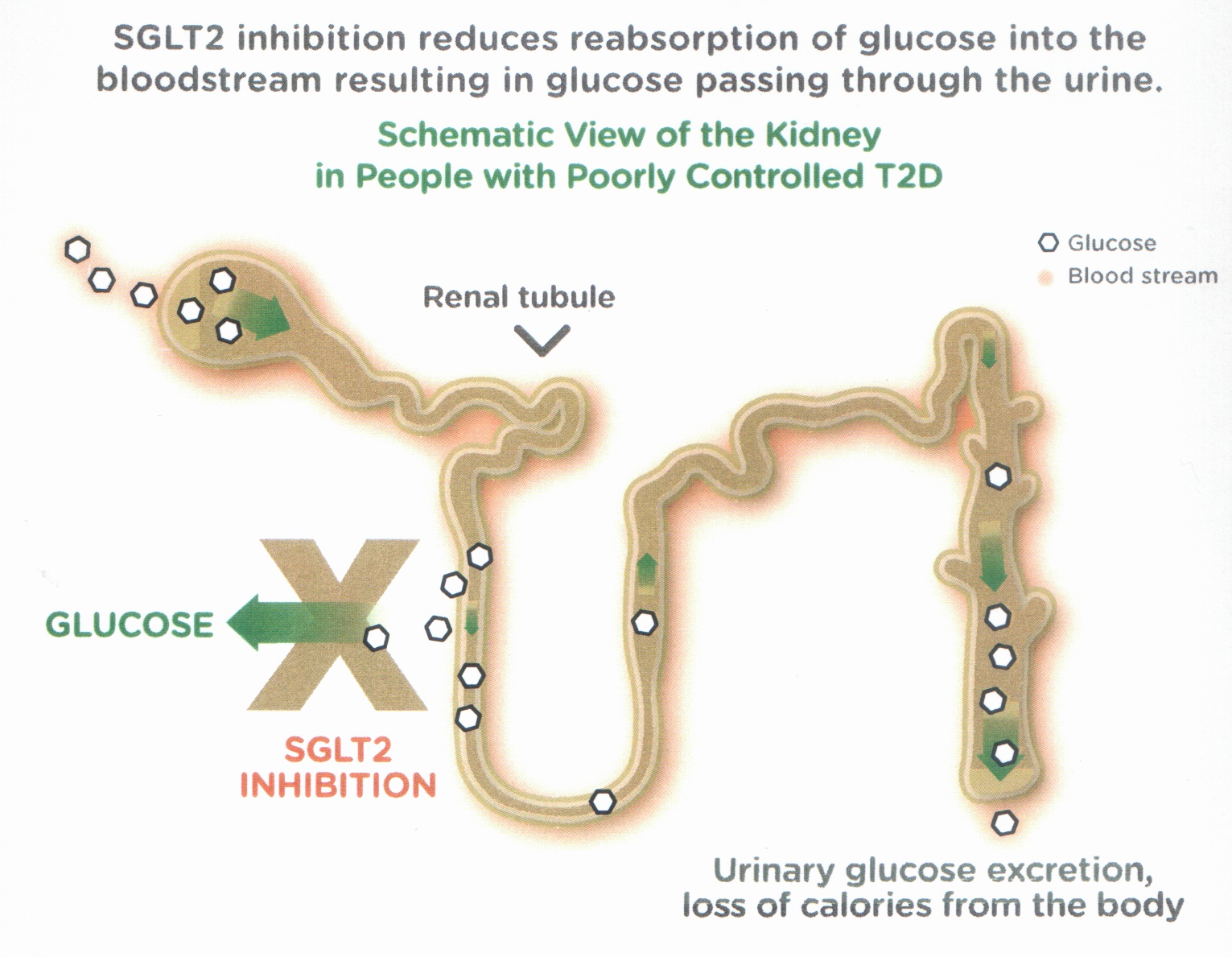
Diabetics, with poorly controlled T2D, have very high renal threshold for glucose reabsorption in their kidneys. The novel treatment inhibits sodium glucose co-transporters (SGLTs) – proteins responsible to the kidneys’ role in reabsorbing glucose into the bloodstream. Specifically, it blocks SGLT2, which reabsorbs 90 % of glucose filtered by the kidney.

Al Sifri describes SGLT2 inhibition as a breakthrough therapy, with few side effects.

Al Sifri describes SGLT2 inhibition as a breakthrough therapy, with few side effects.

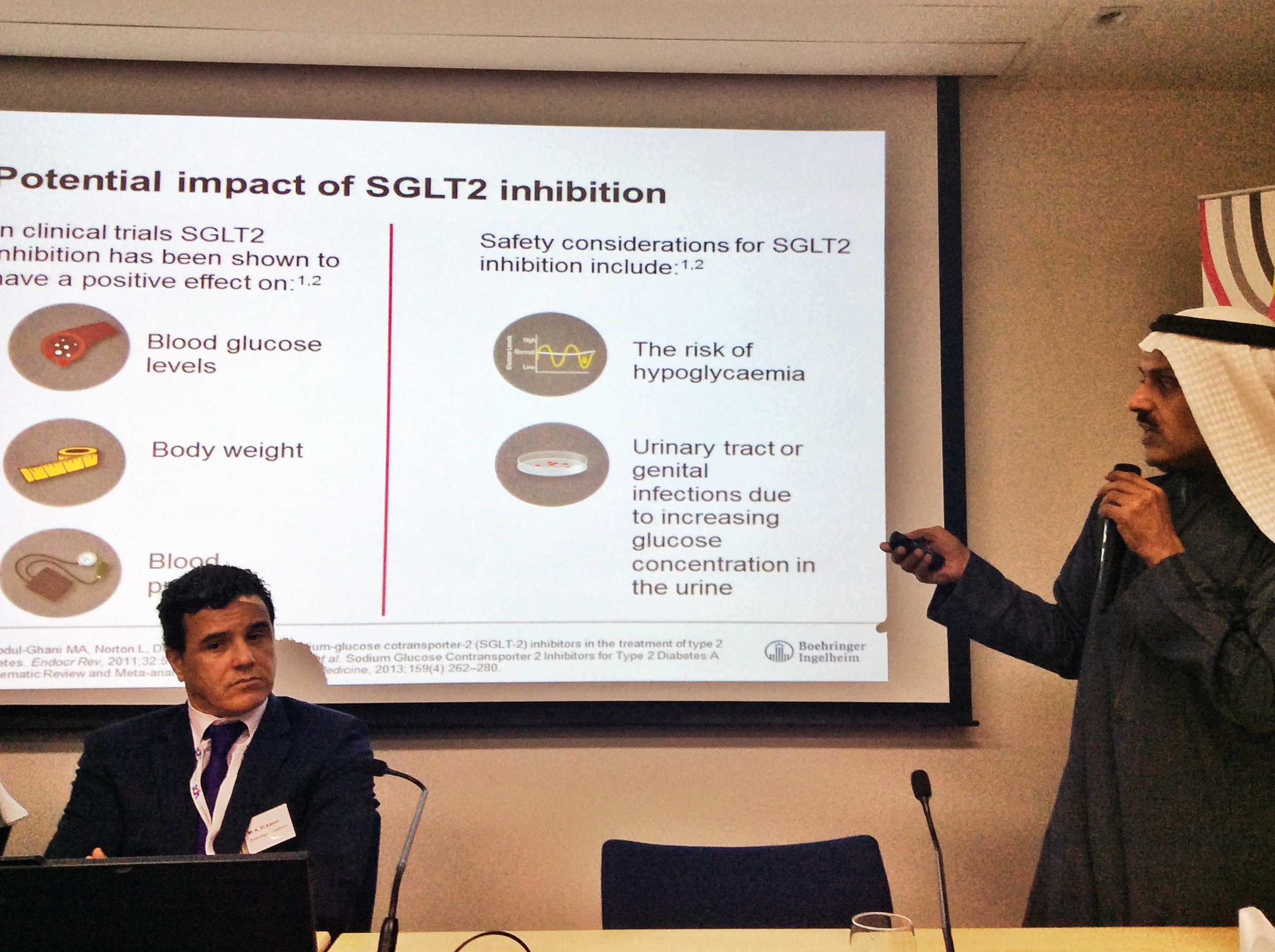
Through reducing reabsorption of glucose into the bloodstream, the SGLT2 inhibitor allows excess glucose to pass through the urine, leading to urinary glucose excretion. It’s one of the few treatments available that also guarantees loss of weight, besides regulating blood glucose. It also has a positive effect on blood pressure.

So far, when prescribing this medication, the primary side effects that doctors should look out for are hypoglycaemia (low blood sugar levels) and urinary tract and genital infections, explains Saud Al Sifri, chairman of the endocrinology, and diabetes department at Al Hada Armed Forces Hospitals, Saudi Arabia. Al Sifri, a proponent of the drug, however explains that so early in its introduction, it’s unclear what long-term effects the medication could have on the kidney or otherwise. “We’re not aware of long-term complications,” he says.

Al Sifri explains that considering diabetes is “very complicated; a disease with different faces, and with many subsets,” new classes of treatment provide a range of viable options, since patients require different sets of treatment and drug combinations, especially if the disease progresses. “There are no templates when it comes to diabetes,” he adds.

“It’s FDA-approved. [And ] the risks are very low with this one, as far as we know,” he adds. “It has a different mode of mechanism; other medications work through the pancreas, namely beta and alpha cells. This is the first therapy that cures diabetes through the kidney.”

Talking it out: How diabetics benefit from diagnosis conversations with doctors

Early conversations between physicians and diabetes patients are not only critical for patients’ emotional well-being but they also predict the degree to which patients keep up with treatment.

There are some 36.8 million diabetics in the Middle East and North Africa, with the highest number of patients in Egypt, and the highest prevalence of the disease in Saudi Arabia, followed closely by Kuwait. In 2014 alone, the region spent a staggering $16.8 billion on healthcare in relation to treating or preventing diabetes –  a strain on the developing countries’ collectives economies. Around 363,000 died last year from diabetes and/or its complications, 53% of which are below the age of 60.

But little changes can make a difference, new information reveals, positively affecting the quality of life (and treatment) of diabetics.

Diagnosis conversations with doctors for one help diabetics accept the fact that the ailment – especially the often-fatal and more prominent Type 2 – is here to stay, in other words a life-time partner; these conversations are also associated with more commitment to the prescribed courses of treatment, reveals “IntroDia” a global survey about type 2 diabetes.

The survey, carried out by Boehringer Ingelheim and Eli Lilly and Company in partnership with the International Diabetes Federation (IDF), launched in 2013 and has since then investigated conversations between over 6,000 doctors and 10,000 patients across 26 countries, including Saudi Arabia and the UAE. The survey is ongoing but the initial results were released in September 2014.

Around 60 physicians from Saudi Arabia and the UAE participated in the survey – which revealed that unfortunately the behavioral changes by patients (or the lack thereof) as well as the preliminary conversations with doctors on the onset of diagnosis are far from enough to curb the damage – both emotional and physical.

Patients revert to old habits, say panelists at Arab Health Congress happening in Dubai this week, and physicians have complained that they need more “tools” to help them make sure that people with type 2 diabetes sustain behavioral changes needed for treatment success.

“They need more time, for instance, with the patients,” explains Karim Al Alaoui, managing director of Boehringer Ingelheim for Middle East, Turkey and Africa, among other things.

During the initial stages of diagnosis, says Abdulrazzaq Al Madani, consultant endocrinologist and physician at the Dubai Hospital and chairman of the Emirates Diabetes society, UAE, patients experience anger, stress and frustration; “it’s the idea that they have to live with this disease forever. It’s a permanent change.”

Treatment success depends on how the patients accept their condition, and the efficacy of medications in equal parts, says Al Alaoui, based on the survey results.

The final conclusions of the survey will be showcased in full later this year. The companies and the IDF are hoping that the insights therein would be used to develop resources to help physicians provide adequate support for patients.

Nobel laureates urge KAUST to openly decry harsh punishment of Saudi blogger

In an open letter addressed to Jean-Lou Chameau, the president of the King Abudllah University of Science and Technology (KAUST) in Saudi Arabia, a group of 18 Nobel laureates, “friends of KAUST,” pleaded with the country’s leading academics to stand up against oppression of free thought; more precisely to openly decry the public flogging of Saudi blogger Raif Badawi.

Badawi, who created an open platform for discussion and criticised the Kingdom’s religious clerics, was handed down a 10-year prison term, and 1,000 lashes in punishment. A Youtube video taken on a mobile phone showing the flogging went viral; renewing concerns over Saudi Arabia’s human rights track record, and sending shock waves across the international community.

Now, the Nobel prizewinners – from France, Germany, the US, the UK, Australia, Canada, and South Africa – are not only urging KAUST academics to speak up and attempt to influence the sentence, which they hope that Saudi Arabia is already reconsidering, but they’re also suggesting that if they stay silent, it might reflect negatively on the important science and research hub they have built up.

“We write out of concern that the fabric of international cooperation may be torn apart by dismay at the severe restrictions on freedom of thought and expression still applied to Saudi Arabia society,” the letter reads. “We have no doubt that members of KAUST share that concern, aware that the cruel sentence passed, for example, on Mr. Raif Badawi who established a forum for open discussion, sent a shock around the world.”

Despite being firm in demanding an acknowledgement of the harshness of the sentence against the now-prominent blogger, the scientists showed understanding (clear in their wording of the letter) that in a country like Saudi Arabia, “change comes by degrees.” They still insisted that five years into the institution’s history, however, it’s “a crucial time for KAUST” to argue for “freedom of dissent, without which no institution of higher learning can be viable.”

“The undersigned friends of KAUST will be there to support you in asserting the values of freedom that we are all agreed are essential to the future of a University in this twenty first century, and that will determine the success of the extraordinary venture which you lead,” the letter concludes.

The full letter can be read here.

The (biological) spoils of war

Despite the destruction war yields, there’s a biological benefit for engaging in it, a study that observed nomadic herders in South Sudan and southwest Euthopia reveals.

The Harvard study is lead by Luke Glowacki, a doctoral student under the guidance of Richard Wrangham, Ruth Moore Professor of Biological Anthropology and Curator of Primate Behavioral Biology in the Peabody Museum of Archaeology and Ethnology.

The author explains that in herding tribes in East Africa, those who have participated in raids or engaged in violent conflict, had more wives and in turn a greater opportunity to reproduce successfully; in short, those who “took part in more raids, had more children” over the course of their lives, according to Glowacki, who was quoted in Science Daily.

“The currency of evolution is reproductive success,” adds Glowacki. He says that in his paper, published on 29 December in PNAS, he emphases that it’s not just a case of “biology made me do it.”

“It’s very clear what the pathway to greater reproductive success is — it’s access to livestock, which are obtained through raiding and then used for marriage,” he’s quoted as saying. “But the cultural mechanism is mediated by the elders who control virtually all aspects of the society. After a raid young men give any livestock they capture to the elders and the raider cannot use them at that point even if he wants to get married. Later in life, as the raider gets older he can gain access to them, so there’s a lag in receiving benefits from participating in a raid.

“The overriding question I’m interested in is how humans cooperate, and one type of cooperation is participating in intergroup conflict.”

It’s not clear whether Glowacki’s conclusions can be generalized to the rest of the region, specifically North Africa and the Middle East, where civil conflict is rampant, as well as the idea of polygamy among many Muslim fighters, say in countries like Syria or Iraq – and whether or not religious, as well as cultural, forces play a part here. In Syria and Iraq, for instance, notorious Islamist group IS (Islamic State) cover ground, raiding new towns and villages, and taking over valuable resources, leaving destruction in their wake. They’re field combatants too, perhaps not unlike the study’s subjects: armed Nyangatom men between the ages of 20 and 40. Taking female hostages or forcing themselves upon communities, for instance, IS has been asserting its right to “Jihad marriages” and offing those who refuse.

Is this the same? Can the same link between war and reproductive capacity be applied to them?

According to the paper, evolutionary anthropologists have argued that individuals can benefit from participating in warfare despite the risks they face, but field data to confirm this hypothesis were rare, until this paper; considered the first quantitative study on warfare and reproductive success.

“Greater warriorship gives men increased access to bridewealth over the life course.”

The study however makes it clear that its conclusions, so far at least, are restricted to small-scale societies engaged in warfare; Nyangatom men are essentially villagers, small numbers compared to organised groups like IS. The politics of the conflict and the community dynamics may also be a deciding factor.