Celebrating International Women’s Day 2018: A Naturejobs roundup

Whilst young scientists working in academia today might face huge problems, women within that group face larger problems still, many of which we cover across Naturejobs. To mark International Women’s Day 2018, here’s some of our coverage of women in science and the hurdles they face.

https://www.youtube.com/watch?v=rdfqXdibc0k
Continue reading

Harassment and assault: ‘Disheartening’ trends

By Paul Smaglik

The belief that rules of workplace conduct don’t apply away from a university setting helps to perpetuate a culture that gives rise to sexual assault and harassment of female scientists conducting field research, says a co-author of a report published this month in American Anthropologist.

pathway-1081989_1920 Continue reading

Mentoring: A powerful tool

By Virginia Gewin

complexity

{credit}westend61/Getty{/credit}

A free mentoring toolkit that helps female Middle Eastern scientists around the world to find and support one another is available online.

Rana Dajani, a molecular biologist based at Hashemite University in Zarqa, Jordan, developed the toolkit to inspire female researchers to build the networks they need to support, collaborate and advise one another as they move forward in their careers.

The number of female researchers in Middle Eastern countries varies wildly. A 2016 report found that women represent around 35.5% of total researchers in the 57 Organisation of Islamic Cooperation countries. Still, the numbers of employed women in some Middle Eastern countries are much lower. In Jordan and Algeria, just 12% of women work and in Saudi Arabia, 14% are employed.

Dajani built a mentoring network in Jordan in 2013, pairing 10 mentees with 10 mentors. From that experience, and with funding from the US National Academies of Science and the US National Science Foundation, she created ‘Three Circles of Alemat’, a three-year project to develop and test the mentoring toolkit. Working with female researchers from 17 universities across the Middle East, she and her team created a low-cost method to improve personal and professional success for both women and men. The final phase of her mentoring project, Three Circles of Alemat, brought together a cross-regional group of female Middle Eastern scientists this year in Boston, Massachusetts, at the annual American Association for the Advancement of Science conference.

The mentoring toolkit is available for free through the website of the Society for the Advancement of Science and Technology in the Arab World. Another organization, 500 Women Scientists, a network of 19,000 women worldwide, has also adopted the toolkit. “We did not want to provide a centralized forum for mentors to find mentees because it is costly,” says Dajani, who is spending this year as a fellow at Harvard University in Cambridge, Massachusetts, writing a book about women redefining success. “Rather, we wanted people to take control and start their own creative forums.”

Virginia Gewin is a freelance writer in Portland, Oregon.


Suggested posts

Video: How did you cultivate mentors?

Ten tips for finding an effective mentor

The faculty series: What does it take to be a mentor?


Helping women in research navigate career challenges

Ismahane Elouafi of ICBA

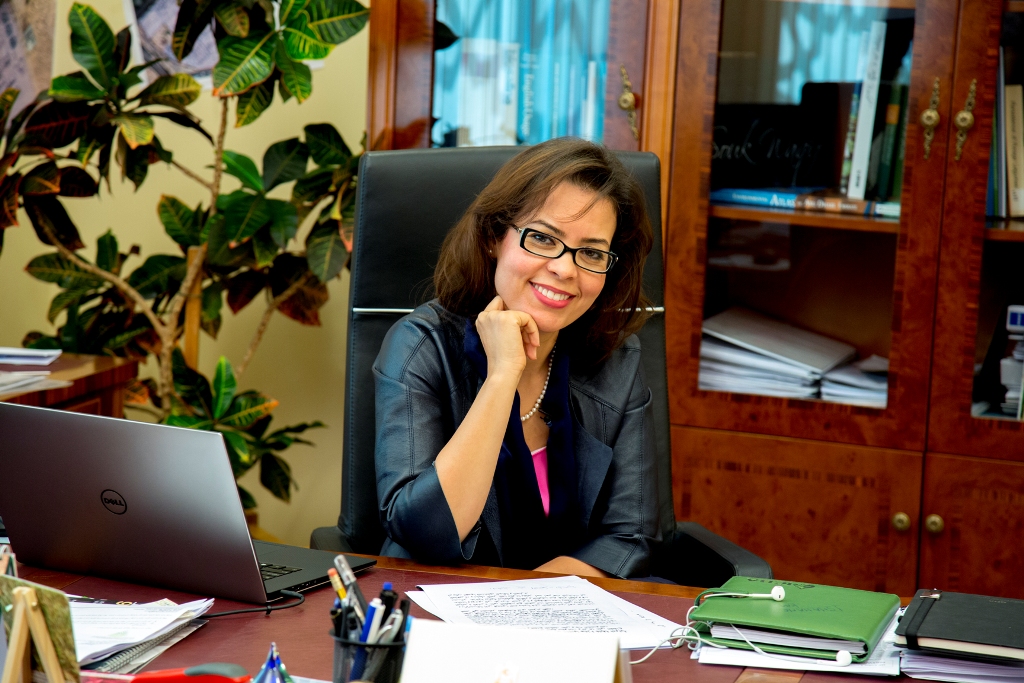
Ismahane Elouafi of ICBA{credit}ICBA{/credit}

This is a guest blogpost by Noha Atef.

Women scientists from nine different countries in the Arab world have gathered in the UAE to spotlight the major challenges and hurdles that they usually face working in different research fields. The gathering, which also included pointers on leadership, building and managing teams, self-confidence and communication workshops, and role playing sessions, was hosted by the Dubai-based agricultural research centre known as ICBA, Bill & Melinda Gates Foundation and the Islamic Development Bank.

The meeting marked Tamkeen’s first ever event – a women scientists’ empowerment programme masterminded by Ismahane Elouafi, director general of ICBA and, as per CEO-Middle East magazine, one of the Arab world’s 100 Most Powerful Women in science. Nature Middle East spoke to Elouafi about the landmark event.

NME: Tell us your impressions of Tamkeen’s first event? Was it up to your expectations?

Ismahane Elouafi: We were lucky to have women joining us from Morocco, Algeria, Tunisia, Egypt, Jordon, Lebanon, Oman, UAE and Kuwait. The young women’s enthusiasm was just impressive. Their feedback was overwhelmingly positive.

We are not starting from scratch, we are building on somebody else’s experience and that’s the AWARD program started by Bill and Melinda Gates Foundation. They helped us a lot despite the differences between the Arab world and African region.

NME: What was the common barrier that women scientists said they faced launching their careers?

IE: The cultural and biological pressure. As women, we have a biological clock. We have to get married, have children, take care of our family and make them a priority, which is normal. That’s what’s expected from our culture. Although that’s something [that is present in] other parts of the world, for Arabs it’s more intense.

NME: Would you care to give us glimpses into some of the participants’ discussions?

IE: One of the ladies said that she will start applying what she has learned first on her family. In her mind, the soft skills [that she learned at Tamkeen’s workshop] are tools that should be used every day and in every place, not just work. And that’s what we are truly looking for; give [these women scientists] the confidence to develop themselves in both the professional and personal [arenas]. … Our aim is to reach 20 to 30 women [per year] and see the impact on their families, communities and countries.

NME: How do you think those potential researchers will use the knowledge you’re providing to nourish their careers?

IE: If the course was successful, it [should] help each one of them to progress in her field. This can be measured through the number of publications they produce and through participation in conferences. It will also reflect on the way they present and communicate their work.

NME: How does this program affect you personally?

IE: Oh, I love young people. I always see myself in them. … I enjoy seeing ambitious women with so much potential. They are just looking for one single opportunity to fly. Helping them in the smallest way is a very big achievement and it’s a joy that I can’t even describe.


Gender gap in US science PhD degrees persists

It’s no surprise that the number of PhD degrees in scientific and related disciplines conferred upon US students has leapt by half in the past decade — from about 18,000 in 2006 to more than 27,000 in 2016 — according to a recent report. But “Snapshot Report – Science and Engineering Degree Completion by Gender,” released last month by the National Student Clearinghouse Research Center in Herndon, Virginia, shows that the proportion of women who earn those degrees has stayed stagnant — at a dismal 39%.


microscope

Credit: CORBIS

Continue reading

Sexual harassment: A continuing struggle

The US scientific community is still searching for a solution to the toxic issue of sexual harassment.

The US National Academies of Sciences, Engineering, and Medicine (NASEM) in Washington DC are conducting a study on how sexual harassment in academia influences the career advancement of women in the scientific, technical and medical workforce.

if-i-complain-will-it-make-my-life-better-or-worse

Continue reading

Women aren’t failing at science — science is failing women

Women in science face considerable barriers to success. Why?

Image 20170215 27406 yhpp79Female scientists are often more productive than their male colleagues but much less likely to be recognised for their work.
Argonne National Laboratory/Wikimedia, CC BY-SA

Continue reading

Do you think your career was harder as a woman in science?

Academic speakers at the Naturejobs Career Expo, London, 2016, discuss sexism in academia.

https://www.youtube.com/watch?v=rdfqXdibc0k

Continue reading

Ageism “as bad as racism”

Ageism in the workplace is as bad as racism and over-50s applying for jobs are five times more likely to get interviews if they do not disclose their age, reports David Payne.

Andy Briggs, the UK government’s new adviser on older workers, told The Times this week that 27% of men of UK men aged 65 to 70 are in paid employment, compared to 15% in 2006. The figure for women is 18% and rising, and one in ten people aged over 70 are still working. And employers have an unconscious age bias.

Employers have an unconscious age bias

“Just as there are resources invested in younger workers in coaching and career development, and similarly when women return from career breaks, companies should invest in their older staff and give them midlife career counselling. It’s in business’s interest to do this,” he said. Continue reading

Ada Lovelace Day: The women in science who inspire us – Part 2

Ada Lovelace Day aims to raise the profile of women in science, technology, engineering and maths by encouraging people around the world to talk about the women whose work they admire. We asked staff from across Nature Research who has inspired them.

This is the second of two blogs we’re posting today to mark this milestone (the first part is here). You can read more about Ada Lovelace’s legacy here.

Mariette DiChristina, Director, Editorial and Publishing, Nature Research Magazines, and Editor in Chief of Scientific American
Mariette

Journalists aren’t supposed to be partial. But I have to say I’m inspired by Elizabeth Blackburn of the University of California, San Francisco. For starters, in 2009 she shared Nobel Prize for Medicine or Physiology with Carol Greider and Jack Szostak for pioneering the understanding of telomeres and telomerase, which affect so many aspects of human health.

Dr. Blackburn tells wonderful stories about growing up with a love of science, and how her Nobel Prize-winning research began in studies of an organism that lives in the scum of ponds (“it’s very cute,” she says).

She’s supported women in science throughout her career. As a woman with more than a touch of imposter syndrome myself, I’ve been grateful to experience that encouragement first-hand.

Back in our Manhattan offices, one of the conference rooms is named Blackburn after her. I always smile when I enter it, happy to be reminded of one of the amazing women of science.

Francesca Cesari, Chief Biological Sciences Editor, Nature

Fran

Rita Levi Montalcini has been a great influence in my decision to become a scientist – as a student, before even deciding to study biology, I read her book “Elogio dell’imperfezione” (in English “In praise of imperfection”) over and over.

Forced out of university in 1938 by fascist race laws due to her Jewish background, she endured great hardship, but persevered in her scientific endeavours. She worked from her home ‘laboratory’ in Turin and then Florence, carrying out research on neurodevelopment.

In 1986, she was jointly-awarded the Nobel Prize in Physiology or Medicine with fellow biochemist Stanley Cohen for their discovery of nerve growth factor. At the time of her death in 2012, aged 103, she was the oldest living Nobel Laureate. She has been a great inspiration for many women in science.

Andrea Taroni, Chief Editor, Nature Physics

Andrea

Chien-Shiung Wu was a Chinese-American nuclear scientist who performed one of the most spectacular physics experiments of the past century. In 1956, she showed that the weak nuclear interaction – the force that is responsible for radioactive decay – does not obey parity symmetry. In other words, the laws of nature are not completely symmetrical.

Wu’s experiment confirmed a theoretical prediction made by Tsung-Dao Lee and Chen-Ning Yang, and caused a sensation at the time – the laws of nature had widely been assumed to be symmetric. Lee and Yang were awarded the Nobel Prize the very next year, in 1957. Even at the time, the fact that Wu did not receive a share of the prize was widely viewed as a gross injustice. Nevertheless, what I find truly inspiring about her is her insight into the inner workings of nature.

Helen Pearson, Chief Features Editor, Nature

Helen

Margaret Llewelyn Davies was an early campaigner for women’s rights and a social scientist of her time. Her deeply moving book, called Maternity Letters from Working Women, revealed the shocking conditions in which working women gave birth just over one hundred years ago.

Her work laid the groundwork for the maternity leave and benefits that women receive today. I came across it when I was researching my own book, The Life Project, published earlier this year. I’m indebted to her, and many other campaigning women, for creating a society in which I can combine children, born healthily and safely, with a job in science and writing – even if we still have a very long way to go to find full equality between men and women in our lives and careers.

David Barnstone, Press Officer, US, Nature Research

David

Alexandra Horowitz and Lisa Guernsey and are two outstanding women in the sciences. They are both social scientists who have progressed our understanding of the minds of two different species: dogs and children.

Horowitz studies canine cognition at Barnard College, one of the world’s oldest women’s colleges and affiliated with Columbia University. It was founded in 1889 because of Columbia’s refusal to admit women at the time.

Guernsey is deputy director of the Education Policy program and director of the Learning Technologies project at the New America Foundation, where she translates the latest research into policies to give all children the opportunity to lead happy and productive lives in an ever-changing world.

I admire both Horowitz’s and Guernsey’s ability to make research accessible and compelling to the general public, which inspired me to pursue science communication.

Smriti Mallapaty, Science Writer and Associate Editor, Partnership and Custom Media

Smriti

Before Elinor Ostrom challenged the idea, shared natural resources were seen as ‘tragedies’, and would always lead to their destruction. In a persuasive essay published in Science in 1968, American ecologist Garret Hardin argued that “freedom in a commons brings ruin to all”. The only way to save these limited resources from destruction was through privatisation or government regulation.

Ostrom offered an alternative account, in which communities did a better job than governments, companies or private individuals in sustainably managing shared resources. She proved this over several decades of fieldwork, studying farmer-managed irrigation systems and community forestry in Nepal, as well as fishers, pastoralists and foresters throughout the world.

In 2009, she became the first woman to win the Nobel Prize in Economic Sciences. The award recognised her achievements, but also drew attention to the success of decentralised forest governance in Nepal. It also inspired many stories on agriculture, land tenure and community forests in Nepal, especially for science and environment journalists like myself. Ostrom died of pancreatic cancer in 2012.