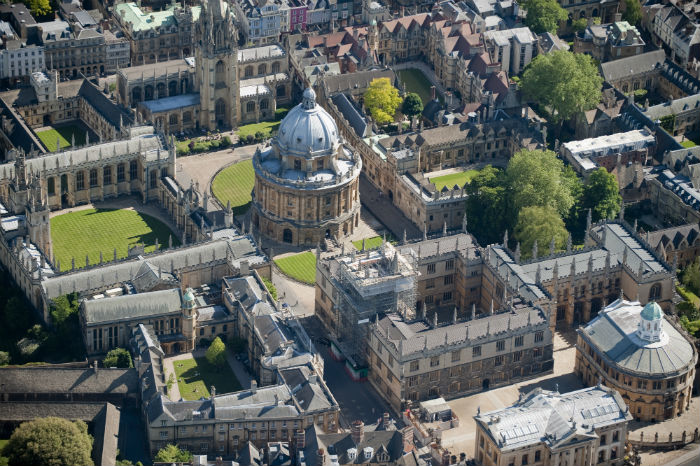
Fewer women lead top universities

Female leadership at the world’s top 200 universities in an international ranking fell this year to 17%, according to a report – a reminder that gender equity in science remains a distant goal.

The University of Oxford has had a female vice chancellor, Louise Richardson, who took up the post in January 2016.

The University of Oxford has a female vice chancellor, Louise Richardson, who took up the post in January 2016. {credit}Getty{/credit}

Just 34 of leading universities named in this year’s annual Times Higher Education (THE) World University Rankings have female presidents, down 1% from the 36 that were led by women in 2017. Continue reading

When conferences collide with family needs

As a busy scientist with two young children, one of Rebecca Calisi’s most vexing challenges is figuring out how to attend scientific conferences without a huge disruption in family life. Bringing children to conferences is an option, but not all are especially welcoming to the needs of families, especially to mothers with young children.
1008602_10151664484247933_418737272_o (3)

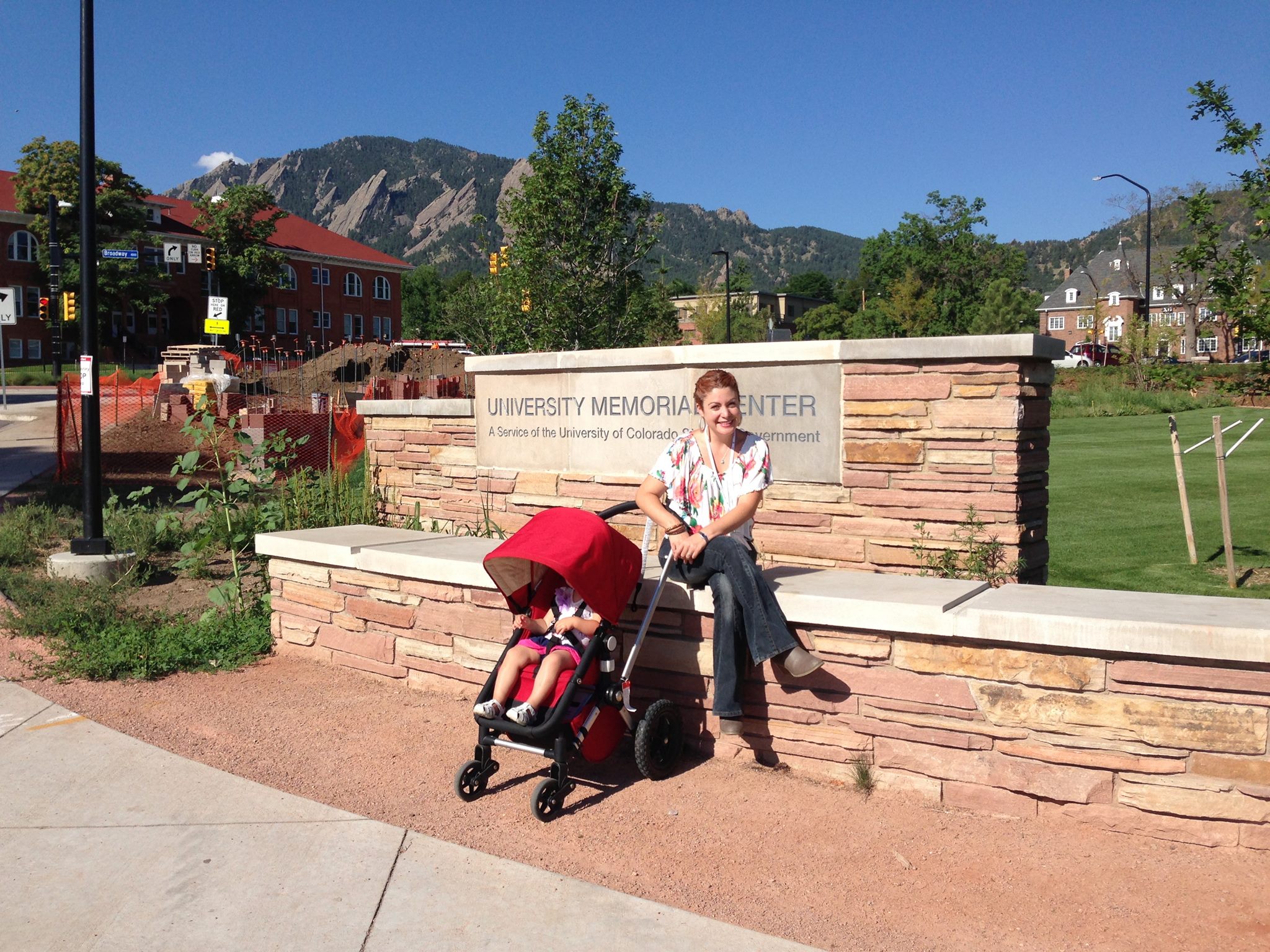
Rebecca and her daughter at the annual conference for the Animal Behavior Society at the University of Colorado in 2013

Calisi, a behavioural neuroscientist at the University of California, Davis, and a group of 45 other scientist-parents, have turned their frustrations into a call for action. In a paper published online Monday in Proceedings of the National Academy of Sciences, the researchers detail the shortcomings of past conferences and offer a blueprint for making conferences more welcoming and accessible to parents of young children.

By not providing accommodations for children, Calisi says, conferences can unintentionally create barriers that exclude large swaths of scientists—especially early-career scientist-mothers who may not be able to afford childcare. “One part of promoting diversity is supporting women with children,” Calisi says. “If institutions say they want to support diversity, they should put their money where there mouth is.”

In the paper, Calisi and co-authors suggest that conferences could fund on-site childcare services, lactation rooms and other amenities by asking for voluntary donations during registration. Exhibitors who make a donation could receive a sign or emblem that show their support. “I guarantee you they would get more foot traffic,” Calisi tells Nature. The paper also calls for all conferences to clearly state that parents are allowed to bring babies to talks and poster sessions. For now, she says, rules about children seem to change from conference to conference and even from hour to hour. She notes that researchers with babies were recently turned away from a poster session at a large conference even though the official policy permitted children in the exhibit area.

A practical, comfortable space for breastfeeding or pumping breast milk is an especially important accommodation, Calisi says. “A lactation room tells you a lot about how much a [scientific] society values women,” she says. In November, she turned to Twitter to complain about the facilities at the Society for Neuroscience (SfN) annual meeting, held last year in Washington DC.  Within hours of that tweet, the society provided more comfortable lounge chairs for mothers. “It’s not that the society was anti-women,” she says. “They just didn’t know.”

SfN, for its part, aims to become more inclusive. “The society is actively exploring ways to continue to enhance the spaces for nursing mothers in San Diego [California] this year and at SfN’s future meetings,” says society spokesperson Kara Flynn in a statement to Nature. She adds that the society is committed to “fostering a welcome and diverse community in which all scientists are able to contribute fully.”

Some conferences are already parent-friendly, Calisi says. She recently attended the annual meeting of the American Academy for the Advancement in Science in Austin, Texas, where the lactation room was comfortable and easily accessible. “I gave them two thumbs up,” she says.

Chris Woolston is a freelance writer in Billings, Montana.


Suggested posts:

The single scientist-parent

Motherhood and science 

From the frontlines 

The leaky pipeline: Thank putdowns, slights

Searches for the reasons behind the ‘leaky pipeline’—the structural failures, such as equal representation, that drive women out of science, technology, engineering and maths (STEM)—often focus on large-scale problems such as work-family or work-life balance. But insidious psychological strikes also contribute to the outflow.

A study involving interviews and online posts of 28 women in the later stages of PhD studies in engineering and physical sciences in the United States, published 31 January in the journal Social Sciences, revealed many day-to-day slights that left them feeling alienated and undervalued. Some said they were contemplating leaving research as a result. “There’s a culture in male-dominated environments,” says Bianca Bernstein, a co-author of the study and a psychologist at Arizona State University in Tempe. “Some women feel it’s not for them.”

Even though they were already deep into their PhD studies, 12 of the 28 women indicated that they didn’t want to pursue research careers. Five cited personal or work-life balance reasons, but six chalked up their decision to change course to the workplace environment and culture, including two who specifically expressed a desire to escape a male-dominated field. Hypothetically, Bernstein says, more women would finish graduate school and remain in research careers if the gender balance wasn’t already so skewed, but noted that any such scenario is difficult to test.

The interviews and posts, which took place over seven months, highlighted many of the positive aspects of the scientific life, including feelings of accomplishment and mastery. But the women in the study also reported “frequent” instances of feeling ignored, dismissed or excluded. One woman reported that a male colleague reacted rudely when she won a scholarship. “He blamed it on the fact that I was a woman and that they probably gave me a scholarship to fulfill a quota,” she said in an interview as part of the study.

The women reported that they were disproportionately asked to perform “women’s work” such as cleaning up the lab or performing clerical duties. “We’ve been hearing that complaint for decades now,” says Bernstein, who is also a principal investigator with the US National Science Foundation’s CareerWISE programme, a coaching initiative for graduate-level women in science and engineering. “It’s surprising that it hasn’t changed.”

A few women reported unwanted sexual advances in the workplace. Bernstein notes that the interviews and posts tracked only study subjects’ recent experiences, not everything that had ever happened with them during their graduate programme. Also, the interviews and posts took place before the rise of the #metoo movement, so women may have been more reluctant to report such events than they would be today.

Kevin Miller, a researcher with the American Association of University Women based in Washington DC, says that even seemingly minor grievances can add up. “Women in STEM have to fight an uphill battle that starts when they are girls and their interest in the sciences may be discouraged or ignored,” he says. “The experiences described in this study show that women face bias both subtle and overt as well as systemic factors that make them more likely to exit STEM fields.”


Chris Woolston is a freelance writer in Billings, Montana.


Suggested reading:

Technology: Women are alienated

Academic housekeeping: Women’s work?

Men are more likely to be hired

Isolation and alienation force female researchers out of US tech jobs

US corporate training programmes aimed at retaining female researchers in technology may be focussing on the wrong targets.

IMG_4078

A report, out on 7 February in Information Systems Journal, examines the results of in-depth interviews with 23 women in information-technology jobs across nine US firms, including consultancies, a bank and an insurance company. Study authors sought to identify the challenges faced by female researchers in industrial technology positions. Continue reading

Still more gender differences are identified

Gender gaps in science continue to exist, and a pair of recent studies highlights yet another set of differences between female and male researchers.

nj7677-549a-i1

One study suggests that the concept of “brilliance” in science might discourage some women from following certain career paths or education opportunities. Another found that women are more likely than men to offer “honorary authorships” to scientists who may not or do not deserve it—a courtesy that might obscure the magnitude of their own contributions. Continue reading

The struggles of female and underrepresented scientists

Initiatives to increase diversity among faculty members—particularly in science, technology, engineering and maths (STEM)—have prompted efforts to track university recruitment and retention of women and underrepresented minorities (URM). Three new US studies shed light on the issues, including salary and publication rates.

nj7668-489a-i1

Continue reading

Harassment and assault: ‘Disheartening’ trends

By Paul Smaglik

The belief that rules of workplace conduct don’t apply away from a university setting helps to perpetuate a culture that gives rise to sexual assault and harassment of female scientists conducting field research, says a co-author of a report published this month in American Anthropologist.

pathway-1081989_1920 Continue reading

Gender gap in US science PhD degrees persists

It’s no surprise that the number of PhD degrees in scientific and related disciplines conferred upon US students has leapt by half in the past decade — from about 18,000 in 2006 to more than 27,000 in 2016 — according to a recent report. But “Snapshot Report – Science and Engineering Degree Completion by Gender,” released last month by the National Student Clearinghouse Research Center in Herndon, Virginia, shows that the proportion of women who earn those degrees has stayed stagnant — at a dismal 39%.


microscope

Credit: CORBIS

Continue reading