Resubmitting your study to a new journal could become easier

Rejected manuscripts are a fact of life in science, but a new initiative might take some of the sting out of the process.

newspaper-pile-naturejobs-blog-2

{credit}Image credit: Getty Images/Mateusz Zagorski{/credit}

By Chris Woolston

The National Information Standards Organization (NISO), a Baltimore, Maryland-based non-profit that promotes standardization in publishing, has embraced a plan to make it easier for journals to share rejected manuscripts and manuscript reviews without forcing authors to go through another arduous submission process. Continue reading


Last-author spot tough to nail for scientists who are not white or male

Many scientists mark the evolution of their careers by publications: Their first paper, their first stint as a lead author, the first time they earn a final or senior spot. But for women and members of some minority groups, those benchmarks can be especially hard to reach, according to a study published in the May 2018 issue of AEA Papers and Proceedings.

By Chris Woolston

scales

The analysis—which covered 486,644 biomedical articles with two to nine authors published between 1946 and 2009—found that female, black and Hispanic authors were less likely than were white men to hold prestigious last-author spots. And while all scientists tended to land more last-author spots as their careers went on, that trend was slower for women and minorities. “There’s a lack of progression for those groups,” says Bruce Weinberg, a co-author of the study and an economist at Ohio State University in Columbus. Continue reading

Still more gender differences are identified

Gender gaps in science continue to exist, and a pair of recent studies highlights yet another set of differences between female and male researchers.

nj7677-549a-i1

One study suggests that the concept of “brilliance” in science might discourage some women from following certain career paths or education opportunities. Another found that women are more likely than men to offer “honorary authorships” to scientists who may not or do not deserve it—a courtesy that might obscure the magnitude of their own contributions. Continue reading

Meditation on a Caltrain: Understanding where to travel to next

Exploring options and thinking laterally about where you can use your scientific skills might be the key to successfully transitioning into industry, learns George Busby.

This piece was one of two winners of the Science Innovation Union writing competition, Oxford.

“This is downtown San Francisco, our train’s final stop. Can all passengers please detrain? All detrain please. All detrain.” Perhaps it was the heady fug of jetlag that made this broadcast particularly amusing to my UK-English language sensibilities, but I “detrained” all the same and stepped into the crisp morning air of the Californian rush hour.

I was on the west coast to visit two genetics start-ups as part of a whirlwind three-day tour of the US. With a long postdoc and several first author papers tucked into my belt, I wanted to see if these credentials would pass muster in the tech haven of Silicon Valley. I’ve always found the loneliness of solo work-travel to be highly amenable to strategic thought, and this American adventure was an opportunity to reflect on why I was there and what I wanted.GettyImages-530306679-smaller

Continue reading

The Naturejobs career expo journalism competition, London, 2016!

Enter for a chance to work as a Nature journalist for the day!


NJCE-2016-(London)


Here we go again!

Following the success of the Boston and San Francisco Naturejobs career expo journalism competitions this year, we’re launching the competition for our tenth career expo in London, to be held on September 16th.

The London Naturejobs career expo is our flagship event, so we are looking for five budding science writers to help us with our coverage of the conference sessions, workshops and general ambience of the event for those who cannot make it. The conference will explore career paths in industry, academia and science communication, finding funding, and much more.

The five winners will have the opportunity to attend the expo and write up at least two of the sessions or workshops for our readers, sharing the advice and expertise of the speakers with our worldwide audience. Winners will also have the opportunity to work closely with Nature editors, and their articles will be published on the Naturejobs blog. Continue reading

Book Smart

It’s hard sometimes to tell the full story about your research – its implications and impact, its repercussions and significance – in a single manuscript.

Data-sharing-naturejobs-blog

You may have lots more to say about your discipline or field, too. Why not write a book? It isn’t easy, but it is rewarding to tell your story to a broader audience than manuscript editors and journal subscribers. And while you’re not likely to get rich from your book, you may find that it presents you with new opportunities – to raise your profile, to collaborate, to develop a novel project. Continue reading

Team science and the early career researcher

The current trend towards increased research collaboration and larger groups is fuelled by the need to answer bigger questions, but this approach puts individual contributions at risk.

Guest contributor Lucia Possamai

Research ventures where several researchers, groups or institutions work together to answer a research question is becoming known as ‘team science.’ It can be seen at work today in large genetics studies, such as the 100,000 genomes project, in multi-centre clinical trials, or in rare disease consortia. Even on a smaller scale, it is becoming more common for publications to arise from collaborative projects.

As an early career researcher I can appreciate that team science is not just good for science: it gives those of us embarking on our scientific careers the opportunity to take part in research with high impact that would otherwise not be accessible to us. It can remove the pressure to obtain independent funding – in many cases, all funding will have been obtained as part of the larger project’s grant.

Continue reading

Author’s corner: Sharing proteomics data to build community-based resources

Ruedi Aebersold & George Rosenberger photo

{credit}Ruedi Aebersold & George Rosenberger{/credit}

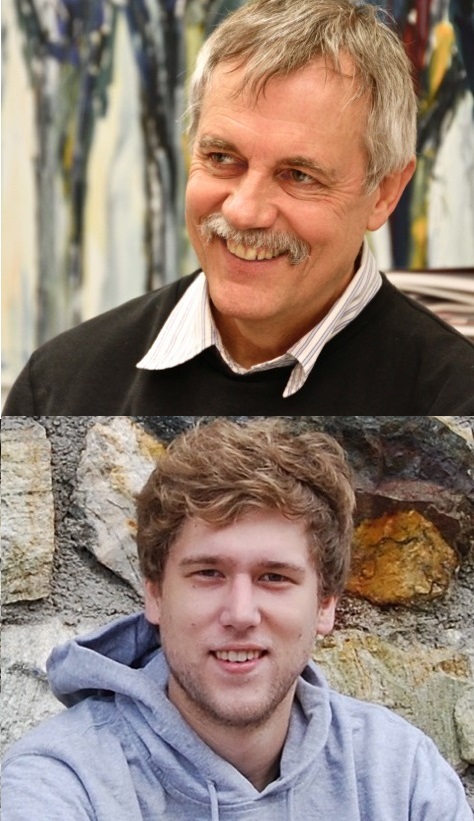
Guest post by Ruedi Aebersold, Professor of Systems Biology with a joint appointment at ETH Zurich and the University of Zurich, & George Rosenberger, PhD student in the Aebersold group at the Institute of Molecular Systems Biology, ETH Zurich.

Mass spectrometry-based proteomics is a data-intense research discipline that primarily aims at identifying and quantifying the proteins that constitute the proteome1. This is achieved by generating large numbers (104 to 106) of fragment ion spectra that represent peptides generated by proteolysis of the respective proteome. Mass spectrometers can operate in different data acquisition modes, referred to as data-dependent acquisition (DDA), targeted acquisition exemplified by selected reaction monitoring (SRM) or data-independent acquisition (DIA)2 exemplified by SWATH-MS3,4. Specific software tools then generate from these raw data processed mass spectra – from which sets of identified peptides, proteins and their abundance are inferred and annotated with metadata. Both, the generation and the processing of such raw data sets are resource and time intensive.  Further, if unique, irreplaceable samples are being analyzed, as is often the case with clinical cohorts the data cannot be re-generated. Therefore, the proteomics community has started to embrace data sharing by the means of different specialized public repositories, for example GPMDB5, PRIDE6, PeptideAtlas7 or ProteomicsDB8. For the last few years, the ProteomeXchange9 consortium has provided centralized deposition of raw data and their meta-annotation. Continue reading

Author’s Corner: Advancing the sharing and standardization of metabolomics data

Mark Viant photo

{credit}Mark Viant{/credit}

Guest post by Mark Viant, Professor of Metabolomics in the School of Biosciences at the University of Birmingham, UK, and Director of both the national NERC Biomolecular Analysis Facility – Metabolomics and the Phenome Centre Birmingham

In 2014, my research team published the first Scientific Data Data Descriptor for metabolomics measurements, Direct infusion mass spectrometry metabolomics dataset: a benchmark for data processing and quality control. This article described in great detail the many steps that are critical for ensuring the production of high quality (direct infusion) mass spectrometry (DIMS) data. It was our intention that this publication would help to establish the benchmark for DIMS metabolomics, derived using best-practice workflows and rigorous quality assessment. The data was also made freely available in the MetaboLights public database for metabolomics data (dataset MTBLS79).1

Continue reading