Book Smart

It’s hard sometimes to tell the full story about your research – its implications and impact, its repercussions and significance – in a single manuscript.

Data-sharing-naturejobs-blog

You may have lots more to say about your discipline or field, too. Why not write a book? It isn’t easy, but it is rewarding to tell your story to a broader audience than manuscript editors and journal subscribers. And while you’re not likely to get rich from your book, you may find that it presents you with new opportunities – to raise your profile, to collaborate, to develop a novel project. Continue reading

The emotional side of leaving academia

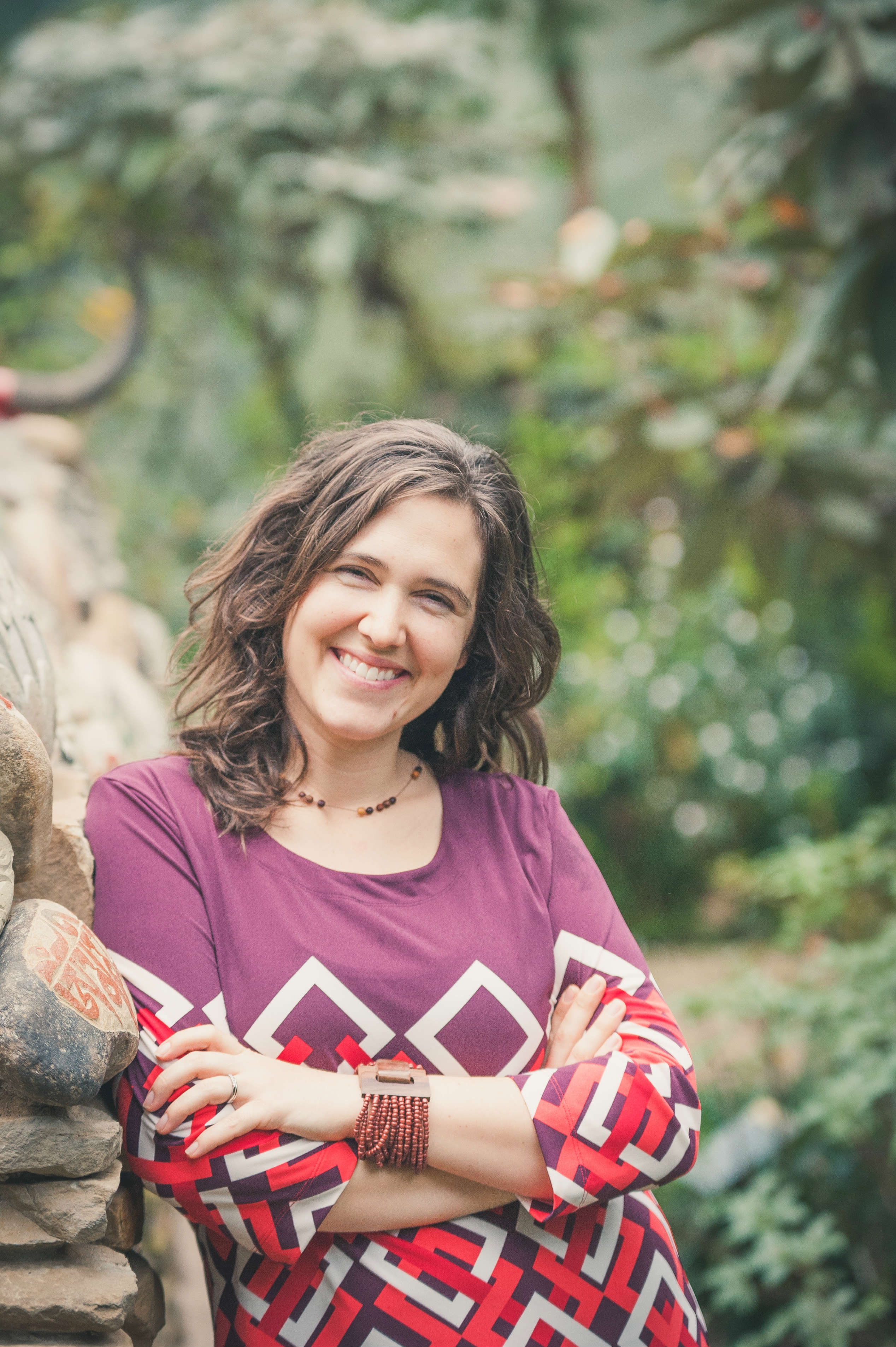
It took a lot for Virginia Schutte to set aside the feeling that she was wasting her PhD.

Guest contributor Virginia Schutte

I’m transitioning from a traditional academic career to one in science communication. There are many challenges that come with this shift, but I didn’t expect the process to be so emotionally difficult.

I left my academic career path in the best possible situation. I have a great relationship with my PhD advisor and everyone I talk to is encouraging when it comes to my new direction. But in my academic experience, changing position meant moving up, or at least adding something to my CV. Graduating and then immediately starting at the bottom of the ladder in a new career felt like I was moving backwards; I was convinced that I had disappointed the people who invested in me because I was “wasting” my PhD.DSC_0889-small


Continue reading

Science communication: A foot in the door

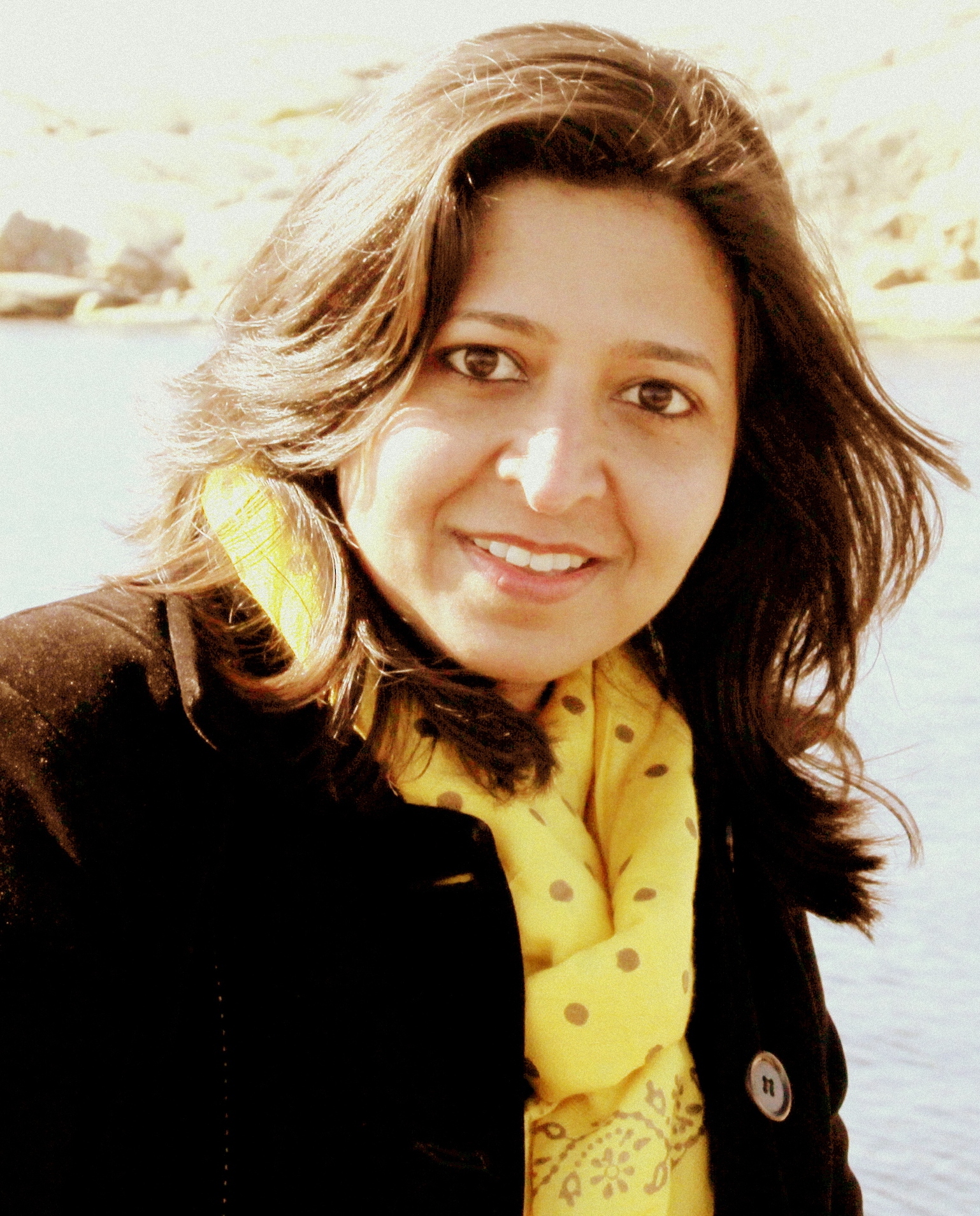
Payal Bhatia shares how she became interested in science communication, and how she has started carving out a career for herself in the field.

Guest contributor Payal Bhatia

science-writing-naturejobs-blog

{credit}Tsha/Shutterstock{/credit}

If I was ever going to leave the lab, it would be to become a full-time science communicator. My first formal piece of science writing was a book chapter I wrote as a PhD. I enjoyed this experience so much that I ended up taking courses at the University of Zurich to improve my writing. This overlapped with a chance meeting Isabel Arnold, editor of the EMBO Journal at the time, who introduced me to the field of science journalism. With my science background, exposure to scientific editing and my passion for writing, I quickly learned that science writing was the career I would love. However, I knew I did not have enough experience to start right away. Employers were looking for candidates with a few years of experience in writing and communication, and when looking at job descriptions, I realized that I was missing a few skills. This gave me an indication on where I could develop and get a foot in the door.

I did some self-reflection and made a plan— a simple outline of what I enjoy writing about, what skills I already have, what resources I can use to gain additional skills and most importantly, if I know someone in the field. Continue reading

Nature India Editor Subhra Priyadarshini on the Indian science boom and the role of journalism

"India is now transitioning from a developing country into an emerging economic superpower and as a result many areas of development, including science, are catching up quickly."

“India is now transitioning from a developing country into an emerging economic superpower and as a result many areas of development, including science, are catching up quickly.”

In the second of our five features celebrating Ada Lovelace Day and prominent women in science and technology across the world, we speak to science journalist and Nature India Editor, Subhra Priyadarshini about the new resurgence of Indian science and the role science journalists play in narrating the country’s success stories.

Ada Lovelace Day, marked today across the world, is an annual celebration of the achievements of women in science, technology, engineering and maths (STEM).

Subhra Priyadarshini is an award winning science journalist and currently Editor of Nature India, the Nature Publishing Group’s (NPG) India portal. She was a deadline-chasing journalist covering politics and sports, fashion and films, crime and natural disasters in mainstream Indian media for over a dozen years. She finally chose to come back to her first love – science – in 2007 launching Nature India. Subhra has been a correspondent with major Indian dailies The Times of India, The Indian Express, The Asian Age, The Telegraph, news agency Press Trust of India (PTI) and environment fortnightly Down To Earth. She worked briefly for the Observer, London. Priyadarshini received the BBC World Service Trust award for her coverage of the ‘Vanishing islands of Sunderbans’ in the Bay of Bengal in 2006. She received letters of commendation from the PTI for her coverage of the Orissa super cyclone in 1999 and the Indian Ocean tsunami in 2004. She is a regular contributor to BBC Radio’s Hindi science programme ‘Vigyan aur Vikas’ (Science and Development) and taught science communication at University of Calcutta.

The scientific landscape of India is a constantly fascinating and fluctuating one. In a country poised to be a global super power, yet fighting issues of poverty, healthcare and education, Indian science has seen something of a new resurgence over the last decade. Research output and publications have increased significantly and an evolving technology industry has been reaping just rewards. And yet for all these exciting developments, in a country where more than 1.2 billion people live, there has until recent years been one fairly absent protagonist: the media.

When Subhra Priyadarshini, who started Nature India in 2006, first specialised in science journalism after nearly 10 years covering everything from economics to sport, she found there were certain challenges to getting science on the news agenda. “In the early 2000s you would be lucky to find a science journalist working on a newspaper or magazine in India. You had to be a generalist and would find yourself one day covering Bollywood and the next looking at financial markets,” says Priyadarshini, who has worked at the Times of India, The Asian Age and the Press Trust of India, among others. “Science was always my first love and I used to get the kind of fulfilment from a science story that I would not get from say a political reportage.”

Phenomenal growth

Priyadarshini is still today only one of a small handful of science journalists in India who are helping to narrate the ever evolving stories of Indian science. She believes many more science stories are now starting to be reported in the mainstream media, a distant reality when she first started specialising in 2000. “Scientific stories that were not popular interest ten years ago are now starting to creep into mainstream media and basic science research is getting more in-depth coverage,” Priyadarshini says. She cites new genomes being mapped or a new nanomaterial with applications in a variety of themes as the types of stories that are now starting to garner media coverage.

Continue reading

Bill Bryson: A champion of science and science communication

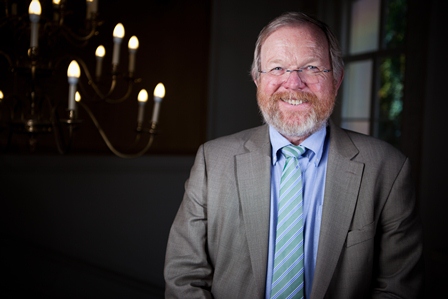
A passionate science advocate: best-selling US author Bill Bryson. Image courtesy of the Royal Society

A passionate science advocate: best-selling US author Bill Bryson. Image courtesy of the Royal Society.

Bill Bryson’s bestselling travel books include The Lost Continent, A Walk in the Woods and Notes from a Small Island, which in a national poll was voted the book that best represents Britain.

His acclaimed book on the history of science, A Short History of Nearly Everything, won the Royal Society’s Aventis Prize as well as the Descartes Prize, the European Union’s highest literary award.

He has written books on language, on Shakespeare, and on his own childhood in the memoir The Life and Times of the Thunderbolt Kid.

His last critically lauded bestseller was At Home: a Short History of Private Life and his most recent book, One Summer: America 1927 chronicles a forgotten summer when America came of age and changed the world for ever.

He was born in the American Midwest, and lives in the UK.

It is over a decade since popular US author Bill Bryson embarked on his eye-opening journey of research for the acclaimed science book ‘A Short History of Nearly Everything’. At that time, he could never have envisaged the popularity and esteem his book would be held in today.

With Bryson’s impeccable wit, charm and honesty, he managed to open up a world of science that was accessible and revealing in equal measure. And yet, in writing the book, Bryson was faced with narrative adjustments and the trepidation of not knowing many of the fields he intended to cover.

Continue reading

Emily Anthes discusses how biotechnology is shaping the future of our furry and feathered friends

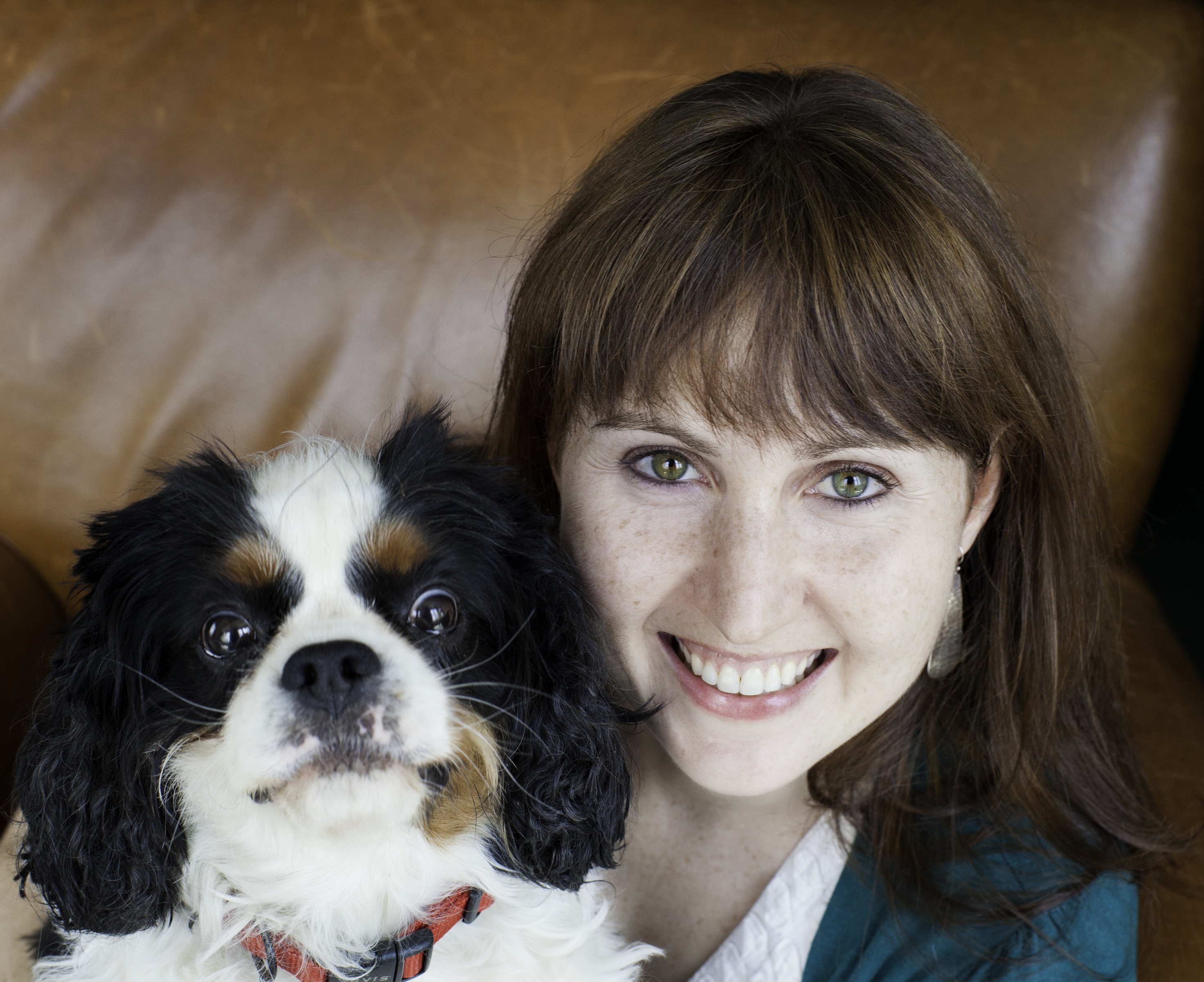
American science journalist and author Emily Anthes with her dog, Milo. Image Courtesy of Nina Subin.

American science journalist and author Emily Anthes with her dog, Milo.
Image Courtesy of Nina Subin.

Emily Anthes is a science journalist and author. Her work has appeared in The New York Times, Wired, Scientific American, Psychology Today, BBC Future, SEED, Discover, Popular Science, Slate, The Boston Globe, and elsewhere.

Her book, Frankenstein’s Cat: Cuddling Up to Biotech’s Brave New Beasts, is out in paperback today published by Scientific American/Farrar, Straus and Giroux. It received the 2014 AAAS/Subaru SB&F Prize for Excellence in Science Books. 

Emily is also the author of the Instant Egghead Guide: The Mind (St. Martin’s Press, 2009).

Her blog post, “When a deaf man has Tourette’s,” was selected for inclusion in The Open Laboratory 2010: The Best of Science Writing on the Web.  

Emily has a master’s degree in science writing from MIT and a bachelor’s degree in the history of science and medicine from Yale, where she also studied creative writing. She lives in Brooklyn, New York with her dog, Milo.

Continue reading

Neil deGrasse Tyson on Cosmos and integrating science in popular culture

"science matters in our lives for us to be better shepherds of not only our civilization, but the world." Image courtesy of Patrick Eccelsine/FOX.

“Science matters in our lives for us to be better shepherds of not only our civilization, but the world.”
Image courtesy of Patrick Eccelsine/FOX.

Neil deGrasse Tyson is the Frederick P. Rose Director of the Hayden Planetarium at the Rose Center for Earth and Space and a research associate in the department of astrophysics at the American Museum of Natural History.

A popular American astrophysicist, author, science communicator and educator, Tyson hosted the science educational show NOVA ScienceNow on PBS for five years. He received a bachelor’s degree in Physics from Harvard University and a doctorate in Astrophysics from Columbia University in 1991. After spending a number of years doing post-doctorate work at Princeton University, Tyson landed a role at the Hayden Planetarium.

He is the author of several best-selling books, including Space Chronicles: Facing the Ultimate Frontier, Death By Black Hole and Other Cosmic Quandaries and the Pluto Files: The Rise and Fall of America’s Favorite Planet. In 2001, US President George W Bush appointed Tyson to the Commission on the Future of the United States Aerospace Industry. He also served another commission three years later to examine US policy on space exploration. In 2004, Tyson was awarded the NASA Distinguished Public Service Medal, the highest civilian honour bestowed by NASA. He also hosts his own podcast and radio show StarTalk.

Cosmos is truly intended for anyone with a beating heart. I haven’t checked recently whether zombies have beating hearts, but if they do – I’ll take them too,” barks Astrophysicist Neil deGrasse Tyson, with exalted hilarity.

Continue reading

Marcus du Sautoy: Communicating Science within the Sciences and to the Public

Marcus du Sautoy. A passionate advocate for the "wonders of science".

Marcus du Sautoy. A passionate advocate for the “wonders of science”.

Marcus du Sautoy, OBE, is the Simonyi Professor for Public Understanding of Science and a Professor of Mathematics at the University of Oxford. He is known for his efforts in popularizing mathematics and has been named by The Independent on Sunday as one of the UK’s leading scientists. He was a recipient of the London Mathematical Society’s prestigious Berwick Prize in 2001, which is awarded every two years to reward the best mathematical research by a mathematician under forty.

Du Sautoy writes for the Times and the Guardian and has presented numerous television and radio programmes, including The Story of Maths, School of Hard Sums and The Code. He is also the author of many academic articles and books including the best-selling The Music of the Primes and The Num8er My5teries: A Mathematical Odyssey Through Everyday Life.

When mathematician Marcus du Sautoy was appointed the prestigious role of the Simonyi Professor for the Public Understanding of Science at the University of Oxford back in October 2008, he had two distinct priorities looming prominently in his mind.

The job brief was clear in its motives at the time and reflected on the one-hand high-level science, and on the other, the ability to communicate this scientific research widely to a public audience. The latter was the first priority. Stepping into fill the boots of the inaugural holder Richard Dawkins, was by no means an easy feat, but du Sautoy also a Professor of Mathematics at the University of Oxford, took to the role naturally.

“When I took over from Richard, my immediate thoughts were on clearly communicating to the public what was happening in science,” says du Sautoy. “Science has such a big impact on humanity. In order for people to feel empowered and for them to be able to make decisions on where they want science to go and the long lasting effects it has on society, they must first fully understand the surrounding issues.”

The second role of his job, encouraging the communication of science between disciplines within the sciences, is perhaps the most intriguing, in terms of developments. The biggest challenges, du Sautoy says, are the “inbuilt education system” and the “linguistic barriers” across the sciences. “This is a fascinating area where across academia we’re looking to break down the silo mentality which I believe has been prevalent in most universities across the world”, asserts du Sautoy. “This is partly due to the time and hard work we put into our own specialist subject meaning there often isn’t time to see what’s happening in other areas.”

Continue reading

Science Journalism Tracker: A virtual water cooler for sciwriters

In addition to training writers from across the globe, the Knight Science Journalism program at MIT keeps an eye on what we all produce. The KS Journalism Tracker web site notes that, for the past six years, its writers have “commented on the effectiveness and balance of thousands of news stories.” The program recently lauched a redesiged web site, but the Tracker’s mission remains the same. Today it counts 30,000 hits a month, including many from Spanish-speaking readers interested in posts on Latin Amerian science journalism. The site hopes to offer the same service to Chinese-speaking science writers.

 Earlier this week, Nature Boston talked Phil Hilts, the former New York Times reporter who runs the Knight Science Journalism program at MIT.

What is the thinking behind the Tracker? 

Knight Science Journalism Program director Phil Hilts

(Charlie Petit’s) original idea was just to do a little round up of a bunch of stories. What he noticed was — science writers, while they know each other and see each other at meetings, they don’t really see each other’s work very much.

… He started getting into the idea that you could pick out a couple of good stories and identify them and do a little critique – and once in a while do a critique when something went wrong. (The posts) are all supposed to be relatively short. They’re starting to get a little too long and I’ve started complaining to (the writers.)…I like a mixed length and not too much analysis.

What’s the difference between an analysis and a critique?

My sense of analysis is that it tends to go pretty deep and long.  I don’t really want deep and long.

Why not?

This is a blog and … (Readers) go to it because they’re interested in what is going on. … If you give them this large post, it’s going to quickly put them off.  Once in a while, a little longer that’s fine.  But mainly they want to jump on and see two or three or four items – here are some good stories or everybody is doing this story this way. Continue reading

The Promise & Pitfalls of Public Outreach Part 3: Social Media: Taking Science To The People

Matt Shipman is a public information officer at North Carolina State University, where he writes about everything from forensic entomology to computer malware. He previously worked as a reporter and editor in the Washington, D.C. area for Inside EPA, Water Policy Report and Risk Policy Report, where he covered the nexus of science, politics and policy. He blogs about NC State research at The Abstract, and you can follow him on Twitter where he is @ShipLives

Explaining the nuances of scientific research to a lay audience has never been easy. Changes in the news media landscape over the past 20 years have created new challenges. The 24-hour news cycle, for example, offers little opportunity for reflective reporting on complex issues. However, there are still steps that scientists can take to communicate effectively about their work.  In my previous two posts I talked about how scientists can work with reporters, public information officers and others to disseminate information about their research to a non-expert audience and about being a science journalist with no scientific background, offering advice for all parties.  In my last post, I look at how the advent of blogs and social media has given researchers the ability to cut out the middle man entirely and speak directly to the public. Sounds great, right? It can be. But it poses its own challenges.

Social Media

There are a lot of social media platforms that allow us to share our thoughts with anyone who cares to listen. Twitter, Facebook and Google+ are clearly at the top of that list. If you set up a Twitter account, for example, you can say whatever you want, 140 characters at a time. But who’s reading it?

Just because you set up a social media account doesn’t mean that anyone will know about it. You’ll need to take the time to cultivate a following. You can start by figuring out your desired audience. Who do you want to be following you? Other scientists? Relevant science writers? Potential grad students? If you try to talk to everyone at once, you’ll end up pleasing no one.

Once you’ve defined your target audience (or audiences), you can begin reaching out to friends and colleagues who are already online. They can help point people to your Twitter account, Facebook page, etc. But if you really want people to pay attention, you need to have something to offer. Content is king, and you need to contribute something to the online conversation. In other words, why should people be listening to you?

For scientists, this could mean disseminating interesting articles you run across. It could also mean providing insight into new findings or news stories where you happen to have relevant expertise. Lastly, it is an opportunity to talk about your work. And here’s where things get tricky.

Social media platforms can be very limiting. For example, can you define genotype and phenotype in 140 characters or less? And even if you write a captivating treatise about the subject on Google+, which gives you far more space to work with, how many people want to read an essay on a social media platform? (Answer: very few.)

If you want to use social media to communicate effectively, you need to drive readers somewhere. This means writing an introductory line that gives readers an idea of what you want to talk about, then including a link which drives them to a site where you’re able to discuss the issue in greater detail. Which brings us to blogs.

Blogging

Clearly there are things that are best confined to peer-reviewed scholarly publications. E.g., you don’t want to scoop yourself. But blogging allows you to dig into the nuance, context and detail of a subject. It also gives you the opportunity to explore facets of news stories that have been ignored in other outlets, discuss papers that may have gone overlooked, or simply share anecdotes that highlight what you love (and loathe) about your field of study.

The one cardinal rule for scientists who blog is (or should be) this: do not regurgitate your papers as blog posts. If you’re simply going to paste your abstract into your blog, what’s the point? You need to bring something new to the table. And there are a lot of ways to do that.

If you want to reach the broadest possible audience, it’s always good to write for your blog in conversational language. Write as if you are writing for your mom (assuming your mom is not also a biochemist). A casual writing style can make even the most arcane subjects seem approachable. If you dive right into a subject using professional jargon, a lay audience will have no idea what you’re talking about – and you’ve lost them.

When you do use terms that may be unfamiliar to your readers, take the time to explain them. Remember, most people aren’t familiar with terms like proteomics, inviscid flow or parameter estimation. And be sure to clarify terms that have different meanings in different contexts. The word “significant,” for example, has a very specific definition when referring to statistics. But if you don’t make the distinction, readers will likely read it as meaning “important” – which may not be the case.

A blog can also be a great place to explain entire concepts. When writing journal articles, researchers can assume a certain amount of expertise on the part of readers. Huge chunks of existing knowledge are addressed with a few cursory sentences and journal citations. For everyone outside of that field, however, the research may appear to exist in a vacuum.

Blogs allow scientists to delve more deeply into the history of a subject, laying out the historical challenges and incremental achievements that brought us to this point. You can say: “Here’s what came before. Here’s why we had these questions. Here’s what we did, what we learned and why it matters.”

Reporters rarely have the time, opportunity or expertise to provide this level of background. But it can be a very effective way of helping people understand the importance of new research findings, without sensationalizing or misrepresenting the work.

Conclusion

Writing a blog gives substance to your social media presence. You have the opportunity to talk about science in a meaningful way, which ultimately helps people better understand the world around them. Answering those questions is probably why you got into science in the first place. Don’t be afraid to share what you’ve discovered.

PS: A final, cautionary note: it is important to remember that anyone could end up seeing what you write on social media. Privacy controls are helpful in some formats, but they aren’t necessarily foolproof. Don’t say anything online that could come back to haunt you.