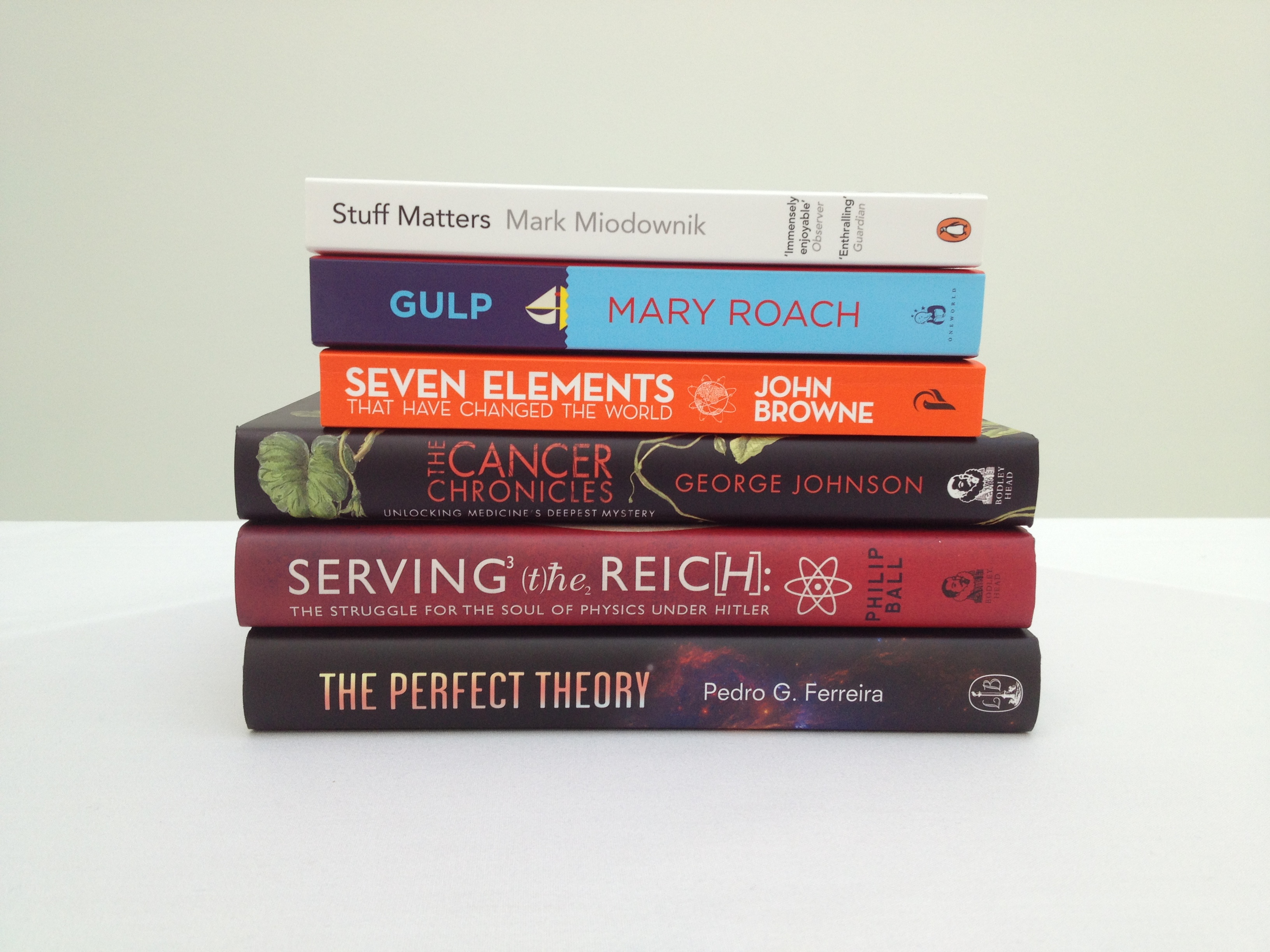
Stuff Matters scoops Royal Society Winton Prize for Science Books

And the winner is…..

The annual award ceremony for the Royal Society Winton Prize for Science Books is always a brilliant affair. The atmosphere is all bubbling excitement, the audience peppered with the celebrities of the science world and the event itself a joyful hurtle through some truly brilliant popular science books.  Last night was no exception, as five of the six shortlisted authors took to the stage to read excerpts from their books and discuss their work with the charming Alice Roberts, who hosted with an enormously infectious enthusiasm that left the audience raring to add the titles to their Christmas lists.

President of the Royal Society, Sir Paul Nurse, kicked off the evening with a brief greeting before passing over to Roberts to introduce the authors, all of whom read a short passage from their book, with John Browne sending a video message as he was sadly unable to attend. A discussion followed, with the brilliantly witty Mary Roach kicking things off to general hilarity and good humour by describing her research on utilising the body cavity to smuggle contraband in and out of US prisons. Mark Miodownik followed with an explanation of why you should never put chocolate in the fridge, George Johnson provided insight into the world of cancer research and Pedro Ferreira charmed with tales of enthusiastic relativists from the world of science. Phil Ball finished off the conversation with some truly fascinating discussion of the accuracy of the reporting of the behaviour of scientists during the Nazi regime.

Mark

Mark Miodownik talks about his winning book, Stuff Matters.

Continue reading

Book 2: Gulp by Mary Roach (2014 Royal Society Winton Prize for Science Books)

Alice’s Analysis – Gulp by Mary Roach

Gulp

I feel I must start with a confession. I love science. It’s dominated my working life and I get to enjoy finding out about new research every day at Nature. But when I’m at home, well, I often reach for a great novel over non-fiction. So I was amazed to find myself eschewing the joys of the latest from the New York Times bestseller list in favour of Gulp and racing through the chapters with the greatest of relish.

Continue reading

Book 1: Stuff Matters by Mark Miodownik (2014 Royal Society Winton Prize for Science Books)

Bex Reflects — Stuff Matters by Mark Miodownik

Stuff

There is a lot of stuff in Mark Miodownik’s fascinating book Stuff Matters, an account of the materials science underlying everyday objects, and little room for nonsense. Miodownik illustrates his efforts with the aid of a photograph of himself on the roof of his London home. Each chapter delves into the surprising properties of one of the ten materials featured in the photograph, from a steel table to a porcelain tea cup.

Continue reading

Alice’s Analysis – 2014 Royal Society Winton Prize for Science Books

Over the coming month, the Nature Press Office will be reading and reviewing the books shortlisted for the 2014 Royal Society Winton Prize for Science Books, cramming in a book or two a week until the winner is announced on the 10th November 2014.

An initial look at a strong shortlist suggests that the competition for a recently-increased prize of £25,000 will be fierce.  There’s a lot here with relevance to our everyday lives, with a vibrant exploration of the man-made materials around us and a moving personal account of experiences with cancer and the vast research world connected to it.  Along the way there’s a huge helping of humour in the form of riotously entertaining science writer Mary Roach, who takes us on a trip down the gut in disgusting and glorious detail.  However, the real hero of this shortlist seems to be history, with a celebration and exploration of the role of science in our past.  Personally I can’t wait to get stuck into the beautiful prose of Phil Ball, pulling apart the ethical struggles and individual stories of scientists in Hitler’s Third Reich.  Added to this, and completing the shortlist, are erudite accounts of the development and controversy around the theory of general relativity and the myriad of ways that seven key elements have changed, and continue to change, our lives.

6

Continue reading

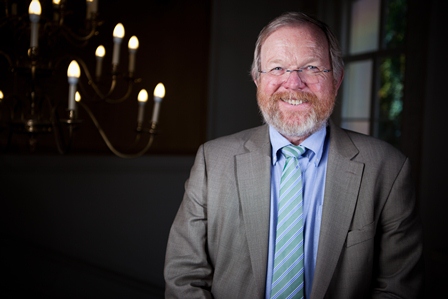
Bill Bryson: A champion of science and science communication

A passionate science advocate: best-selling US author Bill Bryson. Image courtesy of the Royal Society

A passionate science advocate: best-selling US author Bill Bryson. Image courtesy of the Royal Society.

Bill Bryson’s bestselling travel books include The Lost Continent, A Walk in the Woods and Notes from a Small Island, which in a national poll was voted the book that best represents Britain.

His acclaimed book on the history of science, A Short History of Nearly Everything, won the Royal Society’s Aventis Prize as well as the Descartes Prize, the European Union’s highest literary award.

He has written books on language, on Shakespeare, and on his own childhood in the memoir The Life and Times of the Thunderbolt Kid.

His last critically lauded bestseller was At Home: a Short History of Private Life and his most recent book, One Summer: America 1927 chronicles a forgotten summer when America came of age and changed the world for ever.

He was born in the American Midwest, and lives in the UK.

It is over a decade since popular US author Bill Bryson embarked on his eye-opening journey of research for the acclaimed science book ‘A Short History of Nearly Everything’. At that time, he could never have envisaged the popularity and esteem his book would be held in today.

With Bryson’s impeccable wit, charm and honesty, he managed to open up a world of science that was accessible and revealing in equal measure. And yet, in writing the book, Bryson was faced with narrative adjustments and the trepidation of not knowing many of the fields he intended to cover.

Continue reading

Human enhancement will change how we work, says report

{credit}Comstock/Thinkstock{/credit}

If I told you that you could be more productive at work, make better decisions and even enjoy the worst parts of your job more, would you be tempted?

Such are the promises of cognitive enhancing pharmaceuticals and technologies, many of which are increasingly being used by students and professionals to improve their performance at work.

But a new report by scientists and ethicists, which says that these developments will undoubtedly change the way we work in the future, raises concerns about the ethical and safety questions surrounding their use.

“There are many exciting prospects for enhancing production in the workplace,” says Barbara Sahakian, Professor of Clinical Neuropsychology at the University of Cambridge, and one of the members of the report working group, adding that now is the time to consider the issues and “find a way forward.”

The report is timely as a number of cogntive enhancing drugs are already being used. Modafinil, which was originally developed to treat sleep disorders such as narcolepsy, has gained a reputation as a brain boosting-drug which can improve concentration and memory, and even make work feel more enjoyable.

Sahakian says it’s impossible to know exactly how many people are using the drug off-label but the fact is that many more prescriptions are given out than there are people with the conditions the drug is supposed to treat. Surveys suggest that such cognitive enhancers are well known to the student population, who reportedly see them as a better alternative to caffeine, helping them to stay awake longer to revise or write essays, or keep them going during exams.

The US army has also been testing out cognitive enhancing drugs to keep soldiers alert for longer. Then there’s the realm of physical and technological enhancements that may bring other benefits. Cognitive enhancement through ‘brain-training’ video games has also been effective in studies, and could help older workers to keep up to speed with their younger colleagues, for instance.  Other technological advances help improve hearing and vision, limb function, and more, which could all make people more productive.

The question is, how should these technologies be used? For a start, studies have shown that taking cognitive enhancing drugs reduces the number of accidents related to shift workers, and can also help surgeons do a better job, especially compared to caffeine which can cause their hands to shake. If it means saving lives, shouldn’t these advances be made compulsory by employers?

Many of the ethical concerns are not new, or reserved for developments in human enhancement, but where they are unique is that they will affect the workplace, said Jackie Leach Scully, an ethicist from Newcastle University, speaking at the report launch at the Science Media Centre in London. “What is special in the context of work is the competitive nature so it is likely that employees will be under big pressure to use enhancements to perform better,” she said, “but there might be lots of reasons why they don’t want to self enhance.” These include religious beliefs, safety concerns, or their own ethical reasons. Continue reading

Royal fellows

This year’s fellows for The Royal Society — one of the most coveted fellowships in the world of science — announced today, include six names of Indian origin. The fellowship is made up of the most eminent scientists, engineers and technologists from the UK and the Commonwealth. It boasts of more than 80 Nobel Laureates among its fellows.

This year’s list features, right on top, Varinder Kumar Aggarwal, a professor of synthetic biology in the University of Bristol. Born in North India, Aggarwal did all his science in the UK where he studied and worked all his life. In awarding him the fellowship, the society has acknowledged his  “productivity and breadth (that) make him one of the foremost organic chemists of his generation and one who is very widely recognised internationally”.

Like Aggarwal, Shankar Balasubramanian, a professor of medicinal chemistry at the University of Cambridge and a senior group leader at the Cancer Research UK, Cambridge Research Institute also left India as an infant. Born in Chennai (then Madras) he is an internationally recognised leader in the field of nucleic acids. The society makes special mention of his leading next generation sequencing methodology, Solexa sequencing, that makes routine, accurate, low-cost sequencing of human genomes a reality and has revolutionised biology.

However, the true blue Indian in the coveted list is Krishnaswamy Vijayraghavan, a senior professor and Director of the National Centre for Biological Sciences, Bangalore. An alumnus of the Indian Institute of Technology Kanpur, Vijayraghavan has “worked to establish new institutions, drawing the best young scientists to India”. Under his leadership, NCBS has indeed evolved into a world-class institution. He has been recognised by the society for being an “outstanding developmental geneticist”.

Mathematician Chandrashekhar Bhalchandra Khare, who was featured in this blog when he bagged the Infosys Prize for 2010, started his career with the Tata Institute of Fundamental Research in India and later moved out of the country. Presently he works as a professor in the department of mathematics, University of California, Los Angeles. He  has been called an ‘extremely original mathematician’ studying the relationship between Galois representations and modular forms. His forte is finding ingenious but relatively simple new ideas, The Royal Society notes.

Guntur-born Mathukumalli Vidyasagar studied and worked in the US through his adult life. Vidyasagar, born in the year of Indian independence, has made outstanding contributions to the control and systems theory and statistical learning. He has combined probability theory, combinatorics, and artificial intelligence to produce a beautiful unified theory of statistical learning.

Particle physicist Tejinder Singh Virdee of Imperial College, London is distinguished for the design, construction and exploitation of the huge CMS experiment at the CERN Large Hadron Collider on the Franco-Swiss border.  He originated the concept of CMS with four colleagues around 1990 and there are now over 3000 participants from 38 countries. He now concentrates on the search for the Higgs boson.

Congratulations to all the new fellows! They now share their fellowship with the likes of Sir Isaac Newton, Robert Boyle, Charles Darwin, Sir Alexander Fleming, Dorothy Hodgkin, Stephen Hawking, Sir Ernest Rutherford, Sir J.J. Thompson, William Thomson (Baron Kelvin) and Sir Christopher Wren.

Female scientists in UK report improved prospects – but there’s still a long way to go

The gap between men’s and women’s careers in academia in the UK is closing as women become more ambitious, according to the 2010 Athena Survey of Science, Engineering and Technology (ASSET) summary report published earlier this month.

The 2010 survey, which included responses from over 7,000 male and female academics and postdocs from 84 UK universities, found that women are increasingly likely to aspire to senior leadership positions and are as likely as men to hold posts such as head of research and director of postgraduate studies.

Female postdocs are more positive about their career success to date than female academics, suggesting a more positive outlook for younger generations of scientists, and the availability of flexible working is having a beneficial effect on career development.

However, there are still significant differences between men’s and women’s experiences at every career stage. For example, on average:

  • Women are more likely to be employed on temporary contracts
  • Men are more likely to receive routine appraisals
  • Women have less understanding of the promotion process and criteria
  • Men feel more valued and visible in their departments and have more control over their employment choice

In the foreword to the report, Royal Society president Paul Nurse said there is still a long way to go before the UK can be confident it is making the most of the talents of female scientists. “It is more important than ever that we ensure the best scientists can flourish,” he wrote. “All groups should be able to participate to the full extent of their abilities.”

What is your opinion on prospects in the UK? Share your thoughts below.

Science owes much to both Christianity and the Middle Ages

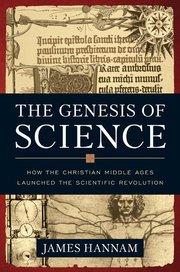
James.JPGThis week’s guest blogger is James Hannam, he has a PhD in the History and Philosophy of Science from the University of Cambridge and is the author of The Genesis of Science: How the Christian Middle Ages Launched the Scientific Revolution (published in the UK as God’s Philosophers: How the Medieval World Laid the Foundations of Modern Science).

The award of the Templeton Prize to the retired president of the Royal Society, Martin Rees, has reawakened the controversy over science and religion. I have had the pleasure of meeting Lord Rees a couple of times, including when my book God’s Philosophers (newly released in the US as The Genesis of Science) was shortlisted for the Royal Society science book prize. I doubt he has welcomed the fuss over the Templeton Foundation, but neither will he be particularly perturbed by it.

the genesis of science.JPGFew topics are as open to misunderstanding as the relationship between faith and reason. The ongoing clash of creationism with evolution obscures the fact that Christianity has actually had a far more positive role to play in the history of science than commonly believed. Indeed, many of the alleged examples of religion holding back scientific progress turn out to be bogus. For instance, the Church has never taught that the Earth is flat and, in the Middle Ages, no one thought so anyway. Popes haven’t tried to ban zero, human dissection or lightening rods, let alone excommunicate Halley’s Comet. No one, I am pleased to say, was ever burnt at the stake for scientific ideas. Yet, all these stories are still regularly trotted out as examples of clerical intransigence in the face of scientific progress.

Admittedly, Galileo was put on trial for claiming it is a fact that the Earth goes around the sun, rather than just a hypothesis as the Catholic Church demanded. Still, historians have found that even his trial was as much a case of papal egotism as scientific conservatism. It hardly deserves to overshadow all the support that the Church has given to scientific investigation over the centuries.

That support took several forms. One was simply financial. Until the French Revolution, the Catholic Church was the leading sponsor of scientific research. Starting in the Middle Ages, it paid for priests, monks and friars to study at the universities. The church even insisted that science and mathematics should be a compulsory part of the syllabus. And after some debate, it accepted that Greek and Arabic natural philosophy were essential tools for defending the faith. By the seventeenth century, the Jesuit order had become the leading scientific organisation in Europe, publishing thousands of papers and spreading new discoveries around the world. The cathedrals themselves were designed to double up as astronomical observatories to allow ever more accurate determination of the calendar. And of course, modern genetics was founded by a future abbot growing peas in the monastic garden.

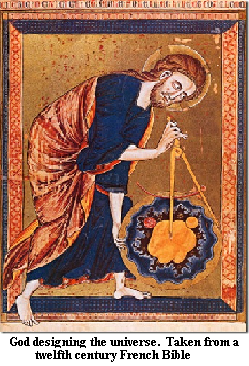
god designing uni.bmpBut religious support for science took deeper forms as well. It was only during the nineteenth century that science began to have any practical applications. Technology had ploughed its own furrow up until the 1830s when the German chemical industry started to employ their first PhDs. Before then, the only reason to study science was curiosity or religious piety. Christians believed that God created the universe and ordained the laws of nature. To study the natural world was to admire the work of God. This could be a religious duty and inspire science when there were few other reasons to bother with it. It was faith that led Copernicus to reject the ugly Ptolemaic universe; that drove Johannes Kepler to discover the constitution of the solar system; and that convinced James Clerk Maxwell he could reduce electromagnetism to a set of equations so elegant they take the breathe away.

Given that the Church has not been an enemy to science, it is less surprising to find that the era which was most dominated by Christian faith, the Middle Ages, was a time of innovation and progress. Inventions like the mechanical clock, glasses, printing and accountancy all burst onto the scene in the late medieval period. In the field of physics, scholars have now found medieval theories about accelerated motion, the rotation of the earth and inertia embedded in the works of Copernicus and Galileo. Even the so-called “dark ages” from 500AD to 1000AD were actually a time of advance after the trough that followed the fall of Rome. Agricultural productivity soared with the use of heavy ploughs, horse collars, crop rotation and watermills, leading to a rapid increase in population.

It was only during the “enlightenment” that the idea took root that Christianity had been a serious impediment to science. Voltaire and his fellow philosophes opposed the Catholic Church because of its close association with France’s absolute monarchy. Accusing clerics of holding back scientific development was a safe way to make a political point. The cudgels were later taken up by TH Huxley, Darwin’s bulldog, in his struggle to free English science from any sort of clerical influence. Creationism did the rest of the job of persuading the public that Christianity and science are doomed to perpetual antagonism.

Nonetheless, today, science and religion are the two most powerful intellectual forces on the planet. Both are capable of doing enormous good, but their chances of doing so are much greater if they can work together. The award of the Templeton Prize to Lord Rees is a small step in the right direction.

The Genesis of Science: How the Christian Middle Ages Launched the Scientific Revolution is available now.

Shortlisted for the Royal Society Science Book Prize

Well-researched and hugely enjoyable.” New Scientist

“A spirited jaunt through centuries of scientific development… captures the wonder of the medieval world: its inspirational curiosity and its engaging strangeness.” Sunday Times

“This book contains much valuable material summarised with commendable no-nonsense clarity… James Hannam has done a fine job of knocking down an old caricature.” Sunday Telegraph

Knowledge, networks and nations

james wilsdon.jpg

This week’s guest blogger is James Wilsdon, Director of the Science Policy Centre at the Royal Society since 2008. Prior to this, he was Head of Science and Innovation at the think tank Demos. His publications include ‘See-Through Science’ (Demos, 2004) ‘The Public Value of Science’ (Demos, 2005), ‘The Atlas of Ideas’ (Demos, 2007) and ‘China: the next science superpower?’ (Demos, 2007).

At the 1908 Olympic Games in London, China failed even to field a team. Eighty years later, in Seoul, they finished in 11th place. And in 2008, as Beijing played host to the most spectacular Olympics in history, China topped the table for the first time, with a tally of 51 gold, 21 silver and 28 bronze medals.

If this is what China can achieve in sport, how quickly can it become a leader in science and innovation? This is one of the questions that prompted the Royal Society’s recent report Knowledge, Networks and Nations. The report maps the global landscape for science in 2011 and charts the growing strength of nations such as China, India and Brazil; as well as the emergence of newer players in the Middle East, South-East Asia and North Africa.

In both science and sport, the Chinese government has set ambitious, long-term targets and mobilized vast resources to achieve them. Just as the $40 billion spent on the Beijing Games dwarfed anything that had gone before, so China is now at an early stage in the most ambitious programme of research investment the world has ever seen. Since 1999, China’s spending on R&D has increased by almost 20 per cent each year. It is now spending US$ 100 billion a year on research, and hitting its target of 2.5% of GDP by 2020 will require a further tripling of investment, to around $300 billion a year.

r and d spending.bmp

Quantity of input doesn’t necessarily result in quality of output, but these investments are starting to yield results. Since 1981, the number of peer-reviewed papers produced by China has increased 64-fold, and it is well on target to become the leading producer of scientific publications within this decade, perhaps as soon as 2013. China’s Olympic triumphs flowed in part from its careful targeting of medal-rich sports like gymnastics, shooting and judo. In the same way, it has focused its research investment on disciplines where the opportunities are greatest.

Alongside globalisation, a second theme of the ‘Knowledge, Networks and Nations’ report is collaboration. The scientific world is also becoming more interconnected: over a third of all articles published in international journals are internationally collaborative, up from a quarter 15 years ago. This is happening for a variety of reasons. Advances in communication technology and cheaper travel have played a part, but the primary driver is scientists themselves, seeking to work with the best of their peers and to access complementary resources, equipment and knowledge. So at a time when budgets in many countries are under pressure, our report makes a strong case for continued investment in collaboration, as vital to high-quality research, and to our capacity to address the big social and environmental challenges that we face today.

Science policy at the Royal Society

The ‘Knowledge, Networks and Nations’ report is one recent example of the contribution that the Royal Society makes to public policy. We’ve been doing this for a long time: our earliest report, on the state of Britain’s forests, was delivered to King Charles II back in 1664.

But today, scientific advice to underpin policy is more important than ever before. In 2009, the Royal Society established a Science Policy Centre to strengthen the independent voice of science in UK, European and international policy. Each year we publish half a dozen reports, usually produced by groups of our Fellows and other experts. We also run workshop and seminars, as well as engaging directly with policymakers and with the media.

Above all, we want to make the Royal Society a hub for debate about science, society and public policy; to act as ‘honest brokers’ of the choices that confront scientists and policymakers in the 21st century.

Last year, the Royal Society celebrated its 350th anniversary. As historians such as Steve Shapin have described, in its early years, the Royal Society was a ‘house of experiment’. Hooke, Boyle, and the Society’s other founders – ‘ingenious and curious gentlemen’ as they styled themselves – met regularly to conduct experiments, to peer through newly-invented telescopes and microscopes, and to dissect strange animals.

Today, while the Society funds the work of several hundred research scientists through its grant schemes, no actual experiments take place within its four walls. Science moved out long ago into the universities and corporate R&D labs. But in other ways, the Society remains a house of experiment. Only now, the experiments that take place are in those messy and contested commons and borderlands between science, politics and society.

This, as I see it, is one of the primary responsibilities of a national academy of science in the 21st Century – to be honest and open in our recognition of the shifting politics of knowledge. To ask and to help answer the burning social, ethical and political questions raised by and for science today.