How to track the “lost generation” of scientists

“We should not consider it a disaster that someone trained to a high level doesn’t remain in academia,” Jean-Pierre Bourguignon, president of the European Research Council, told a panel discussion about science’s “lost generation” last month.

In this podcast Bourguignon and two of his fellow panel members  tell Julie Gould how better career tracking data from universities and other institutions would show how few achieve staff positions, challenging the perception that academia is the only worthwhile career option.

Continue reading

How could universities and funders improve the situation for postdoctoral scientists?

What the research system needs to be doing to improve the world that postdocs face

By David Bogle

I’ve already written about how PhDs can prepare for and decide whether or not they should pursue a postdoc. Here, I will discuss what more universities and funding agencies should be doing as stakeholders in training and employing researchers.

Universities must be doing more to ensure the postgraduate experience is a positive one

Employers, both at universities and elsewhere, need a range of sophisticated research skills at their institutions. Early career researchers have already shown themselves to be incredibly talented; and society needs them to drive innovation in the economy. This is all the more important in the context of an ongoing war for talent. Researchers must have the opportunity to develop as ‘creative critical autonomous intellectual risk takers’ for the sake of society. Continue reading

What should you get from being a postdoc?

And what should you look for when finding a postdoc position?

By David Bogle

You are coming towards the end of your PhD – so what next? There are many options open to you; one obvious one is to apply for a postdoc position. You should think carefully about what you want to do and not just pursue this through inertia. I have supervised many engineering PhDs and some postdocs in my 32 years as an academic. As Head of University College London’s Doctoral School, I oversee the environment and policy for 6000 doctoral candidates and 3200 postdocs.

Many can find good reasons to do a postdoc. {credit} Guy H/ Flickr CC-BY-2.0 {credit}

Continue reading

Reshaping the research landscape

A 12 April report from the US National Academies of Sciences, Engineering, and Medicine offers ideas for reshaping the landscape of life-science research across all career levels in the US biomedical research pipeline.

laboratory-2815640_1920

The proposal from the advisory body in Washington DC calls for more career counselling at the graduate and postdoctoral levels, better data on career outcomes at those levels, three-year caps on postdocs under principal investigators and new non-tenure track academic research positions, among other changes. To implement all the proposals would require a US$2 billion increase to the US National Institutes of Health (NIH)’s budget, as well as subsequent budget raises to prevent future funding bottlenecks.

Continue reading

Fewer women lead top universities

Female leadership at the world’s top 200 universities in an international ranking fell this year to 17%, according to a report – a reminder that gender equity in science remains a distant goal.

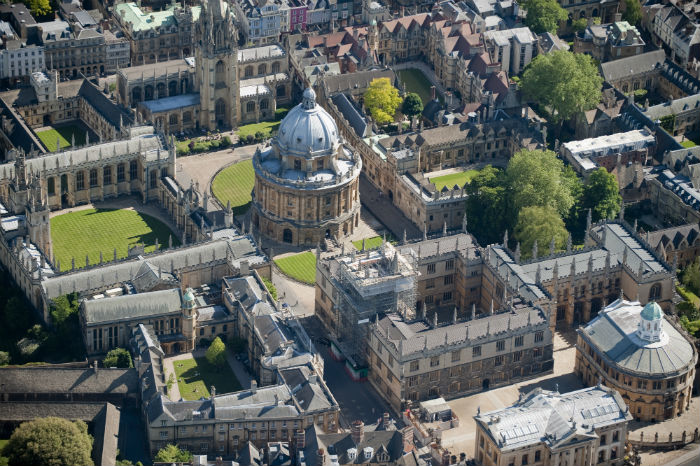
The University of Oxford has had a female vice chancellor, Louise Richardson, who took up the post in January 2016.

The University of Oxford has a female vice chancellor, Louise Richardson, who took up the post in January 2016. {credit}Getty{/credit}

Just 34 of leading universities named in this year’s annual Times Higher Education (THE) World University Rankings have female presidents, down 1% from the 36 that were led by women in 2017. Continue reading

Coming to the US for a postdoc? – If I had known, part II

Is moving to the US for a postdoc worth it? Elena Blanco-Suárez shares her tips on how to make the best decision for you.

pexels-photo-490466

Like many other European researchers, I moved to the US for my postdoc.  While some stay in the US, and others return to Europe after their postdocs, I’m almost certain that anyone who has followed this path will have encountered a few shocks along the way. Choosing the right fit for your postdoctoral training is just as important as choosing the right lab for your PhD. Based on my experiences, here is a list of the things that I think are worth checking in advance to avoid thinking “I wish I had known” too often.

Continue reading

When conferences collide with family needs

As a busy scientist with two young children, one of Rebecca Calisi’s most vexing challenges is figuring out how to attend scientific conferences without a huge disruption in family life. Bringing children to conferences is an option, but not all are especially welcoming to the needs of families, especially to mothers with young children.
1008602_10151664484247933_418737272_o (3)

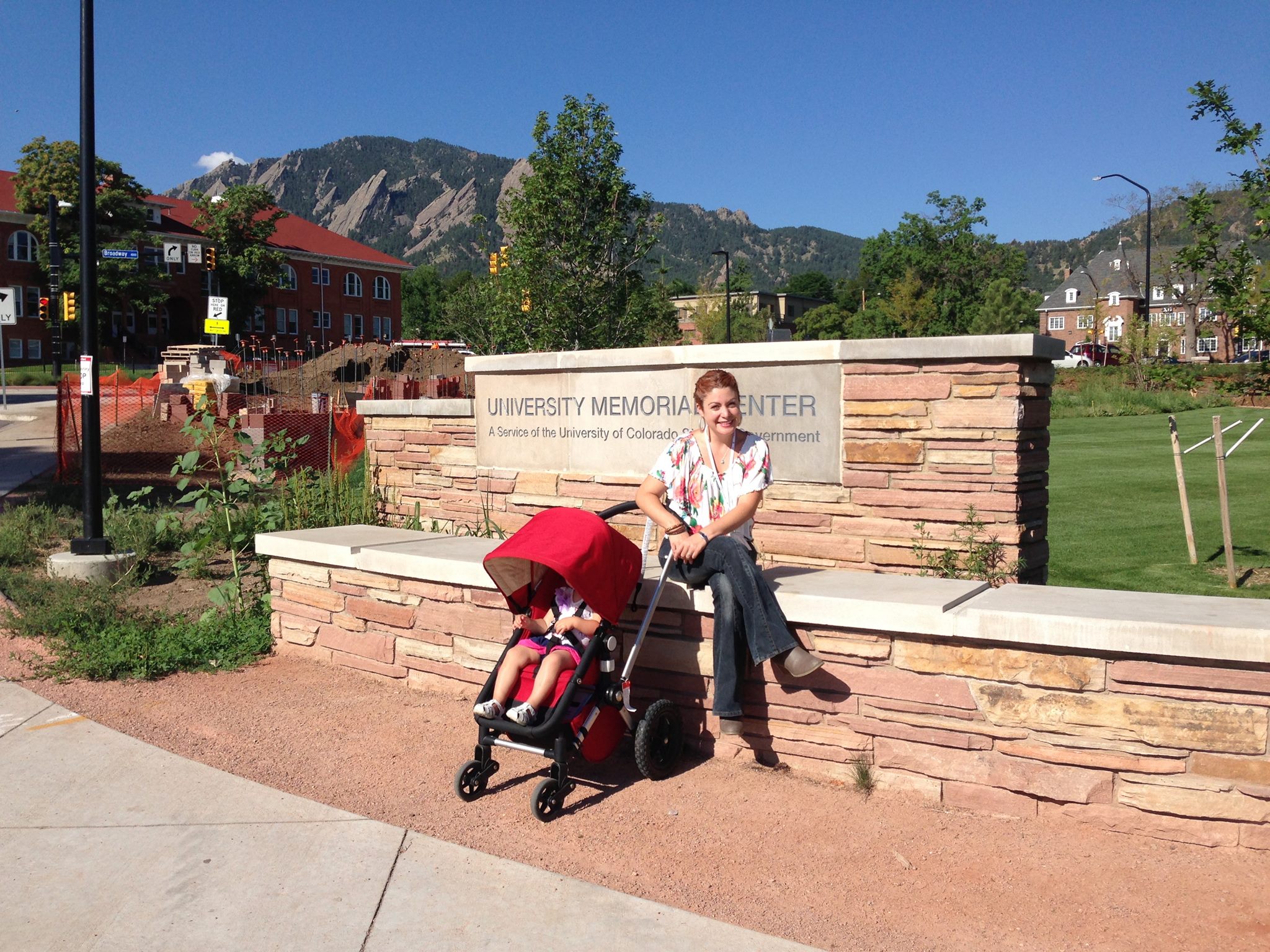
Rebecca and her daughter at the annual conference for the Animal Behavior Society at the University of Colorado in 2013

Calisi, a behavioural neuroscientist at the University of California, Davis, and a group of 45 other scientist-parents, have turned their frustrations into a call for action. In a paper published online Monday in Proceedings of the National Academy of Sciences, the researchers detail the shortcomings of past conferences and offer a blueprint for making conferences more welcoming and accessible to parents of young children.

By not providing accommodations for children, Calisi says, conferences can unintentionally create barriers that exclude large swaths of scientists—especially early-career scientist-mothers who may not be able to afford childcare. “One part of promoting diversity is supporting women with children,” Calisi says. “If institutions say they want to support diversity, they should put their money where there mouth is.”

In the paper, Calisi and co-authors suggest that conferences could fund on-site childcare services, lactation rooms and other amenities by asking for voluntary donations during registration. Exhibitors who make a donation could receive a sign or emblem that show their support. “I guarantee you they would get more foot traffic,” Calisi tells Nature. The paper also calls for all conferences to clearly state that parents are allowed to bring babies to talks and poster sessions. For now, she says, rules about children seem to change from conference to conference and even from hour to hour. She notes that researchers with babies were recently turned away from a poster session at a large conference even though the official policy permitted children in the exhibit area.

A practical, comfortable space for breastfeeding or pumping breast milk is an especially important accommodation, Calisi says. “A lactation room tells you a lot about how much a [scientific] society values women,” she says. In November, she turned to Twitter to complain about the facilities at the Society for Neuroscience (SfN) annual meeting, held last year in Washington DC.  Within hours of that tweet, the society provided more comfortable lounge chairs for mothers. “It’s not that the society was anti-women,” she says. “They just didn’t know.”

SfN, for its part, aims to become more inclusive. “The society is actively exploring ways to continue to enhance the spaces for nursing mothers in San Diego [California] this year and at SfN’s future meetings,” says society spokesperson Kara Flynn in a statement to Nature. She adds that the society is committed to “fostering a welcome and diverse community in which all scientists are able to contribute fully.”

Some conferences are already parent-friendly, Calisi says. She recently attended the annual meeting of the American Academy for the Advancement in Science in Austin, Texas, where the lactation room was comfortable and easily accessible. “I gave them two thumbs up,” she says.

Chris Woolston is a freelance writer in Billings, Montana.


Suggested posts:

The single scientist-parent

Motherhood and science 

From the frontlines