What should you get from being a postdoc?

And what should you look for when finding a postdoc position?

By David Bogle

You are coming towards the end of your PhD – so what next? There are many options open to you; one obvious one is to apply for a postdoc position. You should think carefully about what you want to do and not just pursue this through inertia. I have supervised many engineering PhDs and some postdocs in my 32 years as an academic. As Head of University College London’s Doctoral School, I oversee the environment and policy for 6000 doctoral candidates and 3200 postdocs.

Many can find good reasons to do a postdoc. {credit} Guy H/ Flickr CC-BY-2.0 {credit}

Continue reading

Science careers are careers that involve science

This piece was originally published on the BioMed Central blog network, part of Springer Nature.

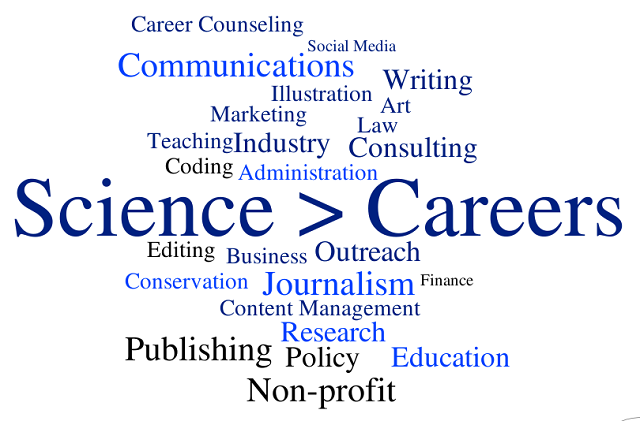
Dana Berry announces the launch of a new series ‘Science > Careers’ putting the spotlight on scientific careers outside of academia. Here she talks about her own experiences and how she hopes the series will inspire others that are searching for something different.
ScienceCareers640c

Dana Berry. Originally published 9 Feb 2016.

During my senior year of high school I decided that I wanted to be a research biologist. From there it was a straight path; I got my bachelor’s degree in biology, while also working in a lab, spent a year at the NIH after graduation, and then started at NYU for a PhD program in biomedicine.

Two years in I decided to leave. Not only was I not happy with what I was doing in the short term, I wasn’t happy with where it would take me. Leaving school with my masters was a difficult decision, and absolutely right for me, but figuring out what to do next was even more difficult.

I still wanted to be involved in science, I still loved biology, but being in a lab just didn’t fit. How do you do science without being a Scientist?

Searching for advice

I sought out as much advice as I could from other students, postdocs, professors, friends of friends, blogs, anyone and everyone. Because I only had research experience on my CV, and I was opting to not continue lab work in any form, I didn’t know what I was looking for, never mind how to find it.

Searching for a job is difficult at the best of times, but when you don’t know what you’re looking for? Seemingly impossible.

On the whole, the job advice I got was either vague or was only helpful in retrospect. Much of it left me more confused about my future than I was before. What exactly are those jobs that are supposedly so plentiful for graduate students? Typing ‘science communication’ into a job search engine gave me search results that were broad, baffling and relatively useless.

Where I work now

By what still seems like sheer luck, I actually found a job that would utilize my experience and involved my interests. For more than a year now I have been working as a Journal Development Editor at BioMed Central, working mainly with microbiology journals.

Seeing as I got my masters in microbiology, it’s been a pretty good fit. Working at a desk, instead of at the bench, has been great. I get to keep up with the latest research, in a much broader context than as a student, attend conferences to meet with our editorial boards and other leading researchers, and work towards improving the lives of researchers and citizens alike.

More than that, and outside of the obvious publishing experience, I’ve gained experience in marketing, science communication, content management and social media. I’ve also come to discover just how vast the world of science is beyond the lab.

So much out there

The web of scientific careers is bigger than most people realize, and definitely bigger than most graduate students see on a regular basis or are even made aware of. Although career training in graduate school is getting better, there’s still an entrenched feeling of two opposing monolithic choices for students: ‘lab research’ or ‘other’.

These two options are not separate, and they’re significantly more than just two categories. Since I started at BioMed Central, I’ve learned about new science jobs nearly every day. Both jobs that I’ve never heard of and jobs that I knew about, but didn’t know that they could revolve around science. I love finding out about these like-minded people, people who love science but aren’t ‘Scientists’.

Using our experience to educate others

I still think back to the difficulties I had looking for a job two years ago, and I wish I could tell the person I was then everything I know now. But since we haven’t invented that technology yet, I am going to share this knowledge with others who are currently going through it.

I am very happy to announce a new series all about careers in science. Previous posts on our network have touched on career exploration, but with this series I want to delve deeper into what these careers truly involve.

Science is not a solitary pursuit, but a team effort, made up of teachers, journalists, policy makers, publishers, as well as researchers. But how does this team work? What do they do and where do they do it?

Starting right here at BioMed Central, our next post will identify and explain four job types in our publishing team, and how the employee’s previous experience lends itself to their current day-to-day tasks.

Beyond that we’ll have in depth interviews with people in science policy, outreach, teaching, communications, art, administration, technology and probably more publishing. We want to explore every nook and cranny of every sector you’ve heard of, those you haven’t, and then some.

danaberry


Dana graduated with a MS in Microbiology from New York University before joining BMC in 2014, where she manages the infectious diseases portfolio.


Suggested posts

Surviving academia as an early career researcher: an unreliable guide

Careers for scientists away from the bench

Adios to academia

How mentoring stopped me giving up

IMG_2721.jpgm smaller

Credit: Helena Lee

It took excellent mentors and a key realisation for Helena Lee to get back on track towards a career in clinical research.

The idea of solving scientific questions that have never been answered before has always excited me — especially if that knowledge might go on to help someone medically. Despite this, I have come very close to giving up on a career as a clinician scientist. Continue reading

Celebrating International Women’s Day 2018: A Naturejobs roundup

Whilst young scientists working in academia today might face huge problems, women within that group face larger problems still, many of which we cover across Naturejobs. To mark International Women’s Day 2018, here’s some of our coverage of women in science and the hurdles they face.

https://www.youtube.com/watch?v=rdfqXdibc0k
Continue reading

Rescued pets from field sites, plus other scientific career tales on video

Cats and dogs that live on or around field sites can become cherished companions, but what is the best way for researchers to help them? In this week’s Nature careers feature meet Fred and other animals who stole the heart of scientists in the field. To whet your appetite before reading Traci Watson’s article, we’ve produced this little video. Continue reading

Boyfriends and husbands may put female researchers at a hiring disadvantage

Married and partnered female researchers may be less likely than their male counterparts to land a junior-faculty position at US universities, finds a study.

Divorce wedding cake

By Paul Smaglik

Female candidates’ – but not male candidates’ — relationship status was a primary consideration in hiring committees’ discussions and decisions, according to study co-author Lauren Rivera, an associate professor at the Kellogg School of Management at Northwestern University in Evanston, Illinois. She found that committee members assumed that heterosexual female candidates whose partners or husbands held academic or high-status jobs could not relocate for the job, and excluded them from offers when the committee had viable male or unpartnered female options. Yet, she says, committees — whose members included women — rarely discussed male applicants’ relationship status and assumed that those candidates’ partners or wives would be able to move for the position if an offer were made.

Continue reading

Building skills through a gig

Some researchers are providing short-term services such as writing science news articles and consulting on industry products to bolster their skills outside the lab. These side gigs can be valuable for career development, says Josh Henkin. (See related story here.)

GettyImages-95692019-smaller

{credit}Noel Hendrickson/Getty{/credit}

Continue reading

Naturejobs podcast: Flexibility and forward planning

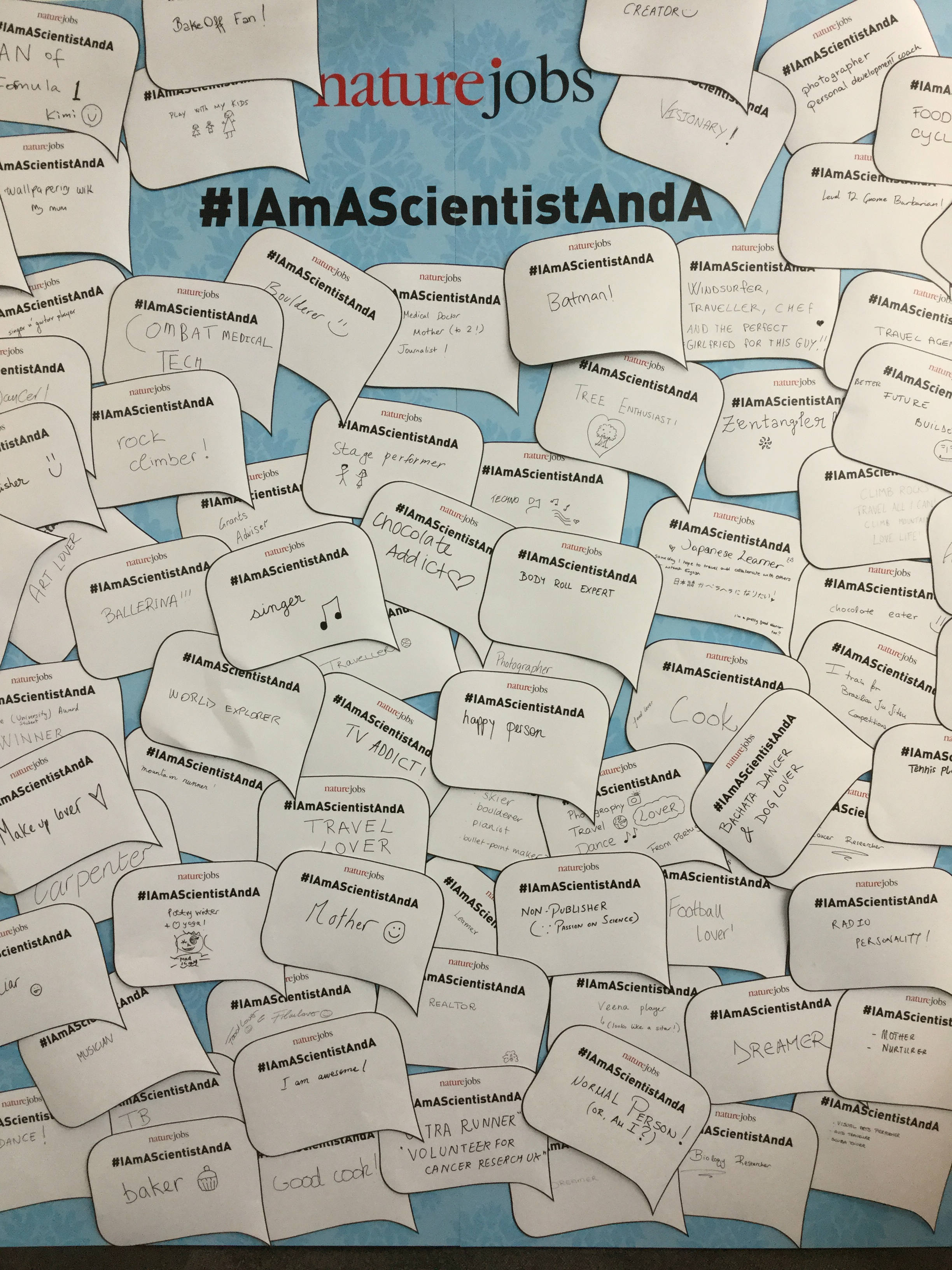
#IAmAScientistAndA-smaller

London Naturejobs Career Expo speakers, exhibitors and attendees share how flexibility in a scientific career is beneficial.

“Science is a multifaceted and large enterprise, and there are lots and lots of very interesting ways to contribute to science” said Venki Ramakrishnan, president of the Royal Society, lab leader at the MRC Laboratory of Molecular Biology and joint winner of the 2009 Chemistry Nobel, at the 11th annual Naturejobs London Career Expo on Oct 4th 2017.

Ramakrishnan encourages scientists to think about the wide variety of options available to them; that having a PhD in science doesn’t mean you need to follow the tenure track career path. Continue reading

The Naturejobs Career Expo – some secrets to scientific success

Naturejobs journalism competition winner Eileen Parkes

Over one thousand scientists attended the Naturejobs Career Expo last week in London. With professional CV checking, exhibitors from academic institutions and companies from around the world, and career-focused talks from Nobel Prize winner Professor Venki Ramakrishnan, science communication expert David Urry, popular blogger and senior lecturer Dr John Tregoning and many more, this was a resource-packed event for researchers.

Spending the day absorbing so much great careers advice left me feeling punch-drunk by the end.  Some themes cropped up repeatedly — distilled wisdom on scientific success.

Some of the submissions to the Naturejobs Career Expo photoboth

Some of the submissions to the Naturejobs Career Expo photoboth

Continue reading

A non-traditional path to a PhD

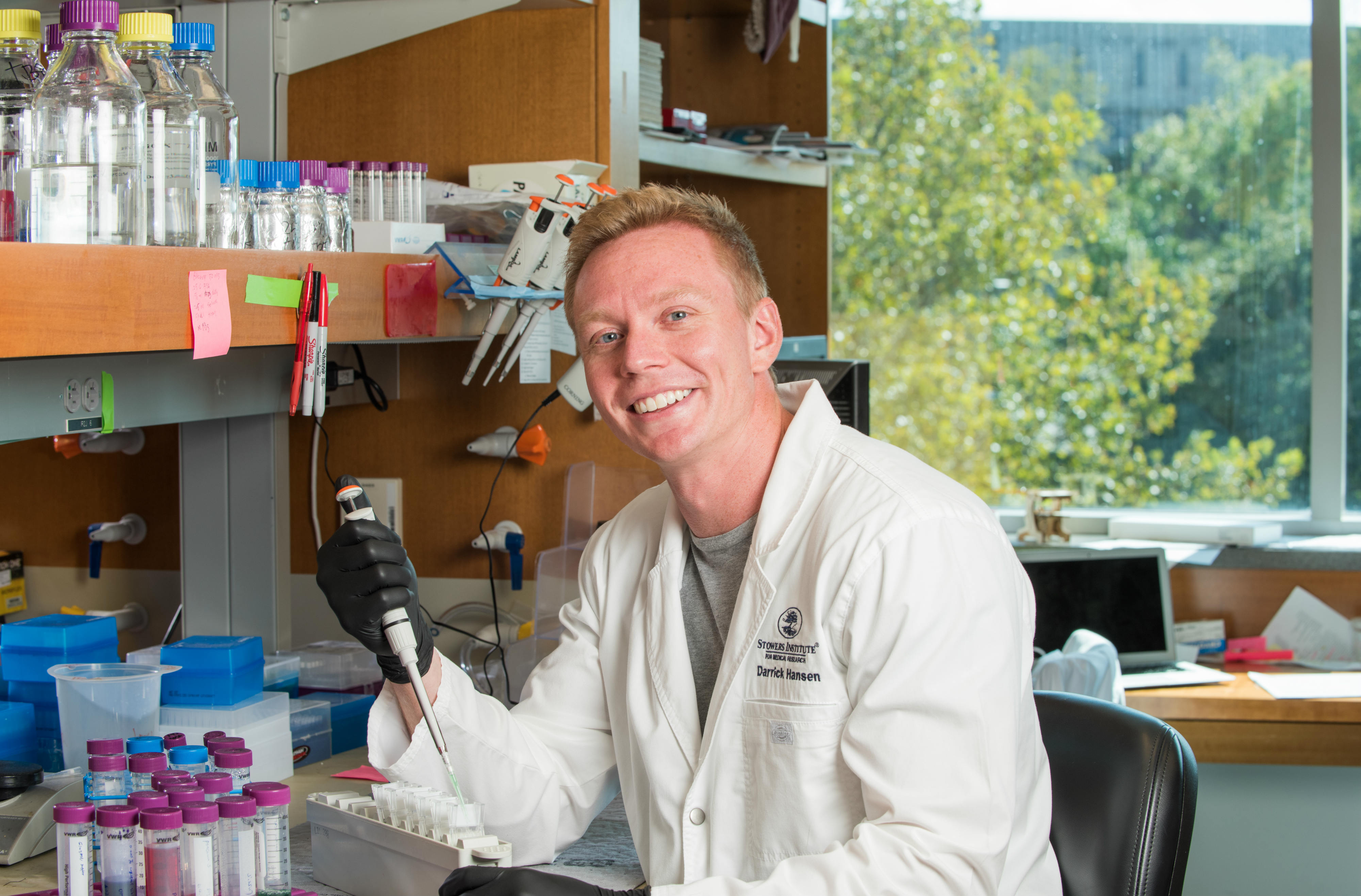
Darrick Hansen explored the world in pursuit of adventure and an undergraduate degree. Now, he sees his PhD program as a chance to explore biomedical mysteries alongside an international community of scientists.

 This post was sponsored by the Stowers Institute

Darrick Hansen has a low threshold for the mundane. On his way to earning his undergraduate degree, he took time off to work in far flung places in between his studies in the US, Singapore, and Scotland.

Derrick Hansen

Derrick Hansen{credit}STOWERS INSTITUTE FOR MEDICAL RESEARCH{/credit}

Continue reading