Done is better than perfect: overcoming PhD perfectionism

The most important thing a PhD will teach you is how and when to stop.

By Atma Ivancevic

Sometimes ‘OK’ is OK enough

I submitted my PhD thesis on the evolution of jumping genes in December 2016, four days before Christmas. It wasn’t perfect — in many ways, it wasn’t even good. By the end of my graduate studies, I had hoped to be a proficient programmer and an established scientist with multiple high impact papers. At the bare minimum, I expected to find evidence to support my hypothesis. Instead, my thesis was largely unpublished, my coding was preliminary, and my results were inconclusive. In my eyes, it was a failure. Continue reading

Why scientists should communicate hope whilst avoiding hype

How we communicate our research is important in maintaining public trust in science

By Eileen Parkes

“Exciting new line of attack for aggressive breast cancer”

I read that headline recently. “Fantastic” I thought, quickly followed by, “How have I missed this?”. My disappointment as I read the article (the new treatment had only been shown to work in cells in the lab, not in humans) turned to anger as I thought what someone with breast cancer might think whilst reading this. Someone who had coped with bad news and difficult treatments, hoping for a cure only to be disappointed again and again by overblown headlines.

Continue reading

What should you get from being a postdoc?

And what should you look for when finding a postdoc position?

By David Bogle

You are coming towards the end of your PhD – so what next? There are many options open to you; one obvious one is to apply for a postdoc position. You should think carefully about what you want to do and not just pursue this through inertia. I have supervised many engineering PhDs and some postdocs in my 32 years as an academic. As Head of University College London’s Doctoral School, I oversee the environment and policy for 6000 doctoral candidates and 3200 postdocs.

Many can find good reasons to do a postdoc. {credit} Guy H/ Flickr CC-BY-2.0 {credit}

Continue reading

Want to find investors for your research idea? Change the way you pitch

A fundraising pitch involves vastly different style and substance than a scientific talk. Entrepreneurial scientists and engineers need to understand and manage the differences.

In a funding pitch, complexity is your enemy — no matter how significant the science

By David Rubenson, Wendie Johnston and Ned Perkins.

Many scientists hope to translate their discoveries into something useful and financially profitable. A biologist, for example, might hope to create a new line of health care products. Many use special grants or family resources to establish small companies. However, given the enormous challenges in the healthcare market, virtually every nascent enterprise needs outside funding; whether from wealthy “angel investors,” venture capital, or investment from large pharmaceutical and device developers. Continue reading

How to mentor undergraduates as a postgraduate, and why it’s important

Spending more time mentoring undergraduates as a postgrad is good for everyone, says Jenn Summers.

To-do lists work for some, but a more holistic approach to researcher development may bring larger rewards.{credit}By FOTO:Fortepan — ID 2278: Adományozó/Donor: Unknown. [Public domain or Public domain], via Wikimedia Commons{/credit}

There’s a difference between mentoring and doling out to-do lists. This is something I’ve learned over the past year, my first as a mentor. Mentoring undergrads became part of my job only recently – in the past, research came first. Most advisors value research outcomes over mentoring, and departments certainly place more value on publications. Before this past year, I was used to just a single undergrad working in my lab, and I thought of them as worker bees, not as future colleagues.

Put simply: I did not think about teaching in the lab.

Now, after guidance from recent research on mentoring, I realize that if graduate students like myself were more invested in mentoring, there would be many more small-but-important teaching opportunities.

Continue reading

Resubmitting your study to a new journal could become easier

Rejected manuscripts are a fact of life in science, but a new initiative might take some of the sting out of the process.

newspaper-pile-naturejobs-blog-2

{credit}Image credit: Getty Images/Mateusz Zagorski{/credit}

By Chris Woolston

The National Information Standards Organization (NISO), a Baltimore, Maryland-based non-profit that promotes standardization in publishing, has embraced a plan to make it easier for journals to share rejected manuscripts and manuscript reviews without forcing authors to go through another arduous submission process. Continue reading

More to science: working as a Research Funding Manager

This piece was originally published on the BioMed Central blog network, part of Springer Nature.

Pixabay

There’s more to science than being a scientist! Next in our ‘Science > Careers’ series Anne Helme explains more about the path that led to her role as Research Funding Manager at Cancer Research UK.

Last-author spot tough to nail for scientists who are not white or male

Many scientists mark the evolution of their careers by publications: Their first paper, their first stint as a lead author, the first time they earn a final or senior spot. But for women and members of some minority groups, those benchmarks can be especially hard to reach, according to a study published in the May 2018 issue of AEA Papers and Proceedings.

By Chris Woolston

scales

The analysis—which covered 486,644 biomedical articles with two to nine authors published between 1946 and 2009—found that female, black and Hispanic authors were less likely than were white men to hold prestigious last-author spots. And while all scientists tended to land more last-author spots as their careers went on, that trend was slower for women and minorities. “There’s a lack of progression for those groups,” says Bruce Weinberg, a co-author of the study and an economist at Ohio State University in Columbus. Continue reading

More to science: working as a Communities Manager

Pixabay

This piece was originally published on the BioMed Central blog network, part of Springer Nature.

There’s more to science than being a scientist! Anna Perman, Communities Manager at the British Science Association, explains more about her role and how her science background has helped her along the way as part of our ‘Science > Careers’ series.

How did you get interested in science?

I never actually liked science very much when I was at school. I was much more of a fan of English, History and Drama. But when I was 15 and studying for exams, I had to teach myself about plant hormones, because I’d been absent for that part of the year.

I found the subtlety and complexity of the topic far more interesting than the multiple choice questions and fact sheets we’d studied from in class, and so I realized that actually science was a really fascinating way to understand and discover new things about the world.

What is your scientific background?

While I could always read, write and act as a hobby, I realized I could only do science as a job, so decided to study biology at University of Bristol. I still think it’s a shame that it’s so hard to do science as a hobby, and so after university, I did a Science Communication Masters at Imperial College London.

Here I learned more about people doing innovative science communication, which actively involved non-scientists in the scientific process. I worked in policy and media for a while, including in the media team at BioMed Central, before joining the British Science Association. Their vision of bringing science out of its silo, involving everyone in it, and putting it at the heart of culture and society really chimed with me.

How do you spend your day in your job?

In my job, I work with professional communities, encouraging and helping them to actively involve the public at the heart of science. I work with science communicators, to encourage best practice in creating truly two-way conversations with their audiences – we recently ran some research on the community and their needs, so that our work is really evidence-based.AnnaPerman
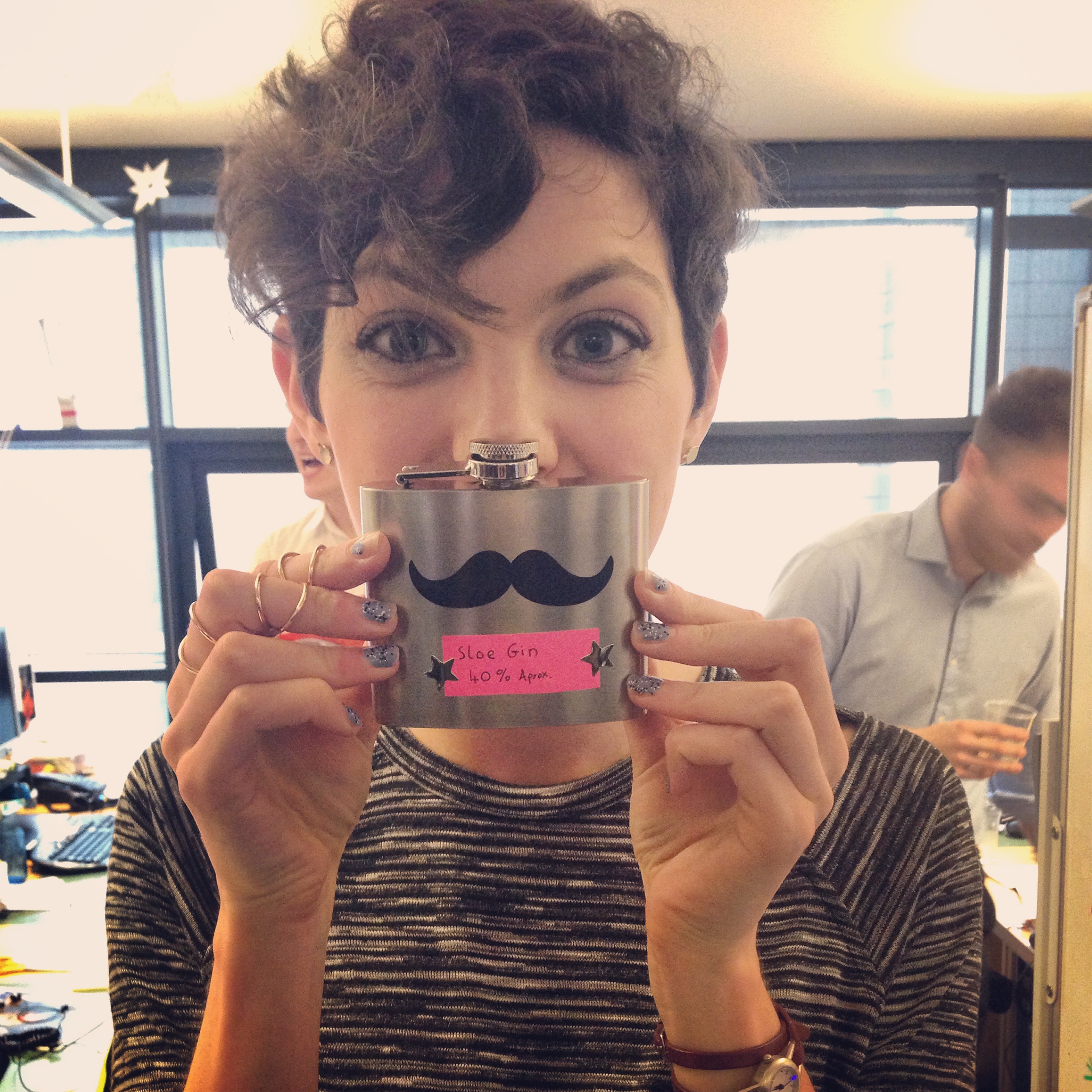
I run our work with Sciencewise, a government program to encourage deliberative dialogue – a technique where the public meet with scientists and policymakers to discuss science policy issues, in order to create better policy.

Finally, I run our Media Fellowships, where we link up scientists with journalists to help create understanding between these two groups. Every once in a while, I also help out on a few other campaigns and programs, including our essay series, Not Just for Scientists, and Science Matters, a series of films we released just before the general election.

All of this work involves a lot of relationship building, so lots of my time is in meetings and on the phone, or finding new and important thinkers and ideas. And because we want our ideas to be challenging and evidence-based, it’s amazing how much thinking, analysis and planning is involved.

What makes this a science job?

I spend much of my time at work thinking about the different ways that science can play a role in everyone’s lives. Whether that’s in more traditional ways, as a job, or watching documentaries and learning about science, or in some of the newer ways that are emerging – citizen science, makerspaces, and home experimentation.

It could be people having a more democratic involvement in science – in decisions about funding in the way that some medical research charities do, or in conversations and discussions with researchers to design experiments. Or even as a mindset that any of us can apply to our daily lives.

What do you like most about your job?

Within my team of five, only two of us did a science degree, which really helps make sure we’re constantly challenging each other, asking questions and thinking really openly about the role science can play in people’s lives.

I like the ambition and creativity that we’re able to bring to this work, and being able to be part of an organization that listens to a range of viewpoints, and working with people in and outside of science to challenge our views of what science can do.

Mostly, this involves being truly open to new ideas, which you can only really learn by listening, critiquing and challenging deeply held assumptions – both your own and other people’s. A lot of the same skills involved in science really!

What would you tell your younger self?

The most rewarding things I’ve done have been things that scared me a little. Taking on curating the program for TEDxAlbertopolis – an event in the Albert Hall for 4,000 people, was terrifying, but one of the best experiences I’ve had.

We brought together scientists, designers, historians, musicians, dancers and a crossword compiler, who all shared a fascinating common ground in the space between science and other subjects. I would advise myself that sometimes areas and ideas like these that seem scary or unfamiliar are actually the most valuable, because that’s where you find and learn the most.


danaberry

Building a Scientific Community – DIY for Young PIs

Growing the next generation of scientists

Development and debate about the March for Science

Science communication: A solution to the upcoming Brexit funding gap?


From academia to Silicon Valley — and back

pexels-photo-77984-smaller

Although faculty members transition from industry to academia (and vice-versa), it’s rare to go back and forth. How does each setting help a researcher grow, and what skills are critical in both environments? Sam King offers his insight.

Five years ago, I left my tenured position in computer science at the University of Illinois at Urbana-Champaign to push myself intellectually and professionally in industry. During these years, I started a company (Adrenaline Mobility), sold my company to Twitter, worked as a software engineer, managed a two-person team, managed a 25-person organization, battled overseas fraudsters and fake accounts, and led a nine-month project (an eternity in industry) that ended up being the largest growth initiative in the history of Twitter. Continue reading