Why scientists should communicate hope whilst avoiding hype

How we communicate our research is important in maintaining public trust in science

By Eileen Parkes

“Exciting new line of attack for aggressive breast cancer”

I read that headline recently. “Fantastic” I thought, quickly followed by, “How have I missed this?”. My disappointment as I read the article (the new treatment had only been shown to work in cells in the lab, not in humans) turned to anger as I thought what someone with breast cancer might think whilst reading this. Someone who had coped with bad news and difficult treatments, hoping for a cure only to be disappointed again and again by overblown headlines.

Continue reading

The million-dollar question every scientist should be asking

Both science communicators and researchers carry the onus of answering science’s most important question

By Jessica Eise

I recently had a phone call with a frustrated colleague looking for some advice. She had two key pressure points, both common in the field of science communication.

First, she often couldn’t make sense of what scientists were telling her. They would explain their advanced, varied concepts increasingly quickly and impatiently as she struggled to understand them. Both parties would leave frustrated, having not achieved much. The scientists might wrongly assume she’s stupid to have not understood.

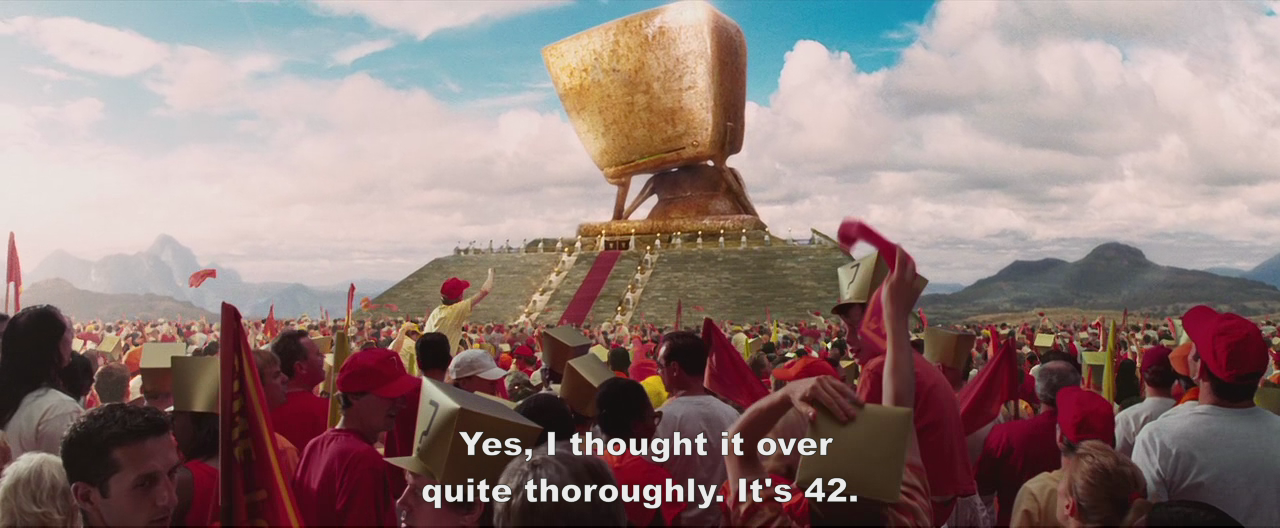
Douglas Adams’ The Hitchhiker’s Guide to the Galaxy asked “What is the answer to life, the universe and everything?” To communicate effectively, scientists should simply ask “So what?”{credit}By IllusionConscious [CC BY-SA 3.0 (https://creativecommons.org/licenses/by-sa/3.0)], from Wikimedia Commons {/credit}

Continue reading

Should you join a start-up company after academia?

A career in a start-up company is more than just risk, discovers Idil Cazimoglu.

This piece was one of two winners of the Science Innovation Union writing competition, Oxford.

“Risky.”

My housemate, now in the final year of his PhD, had a one-word answer to my question “Would you consider working in a start-up company after you graduate?”

Intrigued, I posed this question to fellow PhD students in various disciplines over the following weeks, and received similar answers including “I don’t want to live in uncertainty,” “No job security,” “Academia is more stable,” and, memorably, “I’d rather go bungee jumping.”

rocket-1122402_1920

Not everything launches so smoothly

Continue reading

Five top tips for getting your paper noticed

Your research breakthrough doesn’t just need to be read by the experts, says Mark Lorch.

Guest contributor Mark Lorch

You’ve just made the breakthrough you’ve been dreaming of. The days-weeks-months-years in the lab or field have all paid off, and everything has dropped into place. It’s the sort of moment that we scientists live for – the buzz of discovery. So now it’s time to publish.New Image

Tell your peers about your work and hope it leads to new and even greater things for you, your fellow scientists, and society. But is that really enough? Maybe there’s a wider audience for your science, outside of the narrow confines of your academic circle. Maybe it has applications in other fields, or perhaps the public would like to (or even should) know about it. Plus of course if you get your paper noticed it’s much more likely to have the citations and impact that you, your department and all the metric measurers have been hoping for.

In the open access era there’s nothing stopping anyone from downloading your paper. But there are still hurdles to overcome before getting the wide readership your paper deserves. Based on my experience, here’s five tips for helping your paper reach the widest possible audience. Continue reading

How would you define a successful career in science?

Last week Naturejobs joined more than 100 representatives of funding agencies, research councils, universities and research institutes from across the globe for a workshop on how to track researchers’ careers. The workshop, held in Luxembourg and coordinated by the European Science Foundation (ESF) and Luxembourg’s National Research Fund (FNR), covered a wide range of topics – including how success in a science career should be defined for the purposes of career tracking.

It’s an important issue for both decision makers and scientists to consider because career-tracking studies can be used to judge the impact of funding. And although there have been surprisingly few studies to date – primarily due to running costs – the profile of attendees at the workshop suggests career tracking will play a larger role in funding considerations in the future. So how would you, as a working scientist, define a successful career in science?

Several factors for defining success were put forward by the attendees at the workshop, shown below in no particular order. Please vote for your top three in our poll, and let us know what you think of the suggestions by leaving a comment below. What would you prioritise or dismiss? What is missing? And would you agree or disagree that there are a variety of successful careers for researchers, including those outside academia?

The results of the poll and comments posted below will be considered for inclusion in the final report of the ESF-FNR workshop, and may influence future career-tracking studies, so please feel free to make your views known.

Factors for defining success in science careers

  • Generation of new research ideas (original research and methods)
  • Production of research relevant to society
  • The impact of research on society
  • Personal satisfaction/quality of life
  • (International) networking and professional contacts
  • Diversity (including gender)
  • Employment
  • Leadership position
  • Attractiveness to next generations
  • Salary/income (in relation to national system)
  • Independence
  • Flexibility
  • Security
  • Quality of working environment
  • Quality of research infrastructure
  • Publications
  • Awards
  • Funding