Five rules for starting up in synthetic biology

Building a synthetic biology startup is tough – but stay the course and it’ll be the most rewarding struggle of your life, says James Field.

Since the advent of life 3.6 billion years ago, the survival of all species has depended on rapid innovation at the genetic level. As a consequence, our planet has grown rich with evolved technologies.

Traditionally, the dream of harnessing these evolved technologies has been confined to thought experiments and science fiction. Now, the emerging field of synthetic biology is giving engineers the tools required to tap into evolution’s code-base.

forest-1245951_1280 Continue reading

Meditation on a Caltrain: Understanding where to travel to next

Exploring options and thinking laterally about where you can use your scientific skills might be the key to successfully transitioning into industry, learns George Busby.

This piece was one of two winners of the Science Innovation Union writing competition, Oxford.

“This is downtown San Francisco, our train’s final stop. Can all passengers please detrain? All detrain please. All detrain.” Perhaps it was the heady fug of jetlag that made this broadcast particularly amusing to my UK-English language sensibilities, but I “detrained” all the same and stepped into the crisp morning air of the Californian rush hour.

I was on the west coast to visit two genetics start-ups as part of a whirlwind three-day tour of the US. With a long postdoc and several first author papers tucked into my belt, I wanted to see if these credentials would pass muster in the tech haven of Silicon Valley. I’ve always found the loneliness of solo work-travel to be highly amenable to strategic thought, and this American adventure was an opportunity to reflect on why I was there and what I wanted.GettyImages-530306679-smaller

Continue reading

Should you join a start-up company after academia?

A career in a start-up company is more than just risk, discovers Idil Cazimoglu.

This piece was one of two winners of the Science Innovation Union writing competition, Oxford.

“Risky.”

My housemate, now in the final year of his PhD, had a one-word answer to my question “Would you consider working in a start-up company after you graduate?”

Intrigued, I posed this question to fellow PhD students in various disciplines over the following weeks, and received similar answers including “I don’t want to live in uncertainty,” “No job security,” “Academia is more stable,” and, memorably, “I’d rather go bungee jumping.”

rocket-1122402_1920

Not everything launches so smoothly

Continue reading

The competition that likes to say YES!

Enterprising early career researchers get some high-level mentoring to handle the rough and tumble of the boardroom. David Payne meets finalists in the 21st annual Young Entrepreneurs Scheme (YES)

Epitome is a Singapore biotech start-up whose product pipeline is based on engineered tail proteins to tackle bacterial diseases. It wants a slice of the US’s $6bn acne market. Epitome’s founders are seeking raise $10m to build a factory where its cosmetic products can be manufactured. Investors will be rewarded with a seat on its board.

The launch team describe the company at a presentation attended by other young entrepreneurs. They brace themselves for some tough questions from a judging panel. One judge asks how a factory can be built for $10m Another challenges the team’s plan to launch an acne treatment as a cosmetic product, which means they won’t mention acne on the label (the team adopted this approach to make the US regulatory process more straightforward).

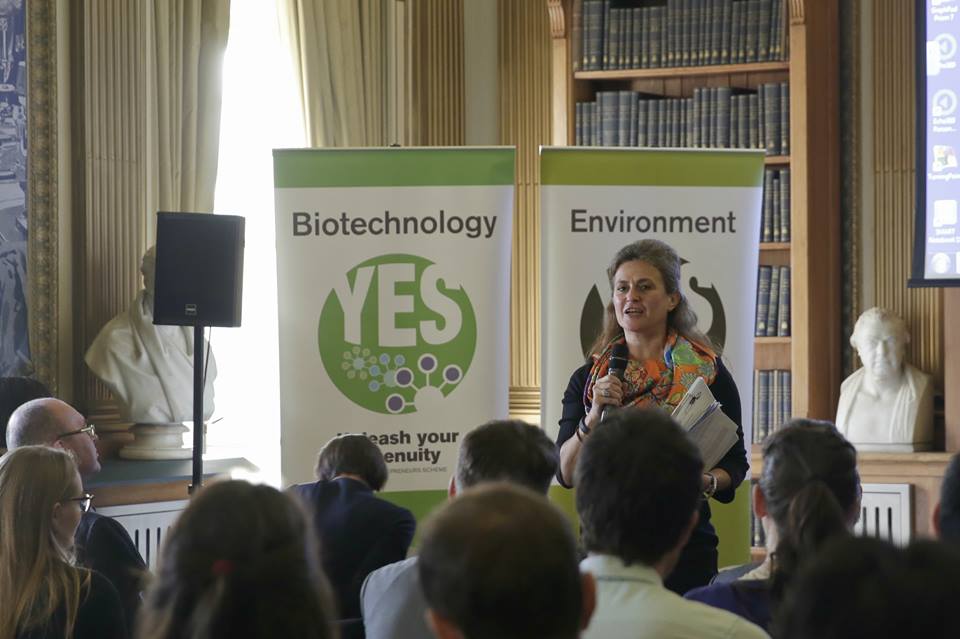
15390900_1695305427446706_286911818743892859_n

‎Elena Lurieluke, Head of Global Life Sciences Open Innovation, Corporate R&D at P&G, addresses fellow YES judges and finalists.

Continue reading

Why building a start-up is probably your most sensible career path

Your PhD has given you the perfect tool set to start a high-tech company, and it’s nothing to do with your technical skill, says Mark Hammond.

In stark contrast to the proliferation of web based start-ups led by young founders, science based start-ups have typically remained the domain of seasoned professors, spinning out breakthrough technology built on years of research. This is changing rapidly, and it’s now more viable than ever to start a science based company straight out of a PhD. In fact, it might just be one of the most sensible career paths that you can take.

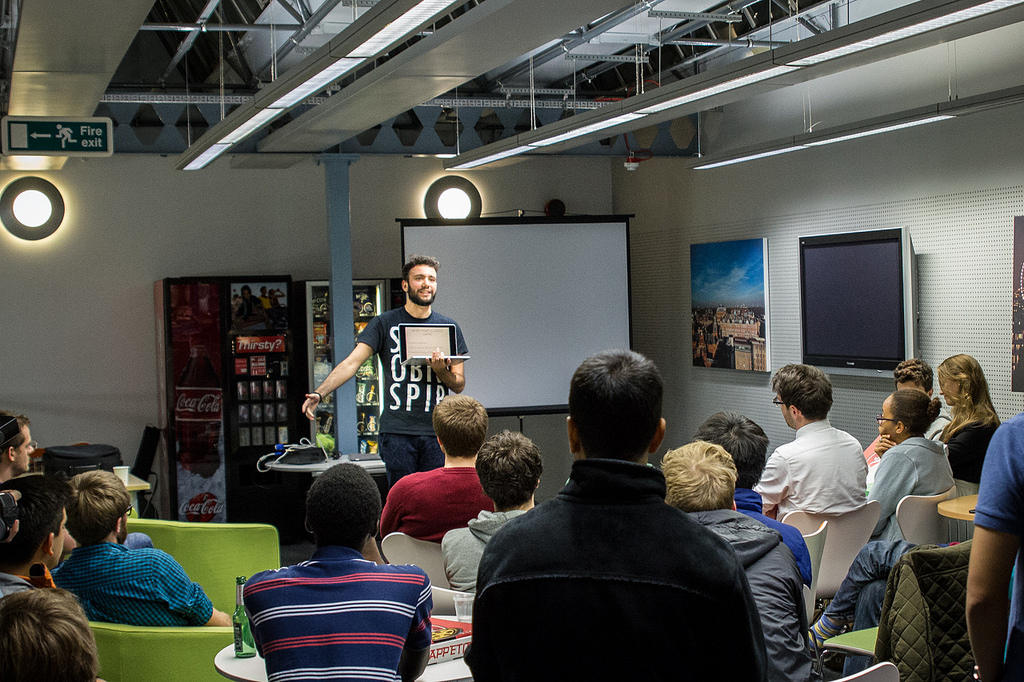
Students at Imperial College’s Marker’s meetup present ideas and get feedback

Continue reading

The Naturejobs Career Expo, San Francisco

Check out our feature video from our first event in San Francisco!

https://youtu.be/9U2nG3LbnRw


Sad you missed it? Our London expo is now open for registrations here.


Suggested posts

How to start a startup

How did you cultivate mentors?

How can people reach you?

How to start a startup

We ask Ambika Bumb, at the Naturejobs career expo, San Francisco, how to start a start up.

https://youtu.be/qZAHrjQmujU

Entrepreneurship: You’ve got the edge to found

Young scientists have substantial advantages over others when it comes to founding a start-up.

Guest contributor Leonie Mueck

Ideas-naturejobs-blog

{credit}Topp_Yimgrimm/ThinkStock{/credit}

Eoin Hyde has been running from meeting to meeting. His start-up, Innersight, is in a critical phase and he has to convince investors to give him and his co-founder enough funds to get it off the ground. Even with his hectic schedule, he’s full of energy.

“Everything is happening very fast,” he says. Until just a few months ago, Hyde had been working as a postdoc at King’s College London, following a PhD in computational biology at the University of Oxford. He enjoyed his research, but when a former colleague approached him with the request to co-found Innersight, a medical imaging company that constructs 3D images from patients’ scans to help doctors during minimally invasive surgery,  he didn’t think twice. “I had been playing with the idea to found a start-up for a long time,” he explains.

Hyde belongs to a minority. Not many science PhDs choose to found companies, at least not in the UK. According to the UK GRAD programme, only 2% of UK-based physical science and engineering PhD graduates are self-employed; it is unknown how many of those have the goal to found fast-growing technology start-ups with global reach. Alex Crompton, programme director at Entrepreneur First, finds these low numbers regretful because in his opinion, science PhD graduates are perfect founders. Continue reading