Meditation on a Caltrain: Understanding where to travel to next

Exploring options and thinking laterally about where you can use your scientific skills might be the key to successfully transitioning into industry, learns George Busby.

This piece was one of two winners of the Science Innovation Union writing competition, Oxford.

“This is downtown San Francisco, our train’s final stop. Can all passengers please detrain? All detrain please. All detrain.” Perhaps it was the heady fug of jetlag that made this broadcast particularly amusing to my UK-English language sensibilities, but I “detrained” all the same and stepped into the crisp morning air of the Californian rush hour.

I was on the west coast to visit two genetics start-ups as part of a whirlwind three-day tour of the US. With a long postdoc and several first author papers tucked into my belt, I wanted to see if these credentials would pass muster in the tech haven of Silicon Valley. I’ve always found the loneliness of solo work-travel to be highly amenable to strategic thought, and this American adventure was an opportunity to reflect on why I was there and what I wanted.GettyImages-530306679-smaller

Continue reading

Should you join a start-up company after academia?

A career in a start-up company is more than just risk, discovers Idil Cazimoglu.

This piece was one of two winners of the Science Innovation Union writing competition, Oxford.

“Risky.”

My housemate, now in the final year of his PhD, had a one-word answer to my question “Would you consider working in a start-up company after you graduate?”

Intrigued, I posed this question to fellow PhD students in various disciplines over the following weeks, and received similar answers including “I don’t want to live in uncertainty,” “No job security,” “Academia is more stable,” and, memorably, “I’d rather go bungee jumping.”

rocket-1122402_1920

Not everything launches so smoothly

Continue reading

Away from home: The two-body problem

We’re bringing you the best stories in lab mobility from Nature India

The ‘Away from home‘ blogging series features Indian scientists working in foreign labs recounting their experience of working there, the triumphs and challenges, the cultural differences and what they miss about India. They also offer useful tips for other scientists headed abroad. You can join in the online conversation using the #postdochat hashtag.

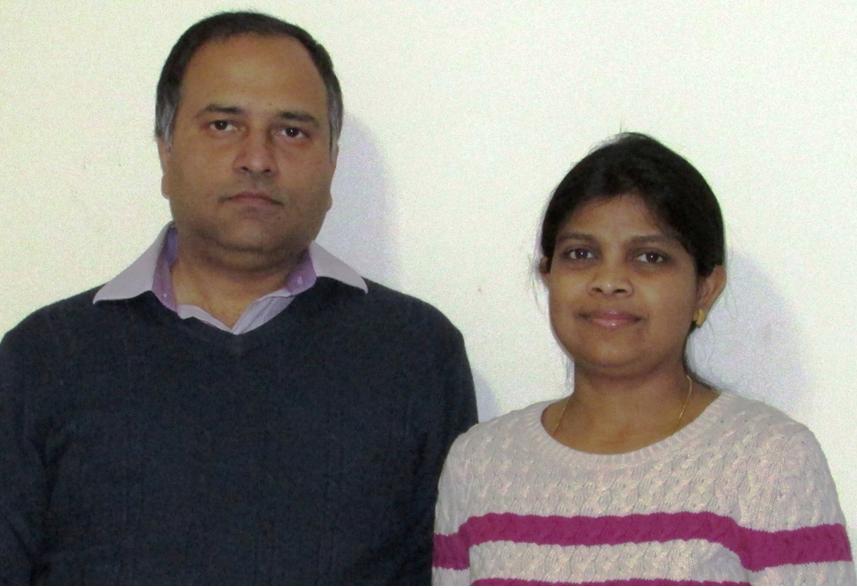
Here’s the account of a scientist couple, looking at opportunities to come back to India. Naresh Bal, a PhD from Jawarharlal Nehru University, New Delhi and a postdoc from the Ohio State University, USA is currently wanting to start an independent research group of his own. He is busy writing grants overtime given the “current grant situation in the USA”. Naresh urges the Indian government and institutions to think of schemes to recruit scientist-couples to work as a team. Read on and leave your comments — have you had a similar experience, do you know someone who has or are your bracing up for this now?

The scientist couple: Naresh Bal and Nivedita Jena

The scientist couple: Naresh Bal and Nivedita Jena

Continue reading

From start-ups to big pharma – how to get into industry

Early career researchers are increasingly faced with the prospect of leaving academia, but is industry the right career move for you?

Naturejobs journalism competition winner Rachel Harris reports.

It can become easy to believe that skills developed during a PhD are suited only to academia, so it’s always refreshing to learn about the value of doctoral training in other settings. I went to the Naturejobs Career Expo London 2016 to see what else I could use my skills for.

RachelHarris

Rachel Harris

Continue reading

On the move

Moving lab is a challenge. Moving country is an undertaking of vast proportions that often requires months of logistical planning for everything from finagling visas and finalizing funding to transporting delicate cultures and mastering a new language.20151126_132257-edit

Continue reading

A Super SoNYC Birthday

Everyone at last week’s SoNYC event was in a celebratory mood. After we toasted with our festively decorated cupcakes, the floor was turned over to members of the audience to present tools and apps that help them do or communicate science. In addition to the tools and apps presented at the SoNYC event, check out our list of #ToolTales over at Soapbox Science.

Here’s a rundown of last weeks’s presenters:

First up was Richard Wing of Project Bourbon. Frustrated with the lack of clear, effective images and charts to explain scientific ideas, Wing decided to make his own.

Check out their submission to Alan Alda’s flame challenge on their Facebook page.

Project Bourbon is still in its infancy and looking for people to help out with creating content and designing the infrastructure and organization for this future tool. If you’re interested in helping out or in learning more about Project Bourbon, check out their Facebook page or follow them on Twitter: @ProjectBourbon1.

"This should be your home page" - Bora Zivkovic

With all the great science blogs out there and all the blogs out there that don’t have anything at all to do with science, how can one person possibly find the time to sift through them all? As Bora Zivkovic of Scientific American explained, you don’t have to. ScienceSeeker will aggregate posts from science blogs that have been approved and vetted by members of the science blogging community, so you’re sure not to run across someone’s Friday night cat pics.

AstroBetter

Kelle Cruz gave us an intro to her website – Astrobetter – a LifeHacker-esque site geared towards astronomers, but with topics that most scientists would find useful, such as being yourself during an interview, how to speak well in front of others, and whether QR codes are useful for scientific posters.

Pat Gordon and Ashlee Bennett, two graduate students at Columbia University, started Biochemistry Revealed to help scientists explain their research around the Thanksgiving day table. With podcasts and blog posts like “We sequenced the human genome!…now what?” and “Proteins – more than just a good steak”, Biochemistry Revealed is geared toward your average armchair scientists who needs a refresher course in some of the basic concepts of chemistry and biology.

Scienceline is a website featuring the work of NYU students. Rose Eveleth talked about her experience in helping create a Scienceline iPad app. One of the most important things for building an app? Knowing how to use an iPad. Also important was knowing how to differentiate the Scienceline app from the website. For Eveleth, that meant adding special extras and bonus features to the app that the website didn’t have.

The Atavist

The Atavist is an online multimedia magazine that publishes nonfiction stories. However, Olivia Koski gave us the inside scoop into how the Atavist is branching out into becoming a general publishing platform that anyone can use to publish their stories. They are currently looking for beta testers. So, check out their website and see how you can help.

Kendra Snyder, from the American Museum of Natural History, gave us a demonstration of one of the cool apps that AMNH is using to help get people involved and excited about its exhibits. In the app for the exhibit “Beyond Planet Earth”, visitors hold an iPad over icons place throughout the exhibit. The iPad sees the icon through its camera and creates a 3D, interactive image the corresponds to the image, such as the moon, the solar system, and even a lunar elevator.

Contextly

Contextly is a plugin for WordPress created by Ryan Singel of Wired. Contextly helps writers and publishers link their articles to related content.

Science@Columbia

In an attempt to coalesce all the great science being done at Columbia University, Jeff Lancaster created the Tumblr page Science@Columbia. The goal is to build bridges between different departments at Columbia that may otherwise operate independently and provide a cohesive resource for non-Columbia-nites who want to know what kind of science is done there. Check it out for the Secret Science Club events, recently published articles, and current science news.

Musa Akbari, founder of Meritocracy, offered his view of of cloud-reviewed publishing platform. Read Musa’s #ToolTale here to hear more about his idea for Meritocracy.

Science Exchange

What do scientists do when they need an experiment done but don’t have the tools or know-how to do it themselves? Well, as Jeanne Garbarino explained, they can check out Science Exchange, an online science marketplace that connects experiment providers with scientists who need to get experiments done.

Wikipedia

While Wikipedia may not be exactly new, Lane Rasberry, Wikipedian in Residence at Consumer Reports,  presented it in a whole new light. How does a science communicator reach millions of readers, publish on the largest publishing platform in the world, and have your words show up as the #1 hit on Google? Publish on Wikipedia.

Tool Tales: Meritocracy – Cloud-Reviewed Science

Science Online New York (SoNYC) encourages audience participation in the discussion of how science is carried out and communicated online. To celebrate our first birthday, we are handing the mic over to the audience so that anyone who would like to participate will get five minutes to show off their favourite online tool, application or website that makes science online fun. To complement the celebrations, we’re hosting a series of guest posts on Soapbox Science where a range of scientists share details about what’s in their online science toolkits.  Why not let us know how they compare to the tools that you use in the comment threads?

Musa Akbari is an Iranian, born in Turkey, who has lived in the Bay Area for the latter half of his life. He graduated with degrees in Science and Technology Studies and Contemporary Leadership from UC Davis. With a deep understanding of networked systems in the sciences, combined with practical experience in emerging markets in web tech, he felt drawn to the insensible disconnect between how science is done and the technologies available today. He has assumed this opportunity as a personal quest to help facilitate the inevitable shift in scientific peer-review and publishing.  

One may argue that we live in times of expertocracy. Everything around us has its fundamental roots in scientific research; from the materials we use in clothing and furniture to their distribution channels; the food products we consume to our daily medicine; studies that determine economic and political policies to the management of energy resources – nearly everything we know and practice has originated from or supplemented by some scientific inquiry. Ideally, we make policy and business decisions based on the most meritable science, but relentless tension between controversial practices – from fracking to pesticides to mortgage frauds – suggests there is room to improve. But who makes these decisions? Based on what evidence? Do we have consensus among the scientific community? How does the public get a say in these matters?

We place a lot of emphasis and effort on communicating science, but the solution may be simpler than we imagine. Going back to the old adage, medium is the message. The ways in which we do science today are counterproductive to knowledge dissemination. Research is done in isolated groups, reviewed by a few anonymous gatekeepers, and shared with high costs for access – for scientists and the public alike. Scientists are neither compensated nor accredited for reviewing papers, and this process can take months to upwards of a year. Online journal access can be prohibitively expensive for universities and research libraries, whose members rely on current knowledge in their fields. The public doesn’t have free access to scientific literature, 80% of which is funded by their tax dollars. Middleman reinterpretations of research through popular media, without bounds to self-interest, continue to cause dissonance in our practices. Sadly, this antiquated gatekeeper model creates a pass-or-fail process that inevitably results in a publish-or-perish culture.

Self-fulfilling prophecy weakens our ability to calculate opportunity costs; while scientists are bound to an imperfect system, the immediate struggle to prevail overcomes the potential long-term benefits of changing the system itself. As long as science operates in a closed circuit, communicating science will remain an uphill battle. Perhaps there is another way.

There lies an opportunity between science and new web technologies, one that could address the shortcomings of scientific peer-review and publishing and open doors for unprecedented progress in science. A cloud-based platform, maintained by the people for the people, that can pave the way for a stronger and more efficient system of checks and balances, where the most meritable knowledge thrives – a Meritocracy.

Meritocracy is an alternative review and publishing medium, where scientists can connect to researchers with similar pursuits, collaborate at the speed of social networks, and navigate through papers based on peer recommendations and field impact. Peer-review, which implies 2-4 anonymous, opaque evaluations, evolves into cloud review, which implies transparent, post-publication evaluations by large communities of peers. Decentralized communities, formed and maintained by host institutions or research coalitions, self-publish their papers. Users retain full ownership of their work, and papers shared in the public domain are centralized by research field and made freely accessible by all.

Let’s fast-forward to a day when Meritocracy has come to full fruition. Let’s take a hypothetical example of how a scientist could operate on such a platform.

Say you are a scientist and have just written a paper. What do you do next? You upload your paper to your online profile which is populated with your research interests, curriculum vitae, past papers, and more. You are connected to your trusted colleagues or can find other subject-matter experts through a social network of researchers and academics. You can customize access and fair use parameters, send personal requests for review, and share your work in the public domain for cloud review. Other scientists can review your paper, anonymously or otherwise, and these in-depth discussions remain visible to all future viewers. Reviews of your paper can be evaluated by others as well, resulting in a fluid rating score which continually adjusts with newfound knowledge and different perspectives. Collaborators and followers of the page can reject inappropriate or misguided comments and reviews by vote (i.e. 5 collaborators, 4 votes to reject; 100 collaborators, 60 to reject, etc.), enabling the community to moderate their own page.

Your references can be linked directly to the original studies, allowing users to seamlessly inquire deeper into the subject, while supplemental data can be uploaded to provide a full evidence base for your claims.  Reviews can be linked directly to the paper, with your approval, to communicate your points to a wider audience range. Your paper can be cited, quoted, discussed, and shared, all of which help quantify the impact of your work.

Your paper remains in review stage until it has gained sufficient reviews and high ratings to be accredited with the same weight of value as a journal-published paper, and the speed of this process is a result of the community’s interest in your paper topic. Publishing negative results becomes a valuable and appreciated contribution to the field. You can promote your paper in a R&D marketplace where businesses can contact you directly for development opportunities.

Papers are open to the public for comments but you can easily switch views to display only accredited reviews, or only questions, and so on. You can join communities centered around special interest topics or research pursuits and collaborate across geographic and institutional boundaries. A personalized news feed will provide trusted paper recommendations, and keep you updated on topics of personal interest. Over time, you can build a scientific portfolio of all your work, qualified by the community at large, allowing interested parties to evaluate your credibility.

This democratizing of the publishing medium imposes a fundamental shift in culture of science; it relieves the pressure to publish in high impact journals, for the sake of personal reputation, shifting focus to the merit of the paper. Cloud review ties social reputation to academic work, creating a more balanced system of checks and balances against errors, frauds, and political and financial influences. And most importantly, open access to scientific knowledge resolves half the battle in communicating science.

60 years ago, print and mass distribution was the most effective way to ensure the integrity and widespread exposure of knowledge. Over 20,000 articles are released each year, and that’s roughly 20% of the research we do. Privatized review and print publishing pose limitations in an age where we are capable of managing high flows of information.

Today knowledge is digital. We have knowledge management software and virtually unlimited storage; we have a democratized web space and worldwide internet access; we have social networks and collaboration tools; we have secure information exchanges and policies that protect proprietary rights. Every conceivable technical circumstance for a 21st century review and publishing system is in place, and the will of the people is the final domino.

Today, Meritocracy is only an idea. Tomorrow, we’ll see what unfolds.

If you’d like to get involved, join our community at www.meritocracyhq.com.

You can follow the online conversation on Twitter with the #ToolTales hashtag and you can read Mary Mangan’s Tool Tale here, Dr Peter Etchells’s Tool Tale here, Alan Cann’s here, Jerry Sheehan’s here, Boris Adryan’s here, Anthony Salvagno’s here, Daniel Burgarth and Matt Leifer’s here, Zen Faulkes’s here, Jenn Cable’s here , Mike Biocchi’s here, Susanna Speier’s here, Derek Hennen’s hereBenedict Noel’s hereChris Surridge’s here and Gerd Moe-Behrens’s here  

Introduction to Tool Tales: Using Science Tools in the Classroom

Science Online New York (SoNYC) encourages audience participation in the discussion of how science is carried out and communicated online. To celebrate our first birthday, we are handing the mic over to the audience so that anyone who would like to participate will get five minutes to show off their favourite online tool, application or website that makes science online fun. To complement the celebrations, we’re hosting a series of guest posts on Soapbox Science where a range of scientists share details about what’s in their online science toolkits.  Why not let us know how they compare to the tools that you use in the comment threads?

This is cross-posted on Soapbox Science. 

My favorite thing about all the online science apps and tools is that they make real science accessible to anyone – even sixth graders.  Last fall, I taught a course through Citizen Schools, an after school program for middle schoolers. Part of the program includes what is called “apprenticeships”, in which people come in and teach something about their job or profession. As a scientist, I decided I wanted to teach the kids about structure-based drug design.

The goal of the class was to teach the kids a little bit about what proteins look like and how they can use that knowledge to design drugs. I wanted to show students that they can do real scientific research, similar to what scientists are doing now. Using HIV-1 protease as our model system, we used the program Pymol to visualize the protein bound to different HIV drugs and decided on what types of changes we could make to those drugs to hopefully make them bind better.

Next, the kids went into the computer lab and drew their new drugs in MarvinSketch (a great, intuitive, easy-to-use chem drawing software). There are a lot of great chem drawing programs out there, but I chose MarvinSketch because it’s free, it’s easy to use, and it has some fun features. The kids got a kick out of using the molecular dynamics feature and seeing their molecules wiggle and dance.

After drawing their drugs, we docked the molecules onto the HIV-1 protease structure using the Autodock/Vina plugin for Pymol. I spent a lot of time looking for a docking software that I thought sixth graders could use, and I picked Autodock/Vina because it’s easy to use, has a decent GUI interface, and works with Pymol, which I already knew how to use. With Autodock/Vina, you take a PDB structure of a protein and a PDB structure of a small molecule, define a binding site, and the program determines and ranks the top ten conformations of the molecule docked onto the protein.

Drug bound to HIV-1 protease (designed by sixth grade student)

The overall goal was to have students look at how current drugs interact with HIV-1 protease, generate hypotheses on how to change the drugs to make them better and then make those drugs with the computer and see if they bind. All the while, the students would be using tools and programs that real scientists use in the lab.

So, did it work? I knew going in that I had my work cut out for me. The concepts of atoms and molecules are so abstract and esoteric that it’s hard to conceptualize them, but using the tools above really helped the kids visualize these things. I know there was some disconnect on what molecules actually are, like how big they are, where they’re found, how they are a part of living things but not themselves living. Also, because we didn’t go into depth about things like salt bridges, hydrogen bonds, and hydrophobic interactions, the “design” part of the structure-based drug design was a little more random than rational.

But for me, the most important lesson that every student walked away with was that they could be scientists and that they could actually help solve the problems of the world.

While I thought that my approach to teach structure-based drug design was kind of clever, it seems that an upcoming version of Fold-it may do something similar, all in one program.

You can follow the online conversation on Twitter with the #ToolTales hashtag and you can read Mary Mangan’s Tool Tale here, Dr Peter Etchells’s Tool Tale here, Alan Cann’s here, Jerry Sheehan’s here, Boris Adryan’s here, Anthony Salvagno’s here, Daniel Burgarth and Matt Leifer’s here, Zen Faulkes’s here, Mike Biocchi’s here, Susanna Speier’s here, Derek Hennen’s here, Musa Akbari’s here, Benedict Noel’s hereChris Surridge’s here and Gerd Moe-Behrens’s here 

Science Online NYC (SoNYC) – Setting the Research Record Straight: Recap

Whose responsibility is it to ensure integrity and honesty in the scientific record, and how have those roles been changing as technology and social media advance?

Those were just a few of the issues discussed at the SoNYC event, “Setting the Research Record Straight” held on Tuesday night at Rockefeller University. In addition to the live lecture, people attended the event via live streaming and joined in on Twitter using the hashtag #SoNYC. You can watch the video of the event here and view our Storify of tweets on Of Schemes and Memes.

The panel consisted of Liz Williams, Executive Editor at the Journal of Cell Biology, John Krueger of the Office of Research Integrity, and Ivan Oransky of Reuters Health and co-founder of the blog RetractionWatch. Much of the night’s discussion focused on image manipulation in scientific manuscripts, primarily because that is one of the easier types of misconduct to detect. In the age of electronic submissions, editors can scan and manipulate images to identify any signs of manipulation.

Liz Williams kicked off the evening with a discussion of how JCB approaches detecting image manipulation. Williams stressed that journals have a responsibility to detect as much manipulation as possible and part of that task consists of creating clear guidelines for authors on what type of manipulations are acceptable and what constitutes as deceptive or fraudulent actions. While almost 50% of authors who submit papers to JCB are asked to remake an image for whatever reason, only 1% of articles are revoked acceptance. This indicates that most unacceptable manipulation is likely due to a misunderstanding of what is and isn’t acceptable and ignorance, or incompetence in the tools used to create and modify images.

John Krueger followed with data from the Office of Research Integrity on the increasing number of retractions over the years. However, the increase in retractions doesn’t necessarily indicate that scientists are slipping or that actual levels of misconduct are increasing. Instead, Krueger speculated that the increasing transparency in science and advances in technology and communication make science more visible to the public and allow the public to scrutinize scientific research like never before. One pervasive theme among the discussions was the idea that a paper is not set in stone upon publication. Rather, it is constantly under “post-publication” review by the public and by other scientists. And when one of those papers is contested and potentially retracted, while the reliability of science isn’t likely to be affected, the perception of science in the public eye can be significantly harmed.

Krueger also followed up on Dr. Williams’ discussion on image manipulation in science. Krueger speculated that as images become more important in communicating scientific research, they not only make science more transparent but also make it easier to detect data manipulation. Another interesting point he brought up was that technology not only makes it technically easier to falsify and manipulate data, but it also removes some of the inherent checks and balances in science. Now, because data collection has in many ways reached a certain level of automation, one person could collect, process, analyze, interpret and potentially manipulate their data without receiving input from other experts on whether each step, from raw data to processed results, was appropriate. Perhaps scientists as a community need to revisit some of these checks and balances and find new ways to vet data during the analysis and interpretation stages.

Ivan Oransky closed the panel presentation by reminding us that, “We are all gatekeepers” (view his slideshow here). Oransky focused on the role of blogs and other “whistleblowers” in detecting dubious research. Blogs, he stated, are getting more aggressive in questioning the scientific literature and journals are starting to take them more seriously. However, as Dr. Krueger asserted, if the data is solid, they will quell any misgivings. Of course, that assumes that scientists hold onto primary data long after it is collected and published, which isn’t always the case.

Like Dr. Krueger, Oransky stressed that, after publication, a paper is still constantly under review. Oransky took that idea one step further, advocating that the communications resulting from that post-publication review, such as additions, disclaimers and concerns about the paper, should be a part of the scientific record. Services such as CrossMark are starting to do this, but it can still be difficult to know by retrieving a paper whether that paper has corrections associated with it or even whether it has been retracted. Oransky mentioned several other resources that have the potential to change the world of science publishing. For example, Nature Precedings, in which scientists can pre-publish manuscripts and data to receive feedback from the scientific community and Altmetrics, which is attempting to redefine the traditional impact factor by considering other types of citations in addition to citations in the peer-reviewed literature when assessing a paper’s impact or importance.

It was implied in most of the discussion that retractions are a result of bad science, whether or not there was an initial intent to deceive. However, as John Krueger pointed out, retractions are a healthy part of the scientific process and a well-written retraction notice can contribute as much, if not more, to the advancement of science than the initial manuscript. And, as Liz Williams put it,

“If the goal is to preserve the integrity of the scientific literature, then retractions are a sign of progress.”


Science Online NYC (SoNYC) 10 – Setting the research record straight

On Thursday evening, we hosted the tenth instalment of the monthly Science Online NYC (SoNYC) discussion series. For this month’s event, the topic for debate was, “Setting the research record straight.”

The internet has enabled the faster and more thorough dissemination of published science, meaning that more eyes than ever are available to check the accuracy, veracity and integrity of the research record. With our enhanced ability to spot plagiarism and image manipulation electronically, it appears that the frequency with which we’ve flagged potentially fraudulent or plagiarized papers has gone up. This panel will look at the trends in retractions and how they relate to real or perceived increases in research misconduct. We hope to discuss what steps publications are taking to deal with the sloppy or fraudulent research practices that sometimes result in retractions, and also what research institutions are doing to investigate and deter such practices. Is the system broken, and what can researchers do to help fix it if it is?

Preparing for the event 

In anticipation of the discussion, we ran a series of guest posts here on Of Schemes and Memes, discussing what steps publications are taking to deal with fraudulent research practices and what is being done to investigate and deter such practices. First we heard from Richard Van Noorden, Assistant News Editor at Nature. He gave us an overview of  what retractions can tell us about setting the research record straight, highlighting some recent high profile cases of retraction, revealing why retraction rates appear to be increasing. We also compiled a Storify from a session at February’s AAAS meeting in Vancouver on Global Challenges to Peer Review which touched on some of the challenges faced by journal editors. Next we heard from Dorothy Clyde (Dot), Senior Editor at Nature Protocols, detailing the role an editor plays in avoiding plagiarism, giving advice to all parties. In our final post, SoNYC panel member Ivan Oransky, executive editor of Reuters Health, explained the concept behind the Retraction Watch blog.

This month’s panel:

  • John Krueger of the Office of Research Integrity.
  • Ivan Oransky, Executive Editor, Reuters Health and one of the people behind the Retraction Watch blog.
  • Liz Williams, Executive Editor, The Journal of Cell Biology.

To read what people on Twitter were saying about the event, check out our Storify of tweets at the bottom of this post.

Blog posts about the 10th #sonyc

Do let us know if you blog about the event and we’ll include a round-up of links here.

  • News Blog: The new gatekeepers: reducing research misconduct.
  • Boston Blog: Boston researchers (with experience) of correcting the scientific record #sonyc
  • NYC Blog: Science Online NYC (SoNYC) – Setting the Research Record Straight: Recap
  • Dana Foundation Blog: Setting the Research Record Straight

Live-streaming and video archiving

We live-stream each SoNYC event to give as many people as possible the chance to take part in the debate. Check out this month’s livestream, or take a look at our archives where you can view the previous meetings.

Finding out more

The next SoNYC will be held on the 2nd May – keep an eye on the SoNYC twitter account for more details and/or watch the #sonyc hashtag.

If you have a suggestion for a future panel or would be interested in sponsoring one of the events, please get in touch.