From start-ups to big pharma – how to get into industry

Early career researchers are increasingly faced with the prospect of leaving academia, but is industry the right career move for you?

Naturejobs journalism competition winner Rachel Harris reports.

It can become easy to believe that skills developed during a PhD are suited only to academia, so it’s always refreshing to learn about the value of doctoral training in other settings. I went to the Naturejobs Career Expo London 2016 to see what else I could use my skills for.

RachelHarris

Rachel Harris

Continue reading

The way to success in science

Young people working in any variant of science face many challenges. However, some tips can increase your chances of success, says Naturejobs journalism competition winner Sofia Otero

A degree in science is just one stepping stone on a long path with varied exits, curves and about-turns. Choosing wisely is not always an easy task, but there’s no right way to success: there’s a whole lot out there to choose from.

pathway-1081989_1920

At the London Naturejobs career expo on September 16th, there was a lot of talk on how to succeed in science, and an interview with the editor-in-chief of Nature, Sir Philip Campbell. Some tips came up repeatedly and are worth listing. Continue reading

Most read on Naturejobs: September 2015

The top ten most widely read articles in September 2015 from naturejobs.com, including working environments, the plight of the postdoc, data misgivings and more!

naturejobs-readsThis month the Naturejobs team have been at their busiest, working hard to put together a successful Naturejobs Career Expo in London, which happened on 18 September 2015. In case you couldn’t join us, keep your eye on the blog as over the coming weeks we’ll be publishing a series of blogs and videos from the event.

But obviously there’s more to our blog & Nature Careers than the Expo. We’ve published some great articles this month, and to refresh your memories of some of them, we’ve pulled out the top ten most read ones from September! Happy reading.

1. Working environment: When labs go bad

2. Employee benefits: Plight of the postdoc

3. How to approach a PI with misgivings about data

4. Career paths: There’s no set route for scientists

5. Creative writing: A world of pure imagination

6. Networking for introverts

7. Science communication: A foot in the door

8. Turning point: Martin Jinek

9. Social media: The art of self-promotion

10. Spotlight on faculty positions: Formula for success

Thanks to all our contributors on the Naturejobs blog this month, without whom we wouldn’t have a blog to read! Samuel Van Ransbeeck, Zoe Self, Rachel Yoho, Monya Baker, Naoimh O’Connor, Nina Divorty, Lauren Emily Wright, Gaia Donati, Paul Brack, Steve Hurst, Catherine Seed, Payal Bhatia, Carina Dehner.

Networking: Talking the talk

Being able to use connections is vital in getting access to opportunities that may otherwise slip by unnoticed, says Rachel Harris.

Guest contributor Rachel Harris

Getting the conversation started is half the battle

Getting the conversation started is half the battle{credit}iStockphoto/Thinkstock{/credit}

As a science undergraduate I always assumed networking was for other people in different careers. Scientists spend a lot of time working independently, so I wondered why we would need business cards and contacts. I, like many others before me, was naïve. Now as a PhD student, I know it’s about who you know, not (entirely) what you know. Being able to use connections is vital in getting access to opportunities that may otherwise slip by unnoticed.

Though a little slow on the uptake I have completely woken up to the power of building a network. This all happened when I attended the British Neuroscience Association 2015: Festival of Neuroscience, without knowing anyone else. After warming up and having a few conversations, I realised that I genuinely enjoy meeting new people and having a good talk. I spoke to several PhD students in my research area, editors and industry supervisors, and reconnected with researchers from my previous institutions. This made the conference a much more interesting and productive experience than if I had only attended the academic talks.

Making long-lasting connections with everyone you meet is going to be difficult, but by starting a conversation you’re not going to lose anything either. Coupled with the relative ease of keeping in contact, even after long periods, making new connections is simpler than ever. Based on my experience at the Festival of Neuroscience, and others I’ve had over the last few years, I thought it would be useful to share some networking tips I’ve collected along the way. Continue reading

Most read on Naturejobs: June 2015

Public speaking, mobility and a bit of self-reflection have been the subject of your favourite reads on Naturejobs in June 2015.

naturejobs-readsWhat a busy month we’ve had. Again! The Naturejobs blog has published 15 new blog posts, which have been read by thousands of you.

For those that missed them when they first came out: here is a list of the top 10 most popular pieces from Naturejobs and Nature Careers this month. Happy reading!

Although it might not be immediately obvious when you first sign up to becoming a scientist, being a proficient public speaker is very important. You might have to present your work at a conference; you’ll definitely have to defend you PhD work in front of a group of peers. You’ll also have to persuade funders to give you money. In Public speaking: The elevator pitch I was inspired by an elevator pitch I had to give (not science related, unfortunately) to write a few tips on what makes a good pitch. Continue reading

Most read on Naturejobs: May 2015

Building reputations, relocation, adjunct teaching and more have been the topics of choice in May 2015.

naturejobs-readsThis month the Naturejobs team have been working hard on the Boston Naturejobs Career Expo, which happened last week. It was a long, but great day and we want to thank everyone who got involved: Speakers, delegates, exhibitors, sponsors. THANK YOU!

For those that missed it, there will be reports on the event coming out on the Naturejobs blog next week, starting with a summary of the keynote speech by Professor Robert Langer on Monday June 1st.

But now I want to concentrate on May, and here’s a list of your Top Ten reads from Nature Careers and the Naturejobs blog:

1. To get respect in a field, scientists need to consider not just their work, but also their interactions with others, says Chris Woolston in Recognition: Build a reputation on Nature Careers.

2. Contract teaching positions are becoming the norm for many aspiring professors. Know how to make the best out of them, says Kendall Powell in Adjunct teaching: For the love of lecture on Nature Careers.

3. The postdoc series: Help for lost postdocs shows how self-reflection can help young researchers analyze their skills and plan for their futures. Continue reading

Most read on Naturejobs: January 2015

January is almost over and spring is almost upon us (or at least for some of us it might be…).

Whilst you’re waiting, why not catch up on the most popular reads of January 2015, as judged by you, our readers??

How to procrastinate effectively (if you cannot stop) is a great piece by Daisy Hessenberger. She has been spending a lot of time writing up her PhD thesis… but this also means she’s spent a lot of time procrastinating. In this article she explains how she used that time effectively, and how you might too!

How easy is it to get into science communication? Very, actually. All you need to do is try it.

Going from academia to industry is a big transition, and to make sure that you get off to a good start, having an industry-ready CV will help. Carol Spenceley, a careers advisor at Surrey University, shares her top tips for academics on preparing an industry CV in  Don’t panic! How to make your CV look its best.

From academia to industry with Paul-Peter Tak highlights his transition from pure academic research to a combination of clinical medicine and research.

We wanted to know what you, our readers, thought of the proposals that Theresa May put forward to the UK parliament towards the end of last year. Here’s some more info: Train ’em up and kick ’em out

We’re celebrating all transitional things this year: whether you’ve got a new postdoc position or a new job. If you’ve moved jobs down the corridor or are crossing an ocean for a new opportunity, we want to hear about it! We’re celebrating Scientists on the move!

Building a career in the biomedical sciences with Jim Smith is the full video of the London Naturejobs Career Expo keynote speech, where Prof Smith shares his career stories and advice with the audience.

Career paths: Beyond the Ivory Towers is this month’s podcast where I interview two people who share their job transition tips with you.

Happy Friday!

Most read on the Naturejobs blog: August 2014

August has been a busy month for the Naturejobs team, especially as the Naturejobs Career Expo is coming up on September 19th in London (we hope to see many of you there). But we’ve still had plenty of time to bring you some great posts on the Naturejobs blog, and we wanted to share your 10 favourite posts from August.

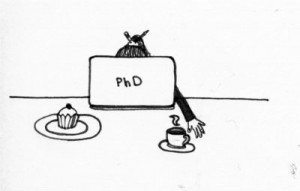
PhD and coffee

Thesis writing tip for the I-left-it-to-the-last-minute PhD student {credit}Image credit: Daisy Hessenberger{/credit}

1. Thesis writing tip for the I-left-it-to-the-last-minute PhD student.You’ve read all the other writing tips and they all say the same thing: start earlier! Unfortunately, that’s no help to you. So here are some top tips for those who have left it a little later than planned. Good luck! 

2. I am a scientist because… shows just how diverse scientists are. Theconversation continues on Twitter with the #IAmAScientistBecause hashtag. 

3. A PhD is more than just research trainingAre there too many PhDs? Only if you consider a one-track career path in academia. But this post shows that academia and a PhD can provide you with a vast set of skills that set you on the right footing for many different career paths. Continue reading