Surviving academia as an early career researcher: an unreliable guide

Being an early career researcher is exciting but terrifying. Use this guide to make the most of your PhD or postdoc experience, says Atma Ivancevic.

In today’s cut-throat world of grants and publications, being an early career researcher (ECR) can feel more than a little daunting. As an ECR myself, I can’t guarantee that this will help you make it to the other side unscathed. But I’m still here, and if you’re reading this, you probably are too. Outlined below are the things I’ve learnt during the ups and downs of post-PhD life.
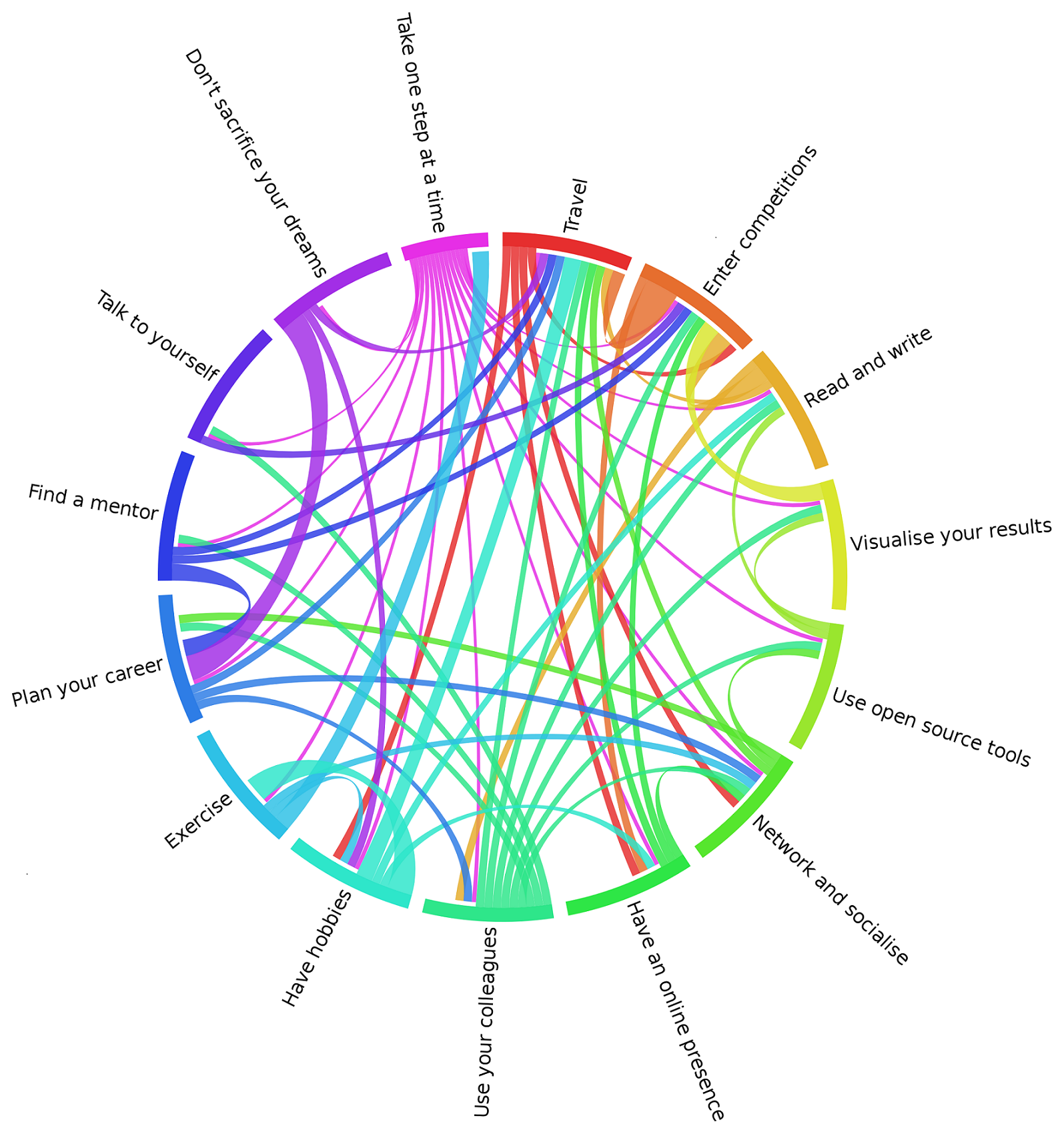
 

circos-table-myxvjxw-smaller

Continue reading

Ask not what you can do for open data; ask what open data can do for you

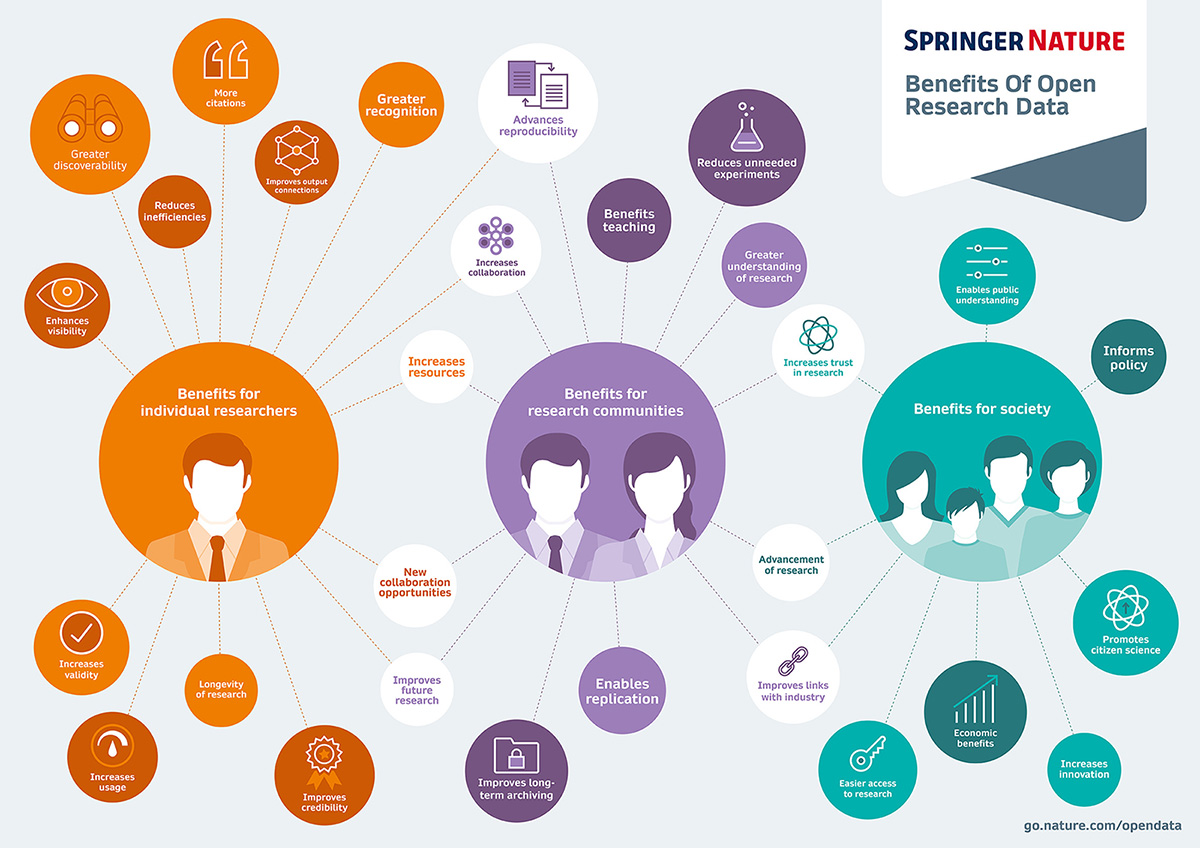
Mathias Astell, marketing manager for Scientific Data and Scientific Reports, outlines the benefits of open research data and provides some tips and tools researchers can use to make their data more open.

It has been shown that research articles receive more citations when they have their underlying data openly linked to them. With this in mind, it’s time to consider not just the ideological reasons for making research data open, but the selfish benefits of openly sharing data that all researchers can (and should) be taking advantage of.

mat1

This infographic can be downloaded under a CC-BY licence here

And as an increasing number of funders mandate data sharing, and publishers start implementing more consistent data policies at their journals, it is worth seriously considering how and why you should make the research data you generate more openly available. Continue reading

Postdocs and early-career researchers: be more than a name on a website

After a few months working as an associate editor at Nature Photonics, chief editor Oliver Graydon asked Gaia Donati if the role was what she had imagined it to be. She answered that in most aspects it had, with one significant exception: she hadn’t realised that finding referees to assess submitted manuscripts would be such a daunting task. Here, Gaia urges peer reviewers to make things easier by setting up a personal web page outlining their research experience and interests.

ConcealedEntranceGD

Don’t stay in the shade, says Gaia Donati {credit}Patrick Michelberger {/credit}

Continue reading

Omnity opens multilingual semantic searches up to academia

When preparing a grant or publication, where can you turn for new ideas? You can bounce ideas off colleagues, search PubMed and Web of Science for related literature, and maybe take a trip down Google lane. But it’s difficult to get outside one’s particular area of expertise — to mine the opportunities at cross-disciplinary boundaries  unless you know what you’re looking for. The developers of a new document search engine hope to make such cognitive leaps easier, finds Jeff Perkel.

Continue reading

The way to success in science

Young people working in any variant of science face many challenges. However, some tips can increase your chances of success, says Naturejobs journalism competition winner Sofia Otero

A degree in science is just one stepping stone on a long path with varied exits, curves and about-turns. Choosing wisely is not always an easy task, but there’s no right way to success: there’s a whole lot out there to choose from.

pathway-1081989_1920

At the London Naturejobs career expo on September 16th, there was a lot of talk on how to succeed in science, and an interview with the editor-in-chief of Nature, Sir Philip Campbell. Some tips came up repeatedly and are worth listing. Continue reading

Making headlines: Choosing the best title for your paper

It may feel like an afterthought, but taking the time to write an effective title for your paper could be an easy way of promoting your research, says Helen Robertson.

Writing up a manuscript for publication is a multi-faceted process. You’ve finished the literature review, detailed your methods, discussed your findings and formatted your figures. Now, the only thing left is to come up with the title.

Easy, right?

original

Is is that easy to come up with a title? {credit} Alias la Patata by Pierpaolo Voci. CC-SA-3.0 {/credit}

Continue reading

Why should we work so hard to make our work reproducible?

Most scientific work isn’t reproducible. Andy Tay explains why that’s a problem.

The call for reproducibility has never been stronger in the history of science. Since two major pharmaceutical companies, Amgen and Bayer, reported in 2011/12 that their scientists were unable to replicate 80-90% of the findings in landmark papers, scientific news outlets have caught up on the issue. Their reports have catalyzed conversations among stakeholders (policy makers, funding agencies and scientists) to improve reproducibility in science.

Copyright: LEGO

{credit}LEGO{/credit}

There are a lot of reasons why reproducibility is so important, and why Amgen and Bayer’s results caused such controversy. I’ll start at the individual level. Continue reading

What do you dislike about your job?

We ask academics at the Naturejobs career expo, San Francisco, what they dislike about their jobs.

https://youtu.be/huuvlt5hepg

How not to respond to reviewers: Eight simple tips

Responding to reviewer reports is a key part of publishing academic work in peer reviewed journals. But if you’ve received mixed reviews of a paper or are publishing for the first time, where do you start?

This piece was republished from Sophie Lewis’ blog.

My first attempt at publishing a paper was a breeze. A collaborator was asked to contribute to a special issue and offered me the opportunity to lead the paper. I was a PhD student at the time, and spent two months visiting her lab overseas and writing. By the end of my visit, I’d carved out a draft that I left behind for comments. After a bunch of emails and several rounds of revisions over the next month, we were ready to submit.

Flickr/AJ Cann, CC BY-SA

Flickr/AJ Cann, CC BY-SA

Continue reading

Counting all the ways connections matter

New research shows that the size of a faculty member’s network predicts productivity, promotion, and probability of winning an NIH R01 grant.

Guest contributor Viviane Callier

Connections matter – in terms of productivity, in terms of obtaining grants, in terms of promotion and advancement, and in terms of retention in academic positions, a new Harvard-based study shows. Women and underrepresented minorities (URMs) have a smaller “reach” – a measure of second-order connections – and the discrepancy between the reach of women & URMs and that of white men is greatest at the junior faculty level. This discrepancy may account for differences in productivity, promotion, and retention of women and URMs in academia.

7822101134_6cbcbb435b_o

CREDIT: CC-BY-SA Atos/Flickr

Continue reading