Last month Nature published a Special on human migration, which included stories of refugee scientists.
This related blog comes from Leonie Mueck, writing in her personal capacity. Dr Mueck is a volunteer for Cambridge Refugee Resettlement Campaign and also Senior Editor at Nature.
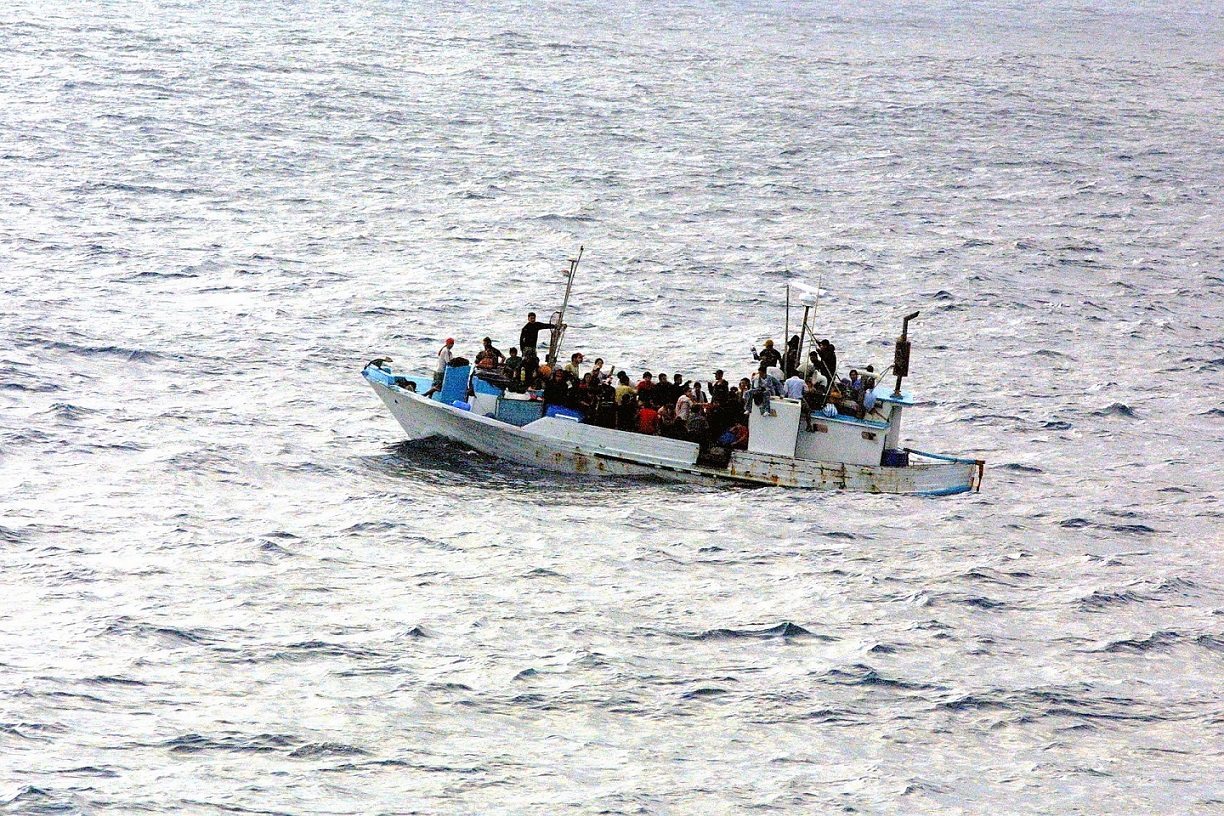
We are facing the biggest refugee crisis since the Second World War. Worldwide, more than 60 million people are seeking refuge from political persecution and war. In particular, the anguish of Syrian refugees desperately running for their lives is moving the world to tears. Already, five million Syrians have left their home country and more than seven million have been internally displaced. Images of the body of a toddler washed up on a Greek beach, of the deep furrows of fear written into the face of a father disembarking a flimsy boat in which he and his family crossed the Mediterranean, and of a badly wounded boy from Aleppo, covered in dust and blood, have been messengers of a sad and terrible conflict.
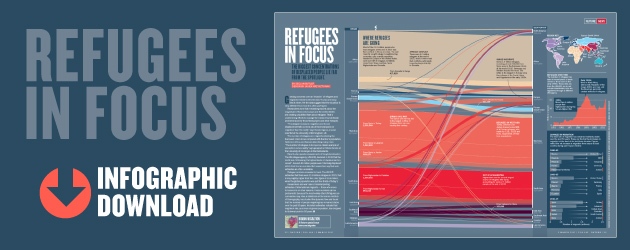
Download a PDF of the graphic from Nature
Academic solidarity
In the midst of desperation and helplessness, there are silver linings of humanity and empathy. Many ordinary citizens around Europe – and, indeed, the whole world – have joined forces to help in any way they can.
Among them are a great number of academics and students, lobbying their institutions to give sanctuary to scholars at risk and bursaries to Syrian undergraduates. “We feel a general responsibility towards helping scholars at risk.” explains Noah Azar (name changed), a Cambridge University academic. “But beyond showing solidarity, we have the goal to help rebuild a region that has historically been a centre for science and discovery.”
A lost generation
Indeed, Syria’s higher education system once comprised flourishing institutions, home to brilliant students and professors. Before the conflict, 20 per cent of youths between ages 18 and 24 were in higher education. After six years of civil war, it is less than five per cent.
As the conflict drags on, the opportunity for many young Syrians to receive an adequate education is receding. The civil war will produce a lost generation that will lack the skills needed for the monumental and decade-long task of rebuilding the country. Researchers cannot foresee a time when they can restart their work under normal conditions.
Grassroots activism at universities
On a European level, programmes like Science4Refugees have emerged, encouraging a coordinated institutional approach by European universities to the refugee crisis that can support academics and students affected by the conflict.
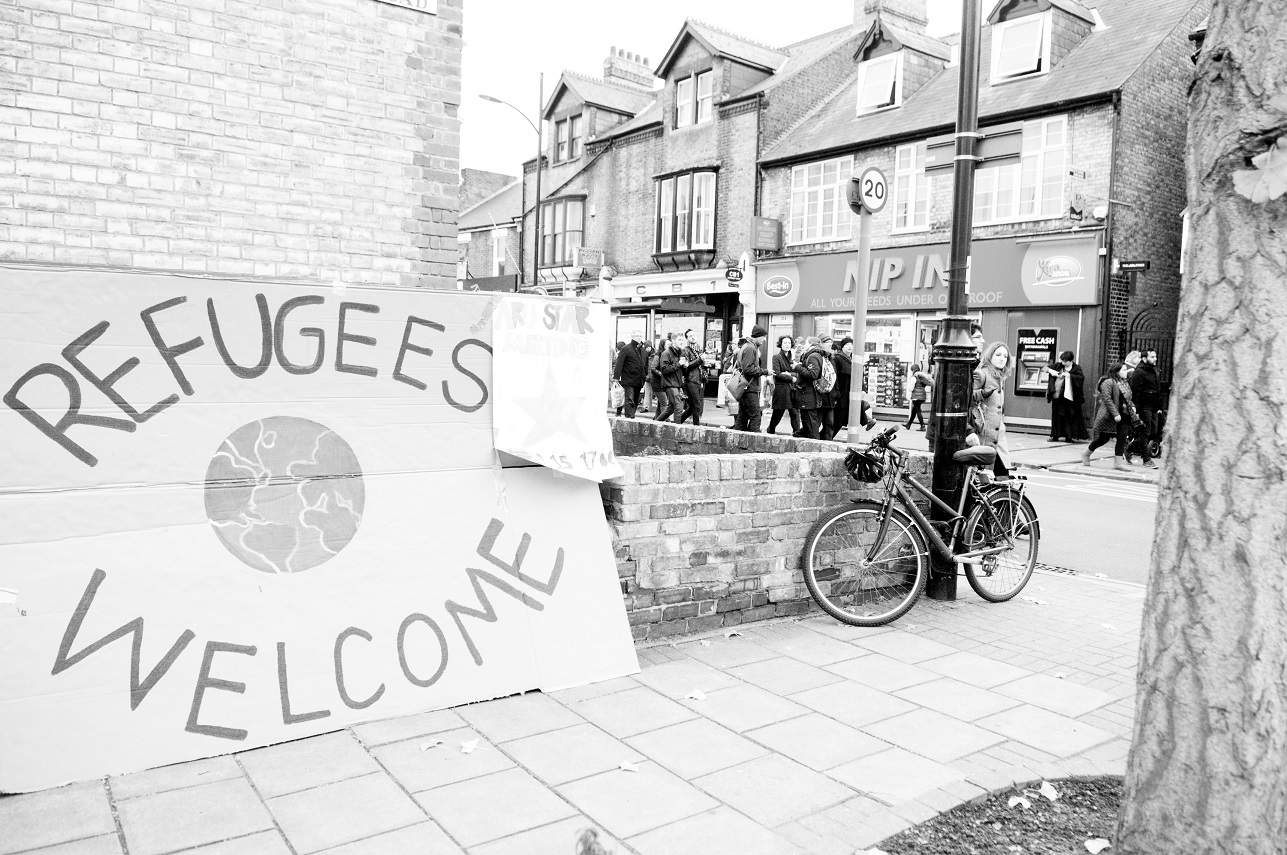
In the UK, however, the institutional response has so far been patchy. As a result, at many universities, grassroots movements of concerned academics and students have kick-started their own refugee programmes, with some notable successes. At the University of Oxford, a campaign led by biomedical engineering student Thais Roque received pledges of over £240,000 to fund scholarships for refugee students from war-torn countries. At Cambridge University, a college offered a placement to a Syrian scholar last summer after a concerned fellow took the matter into her own hands, spending countless hours convincing university officials and jumping all bureaucratic hurdles.
Cred:Chris Cellier
Azar is currently working with several Cambridge academics to bring a second refugee scholar to the university. They have partnered with CARA, the Council for At-Risk Academics. CARA was founded in the 1930s to help refugee academics from continental Europe fleeing the Nazi regime. Scholars who are persecuted in their home country can contact CARA, which then tries to secure a three-year fellowship at a UK partnering institution – but the institution needs to cover the costs. In 2016, CARA received a level of applications not seen since the 1930s, and is desperately looking for placements.
Talking to Azar, it quickly becomes clear how much grit and dedication it takes for a grassroots group to secure such a placement at their university. All university officials have been very supportive in principle, but nobody had a blueprint on how to deal with the logistics and bureaucracy of the endeavour, making the process painstakingly slow and laborious. It has already taken two years.
“There are interlocking mechanisms that are time sensitive and make coordination very complicated,” Azar says. For example, housing had to be allocated from a different college than the host college. Once the organisational details at the university were clear, CARA identified a suitable scholar and dealt with the nitty-gritty of immigration, including the very delicate and complicated process of getting the scholars out of their residing country and into the UK. The scholar is scheduled to arrive soon, if everything goes according to plan.
Opportunities to do more
Azar hopes that the process will be smoother for the next scholar at risk. After all, so much will have been learned from jumping through the bureaucratic hoops once already. But he hopes his institution may do more in future. “If university leadership made a bold commitment, saying that Cambridge University will take in ten scholars, I’m sure this would make things happen much faster,” he says.
Some universities in the UK have been more proactive on an institutional level. The University of Bradford, for example, has declared itself to be a “University of Sanctuary,” drawing up a seven-element plan to respond to the current refugee crisis. University of Sanctuary is an initiative of the City of Sanctuary movement and seeks to create a culture of hospitality at higher education institutions, for example, by ensuring equal access to education and creating structures to support asylum seeking and refugee students.
But compared to other European countries, only few UK institutions have committed themselves to creating programmes for refugees. The Refugee Welcome Map, a project of the European University Association that documents higher education initiatives in aid of refugees, lists only nine active institutions in the UK compared with 63 in Germany. Given the high number of refugees and asylum seekers that have recently come to Germany – around 750,000 asylum applications in 2016, 36% from Syria – there is pressure to create scalable solutions for giving the newcomers an education. In comparison, only 31,000 asylum applications were submitted in the UK in 2016, with Syria not among the top ten countries of origin. According to statistics published by the British Council, the number of Syrian students at UK universities actually dropped from around 600 in 2010/11 to below 300 in 2014/15.
A legacy to live up to
Higher education institutions in the UK have little incentive to work towards opening channels that would bring more Syrian scholars and students to the UK. For example, in evaluation exercises like the Research Excellence Framework, giving sanctuary to refugee students and scholars does not feature despite having huge potential “impact” –it would help preserve Syria’s education system. Given the situation, it is no surprise that demand for placements and fellowships through CARA greatly exceeds what universities have made available. 213 fellows in total were supported in 2015/16. As of July 2016, CARA had been unable to find placements for more than 100 scholars.
Even when the Syrian conflict finally ends, the issue of providing sanctuary to academics and student refugees will not stop. Conflict and persecution elsewhere – and increasingly the impact of climate change – will continue to displace people.
People such as Azar make a huge contribution by putting so much energy into securing a handful of fellowships, but only a coordinated institutional response will enable UK higher education institutions to live up to their historic legacy. A country that gave refuge to Max Born and Hans Krebs should not miss this opportunity to show its greatness and benevolence.
- If you are an academic in the UK who would like to help, get in touch with CARA
- You can also contact Cambridge Refugee Resettlement Campaign cambridgerefugees.org or your local equivalent https://www.refugees-welcome.org.uk/refugeeswelcome-groups-training-action/ to get advice.
- In the US, the Scholars at Risk Network and the Scholar Rescue Fund have a similar range of activities as CARA.
- Students are encouraged to join initiatives like Student Action for Refugees