Chemistry in retrospect: True Grit and the path to a faculty position

mribbe


As students and postdocs worldwide gear up for the start of graduate school, a new postdoc, or the beginnings of a long (and often stressful) search for a permanent position, Markus Ribbe reflects on his career path in order to remind us that things often don’t go the way you expect — but that doesn’t mean that things can’t end up better than you could have imagined.
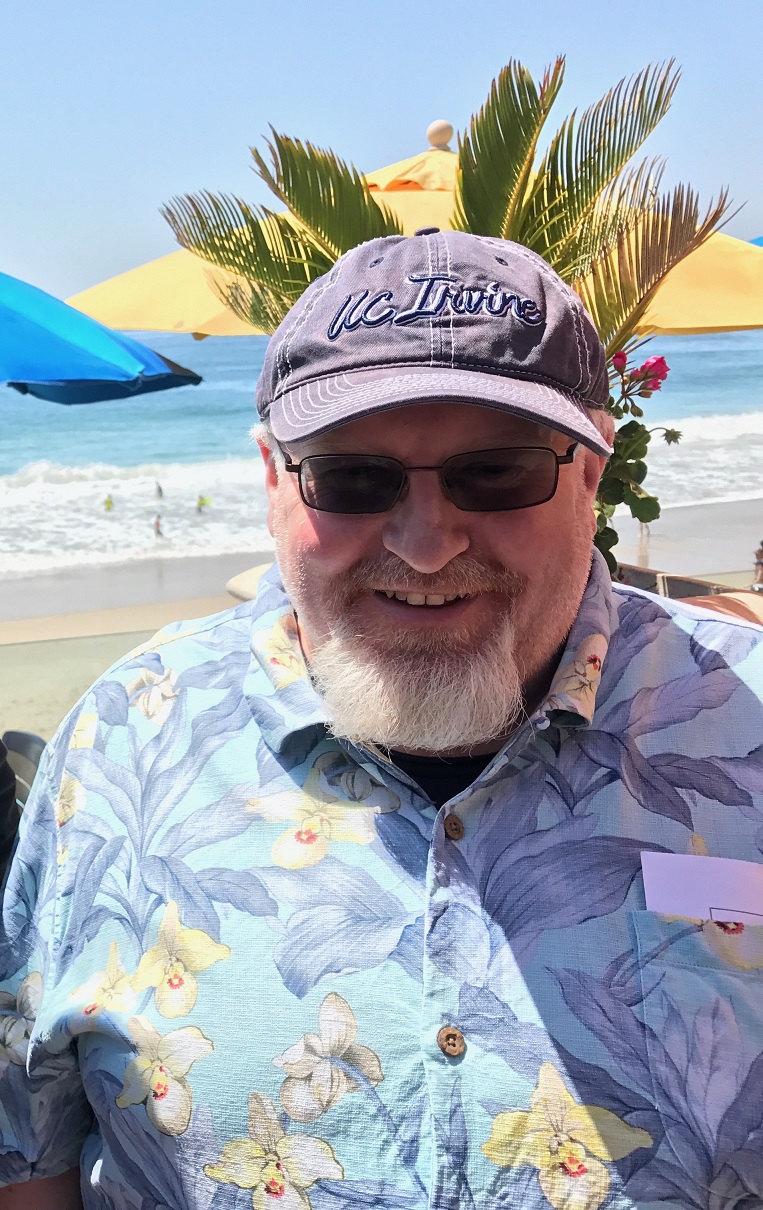


Nearly 20 years ago, I was sitting on a plane from Munich to John Wayne Airport in southern California. I was on my way to a postdoc position in the research group of Barbara Burgess at the University of California, Irvine. Other than being interested in Barbara’s line of research, I did not know what to expect from this new life far, far away from my small hometown in Bavaria — in fact, I had no idea where I was heading to. As a former weightlifter, I was certainly excited to move a lot closer to Venice Beach, the residency of Arnold Schwarzenegger and the undisputed mecca of my sport. However, my enthusiasm was mixed with trepidation that Irvine was just a ranch in an area with nothing but cattle, a fear supported by a friend’s internet research. Instead of a herd of cattle greeting me at the airport, it was an oversized statue of John Wayne — a former resident of Orange County. At this point, it seemed strange to me that an airport in southern California should be named after a movie star other than Arnold, and that this movie star even deserved a statue of that size. This reaction was probably natural for a clueless postdoc who just arrived with nothing else but a small, half-empty suitcase and very little knowledge about life in SoCal. Little did I know that the statue of John “the Duke” Wayne would have a major impact on my life and career many years later.

Continue reading

Chemistry in retrospect: Personal reflections on a polarizing story

eisenbergMany scientists will at some point come up against the question regarding what good their work might do for the world. For those working in applied and interdisciplinary areas, this is often easier to rationalize to the public than for those working on fundamental, basic research. In this week’s “Chemistry in retrospect,” Rich Eisenberg tells us the story behind PHIP as a case study for why answering fundamental questions in chemistry is so important to the development of the field.


The word “hype” has been used — and abused — when chemists are asked to explain what they do and why.  This extends beyond simple social conversations with friends and folks newly met who will invariably ask with a slightly glazed stare after we explain what we do, “What good will that be?” Even our introductions to papers and proposals promise social and economic good before the science is discussed. And yes, sometimes we do overstate the ultimate social, economic and technological benefits of our science when we are just doing basic research. The key word here is “basic” and it really addresses the key question that drives experimental science, “Why does this happen?”

I want to talk about a basic research story that commenced in my lab more than 30 years ago into which we were drawn by the question, “why?” Thanks to the current efforts of a former postdoc and collaborator, the answer will likely have significant practical applications in magnetic resonance imaging (MRI).  Despite its widespread use, MRI lacks sensitivity that requires use of large-magnet instruments and specialized contrast agents to achieve current results which are often less than optimal.  But let’s go back to the beginning and see how that simple question “why” drove us to where we are now.

Continue reading

Introducing “Chemistry in retrospect”

ChemistryInRetrospectThere is a great deal of storytelling that comes along with chemistry. Take a look at any article from our ‘In Your Element’ series and you’ll notice the gentle reverence we give to discoveries and champions of the field. For better or worse, part of what makes a particular event memorable in chemical history is the mythos surrounding it: besides being an important compound, ferrocene comes with the twisting tales of its structural assignment and the back-and-forth between eminent scientists is recounted to students regularly, and we take note of the fact that the original report of C60 to Nature was written by Curl & co-workers in only a single day. These stories, and many like them, are the ones that make us proud to be chemists and excited to continue building these legacies.

However, there are plenty of stories that don’t make it into the broader canon for one reason or another. Every day in the lab we have experiences that build us as scientists and, as Beth Haas pointed out in her article on the autobiographical Lab Girl, there are stories of success, failure and everything in between that come together to form the full-fledged chemists that we are today. Moreover, I am a firm believer that there is value in sharing these stories and diverse points of view. As a young scientist, learning about the challenges that come up in research that you can’t learn about in a textbook or journal article can be the difference between thriving and burning out. Knowing that you aren’t the first to struggle with research in some fashion is empowering — particularly if it comes with some perspective on how to address the issue at hand.

It’s in this vein that I’m proud to introduce the first of several posts that will appear here on The Sceptical Chymist as part of an informal series called ‘Chemistry in retrospect’. In this series, I hope to collect stories of life in the profession that are less formal in tone but illustrate an aspect of the job or a particular area of research that might not be clear from just reading published reports. Some of these stories will be more anecdotal ‘around the watercooler’ tales of adventures in professional development, lab safety and more, while others will take a slightly more technical slant as they pull back the curtain on how some important work came to be. The inaugural  story is a little bit of both of these as Professor Richard Eisenberg from the University of Rochester recounts the story behind how his group came to develop parahydrogen-induced polarization NMR techniques as a case study in how curiosity can take fundamental research in new and unexpected directions. It serves as a reminder that sometimes you don’t get what you sought out, and a well-prepared mind can capitalize on that.

I intend to maintain this series as often as I have articles to post — if you have a story to share or would like to suggest someone to write one for us, send an email to nchem at nature.com and I’ll get in touch. In the meantime, I hope you enjoy this first entry.

–Marshall