Light and matter in sync

Contributed by Saar Nehemia and Ido Kaminer – Technion, Israel Institute of Technology.

In 1934, Pavel Cherenkov discovered that when charged particles surpass the speed of light in matter, they generate an electromagnetic shockwave. A well-known analogue for this phenomenon is a sonic boom – shockwaves of sound generated when jet planes surpass the speed of sound in air. This new understanding of light–matter interactions led Cherenkov to share the 1958 Nobel Prize in Physics with Ilya Frank and Igor Tamm for his experiment and their theory. The Vavilov–Cherenkov effect has been studied extensively since then and besides being of fundamental science importance, it has led to applications in particle identification, medical imaging, quantum cascade lasers, optical frequency combs, laser-driven particle acceleration, and other areas of nonlinear optics and nanophotonics

In 2020, our paper in Nature Physics demonstrated an experimental signature of a quantum Cherenkov effect. In this post, we take you behind the scenes of our experiment.

The quantum Cherenkov effect

The Cherenkov interaction and analogous effects were mainly studied in the context of classical physics; however, some scientists were interested in their quantum description. The first to study the quantum nature of the Cherenkov effect were Ginzburg and Sokolov in 1940. The conclusion from their work was that quantum corrections to the Cherenkov effect are negligible and irrelevant. In a later paper from 1996, Ginzburg even states that “In 1940, L D Landau told about my work stated that it was of no interest. It follows from the above, that he was fully justified in drawing this conclusion, and his comment hit the mark as was usual with his criticism”. For many years, this statement and related beliefs created a conception that kept scientists away from studying the quantum Cherenkov effect.

A series of theoretical papers from the past 5 years revisited the quantum Cherenkov effect and ignited a new interest in its consequences, starting with our theoretical paper from 2016. These papers predicted interesting consequences for a quantum treatment of Cherenkov-type effects and envisioned that modern experimental capabilities and advances in electron microscopy and in quantum optics could lead to the demonstration of quantum Cherenkov-type phenomena.

Over the last couple of years, other scientists began to predict similar theoretical features in related effects, such as the Smith-Purcell effect (see work by Talebi, Gover, Arie, Polman, and Garcia de Abajo). All these effects can be considered as Cherenkov-type because they all share the same underlying principle: an enhanced interaction between a charged particle and light that occurs when the velocity of the particle matched the phase velocity of light – also termed phase-matched particle–light interaction. These theoretical findings increased the general interest in building an experiment to test these theoretical predictions.
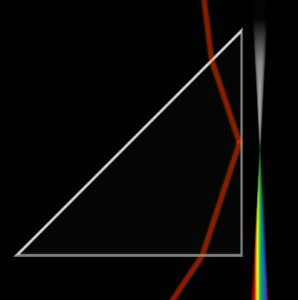
Illustration of the electron-laser interaction, inspired by Pink Floyd’s cover art of Dark Side of the Moon. Each electron is coherently split into a wide energy spectrum (rainbow). The laser light (red) has to be coupled at a precise angle to achieve the strong interaction, in which the electron simultaneously absorbs and emits hundreds of photons from the laser. {credit}Morgan H. Lynch and Saar Nehemia, Technion AdQuanta lab. {/credit}

There exist three types of quantum effects that can occur in phase-matched particle–light interactions.

  1. Recoil corrections due to the quantization of the electromagnetic field. The emission occurs in quantized packets, creating a deviation from classical theories of radiation emission. This effect was first analyzed in 1940 by Ginzburg and Sokolov, in the context of the Cherenkov effect.
  2. Intrinsic changes to both the charge dynamics and the emission properties due to higher-order processes in QED. These effects include photon re-absorption that causes an electron mass correction (analogous to Lamb shift in renormalization theory), all being effects that cannot be explained classically.
  3. Phenomena due to the quantum wave nature of the charged particle, with features that cannot be explained by a classical point-charge description, such as the emergence of discrete energy peaks in the electron energy distribution. This is what we measured in 2020.

Our paper

In our recent work, we measured the third type of the quantum effects described above. To demonstrate the Cherenkov-type interaction, we launched a laser pulse through an optical medium (see prism, below) to synchronize its velocity with a highly-collimated electron beam passing nearby. Using a very accurate electron energy spectrometer (as used in the EELS technique), we measured the electron energy distribution and revealed the discrete energy peaks discussed above. The longitudinal profile of the electron wavefunction altered the interaction. Analogous quantum corrections also arise from transverse features in the electron wavefunction, as its orbital angular momentum (OAM) or its transverse spatial profile.
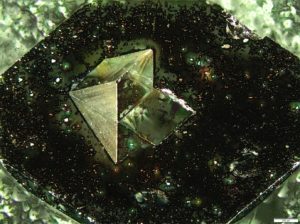
An optical microscope image of the prism used in the experiment. This 0.5 mm prism was attached to a 3 mm surface (darker background) with a square hole (center of image). The prism alignment was extremely precise to ensure that the electrons interact resonantly with the light in the prism. These electrons then pass through the square hole at the center of the surface. {credit}The Technion AdQuanta lab.{/credit}

Our experiment demonstrated a Cherenkov-type interaction between light waves and an electron wavefunction: the Cherenkov conditions are satisfied between an electron pulse and an incoming laser pulse that stimulates the interaction. This stimulated-Cherenkov effect is also known as the inverse-Cherenkov effect. The excitation laser pulse interacts with the electron at the Cherenkov angle (the same angle at which the radiation is emitted in the Cherenkov effect), resulting in a phase-matching between the electron and the laser light that leads to their strong interaction – causing both energy gain and energy loss – occurring simultaneously by each individual electron. In our experiment, this interaction is sustained over hundreds of wavelengths, causing the electron to become a coherent superposition of hundreds of energy levels.

Our setup is based on the ultrafast transmission electron microscope (UTEM), which utilizes femtosecond lasers for pump probe experiments. The microscope offers several degrees of freedom to measure the interactions between light and free electrons: controlling the delay between the light (“pump”) and the electron (“probe”), in addition to the light wavelength and polarization. The microscope allows us to control the electron wavefunction in space and time through its interaction with the laser.
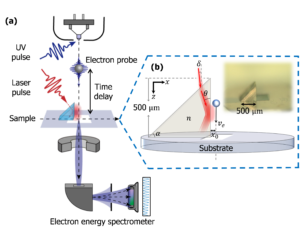
Illustration of the UTEM set-up, showing the grazing-angle interaction with a prism. {credit}Dahan et al. Nat. Phys. 16 1123–1131(2020){/credit}

Our Cherenkov experiment required a unique configuration that has never been achieved in a UTEM system, or in any transmission electron microscope: we needed to align the electron beam to graze the surface of our prism over 500 microns, while remaining at a distance of just 100 nanometers from the surface. To understand how complex this achievement is, consider that even samples that are 10,000 times thinner (nanometer scale, about the size of the corona virus or a couple of DNA strands) are considered quite thick in transmission electron microscopy.

To explain our results, we used the theory that was originally developed for a technique called photon-induced nearfield electron microscopy (PINEM), and extended it to describe our grazing-angle interaction. While all previous PINEM experiments dealt with localized interactions (in which the electron-light interaction spans over a single light wavelength or much below), our grazing angle experiment enabled the electron-light interaction to extend over hundreds of field cycles and hundreds of wavelengths. By satisfying energy–momentum matching over a long interaction distance and a prolonged interaction duration, the interactions become stronger by orders of magnitude compared to localized interactions – this opens the way to creating strong and ultrastrong coupling phenomena with free electrons.

Going back to the types of quantum effects that can arise in electron-light interactions, the PINEM interactions (see work by Carbone, Ropers and others) can be seen as an occurrence of the quantum effect of the third type – since it depends on the electron wavefunction. However, PINEM interactions before our work did not reach the Cherenkov-type interaction because they relied on localized fields (interestingly, even the acronym PINEM includes the word “nearfield”, although other types of fields can also create the effect).

The Cherenkov effect is only one example of phased-matched particle–light interactions. The energy–momentum phase-matching condition that is famously found in the Cherenkov effect also occurs in the Smith-Purcell effect, their inverse effects and a wide range of electron–light interactions that satisfy similar phase-matching conditions.

Looking Ahead
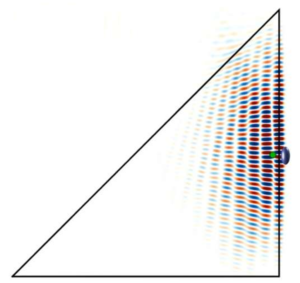
Simulation of the electron-laser interaction. The laser light (red-blue wave) interacts with the electron wavefunction (elongated sphere). This setup assures that the electron exchanges energy with the laser in a resonant manner – achieving the precise conditions of the Cherenkov effect. {credit}Dahan et al. Nat. Phys. 16 1123–1131(2020){/credit}

In another recent study by our group in 2020, published in Nature, we measured the interaction of free electrons with light captured inside a photonic cavity (also measured at the same time here). Looking ahead, we envision combining the Cherenkov phase-matched interaction with an elongated photonic cavity as a route to achieving efficient electron-photon interactions. The cavity will channel emitted photons that can then be resonantly reabsorbed by the elongated electron, creating a strongly-coupled electron–photon hybrid. This hybrid will enable the exploration of extreme conditions such as single-electron–single-photon interactions, which can serve as a novel mechanism for number-resolved single photons detection.

Reaching this regime of physics would open previously unknown processes like free-electron Lamb shifts, controllable free-electron mass renormalizations, and potentially even cavity-mediated Cooper pairs of free electrons. These exciting prospects rely on the quantum interaction of free electrons with photons that are dressed by their optical environment – which enables the Cherenkov effect and many other future ideas.


A number of pictures

Posted on behalf of Nina Meinzer, senior editor at Nature Physics

The October issue of Nature Physics marks the journal’s 15th anniversary, complete with a cover on which four experimental images are arranged in such a way to form the number ‘15’. Here Nina Meinzer tells the story of how the images that make the cover were created.

Earlier this year, the Nature Physics editors started to think about ways to mark the journal’s 15th anniversary. Little did we know then that, by October, we would not be able to come together and raise a glass to the occasion, and so the celebration had to be confined to the pages of the journal. We knew early on that we wanted to give our past and present editors a chance to reminisce about their time at the journal, and that turned into a collection of memories of their favourite papers.

But how do you turn those assorted papers into a visual concept to make a cool cover? Once we started thinking about it, it struck us that it’s not unusual to see experimental methods, especially imaging methods, demonstrated with the help of numbers or letters as simple test objects. So we asked some of our authors if they had any images of a 15 (or a 1 and a 5) on their hard drives that we might use for the cover. We were deeply moved by the response: although nobody had the sort of thing we were looking for on file, they offered to take some data especially for us — in August, in the middle of a pandemic.

Our art editor then took four of these images and arranged them into a collage to create one big number 15. Bringing together methods from different areas of physics reflects the aim of Nature Physics itself to be a platform for the entire physics community.

What are the methods used to create the images that eventually made up the anniversary cover?

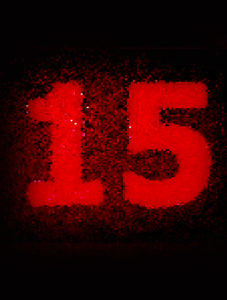
Credit: Hugo Defienne, Daniele Faccio and Alex Wing

Quantum holography (Hugo Defienne & Daniele Faccio, University of Glasgow)   

“Holography is a widely used imaging technique that can be applied to the full electromagnetic spectrum, from X-rays to radio waves and relies on the coherence properties of these waves to extract information from interference patterns.

We have recently extended holography to the case of intrinsically incoherent waves, so that no phase information can be retrieved from a classical interference measurement. Instead, the phase information is now encoded and decoded using entanglement. Entangled photon pairs are used to probe complex objects of which amplitude and phase components are retrieved by imaging the spatial structure of entanglement. As an example, the image on the cover shows the quantum holographic image of the number 15 imprinted onto a spatial light modulator. See also the preprint for more details”

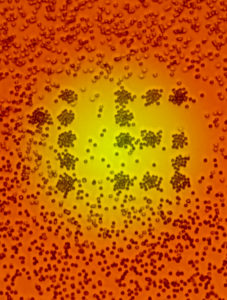
Self-assembly (Serim Ilday, Bilkent University – UNAM) 

Credit: Serim Ilday and Alex Wing

Credit: Serim Ilday and Alex Wing

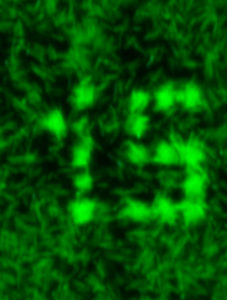
 “These are microscopy images. Each dot forming the number ‘15’ is a laser beam. Laser pulses that get absorbed by the liquid heat it. The rest, untouched by the laser pulses, remains cold. The liquid starts flowing from the hot to the cold regions, just like in a steam engine. The flows carry polystyrene spheres (red image) and E. coli bacterial cells (green image) towards the beam spots. When they exceed a threshold number, particles and cells slow down the flow the same as the water slows down when you drain it over a sieve. Then, their numbers grow further and write ‘15’.

The recipe? Couple an ultrafast laser to a microscope through a series of optical elements, including a spatial light modulator, which divides a single beam into multiple beams. Cinema projectors have at least one of these for precisely the same reason. Sandwich a thin liquid layer containing the material of interest between two glass slides. Put it under the microscope and shine the laser. Record using a camera. Enjoy!”

Quantum gas microscope (Immanuel Bloch, Max Planck Institute of Quantum Optics)

Credit: Immanuel Bloch and Alex Wing

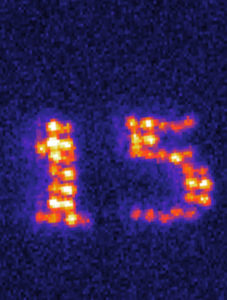
“The ‘birthday candles’ forming the ’15’ are individual atoms fluorescing in ultra-high vacuum. Lithium-6 atoms are cooled down to around a billionth of a degree above absolute zero and trapped using laser beams. By interfering three pairs of beams, an optical lattice is created which forces the atoms onto a micrometre-spaced regular grid.

An additional custom-shaped laser-pattern coaxes them into the shape of the ’15’. Visible light is then scattered off the atoms and collected with a microscope objective and a single-photon sensitive camera. During illumination, the atoms need to be hindered in heating up via continuous laser cooling. The resulting black-and-white photo is finally coloured. When the atoms are not sending special birthday greetings, they simulate the quantum mechanical behaviour of complex many-body systems.”


Achieving a Bose–Einstein Condensate from my living room during lockdown

During the COVID-19 lockdown which led to the closure of many labs around the world, Dr. Amruta Gadge, a postdoctoral researcher in the Quantum Systems and Devices group at the University of Sussex*, made headlines for remotely setting up a Bose–Einstein condensate from her living room. Here, she tells us her story.

When the UK government announced the national lockdown on 23rd March due to the pandemic, my lab at the University of Sussex was forced to temporarily close its doors.  We of course had a strong inkling this was coming, and rushed to get ourselves in order before it happened. In my laboratory, we were determined to keep our experiments going as best we could although we had never run them remotely before. Without being able to set foot in the labs, bar a few essential maintenance visits, the only way to continue working on our experiments was to use dedicated remote control and monitoring technology.

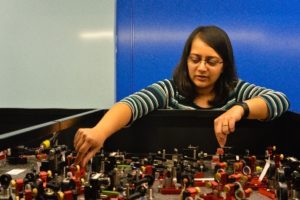
Dr Amruta Gadge adjusting a laser pre lockdown{credit}Rebecca Bond{/credit}

Pre-lockdown, I was part of a team building an apparatus to produce Bose-Einstein condensates (BECs).  A BEC consists of a cloud of hundreds of thousands of rubidium atoms, which have been cooled down to nanokelvin temperatures using lasers and magnetic fields.  At such temperatures the cloud suddenly takes on different characteristics, with all atoms behaving together as a single quantum object. This object has such low energy that it can be used to sense very low magnetic fields, a property we are making use of to probe   novel materials such as silver nanowires , silicon nitride nano membranes or to probe ion channels in biological cells.

We had started assembling this system just a few months before, and were looking forward to reaching a big milestone in the lab – producing our first BEC.  Time was short!  To run such an experiment from home was no easy feat, with large and complex laser and optics set-ups in state-of-the-art labs – which couldn’t just be transported.  In the days leading up to lockdown, equipment, chairs, and computers were being ferried to various homes, deliveries of equipment were diverted and protocols for remote access and online control were put in place.

Ultra-cold atom experiments are very complex. Obtaining a BEC involves a large amount of debugging and optimising of the experimental sequence. When not in the lab, at times it felt almost impossible to debug. We set up software control for the equipment, such as oscilloscopes, vacuum pumps, and others. However, the tool that played the most important role was our environmental monitoring system. Trapped cold atoms are extremely sensitive to any variations in the environmental conditions. Changes in the ambient temperature of the lab, humidity, residual magnetic fields, vacuum pressure, and so on, result in laser instability, polarisation fluctuations or changes in the trapping fields. All of these effects lead to fluctuations of the number of trapped atoms, as well as their position and temperature.

Debugging the system is a long process, but this can be greatly helped by monitoring the environmental conditions at all times. This may sound elaborate, however with the rising popularity of time series databases and data visualisation software, it is possible to develop a convenient monitoring system. We made use of cheap and easily programmable microcontrollers for data collection, and two popular open source platforms, InfluxDB and Grafana, for storing and visualising the data, respectively. We set up a large network of sensors throughout the labs, aimed at monitoring all the parameters relevant to the operation of the experiments. If atom numbers fluctuated, or something wasn’t performing well, we could quickly narrow down the problem by looking at our Grafana dashboards. This meant that our experimental control sequence could be quickly tweaked from home for compensating the environmental fluctuations, and the monitoring system proved to be an extremely useful tool in achieving BECs remotely.

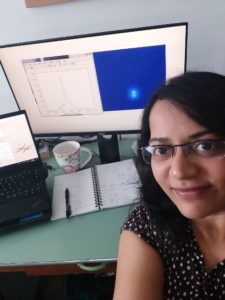
Dr Amruta Gadge working from home with an image of her BEC on screen{credit}Amruta Gadge{/credit}

We were installing a new 2D magneto-optical trap atom source in the lab, and managed to see a signal from it just the day before the lockdown. I remember clearly that I was very worried that lockdown was going to delay the progress of our experiment significantly.  .  However, thankfully we could keep operating remotely, and managed to achieve our long-awaited first BEC from my home.

I was very excited when I saw the image of our first BEC. I had spent the whole day optimising the evaporation cooling stage. It was past 10pm, and I was about to stop for the day and suddenly the numbers started looking promising. I continued tweaking the parameters and in just few attempts, I saw the bimodal distribution of the atoms — a signature of a BEC. It was strange to have no one there to celebrate with in person, but we instead got together to hold celebrations virtually — something we are all getting used to now. I was really hoping to get the first BEC of our experiment before moving to my next post-doc, and having it obtained remotely turned out to be even more gratifying.


*Dr. Amruta Gadge is now a post-doctoral researcher in the cold atoms and laser physics group at the Weizmann Institute of Science, Israel.


Behind the paper: CP violation in neutrino oscillations

In 1967, Andrei Sakharov proposed conditions required in the early universe for generating
matter and anti-matter at different rates, to explain the abundance of matter in our universe
today. Charge-Parity (CP) violating processes are essential under these conditions.
Measurements of the CP violation in quarks, first performed in 1964, are too small to explain
the difference, and finding other sources of CP violation is an ongoing quest in the physics
community. In April 2020, the T2K collaboration published a paper in Nature suggesting
large CP violation in the leptonic sector, namely in neutrino oscillations. Some of the
researchers involved in the project tell us their story.

A guest post by Ciro Riccio (Scientist, Stony Brook University), Patrick Dunne (Scientist,
Imperial College London), Pruthvi Mehta (Ph.D. student, University of Liverpool), Sam
Jenkins (Ph.D. student, University of Sheffield), Tomoyo Yoshida (Graduated Ph.D. student,
Tokyo Institute of Technology), Clarence Wret (Scientist, University of Rochester)

The oscillation analysis, whose results were recently published in Nature, is the last link in a
long chain of work. It amalgamates the effort of the entire collaboration, from those designing
and constructing the experiment 20 years ago, to the countless hours of detector operations
taken by people all over the world, to the development of the analyses.

The project
There are over 400 people working on T2K, in 12 countries, at 69 institutes. Many of us have
spent years building our bit of the experiment, from physical objects like detector or beamline
instrumentation, to abstract items like data analysis frameworks. Looking at the author list,
you’ll see that T2K consists of collaborators from all over the world. Our daily
communications happen online; in video meetings, emails, and chats. It’s sometimes a
challenge to find good time-slots for connecting people over 16 time zones, and it’s not
uncommon to sign-off from a meeting with a good-night, only to be met with a good-morning,
and vice versa.

Our international collaborators frequently fly to Japan to spend a week or two monitoring the
experiment in Tokai—on the east coast—where the neutrino beamline and Near Detectors
are, or Kamioka—just west of the Japanese alps—where the Far Detector is. In addition to
the flashing computer screens and sounding alarms, we get to witness a very different side
of Japan from the bright lights of Tokyo, from the beautiful mountains and rivers of rural
Japan, to the delicious local specialities. Avoiding the risk of data loss often occurs at the
cost of sleep for the operations experts (as the contributors to this blog post can attest)—but
all is forgotten after a morning visit to the local onsen (hot-spring).

It’s impossible to overemphasise the fantastic experience of Japanese culture as an added
bonus of partaking in T2K. Many of the restaurants in the Tokai and Kamioka areas are
familiar with members of the collaboration, and are very accommodating to international
collaborators. The owner of one particular restaurant in Tokai often recognises Sam and
remembers that he can speak a small amount of the language (chotto), and indulges him to
order in broken Japanese (we like to think it’s good for practice, and not solely their
entertainment). A favourite annual event is the sweet potato festival (imo matsuri), a
community event in Tokai held in November to celebrate the root vegetable that the Ibaraki
prefecture is renowned for.

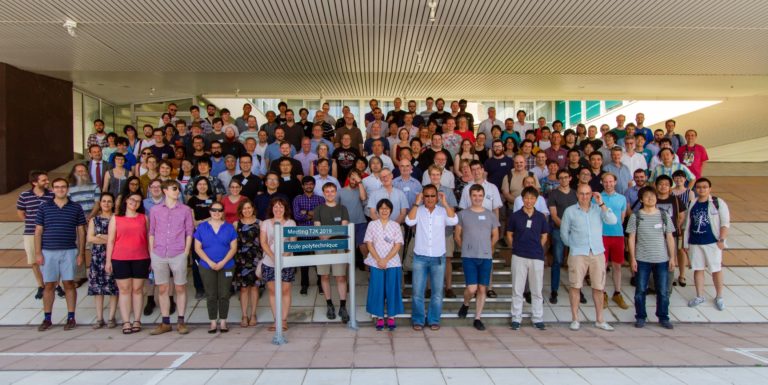
T2K collaboration meeting, Paris 2019, Credit: Pieyre Sylvaineat

The measurement
The Super-Kamiokande Far Detector started construction in 1991 in Kamioka, and operates
24 hours a day, 365 days a year, so as not to miss rare astrophysical events, such as
supernova bursts. The neutrino beam and the Near Detectors started construction 2001
(beam) and 2007 (Near Detectors) in Tokai, and are continuously operating when we have
pre-allocated beam time, sometimes up to seven months per year.
To make our measurement we not only need the neutrino beam and the detectors, but also a
computer-simulated model of the entire experiment, painstakingly quantifying how we think
each component behaves and how certain we are of that description. This includes
everything from the neutrino beam (and the proton beam collisions that creates it), to the
neutrino interactions in our detectors, to the density of the Earth between Tokai and
Kamioka, to how good our detectors are at measuring the neutrinos.

To characterise the neutrino beam, we have two detectors (“ND280” and “INGRID”) 280m
from the neutrino source, which have a staggering amount of neutrinos passing through
them. Occasionally these neutrinos interact at the Near Detectors, occasionally they interact
300km later in Super-Kamiokande, but most of the time they continue out through Earth’s
atmosphere, propagating deep into space. To put things into perspective, this analysis used
about 3×10²¹ (3,000,000,000,000,000,000,000) proton interactions to create the neutrino
beam. Roughly one neutrino is created per proton interaction, but due to their rare interaction rate with matter, we observe a mere 120,000 neutrino events at ND280 (60,000
of which were used in our analysis) and about 500 at Super-Kamiokande over the course of
nine years. In the early neutrino beam experiments of the 1970s, the data are often on less
than 500 neutrino events, with the experiments sitting right next to the neutrino source for
tens of years. Today we have about the same number of neutrino events in a similar amount
of time, but sitting 300km away from the source at Super-Kamiokande. It’s only recently that
we have the technology, international funding support from governments, and scientific
community in place to produce such powerful neutrino beams, which are the backbone of
these precise measurements.

Presentation of final results of the oscillation analysis. Credit: Pieyre Sylvaineat

Once the neutrinos are characterised at the Near Detector, the oscillation analysis takes all
the models of the neutrino beam, the detectors, the neutrino interaction, and neutrino
oscillations, combines them with their constraints, and blends them together to describe our
observations. The analysis and all of its inputs turns PhD students’, scientists’ and
professors’ daily work into many cycles of communication-implementation-validation, over
the course of more than a year. When validations and tests are satisfied, we finally get to
look at the data and make our measurement of the neutrinos’ oscillations. That last link in
the long chain has the privilege to see the final result first in the collaboration. The moment
when the plot pops onto your screen and you’re the only person who knows what it shows is
pretty special. For this result, published in April 2020, we first saw the results internally in
Autumn 2018, and spent the time between then and now extensively validating and testing
alternate explanations.

Looking ahead
T2K is currently in the process of updating the analysis using more data taken during
2019/2020, and using better models of the experiment, all thanks to the continuing dedicated
work of all our collaborators. Many of us are also working on upgrades of the neutrino
beamline, the Near Detectors and the Far Detector, to squeeze out more science from the
neutrino beam. Our results published in Nature are the strongest constraint on the CP
violating phase in neutrinos to date, but we have only taken about half of our allocated data.
There is much more to come and the prospects are truly exciting for all of us. As we
continue, we’re including the work of even more people than the analyses that came before;
new students, scientists and professors. We hope they, like us, get their share of the
pleasant, stressful, lovely, frustrating, and ultimately rewarding experience of being on an
international science collaboration such as ours.

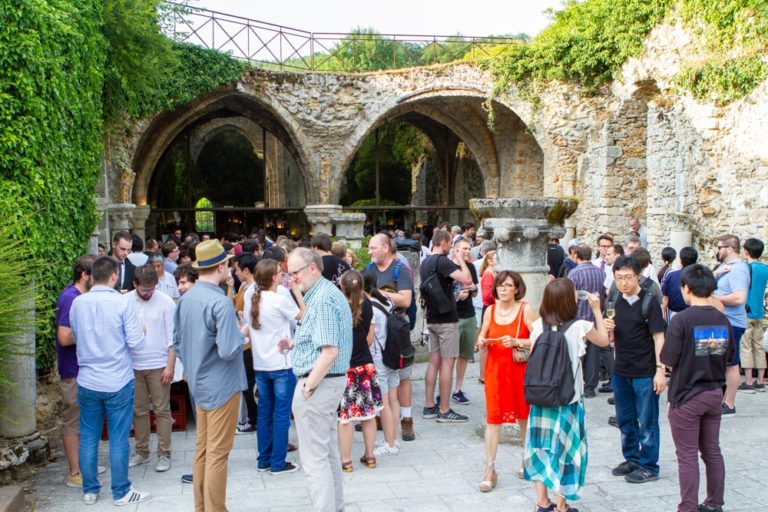
Party at Abbaye des Vaux de Cernay. Credit: Pieyre Sylvaineat

Don’t make it so

Christine Horejs reviews the latest series in the Star Trek franchise, the recently broadcasted Star Trek: Picard.

We live in almost surreal times: it feels as if Q was playing another one of his evil games, expecting humanity to fail again it its attempt to prevent a catastrophe (remember the pilot episode of Star Trek: The Next Generation?).  Precisely because of this, the new Star Trek: Picard promises to be the show to watch. Wait, is this the biased view of a Trekkie, who cited Jean-Luc Picard at the beginning of her PhD thesis? Maybe. But Star Trek has always been at the forefront of scientific advance, has solved unsolvable moral and medical problems, has gone where no women or men had gone before. Right now, this is exactly what we would like to see. We need the flagship of the Federation with its wise Captain and crew, who can solve pretty much every problem in the Galaxy using science and diplomacy.

Jean-Luc Picard 2

Sir Patrick Stewart as Jean-Luc Picard. Credit: Patrick Caughey[1]derivative work: Loupeznik / CC BY-SA (https://creativecommons.org/licenses/by-sa/3.0)

Star Trek: Picard is a ten-episodes series, the follow-up of the legendary Star Trek: The Next Generation, centred around captain Jean-Luc Picard – Captain, Sir or Jean-Luc, but certainly not JL.  The story is set at the end of the 24th century, that is, 20 years after we last saw Jean-Luc commanding the USS Enterprise. He has now retired from Starfleet, following his great disappointment with the Federation, who refused to help the Romulans after the destruction of their home planet by a supernova. What follows is a complicated conspiracy theory story, involving the Romulans, Starfleet, the Borg (or rather Ex-Borgs and their cube) and the ‘Synthetics’, who are essentially Data’s children, designed based on his positronic memory.

The plot remains rather unexciting and to prevent any potential spoilers, I will jump right into the scientific vision – if only I could. Thinking of Star Trek: The Next Generation, there are numerous scientific and technological inventions and visions that made every scientist’s heart jump a beat.  Voice activation (long before Siri or Alexa), virtual reality (especially now, I would give everything for a holo deck), replicators (could they make toilet paper?), touch screens (long before iPads), video calls (what would we be without them), diagnostic beds (Beverly Crusher could diagnose everything using those beds and her medical scanning device), to name only a few (see also Boldly going for 50 years). And then there was the really big science: matter-antimatter generators, cloaking devices, the warp drive. In fact, every time a species was close to developing the warp drive, the Enterprise would pay a visit to ensure diplomatic first contact. So, what are the major scientific stories in the new Star Trek: Picard series? Ethical questions related to AI or synthetic life? Well, this has all been discussed at length throughout all The Next Generation episodes with Data, his brother and his father Noonien Soong.  De-assimilation of the Borg? That is indeed interesting; however, the science behind this is not given any room in the series. Making Picard an android? Yes, that is new, albeit without any (valid or not-valid) scientific explanation.  Indeed, the creators managed to take the science out of science fiction.

Then there is the crew. At the heart of every Star Trek series are the smart, adventurous, highly trained crew members, comprising multiple species from all over the Galaxy. Spock, the legendary Vulcan science officer of the original series, Worf, the grumpy Klingon, growing up with humans, always in between two worlds, Geordi, the best engineer in Starfleet, Beverly, the clinician with a passion for fundamental science, Neelix, the Talaxian, who has numerous jobs on board the Voyager, Major Kira, the Bajoran, who certainly is one of the strongest female characters of Star Trek on Deep Space Nine. We meet some of the beloved characters of Next Generation again. Seeing William Riker and Deanna Troi finally happy together is certainly a highlight of the show. And the appearance of Data and Spot 2 are intriguing. However, Seven of Nine as action figure killing Romulans and taking over the place of the Borg queen is rather disturbing. Picard’s new crew members cannot even remotely reach the depth of the old Star Trek characters, and the fact that the majority are human goes against the very principle of Star Trek and the United Federation of Planets.

One of the most hilarious scenes of the new Star Trek: Picard series, in which he calls his dog ‘Number One’, is in the very first episode. And unfortunately, it goes downhill from there. The only thing that will always remain the same is the amazing acting of Sir Patrick Stewart as Captain Jean-Luc Picard, who still spreads the same optimism and belief in the peaceful solution of conflicts as he always has. Make it so!

What’s the difference between a supernova and a fork?

Francesca Chadha-Day is a Junior Research Fellow at the University of Cambridge, studying particle astrophysics and axion phenomenology. She is also a comedian. Here, Fran writes for us about her experience of stand-up comedy. 

My first stand-up comedy performance was an unfortunate side effect of a promise I made to myself. I used to be an atrocious public speaker and, at the start of my PhD, vowed to do something about it. I promised myself I would say yes to every public speaking opportunity that came my way for the next few months. I deeply regretted this promise when I opened an e-mail from Bright Club – a comedy night where academics do stand-up about their research. According to my self-imposed rules, I had to do it.

{credit}Steve Cross{/credit}

For the next month, most of my free time was devoted to writing and meticulously memorising my set. I was terrified. When my time on stage finally arrived, it was 20 seconds of blinding fear, followed by eight minutes of pure joy (and relief). Making a room full of people laugh is absolutely brilliant.

My first set asked and answered the question “what do theoretical particle physicists do all day?” My answer is that we spend our time figuring out what the universe would look like if the laws of physics were just a little bit different than what we currently think. For example, what if there were new particles, new interactions between particles, or even new dimensions? Comparing these calculations to data helps us discover what the laws of physics really are. In other words, we write fan fiction for the universe. This first short set formed the basis of my first solo show, Physics Fan Fiction, which I took to the Edinburgh Fringe in 2016.

I believe that science comedy is a great addition to the landscape of public engagement with science. It appeals to people who might not want to come to a more traditional science talk, and it’s a perfect medium for communicating how science works. Rather than focusing only on the facts and figures of physics, my comedy explores the scientific method, the challenges of making progress in particle physics, and day to day life as a theoretical physicist. I even have a set on quantum field theory.

This kind of science communication really appeals to me because I have never been that excited by how large space is, or how fast the protons can go at the Large Hadron Collider. I am excited by the fact that the laws of physics which make a star explode into a supernova are the same laws of physics that make celery. The immense variety of phenomena that arise from the interactions of 18 or so fundamental particles is what physics is all about. This is the subject of my recent show “10 key differences between a supernova explosion and a fork”.

Writing a stand-up comedy show is a highly creative endeavour – and theoretical physics is just as creative. My creative process is more or less the same, whether I am writing a set, thinking up a new method to discover dark matter, or even debugging some code. For me, it’s all about asking stupid questions, and then doing my best to answer them. “What are the main differences between a supernova and a fork?” is a pretty stupid question. Einstein’s question, “how come the speed of light is a constant in Maxwell’s equations” might well have seemed stupid initially, but it led to one of the most beautiful and revolutionary theories in physics.

So, what are the key differences between a supernova and a fork? The first difference is that a supernova lasts for a few weeks, whereas forks are stable more or less indefinitely. The last is that no-one knows what happens if you put a supernova in a microwave.


Why so serious? PowerPoint Karaoke at MRS Meetings

Guest post by Daniel Stadler, PhD student in Chemistry at the University of Cologne and organizer of the PowerPoint©  Karaoke at the Materials Research Society (MRS) meetings

The idea that karaoke is fun and a great ice-breaker is shared by all those who have ever participated in a karaoke event.  But karaoke in science — where you have a PowerPoint© slide instead of a teleprompter and music — can also be hilarious, as was shown at the recent Materials Research Society (MRS) meetings. What if you have never seen a slide you are asked to present: welcome to PowerPoint© Karaoke!

Power Point Karaoke at the Fall MRS meeting 2019 in Boston. Image courtesy of Daniel Stadler.

An initiative of the Student Engagement Subcommittee of the Materials Research Society dedicated to promote the engagement of the younger generation in science, the PowerPoint© Karaoke was coordinated and organized by a group of highly motivated volunteers, and the event was featured at both the Spring and Fall editions of the 2019 MRS meeting. In the words of Sanjay Mathur, a professor from the University of Cologne who chairs the broader committee of which the Student Engagement Subcommittee is part,a science karaoke can be both intimidating and thrilling at the same time, but it creates an excitement that is best described as an amalgam of a delightful social gathering and scientific presentation”.

At this event where you don’t know the content of your slide, you have to come up with your own interpretation and ideas. And because this slide was made by another person, it is sometimes difficult to get the intended message, but this gives the presenter the possibility to create their own, sometimes very entertaining story. A dozen of participants took part to the two editions of the MRS PowerPoint© Karaoke before an audience of more than 200 people, and really nailed it. In the serious and sometimes exhausting frame of a conference, with a lot of discussions, scientific networking and debating, people could see that there is also a room for entertainment and fun in science. Sometimes it just needs one presentation to remind people that this fun is needed to create new ideas.

The event also has some educational aspects. On the one hand, the slide authors have to prepare a clear, readable and – most importantly – understandable PowerPoint© presentation. On the other hand, the presenter needs to get the idea and come up with a catchy way to deliver the message. In fact, the presenter needs to be brave enough to give this kind of presentation in the first place. At this point, the audience comes into play. By cheering and supporting the presenter, the audience creates a relaxed environment: stuttering is not awful, missing a word not a big deal. From this, the role of an audience in any presentation becomes clearer, and should be a take home message for everyone. The interplay between presenter and audience is critical, and the beauty of PowerPoint© Karaoke lies in the fact that people are experiencing this without deliberately noticing.

Going up on stage and giving a three-minute performance on an unknown topic requires self-confidence and courage and I have great respect for everyone who was willing to participate in this very enjoyable event,” says Isabel Gessner, MRS PowerPoint© Karaoke enthusiast since day one. “All participants, presenters and slide authors did a fantastic job, and I am very thankful to the organizer who let us include this scientific and entertaining event in the MRS Meeting program.” 

During the organization of the first event, I did not know in which direction PowerPoint© Karaoke might evolve. Now, one year later, I look back on many wonderful talks and lots of good memories. A good presentation does not need to be only scientifically sound, but also natural. Be yourself, present yourself and deliver the message you see in the PowerPoint© slide. See you at the next MRS PowerPoint© Karaoke event!

CERN Science Gateway – for audiences of all ages, and for the scientific community

Ana Godinho, the Head of Education, Communications and Outreach at CERN, talked to us about the CERN Science Gateway, a very exciting outreach project.


On a recent trip to Lisbon, the taxi driver asked me where I had flown in from.

“Geneva,” I replied.

“And what do you do there?” he asked.

“I work at CERN,” I said.

“Ah, CERN. Where they accelerate particles round the huge tunnel,” the taxi driver cheerfully offered.


Was I surprised that someone from outside the scientific world was familiar with CERN? As a matter of fact – no, I wasn’t. Over more than a decade, concerted communications and public engagement programmes have contributed to CERN becoming part of popular culture. The start of the Large Hadron Collider (LHC), in 2008, and the discovery of the Higgs boson, in 2012, captured the imagination of both scientific communities (notice the plural) and the so-called lay public alike.

CERN is one of the world’s leading laboratories for particle physics. Today, it is also recognised as a source of inspiration and engagement for citizens around the world. The taxi driver could well have been one of the over 100 000 visitors that visit CERN each year (he wasn’t), or he could know one of the close to 1000 teachers that take part in CERN’s programmes, or any of the almost 7000 students that each year participate in hands-on physics workshops at CERN.

To expand and diversify its education, communication and public engagement portfolio, CERN is preparing to build a new education and outreach centre – CERN Science Gateway. Housed in an iconic building designed by the Italian architect Renzo Piano, CERN Science Gateway will enable a diverse audience across all ages and all sectors of the public to engage with the science, the discoveries, the technologies and the people working at CERN. A series of three pavilions and two tunnels, joined by a bridge floating over the road running in front of CERN, will house exhibitions, laboratories for informal learning and a 900-seater auditorium. An ample and forest-like outdoor area will consolidate the vision of a village, where people will meet to explore CERN Science Gateway, and depart on a discovery of the CERN sites.

CERN Science Gateway Credit: Renzo Piano Building Workshop

CERN Science Gateway’s permanent exhibitions will be housed in the two suspended tubes. In ‘Discover CERN’ children and adults alike will feel they are behind the scenes at CERN, interacting with technologies and discoveries in their actual setting, embedded in stories featuring real scientists and engineers. ‘Our Universe’ will be a journey through space and time back to the origin of everything we see around us today – the Big Bang. It will also be a journey into the future, inviting visitors to discover the big mysteries that govern our universe: dark matter, gravity, extra dimensions and more. Another hands-on exhibition area (located in one of the pavilions) will explore the quantum world – visitor will investigate on a macro scale the weird world in which particles move and interact.

Hands-on and minds-on is the motto for the learning laboratories in CERN Science Gateway. Through enquiry-based learning, children (from age five), students and families will work independently on experiments linked to the research carried out at CERN. Specially trained tutors will guide the visitors on their exploration into the working methods, technologies and research of the world’s largest particle physics laboratory.

CERN Science Gateway Credit: Renzo Piano Building Workshop

The modular auditorium will provide a unique space (in fact, several spaces) for both the scientific community and for public events. It will be a privileged venue for the meetings of the collaborations of the experiments at CERN and indeed for the wider particle physics community. For the public of all ages, science shows, film festivals, theatre, performances, debates will be part of a wide-reaching and diverse programme, making CERN a hub for multidisciplinary debate, learning and participation.

This ambitious project (as all projects at CERN) costs at CHF 79 million, and is fully covered by external funds, raised through a dedicated fundraising strategy. Several important donations have been secured since the work started on the project, in 2017, setting us confidently on the path to start building work in 2020 and opening CERN Science Gateway in the third quarter of 2022.


Make a note in your diaries for a visit to Geneva in 2022, to explore Science Gateway and CERN!

The matter that apparently doesn’t matter

Guest post by David Schilter, Senior Editor Nature Reviews Chemistry

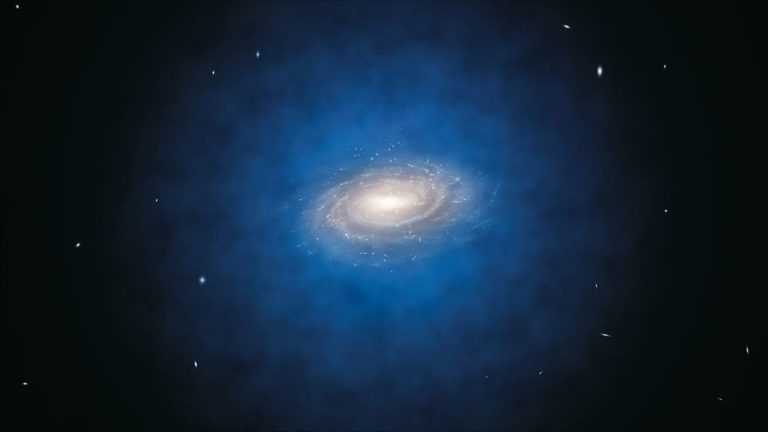
Artist’s impression of the expected dark matter distribution around the Milky Way{credit}ESO/L. Calçada [CC BY 4.0 (https://creativecommons.org/licenses/by/4.0)]{/credit}

We interact with ordinary matter all the time. It is the bed in which you wake up in the morning and the food that you eat for breakfast. It is the people we love and the pets we often love even more. It is us. Being fairly prominent stuff, ordinary matter is often referred to as ‘the matter that matters’ and without doubt deserves our attention. But we should not forget that it only makes up 5% of our Universe, the remainder of which is dark matter. Indeed, dark matter crosses paths with all of us but unless you’re a physicist it is unlikely to have crossed your mind. This prompted The Science Gallery London to present Dark Matter (free admission, June 6 – August 26), an exhibition that finally brings this ubiquitous yet elusive subject to the masses. “95% of the Universe is missing”, the Gallery asserts, so they commissioned collaborative works from teams of artists and scientists to show us what and where this mass–energy really is.

For laypersons, the thought of dark matter is more likely to cue spooky music than to evoke thoughts about baryons (or the lack thereof). Dark Matter depicts the eponymous concept in an approachable way by using everything from music and mirrors to maps and movies. To be sure, the exhibition is not only a feast for the mind but also for the senses, which is ironic because none of our five senses can detect dark matter (perhaps we really do need that sixth sense…). Although we can’t see dark matter, perhaps, like false-colour imaging, we can guess how it would look like if we could see it. Similarly, we can’t hear, touch, taste or smell dark matter, but what if we could?

The mystery associated with dark matter is not limited to laypersons. Among physicists, the subject remains controversial because much of our knowledge comes only from indirect observations that implicate the existence of matter beyond the ordinary. For example, the velocities, X-ray spectra and gravitational lensing from galactic bodies are explicable in terms of an ‘invisible’ mass. Our poor understanding of the spacetime-bending dark matter concept isn’t for lack of trying, and this exhibition highlights the sophisticated experiments carried out by great consortia seeking to fill our knowledge gap. The scale of these mammoth efforts is conveyed to us in HIGGS, In Search of the Anti-Motti, a video in which artist Gianni Motti does his best proton impersonation and circumnavigates the Large Hadron Collider. Walking 27 km in less than 6 hours isn’t bad, although a proton does do it a hundred millions times faster. Efforts to spectroscopically detect dark matter have been likened to tuning a radio in search of a station that might not even exist. In Dark Matter Radio, an installation with a circular array of audio speakers playing sounds at different frequencies, and as we walk around we experience strange interferences and beats that Aura Satz uses to depict this tuning.

Perhaps the simplest way to explain dark matter is in terms of something invisible, this being despite most visitors to Dark Matter knowing full well that there’s plenty of ordinary matter we can’t see either. Nevertheless, artists Carey Young, Nina Canell and Robin Watkins present us apparently empty vessels that, statistically speaking, contain a lot of dark matter (not being under vacuum, they also contain plenty of normal matter, but that’s not the point). Much like our knowledge of Earth’s geography evolved into what it is today (The Maps of Phantom Islands by Agnieszka Kurant is a must-see), our knowledge of dark matter will surely develop commensurate with our technologies. The artist Satz is frank in her admission that these developments are unlikely to come from a fertilization of breakthroughs in these artist–scientist collaborations. But if the only breakthrough these collaborations achieve is to take the most esoteric topic and pique the attention of the general public then that will be breakthrough enough.

There was nothing sane about Chernobyl

Guest post by Christine Horejs, Senior Editor Nature Reviews Materials

The new British-American miniseries ‘Chernobyl’, aired on HBO and Sky in May and June 2019, takes you on a dark ride through the insanity that accompanied the nuclear disaster of Chernobyl. Five haunting episodes depict the night and aftermath of the explosion of reactor 4, using the style of disaster films to vividly show how the combination of bad nuclear reactor design, irresponsible scientists, a totalitarian system and human error led to one of the biggest nuclear disasters, with devastating consequences within and outside the Iron Curtain.  

In Eastern Austria, where I grew up, the weather was rather bad in the last days of April 1986. We children did not know at that time that the rain that fell on our sandbox in the garden carried radioactive waste.

On 26th April 1986, reactor 4 in the Chernobyl nuclear power plant in Soviet Ukraine had exploded. Once the news of the catastrophic nuclear accident spread across the Iron Curtain – on 28th April – we lost our sandbox for good, were fed iodine tablets by our parents and stopped drinking milk and eating berries or mushrooms. Many of the children growing up in Eastern Austria in the 1980s had thyroid problems later in their lives. I had to get my thyroid removed a few years ago – whether this is related to Iodine 131 released in Chernobyl and absorbed by my thyroid remains unclear. Indeed, many facts about Chernobyl have long remained in the dark, as neither the Americans (or Europeans) nor the Russians had an interest in telling the truth about nuclear disasters and the consequences of radiation for human health.

Three important books1,2,3, published over the last year, and a new HBO TV drama, now dissect every minute and (known) consequence of the Chernobyl accident. Being slightly obsessed with this topic, I read them all and I certainly could not wait to watch the HBO series. And, yes, ‘Chernobyl’ drags you right into the agonizing hours after the disaster and creates this feeling of horrifying fascination that often accompanies apocalyptic movies – but this time it is real (most of it)!

Many people are familiar with the ever reoccurring stories about Chernobyl – the spreading wildlife in the exclusion zone, the awkward selfies taken in front of deserted Pripyat or the liquidators as heroes of the Soviet Union. But this series is definitely something else. It not only shows how an RBMK reactor (like the one in Chernobyl) works or does not work and how high doses of radiation literally dissolve the human body, but also how totalitarianism and secrecy provided the basis for what happened at Chernobyl. In particular, the complete refusal of the scientists and politicians in charge to acknowledge the fact that the graphite core of reactor 4 had exploded and that high doses of radiation had been released, despite overwhelming evidence. Highly radioactive graphite pieces from the reactor core lying on the ground outside the reactor and nuclear engineers disbelievingly staring into the remains of the reactor core from the roof while their skins turn red. And yet, Nikolai Fomin, the chief engineer who approved the safety test that ultimately caused the explosion, constantly repeats that the “the core of an RBMK reactor cannot explode,” – like a prayer. Meanwhile, invisible radioactive particles fall on the town and people of Pripyat (the Atomgrad —atomic city – located 2km from the power plant) and accumulate high up in the clouds to make their way across Europe. It is this invisibility that creates the true horror of ‘Chernobyl’. You, the viewer, know, but the children playing in the radioactive dust and their parents gathering on a railway bridge in Pripyat to check out the burning reactor don’t. In the credits at the end of the series, we learn that none of the people on the railway bridge in Pripyat survived.

In ‘Chernobyl’, we experience the actual explosion from the window of the wife of the firefighter Vasily Ignatenko. At 01:23 on 26th April 1986, a bright light appears in the distance, followed by a massive thud leaving behind a bright blue flash in the night sky above the Chernobyl power plant (caused by radiation ionizing air). The few nuclear engineers present in the control room of the power plant anxiously look at each other. “What just happened,” asks Anatoly Dyatlov, deputy chief-engineer of the power plant and supervisor of the fatal safety test. The scene perfectly captures the essence of what went wrong during and after the Chernobyl disaster. The nuclear engineers remain paralysed after the accident, not comprehending its magnitude or cause. Similarly, the director of Chernobyl, Viktor Bryukhanov, who is brought in after the accident, wastes crucial time by convincing local politicians that the accident is under control and that he cannot be held responsible for any damage. Outside, one of the firefighters, who were called to Chernobyl right after the explosion, grabs a piece of the graphite core. What happens to his hand in an instant after he touched the piece of graphite is the stuff of zombie movies.

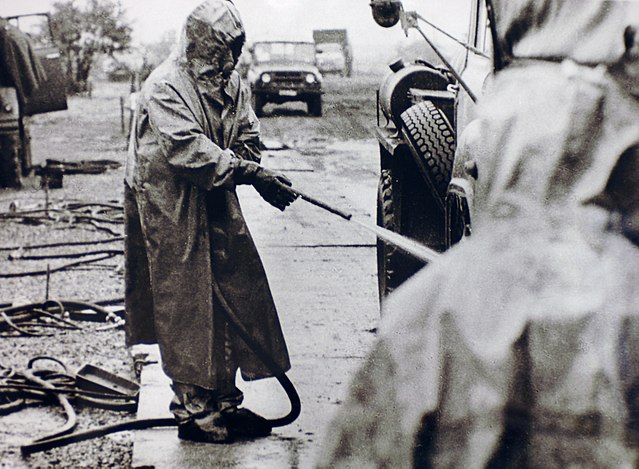
‘Chernobyl’ is mesmerizing owing to the sheer drama of actual facts. For example, biorobots (that is, human beings) have to clean up the roof of reactor 3 to make room for the concrete wall, which will become famous as the sarcophagus shielding the world from reactor 4. Even a rover designed to work on the moon failed in this radioactive environment. Each liquidator has only 90 seconds to shovel graphite pieces back into the open core of reactor 4. The graphite is so radioactive that exposure for longer would be fatal. Ninety seconds never felt so long.

Liquidators (biorobots).{credit}IAEA Imagebank [CC BY-SA 2.0 (https://creativecommons.org/licenses/by-sa/2.0)]{/credit}

The reality of ‘Chernobyl’ could have maybe been even more emphasized by using Russian-speaking actors, as, sometimes, hearing a Russian nuclear engineer speaking English with a British accent seems slightly inappropriate for a historical drama set in Soviet Ukraine in the 1980s.

And then there is the very last episode – the trial. Valery Alekseyevich Legasov, a chemist, who, together with Boris Yevdokimovich Shcherbina, vice-chairman of the Council of Ministers, investigated the Chernobyl disaster, explains what went wrong during the safety test. Legasov theatrically illustrates the combination of errors that caused the explosion of reactor 4 using red and blue panels on a wooden board, to depict the factors that can speed up or slow down the nuclear reaction. He also explains two crucial design flaws of RBMK reactors: the dangerously high ‘positive void coefficient’ and the graphite tips of the control rods, which together make this reactor type inherently difficult to control. Cooling water absorbs neutrons, but once steam is generated, a bubble is created that does not absorb neutrons. This bubble void leads to a reduction in moderation, that is, neutrons are not slowed down, which can cause a runaway condition. RBMK reactors have the highest positive void coefficient of any commercial reactor ever designed. In addition, the ultimate stop button (AZ-5), which should theoretically shut down a reactor as all control rods are inserted at once, can – for a short time – increase the reactor power output, as in RBMK reactors, the rods initially displace coolant with their graphite tips before the neutron-absorbing boron is inserted. Thus, when the nuclear engineers in the control room of reactor 4 pressed the AZ-5 button to shut down a reactor out of control, they ultimately caused the explosion. If only the engineers operating the nuclear power plant would have known about this fatal flaw of the AZ-5 button – but they didn’t as this would have compromised the reputation of Soviet nuclear physics. These construction errors in combination with all the errors previously made during the safety test led to the nightmare that followed.

The episode perfectly rounds up the story, showing what actually happened in the control room before and after the accident (which is well in line with what has been reported in recent books1,2). But in reality, Legasov was not present at the Chernobyl show trial, and even if he had been there, I doubt that he would have openly criticised Soviet science. At an International Atomic Energy Agency meeting in August 1986 Vienna, he had reported that it was only human error that caused the explosion. One wonders why there is the need to introduce fiction in a story that certainly does not lack dramatic historical figures and facts. Especially, because this might open up the room for criticism – as it already happened in the Russian media. Despite these flaws, ‘Chernobyl’ is definitely worth watching and forces you to comprehend the destructive combination of nuclear power going out of control and an authoritarian system – not only for Chernobyl-obsessed people like me, but for all present and future children of the nuclear age.

1 Serhii Plokhy. Chernobyl, the history of a nuclear catastrophe. 2018

2 Adam Higginbotham. Midnight in Chernobyl. 2019

3 Kate Brown. Manual for Survival: A Chernobyl Guide to the Future. 2019

Watch the Chernobyl miniseries here.