It’s Nobel week. And while all eyes are on this year’s winners of the medicine/physiology prize for their work on cell transport mechanisms, it’s worth looking back at another award granted seven years ago to the discoverers of RNA interference (RNAi), the biological process by which small RNA molecules inhibit gene expression. In recent years, various RNAi therapies have entered clinical trials, including one that researchers reported earlier this month can drastically reduce cholesterol levels. But although scientists know that the biological machinery for RNAi is conserved in humans and can be exploited for therapeutic purposes it has been unclear whether the system is ever put into play under natural circumstances like it is in plants and invertebrates.
 Now, a pair of papers published in today’s issue of Science offers the most concrete evidence to date that humans and other mammals indeed use RNA to fight off their viral intruders. “This work is very important, because there’s no longer a question that mammals ever have an RNA-based antiviral response,” says Chris Sullivan, an RNA researcher at the University of Texas at Austin who was not involved in the research.
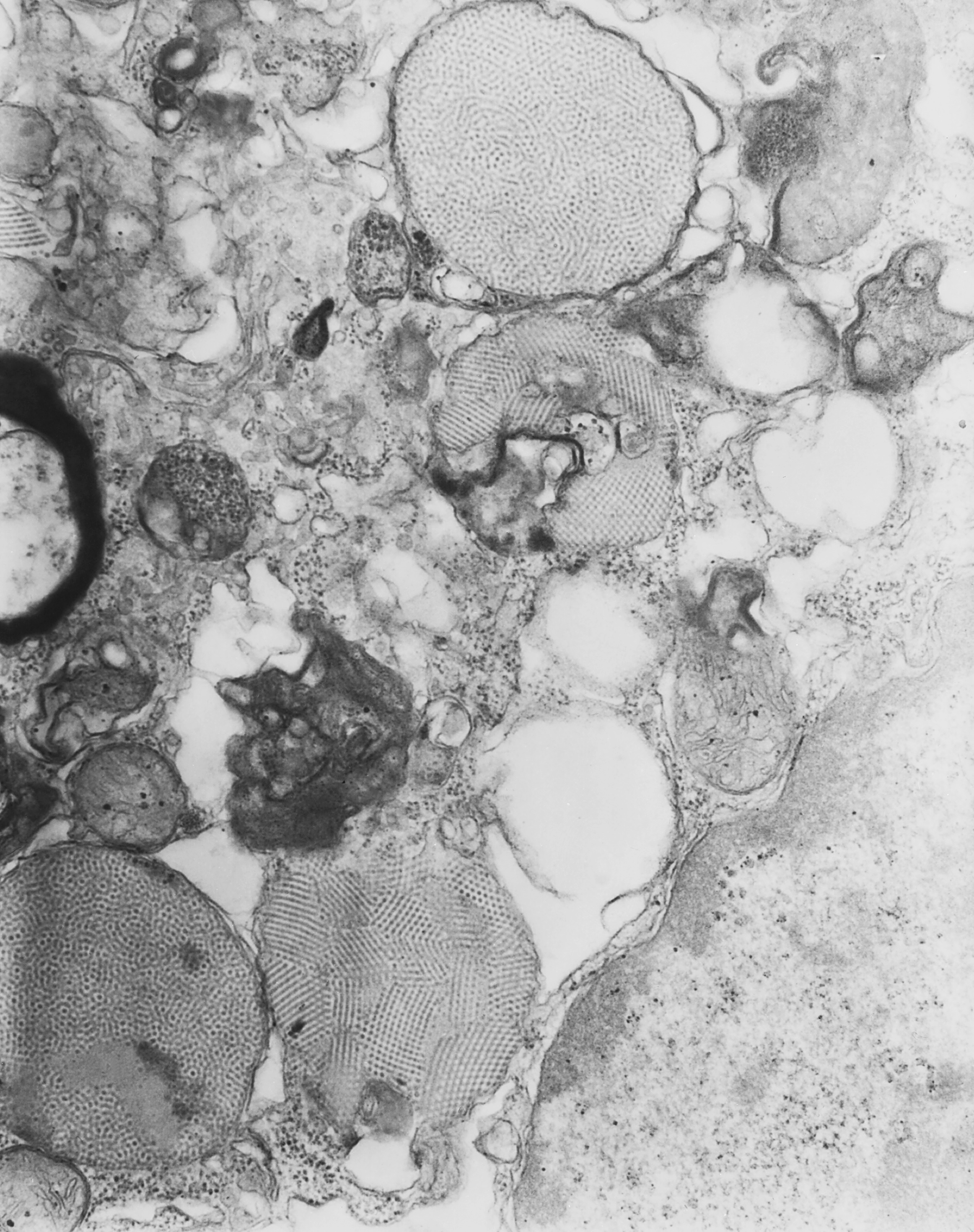
In these new studies, researchers from the University of California–Riverside (UCR) and the Swiss Federal Institute of Technology in Zurich infected either mice or embryonic mouse cells with a type of mosquito-transmissible RNA virus called the Nodamura virus (pictured here). After infection, they observed the accumulation of short RNA strands with all the signature features of an antiviral RNAi response. A viral protein called B2 could block the production of a host cell’s interfering RNA. But without this protein, the viruses were cleared by the RNAi mechanism—both in vitro, as the Zurich team showed, and in vivo, as demonstrated by the California researchers.
Although scientists have looked for this type of mechanism in mammals before, they’ve come up empty handed. Shou-Wei Ding, a UCR microbiologist who was involved in both research efforts, thinks those negative results probably arose because previous studies used viruses that inhibited RNAi, as Nodamura does if its B2 protein is intact. “This mechanism has been hidden from us until we were able to remove the suppressor the virus uses to block the antiviral RNA production,” he says.
Ding says it’s far too early to say whether this research could yield a druggable pathway. The next steps are to look for the suppressors that other viruses may use to block this line of RNA defense.
You are currently viewing a placeholder content from YouTube. To access the actual content, click the button below. Please note that doing so will share data with third-party providers.
More Information
Image courtesy of the Centers for Disease Control and Prevention/ Dr. Fred Murphy; Sylvia Whitfield

 Before there was Twitter, there was Facebook, and before that, Friendster. And who can forget MySpace? There’s a similar trend of successive usurping technologies in the fast-moving quest to develop therapeutics capable of modifying the genome. Since the late nineties, we’ve witnessed the rise of several gene-silencing approaches, from “antisense” oligonucleotides and RNA interference (RNAi) to the latest targeted genome-editing techniques, such as those based on zinc finger nucleases or CRISPR (Clustered Regularly Interspaced Short Palindromic Repeats) technology. These rapid developments raise the stakes for companies that have wagered on a particular gene-silencing approach.