Uncertain of the future, three ALS patients spearhead a new fund

It was only last summer, while on a kite surfing holiday, Garmt van Soest observed that his right hand was unusually weak. He also noticed that his speech was gradually becoming slower. “You wouldn’t know it now but I was really the fastest speaker in the office,” he says, enunciating deliberately. The changes motivated him to see his doctor. “I was really lucky,” says van Soest, a senior manager in Accenture Strategy based in Amsterdam. “I was diagnosed with ALS [amyotrophic lateral sclerosis] in six weeks. For most patients, the process takes a year.”

Since his diagnosis in August of 2013, van Soest has been using his management consulting background to strategize how best to contribute to the ALS community. He soon met two fellow ALS patients and entrepreneurs, Robbert Jan Stuit and Bernard Muller. On 19 May the three launched an ALS-specific investment fund, called Qurit Alliance. Qurit Alliance aims to raise €100 million ($139 million) to then invest into ALS-focused private biotechnology companies and institutions to kick start projects of drug discovery and smarter design drug trials to find ALS treatments.

“This is one of the novel, innovative ventures that wants to make sure orphan disease clinical pipelines do not dry up as the pharma model and venture investment shifts to later stage opportunities,” says Steve Perrin, CEO of the Massachusetts-based ALS Therapy Development Institute.

Continue reading

Drug target suggested for MERS as case count rises

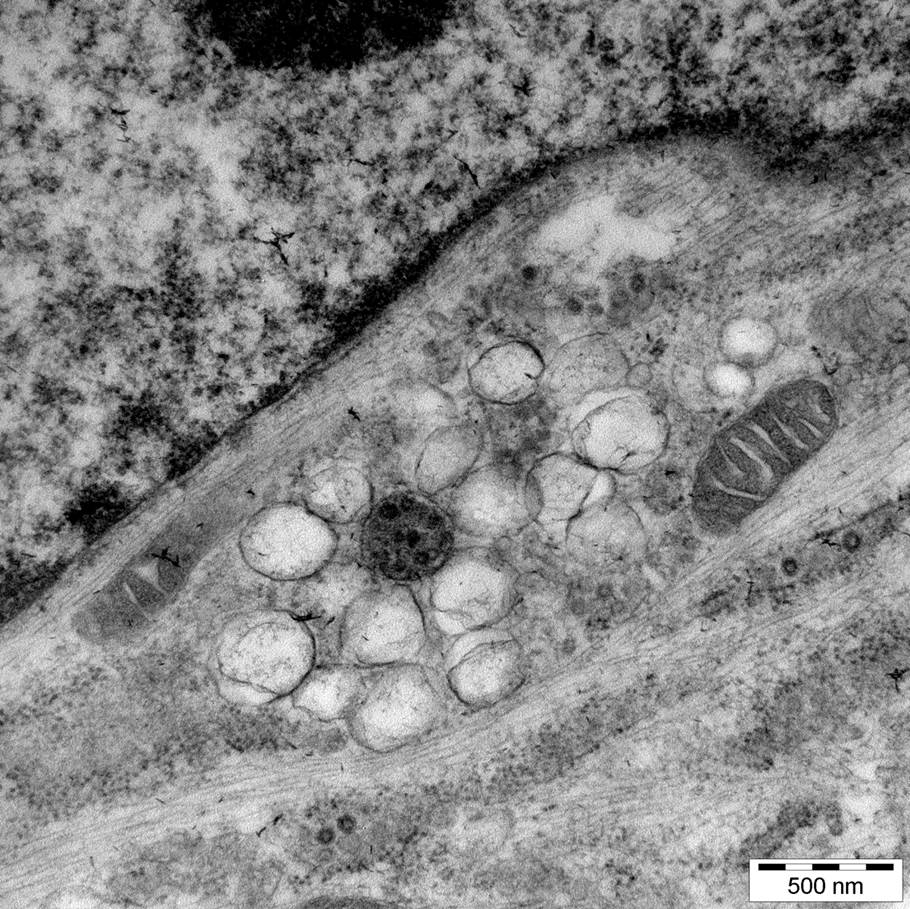
Cluster of vesicles made by virus from usurped and reshaped membranes.

Cluster of vesicles made by virus from usurped and reshaped membranes.{credit}Volker Thiel, Edward Trybala and colleagues{/credit}

Since its appearance in Saudi Arabia in 2012, Middle Eastern Respiratory Syndrome (MERS) has spread to fifteen countries, including the US, where two cases were confirmed in the past month. Worryingly, about 30% of confirmed cases have been fatal, and the lack of specific antiviral drugs for the MERS-coronavirus (MERS-CoV), which causes the illness, poses a threat to public health.

A new insight could help pave the way to treatments in the future for this type of virus. In a paper published today in Plos Pathogens, clinical virologist Edward Trybala and his colleagues at the University of Gothenburg in Sweden describe a compound called K22 that inhibits coronavirus growth in human cells.

Continue reading

As gene therapy technologies blossom, ddRNAi tries to take root

shutterstock_133184528Before there was Twitter, there was Facebook, and before that, Friendster. And who can forget MySpace? There’s a similar trend of successive usurping technologies in the fast-moving quest to develop therapeutics capable of modifying the genome. Since the late nineties, we’ve witnessed the rise of several gene-silencing approaches, from “antisense” oligonucleotides and RNA interference (RNAi) to the latest targeted genome-editing techniques, such as those based on zinc finger nucleases or CRISPR (Clustered Regularly Interspaced Short Palindromic Repeats) technology. These rapid developments raise the stakes for companies that have wagered on a particular gene-silencing approach.

Take the case of an approach known as DNA-directed RNAi (ddRNAi). In January, Australia-based Benitec Biopharma received a green light from the US Food and Drug Administration to begin the first human trial of an intravenous viral gene therapy based on ddRNAi. The therapy, dubbed TT-034, is essentially a modified form of adeno-associated virus 8, which naturally infects people but is not pathogenic. In TT-034, the viral DNA has been engineered to encode short hairpin RNAs (shRNAs) that silence three different components of the hepatitis C virus (HCV). The approach is referred to ddRNAi because the shRNA that carries out the gene silencing is continually produced by the cell from a DNA vector. Continue reading

Discrepancies in serious adverse event reporting may distort the medical evidence base

CT blog

The worst thing that can happen to a person participating in a clinical trial is what’s known as a ‘serious adverse event’, which can describe anything from permanent kidney damage or liver failure to hospitalization or even death. Federal law in the US mandates that researchers conducting trials of drugs or other products regulated by the country’s Food and Drug Administration (FDA) report adverse events on ClinicalTrials.gov, a data repository open to the public. But a new study shows that many of these serious adverse events don’t appear in medical journals, making some interventions seem more favorable than they may actually be.

Reporting online today in the Archives of Internal Medicine, a group of researchers led by Daniel Hartung, a drug safety and policy analyst at Oregon Health & Science University in Portland, looked at how the data reported on ClincialTrials.gov stack up against the results published in the medical literature. The team limited their focus to phase 3 or 4 trials with results reported on ClinicalTrials.gov and completed prior to 2009, to allow sufficient time for the trials’ results to be published in medical journals. Hartung’s group then randomly selected 10% of those trials that had matching publications, yielding a total of 110 trials.

Hartung’s team found that 33 of the trials reported a greater number of serious adverse events on ClinicalTrials.gov than in the medical literature. For example, a 13,608-person study comparing the blood-thinning drugs Effient (prasugrel) and Plavix (clopidogrel) reported in the online database a total of 3,406 serious adverse events among all participants in the trial, and 3,082 in a related publication. (The patients in the trial were at high risk of heart attack, and were undergoing angioplasty, so it’s important to note that these adverse events were not necessarily linked to the drugs.)

Of the 84 trials that reported the occurrence of serious adverse events in the public database, 16 of the matching publications either failed to mention them or incorrectly reported that they did not occur. (Notably, 5 trials actually reported more serious adverse events in related medical papers than they did in the public database.)

Continue reading

Promising psoriasis treatment signals hope for microRNA therapies

guinea1HR

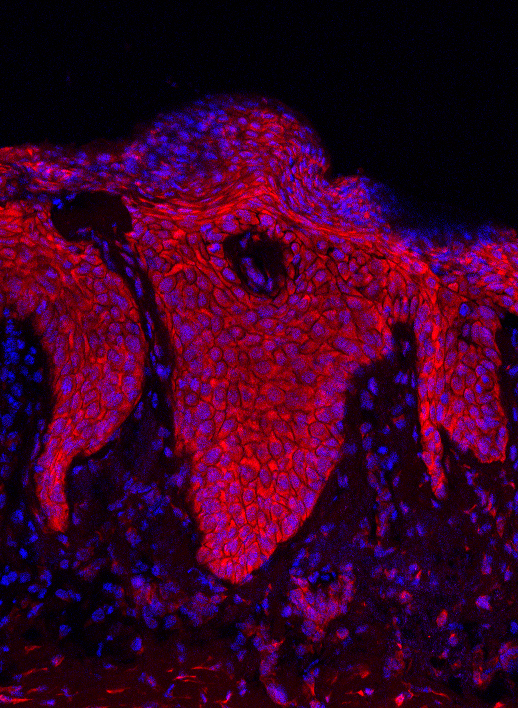
Human psoriatic skin treated with anti-miR-21 {credit}María Jiménez and Juan Guinea-Viniegra{/credit}

Nearly 2% of people worldwide chronically suffer from itchy and painful patches on their bodies, the manifestation of psoriasis, an incurable inflammatory disease in which immune cells infiltrate the skin and release molecules called cytokines that stimulate the skin cells to grow too rapidly. Treatments such as corticosteroids and immunosuppressants can help alleviate mild forms of the disease, and newer antibody-based therapies provide some relief for some of the most severe cases, but some patients fail to respond to these treatments or experience harmful side effects. Now, a new study shows that inhibiting a specific microRNA—a short bit of genetic material that influences the production of proteins in cells—appears to be an effective psoriasis treatment in mice, leaving researchers hopeful that this therapeutic approach will one day be tested in clinical trials.

Psoriasis researchers have known for some time that the levels of a microRNA called miR-21 are elevated in the skin lesions of patients with psoriasis. To determine whether miR-21 plays a crucial role in the disease, a team of scientists led by Erwin Wagner at the Spanish National Cancer Research Centre in Madrid inhibited these genetic elements using an anti-miR-21 treatment. The anti-miR-21 molecules are tiny strands of nucleotides that specifically glom onto miR-21 and prevent it from functioning. Wagner and his colleagues injected this treatment into the skin of mice bearing grafts of diseased tissue from human patients with psoriasis. The anti-miR-21 reduced the thickness of the human skin lesions by about half, a response similar to that obtained using the antibody-based psoriasis therapy etanercept (commercially available from California-based Amgen as Enbrel).

Continue reading

Experimental diabetes drug reverses emphysema in mice

Lung tissue damaged by emphysema

Lung tissue damaged by emphysema

This year marks the 50th anniversary of the US Surgeon General’s first ever report, which implicated smoking as the primary cause of emphysema and other chronic diseases. Despite decades of research, emphysema—a form of chronic obstructive pulmonary disease (COPD), which ranks among the third leading cause of death in the US—remains incurable.

But a new study provides a glimmer of hope. In a paper published online yesterday in the Journal of Clinical Investigation, researchers show that a compound belonging to the class of drugs known as thiazolidinediones (TZDs) can reverse smoking-induced lung damage in mice. What makes the discovery even more intriguing is that TZDs activate a protein called PPAR-gamma, which acts on DNA, and two of these drugs—namely, Takeda’s Actos (pioglitazone) and GlaxoSmithKline’s Avandia (rosiglitazone)—have been used clinically to treat type 2 diabetes.

At first glance, type 2 diabetes and emphysema might appear to have little in common. But in the last decade several studies have suggested that smoking triggers heightened lung inflammatory responses through pathways that are normally held in check by PPAR-gamma, which is perhaps best known for its crucial role in the development of fat cells and regulation of metabolism.

In the new study, led by David Corry and Farrah Kheradmand at Baylor College of Medicine in Houston, the researchers investigated the genetic changes induced by tobacco smoke, and discovered that levels of PPAR-gamma mRNA were depleted in a subset of immune cells from the lungs of smokers with emphysema and mice exposed to cigarette smoke. What’s more, emphysema-associated lung damage began to heal in animals that had ongoing exposure to smoke when they received ciglitazone, an experimental antidiabetic medicine belonging to the TZD class drug that activates PPAR-gamma.

Continue reading

As drug target reemerges, the question is to block or stimulate it

More than two decades ago, drugmakers searching for new hypertension medications unearthed a mysterious new cell receptor that responded to a hormone known as angiotensin II. This peptide hormone constricts blood vessels, but, oddly, blocking the so-called angiotensin II receptor type 2 (AT2) appeared to have no effect on blood pressure, so the target was largely ignored by drug developers. “Big pharma really just left the AT2 receptor by the side of the road,” says Tom McCarthy, chief executive of Spinifex Pharamceuticals, a company based in Melbourne, Australia, that is exploring the promise of targeting AT2.

Fast forward to today, and scientists now know that AT2 plays a role in everything from tissue repair to inflammation to pain response. A handful of companies are hustling to develop compounds that either block or stimulate this receptor to treat inflammatory diseases, nerve injuries, hypertension and more. In a paper published today, researchers from Spinifex and their collaborators published the first clinical data on a compound that binds to AT2, called EMA401. Results from the placebo-controlled, phase 2 trial suggest that EMA401, which blocks the receptor, can blunt lingering nerve pain due to damage caused by the shingles virus.

AT2 is just one of two receptors known to bind angiotensin II. Several medications that block the other receptor, AT1, have already received market approval for hypertension, diabetic nephropathy and congestive heart failure. When AT2 was first discovered, researchers thought the receptor was “just a little brother,” says Thomas Unger, scientific director of CARIM, Maastricht University’s School for Cardiovascular Diseases in the Netherlands. But Unger and his colleagues now know that AT2 has a “very peculiar and unique combination of effects, which is completely different from the AT1 receptor.”

Continue reading

Migraine study attributes more than half a drug’s benefit to placebo effect

The information that clinicians provide to patients about a medication prescribed for their migraines can influence the magnitude of pain relief induced by the treatment, reports a study published online today in Science Translational Medicine. The findings suggest that patients who receive positive messages about the potential efficacy of their treatment may have better treatment outcomes than patients who receive negative messages.

The study involved 66 patients with recurring migraine attacks, which are characterized by symptoms such as debilitating headaches, nausea, sensitivity to light and even experiencing aura. Some research has linked the condition to ion channel defects in brain cells that cause certain neurons to become overactive.

Patients first recorded their baseline pain intensity on a scale from zero (no pain) to ten (maximal pain) for an untreated migraine attack. Then each study participant received a series of six envelopes containing treatment for six subsequent migraine attacks: two of the envelopes were labeled as “placebo”, two as “Maxalt” (the anti-migraine drug rizatriptan sold by the New Jersey-based pharmaceutical giant Merck) and two as “placebo or Maxalt.” However, for each pair of envelopes with identical labels, one envelope actually contained a placebo pill, whereas the other contained Maxalt.

Continue reading

Centipede venom trumps morphine in mouse study of pain

Centipede picturePlacing a Chinese red headed centipede on a burn can speed up the healing process, according to ancient Chinese medicine. But a mouse study published today suggests that what the Chinese interpreted as a healing effect may in fact have been the handiwork of a pain-inhibiting peptide contained within this centipede’s venom, which kills insects but is harmless in humans. The results indicate that the peptide, called m-SLPTX-Ssm6a, is a powerful analgesic that, in some cases, surpasses the effect of morphine. Given its apparent lack of side effects, Ssm6a is seen by scientists as an attractive candidate drug compound that might prove suitable for treating chronic pain.

Researchers first discovered Ss6ma’s effect by screening it, and other peptides, for the ability to inhibit Nav 1.7, a channel located on the surface of nerve cells that allows sodium to transmit pain signals when the cell membrane is depolarized. Nav 1.7’s importance in pain signaling came to light in 2006 when researchers linked mutations in the channel to a rare genetic condition in which people are unable to perceive pain. The finding led many researchers to suggest developing pain medications composed of small molecules that could block the channel.

But there was a problem with this approach: Nav 1.7 is one of nine types of so-called ‘voltage-gated sodium channels’, all endowed with similar channel entrances that, if blocked all at once, would lead to major neurological malfunctions including cardiac arrest. “This makes it really hard to get selectivity,” explains Glenn King, a structural biologist of the University of Queensland, Australia, and a co-author of the study, which appears in the Proceedings of the National Academy of Sciences. Luckily, he says, “toxins found in venoms are much bigger,” so their action does not take place at the channel entrance.

Continue reading

Cytomegalovirus—a ‘stealth’ pathogen—gains attention in the drug development realm

OCytomegalovirus is sometimes called ‘the stealth virus’ because many people, including more than 50% of adults in the US, harbor the infection. But few individuals ever feel the effects of CMV unless something else squelches their immune system first—such as the immunosuppressing drugs given before a bone marrow transplant. Wherever the virus gains a foothold, it can create serious problems such as pneumonia, unrelenting diarrhea or inflammation in the eye. It’s also the most common viral infection in newborns and 1 out of every 750 infants born with CMV in the US will suffer permanent harm—hearing loss, brain damage, or even death—from this virus.

At present, more than three-quarters of people being treated for CMV infection who receive the antiviral drugs ganciclovir or valganciclovir respond to therapy. Both medications stop the virus from replicating, but they only work as long as the treatment is given. So the virus can make a comeback later on. Also, these drugs lower white blood cell counts, making it harder for the immune system to fight CMV on its own. If the virus develops resistance to these first-line drugs, then there are effective back-up treatments with foscarnet and cidofovir, but these compounds can cause kidney damage.

One new option, described in a paper published today in the New England Journal of Medicine, is an investigational drug called CMX001 that shows about the same efficacy as the current drugs. CMX001, also called brincidofovir, is a less-toxic, lipid-coated version of the current second-line drug, cidofovir. But this drug escapes the toxic kidney problems seen with cidofovir and doesn’t cause a drop in white blood cell counts. Additionally, CMX001 can be given in a pill form, an advantage over some of the other drugs used against CMV that must be injected intravenously.

“There’s a perception in the scientific community that we need to do better in our treatments for cytomegalovirus. This drug is better than what we’ve had,” says first author on the paper Francisco Marty, an oncologist at the Dana-Farber Cancer Institute in Boston.

Continue reading