Careers in academia: Different options

The traditional career path in academia isn’t the only option available for scientists, say panelists at the 2015 Naturejobs Career Expo in London.

Guest contributor Gaia Donati

Careers-in-acdemia-NJCE15-naturejobs-blog

L-R: Frances Ashcroft, James Hadfield, Frederique Guesdon, Lisa Fox and Anna Price. {credit}Image credit: Julie Gould{/credit}

Are you close to finishing your degree, and tempted by the academic environment you came to know well? If yes, then you’re in good company: according to the Vitae Careers in Research survey from 2015, 77% of researchers in the UK aspire to a position in academia, and 60%  expect to find an academic job. However, the Royal Society estimates that only 3.5% of PhD graduates land a permanent position as researchers or lecturers. But all hope isn’t lost: alternative options for those wishing to stay in academia exist, as panelists discussed at the Naturejobs Career Expo in London on Friday 18 September 2015.

The panel offered a refreshing perspective on some options that allow scientists to maintain the link with academic research without facing years of potential postdoctoral insecurity. Dr Anna Price, chair of the panel, left academic research because she lacked a specific question to answer as a scientist. As the head of Researcher Development at Queen Mary University of London, she now works with researchers on planning their careers and honing their transferable skills. Price is well aware that academia is a competitive sector; for this reason, and from her own career development perspective, she introduced four panelists to talk about traditional academic positions as well as roles at the crossing between research and management. Continue reading
US research ethics agency upholds decision on informed consent

United States regulators are standing by their decision that parents were not properly informed of the risks of a clinical trial in which premature babies received different levels of oxygen supplementation.

From 2005 to 2009, the Surfactant, Positive Pressure, and Oxygenation Randomized Trial (SUPPORT) trial randomly assigned 1,316 premature babies to receive one of two levels of oxygen supplementation in an effort to test which level was best. Even though the lower level was associated with increased risk of brain damage and possibly death, and the higher level with blindness, the study leaders said that they did not disclose these risks to parents because all ranges of oxygen used in the trial were considered to be within the medically appropriate range at the time.

The study was supported by the US National Institutes of Health (NIH). On 7 March 2013, the US Office of Human Research Protections (OHRP) issued a letter determining that the trial investigators had not adequately informed parents about the risks to their babies in the SUPPORT trial. The NIH and many researchers disputed the decision, arguing that it would impede “comparative effectiveness research” studies that are designed to test the best use of approved interventions. Parents of children in the trial, however, and others supported the OHRP’s determination that parents hadn’t received adequate information. The two sides clashed at a meeting convened by the NIH and the OHRP in August 2013.

Today, 24 October 2014, the OHRP has issued guidance reiterating and clarifying its position on what types of risks must be disclosed to study subjects in comparative effectiveness research studies such as SUPPORT. The agency has determined that risks of the intervention must be disclosed to study participants even if the risks are considered acceptable according to current medical guidelines, if the study intends to evaluate these risks and if the patients’ risks will change when they enrol in the study.

The OHRP said that even though both the low and high levels of oxygen supplementation were considered within the acceptable range, “the key issue is that the treatment and possible risks infants were exposed to in the research were different from the treatment and possible risks they would have been exposed to if they had not been in the trial”.

“[F]or the great majority of infants in the trial, it is likely that their participation altered the level of oxygen they received compared to what they would have received had they not participated,” the OHRP added.

The agency said further that if a trial is designed to compare the risks of potential side effects of a treatment already in use, then the risks are “reasonably foreseeable” and that prospective study participants should be made aware of it.

“If a specific risk has been identified as significant enough that it is important for the Federal government to spend taxpayer money to better understand the extent or nature of that risk, then that risk is one that prospective subjects should be made aware of so that they can decide if they want to be exposed to it,” OHRP said.

The guidance is open to comments until 24 December.

Discrepancies in serious adverse event reporting may distort the medical evidence base

CT blog

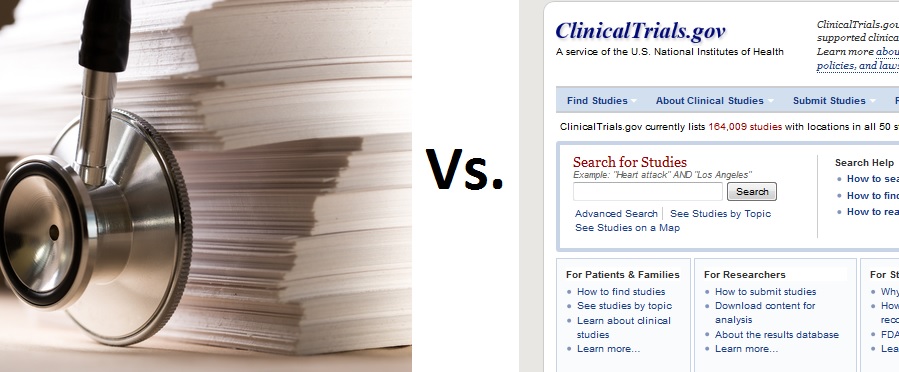
The worst thing that can happen to a person participating in a clinical trial is what’s known as a ‘serious adverse event’, which can describe anything from permanent kidney damage or liver failure to hospitalization or even death. Federal law in the US mandates that researchers conducting trials of drugs or other products regulated by the country’s Food and Drug Administration (FDA) report adverse events on ClinicalTrials.gov, a data repository open to the public. But a new study shows that many of these serious adverse events don’t appear in medical journals, making some interventions seem more favorable than they may actually be.

Reporting online today in the Archives of Internal Medicine, a group of researchers led by Daniel Hartung, a drug safety and policy analyst at Oregon Health & Science University in Portland, looked at how the data reported on ClincialTrials.gov stack up against the results published in the medical literature. The team limited their focus to phase 3 or 4 trials with results reported on ClinicalTrials.gov and completed prior to 2009, to allow sufficient time for the trials’ results to be published in medical journals. Hartung’s group then randomly selected 10% of those trials that had matching publications, yielding a total of 110 trials.

Hartung’s team found that 33 of the trials reported a greater number of serious adverse events on ClinicalTrials.gov than in the medical literature. For example, a 13,608-person study comparing the blood-thinning drugs Effient (prasugrel) and Plavix (clopidogrel) reported in the online database a total of 3,406 serious adverse events among all participants in the trial, and 3,082 in a related publication. (The patients in the trial were at high risk of heart attack, and were undergoing angioplasty, so it’s important to note that these adverse events were not necessarily linked to the drugs.)

Of the 84 trials that reported the occurrence of serious adverse events in the public database, 16 of the matching publications either failed to mention them or incorrectly reported that they did not occur. (Notably, 5 trials actually reported more serious adverse events in related medical papers than they did in the public database.)

Continue reading

One in six clinical trials might fall outside federal oversight, study estimates

Bioethicists have long known about a potential regulatory loophole that excludes certain types of clinical trials from federal regulations designed to protect the safety of human research subjects in the US. However, the number of clinical trials that fell into this gap remained unknown. Now, a letter published online today in the Journal of the American Medical Association reveals just how many trials may fall outside federal government supervision at present.

In the US, two federal policies provide oversight for research involving people. One is the so-called Common Rule, which applies to the majority of human studies that are performed or funded by the federal government. The other is the set of regulations issued by the US Food and Drug Administration (FDA) that apply to human tests of drugs, devices and biological products such as vaccines regardless of funding source. Some clinical trials are subject to only one of these regulations; others are governed by both. However, some privately funded trials are neither subject to oversight by the FDA nor the Common Rule.

A team led by Deborah Zarin, director of the site ClinicalTrials.gov—a federal registry of publicly and privately funded human trials—decided to find out just how many active trials fall into each of the various categories of oversight. The researchers compiled a list of some 24,000 US-based clinical trials that were listed as active in that database as of 13 September 2013, and estimated that at least 19% of the sampled trials were covered by both policies. Furthermore, between 1,285 and 3,696 trials, or approximately 5%–16%, were not subject to the Common Rule or the FDA, because they weren’t federally funded and didn’t involve drugs, devices or biologics. “That might include things like surgical interventions,” Zarin says.

The unregulated trials raise concerns for human safety, says Robert Califf, vice chancellor for clinical research at Duke University in Durham, North Carolina. “Put yourself in the shoes of a person that volunteers for a study,” he says. “I think most people would agree it would be good to make sure that there’s an encompassing system so you can be assured that the institution that’s conducting the trial has agreed to a common set of rules about how human studies should be done.”

At the same time that Zarin voices concern about studies falling outside the regulatory domain of both the FDA and Common Rule, she says it’s not ideal for trials to be subject to oversight by both rules. This double oversight, according to Zarin, could create a potential burden to researchers due to differences in reporting requirements and extra paperwork: “When people consider possible changes to the regulatory framework, these are the kinds of things that should be thought about.”