How to track the “lost generation” of scientists

“We should not consider it a disaster that someone trained to a high level doesn’t remain in academia,” Jean-Pierre Bourguignon, president of the European Research Council, told a panel discussion about science’s “lost generation” last month.

In this podcast Bourguignon and two of his fellow panel members  tell Julie Gould how better career tracking data from universities and other institutions would show how few achieve staff positions, challenging the perception that academia is the only worthwhile career option.

Continue reading

Done is better than perfect: overcoming PhD perfectionism

The most important thing a PhD will teach you is how and when to stop.

By Atma Ivancevic

Sometimes ‘OK’ is OK enough

I submitted my PhD thesis on the evolution of jumping genes in December 2016, four days before Christmas. It wasn’t perfect — in many ways, it wasn’t even good. By the end of my graduate studies, I had hoped to be a proficient programmer and an established scientist with multiple high impact papers. At the bare minimum, I expected to find evidence to support my hypothesis. Instead, my thesis was largely unpublished, my coding was preliminary, and my results were inconclusive. In my eyes, it was a failure. Continue reading

What should you get from being a postdoc?

And what should you look for when finding a postdoc position?

By David Bogle

You are coming towards the end of your PhD – so what next? There are many options open to you; one obvious one is to apply for a postdoc position. You should think carefully about what you want to do and not just pursue this through inertia. I have supervised many engineering PhDs and some postdocs in my 32 years as an academic. As Head of University College London’s Doctoral School, I oversee the environment and policy for 6000 doctoral candidates and 3200 postdocs.

Many can find good reasons to do a postdoc. {credit} Guy H/ Flickr CC-BY-2.0 {credit}

Continue reading

Why learning to mentor and teach is more important for US faculty members than publishing papers

An influential ally aims to reform the experience of US PhD students in science, technology, engineering and math (STEM) by advocating for a system that rewards faculty members for mentoring and advising students rather than for their own publications.


By Chris Woolston

In a 29 May report , Graduate STEM Education for the 20th Century, the National Academies of Science, Engineering and Medicine (NASEM) in Washington DC calls for providing faculty members with incentives for developing skills such as teaching and mentoring while de-emphasizing the importance of publications. The report recommends that institutions change their promotion and tenure policies and practices to recognise and reward faculty members’ contributions to graduate mentoring and education.

Continue reading

Celebrating International Women’s Day 2018: A Naturejobs roundup

Whilst young scientists working in academia today might face huge problems, women within that group face larger problems still, many of which we cover across Naturejobs. To mark International Women’s Day 2018, here’s some of our coverage of women in science and the hurdles they face.

https://www.youtube.com/watch?v=rdfqXdibc0k
Continue reading

African astronomy and how one student broke into the field

Africa is investing in a future of astronomy research, but students need access to inspirational lecturers, says Gina Maffey.

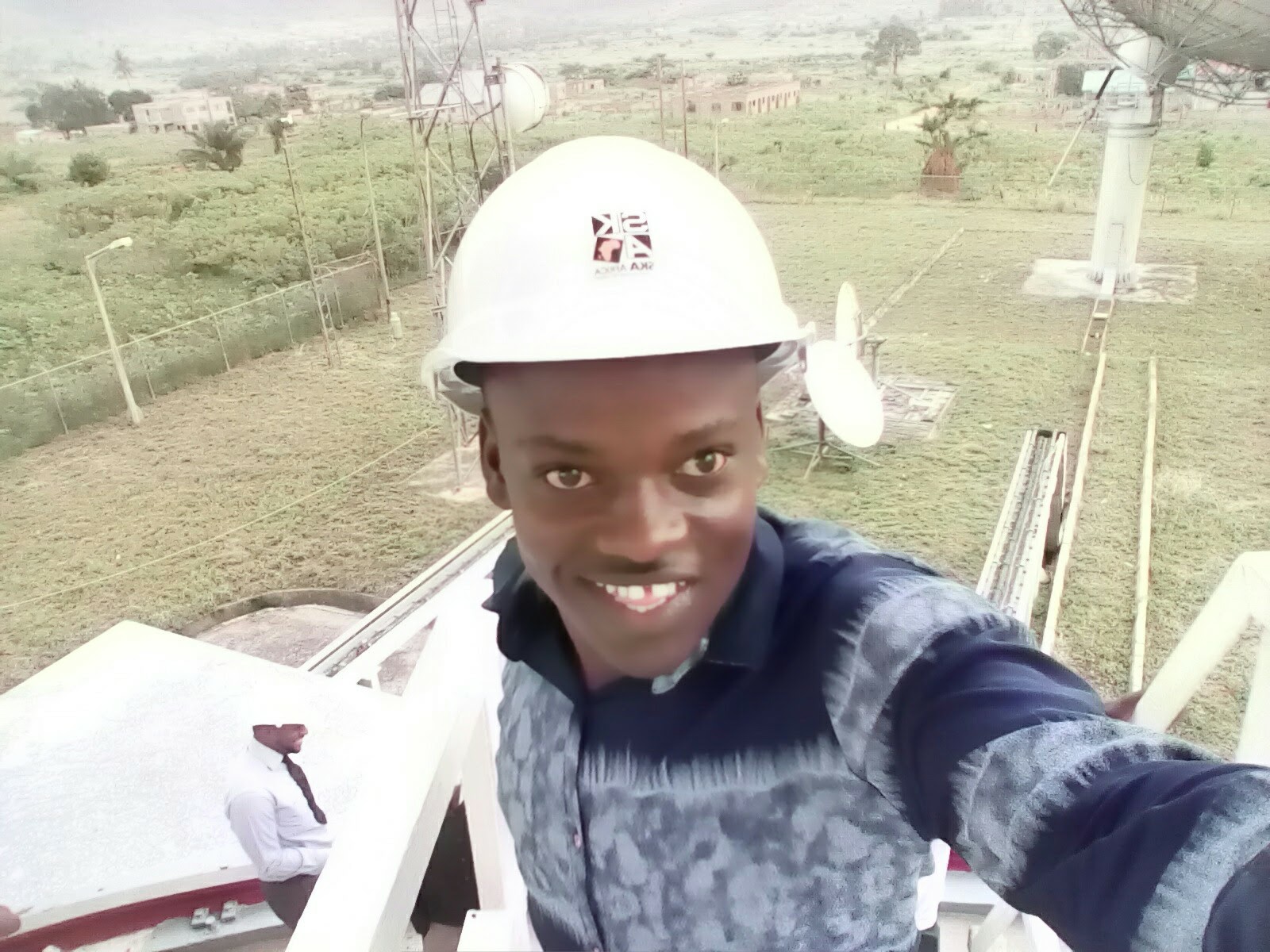
Mutie at the Ghana Radio Astronomy Observatory (GRAO) at Kuntuse, Ghana

Isaac Mumo Mutie

What do you do when the degree you want to study is not offered by your university?

You study it anyway.

“I did a lot of personal research online, looking for answers” says Isaac Mumo Mutie, an astronomy student who studied at the Technical University of Kenya. While studying for a Bachelor of Technology in Technical and Applied Physics, Professor Paul Baki introduced Mutie to astronomy, and Mutie would consult with him in his spare time.

“He would ask me ‘why are you interested? This is not part of the curriculum.’ But I insisted.” Continue reading

A student shaping the future of African astronomy

Africa is investing in a future for astronomy research, but it requires a fresh cohort of enthusiastic people to make it happen. Gina Maffey talks to one dedicated scientist.

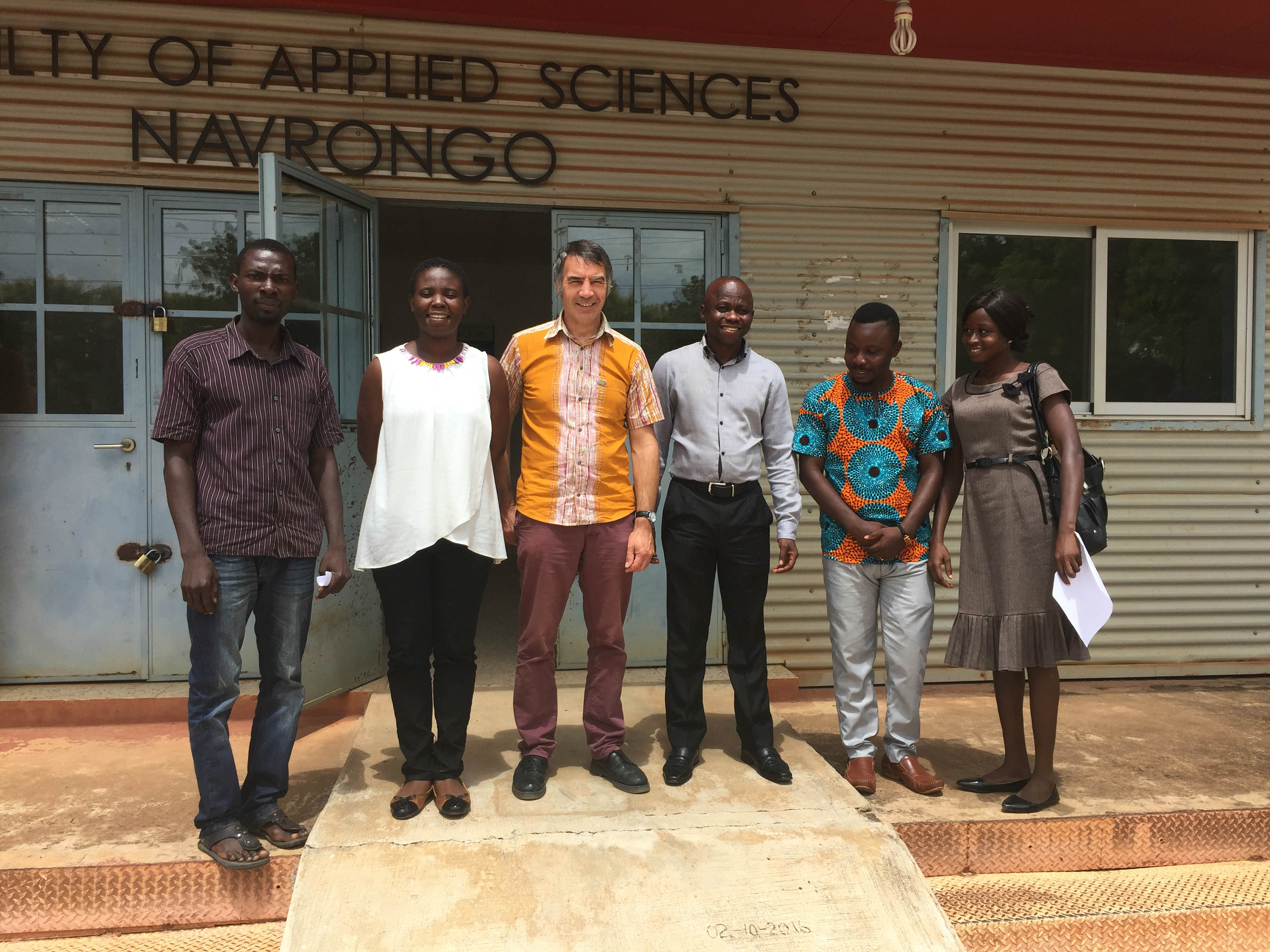
Asabre Frimpong (second from the left) and Prof-smaller

“I want to see Africa lit up.” Naomi Asabre Frimpong says with a laugh, “I want to show how Africa can be forward thinking. I want to make sure that we are not left behind.”

Asabre Frimpong is a 2nd year PhD student at the University of Manchester, in the UK, and her enthusiasm — for both astronomy and science in general — is infectious.

She says she was attracted to science through chemistry, and studied for a BSc and MPhil in Ghana. A post at the Ghana Space Science and Technology Centre introduced her to astronomy and shortly afterwards, on an astronomy and astrophysics training scheme in India, her worlds collided as she discovered astro-chemistry – the study of chemical reactions in space Continue reading