Guest blog by Julie Overbaugh, recipient of the Lifetime Achievement 2016 Nature Award for Mentoring in Science.
Dr Overbaugh was presented with the award in Seattle on 1 December by Sir Philip Campbell, Editor-in-Chief of Nature. These annual awards are hosted by Nature to champion the importance of mentoring and inspiring early-career scientists. You can read the full announcement here.
{credit}Stefanie Felix{/credit}
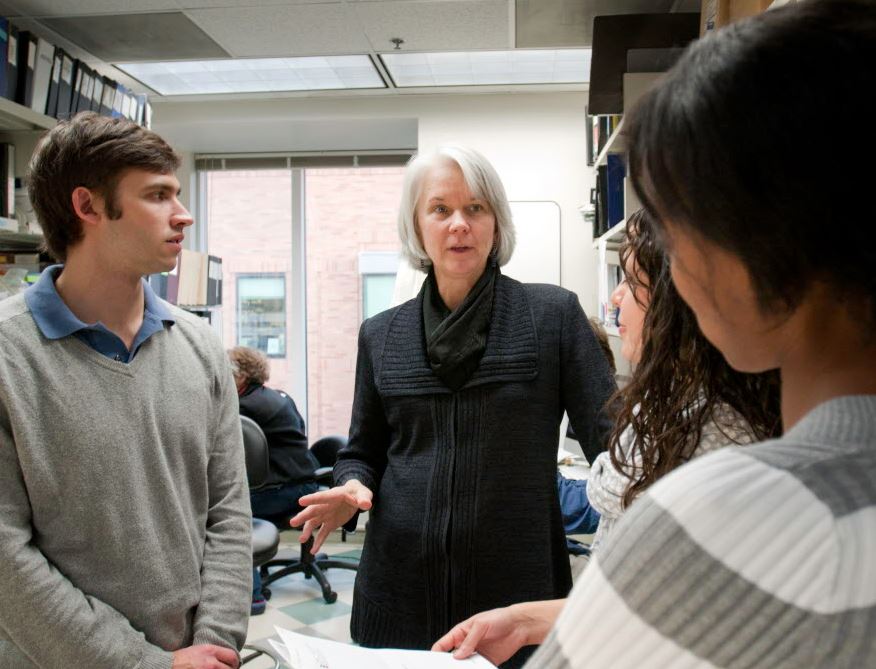
Balancing being a strong mentor and achieving the more standard measures of success in science – publications, grants, and so on – is increasingly challenging, especially as we stress more and more about tight funding.
At times, the goals of the mentor and mentee are well aligned, for example, when both are striving to publish a timely paper or generate data for an abstract. But at other times, the needs of trainees to take classes and exams, or learn other skills, may delay progress on a project that is central to the lab’s overall research portfolio. If the mentor takes the short-term view on this, they may be tempted to find ways to push the research forward and pay little attention to the needs of their trainee. This approach may result in publishing first, but most likely at the expense of the trainee.
The other option is to take the long view, and realize that while the time spent helping the mentee develop as a scientist may slow progress on this one project, the longer term benefit will be a well-trained and motivated lab member going forward. This person, in turn, will train others and promote the lab, and will be better positioned to produce thoughtful science, including if they go on to become independent investigators. Overall, I have drawn more satisfaction from seeing people I have worked with over the years achieve their goals and contribute in their own individual way to advancing science than from the papers we have published.
I am not sure I looked at this issue in this way when I started my lab almost 30 years ago, although I do recall early times in the lab when I made the decision that if a trainee was working on a project, then the pace of the project had to include time for training. I have always been interested in the ‘people’ part of science, as much as the science itself.
This approach comes in part from growing up in a working class family where we rarely talked about grades and future careers and I felt little pressure there. In my family, we mostly talked about friends and our social schedules and our sports activities. Playing sports helped me learn to work within a team, and understand healthy competition and fair play. The focus on friends and social life made me more in tune with the people I train and perhaps less focused on other benchmarks of success. So when someone comes in to my office, I mostly see them as individuals, rather than as someone who is leading project X.
{credit}Stefanie Felix{/credit}
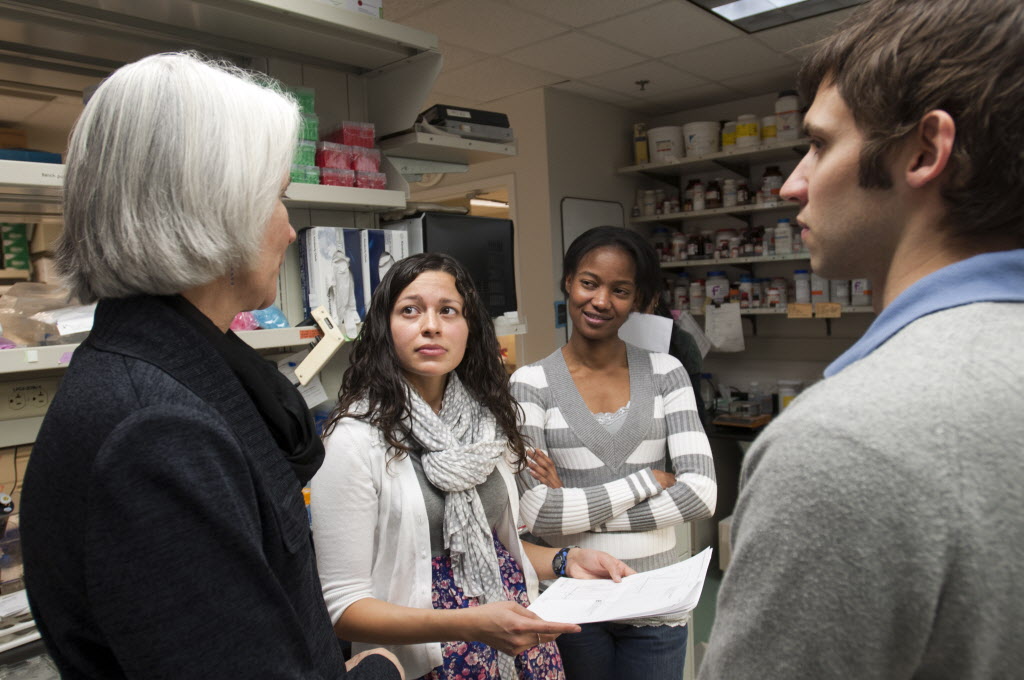
I think effective mentoring requires that you see each person as unique, with different talents and perhaps different limitations. You tailor training to people’s goals and their strengths and weaknesses. In some cases, for example, with the best students, this means just gentle nudges and encouragement along the way. For some, it is building on their strengths and also helping them see where they need effort to correct weaknesses. And for others – and this is the most difficult – it means helping encourage someone to better align their goals and talents. The point is that mentoring has to be tailored to the individual.
Thinking of the lab as a team, but also realizing each person is an individual, has shaped the culture of my lab. It is made up of people who support each other, and it often attracts people who value work-life balance. My guess is that a healthy work-life balance is probably correlated with wanting to work in a supportive environment because the achievements of work are just one facet of their lives. As I have argued previously (Nature, 2011) having outside interests has many benefits and does not necessarily lead to less productivity. I think my lab is a great example of this, as we have contributed in significant ways to understanding HIV transmission and pathogenesis, while generally working well as a team and having some fun from time to time along the way.
I have also had the amazing opportunity to work with a larger collaborative group, the Kenya Research Program. This team includes people who work in a range of disciplines, in Seattle and in Kenya, who all share a passion for fighting HIV in the most vulnerable populations. This is an amazing group that shares common values around mentoring. It is perhaps why we are one of the longest standing international interdisciplinary collaborations in the HIV field, and why the team continues to do remarkable science.
{credit}Robert Hood{/credit}
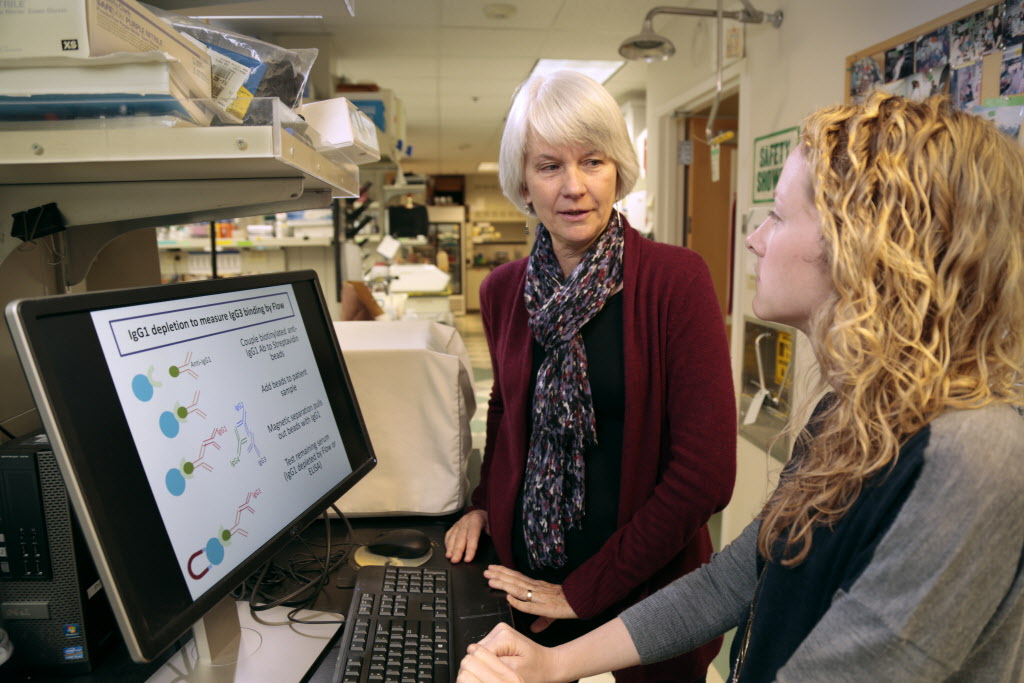
Over the course of my career, I have experienced a range of mentoring, from good to bad. The strong mentors in my career helped me to think critically, write papers, prepare grants and learn how to run a lab – all invaluable to my success in science. In the situations where mentoring was not a focus, it was easy to get discouraged. From all my experiences, I’ve found that good mentoring not only provides useful practical training, it can help build confidence and provide motivation.
I am lucky to work at an institution, the Fred Hutch Cancer Research Center, that values mentoring, and I am surrounded by many dedicated mentors. I am particularly inspired by some of our junior faculty who are taking mentoring very seriously as they build their own research teams.
I realise that when there is not effective mentoring, bottlenecks are created in science. I’ve watched people who have left the FredHutch struggle in environments where mentoring isn’t as cherished, and I think we lose talented people from the science pipeline for this reason. To an extent, the people who are most sensitive to lack of encouragement and support are women and minorities – potentially already dealing with an imposter syndrome – and this could be part of the vexing pipeline issue that exists in science and limits our diversity at higher levels.
I am incredibly honored to receive the Lifetime Achievement Nature Award for Mentoring in Science. The fact that Nature, one of the most prominent and leading journals gives this award makes a very powerful statement that success is science is not just about publishing papers in top journals, it is also the legacy we leave through our trainees, wherever they go and whatever they do – traditional or not. Maybe Nature will set a new standard making success in mentoring part of how academic institutions promote faculty, or even how funding agencies think about supporting science.
I am even more honored that my lab members, past and present, nominated me for this award because it means I am doing my job and finding that balance between supporting my trainees, but also leading a productive research team. Finding that balance is still not always easy and I am sure I have not always got it right.
But I am reminded by the great group of people who have trained in my lab – as well as by my many colleagues who value mentoring – that it is worth it! I can’t imagine another award or honor that comes close to this one.