Thursday 26th July saw the launch of SciLogs.com, a new English language science blog network. SciLogs.com, the brand-new home for Nature Network bloggers, forms part of the SciLogs international collection of blogs which already exist in German, Spanish and Dutch. To celebrate this addition to the NPG science blogging family, some of the NPG blogs are publishing posts focusing on “Beginnings”.
Participating in this cross-network blogging festival is nature.com’s Soapbox Science blog, Scitable’s Student Voices blog and bloggers from SciLogs.com, SciLogs.de, Scitable and Scientific American’s Blog Network. Join us as we explore the diverse interpretations of beginnings – from scientific examples such as stem cells to first time experiences such as publishing your first paper. You can also follow and contribute to the conversations on social media by using the #BeginScights hashtag.
Click for video of Jerry De Zutter and others
A scientist’s first job can be a thrill, a terror, a challenge, a source of inspiration or the inspiration to do something different. So say some of the researchers whose career paths led them through Kendall Square this week. Conversations inside and outside neighborhood labs and offices explored the question – What lessons did you learn when first starting out?
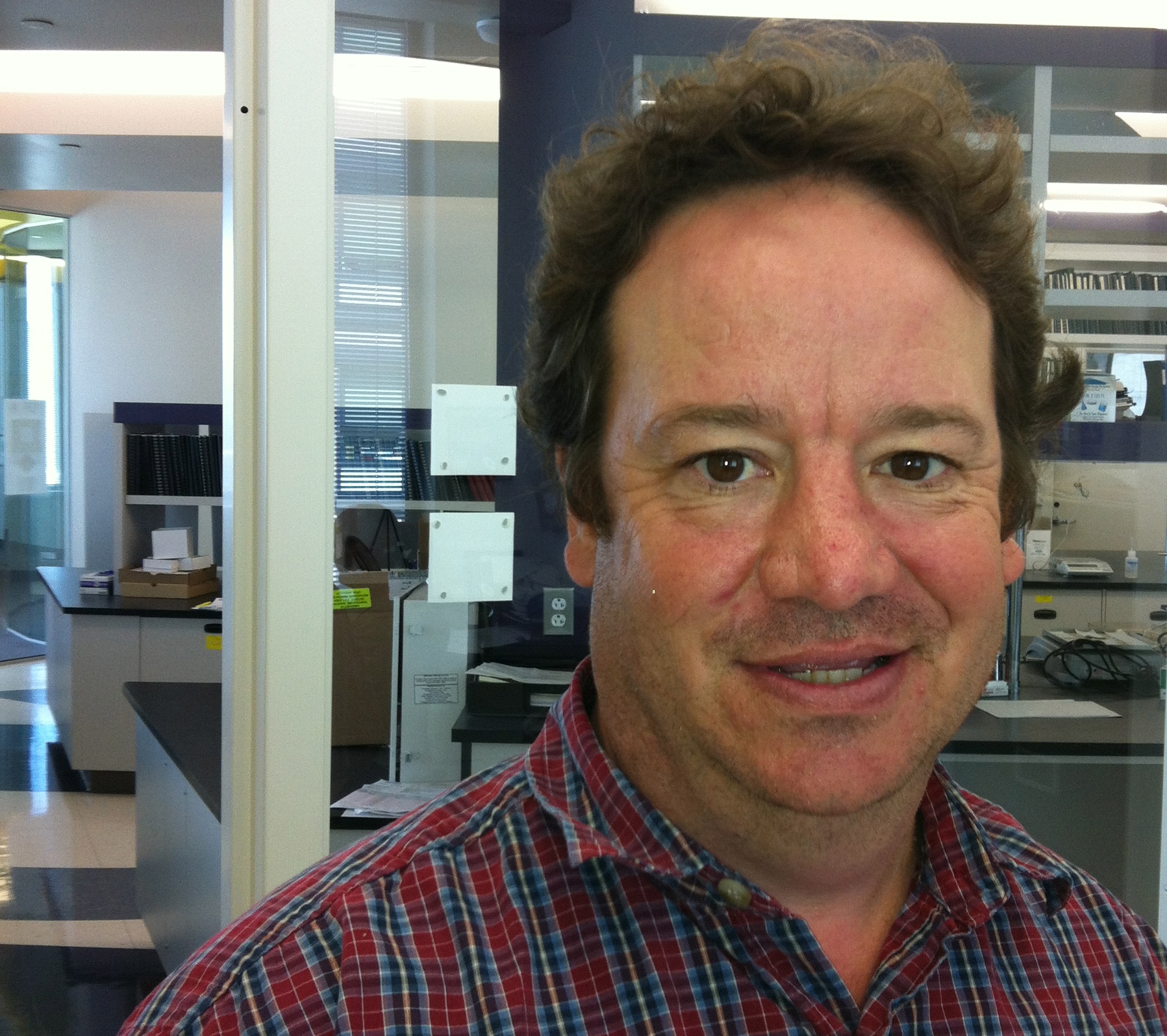
Some researcher had mentors — or at least people who gave them memorable advice. Jerry De Zutter met his first boss — Gary Barsomian of Genzyme – while playing Ultimate Frisbee. De Zutter interned at Genzyme as an undergrad, worked at the Cambridge-based pharma for a year, and got some advice from Barsomian before heading to graduate school :“The one thing you want to make sure you do when your rise to the level of a PHD science, is to become an expert in something. “
De Zutter focused on the signal transduction processes that underlie neurodegeneration. After several jobs in the pharmaceutical industry, he now runs a team of researchers working on discovery and the pre-clinical pipeline at ALS Therapy Development Institute. The company is one of a growing number of non-profit pharmaceutical development projects.
On a break at a Kendall coffee shop, Deepti Sharma also said she had a supportive boss. Working with LC-MS ( liquid chromatography-mass spectrometry] at Advion, a company in Ithaca, New York, she said her supervisor encouraged her to take on more responsibility: “That gave me a good opportunity to explore the product development platform with full enthusiasm and energy,” she said. Sharma also got the best of both worlds – academic and industry. While at the company, she was able to work with Cornell professor Jack Henion, whom she described as “the father of LC-MS…It was as if I was working as a student but in an innovative, fast-paced environment,” she said.
Not everyone queried in the square remembered an inspiring boss. Chris, a pharma chemist who asked that his last name not be used, said he had a supervisor with “a very serious temper problem” at his first job, which was in an academic lab. But, that isn’t what drove him out of the university setting and into the world of corporate science. Without a PhD, he didn’t see any future in academia.
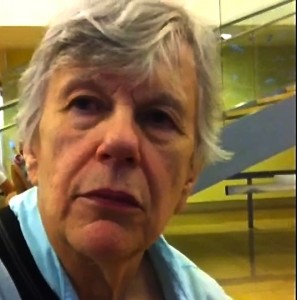
Kathryn Erat
When Kathryn Erat started her career in the 1950’s, she quickly stepped into the future. A degree in math and physics landed her a job with a combustion engineering company working on power systems for nuclear submarines. After struggling for days to solve complex math problems, she suggested to her boss that they might be able to work more efficiently with a new form of technology – the computer. Back then, that meant a mainframe and a trip to New Jersey.
Two chemical engineers lunching outside a local biotech – Tanya and Hong – both faced the same problem when finding their first jobs in the US. The two women – who asked that their last names not be used – had to convince employers that the skills they learned in Communist countries would apply to work in this country. When Tanya, who was trained in the former Soviet Union, got her first job, she was grateful for the chance to prove herself: “For those who are not born in the States and do not have an American education, to find a first job is extremely challenging because you don’t have the right experience in this country. Your experience anywhere else seems to be absolutely irrelevant.”
Hong, who arrived from mainland China 20 years ago, said she had the same problem, but ended up landing a job with a helpful boss. Her first realization was that the U.S. drug development industry worked under a different set of rules.
“Twenty years ago in China, (regulations) were a lot looser,” she said. Here, for example “the regulations about patient safety are very strict.”
Computational biologist Kevin Galinksy spent two years at the J. Craig Venter Institute in Maryland before coming to the Broad Institute. As a young scientist, he’s only worked in a wired world. So, the advice to publish or perish had a different meaning for him – he can post some of the code he’s developed on the web.
John Lincecum
Back at the ALS Therapy Development Institute, Director of Discovery John Lincecum, said he was interested in science and took premed course as an undergrad. But he decided to focus on the liberal arts and leave most of the science for grad school.
He fled the oil bust in his native Texas to look for work in then booming Massachusetts. Lincecum emphasized the science on his resume and was hired as a technician for a company now known as Charm Sciences, which was developing radioimmunoassays to test for penicillin levels in milk.
“I was absolutely terrified because my worry was that they would figure out I really wasn’t a scientist,” he said. “I was English major.”
His fears came true when he spent an entire week pressing the wrong button on a scintillation counter. Instead of carefully measuring ionizing radiation, he was pushing the button for the timer. He expected to get fired. “But they were very patient,” he said. What he found was that the approach he had been counting on paid off: “I felt all I had to do was — ask a lot of questions, be very, very enthusiastic and be willing to admit every mistake I made.”