Real-time tissue analysis could guide brain tumor surgery

The intraoperative mass spectrometry platform for image-guided surgery in the Advanced Mutimodality Image Guided Operating (AMIGO) suite at Brigham and Women's Hospital, Harvard Medical School as part of the National Center for Image Guided Therapy. Part of the team from left to right: Dr. David Calligaris, Postdoctoral Fellow, Dr. Sandro Santagata, Neuropathologist, Dr. Alexandra Golby, Neurosurgeon, and Isaiah Norton, Senior Programmer Analyst.

Santagata (second from left) and part of his team with the mass spectrometry platform for image-guided surgery in the Advanced Mutimodality Image Guided Operating (AMIGO) suite at Brigham and Women’s Hospital, Harvard Medical School.

It doesn’t get much more complicated than brain surgery. Surgeons tasked with removing brain tumors have limited information available to help them make decisions about what tissue appears cancerous and how much to excise without damaging brain regions important to key functions such as movement and speech.

But decisions about how much to cut might become easier in the near future: A study published today offers a possible way to discern which brain tissue is cancerous and guide surgeons in real time. The research, which appears in the Proceedings of the National Academy of Sciences, uses a technique formerly confined to analytical chemistry labs, called mass spectrometry, to make this determination right in the operating room.

“It’s hard to distinguish normal tissue from tumor,” explains Sandro Santagata, a pathologist at Brigham and Women’s Hospital in Boston and co-author of the study.** Thanks to the new approach, he says, “we’re many steps closer to getting a complete picture at the time of surgery.”

Techniques currently used in the operating room to guide tumor excision, such as tissue pathology and magnetic resonance imaging (MRI), can be costly and time consuming. A surgeon may have to wait 30 minutes for the biopsy results or an hour to perform MRI, adding to surgery time and increasing patient risk.

In an effort to speed up the process, Santagata and his colleagues joined with analytical chemist Graham Cooks at Purdue University in West Lafayette, Indiana, to exploit a hallmark feature of brain tumors as a way of defining the boundaries of these malignancies. As it turns out, brain tumors known as gliomas tend to express high amounts of a lipid metabolite called 2-hydroxyglutarate (2-HG).

According to Dan Cahill, a neurosurgeon at Massachusetts General Hospital in Boston who was not associated with the new study, doctors already use other methods, like polymerase chain reaction, to check tissue for 2-HG levels after surgery to ensure that they have thoroughly excised the tumor. The absence of it in the area immediately surrounding the tumor site means that all of the cancerous cells have been removed. “If you have it [2-HG], you know your margin isn’t clean,” he says. Unfortunately, current methods to detect 2-HG take far too long—about two daysto influence decisions made mid-surgery.

Santagata and his colleagues installed a mass spectrometer in an operating suite at Brigham and Women’s Hospital and analyzed 35 biopsied glioma specimens for the 2-HG metabolite. Although they performed the analysis immediately, the results were not used to inform the surgeons since the research is still in early stages. The mass spectrometry technique used, called desorption electrospray ionization, analyzes the tissue without destroying it, allowing detailed pathology, which is still the gold standard for tumor assessment, to be performed on the same sample. Pathology done for the study confirmed that 2-HG was detected at the highest levels in areas with the most tumor cells.

“I’m hoping we can start incorporating this into therapy for this subset of tumors,” says Nathalie Agar, a neuroscientist at Brigham and Women’s Hospital and co-author of the study. She and Santagata are currently advising the biotech company, BayesianDx, which is trying to develop the technology and bring it into clinical use. It may be years before this technology becomes widespread, but Agar says she is encouraged by this proof-of-concept study.

**Correction (2 July): In an earlier version of this story, Sandro Santagata was referred to as the lead author of the study. He was the first author. Nature Medicine regrets the error.

Uncertain of the future, three ALS patients spearhead a new fund

It was only last summer, while on a kite surfing holiday, Garmt van Soest observed that his right hand was unusually weak. He also noticed that his speech was gradually becoming slower. “You wouldn’t know it now but I was really the fastest speaker in the office,” he says, enunciating deliberately. The changes motivated him to see his doctor. “I was really lucky,” says van Soest, a senior manager in Accenture Strategy based in Amsterdam. “I was diagnosed with ALS [amyotrophic lateral sclerosis] in six weeks. For most patients, the process takes a year.”

Since his diagnosis in August of 2013, van Soest has been using his management consulting background to strategize how best to contribute to the ALS community. He soon met two fellow ALS patients and entrepreneurs, Robbert Jan Stuit and Bernard Muller. On 19 May the three launched an ALS-specific investment fund, called Qurit Alliance. Qurit Alliance aims to raise €100 million ($139 million) to then invest into ALS-focused private biotechnology companies and institutions to kick start projects of drug discovery and smarter design drug trials to find ALS treatments.

“This is one of the novel, innovative ventures that wants to make sure orphan disease clinical pipelines do not dry up as the pharma model and venture investment shifts to later stage opportunities,” says Steve Perrin, CEO of the Massachusetts-based ALS Therapy Development Institute.

Continue reading

‘Google Earth’ of the brain slated for planetarium show

If you’re anything like me, you love a good planetarium show. I don’t mean the trippy laser light shows set to Pink Floyd tunes (although these certainly have their place), but rather the kind of immersive experience that gives you a glimpse into the untold depths of the universe and a few wondrous moments of what it feels like to soar through outer space. Now, a team of neuroscientists, astronomers, software engineers and film specialists are working on a new planetarium show to give us a fly-through experience in a different kind of vast and awe-inspiring space: the human brain.

The project is called the Neurodome. It’s the brainchild of Jonathan Fisher, a neuroscientist at New York Medical College who also has a background in astrophysics. Although the planetarium version of the Neurodome is not yet complete, you can get a taste of what to expect tomorrow evening at Columbia University in New York, where Fisher and Columbia astronomer Matt Turk will guide viewers through pictures of outer space and images of human brains, explaining how light travels across the universe from distant stars and into the eye, triggering electrical impulses in the brain’s neural pathways. “Just like you can walk through Google Earth, we’ll walk through the brain,” says Fisher.

Continue reading

Head injury documentary points to global concussion crisis

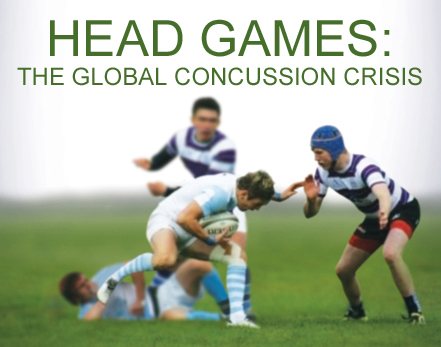
headgames_global_ landscapeAlthough it wasn’t a contender for last night’s Academy Awards, there’s a powerful new film out this week that you may want to see. It’s the sports documentary, Head Games: The Global Concussion Crisis, and it provides a human face to the seemingly endless stream of high-profile reports linking repetitive head trauma to degenerative brain disease.

Early in the film, we meet Christopher Nowinski, who confesses that he once “loved the violence” of football. “It’s the closest thing to being a warrior without actually having to go to war,” says Nowinski, a former Harvard football defensive lineman turned pro-wrestler. But not long after that, we see him lying on a cold concrete floor, clutching his head after what would turn out to be a career-ending concussion he sustained during a wrestling match in 2003.

As Nowinski continued to experience headaches, memory problems and sleepwalking for the next year, he decided to see Boston University School of Medicine concussion expert Robert Cantu, who asked Nowinski how often he saw stars or felt woozy after being hit in the wrestling ring or on the football field. “All the time,” Nowinski recalls sheepishly, dumbfounded that he had likely been experiencing regular concussions but had never before given much thought to the potential long-term consequences of such injuries.

That experience led Nowinski on a crusade to better understand his condition, and in 2006 he published the book, “Head Games: Football’s Concussion Crisis,” which inspired the documentary from director Steve James (who also gave us the 1994 Oscar-nominated documentary, Hoop Dreams). But whereas Nowinski’s book largely focused on the brain hazards associated with professional and amateur football, the new film makes painfully clear that all athletes who engage in contact sports—be it hockey, rugby, soccer or any of a variety of games—are potentially at risk.

Continue reading

Migraine study attributes more than half a drug’s benefit to placebo effect

The information that clinicians provide to patients about a medication prescribed for their migraines can influence the magnitude of pain relief induced by the treatment, reports a study published online today in Science Translational Medicine. The findings suggest that patients who receive positive messages about the potential efficacy of their treatment may have better treatment outcomes than patients who receive negative messages.

The study involved 66 patients with recurring migraine attacks, which are characterized by symptoms such as debilitating headaches, nausea, sensitivity to light and even experiencing aura. Some research has linked the condition to ion channel defects in brain cells that cause certain neurons to become overactive.

Patients first recorded their baseline pain intensity on a scale from zero (no pain) to ten (maximal pain) for an untreated migraine attack. Then each study participant received a series of six envelopes containing treatment for six subsequent migraine attacks: two of the envelopes were labeled as “placebo”, two as “Maxalt” (the anti-migraine drug rizatriptan sold by the New Jersey-based pharmaceutical giant Merck) and two as “placebo or Maxalt.” However, for each pair of envelopes with identical labels, one envelope actually contained a placebo pill, whereas the other contained Maxalt.

Continue reading

Centipede venom trumps morphine in mouse study of pain

Centipede picturePlacing a Chinese red headed centipede on a burn can speed up the healing process, according to ancient Chinese medicine. But a mouse study published today suggests that what the Chinese interpreted as a healing effect may in fact have been the handiwork of a pain-inhibiting peptide contained within this centipede’s venom, which kills insects but is harmless in humans. The results indicate that the peptide, called m-SLPTX-Ssm6a, is a powerful analgesic that, in some cases, surpasses the effect of morphine. Given its apparent lack of side effects, Ssm6a is seen by scientists as an attractive candidate drug compound that might prove suitable for treating chronic pain.

Researchers first discovered Ss6ma’s effect by screening it, and other peptides, for the ability to inhibit Nav 1.7, a channel located on the surface of nerve cells that allows sodium to transmit pain signals when the cell membrane is depolarized. Nav 1.7’s importance in pain signaling came to light in 2006 when researchers linked mutations in the channel to a rare genetic condition in which people are unable to perceive pain. The finding led many researchers to suggest developing pain medications composed of small molecules that could block the channel.

But there was a problem with this approach: Nav 1.7 is one of nine types of so-called ‘voltage-gated sodium channels’, all endowed with similar channel entrances that, if blocked all at once, would lead to major neurological malfunctions including cardiac arrest. “This makes it really hard to get selectivity,” explains Glenn King, a structural biologist of the University of Queensland, Australia, and a co-author of the study, which appears in the Proceedings of the National Academy of Sciences. Luckily, he says, “toxins found in venoms are much bigger,” so their action does not take place at the channel entrance.

Continue reading

Voting commences on research prize determined by public poll

It’s an off year in the US election cycle, which means that neither the President nor most members of Congress will face the voters come November. But that doesn’t mean you can’t still cast a ballot this fall. Today, the Brigham and Women’s Hospital (BWH) in Boston announced the finalists for the second annual BRIght Futures Prize, a $100,000 research contest in which the winner is decided by a public poll. Voting is now open through 21 November.

The BWH launched the prize last year in an effort to engage the public-at-large. First, the hospital’s Biomedical Research Institute (BRI) solicited grant proposals from BWH staff on various overarching themes: last year, those were personalized medicine and systems immunology; this year, the topics span the nine featured at the hospital’s ‘research day‘ in November (where the BRIght Futures Prize winner will be announced). Then, the BRI convened peer-review panels to winnow the applicants down to three finalists, each of whom made a short video to pitch their ideas to the public. (See my coverage of last year’s prize: ‘Biomedical grant awarded by ‘American Idol’-style public vote’.)

Last year’s winner was Robert Green, a clinical geneticist at BWH who proposed to sequence the genomes of 480 newborns, half from healthy babies and half from sick babies, in an effort to study how to use that information in routine medical care. Off the back of his BRIght Futures Prize, which served as a sort of pilot grant, earlier this month Green won a $6 million grant from the US National Human Genome Research Institute to roll out his plan in full. (See ‘Scientists to sequence genomes of hundreds of newborns’ from the Nature News blog.)

This year’s finalists include: Utkan Demirci*, a biomedical engineer who aims to advance a point-of-care microfluidic device for detecting levels blood levels of antiepileptic drugs; pharmacoepidemiologist Daniel Solomon and healthcare researcher Joel Weissman, who hope to create an online patient portal to streamline clinical trial enrollment and boost participation; and plastic surgeon Bohdan Pomahač and bioengineer Jeffrey Karp, who propose to develop a new generation of adhesive medical tapes based on biologically-inspired designs. (See my February 2013 news feature about Karp’s investigations of ‘biomimetic’ adhesives: ‘The sticking point’.)

You can watch all the finalists’ videos and read short descriptions of their research proposals here. Check them out, and then exercise your voting right!

*Update: Demirci was named the winner at the BWH Research Day on 21 November.

Months after an injury has healed, receptors involved in modulating pain remain active

shutterstock_139125542Pain researchers know that, in the immediate aftermath of a severe injury, pain sensitization pathways become active, causing the body to produce opioids—naturally occurring chemicals that inhibit pain by activating receptors. But a mouse study published today in Science reveals that a specific type of opioid receptor found on the surface of nerve cells remains hyperactive months after an injury has healed—a period much longer than previously thought. Moreover, blocking this receptor from binding opioids can produce opioid withdrawal, much like that experienced by people addicted to heroin or codeine. This finding suggests that opioids only serve to mask underlying pain, shedding light on why some chronic nature of pain disorders.

To study the long-term role of ‘endogenous’ opioids produced naturally by the body, scientists created an inflammatory response in the paws of mice by injecting a dose of toxic bacteria fragments. The researchers then allowed the injury to heal for a period of three weeks or more, all the while monitoring how sensitive the area was by using molecular biomarkers and recording how often the rodents made facial grimaces or withdrew their paws when the injured area was touched.

Six months on, once the injury had healed, the researchers administered naltrexone methobromide, a drug that blocks the receptors that can normally bind to opioids. Surprisingly, blocking the receptor’s activity caused the pain to return, even though considerable time had passed. Moreover, the mice also exhibited the telltale signs of opioid withdrawal, such as jumping, shaking and teeth chattering. “We think it’s possible that the body becomes dependent on the endogenous opioid system after an injury,” says neurobiologist and co-author Bradley Taylor, of the University of Kentucky in Lexington, “but this is speculative.” If these results are further validated, this could be the first recorded expression of what the researchers call ‘endogenous opioid withdrawal’.

Continue reading

Discovery of distinct peptides in brains of Alzheimer’s patients could help diagnosis

Alzheimer’s patients with different medical histories might possess distinct variants of amyloid beta fibrils—the basic component of the plaque-like deposits found in the brains of people with the disorder—according to study of two affected individuals published online today in the journal Cell. The findings hint at the existence of Alzheimer’s disease subcategories, and suggest a potential path forward to improving the diagnostic specificity of this devastating illness.

It’s thought by some scientists that the overproduction of amyloid beta peptides, or perhaps the failure to clear this peptide, can cause an accumulation of these molecules and the formation of fibrils in the brain, possibility leading to inflammation and neurotoxic effects.

Previous studies demonstrated that amyloid beta fibrils cultured in a test tube can present different molecular structures and can retain these structures when grown from short fibril fragments. To determine if different structures of these peptide chains are also present in human brains, the study’s researchers gently extracted amyloid fibrils from postmortem brain tissue taken from two Alzheimer’s patients who had different medical histories. One of the individuals received an Alzheimer’s diagnosis while still alive. The other was had initially been diagnosed with another form of dementia, but an autopsy that revealed the hallmark amyloid plaques in his her brain that indicated Alzheimer’s.

The researchers then used the extracted amyloid beta fibrils to seed the growth of isotopically-labeled amyloid samples in sufficient quantity for analysis. A close inspection of the peptides revealed that the fibrils grown from one patient seemed to have a periodic twist in their structure that was absent from those grown from the other patient’s sample, which grew fibrils with a constant diameter of 7 nanometers. Importantly, each of the patients possessed a single type of structure that did not overlap with that found in the other.

Continue reading

Lasker Awards go to rapid neurotransmitter release and modern cochlear implant

Lasker_logo 2

A very brainy area of research has scooped up one of this year’s $250,000 Lasker prizes, announced today: The Albert Lasker Basic Medical Research Award has gone to two researchers who shed light on the molecular mechanisms behind the rapid release of neurotransmitters—findings that have implications for understanding the biology of mental illnesses such as schizophrenia, as well the cellular functions underlying learning and memory formation.

By systematically analyzing proteins capable of quickly releasing chemicals in the brain, Genentech’s Richard Scheller and Stanford University’s Thomas Südhof advanced our understanding of how calcium ions regulate the fusion of vesicles with cell membranes during neurotransmission. Among Scheller’s achievements is the identification of three proteins—SNAP-25, syntaxin and VAMP/synaptobrevin—that have a vital role in neurotransmission and molecular machinery recycling. Moreover, Südhof’s observations elucidated how a protein called synaptotagmin functions as a calcium sensor, allowing these ions to enter the cell. Thanks to these discoveries, scientists were later able to understand how abnormalities in the function of these proteins contribute to some of the world’s most destructive neurological illnesses. (For an essay by Südhof on synaptotagmin, click here.)

The Lasker-DeBakey Clinical Medical Research Award went to three researchers whose work led to the development of the modern cochlear implant, which allows the profoundly deaf to perceive sound. During the 1960s and 1970s Greame Clark of the University of Melbourne and Ingeborg Hochmair, CEO of cochlear implant manufacturer MED-EL, independently designed implant components that, when combined, transformed acoustical information into electrical signals capable of exciting the auditory nerve. Duke University’s Blake Wilson later contributed his “continuous interleaved sampling” system, which gave the majority of cochlear implant wearers the ability to understand speech clearly without visual cues. (For a viewpoint by Graeme addressing the evolving science of cochlear implants, click here.)

Bill and Melinda Gates were also honored this year with the Lasker-Bloomberg Public Service Award. Through their foundation, the couple has made large investments in helping people living in developing countries gain access to vaccines and drugs. The Seattle-based Bill & Melinda Gates Foundation also runs programs to educate women about proper nutrition for their families and themselves. The organization has a broad mandate in public health; one of its most well known projects is the development of a low-cost toilet that will have the ability to operate without water.

The full collection of Lasker essays, as well as a Q&A between Lasker president Claire Pomeroy and the Gateses, can be found here.