Rediscover your Nature

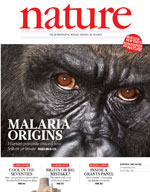
cover_nature_redesign.jpg

A message from Dr Philip Campbell, Editor in Chief of Nature:

From today, Nature has a new look, a clearer structure, and contains new types of content. Above all, our underlying goal is greater clarity in the reading experience, and this blog post describes a few of the changes we’ve made to this end. More details are given in the official press release.

For authors of original research and commissioned articles we provide an improved online template for the full-text version of articles (an example is here, free to access online). We’ve also updated and clarified Nature‘s guide to authors, including downloadable summary sheets to help in submission and preparation of manuscripts.

The print magazine component of Nature is now structured in a clearer way. The introductory material has been reduced to a simple table of contents. A new section called This Week contains Nature’s Editorials and summaries of recent developments in and around science. It also includes a new page, World View, in which external authors give prompt personal perspectives on live issues. More analytical and reflective content, presenting developments in the world of science in greater depth, appears as journalism in News in Focus and News Features, or as Comment, a forum for essays, debates, reviews, and readers’ correspondence. Online, these are presented as a unified News and Comment section for easy access to these features as well as to the journal’s specials.

The Research section includes accessible summaries of the latest research articles available now online, News and Views, review articles, and primary research content of Nature – its Articles and Letters. To provide additional and useful navigation for readers and authors, these contributions are presented online by subject as well as in the more conventional temporal (by issue) method.

Within these sections we have tried, in the redesign of our print layouts and key elements, to ensure that the reader gains as quickly as possible a clear idea of just why he or she should be reading an article. We’ve created space for more descriptive headlines and other display elements that allow a reader to get an immediate sense of what an article has to say and who its authors are. The new design also emphasizes the use of charts and graphics that offer a quick summary of the key data underlying an opinion piece or news story. It allows for more inventive, attractive pages as well.

Both in print and online, these changes have been developed over more than a year in consultation with members of the scientific community in their guises of readers, authors and peer-reviewers, with much positive feedback in the process. We have listened and we have changed. We hope that Nature’s subscribers will look forward to their weekly magazine all the more, and enjoy the improved online experience by a similarly enhanced degree.

As well as in print and online media, Nature is also available from today in a new, much improved digital edition. By visiting this link you can sign up for a free, three-month trial of the digital edition, and watch a video demonstrating the many new features in the journal.

As well as print, online or digital, you can read, follow and access the journal via our iPhone app, our weekly podcasts, or by video, Twitter, Facebook and Nature Network. Whether for readers or for authors, Nature is everywhere that matters. And, of course, we want to know what you think of it all, ideally by undertaking our brief survey.

Further reading:

Announcement: Nature‘s new look ( Nature 467, 368; 2010).
Grrl Scientist’s blog at Nature Network.

Press release.

New online article layout for Nature journals

NChemBioJune.gif

Several of the Nature journals have a new online article layout, a two-column format that increases on-screen article readability while providing enhanced navigation and a flexible set of tools. For more details of what is included, download a PDF showing the key aspects.

Journals so far in the new template include Nature, Nature Biotechnology, Nature Chemical Biology, Nature Chemistry, Nature Communications, Nature Genetics, Nature Immunology, Nature Materials, Nature Medicine, Nature Neuroscience and Nature Structural and Molecular Biology. The rest of the Nature journals will adopt the new design over the coming months.

An example of an article in the new template at Nature Communications.

Announcing Nature Climate Change

NRCCcover.gif

From Olive Heffernan, Editor of Nature Reports Climate Change:

Nature Reports Climate Change has published its final issue, on 5 May 2010. In practical terms, thais means that the site will no longer be updated, but the archived content will still be freely available online. Although an ending of sorts, the closure of Nature Reports Climate Change is necessary to facilitate what will ultimately be a much larger effort by Nature Publishing Group to cover climate change.

In April 2011, we will launch Nature Climate Change, a full-fledged journal, whose mission will be to publish original research on climate change and its impacts, as well as to place such change in a wider social and political context. This new addition to the Nature family of journals is exciting for a number of reasons. As an interdisciplinary publication, Nature Climate Change will be the first Nature journal to publish research from social scientists. This marks an exciting new venture for us, but also a challenge in reaching out to a new community.

In addition to publishing the very best research from the natural and social sciences, Nature Climate Change will take forward the features, commentary, analysis and reviews that Nature Reports Climate Change has become known for over the past three years. Blending high-quality original research and opinion from international experts with unique reporting from renowned journalists, Nature Climate Change will set itself apart from existing climate research journals, enabling it to reach out beyond the confines of academia to decision-makers and other stakeholders.

Although April 2011 is some time away, launching a journal is a protracted process, and already the wheels are in motion to ensure that it happens on schedule. So, as the Editor-in-Chief of the new journal, it is with a mixture of anticipation and relief that I sign off on the last issue of Nature Reports Climate Change. Since its inception, the site has provided a home for engaging content from a host of thought-provoking authors and climate change experts. And Nature Publishing Group has done a wonderful service to society in making this content freely available to all. Nature Reports Climate Change has been the obvious precursor to what will be a bigger, better beast.

Our regular readers can follow the journal’s launch on our Climate Feedback blog which will continue to be a mainstay of discussions on climate science in the world at large, but will also become a vehicle for informing a wider audience of the new insights, analysis and opinion published in the subscription-based journal.

Finally, sincere thanks to those who have followed and contributed to Nature Reports Climate Change since its launch in 2007. We hope that you share our excitement about our new venture, and we welcome your thoughts and suggestions for its evolution.

Nature Climate Change preliminary website.

About the new journal.

Contact the journal.

Climate Feedback blog.

Nature Communications, a new multidisciplinary journal

ncomms.gif

From Nature 464, 958 ( 2010):

This month sees the launch of the seventeenth Nature journal, Nature Communications. All the previous Nature research journals have focused on a particular discipline or community of research interests. Their aim is to publish the most original and scientifically impact-making research appropriate to those particular audiences. Their high ranking in the citation league tables would suggest that this goal is generally being fulfilled.

Nature Communications differs in being multidisciplinary. It aims not to compete with the established Nature journals, but to publish rigorous and comprehensive papers that represent advances of significance to specialists within each field. In addition, it welcomes submissions in fields that are not represented by a dedicated Nature research journal — for example, developmental biology, plant science, microbiology, ecology and evolution, palaeontology, astronomy and high-energy physics. Readers will find in the launch issue papers on topics including classical and quantum correlations under decoherence; a candidate gene for mechanoreception in Drosophila sensory cilia; a strategy to obtain sequence-regulated vinyl copolymers using metal-catalysed step-growth radical polymerization; how a ritualized vibratory signal evolved from locomotion in territorial caterpillars; and more besides.

Like all Nature journals, Nature Communications is editorially independent. It is also the first Nature research journal to be funded in hybrid fashion: by both subscriptions and optional authors’ fees that allow instant free access to their published papers. Furthermore, it is the first Nature journal to be launched entirely without a print edition: its content is available only online.

Nature welcomes this distinctive new sibling publication — this time, serving the whole research community.

See the inaugural editorial in Nature Communications, providing more details of the journal’s scope and pubilshing model.

Nature Communications guidelines for authors and peer-reviewers.

More about the journal.

Latest articles in Nature Communications.

Submit your research to Nature Communications.

Nature Climate Change

NCC.gif

Nature Climate Change will launch later in 2010. It will be a monthly journal providing in-depth coverage of scientific and impact-based research relating to the Earth’s changing climate. A multidisciplinary journal, Nature Climate Change will publish high-quality papers across both the natural and social sciences, as well as place the latest research into a wider economic, social and political context. The journal’s scope will cover research in the climate sciences but will cast a wider net to cover the implications of climate change for the economy, policy and society. As well as reflecting the traditional core subjects relating to climate change and its impacts, such as atmospheric science, biogeochemistry, geography, geomorphology, ecology, environmental economics, geoengineering, modelling and prediction, oceanography, palaeoclimatology and paleaoecology, the journal will also cover related subjects including climate and society interactions, political impacts and environmental assessment and management. More information about the journal is available here.

Contact the journal.

A limited number of personal subscriptions to Nature Climate Change will be made freely available to researchers working on the scientific understanding and impact of the Earth’s changing climate as well as policy makers, economists, sociologists and other researchers on the periphery of climate related research. Further information about qualifying for a free subscription will be available shortly via the journal’s website.

General subscription information for Nature Climate Change.

See also: Climate Feedback, the blog that facilitates discussion on climate change, covering the latest research, news, opinion and analysis. It is an informal forum for debate and commentary among the science community and the wider interested public on climate science in our journals and others, in the news, and in the world at large.

Nature Medicine expands its horizons

nmed_jan.gif

Molecular medicine has undergone profound changes since the publication of the first issue of Nature Medicine 15 years ago this month (January). To keep up with these changes, the journal is strengthening its commitment to publishing the best research and the most topical news and commentary on translational medicine by adding more pages to the journal. The details are provided in the journal’s first Editorial of the year (Nature Medicine 16, 1; 2010)

Nature Medicine‘s inaugural editorial (1, 1; 1995), stated that the journal would be “home to papers that bridge the gap between cutting edge biological research and more clinically oriented human investigation.” In current parlance, Nature Medicine was to be the home of translational research.

Fifteen years later, the journal’s mission remains the same. What has changed is the landscape in which biomedical research is conducted. Funding organizations worldwide now pay a premium for ‘translational projects’—research that, broadly speaking, aims to satisfy an unmet medical need. As a result, the journal’s niche has expanded, serving a bigger community – and translational research is more visible than ever.

Among the changes that have occurred in the past 15 years are the nature of the drug discovery process, the way in which translational research is conducted, and the advent of the Internet. These and other changes in the translational research landscape have directly affected what Nature Medicine considers for publication. The larger size of the translational community has increased the number of submissions; systems biology approaches to biomedicine have resulted in more studies on disease biomarkers; and there is a plethora of submitted studies that claim to have identified a molecule that is “critically important” for essentially any disease you can think of, making it harder than ever to identify those that report a true disease target that will eventually result in the discovery of a new therapy.

Nature Medicine is renewing its commitment to offering readers the best studies that “bridge the gap between cutting edge biological research and more clinically oriented human investigation” and to being a trusted source of information on every facet of the biomedical world. This year, therefore, Nature Medicine is growing. News coverage in print and online is increasing, there will be more podcasts, and the journal now has a presence at Twitter and Facebook. The number and scope of News and Views, Commentaries and Reviews will be increased, and new sections of the journal will be introduced. An additional editor for research manuscripts will help to cope with the ever-growing submissions load, enabling us to provide authors with decisions as quickly and as fairly as possible.

Nature Medicine journal website.

Spoonful of Medicine, the Nature Medicine editors’ blog.

Nature Medicine guide to authors.

Nature Communications goes blogging

Nat Comms.jpg

Nature Communications, an innovative online science journal covering all areas of the physical, chemical and biological sciences, will be launching in Spring 2010. The journal is open for submissions of manuscripts in these disciplines. For researchers keen to learn more about this new journal, Dr Lesley Anson, the chief editor of Nature Communications, has been interviewed by science blogger Dr Martin Fenner at Nature Network. A brief taste of the interview:

Can you describe Nature Communications for me?

The published research will be of the quality associated with Nature-branded journals, but won’t necessarily have the high impact or broad appeal of papers published in Nature and the Nature research journals. In other words, we expect that papers published in Nature Communications will be of interest and importance to specialists within each field. All research papers will be in Article format, regardless of their length, and will undergo rigorous, yet efficient, peer review and be published rapidly online. Authors of primary research papers can choose to make their published article available via subscribed access, or open access through the payment of a publication fee. Nature Communications will also publish occasional Reviews and Editorials.

What will you be doing differently from other Nature journals?

Like other Nature-branded journals, Nature Communications has an independent team of editors who are responsible for maintaining the quality of the published research through rigorous peer review. However, Nature Communications has streamlined the editorial process – by limiting presubmission enquiries, appeals and the number of rounds of review – in order to secure rapid decisions for authors. Another distinctive feature of Nature Communications is its Editorial Advisory Panel – to be announced shortly – which will consist of recognized experts from all areas of science. Their collective expertise will support the editorial team in ensuring that every field is represented in the journal.

For more information of relevance to researchers interested in publishing in, and reading, the new journal, please see the full interview. Another science blogger, chemist Dr Cameron Neylon, has also written about Nature Communications, this time in an interview with Grace Baynes of the NPG communications team. The interview is posted on Dr Neylon’s blog, Science in the Open. This interview begins by focusing on the publishing model of the journal, which is a hybrid of the subscription model used by many journals, and the newer model in which the author pays a publication fee to allow free readership of the article. It then goes on to discuss speed, quality and the fees charged either to publish in or to subscribe to the new journal. A sample question and answer:

In five years time what are the possible outcomes that would be seen at NPG as the journal being a success? What might a failure look like?

We would like to see Nature Communications publish high quality manuscripts covering all of the natural sciences and work to serve the research community. The rationale for launching this title is to ensure NPG continues to serve the community with new publishing opportunities. A successful outcome would be a journal with an excellent reputation for quality and service, a good impact factor, a substantial archive of published papers that span the entire editorial scope and significant market share.

See the full interview at Science in the Open blog.

Nature Communications guide to authors.

Nature Communications guide to peer-reviewers.

Nature Medicine classics collection

In 2010, Nature Medicine will celebrate 15 years as the leading translational-research journal. To mark this anniversary, the journal has launched the Nature Medicine Classics Collection. This collection brings together some landmark articles published in Nature Medicine over the past 15 years, making them freely available to all readers together with a series of recent articles on different fields of biomedicine to illustrate the breadth of the journal.

The Nature Medicine editors write: Since 1995, our journal has been at the forefront of publishing translational medicine, way before the term was even coined. Our focus on publishing basic and preclinical work that has direct relevance to human disease has been a key characteristic of Nature Medicine that has helped establish the reputation of the journal in the translational research landscape.

To put together this sampler, we have chosen a series of recent articles from our pages, organized them by therapeutic area, and made them freely available in order to give you a glimpse of the breadth of Nature Medicine’s coverage, as well as the quality of the science we publish.

In addition, we have chosen a few landmark articles that we had the privilege to publish over the past 15 years in an effort to illustrate why Nature Medicine is the home of translational research.

Nature Medicine Classics Collection by subject:

Classic articles

Cancer

Cardiovascular disease

Immunology

Infectious diseases

Metabolism

Neuroscience

See also:

Nature Medicine‘s free podcast.

Journal press releases.

Spoonful of Medicine, the journal’s blog.

Cover competition at EMBO Journal

EMBO J cover.jpg

EMBO Journal has just announced its annual competition for the best (scientific or non-scientific) cover images in 2010. The front cover of the 4 November issue (pictured) shows an assembly of many of the beautiful images that have been featured on the EMBO Journal since 2007; most of these had been submitted to previous competitions by scientists based throughout the world. Please visit the journal’s competition page for details of how you can participate in this year’s contest and submit your entries online. You can take a look at the gallery in the journal’s online archive for an impression of what type of images might be good candidates for an EMBO Journal cover. The jury and the editors are looking forward to seeing your contributions. The closing date of the 2010 cover contest is 15 January 2010. Send a brief email to covers@embojournal.org if you wish to receive a notification when next year’s contest is announced.

In another similar enterprise, the editors of The American Journal of Gastroenterology are seeking eye-catching cover images for the journal in 2010. Images can be submitted using the journal’s online manuscript submission service. All readers and contributors to The American Journal of Gastroenterology are eligible. Full information on artwork submission guidelines is available (PDF).

The American Journal of Gastroenterology , the official publication of the American College of Gastroenterology, is the clinical leader in publishing highly cited articles that appeal to all practicing clinicians interested in gastroenterology, hepatology, endoscopy and other related disorders.

Nature Communications is open for submissions

Nature Communications is an innovative online science journal launching in Spring 2010, providing a unique forum for the rapid publication of high-quality research in all areas of the physical, chemical and biological sciences. Nature Communications offers:

– An online publishing arena for the entire scientific spectrum

– Rigorous peer review

– High-quality papers reporting fundamental scientific advances

– Rapid dissemination of accepted research to a broad audience

– An open-access publishing opportunity

You can now submit your research to Nature Communications using the journal’s online manuscript tracking service.

We advise reading the journal’s Guide to Authors before submitting your paper, for information about content types, how to submit, and the editorial process. Here is some more detail for authors:

Nature Communications is an online-only, multidisciplinary journal dedicated to publishing high-quality research in all areas of the biological, physical and chemical sciences. Papers published by the journal represent important advances of significance to specialists within each field.

Nature Communications encourages submissions in fields that aren’t represented by a dedicated Nature research journal; for example developmental biology, plant science, microbiology, ecology and evolution, palaeontology, astronomy and high-energy physics. The editors particularly welcome submissions from cross-disciplinary fields, including biophysics, physical chemistry, environmental science and mathematical biology, although no area is excluded from consideration. In all cases, papers published in Nature Communications will be of high quality, without necessarily having the scientific reach of papers published in Nature and the Nature research journals.

Nature Communications is committed to providing an efficient service for both authors and readers. A streamlined peer-review system, together with the support of an Editorial Advisory Panel, allows a team of independent editors to make rapid and fair publication decisions. Prompt dissemination of accepted papers to Nature Publishing Group’s wide readership and beyond is achieved through a programme of continuous online publication. Published manuscripts are enhanced by innovative web technologies, including interactive browsing and efficient data- and text-mining.

Further information:

About the editors of Nature Communications.

Open Access options.

Frequently asked questions about Nature Communications (PDF).

Contact the journal.

Nature Communications Nature Network forum, where you can read, post and discuss matters relating to the journal with the editors and other Nature Network users.