Kavli Prizes reward cosmic inflation, memory research and imaging

Posted on behalf of Gene Russo.

The 2014 Kavli Prizes, announced today, were shared among nine scientists for their work on the theory of cosmic inflation, for contributions to the field of nano-optics and for the discovery of specialized brain networks for memory and cognition.

The Kavli Foundation has awarded prizes every two years since 2008 in the disciplines of astrophysics, nanotechnology and neuroscience. The prizes are administered in cooperation with the Norwegian Academy of Science and Letters and consists of a cash award of US$1 million, as well as a gold medal.
astro-three

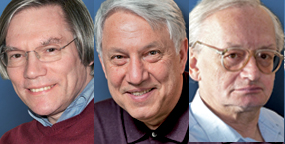
Alan Guth, Andrei Linde and Alexei Starobinsky shared the astrophysics prize.

The prize in astrophysics went to Alan Guth of the Massachusetts Institute of Technology in Cambridge; Andrei Linde of Stanford University in Palo Alto, California; and Alexei Starobinsky of the Landau Institute for Theoretical Physics at the Russian Academy of Sciences near Moscow. The three earned the award for pioneering work on the theory of cosmic inflation, which holds that the Universe underwent a short-lived phase of exponential expansion soon after it came into existence.

Studies of inflation now occupy thousands of theorists. Indeed, recently reported results seemed to suggest that scientists had found the imprint of the Big Bang by examining cosmic microwave background using the BICEP2 telescope; those results, however, have now been called into question.
nano-three

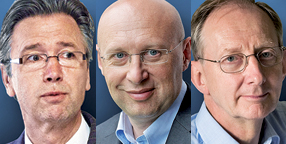
Thomas Ebbesen, Stefan Hell and John Pendry shared the nanotechnology prize.

For the field of nanoscience, the Kavli prizes went to Thomas Ebbesen of the Université Louis Pasteur in Paris; Stefan Hell of the Max Planck Institute for Biophysical Chemistry in Göttingen, Germany; and John Pendry of Imperial College London. The three countered long-held beliefs about the resolution limits of optical imaging and microscopy, showing that light can interact with nanostructures smaller than light’s wavelength. Previous convention had suggested that only details larger than approximately 200 nanometres could be imaged. In a press release, the Kavli Foundation calls this ability to see and image nanoscale objects “a critical prerequisite to further advances in the broader field of nanoscience”.

Ebbesen’s experiments in the late 1990s, which challenged accepted theory of light propagation through small holes, led to new means of increasing the efficiency and spatial focus of photonic devices and the sensitivity of optical sensors. Hell developed a technique that enables imaging at dimensions much smaller than optical wavelengths, including the processes in living cells. Pendry developed a model for the ‘perfect lens’, or superlens, using materials such as silver, gold and copper. Pendry is most famous for developing the concept of an invisibility cloak, which, like perfect lenses is based on the use of ‘metamaterials’ that have a negative index of refraction (see ‘Invisibility cloaks are in sight‘).
neuro-three

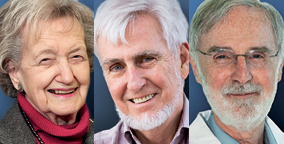
Brenda Milner, John O’Keefe and Marcus Raichle shared the neuroscience prize.

Kavli awarded prizes for neuroscience to Brenda Milner of McGill University in Montreal, Canada; John O’Keefe of University College London; and Marcus Raichle at the Washington University School of Medicine in St Louis, Missouri. Through a variety of research techniques, these neuroscientists elucidated how specialized nerve cells perform different functions and revealed details about brain regions involved in memory. The Kavli announcement notes that memory “defines who we are” and that “loss of memory can have devastating effects on an individual’s personality”.

Milner studied a celebrated patient known as H.M. and others who had incurred brain damage, and found that the medial temporal lobes are necessary for the formation of what is now known as episodic memory. O’Keefe showed that the hippocampus contains neurons that encode an animal’s specific location. And Raichle designed methods for visualizing the brain’s activity.

The Kavli Foundation, based in Oxnard, California, was established in 2000 by Norwegian-born entrepeneur Fred Kavli (1927–2013), and funds more than a dozen Kavli Institutes around the world.

The award ceremony will take place in Oslo on 9 September.

Pictures courtesy of Kavli Foundation (Guth); Linda A. Cicero/Stanford University (Linde); Landau Institute/RAS (Starobinsky); Eirik Furu Baardsen (Ebbesen); Bernd Schuller/Wikimedia Commons (Hell); Mike Finn-Kelcey/Imperial College London (Pendry); Owen Egan/McGill University (Milner); Kavli Foundation (O’Keefe and Raichle).

German research agencies condemn animal-rights attack on neuroscientist

A timid silence often follows public attacks on scientists who use animals in their research. But today a group of ten heavyweight academic organisations in Germany shed its habitual reserve and raised a stern collective voice against animal-rights activists whose recent advertising campaign targeted an individual neuroscientist.

The activists overstepped the line between freedom of expression and unacceptable defamation, said the group, known as the Alliance of Science Organisations, which includes the Max Planck Society, the DFG grant-giving agency, the Conference of University Rectors and the German National Academy of Sciences Leopoldina. In particular, it said, activists depicted Andreas Kreiter, who uses monkeys in his research, as ‘not quite human’.

The row began on 16 April, when the Tierversuchsgegner Bundesrepublik Deutschland (Opponents of Animal Experiments Federal Republic of Germany) placed an aggressive full-page advertisement in two national quality newspapers and three regional newspapers.

The advertisement comprised a long treatise against animal research. It focused on Kreiter, from the University of Bremen, but also called on “all citizens” to treat every animal experimenter “with contempt and to denounce their work publicly”.

Its headline read “Kreiter cold-bloodedly carries on”, a reference to a federal court’s recent decision that local authorities in Bremen acted illegally in trying to stop his research. This legal decision had led Kreiter to believe his 16-year struggle to continue his studies into mechanisms of attention, one of the pillars of consciousness research, had finally ended. In the late 1990s Kreiter and his family had to be placed under police protection.

The advertisement set Kreiter’s photograph next to a picture of a primate with a number tattooed onto its chest, and with its head secured against movement during an experiment. It claimed that Kreiter’s experiments cruelly torment primates without yielding any medical advances.

This personalisation of the animal debate helped to spur the Alliance into action, as did the advertisement’s provocative opening quotation, attributed to neurologist and animal protectionist Herbert Stiller: “Animal experimenters are a particular type of creature – one should not casually call them human.”

The citation also precipitated an unprecedented debate in the press, because the right to human dignity is considered sacred in Germany and is enshrined in the first article of the country’s post-war constitution. During the Nazi era, categories of people like Jews, gypsies or the handicapped were declared to be ‘sub-human’ and killed.

In its public statement, the Alliance “expressly and decisively condemns” the advertisement. It says that animal research is necessary and is carried out under the tight contol of the authorities.

Welcoming the Alliance’s first public defence of animal research, neuroscientist Stefan Treue, director of the German Primate Centre in Göttingen, says that the affair “reinforces the recognition of the scientific community that we really need a public information platform where citizens and journalists can learn the facts about why animal research is needed”.

Kreiter says he is disappointed that the debate around his work has been reactivated. “This type of attack is hardly new for me,” he adds. “But these advertisements were particularly aggressive.”


UK Royal Society still trails US National Academy of Sciences in female members

Women in science

{credit}NAS/Royal Society{/credit}

The Royal Society — the United Kingdom’s national science academy — today announced that it has elected 50 new fellows, who get to put the prestigious letters ‘FRS’ after their name. Among the array of top scientists this year are UK chief medical officer Sally Davies and climate economist Nicholas Stern. Stephen Chu — Nobel physics laureate and former US Energy Secretary — is one of ten new foreign members.

Just 14% of the new fellows are women, meaning that the Royal Society still lags behind the US National Academy of Sciences (NAS) in terms of female representation. The NAS had 21% women among the 84 newly elected members it announced two days ago, and consistently elects a higher proportion of women than its UK counterpart (see chart).

The Royal Society says that its selection broadly mirrors the proportion of women put forward for membership. Indeed, according to statistics e-mailed to Nature by a spokesperson, women made up 14% of new nominations in 2014 and currently make up 11% of the total pool of candidates for election (once nominated, candidates remain eligible for election for seven years). However, women now make up 17% of UK professors in science, technology, engineering and mathematics (STEM) disciplines, a parliamentary report noted in February. (The Royal Society prefers to quote figures from the UKRC in 2010, which found 9.3% female professors in STEM subjects in full-time employment, and is “the best match for the pool of people who are likely to be elected as Fellows”, it says).

The National Academy of Sciences keeps its election process confidential, but the United States overall has a slightly healthier proportion of women in the senior echelons of science. The US National Science Foundation estimates that as long ago as 2010, women made up 21% of full science professors. (More up-to-date figures specific to the sciences are not available; see Nature’s special issue, ‘Women in Science’ for more details).

The Royal Society is aware of the issue. A spokesperson points out that in 2012–13, the society ran a project called Mobilising Research Fellows to improve the diversity of candidates for fellowship and academy medals, and in particular to improve the pool of female candidates. In 2013 it set up four ‘temporary nominating groups’ to pick out people in areas where the fellowship was under-represented, which included female candidates and industry.

Indeed, the academy found room to elect some industry-oriented fellows this year, including Andrew Mackenzie, the chief executive officer of mining giant BHP Biliton, and Michael Lynch, the computer-science and technology entrepreneur who co-founded the software business Autonomy. (In 2011, Hewlett-Packard (HP) bought Autonomy for more than US$11 billion, but the deal rapidly soured. HP wrote off $8.8 billion from the firm’s value and accused the British firm’s senior management of unlawful accounting and other misrepresentations — allegations still under investigation by financial authorities.)

As for the new NAS members, they include nanoscientist Fraser Stoddart (Scottish-born and already a fellow of the Royal Society, but now at Northwestern University in Illinois), and David Shaw, the former hedge-fund magnate who gave up his financial career more than a decade ago and now uses supercomputers to simulate protein folding. New foreign members include Japanese Nobel chemistry laureate Ei-ichi Negishi and Danish palaeobiologist Eske Willerslev.

Discrimination starts even before grad school, study finds

biased-teaching-natureMost would acknowledge that women and minorities already face more hurdles in academia than their white, male peers. A lack of mentors, occasionally overt discrimination and the academy’s poor work-life balance, are well-documented issues. But now a study has suggested that these groups may be at a disadvantage even before the starting whistle sounds.

A study published on 22 April (and currently under review) looked at how likely faculty were to respond to a request to meet with a student to informally discuss potential research opportunities — a scenario picked as a proxy for the many informal events that could boost an academic career and which fall outside institutions’ formal checks and balances. They found — overwhelmingly — that professors of all groups were more likely to respond to white men than women and black, Hispanic, Indian or Chinese students. Academics at private universities and in subjects that pay more on average were the most unresponsive.

Katherine Milkman at the University of Pennsylvania in Philadelphia, along with colleagues Modupe Akinola of Columbia University in New York and Dolly Chugh of New York University, sent fake e-mails to 6,548 professors at 259 US institutions, pretending to be students wanting to discuss research opportunities before applying to a doctoral programme. The messages were identical, bar their fictional authors, whose names were picked for being recognizable by gender and ethnicity — ‘Steven Smith’ representing a white male, for example, and ‘Latoya Brown’ for a black female.

White men were more likely than women and minorities to receive a reply in every discipline except the fine arts, where the bias was reversed (see ‘Biased teachings’ above). Business showed the greatest disparity, with 87% of white males receiving a response compared to just 62% of female and minority students. In the sciences, faculty in engineering and computer sciences, life sciences and natural, physical sciences and maths all showed significant biases against minorities and women.

Broken down by group, the results were more nuanced. Asian students experienced the greatest bias, despite research showing that stereotypes about Asians in academia are generally positive, says Milkman. Among private university faculty the response rate for white men was 29 percentage points higher than for Chinese woman — the greatest disparity observed. Meanwhile in the natural and physical sciences and maths there was a small, though not statistically significant, bias in favour of Hispanic women.

The study found no relationship between representation of any group among faculty in a given discipline and the degree of bias that students faced when trying to interact with them. This means the findings cannot be attributed to the largely white, male academy preferring to associate with others like them, says Milkman. “One of our hypotheses was that more diverse departments would be less biased and we just don’t see it,” she adds. The only exception was among Chinese faculty, who were less likely than other faculty to discriminate against Chinese students.

Curt Rice, a professor at the University of Tromsø in Norway and head of Norway’s Committee for Gender Balance in Research, says that the result that women and minorities are as biased as white men is not surprising. They mirror a 2012 study, by researchers at Yale University in New Haven, Connecticut, which showed that science faculty of both sexes show unconscious biases against women in hiring and pay decisions. The problem — says Rice — is implicit rather than explicit bias. “We’re talking about the absorbed effect of cultural stereotypes that lead to the formation of biases,” says Rice. “It’s no surprise they’re held by all of us because they’re subconscious and the result of cultural stereotypes that we’re all exposed to.”

Comparing results across disciplines, the team found more intriguing effects. The more highly paid faculty are on average (by subject), the greater the difference in response rate between white male and other students. “For every US$13,000 increase in salary, we see a drop of 5 percentage points in the response rate when compared to Caucasian males,” says Milkman. She links the finding to studies that recently found that wealthy, high-status people tended to be less empathetic and more self-focused. Biases were also more prevalent in private institutions than public ones, she adds.

Although the study looks at only one tiny step in the path to a successful academic career, Rice thinks the compound effect of many situations like it could well help explain why we find so few women and people from minority backgrounds at professor level. Milkman agrees: “This is a small moment — it’s one time someone’s reaching out and looking for guidance and encouragement. But if every time you do this happens to you, that’s going to add up.”

Chemists call for boycott over all-male speaker line up

Clarification added on 18 Feburary*.

Scientists are being urged to boycott a major international chemistry conference after its preliminary list of invited speakers and chairs featured no women.

An open letter on the website Change.org has called for a boycott of the 15th International Congress of Quantum Chemistry (ICQC), to be held in Beijing in June 2015. The move came after a list was posted on the conference website that allegedly showed no women among 24 speakers and 5 chairs and honorary chairs. The list, screenshots of which were seen by Nature, has since been taken down.

According to a blog by chemist Christopher Cramer of the University of Minnesota in Minneapolis, the organizers had invited 27 scientists as speakers, only one of whom was a woman.

The letter, which has gained more than 600 signatures in 48 hours, was authored by three eminent theoretical chemists: Emily Carter of Princeton University in New Jersey; Laura Gagliardi of the University of Minnesota; and Anna Krylov of the University of Southern California in Los Angeles.

It reads: “It happened again — another major theoretical chemistry conference features an all-male program. One of us began boycotting such conferences 14 years ago and can’t believe that 14 years later we are still seeing such overt discrimination.”

In an e-mail to Nature, Josef Michl, president of the International Academy of Quantum Molecular Science (IAQMS), which runs the congress, said that the three letter writers had pointed out “a very serious problem” and were “justifiably concerned” with the partial list, which accounted for two-thirds of the eventual speakers.

According to Michl, Zhigang Shuai, a theoretical chemist from Tsinghua University who heads the conference organizing committee, had already asked Michl to send academy members the partial list and ask for suggestions of speakers — specifically women — to complete the line-up. The response to this had been excellent and the final list would be gender-balanced, Michl adds.

Michl says that it had been a mistake to release a partial and very imbalanced list, because “it can easily be misinterpreted”, adding that he would be sending a letter of apology to the three signatories and members of the IAQMS. Michl’s letter, a draft of which has been seen Nature, adds that a large fraction of the people already on the list were outside the control of the organizing committee, including medalists and newly elected IAQMS members and previous organizers.

However, Carter says that asking for female speakers after publicizing the all-male list of speakers looked like “tokenism” and that organizers should have solicited advice long before posting the list. “Asking afterward definitely is a subtle message that we ‘need to add some women, let’s just dig around the dregs’,” she says.

“There are mediocre scientists of both genders, but there are also outstanding scientists of both genders. And to not have bothered to think about this — or to think about the message it sends to every young scientists when you have a meeting that only has men speaking — is deeply discouraging,” she says. “This happens over and over again, and it’s not reasonable.”

Organizers of the ICQC say, however, that the message sent to members, which included the partial list of 24 speakers and request for further suggested speakers — specifically women — was sent on 9 February. This was done before the partial list was posted on the conference website, on 14 February.

The letter includes a link to the Women in Theoretical Chemistry web directory, which lists more than 300 female scientists holding tenured and tenure-track academic positions or equivalents in related areas. “Many of these women are far more distinguished than many of the men being invited to speak at these conferences,” the letter reads.

————-

*The article was amended to include the ICQC organizers’ clarification that the request for additional speakers was sent out five days before the list was posted on the website.

Taiwan scientist’s findings did not constitute defamation

Posted on behalf of Michele Catanzaro.

The legal odyssey of Taiwanese environmental engineer Ben-Jei Tsuang has come to an end, as the petrochemical company that had accused him of libel did not appeal an earlier ‘not guilty’ verdict by the legally-required deadline of 20 November. The company had claimed that Tsuang’s release of data linking a petrochemical plant to increased cancer rates amounted to libel.

Tsuang, an environmental engineer at National Chung Hsing University in Taichung, presented evidence of correlations between FPG’s emissions and cancer in a scientific conference in December 2010 and in a press conference in November 2011. A paper containing these results is currently submitted to Atmospheric Environment.

In April 2012, two units of the FPG group filed a civil suit against Tsuang for libel, asking for US$1.33 million in damages and for him to publish an apology in four major newspapers; they also filed a criminal complaint that accused him of defamation. In response, more than 1,000 academics, including Nobel chemistry laureate Lee Yuan Tseh, signed an open letter in support of Tsuang (see letter in Chinese).

In findings issued on 4 September, the Taipei District Court ruled in favour of Tsuang in both the civil and the criminal case.

The court subsequently issued its reasoning, in which it deemed Tsuang’s statements as “fair comment on facts subject to public criticism”. The court noted that Tsuang’s arguments would not be considered libellous even if their content were eventually proven to be false. “The content of the defendant’s speech is deeply related to the life, health and safety of the public… and since the FPG affiliates voluntarily engaged in activities that implicate public health, they should be more prepared to tolerate the criticism,” the sentence states.

The company had until 20 November to appeal the court’s rulings, and its apparent decision not to do so effectively closes the case and clears Tsuang of any wrongdoing.

Tsuang has repeatedly said that FPG’s actions are part of a strategy of intimidation to keep scientists quiet. “The case is over, but the struggle is not finished,” he says.

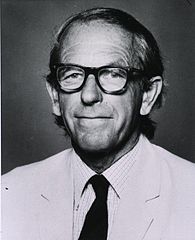
Frederick Sanger, father of DNA sequencing, dead at 95

Fred Sanger

Fred Sanger{credit}Wikimedia Commons{/credit}

Frederick Sanger, who won two Nobel Prizes for his work on DNA and protein sequencing, died yesterday, according to a spokesperson at the Laboratory for Molecular Biology at the University of Cambridge, UK. He was 95.

The chemist won the 1958 Nobel Prize for Chemistry for developing a method to determine the complete amino acid sequence of insulin. Twenty-two years later, the Nobel Committee awarded him the 1980 prize in Chemistry for discovering a way to determine the ordered sequence of DNA molecules. An adaptation of this method — known as Sanger sequencing — was used to sequence the human genome. He is only scientist to have won two Chemistry Nobels. Just two other scientists have been awarded two Nobel Prizes in the sciences: Marie Curie (Physics in 1903 and Chemistry in 1911) and John Bardeen (Physics in 1956 and 1972).

After the announcement of a draft human genome sequence in 2001, Sanger penned an essay for Nature Medicine on the history of DNA sequencing. “When we started working on DNA I don’t believe we were thinking about sequencing the entire human genome — perhaps in our wildest dreams but certainly not within the next 30 years,” Sanger wrote.

His archived lab notes were recently made available by the Wellcome Collection.

Update 12:53 p.m

The Medical Research Council (MRC) Laboratory for Molecular Biology (LMB), where Sanger spent much of his career, has posted an obituary encapsulating his professional life. It also notes that Sanger turned down a knighthood because he did not want to be called “Sir”.

Jeremy Farrar, the new director of the Wellcome Trust (which named its Sanger Institute after him), has issued a statement: “I am deeply saddened to learn of the death of Fred Sanger, one of the greatest scientists of any generation and the only Briton to have been honoured with two Nobel Prizes. Fred can fairly be called the father of the genomic era: his work laid the foundations of humanity’s ability to read and understand the genetic code, which has revolutionised biology and is today contributing to transformative improvements in healthcare.”

Update 1:40 p.m.

J. Craig Venter — whose privately funded effort to sequence the human genome was criticized by Sanger for limiting access — has chimed in via Twitter.

Update 2:00 p.m.

Science journalist and regular Nature contributer Ed Yong has a rather cryptic tribute on his blog: “CGCATTCCGTTTCGCGAAGATAGCGCGAACGGCGAACGC.” This tool will help translate.

Update 2:30 p.m.

University of Oxford neuroscientist and former MRC chief Colin Blakemore had this to say: “[H]e was a disarmingly modest man, who once said: ‘I was just a chap who messed about in his lab’. The journal Science rightly described him as ‘the most self-effacing person you could hope to meet’. Fred Sanger was a real hero of twentieth-century British science.”

Richard Henderson, former director of the LMB, said: “He was a superb hands-on scientist with outstanding judgement and skill, and an extremely modest yet encouraging way of interacting with his younger colleagues. I particularly remember one young scientist who had asked Fred for advice being told ‘I think you should try harder’. The example he set will continue to motivate young scientists even now he has gone.”

Updates to follow as tributes to Sanger, no doubt, pour in.

Balzan prizes honour research on ‘spooky action at a distance’ and infectious bacteria

ASPECT_Inst_Optique

Alain Aspect
CREDIT: International Balzan Prize Foundation

A physicist and a bacteriologist, both French, have claimed two of this year’s Balzan prizes, each worth 750,000 Swiss francs (US$ 800,000), the Italo-Swiss International Balzan Prize Foundation announced today.

Physicist Alain Aspect of the École Polytechnique in Palaiseau, France, is being honoured “for his pioneering experiments which led to a striking confirmation of quantum mechanics as opposed to local hidden-variable theories,” a statement by the foundation said. In the 1980s Aspect dazzled the physics community by demonstrating an effect that Albert Einstein had derisively named ‘spooky action at a distance’.

In 1935, Einstein, in work with Boris Podolsky and Nathan Rosen, had shown theoretically that quantum theory predicts that two particles can have their quantum states ‘entangled’, so that altering the state of one of the particle seemingly affects the state of the other particle instantaneously — something the three physicists regarded as a paradox that proved that quantum physics was wrong or, at best, incomplete. After Aspect’s first proof of principle, the EPR effect has now become a staple of ‘quantum weirdness’ experiments, and is at the heart of so-called quantum teleportation.

PascaleCOSSART_2

Pascale Cossart
CREDIT: International Balzan Prize Foundation

Aspect is a previous recipient of several awards, including the Wolf Prize.

Bacteriologist Pascale Cossart of the Pasteur Institute in Paris was recognized “for her seminal discoveries on the molecular biology of pathogenic bacteria and their interaction with host cells”, the Balzan foundation statement said.  Cossart’s most celebrated achievement was that she worked out how the intracellular bacteria pathogen Listeria monocytogenes enters and takes over host cells. She has previously been the recipient of numerous awards, including the Robert Koch prize.

Ewen Callaway contributed reporting.

Updated: White House announces Energy Department nominees

President Barack Obama today nominated Franklin “Lynn” Orr, a chemical engineer at Stanford University in California, as under secretary for science at the Department of Energy. Orr’s nomination was accompanied by that of Marc Kastner, a physicist at the Massachusetts Institute of Technology in Cambridge, to head the department’s office of science.

Orr joined the Stanford’s Department of Petroleum Engineering in 1985 and rose to become dean of the School of Earth Sciences in 1994. He led the university’s Global Climate and Energy Project before assuming his current post, in 2009, as director of the Precourt Institute for Energy.

Orr has proven his ability to integrate basic and applied research while focusing on big-picture energy questions, says James Sweeney, a colleague at Stanford who directs the Precourt Energy Efficiency Center, which is part of the institute headed by Orr. Sweeney says those skills will come in particularly useful now that Energy Secretary Ernest Moniz has given the under secretary for science oversight over both science and energy research. Orr is also co-teaching a freshman-level course on energy with Sweeney and another colleague, and Sweeney says Orr’s skills as a communicator will prove equally useful in Washington.

“Besides being a researcher and a manager, he is also an educator,” Sweeney says. “He’s got a little of everything.”

Orr’s appointment comes nearly two years after the departure of Steven Koonin, who went on to head New York University’s Center for Urban Science and Progress.

At the Energy Department’s office of science, Kastner would replace William Brinkman, who stepped down in April. Kastner joined MIT’s Department of Physics in 1973 and headed the department from 1998 to 2007. He has served as the dean of MIT’s School of Science since 2007 and remains active in semiconductor research.

Five physicists make the shortlist for $3-million award

Five theoretical physicists are in the running for the field’s most lucrative prize.

The winners of the 2014 Physics Frontiers Prize, who become nominees for the $3 million 2014 Fundamental Physics Prize, were announced on 5 November.

Michael B. Green of the University of Cambridge, John H. Schwarz of the California Institute of Technology, Andrew Strominger and Cumrun Vafa, both of Harvard University, and Joseph Polchinski, from the Kavli Institute for Theoretical Physics at the University of California, Santa Barbara were nominated.

If they fail to pick up the big prize, each will receive an award of $300,000 and automatically be re-nominated for the next five years.

Launched last year by Russian billionaire entrepreneur and former physicist Yuri Milner through the Fundamental Physics Prize Foundation, the awards are designed to provide recipients with more freedom and opportunity to pursue future accomplishments.

The foundation has already made millionaires of 11 physicists (plus handing a hefty cheque to seven CERN physicists who split a twelfth prize), and it has begun to do the same in biology.

But the prize is not without its critics who question whether their efforts to create “science superheroes” are the best way to drive the field.

Continue reading