UK launches space weather forecast centre

The UK officially opened its first space weather forecasting centre this week.

Funding for the Met Office Space Weather Operations Centre, based at the organisation’s headquarters in Exeter, was announced by the government late last year.

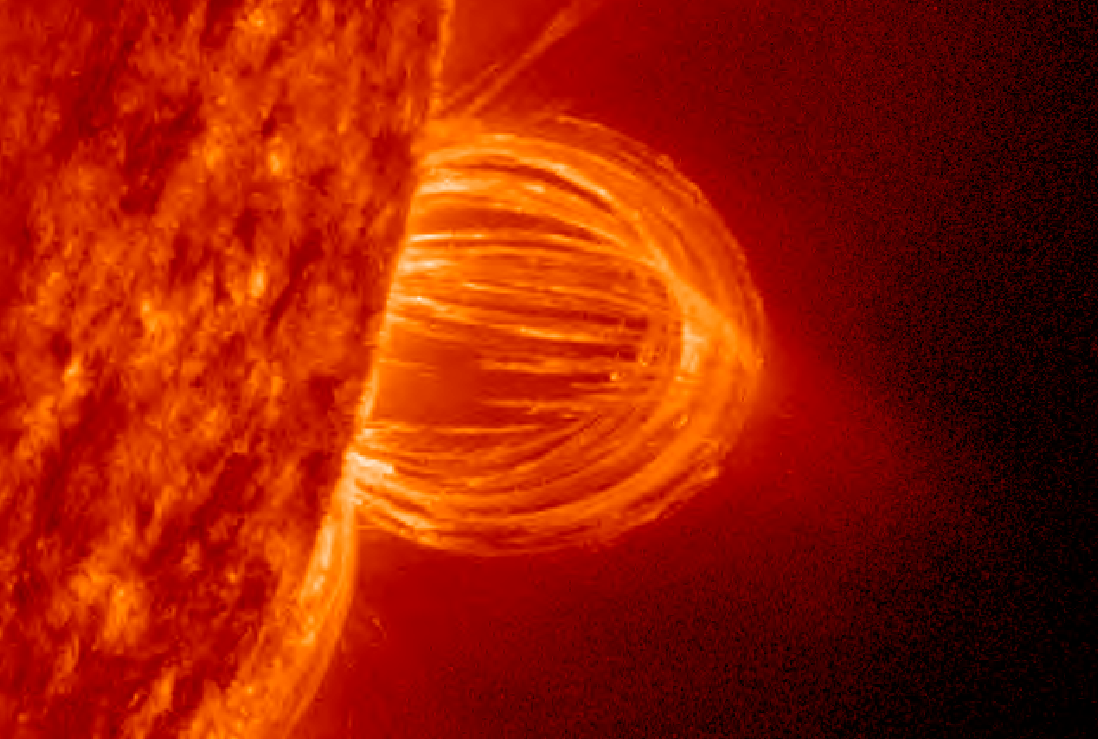
Solar flare July 2012

{credit}NASA/Royal Observatory Belgium/SIDC{/credit}

Since May the centre has been operating 24/7, ahead of its public launch on 8 October. As well as giving early warning of space weather threats to critical infrastructure, such as the National Grid, the Met Office now also provides publicly-available forecasts, published on its website.

‘Space weather’ is a term which covers how radiation and high-energy particles, ejected from magnetic storms in the Sun, interact with Earth’s magnetic field and impact terrestrial technology. Severe space weather can knock out satellite communications and disrupt global positioning systems (GPS) and power grids.

The centre came about following three years of discussion between the Met Office and its US counterpart, the National Oceanic and Atmospheric Administration’s National Weather Service, based in Boulder, Colorado, which was keen to establish a backup for their Space Weather Prediction Center (SWPC).

To determine how soon a solar event will be felt on Earth, forecasters at the SWPC and Met Office will use the same models, based on data from the same spacecraft. But by running the models at slightly different times, forecasters will be able to compare the results and generate a more accurate picture, says Catherine Burnett, space weather programme manager at the Met Office.  The UK’s centre will also use different ground-based data to hone its forecasts for the UK, she adds.

Speaking ahead of the official launch, Laura Furgione, deputy director at NOAA’s National Weather Service, said that accurately predicting and preparing for the impacts from space weather required “a commitment similar to terrestrial weather forecasting and preparedness”.

Nanoscopy pioneers win Chemistry Nobel

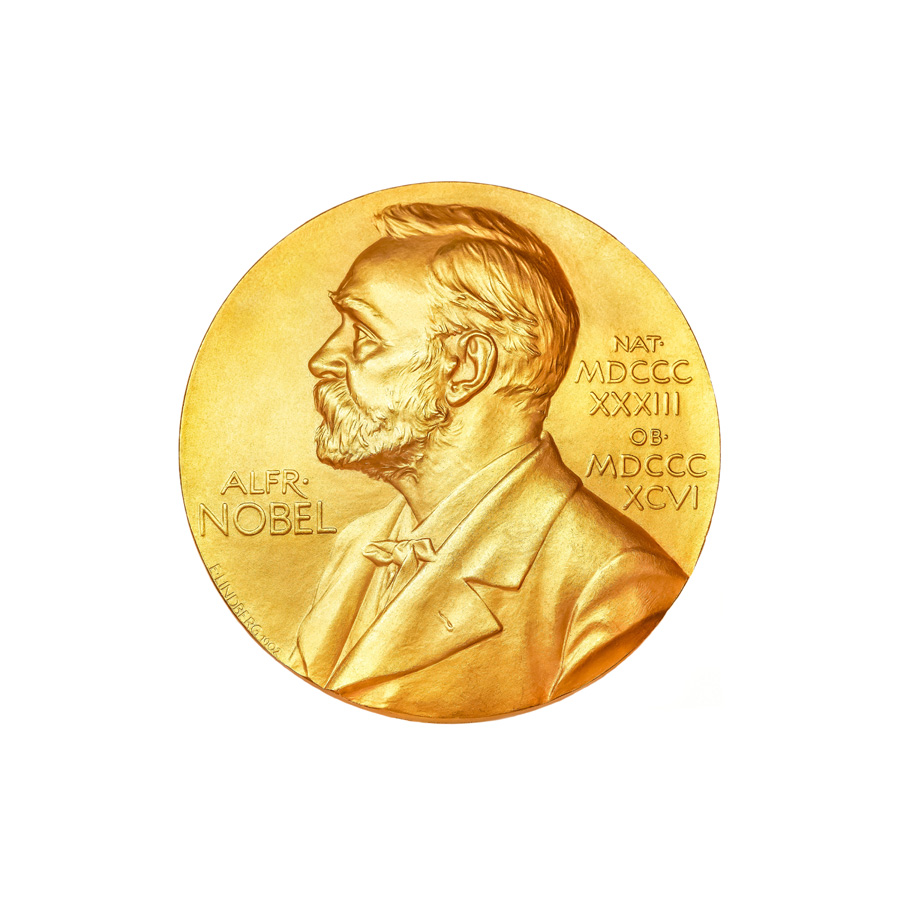
Nobel

{credit}Akademie/Alamy{/credit}

The 2014 Nobel Prize in Chemistry has been awarded to Eric Betzig, Stefan Hell and William Moerner.

The researchers won for the development of microscopes that make it possible to study molecular processes in real time (see press release).

Scientists long believed that optical microscopy would never be able to resolve distances smaller  than half the wavelength of light, 0.2 micrometres. The three laureates have won the prize for their “groundbreaking work” that broke this limit and brought optical microscopy down to the nanoscale.

The researchers used two separate techniques, both of which make use of the fluorescence or glow of molecules in response to light. In 2000, Hell, working at the Max Planck Institute for Biophysical Chemistry in Göttingen, Germany, developed a technique called stimulated emission depletion (STED) microscopy using laser beams.

Betzig, now at the Howard Hughes Medical Institute in Ashburn, Virginia, and Moerner, at Stanford University in California, separately paved the way for the development of a second method known as single-molecule microscopy, which Betzig achieved for the first time in 2006.

Using these techniques, scientists can now “see how molecules create synapses between nerve cells in the brain; they can track proteins involved in Parkinson’s, Alzheimer’s and Huntington’s diseases as they aggregate; they follow individual proteins in fertilized eggs as these divide into embryos”, according to a statement released by the Royal Swedish Academy of Sciences.

This page will be updated throughout the morning.

Update 11:35 a.m.

In 2009 Nature interviewed Hell for a feature on this revolution in microscopy. Read it here.

Hell also features in this Nature Methods‘ Method of the Year 2008 video on various forms of Super-Resolution Microscopy.

UK and US universities slip in latest rankings

7888173294_22d92133e6_z

The California Institute of Technology was ranked #1 university in the world by the Times Higher Education, but overall the US lost three institutions from the top-200.
{credit}Bob Paz/Caltech{/credit}

Universities in both the United States and United Kingdom slipped slightly down the tables in the latest Times Higher Education World University Rankings 2014-15, released on 1 October.

Both countries still dominate the rankings, with 103 of the top 200 institutions — and the totality of the top 12 spots — between them. The California Institute of Technology in Pasadena topped the table for the fourth year in a row (see Top 10 below). But overall the US lost three institutions from the top 200, and the UK lost two. According to THE, over four years the US has suffered the largest total loss in rankings position.

Meanwhile universities on the Asian continent continued to rise within the ranking, with China, Russia and Hong Kong gaining one top 200 representative each, and Turkey gaining three. German universities also increased their representation, with two new top-200 entrants.

The rankings, which were revamped in 2010, try to measure an institution’s research, teaching, knowledge transfer and international outlook, based on 13 criteria, which include a reputation survey, subject-averaged citation impact, income from industry and international co-authorship.

Flaws in such rankings are well documented (see ‘University rankings ranked’), but the annual tables continue to prove popular among students and policymakers. The THE results come on the back of the QS World University Rankings, which painted a rosier picture for UK universities.

2014-15 Rank
2013-14 Rank
Institution name
1 1 California Institute of Technology
2 2 Harvard University
3 2 University of Oxford
4 4 Stanford University
5 7 University of Cambridge
6 5 Massachusetts Institute of Technology
7 6 Princeton University
8 8 University of California, Berkeley
9 10 Imperial College London

CERN at 60: Biggest moments at flagship physics lab

LEP-startup

CERN director Carlo Rubbia (wearing tie) and other staff celebrate the first particles racing through the Large Electron-Positron collider on 4 July 1989.
{credit}CERN{/credit}


CERN, Europe’s particle-physics laboratory and the place famous most recently for the discovery of the Higgs boson, is celebrating its sixtieth birthday today.

The name CERN originally was the French acronym for Conseil Européen pour la Recherche Nucléaire, or European Council for Nuclear Research, and its convention officially came into force on 29 September 1954. In the wake of a war that had torn the continent apart, a small group of scientists and policy-makers created CERN in an attempt to use fundamental research to reunite Europe.

From 12 founding members, the organization has today grown to 21 states, with scientists at the lab hailing from almost 100 countries around the globe.

While CERN hosts a celebration at its home near Geneva, Switzerland, Nature looks back at some of the lab’s most significant moments from the past six decades. The links below are to a mixture of free and paywall pages, and will no doubt miss out many big CERN moments. Please add your own to the comments section below.

1954: CERN is set up. Nature outlines plans for the organization in an essay published in October of the previous year. CERN’s ‘official birth’ had come in 1952, with an agreement establishing the provisional council.

1968: Georges Charpak invents the multiwire proportional chamber. Until this time, particle physics had looked for traces of particle collisions by photographing their wake in bubble chambers or spark chambers. Charpak’s invention — a gas-filled box in which amplifiers boosted the signals detected by each wire — allowed for a 1,000-fold increase in detection rate. To this day, most high-energy physics experiments still use detectors based on this principle. Charpak’s Nature obituary in 2010 celebrated his life and achievements.

1978: CERN stores antiprotons for the first time. Paul Dirac had predicted the existence of antimatter in 1928, and antiprotons were discovered in 1932. In 1978, CERN succeeds in circulating several hundred antiprotons for 85 hours in a machine called the Initial Cooling Experiment, in a study aimed at exploring the feasibility of colliding beams of high-energy protons and antiprotons. Today CERN’s antiproton decelerator delivers low-energy antiprotons  for studies a range of experiments studying the properties of antimatter.

1983: CERN’s 6.9-kilometre-long Super Proton Synchrotron (SPS) discovers the particle carriers of the weak force, the W and Z bosons. In this Nature News and Views from April 1983, Frank Close, a particle physicist now at the University of Oxford, UK, discusses the first signs of the W boson at the SPS’s UA1 experiment, and hints that the Z will be next.

1984: According to a Nature News & Views (penned by John Maddox, then Nature‘s editor-in-chief), CERN discovers the top quark, the last missing element in the family of six known quarks that includes the ‘up’ and ‘down’ quarks that make up protons and neutrons. That announcement, however, will turn out to be premature, and the credit for the discovery of the top quark now goes universally to CERN’s biggest US competitor, the Fermi National Accelerator Laboratory (Fermilab) in Batavia, Illinois. It found the top quark in 1995.

1989: CERN computer scientist Tim Berners-Lee’s drafts a paper outlining plans for an information-management system, which at the time he termed “the mesh” but which later becomes known as the World Wide Web. Berners-Lee’s boss, Mike Sendall, famously replies that the proposal was “vague, but exciting”, giving Berners-Lee the green light for development. The world’s first web page address is born the following year (this copy is from 1992).

2000: The 27-kilometre Large Electron-Positron (LEP) collider at CERN closes after 11 years of operation to make way for the Large Hadron Collider (LHC), to be built in the same tunnels. LEP experiments have confirmed the Standard Model, the theory that describes fundamental particles and forces, to an extraordinary degree of precision. Nature reporter Alex Hellmans reports on the melancholy, and hope, in the wake of the shutdown.

2012: On 4 July scientists at the LHC’s ATLAS and CMS experiments announce that they have found a clear signal of the Higgs boson, and reporter Geoff Brumfiel records the moment in a live blog (and later in an article). The announcement, made by the ATLAS and CMS experiments, causes waves around the world, and in 2013 earns theoretical physicists François Englert and Peter Higgs the Nobel Prize in Physics for their prediction of the mechanism.

Where to land on a comet?

Philae_candidate_landing_sites

Philae will aim for one of five sites on Comet 67P/Churyumov-Gerasimenko when it lands in November
{credit}ESA/Rosetta/MPS for OSIRIS Team MPS/UPD/LAM/IAA/SSO/INTA/UPM/DASP/IDA{/credit}

Spare a thought for scientists on the European Space Agency (ESA) Rosetta mission, who will spend this weekend dissecting the ins and outs of five patches of land on a comet 440 million kilometres away.

They will be selecting a landing spot for the washing-machine-sized robotic probe Philae. On 11 November they plan to land the 100-kilogramme probe on 67P/Churyumov-Gerasimenko, in what will be the first ever attempt to soft land on a comet.

Picking the site will be a trade-off between scientific interest and operational safety — based largely on data from Rosetta’s instruments that are just weeks old, taken since the spacecraft caught up with its target on 6 August. High-resolution visible range, ultraviolet and temperature maps of the rubber-duck shaped comet, and data on the pressure and density of gas around the nucleus, already make the comet the most studied in history, says Rosetta project scientist at ESA, Matt Taylor.

At a meeting this weekend at the French National Centre for Space Studies (CNES) in Toulouse, scientists will debate the pros and cons of five shortlisted sites, three on the duck’s head and two on its body (see picture), selected last month. None are perfect, says Taylor. “There isn’t a great spot there. We’re going to have to pick the best of what we can achieve.”

Uncertainties in Rosetta’s navigation near the comet, as well as the distance from which it must release Philae, mean that the smallest spot the scientists can specify to land in is an ellipse with an area of 1 square kilometre. To maximize the chances of a safe landing, engineers will want the site to be as flat and smooth as possible, as well as somewhere on the comet that is feasible to reach, given safe orbits for Rosetta.

To thrive once there, Philae will need the spot to have just the right amount of daylight to power the lander’s solar panels and recharge its batteries. This means at least 6 hours per 12.4-hour comet rotation, but constant sunlight will cause the craft to overheat, says Mark McCaughrean, senior science adviser at the ESA directorate of science and robotic exploration.

Scientific interest is also balanced in the landing-site trade-off. Philae is armed with an on-board chemistry laboratory and instruments that allow it, in conjunction with Rosetta, to use radio waves to map the interior of the comet. Scientists will want to land Philae where they can use these instruments to learn the most.

Site A, for example, is scientifically exciting as it gives a view of both the head and body section, between which most of the comet’s gas is being produced.  Site J has advantages for radio mapping the nucleus.  Site B seems to be a safer choice in terms of landing. The wide crater has already been nicknamed “the heliport” because of its flatness, says Stephan Ulamec, Philae lander manager at the German Aerospace Center (DLR).

After examining the case for each, the lander team and Rosetta scientists will announce their favourite, and a backup, in Paris on Monday 15 September at 11 a.m. local time.

Rosetta is currently in orbit just under 30 kilometres from the comet’s surface, caught within its gravitational field. In the coming weeks, depending on the amount of gas and dust the comet releases, Rosetta will try to creep into closer orbits, taking pictures from as low as 10 kilometres, to best prepare for the landing in November.

Physics student arrested after axe attack

A former PhD student at the University of Coimbra, Portugal, has been arrested after allegedly attacking a former colleague with an axe.

Colin Gloster, an Irish national, is suspected of repeatedly striking a female professor in the department of physics with the weapon, a spokeswoman for the university told Nature. He was then reportedly overpowered by a student at the scene. The professor, named in reports as Maria Filomena Santos, was treated in hospital for wounds to an arm and a hand.

Gloster had been a doctoral student in the university’s physics department, with the support of the Portuguese Foundation for Science and Technology. A grant was cancelled in January 2014, and Gloster is believed to have been upset over the decision.

According to the spokeswoman, the institution had “recently communicated to Colin Gloster that he was no longer a student of this university”.

Before the suspected attack on 4 August, the former student allegedly first entered the office of academic affairs and threatened staff with an axe. He is reported to have left before the police arrived, before later heading to the physics department.

The victim had no connection to Gloster’s cancelled grant, says the spokeswoman.

Space agencies battle to keep Mars mission on track

Delays and funding problems are threatening to push back the planned launch of ExoMars, a European and Russian rover designed to search for life on the red planet.

ESA Exomars robot

{credit}ESA{/credit}

They had originally planned to launch the mission in 2018, but the European Space Agency (ESA) and Roscosmos, the Russian space agency, may now have to wait until 2020.

ESA has confirmed that problems with the design of the lander’s descent module — a component for which Roscosmos takes the lead — has delayed a key milestone: a health check of the entire mission called the System Preliminary Design Review. Technical problems with the module include the need to increase the clearance between its landing platform and the ground, to allow for a landing on large rocks.

Originally planned for early July, the review has been delayed until mid-September, says Jorge Vago, ESA’s ExoMars project scientist.  When the review board concludes in early November, it hopes to confirm ExoMars’ design and procurement plans, and also address whether the schedule remains feasible, he adds.

A further problem is funding. After NASA dropped out of the €1.2 billion (US$1.6 billion) mission in 2011 and Roscosmos took its place, ESA was forced to increase its contribution. Vago says that ExoMars is still short of “a couple of hundred million” euros. He hopes that, once the review is complete, the cash will be confirmed during a meeting of ESA’s governing body, the council of ministers, planned for early December.

If ExoMars misses its 2018 launch, the mission would have to be delayed until 2020 because Earth and Mars are only suitably aligned every 26 months.

How likely this is to happen depends on whom you ask. Thomas Passvogel, head of the projects department in ESA’s directorate of science and robotic exploration, predicts that the project will be able to absorb the delay and still launch on time. Other ExoMars scientists who did not want to be named told Nature‘s news team that planning for a potential launch in 2020 had been going on for some time, although this did not mean a delay was inevitable. Meanwhile, a report last week by Russian journalist Anatoly Zak claimed that many on the inside view the delay as “inevitable”. ESA described the article as “speculative”.

Vago says that if faced with further problems, the agencies would do everything they can to stick to a 2018 launch — including reshuffling the schedule and working double shifts, not least because a shift to a later date would mean finding even more funding to cover two more years’ costs. “We would not consider a launch delay lightly,” he adds.

If ExoMars 2018 becomes ExoMars 2020, an intriguing twist in the plot is that the delay would see the European mission competing with NASA’s next Martian venture — the Mars 2020 Rover, which last week announced the instruments it will take to the planet.

The US-led mission will look at how habitable Mars may have once been, with a focus on selecting samples that could eventually be brought back to Earth. Meanwhile ExoMars, armed with a drill and wide-ranging analytical laboratory, will concentrate on looking for signs of Martian life in situ, which could be preserved up to 2 metres under the surface.

Jack Mustard, a Mars scientist at Brown University in Providence, Rhode Island, says that the two projects have sufficiently different goals and landing sites to ensure they remain distinct even if they operate at the same time.

More detrimental for ExoMars, of course, would be having to share the limelight.

São Paulo state joins mega-telescope

The Giant Magellan Telescope (GMT) received a boost today when Brazil’s São Paulo Research Foundation (FAPESP) confirmed its plans to join the project. The US$880-million facility, some components of which have already been built, is one of three competing mega-telescopes that will study the skies in the next decade.

Approving plans reported by Nature in February, the richest state in Brazil confirmed on 22 July that it would contribute $40 million towards membership of the GMT, which is managed by a consortium of institutions in the United States, Australia and South Korea.

São Paulo researchers might not be the only ones to benefit. FAPESP scientific director Carlos Henrique de Brito Cruz told Nature’s news team that negotiations between the foundation and the Ministry of Science and Technology of Brazil were “well advanced to share these costs and allow astronomers from all states of Brazil to have access to the telescope”. If that plan goes ahead, the ministry will refund part of the costs to FAPESP.

Although a boon for Brazilian astronomers, the move could raise concerns for advocates of the Extremely Large Telescope (E-ELT), which is being built by the European Southern Observatory (ESO) in Chile. ESO has begun blasting the top off the 3,000-metre peak of Cerro Armazones where the E-ELT will be based, but is reliant on funding from Brazil’s federal government to enter the main construction phase. In 2010 Brazil agreed to contribute €270 million ($371 million) to ESO over a decade, but the deal has yet to be ratified and remains held up in legislative committees.

Some legislators may see the GMT agreement as a cheaper way for Brazil’s astronomers to access a future mega-telescope, even though the ESO deal also allows access to existing observatories in Chile. However Beatrice Barbuy, head of the Astronomical Society of Brazil’s ESO committee, says that the plans are still moving ahead. She adds that they had stalled in recent months owing to the country’s hosting the FIFA World Cup and staff going on winter vacations, but discussions were likely to get underway again in August.

The 25-metre GMT, to be built at the Carnegie Institution for Science’s Las Campanas Observatory in Chile, is scheduled to begin operations in 2020. It is designed to have six times the collecting power of the largest existing observatories and 10 times the resolution of NASA’s Hubble Space Telescope. The agreement is expected to secure São Paulo a 4% stake in the GMT project, guaranteeing 4% of observation time for Brazilian astronomers each year, as well as representation on the consortium’s decision-making board.

The GMT, E-ELT and a third planned next-generation ground-based observatory, the Thirty Meter Telescope, proposed to be built in Mauna Kea in Hawaii, are intended to address similar science questions. Astronomers hope to use the huge light-collecting capacity of the telescopes to explore planets outside our Solar System, study supermassive black holes and galaxy formation and unravel the nature of dark matter and dark energy.

Scientists praise outgoing UK science minister

david_willetts_national_science_week

An undated picture from davidwilletts.co.uk.

Update: Conservative MP Greg Clark will replace David Willetts as minister for universities and science. 

UK universities and science minister David Willetts resigned from his role on 14 July as part of a cabinet reshuffle.

A replacement has yet to be announced for the popular minister — known as ‘two brains’ because of his reputed intellectual abilities — who has served in the role since 2010. Willetts is reported to also be standing down as member of parliament for Havant at the coming election.

Leading voices from the UK scientific community were quick to praise Willetts.

“David Willetts is one of the UK’s sharpest and most talented politicians; we’ve been extraordinarily privileged to have him as the UK’s science minister for the past four years,” said Imran Khan, chief executive of the British Science Association and former director of the Campaign for Science and Engineering, in a statement.

“We in the science sector like to moan about there not being enough scientists in Parliament, but it was obvious from early on that Willetts — despite not having had much to do with science previously — developed a genuine passion for the subject. You’d be hard-pressed to find many in our sector who have a bad word to say about him,” he added.

Under his watch, science received a static £4.6-billion (US$7.9 billion) budget in 2010’s austere spending review, seen as such a good settlement at the time that it earned the new minister a bouquet of white lilies and roses from one awaiting journalist.

In-depth knowledge of his brief and advocacy for science mean Willetts has remained popular throughout his term. This is despite a rising clamour around the impact of the ‘flat cash’ budget — which inflation is set to erode by an estimated £1 billion by the end of 2015–16 — as well as the instability caused by slashing and rebuilding piecemeal of infrastructure spending.

The president of the Royal Society, Paul Nurse, said in a statement that Willetts had been “an outstanding science minister, respected not only in the UK but throughout the world”.

John Womersley, head of the Science and Technology Facilities Council, one of the government’s main research spending bodies, said he hoped the minister’s departure would not in any way compromise the government’s recent commitment to spend £1.1 billion in capital investment annually, rising with inflation.

Willetts’ personal impacts on science policy in the United Kingdom included a push towards open access, the drafting of a list of ‘eight great technologies’ that became the focus of capital and industry spending, as well as a beefing up of the government’s innovation body, the Technology Strategy Board.

The minister will also be remembered within the higher education sector for raising the cap on student tuition fees to allow most universities to charge £9,000 a year.

The reshuffle has been widely seen as a move by Prime Minister David Cameron to promote a new generation of Conservative politicians, especially women, into senior positions ahead of the 2015 election. Also quitting the cabinet are Tory stalwarts foreign secretary William Hague and justice secretary Kenneth Clarke.

Liz Truss has been appointed as secretary of state for environment, food and rural affairs, and Nicky Morgan has been brought in as secretary of state for education.

First boron ‘buckyball’ could be used to store hydrogen

Just in time for the World Cup final, researchers have succeeded in building the first ‘buckyballs’  made entirely from boron atoms. Unlike true, carbon-based buckyballs, the boron molecules are not shaped exactly like footballs.  But this novel form of boron might lead to new nanomaterials and could find uses in hydrogen storage.

Robert Curl, Harold Kroto and Richard Smalley found the first buckyball — or buckminsterfullerene — in 1985. The hollow cage, made of 60 carbon atoms arranged in pentagons and hexagons like a football, got its name from the US architect and engineer Richard Buckminster Fuller, who used the same shapes in designing his domes. The discovery opened the flood gates for creating more carbon structures with impressive qualities, such as carbon nanotubes and the single-atom-thick graphene. Since then, materials scientists have also searched for buckyball-like structures made of other elements.

Clusters of 40 boron atoms form a hollow cage similar to the carbon buckyball

Clusters of 40 boron atoms form a hollow cage similar to the carbon buckyball{credit}Wang lab/Brown University{/credit}

In 2007, Boris Yakobson, a materials scientist at Rice University in Houston, Texas, theorized that a cage made of 80 boron atoms should be stable. Another study published just last week predicts a stable structure with 36 boron atoms.

Publishing today in Nature Chemistry, a team led by Lai-Sheng Wang, a chemist at Brown University in Providence, Rhode Island, has become the first to see such a beast — although its structure is slightly different from that predicted. The researchers call their 40-atom molecule borospherene. It is arranged in hexagons, heptagons and triangles.

“We predicted the possibility of B80 fullerene, and now, seven years after, it is remarkable to see experimental evidence,” says Yakobson. “Especially as it is not what any of the theoretical calculations predicted.”

Wang’s team found the structure while looking for analogues of graphene made of boron. They found that clusters of 40 boron atoms seemed to be unusually stable, but they didn’t know what form these clusters were taking. Further calculations and experiments revealed that they had made two stable structures — one an almost flat molecule, the other a hollow, ball-like structure made of tesselated shapes, similar to the carbon buckyball.

In addition to having a less elegant shape, the borosphene balls form a different type of internal bond from their carbon counterparts. This makes them difficult to use as isolated building blocks as they have a tendency interact with each other, but this reactivity may make boron buckyballs good for connecting in chains. It also makes the balls capable of bonding with hydrogen, which the team says could make them useful in hydrogen storage.

Boron is not the first element after carbon to get buckyballed, but the result may be the closest analogue to the carbon variety. Scientists have formed buckyball-like structures out of uranium-based and silicon-based compounds, mutli-walled boron nitride and molybdenum disulphide structures and smaller single-element cages of goldtin and lead. But only boron seems to match the large hollow cage and  symmetry of the original carbon buckyball, says Yakobson.