Physicists defend Big Bang wave announcement

Cosmic swirls that were hailed earlier this year as evidence for primordial gravitational waves – ripples in spacetime dating back to the early universe – may turn out to have been caused by dust. But several top physicists are standing by the decision to announce the result back in March, before it had been peer-reviewed.

“I think it’s important to give it at the same time to the scientific community as to the general public,” said Rolf Dieter-Heuer, the director general of Europe’s particle physics Laboratory, CERN.  “We did the same two years ago when we announced the discovery of the Higgs boson.” Not a member of  the BICEP2 team that made the original claim, Dieter-Heuer was speaking to journalists at the International Conference on High Energy Physics (ICHEP) in Valencia, Spain.

When the BICEP2 team first reported that their telescope in the South Pole had detected twists in the polarization of relic light from the Big Bang, known as the cosmic microwave background, the results  seemed to confirm that the baby Universe underwent a period of rapid expansion, a theory known as inflation. But since then, the finding has been scrutinised and challenged by physicists who raised the possibility that grains of dust in the Milky Way – rather than gravitational waves – created the swirling polarization pattern. That culminated in the team last month scaling back their claims when publishing in the peer-reviewed journal Physical Review Letters1

It is something that the European Space Agency’s Planck telescope has the power to answer, said Enrique Martinez, a physicist at the Institute of Physics of Cantabria and a member of the Planck collaboration. He too was speaking at ICHEP, in a huge auditorium packed with delegates who had gathered in the hopes of some resolution on the BICEP2 result. But his talk failed to satisfy the expectant crowd.

Instead he promised that Planck would release results for the part of the sky relevant to the findings within a month, followed by its full dataset in October. He also confirmed that the Planck and BICEP2 teams were in the final stages of forming an agreement to collaborate on a joint, but separate, analysis.

Was BICEP2’s March announcement premature? Speaking alongside Dieter-Heuer, Alan Guth, the cosmologist who first proposed the inflation concept in 1980, said the team’s decision to speak to the press, which they did at the same time as posting a paper to the pre-print server ArXiv, was a natural one to take. “The press wants to know, the referring process is slow, and meanwhile the scientific community would probably find out anyway,” he said.

However, there should have been more caveats and cautionary remarks, he said: “It was almost presented if there was no way the experiment could not be interpreted as they interpreted it to be. When others came to look at it, that seemed no longer to be the case.”

In a talk in which he represented the BICEP2 collaboration, Roger O’Brient, a physicist at Caltech’s Jet Propulsion Laboratory, stressed the effort his team had taken to distinguish the signal from the dust or other causes of polarization. “We actually thought through this for about a year and a half before we published,” he said.

Afterwards, O’Brient told Nature that releasing the paper publicly had actually been good for science, as it had spurred others, sometimes from surprising areas of the scientific community, to examine the results.  “It’s not clear to me that the peer review process on its own in a vacuum would have necessarily caught issues.”

Guth is not giving up on BICEP2. During another talk at the conference, he said there was “reasonable hope” the signal would turn out to be the long sought after gravitational waves. However he also stressed that if the signal turns to dust, it would not cause any problems for his theory – other than from a public relations perspective. “If it turns out to be all dust, that’s not a mark against inflation,” he said.

Portugal cuts funding for lowest-rated labs

More than a fifth of research departments in Portugal are to have their funding cut, leaving the future of the groups and their staff uncertain.

As part of the latest five-yearly evaluation of the country’s Science and Technology Foundation (FCT), its primary funding body, 22% of 322 evaluated units (representing 1,904 researchers or 12% of the total) were graded as fair or poor, and will receive no funding between 2015 and 2020.

A spokeswoman for the FCT told Nature that these units “may face a difficult period… and will have to re-group and re-think their strategy for the coming years”. Units can appeal their grade, a process that is already underway.

Meanwhile, another 26% of units – graded as “good” – will receive core funding only. This funding, which depends on the size of the lab and its equipment and activities, is minimal. “High intensity” labs with more than 81 researchers will receive just €40,000 per year, while “low-intensity” research units with fewer than 40 members will receive €5,000 a year. The FCT says this funding “may be used to re-structure the unit, in order to be better prepared for future review and funding rounds, both in Portugal and internationally”.

The remaining 52% of units (66% of the pool of associated researchers) were graded as “very good” or better and will now pass through to a second round of funding. There they will compete for strategic funding, which they will receive on top of enhanced levels of core funding, up to 10 times that of “good” units. The results will be based on a further assessment, including a site visit, with the final results due by the end of the year.

The total funding being allocated – which amounts to around €50 million ($68 million) each year – is unchanged from previous years. The number of units being denied funding in the latest round is comparable to the 2007-2008 evaluation, in which 17% of 378 units received no funding.

But changes to the evaluation process have drawn criticism from some researchers. In a blog post on Science 2.0, science writer and former immunologist Catarina Amorim says that most of the units that have been denied funding show “competitive productivity” scores at the international level and the decisions were largely made by non-specialists in each field.

She adds that the level of basic funding for units rated as good “in practice is a a slow death sentence”.

In an open letter to the president of FCT, a group of 13 social scientists from universities across Portugal also criticised the assessment. They claimed that rigour and impartiality were “glaringly absent” in the evaluation, taking as their case in point the failure of one of the country’s benchmark research units in the social sciences, the University Institute of Lisbon’s Centre of Investigation and Study in Sociology (CIES), to pass to the second stage.

The FCT told Nature that while bibliometrics formed part of the process (which for the first time was carried out in two phases, and in collaboration with the European Science Foundation), each unit’s evaluation was carried out by three reviewers, whose report fed into an assessment by between 9 and 17 academics drawn from a pool of international experts. Reviews were based on measures such as graduate training output and the unit’s research strategy, as well as productivity. The first phase also included a rebuttal phase for researchers to respond to comments, she adds.

Antibiotic resistance focus of UK Longitude Prize

The people have spoken. Antibiotic resistance has been voted by the UK public as the subject of the government’s £10-million (US$17-million) Longitude Prize — an initiative aimed at tackling society’s greatest issues.

Competing teams will now have five years to create a cost-effective, accurate, rapid and easy-to-use test for bacterial infections to win the prize. The organizers hope that such a test will help health workers to better target the use of antibiotics, which will prevent the rise of drug-resistant strains.

Bacteria’s growing resistance to life-saving antibiotics was the subject of a stark warning by the World Health Organization, leading to calls (including by Nature) to create an intergovernmental panel to tackle the issue.

In the public vote, collected on the webpage of the BBC2 television show Horizon, the issue beat challenges involving food, water scarcity, climate change, paralysis and dementia to become the focus of the prize.

This autumn the prize organizers, the Longitude Committee and London-based innovation charity Nesta, will publish the criteria entrants must fulfil, following consultation with the scientific community. Groups with “creditable ideas” will be invited to review sessions throughout the five years, starting in autumn 2015.

Launched by UK Prime Minister David Cameron last year and opened for public voting last month, the initiative is named after a competition the British government launched 300 years ago, and has parallels with modern ‘challenge prizes’, such as those administered by the Culver City, California-based X-Prize Foundation.

Writing in Nature last month, chairman of the Longitude Committee, Martin Rees, said that he hoped both the prize fund and publicity generated by a well-designed prize would “unleash investment from many quarters, amounting to much more than the prize itself”. (Philip Campbell, Nature‘s editor-in-chief, is also a member of the prize committee.)

Mathematicians claim share of science’s most lucrative prize

Five mathematicians will take home US$3 million each as winners of the inaugural Breakthrough Prize for Mathematics, announced today.

Funded by billionaire philanthropists, the prize tops, in terms of money, mathematics’ most prestigious awards, including the $1-million Abel prize and the $14,000 Field’s Medal.

Mathematics is the third field to benefit from the Breakthrough Prizes, which were established in the life sciences in 2013 and in theoretical physics in 2012. The high-profile awards, which have been met with praise, puzzlement and criticism within the scientific community, aim to raise researchers to celebrity status.

Winners of the 2014 mathematics prize include Simon Donaldson, of Stony Brook University in New York and Imperial College London, who drew ideas from physics to devise a method to understand when calculus can be done in a four-dimensional space; and Jacob Lurie of Harvard University in Cambridge, Massachusetts, who works on an abstract version of algebraic geometry.

Also awarded were Terence Tao of the University of California, Los Angeles — known for his work on problems involving prime numbers — and the number theorist Richard Taylor, of the Institute for Advanced Study in Princeton, New Jersey, who contributed to solving Fermat’s last theorem.

For the remaining winner, Maxim Kontsevich of the Institute of Advanced Scientific Studies in Bures-sur-Yvette, France — who has worked at the intersection of mathematics and physics and on string theory in particular — the award will be his second $3-million pay-out, as he also won one of nine founding awards in fundamental physics in 2012.

Yuri Milner, an Internet entrepreneur and former physics PhD candidate, announced the mathematics prize in December last year, alongside fellow sponsor Mark Zuckerberg, the founder of Facebook.

Milner told Nature that in contrast to national funding agencies, which put their energies into funding research directly, the awards are about communicating the excitement of science to the broader public and about celebrating amazing minds.

The prizes will be presented at a televised ceremony in November. Last year’s event was hosted by actor Kevin Spacey and included entertainment by singer Lana Del Rey.

So far the prize sponsors — which, along with Milner and Zuckerberg, include the founders of Google, the Alibaba Group and 23andMe — have awarded more than $105 million.

Milner says that he hopes other people of means will think about funding science in their own way. He adds that there are currently no plans to introduce prizes in other fields.  

As with the awards in biology and physics, the five inaugural winners will now go on to sit on the selection committee responsible for choosing future winners of the annual prize — a process Milner compares to awarding to the Oscars. Six major prizes will be awarded each year in biology, and one each in mathematics and physics.

The Breakthrough Prize organizers also announced that Art Levinson, chief executive of Google technology spin-out Calico, would step down as chair of Breakthrough Prize in Life Sciences Foundation. He will be succeeded by Cori Bargmann, a neurobiologist at Rockefeller University in New York and one of the inaugural winners of the prize.

Comet begins to steam off as Rosetta homes in

 Comet_develops_a_coma_large

Hurtling through space at thousands of kilometres per hour, the comet-chasing Rosetta spacecraft has photographed its target spewing out gas and dust as both get closer to the Sun.

The €1-billion (US$1.4-billion) European Space Agency spacecraft woke up in January this year after almost three years in hibernation. By August it hopes to catch up with the comet before setting down its lander, Philae, on the surface in November. This will be the first time a soft-landing has been attempted on a comet.

The images from Rosetta’s OSIRIS camera, released by ESA today, show 67P-Churyumov–Gerasimenko increasingly releasing gas and dust over six weeks, from 27 March to 4 May. During that time Rosetta closed the distance to the comet from around 5 million kilometres to 2 million kilometres.

As the Sun heats the comet, surface ice turns into gas. This escapes carrying dust into space, forming the visible ‘coma’. Dust and gas around the comet will increase as it approaches the Sun, eventually forming into a characteristic tail. Rosetta will have to negotiate this cloud as it descends to as low as 1 kilometre from the surface to land Philae.

Relatively little is known about the comet. Rosetta’s 11 science experiments, lander and its 10 instruments have now all been activated and already turned up one surprise – that the comet is rotating every 12.4 hours, a period 20 minutes shorter than previously thought.

Scientists hope that by studying 67P-Churyumov–Gerasimenko and its dust they will learn clues about the Solar System’s early history, as well as whether comets played a role in bringing  water and the basic building blocks of life to Earth.

Biased biology: the case of the missing vaginas

vagina shield

The female genitalia of the water strider Gerris gracilicornis have a ‘genital shield’ that can block forced mating.
Source: Han, C. S. & Jablonski, P. G. PLoS ONE 4, e5793 (2009).

Genitalia are a hot topic. Interest in their diversity and rapid evolution have seen research in the field balloon in the past decade. Stories on studies of the penises of ostriches, chickens, sea slugs and a variety of insects have all made the science pages. But where are all the female genitalia?

A study published in PLoS Biology this week has quantified their dearth. Analysing 25 years of research in the evolution of genitals, the authors found a strong bias towards studying male animals — a disparity that has got worse over time. The bias, they say, is down to ingrained biases that lead researchers to see female genitalia as less important to evolution — something that, they argue, is hampering our understanding.

Malin Ah-King, an evolutionary biologist and gender researcher at Humboldt University in Berlin, and colleagues analysed 364 papers published between 1989 and 2013 that address the evolution of genitalia, and categorized them by research question and species studied. They found that the largest group, 49%, looked at male genitals alone. Just 8% of the papers looked only at female genitals, and 44% studied both (see graph).

Why the disparity? The study found that the bias is not restricted to male researchers, as papers by women biologists showed the same trend. Nor is the phenomenon something that can be blamed on old attitudes: it seems to grow stronger from 2000 onwards, even after a similar study in 2004 flagged the issue.

The authors also dismiss the notion that female genitalia are any less scientifically interesting than those of males, citing a range of studies in which variations are biologically significant — including the genital shields of water striders (Gerris gracilicornis, pictured above) and the elaborate, corkscrew vagina of the long-tailed duck (Clangula hyemalis). “There are a number of studies showing large variation in female genitals, both within and between species. But there’s a lack of knowledge and of studies,” says Ah-King.

Another reason could be that that the bias comes from male organs being easier to study than female ones. Johan Hollander, an evolutionary biologist at Lund University in Sweden, says that at least in the species he studies, sea snails, it is “hardly surprising” that males are studied, as their genitalia are external. They also present easy-to-see characteristics that are specific to each species, making them useful for taxonomy, he adds.

The authors recognize that this plays a part, as is evident, for example, in their finding that the bias is reduced in species where the female sex organs are external, such as spiders. But it is not the whole story, they say. Plenty of new techniques, such as high-resolution X-ray scanning, make research of internal, soft-tissue organs possible, says Ah-King.

Instead, they argue that at the root of the problem are longstanding assumptions about the roles of the sexes in evolution, namely the assumption that the female’s role is passive and relatively unimportant. This dates back to Charles Darwin’s theory of sexual selection, which the authors say proposed that females are generally “coy”. Darwin’s contemporaries even cast doubt over whether females had the mental abilities to choose mates, they add.

Although many of these assumptions have been overturned, evolutionary theory still emphasizes the male side of the equation, leaving studies of the female’s role to lag behind, say the authors. “We think assumptions about the dominant role of males and lack of variation in females have influenced how people have been looking at these questions,” says Ah-King. The fact that the study found that the bias varied depending on which evolutionary mechanism researchers were tackling, suggests that certain questions steer researchers towards focusing on males, she adds.

The problem with this nineteenth-century hangover is that by studying just one sex, researchers risk examining “just one side of a very complex equation” and are prone to misinterpreting complicated co-evolutionary dynamics, say the authors. From looking only at the long, hairy ‘virga’ of the male Euborellia plebeja earwig, for example, it would be easy to assume it was an efficient tool for removing a competitor’s sperm. But studies of the female show that her sperm-storage organ is even longer, meaning she can influence which sperm she keeps. Although studies on such specialized penile structures are common, “too often the female is assumed to be an invariant container within which all this presumed scooping, hooking, and plunging occurs,” say the authors.

Elizabeth Pollitzer, director of Portia, a London-based non-profit organization that seeks to address gender issues in science, says that male-oriented language such as “wounding the female”, “competitor sperm”, “forced copulation” and “coercive mating” run through interpretations of genital function and sexual dynamics. This is an issue not just for science, but helps to reinforce societal gender attitudes and stereotypes regarding male-female roles, she says.

The University of Wisconsin–Madison is among the institutions hoping to reverse the bias. Last month, the university appointed anthropologist Caroline VanSickle as the first Wittig Postdoctoral Fellow in Feminist Biology, a research position aimed at uncovering and reversing gender bias in biology.

vaginas

Studies of animal genitalia that look at male organs only (black) outnumber those that look at both sexes (blue) and especially those that focus on female organs (green).
Source: Ah-King, M., Barron, A. B. & Herberstein, M. E. PLoS Biology 12, e1001851 (2014).


Independence wouldn’t break research ties, says Scottish government

The Scottish government is hoping to put researchers’ minds at ease ahead of a crucial referendum this autumn, but has already been challenged on the feasibility of its plans.

Scotland’s future: higher education research in an independent Scotland, published on 30 April, says that if on 18 September voters choose independence, Scotland would seek to stay part of the existing research system of the United Kingdom. There would even be some perks, it adds, such as a boost in its influence over spending (as Scotland’s financial contribution to the UK research council funding pot would become more direct) and a loosening of immigration restrictions for researchers coming to Scotland from outside of the European Union.

Scotland’s devolved government — run by the pro-independence Scottish National Party — said that an independent Scotland would try to negotiate a “fair funding formula” for paying into, and receiving funding from, the UK research councils (worth a total of £2.9 billion (US$4.9 billion) UK-wide in 2012–13). Scotland’s strength in research means that it currently gets out more cash out from the research-council system than it puts in. In 2012–13, Scottish institutions received 10.7% of the total UK research-council spending, compared to a UK population share of 8.3% and tax contribution of 9.4%.

The Scottish government said that a formula should remain based “on merit not geography”, calculated relative to population share but also taking into account the amount its institutions receive. If allocations were to be brought into line with contributions, Scotland would see a post-break-up cut of around £70 million.

But the idea that the status quo could continue could be wishful thinking. The report quotes Paul Boyle, chief executive of the Economic and Social Research Council, telling members of the Scottish Parliament that Research Councils UK (RCUK) “would like to see a single research system continue whether there is a yes vote for independence or not”. But RCUK swiftly responded that this does not mean the body supports an independent Scotland remaining part of the single system. In a statement published later that day it said: “Should there be a vote for independence the current system could not continue. There would need to be discussions about how Scotland and the UK would work together in the future, as Professor Boyle stressed in the evidence he gave to the Scottish Government in March.”

Earlier this year, UK science minister David Willetts told the Scottish Affairs Committee that the research system would see “big changes” if Scotland became independent. The working relationship in research would become more like that between the United Kingdom and other European countries, he said, than the single system that exists at the moment.

Through its devolved powers, Scotland already does some things differently to the rest of the United Kingdom. Its research pools — cross-institution networks that focus on specific disciplines — are popular with policy-makers and researchers alike. Scotland’s record on university spin-outs is also better than the rest of the United Kingdom’s. The nation was the only one in the United Kingdom to increase the number of life-science spin-outs from its universities in recent years — something an independent report published last year said could be linked to increased public sector support for innovation in the life sciences in Scotland.

Omid Omidvar, a social scientist at the Innogen centre at the University of Edinburgh, which runs the Future of the UK and Scotland programme, says that the academicians he has interviewed (for a yet-to-be-published study) were divided in their attitudes towards Scotland and the rest of the United Kingdom sharing a research system. Some thought the practice should continue, but others mentioned that independence might give Scotland some flexibility in modifying the Research Excellence Framework, for example by making it more relevant to industrial needs.

Scottish collaboration with other UK universities could be negatively affected if Scotland becomes independent, says Omidvar. But another promise — to introduce a more flexible immigration structure — could potentially help to fill gaps in the skills base and boost entrepreneurship, he adds. This week’s report says Scotland would reinstate the post-study work visa for students, which was scrapped in the United Kingdom in 2012. In a report published earlier this year, the Science and Technology Select Committee of the UK House of Lords said the United Kingdom was now “unwelcoming” to international science students, and recommended reinstating the visa.

Polar icebreaker pledged as UK launches science-spending consultation

An artist's impression of the research vessel

Artist’s impression of the research vessel.{credit}NERC/BAS{/credit}

The United Kingdom will soon be the proud owner of a £200-million (US$336-million) polar research vessel, the Chancellor of the Exchequer, George Osborne, announced today. Bigger and with greater icebreaking and endurance capabilities than the United Kingdom’s existing polar ships,  the vessel is designed to open up new research locations, as well as reinforce UK presence in Antarctica and the South Atlantic.

So far unnamed (but red and shiny if the artist’s impressions are anything to go by) the ship is scheduled to begin its first science mission in 2019. It may have to be impressive if it is to fill the shoes of the two existing UK polar vessels, operated by the British Antarctic Survey. The RSS James Clark Ross and RSS Ernest Shackleton, both built in the 1990s, are due to be decommissioned at the end of the decade. A spokeswoman for the Natural Environment Research Council said that their fates have yet to be decided.

Speaking today at the Medical Research Council’s Laboratory of Molecular Biology in Cambridge, UK, Osborne also launched a consultation on the United Kingdoms’ long-term plans for science infrastructure spending, intended to shape a road map to be published this autumn.

The consultation will decide how the United Kingdom should spend the £1.1 billion ($1.8 billion) a year (rising in line with inflation) that it has promised to allocate to science capital over the next parliament (2015–16 to 2020–21). The decision, made in last year’s spending review, followed the government’s widely criticized slashing of capital funding from the Research Council budgets in 2010, only to replace it in piecemeal announcements over the course of the current term.

Speaking ahead of the event, Osborne repeated the government’s mantra that the country needs to do more to ensure it converts “great British science into great British business”, making clear that the capital spending plans would be shaped by both UK researchers and businesses.

The government’s £4.6-billion ($7.7-billion) ring-fenced annual budget for research has been frozen since 2010 and will remain so until 2015–16. The Campaign for Science and Engineering says the cumulative erosion due to inflation will amount to more than £1.1 billion by 2015–16. The lobby group also highlights that the United Kingdom spent 1.7% of its national wealth (gross domestic product) on research and development in 2012 — a drop on 2011 and well below the European Union average.

Responding to a tweet from the Chancellor calling for the United Kingdom to turn “scientific ingenuity into commercial success”, David Price, vice-provost for research at University College London replied: “The challenge is with lack of UK industry take up. Where are their development labs and investment in innovation?”

Discrimination starts even before grad school, study finds

biased-teaching-natureMost would acknowledge that women and minorities already face more hurdles in academia than their white, male peers. A lack of mentors, occasionally overt discrimination and the academy’s poor work-life balance, are well-documented issues. But now a study has suggested that these groups may be at a disadvantage even before the starting whistle sounds.

A study published on 22 April (and currently under review) looked at how likely faculty were to respond to a request to meet with a student to informally discuss potential research opportunities — a scenario picked as a proxy for the many informal events that could boost an academic career and which fall outside institutions’ formal checks and balances. They found — overwhelmingly — that professors of all groups were more likely to respond to white men than women and black, Hispanic, Indian or Chinese students. Academics at private universities and in subjects that pay more on average were the most unresponsive.

Katherine Milkman at the University of Pennsylvania in Philadelphia, along with colleagues Modupe Akinola of Columbia University in New York and Dolly Chugh of New York University, sent fake e-mails to 6,548 professors at 259 US institutions, pretending to be students wanting to discuss research opportunities before applying to a doctoral programme. The messages were identical, bar their fictional authors, whose names were picked for being recognizable by gender and ethnicity — ‘Steven Smith’ representing a white male, for example, and ‘Latoya Brown’ for a black female.

White men were more likely than women and minorities to receive a reply in every discipline except the fine arts, where the bias was reversed (see ‘Biased teachings’ above). Business showed the greatest disparity, with 87% of white males receiving a response compared to just 62% of female and minority students. In the sciences, faculty in engineering and computer sciences, life sciences and natural, physical sciences and maths all showed significant biases against minorities and women.

Broken down by group, the results were more nuanced. Asian students experienced the greatest bias, despite research showing that stereotypes about Asians in academia are generally positive, says Milkman. Among private university faculty the response rate for white men was 29 percentage points higher than for Chinese woman — the greatest disparity observed. Meanwhile in the natural and physical sciences and maths there was a small, though not statistically significant, bias in favour of Hispanic women.

The study found no relationship between representation of any group among faculty in a given discipline and the degree of bias that students faced when trying to interact with them. This means the findings cannot be attributed to the largely white, male academy preferring to associate with others like them, says Milkman. “One of our hypotheses was that more diverse departments would be less biased and we just don’t see it,” she adds. The only exception was among Chinese faculty, who were less likely than other faculty to discriminate against Chinese students.

Curt Rice, a professor at the University of Tromsø in Norway and head of Norway’s Committee for Gender Balance in Research, says that the result that women and minorities are as biased as white men is not surprising. They mirror a 2012 study, by researchers at Yale University in New Haven, Connecticut, which showed that science faculty of both sexes show unconscious biases against women in hiring and pay decisions. The problem — says Rice — is implicit rather than explicit bias. “We’re talking about the absorbed effect of cultural stereotypes that lead to the formation of biases,” says Rice. “It’s no surprise they’re held by all of us because they’re subconscious and the result of cultural stereotypes that we’re all exposed to.”

Comparing results across disciplines, the team found more intriguing effects. The more highly paid faculty are on average (by subject), the greater the difference in response rate between white male and other students. “For every US$13,000 increase in salary, we see a drop of 5 percentage points in the response rate when compared to Caucasian males,” says Milkman. She links the finding to studies that recently found that wealthy, high-status people tended to be less empathetic and more self-focused. Biases were also more prevalent in private institutions than public ones, she adds.

Although the study looks at only one tiny step in the path to a successful academic career, Rice thinks the compound effect of many situations like it could well help explain why we find so few women and people from minority backgrounds at professor level. Milkman agrees: “This is a small moment — it’s one time someone’s reaching out and looking for guidance and encouragement. But if every time you do this happens to you, that’s going to add up.”

Shorter list for gamma-ray telescope sites, but no home yet

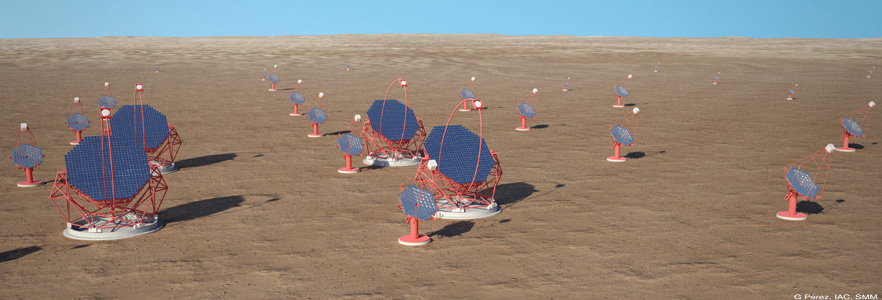
Concept illustration of Cherenkov Telescope Array

Where will the world’s next generation ground-based γ-ray detector, the Cherenkov Telescope Array (CTA), be built? No one yet knows. But a panel of funders have narrowed the field slightly, following a meeting in Munich, Germany, this week.

Scientists had originally hoped to select two sites — a large one in the Southern Hemisphere and a smaller one in the North — by the end of 2013. But the selection process for the €200-million ($276-million) project has taken longer than originally foreseen.

At a meeting on 10 April, representatives from 12 government ministries narrowed the potential southern sites from five to two: Aar, a site in Southern Namibia; and Armazones, in Chile’s Atacama desert. They also picked a reserve site in Argentina.

The committee, a panel of representatives from Argentina, Austria, Brazil, France, Germany, Italy, Namibia, Poland, Spain, South Africa, Switzerland and the United Kingdom, decided that all four possible northern sites — in Mexico, Spain and the United States — needed further analysis. A statement from the board said that a final site decision will happen “as soon as possible”.

If the CTA is built, its two sites will contain around 120 telescopes, which will look for the faint blue light emitted when very-high-energy photons slam into Earth’s atmosphere and create cascades of particles. By triangulating the data from various detectors, astrophysicists hope to piece together the energy and path of such photons. This should help them not only identify the sources of the γ-rays — extreme environments such as supermassive black holes — but also answer fundamental questions about dark matter and quantum gravity.

Like many astronomy projects, the best site for the CTA would be a high-altitude, remote location with clear skies. But the site decision must also take into account environmental risks, such as earthquakes and high winds, and projected operational costs. How much each host country would be prepared to contribute is also a factor.

Last year, an evaluation by representatives of the CTA’s 1,000-strong consortium rated Aar in Southern Namibia as the best southern site, which would contain 99 telescopes spread out over 10 square kilometres. Two sites tied for second: another Namibian site, which already hosts the High Energy Stereoscopic System (HESS) γ-ray telescope; and Armazones, where the European Southern Observatory already has a base and plans to build the European Extremely Large Telescope. The group equally ranked the four contenders for the northern site, which would be a 19-telescope array spread out over one square kilometre. Mexico is already building the High-Altitude Water Cherenkov Observatory (HAWC),  a γ-ray observatory of different type.

Although the consortium’s ranking was based largely on the science case and observing conditions, the latest decisions follows the report of an external site selection committee, which also took into account political and financial factors. Further decisions will rest on detailed negotiations, including host country contributions and tax exemptions at the various sites.

The CTA now aims to pick a final southern site by the end of the year. Board chair Beatrix Vierkorn-Rudolph, of Germany’s Federal Ministry of Education and Research, told Nature it was not yet clear whether the same will be possible for the northern site.