Nanoscopy pioneers win Chemistry Nobel

Nobel

{credit}Akademie/Alamy{/credit}

The 2014 Nobel Prize in Chemistry has been awarded to Eric Betzig, Stefan Hell and William Moerner.

The researchers won for the development of microscopes that make it possible to study molecular processes in real time (see press release).

Scientists long believed that optical microscopy would never be able to resolve distances smaller  than half the wavelength of light, 0.2 micrometres. The three laureates have won the prize for their “groundbreaking work” that broke this limit and brought optical microscopy down to the nanoscale.

The researchers used two separate techniques, both of which make use of the fluorescence or glow of molecules in response to light. In 2000, Hell, working at the Max Planck Institute for Biophysical Chemistry in Göttingen, Germany, developed a technique called stimulated emission depletion (STED) microscopy using laser beams.

Betzig, now at the Howard Hughes Medical Institute in Ashburn, Virginia, and Moerner, at Stanford University in California, separately paved the way for the development of a second method known as single-molecule microscopy, which Betzig achieved for the first time in 2006.

Using these techniques, scientists can now “see how molecules create synapses between nerve cells in the brain; they can track proteins involved in Parkinson’s, Alzheimer’s and Huntington’s diseases as they aggregate; they follow individual proteins in fertilized eggs as these divide into embryos”, according to a statement released by the Royal Swedish Academy of Sciences.

This page will be updated throughout the morning.

Update 11:35 a.m.

In 2009 Nature interviewed Hell for a feature on this revolution in microscopy. Read it here.

Hell also features in this Nature Methods‘ Method of the Year 2008 video on various forms of Super-Resolution Microscopy.

Blue LED discovery wins Physics Nobel

Nobel

{credit}Akademie/Alamy{/credit}

The 2014 Nobel Prize in Physics has been awarded to Isamu Akasaki, Hiroshi Amano, and Shuji Nakamura.

The three researchers won the award for their invention of diodes that emit blue light, “which has enabled bright and energy-saving white light sources,” the prize-awarding committee announced in Stockholm today (see press release).

Combining blue, green and red diodes creates a long-lasting, efficient white light. But despite earnest industry efforts to work out how to get gallium nitride-based semiconductors to shoot out blue beams, it took until the 1990s before Akasaki and Amano – working together at Nagoya University in Japan – and Nakamura, working at a company in Tokushima called Nichia Chemicals, made the breakthrough.

Nakamura, like the other winners, was born in Japan. But in 2000, he left the country to take up an academic position at the University of Santa Barbara in California, and is now a US citizen. At the time, he said that the United States offered better working conditions: “Japanese industrial research and development may be on its way to becoming obsolete.” He later sued Nichia Chemicals over the compensation he received for inventing the blue LED technology, in January 2005 eventually settling for ¥840 million ($7.6 million at the time).

Update 2.25pm

Scientific American have a profile of Nakamura, written in 2000, which reveals how hard he had to push to develop the technology at Nichia Chemicals:

In January 1988 [Nakamura] bypassed his boss and marched into the office of Nichia’s CEO, Nobuo Ogawa, with a list of demands. He wanted about $3.3 million in research funding to work on blue-light devices and also a year off to study metallorganic chemical vapor deposition, or MOCVD, at the University of Florida. MOCVD was then emerging as the technology of choice for producing exotic semiconductors, such as the ones capable of emitting blue light.

Nakamura’s move would probably raise a few eyebrows at most in a small American start-up company, but it was absolutely outrageous in the feudal, seniority-based Japanese system. “I was very mad,” he explains, when asked what prompted his ultimatum. “I wanted to quit Nichia. I didn’t care about anything. It was OK for them to fire me. I was not afraid of anything.”

Much to his amazement, Ogawa simply agreed to all his demands.

Nature full news story on the prize is here.

Brain positioning system wins medicine Nobel

Nobel

{credit}Akademie/Alamy{/credit}

The 2014 Nobel Prize in Physiology or Medicine has been awarded to John O’Keefe, May-Britt Moser and Edvard Moser.

The researchers discovered how the brain helps us navigate the world around us. O’Keefe, a neuroscientist at University College London, discovered specialized “place cells” that were activated when a rat explored a room.

In 2005, the Mosers (a married couple who share a laboratory at the Norwegian University of Science and Technology in Trondheim, Norway) together discovered another component of the brain’s positioning system. The “grid cells” they found create a coordinate system by firing at regular spatial intervals as an animal explores a space. They went on to show how grid cells and place cells work together.

Keep watching this blog for reaction.

Update 11:05 a.m.

As coincidence would have it, Nature was planning to publish a feature story on the Mosers in this week’s issue. Here it is.

Update 11:11 a.m.

The Mosers explain how grid cells work in this 2011 video. For more videos from the duo, follow this link.

Update 11:32 a.m.

In their press release (download the PDF here) announcing today’s award, the Nobel Committee recognizes work that O’Keefe did in the 1970s and research in the Mosers’ lab three decades later. But the three all worked together in 1995. The Mosers were fresh out of graduate school, and they did a short stint in O’Keefe’s lab, learning how to take electrical recordings of place cells. “This was probably the most intense learning experience in our lives,” they write, in a nice summary of their work on their lab website.

Update 11:52 a.m.

The Nobel website has a recording of May-Britt Moser’s response to the news. She says her husband is still on a plane and hasn’t yet heard the news. He’s due to land in Munich soon. “That would be fantastic if people were waiting at the airport. He would be in shock,” she says.

Update 12:07 p.m.

John Stein, a physiologist at the University of Oxford, says that O’Keefe’s discovery of place cells initially raised more than a few eyebrows. In a statement sent to reporters by the UK Science Media Centre he says: “I remember how great was the scoffing in the early 1970s when John first described ‘place cells’.  “Bound to be an artifact”, “He clearly underestimates rats’ sense of smell” were typical reactions.  Now, like so many ideas that were at first highly controversial, people say “Well that’s obvious”!”

Updated 1:39 p.m. Corrected affiliation of May-Britt and Edvard Moser

NIH awards $46 million for brain-research tools

Just 18 months after the White House announced the Brain Research through Advancing Innovative Neurotechnologies (BRAIN) Initiative, the US National Institutes of Health has awarded its first US$46 million in grants for the programme.

“We have referred to this as a moonshot,” said NIH director Francis Collins at a 30 September press conference. “To me, as someone who had the privilege of leading the Human Genome Project, this sort of has the same feel as October 1990, when the first genome centres were announced.”

The 58 NIH grants, which range in size from about $300,000 to $1.9 million, will support more than 100 researchers. According to Story Landis, director of the National Institute of Neurological Disorders and Stroke, the NIH received more than 300 grant applications, and ended up spending $6 million more than it had anticipated in order to fund as many of these grants as possible.

The awards address research priorities included in the NIH’s 10-year plan for the BRAIN Initiative; most will support the development of new tools to monitor the brain, such as a wearable positron emission tomography (PET) scanner that could monitor a person’s brain activity as she goes about her day. Some of these tools could eventually be used for studying and treating human disorders, including grants for imaging neurotransmitters such as dopamine in real time in a living brain, which Thomas Insel, director of the National Institute of Mental Health, says will be extremely useful for studying disorders such as depression. Other tools will be useful primarily for basic research, including many potential improvements on optogenetics – using light to control neuronal firing in animals.

“It’s a new era of exploration, an exploration of inner space instead of outer space,” says Cornelia Bargmann, a neurobiologist at Rockefeller University in New York . “We feel a little like Galileo looking at the sky through his telescope for the first time.”

The NIH’s master plan calls for $4.5 billion for BRAIN Initiative research over the next 10 years, a goal that will require support from Congress to increase the agency’s overall budget. To allay concerns that BRAIN initiative will detract from other NIH-funded research, Collins noted that the BRAIN funding request is dwarfed by the $5.5 billion the agency spends on neuroscience research annually.

The NIH is the last of the three agencies involved in BRAIN to announce its awards. The Defense Advanced Projects Research Agency, which received $50 million this year, has announced several multimillion dollar grants for therapeutic applications such as brain stimulation to improve memory and prosthetic limbs controlled by brain activity. The National Science Foundation received $30 million and, in August, announced 36 small awards for basic research in topics such as brain evolution and ways to store data collected from brains.

Meanwhile, two additional federal agencies — the US Food and Drug Administration (FDA) and the Intelligence Advanced Research Projects Activity (IARPA) — are set to join the effort, the White House announced on 30 September.

The FDA will be working with the other agencies to enable the development of medical and research devices that could be used in humans. IARPA will be joining BRAIN with several of its own ongoing research programmes, including an effort to develop new artificial intelligence systems based on the brain’s network patterns and a study on the use of brain stimulation to increase human problem-solving ability. According to the White House, the total investment in BRAIN Initiative research this year by government and private funding sources, such as the Kavli Foundation, totals more than $300 million.

Prime numbers, black carbon and nanomaterials win 2014 MacArthur ‘genius grants’

Yitang Zhang, a mathematician who recently emerged from obscurity when he partly solved a long-standing puzzle in number theory, is one of the 2014 fellows of the John D. & Catherine T. MacArthur Foundation.

The awards, commonly known as ‘genius grants’, were announced on 17 September. Each comes with a no-strings-attached US$625,000 stipend paid out over five years.

Zhang, a mathematician at the University of New Hampshire in Durham, was honored for his work on prime numbers, whole numbers that are divisible only by 1 or themselves. In April 2013 he published a partial solution to a 2,300-year-old question: how many ‘twin primes’ — or pairs of prime numbers separated by two, such as 41 and 43 — exist.

The twin-prime conjecture, often attributed to the Greek mathematician Euclid of Alexandria, posits that there is an infinite number of such pairs. But mathematicians have not been able to prove that the conjecture is true.

Zhang’s work has narrowed the problem, however. In his 2013 proof, Zhang showed that there are infinitely many prime pairs that are less than 70 million units apart.

Other science and maths-related winners of this year’s fellowships are listed below.

Danielle Bassett, a physicist at the University of Pennsylvania in Philadelphia, studies the organizational principles at work in the brain, and how connections within the organ change over time and under stress. Her research, which draws on network science, has revealed that people with more ‘flexible’ brains — those that can easily make new connections — are better at learning new information.

Tami Bond, an environmental engineer at the University of Illinois, Urbana-Champaign, studies the effects of sooty ‘black carbon’ on climate and human health. Bond, who led the most comprehensive study to date of black carbon’s environmental effects, has found that the pollutant is second only to carbon dioxide in terms of its warming impact.

Jennifer Eberhardt, a social psychologist at Stanford University in California, studies the effects of racial bias on the criminal-justice system in the United States. Her analyses have shown, for example, that black defendants with stereotypical ‘black’ features are more likely to receive the death penalty in cases where victims are white.

Craig Gentry, a computer scientist at the IBM Thomas J. Watson Research Center in Yorktown Heights, New York, has shown that encrypted data can be manipulated without being decrypted, and that programs themselves can be encrypted and still function.

Mark Hersam, a materials scientist at Northwestern University in Evanston, Illinois, is developing nanomaterials for a range of uses, such as solar cells and batteries, information technology and biotechnology.

Pamela Long, an historian of science based in Washington DC, has examined intersections between the arts and sciences and issues of authorship and intellectual property. She is now at work on a book tracing the development of engineering in 16th-century Rome.

Jacob Lurie, a mathematician at Harvard University in Cambridge, Massachusetts, studies derived algebraic geometry. “With an entire generation of young theorists currently being trained on Lurie’s new foundations, his greatest impact is yet to come,” the MacArthur Foundation said in its award announcement. In June, Lurie was named a winner of the inaugural $3-million Breakthrough Prize in Mathematics.


Balzan prizes honour plant ecologist and mathematician

Plant ecologist G. David Tilman of the University of Minnesota in Saint Paul and mathematician Dennis Sullivan of the City University of New York are among the four winners of this year’s prestigious Balzan Prize. The announcement was made on 8 September.

The prize is awarded by the International Balzan Prize Foundation, based in Milan, Italy, and Zurich, Switzerland. Each year, the jury selects four different categories for the award. Each winner receives 750,000 Swiss francs (US$800,000) and must spend half of it on research projects carried out, preferably, by young scholars or scientists.

Tilman was recognized for contributions to theoretical and experimental plant ecology that have illuminated how plant communities are structured and interact with their environment.

Sullivan was recognized for his work in topology and the theory of dynamical systems, as well other fields of maths, including geometry, the theory of Kleinian groups, analysis and number theory.

The other 2014 winners were Mario Torelli of the University of Perugia, Italy, for classical archaeology, and Ian Hacking of the University of Toronto, Canada, for epistemology and philosophy of mind.

The categories for the 2015 prizes will be oceanography, astroparticle physics including neutrino and γ-ray observation, history of European art (1300–1700) and economic history.

Lasker Award goes to breast-cancer researcher

Posted on behalf of Mark Zastrow. 

The 2014 Albert Lasker Special Achievement Award has been awarded to the geneticist Mary-Claire King. King, of the University of Washington in Seattle, is the leader of the team that discovered the BRCA genes, mutations in which are linked to breast cancer. King’s team found that the 10% of women affected by such mutations have nearly an 80% chance of developing breast cancer. The rush to develop tests for the mutations triggered a legal dispute in the United States that ended with a US Supreme Court ruling prohibiting the patenting of naturally occurring genes.

King was also recognized for her contributions to human rights in developing DNA analysis to prove genetic relationships. These have have been used to find the ‘lost children’ of Argentina — who were kidnapped and separated from their biological families as infants — and to identify the remains of soldiers missing in action and of disaster victims.

Other winners of this year’s Lasker awards, often referred to as ‘the American Nobels’, include molecular biologists Kazutoshi Mori of Kyoto University in Japan and Peter Walter of the University of California in San Francisco, in the category of basic medical research. They independently uncovered how cells correct proteins that are improperly folded by activating the transcription of certain genes.

The winners for clinical medical research were neurologists Alim Louis Benabid of Joseph Fourier University in Grenoble, France, and Mahlon R. DeLong of the Emory University School of Medicine in Atlanta, Georgia, for their work in high-frequency deep-brain stimulation. By targeting an area of the brain involved in motor functions called the subthalamic nucleus, they found the technique could be used to treat those with Parkinson’s disease to alleviate tremors and motor problems.

Antibiotic resistance focus of UK Longitude Prize

The people have spoken. Antibiotic resistance has been voted by the UK public as the subject of the government’s £10-million (US$17-million) Longitude Prize — an initiative aimed at tackling society’s greatest issues.

Competing teams will now have five years to create a cost-effective, accurate, rapid and easy-to-use test for bacterial infections to win the prize. The organizers hope that such a test will help health workers to better target the use of antibiotics, which will prevent the rise of drug-resistant strains.

Bacteria’s growing resistance to life-saving antibiotics was the subject of a stark warning by the World Health Organization, leading to calls (including by Nature) to create an intergovernmental panel to tackle the issue.

In the public vote, collected on the webpage of the BBC2 television show Horizon, the issue beat challenges involving food, water scarcity, climate change, paralysis and dementia to become the focus of the prize.

This autumn the prize organizers, the Longitude Committee and London-based innovation charity Nesta, will publish the criteria entrants must fulfil, following consultation with the scientific community. Groups with “creditable ideas” will be invited to review sessions throughout the five years, starting in autumn 2015.

Launched by UK Prime Minister David Cameron last year and opened for public voting last month, the initiative is named after a competition the British government launched 300 years ago, and has parallels with modern ‘challenge prizes’, such as those administered by the Culver City, California-based X-Prize Foundation.

Writing in Nature last month, chairman of the Longitude Committee, Martin Rees, said that he hoped both the prize fund and publicity generated by a well-designed prize would “unleash investment from many quarters, amounting to much more than the prize itself”. (Philip Campbell, Nature‘s editor-in-chief, is also a member of the prize committee.)

Mathematicians claim share of science’s most lucrative prize

Five mathematicians will take home US$3 million each as winners of the inaugural Breakthrough Prize for Mathematics, announced today.

Funded by billionaire philanthropists, the prize tops, in terms of money, mathematics’ most prestigious awards, including the $1-million Abel prize and the $14,000 Field’s Medal.

Mathematics is the third field to benefit from the Breakthrough Prizes, which were established in the life sciences in 2013 and in theoretical physics in 2012. The high-profile awards, which have been met with praise, puzzlement and criticism within the scientific community, aim to raise researchers to celebrity status.

Winners of the 2014 mathematics prize include Simon Donaldson, of Stony Brook University in New York and Imperial College London, who drew ideas from physics to devise a method to understand when calculus can be done in a four-dimensional space; and Jacob Lurie of Harvard University in Cambridge, Massachusetts, who works on an abstract version of algebraic geometry.

Also awarded were Terence Tao of the University of California, Los Angeles — known for his work on problems involving prime numbers — and the number theorist Richard Taylor, of the Institute for Advanced Study in Princeton, New Jersey, who contributed to solving Fermat’s last theorem.

For the remaining winner, Maxim Kontsevich of the Institute of Advanced Scientific Studies in Bures-sur-Yvette, France — who has worked at the intersection of mathematics and physics and on string theory in particular — the award will be his second $3-million pay-out, as he also won one of nine founding awards in fundamental physics in 2012.

Yuri Milner, an Internet entrepreneur and former physics PhD candidate, announced the mathematics prize in December last year, alongside fellow sponsor Mark Zuckerberg, the founder of Facebook.

Milner told Nature that in contrast to national funding agencies, which put their energies into funding research directly, the awards are about communicating the excitement of science to the broader public and about celebrating amazing minds.

The prizes will be presented at a televised ceremony in November. Last year’s event was hosted by actor Kevin Spacey and included entertainment by singer Lana Del Rey.

So far the prize sponsors — which, along with Milner and Zuckerberg, include the founders of Google, the Alibaba Group and 23andMe — have awarded more than $105 million.

Milner says that he hopes other people of means will think about funding science in their own way. He adds that there are currently no plans to introduce prizes in other fields.  

As with the awards in biology and physics, the five inaugural winners will now go on to sit on the selection committee responsible for choosing future winners of the annual prize — a process Milner compares to awarding to the Oscars. Six major prizes will be awarded each year in biology, and one each in mathematics and physics.

The Breakthrough Prize organizers also announced that Art Levinson, chief executive of Google technology spin-out Calico, would step down as chair of Breakthrough Prize in Life Sciences Foundation. He will be succeeded by Cori Bargmann, a neurobiologist at Rockefeller University in New York and one of the inaugural winners of the prize.

Kavli Prizes reward cosmic inflation, memory research and imaging

Posted on behalf of Gene Russo.

The 2014 Kavli Prizes, announced today, were shared among nine scientists for their work on the theory of cosmic inflation, for contributions to the field of nano-optics and for the discovery of specialized brain networks for memory and cognition.

The Kavli Foundation has awarded prizes every two years since 2008 in the disciplines of astrophysics, nanotechnology and neuroscience. The prizes are administered in cooperation with the Norwegian Academy of Science and Letters and consists of a cash award of US$1 million, as well as a gold medal.

astro-three

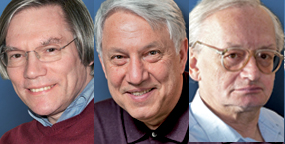
Alan Guth, Andrei Linde and Alexei Starobinsky shared the astrophysics prize.

The prize in astrophysics went to Alan Guth of the Massachusetts Institute of Technology in Cambridge; Andrei Linde of Stanford University in Palo Alto, California; and Alexei Starobinsky of the Landau Institute for Theoretical Physics at the Russian Academy of Sciences near Moscow. The three earned the award for pioneering work on the theory of cosmic inflation, which holds that the Universe underwent a short-lived phase of exponential expansion soon after it came into existence.

Studies of inflation now occupy thousands of theorists. Indeed, recently reported results seemed to suggest that scientists had found the imprint of the Big Bang by examining cosmic microwave background using the BICEP2 telescope; those results, however, have now been called into question.

nano-three

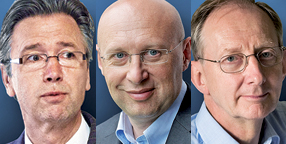
Thomas Ebbesen, Stefan Hell and John Pendry shared the nanotechnology prize.

For the field of nanoscience, the Kavli prizes went to Thomas Ebbesen of the Université Louis Pasteur in Paris; Stefan Hell of the Max Planck Institute for Biophysical Chemistry in Göttingen, Germany; and John Pendry of Imperial College London. The three countered long-held beliefs about the resolution limits of optical imaging and microscopy, showing that light can interact with nanostructures smaller than light’s wavelength. Previous convention had suggested that only details larger than approximately 200 nanometres could be imaged. In a press release, the Kavli Foundation calls this ability to see and image nanoscale objects “a critical prerequisite to further advances in the broader field of nanoscience”.

Ebbesen’s experiments in the late 1990s, which challenged accepted theory of light propagation through small holes, led to new means of increasing the efficiency and spatial focus of photonic devices and the sensitivity of optical sensors. Hell developed a technique that enables imaging at dimensions much smaller than optical wavelengths, including the processes in living cells. Pendry developed a model for the ‘perfect lens’, or superlens, using materials such as silver, gold and copper. Pendry is most famous for developing the concept of an invisibility cloak, which, like perfect lenses is based on the use of ‘metamaterials’ that have a negative index of refraction (see ‘Invisibility cloaks are in sight‘).

neuro-three

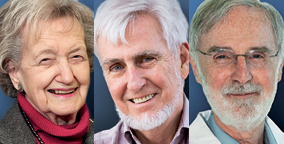
Brenda Milner, John O’Keefe and Marcus Raichle shared the neuroscience prize.

Kavli awarded prizes for neuroscience to Brenda Milner of McGill University in Montreal, Canada; John O’Keefe of University College London; and Marcus Raichle at the Washington University School of Medicine in St Louis, Missouri. Through a variety of research techniques, these neuroscientists elucidated how specialized nerve cells perform different functions and revealed details about brain regions involved in memory. The Kavli announcement notes that memory “defines who we are” and that “loss of memory can have devastating effects on an individual’s personality”.

Milner studied a celebrated patient known as H.M. and others who had incurred brain damage, and found that the medial temporal lobes are necessary for the formation of what is now known as episodic memory. O’Keefe showed that the hippocampus contains neurons that encode an animal’s specific location. And Raichle designed methods for visualizing the brain’s activity.

The Kavli Foundation, based in Oxnard, California, was established in 2000 by Norwegian-born entrepeneur Fred Kavli (1927–2013), and funds more than a dozen Kavli Institutes around the world.

The award ceremony will take place in Oslo on 9 September.

Pictures courtesy of Kavli Foundation (Guth); Linda A. Cicero/Stanford University (Linde); Landau Institute/RAS (Starobinsky); Eirik Furu Baardsen (Ebbesen); Bernd Schuller/Wikimedia Commons (Hell); Mike Finn-Kelcey/Imperial College London (Pendry); Owen Egan/McGill University (Milner); Kavli Foundation (O’Keefe and Raichle).