
{credit}Akademie/Alamy{/credit}
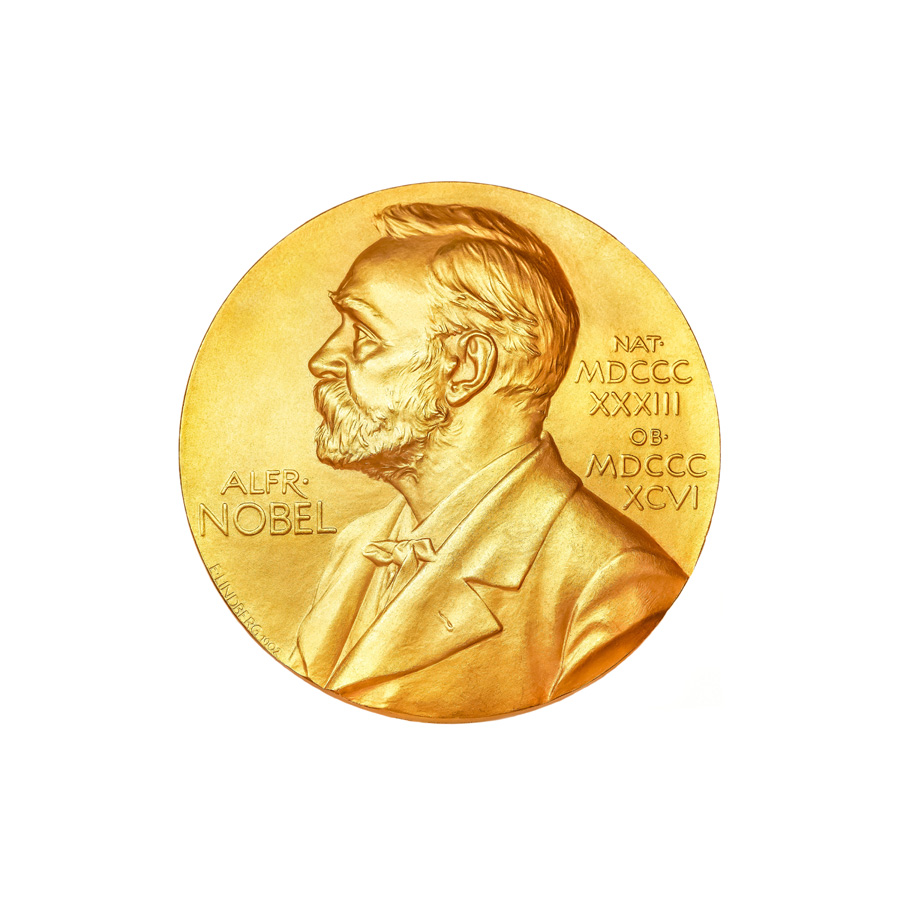
The 2014 Nobel Prize in Physiology or Medicine has been awarded to John O’Keefe, May-Britt Moser and Edvard Moser.
The researchers discovered how the brain helps us navigate the world around us. O’Keefe, a neuroscientist at University College London, discovered specialized “place cells” that were activated when a rat explored a room.
In 2005, the Mosers (a married couple who share a laboratory at the Norwegian University of Science and Technology in Trondheim, Norway) together discovered another component of the brain’s positioning system. The “grid cells” they found create a coordinate system by firing at regular spatial intervals as an animal explores a space. They went on to show how grid cells and place cells work together.
Keep watching this blog for reaction.
Update 11:05 a.m.
As coincidence would have it, Nature was planning to publish a feature story on the Mosers in this week’s issue. Here it is.
Update 11:11 a.m.
The Mosers explain how grid cells work in this 2011 video. For more videos from the duo, follow this link.
You are currently viewing a placeholder content from YouTube. To access the actual content, click the button below. Please note that doing so will share data with third-party providers.
Update 11:32 a.m.
In their press release (download the PDF here) announcing today’s award, the Nobel Committee recognizes work that O’Keefe did in the 1970s and research in the Mosers’ lab three decades later. But the three all worked together in 1995. The Mosers were fresh out of graduate school, and they did a short stint in O’Keefe’s lab, learning how to take electrical recordings of place cells. “This was probably the most intense learning experience in our lives,” they write, in a nice summary of their work on their lab website.
Update 11:52 a.m.
The Nobel website has a recording of May-Britt Moser’s response to the news. She says her husband is still on a plane and hasn’t yet heard the news. He’s due to land in Munich soon. “That would be fantastic if people were waiting at the airport. He would be in shock,” she says.
Update 12:07 p.m.
John Stein, a physiologist at the University of Oxford, says that O’Keefe’s discovery of place cells initially raised more than a few eyebrows. In a statement sent to reporters by the UK Science Media Centre he says: “I remember how great was the scoffing in the early 1970s when John first described ‘place cells’. “Bound to be an artifact”, “He clearly underestimates rats’ sense of smell” were typical reactions. Now, like so many ideas that were at first highly controversial, people say “Well that’s obvious”!”
Updated 1:39 p.m. Corrected affiliation of May-Britt and Edvard Moser