US to restore El Niño monitoring array, but seeks international collaboration

The US National Oceanic and Atmospheric Administration (NOAA) says it will restore a network of moored buoys in the equatorial Pacific Ocean that serves as an early warning system for periodic and disruptive warming events known as El Niños.

Nearly half of the 57 buoys in the Tropical Atmosphere Ocean (TAO) array have failed since 2012, when NOAA, under budgetary pressure, retired a maintenance ship. Scientists are now receiving just 40% of the data that would be collected if all of the buoys were functioning properly, compared to the long-term goal of 80%. This has affected researchers’ ability to monitor for major El Niño events in the eastern Pacific, which have been known to alter weather patterns and inflict massive damage across the globe. The loss of data may also be impacting seasonal weather forecasts.

Craig McLean, who oversees NOAA’s research programmes, says that the agency expects to restore the array to its previous capacity this year, thanks to extra funds in the fiscal 2014 budget approved last month.  “We think it’s an achievable goal.”

The ship previously dedicated to maintaining the TAO array cost US$6 million annually, whereas NOAA spent $2 million to $3 million on charter services in fiscal 2013. McLean says he expects the agency will be able to boost that figure to $4 million this year. That should allow for an expansion of charter operations for now, he says, and then the agency will seek international collaboration on a long-term solution, which may involve the deployment of a more robust monitoring system that requires less maintenance.

“If we can find alternative technologies that can complement and if appropriate replace the devices we have deployed, we will achieve the same scientific results at a lower price,” McLean says. “That technology may exist today, or it may need to be developed.”


Q&A on the forest agreement in Warsaw

Building on several years of negotiations, countries inked a major agreement on forest conservation at the United Nations climate talks in Warsaw on 23 November. The deal formally integrates carbon emissions from tropical deforestation into the international climate agenda by enabling wealthy countries to pay for forest protection in developing countries.

The framework is known as REDD+, which stands for Reducing Emissions from Deforestation and Forest Degradation. The plus sign refers to an additional component that would reward countries for enhancing their forests. Nature talked to Doug Boucher, director of the tropical forests and climate initiative at the Union of Concerned Scientists in Washington DC, about the agreement in Warsaw.

How would this programme work?

Results-based payments will start with countries fixing a ‘reference level’ — their emissions from deforestation before they start working to reduce it — and putting into place a forest-monitoring system to track emissions. Additionally, they would need to establish safeguards to protect the rights of Indigenous Peoples and environmental values such as biodiversity.

They would then take actions, of many kinds, to deal with the drivers of deforestation… After several years, if they have been successful…they will be paid financial compensation. This can come from a variety of sources, including bilateral programs and multilateral programmes. The Green Climate Fund, which has been established and is going to start receiving contributions in the coming year, is expected to become one of the major sources of compensation in years to come.

How much would it cost? And given the state of climate negotiations more broadly, is there financing to pay for it?

The estimates of several years back generally agreed that we would need US$20 billion or so per year, once REDD+ got going globally in the 2020s. The experience of Brazil and Norway has shown that major emissions reductions can made at costs considerably less than such estimates would have predicted, but we’re not at all sure that this can be done in many other countries. So for the time being I think those older estimates are still our best guesses.

Right now, the financing isn’t there at that scale. More worrisome is that there’s no clear plan among donor countries to increase funding over the next several years… The Green Climate Fund has been established, but countries are going to have to fill it if they want REDD+ to succeed globally.

The agreement took longer than expected. Fears arose about ‘carbon cowboys’, social and environmental safeguards as well as the actual structure of the policy. What were some of the outstanding issues, and how were they resolved?

Safeguards were one of the major issues, and important decisions in Cancun, Durban and here in Warsaw put those into place. The technical aspects — especially how to establish reference levels and how to measure, report and verify reductions with respect to them — required a lot of complicated discussions, but ultimately they were resolved by establishing rules that were scientifically sound but not overly complicated, with technical assessment by the global scientific community. Financing took the longest, and although we now have the procedures for payment in place… we still don’t have the necessary money.

To benefit from forest management, countries must be able to monitor their forests. How will science play into the process?

Science will be critical to monitoring, and we’re fortunate that over the last decade or so…the technology necessary to monitor forests has improved significantly… There have also been important advances in our understanding of the drivers of deforestation and the global economic patterns, including trade and changing diets, that underlie them. So the science is now up to the task, if the resources to implement it are made available.

Where do we go from here? And how long will it take to begin implementing the agreement?

This can start for many countries in 2014, but as I mentioned, some have already been doing it, with considerable success. Leaders such as Brazil, Costa Rica, Vietnam and Norway have already been implementing REDD+ without waiting for the agreement in Warsaw. They’ve shown the way; other countries can now follow.

CORRECTION: In an earlier version of this post, the introduction said the agreement would allow wealthy nations to “offset” their emissions by paying for forest protection in developing countries. In fact, UN negotiators have yet to determine whether developed countries will be able to record the resulting reductions in carbon emissions as formal offsets when reporting on greenhouse gas mitigation activities. 

UN climate talks conclude with a whimper, and a new forest policy

After two weeks of frustration and controversy, negotiators departed the United Nations climate talks in Warsaw on Saturday with a landmark agreement on forests and a rough roadmap to the next headline summit in Paris two years hence.

Under the agreement, countries must submit by early 2015 their commitments for action after 2020, when the current commitments expire. Left to be decided at next year’s meeting in Lima, Peru, is what kind of information those plans must include and how they will be evaluated. More immediately, the agreement sets out a mechanism for reporting climate aid from developed countries, which have committed to ramp contributions up to US$100 billion annually by 2020. Negotiators also established a new international body on ‘loss and damage’ in order to help poor countries cope with climate impacts.

But the most significant achievement was an agreement on the basic framework for reducing deforestation, which is responsible for as much as 15% of global carbon emissions. The deal creates a mechanism enabling carbon payments for countries that can document reductions in deforestation and forest degradation.

Formally launched in 2007 in Bali, Indonesia, the forestry talks initially moved quickly. Developed countries saw the opportunity to cheaply offset their emissions, while developing countries in the tropics saw an opportunity to attract money for rural development. Various countries and international institutions quickly embarked on initiatives intended to lay the groundwork for a global programme, but the talks eventually stalled over how to design and fund such a system. Long-term financing for this week’s agreement still needs to be worked out, but Norway, the United Kingdom and the United States kicked things off by collectively committing $280 million to a new BioCarbon Fund.

The agreement on forest conservation was nonetheless overshadowed by a dearth of progress in other areas. For environmental and social activists, who staged a walk-out earlier this week, Warsaw kept the negotiating process alive — but only just. “The lack of urgency shown by governments in this process has been sickening,” Samantha Smith, who heads the WWF’s Global Climate and Energy Initiative out of Oslo, Norway, said in a prepared statement. “This has placed the negotiations towards a global agreement in 2015 at risk.”

Updated: White House announces Energy Department nominees

President Barack Obama today nominated Franklin “Lynn” Orr, a chemical engineer at Stanford University in California, as under secretary for science at the Department of Energy. Orr’s nomination was accompanied by that of Marc Kastner, a physicist at the Massachusetts Institute of Technology in Cambridge, to head the department’s office of science.

Orr joined the Stanford’s Department of Petroleum Engineering in 1985 and rose to become dean of the School of Earth Sciences in 1994. He led the university’s Global Climate and Energy Project before assuming his current post, in 2009, as director of the Precourt Institute for Energy.

Orr has proven his ability to integrate basic and applied research while focusing on big-picture energy questions, says James Sweeney, a colleague at Stanford who directs the Precourt Energy Efficiency Center, which is part of the institute headed by Orr. Sweeney says those skills will come in particularly useful now that Energy Secretary Ernest Moniz has given the under secretary for science oversight over both science and energy research. Orr is also co-teaching a freshman-level course on energy with Sweeney and another colleague, and Sweeney says Orr’s skills as a communicator will prove equally useful in Washington.

“Besides being a researcher and a manager, he is also an educator,” Sweeney says. “He’s got a little of everything.”

Orr’s appointment comes nearly two years after the departure of Steven Koonin, who went on to head New York University’s Center for Urban Science and Progress.

At the Energy Department’s office of science, Kastner would replace William Brinkman, who stepped down in April. Kastner joined MIT’s Department of Physics in 1973 and headed the department from 1998 to 2007. He has served as the dean of MIT’s School of Science since 2007 and remains active in semiconductor research.

India balks during Montreal Protocol talks

International negotiations over a proposal to regulate hydrofluorocarbons (HFCs) came up short in Bangkok this week.

Two separate proposals, one by Micronesia, Morocco and the Maldives and the second by Canada, Mexico and the United States, would expand the Montreal Protocol on Substances that Deplete the Ozone Layer to regulate HFCs, commonly used as refrigerants and in other industrial applications. HFCs were developed as ozone-friendly alternatives to chlorofluorocarbons (CFCs), but they double as powerful greenhouse gases.

Environmentalists reported that the idea continued to garner support at this week’s meeting, which ended today. In particular, South Africa and the larger negotiating block of African countries endorsed a call to begin formal negotiations over the HFC amendments. But many had hoped for a more concrete decision in favour of regulating HFCs this week, given the endorsement by leaders of the Group of 20 (G20) in September. India, joined by Saudi Arabia, blocked consideration of the amendments.

With China apparently on board thanks to an agreement between US President Barack Obama and Chinese President Xi Jinping, India shouldered most of the blame. India backpedaled after signing onto the G20 commitment, although Obama and Indian Prime Minister Manmohan Singh agreed on 27 September to launch negotiations over the issue.

The proposal has been in the works for several years (for prior coverage, see ‘Cutting out the chemicals’ and ‘Ozone treaty could be used for greenhouse gases’). At this week’s meeting, delegates called for a technical report on HFC alternatives and a formal workshop on the issue next year.

National laboratories prepare to shut down

With no end in sight for the US government shutdown that began on 1 October, the Department of Energy (DOE) is now preparing to shut down the sprawling complex of national laboratories that maintains nuclear weapons and performs a range of basic and applied research.

Los Alamos National Laboratory will stop most work on 18 October due to the US government shutdown.

Los Alamos National Laboratory will stop most work on 18 October due to the US government shutdown.{credit}Ethan Froggett/LANL{/credit}

Thus far the facilities have been sheltered from the government shutdown because they are operated by subcontractors — including universities and businesses — under longer-term contracts. But with their remaining DOE money beginning to run dry, national laboratories have begun curtailing work and preparing to close their doors. At least three major DOE facilities — including two of the core nuclear weapons laboratories, Los Alamos and Sandia in New Mexico — are scheduled to shut down within two weeks.

Without funding, Los Alamos will shut down on 18 October. Officials there are now preparing a list of essential employees who will stay on to ensure safety and security of the laboratory’s core facilities, nuclear materials and any critical scientific experiments. The lab will also “retain the capability to respond to national emergencies,” says spokesman Fred deSousa. As of 9 October, it remained unclear how many of the roughly 10,300 workers would be furloughed.

In an 8 October memo to employees, Sandia director Paul Hommert warned employees that the laboratory is preparing to shut down at the close of business on 21 October. Hommert did not say how many of the laboratories 8,700 employees would be retained, but cautioned that ongoing activities would be extremely limited.

At the Hanford Site in Richland, Washington, workers are already preparing scale back cleanup activities at the former nuclear processing site in preparation. Hanford has 8,000 contractors and another 450 federal employees, and officials expect that the vast majority of those employees would be furloughed beginning 21 October. The Y-12 National Security Complex, a manufacturing facility near Oak Ridge, Tennessee, that supports the nuclear weapons programme, has already begun shutting down operations in preparation for closure on 17 October.

Other laboratories are faring better. Argonne National Laboratory in Lemont, Illinois, has enough money to continue operations through the end of the month, and perhaps into November. Both the Pacific Northwest National Laboratory in Richland and Oak Ridge National Laboratory in Tennessee will continue operations into November. Laboratory officials have been ordered to direct all media queries to DOE officials in Washington DC, but officials there declined to provide any details regarding the pending closures.

One laboratory official who declined to be identified laments the gridlock among politicians in Washington DC. That person says it is just a matter of time before everything comes to a halt. “We’ll all be in the same boat if they don’t come up with a solution soon,” he says.

Facility Furlough date Employees affected Research areas
Y-12 National Security Complex 17 October 4,800 Engineering and manufacturing for nuclear weapons
Los Alamos National Laboratory 18 October More than 10,300 Nuclear weapons, security, energy, environment
Sandia National Laboratory 21 October 8,700 Nuclear weapons, engineering, energy, environment
Hanford Site 21 October 8,450 Nuclear clean-up
Pacific Northwest National Laboratory November 4,700 Materials science, energy, environment and national security
Oak Ridge National Laboratory Early November 4,400 Nuclear energy, environment, national security

EPA proposes emissions limits for new power plants

Following through on President Barack Obama’s climate strategy, the US Environmental Protection Agency (EPA) today proposed greenhouse gas regulations that would effectively ban coal-fired power plants unless they are equipped to capture and sequester a portion of their carbon dioxide emissions.

The proposed regulations come 18 months after the agency released its initial regulatory proposal, which encountered intense opposition from electric utilities. Although the new standards provide a little extra leeway and flexibility, the agency basically stuck to its guns regarding new coal plants, which would need to capture 40-60% of their emissions in order to meet the new standard. Utilities have said the regulations would effectively ban new coal-fired plants by requiring the installation of immature and expensive technology, but EPA administrator Gina McCarthy argued the opposite today.

“CCS is a technology that is feasible, and it is available today,” McCarthy said. “I believe this proposal, rather than killing future coal, actually sets out a certain pathway forward for coal to continue to be part of the diverse mix in this country.”

Under the proposed standard, large natural gas plants would be allowed to emit up to 454 kilograms of carbon dioxide per megawatt hour, while coal-fired plants would be limited to 499 kilograms of carbon dioxide per megawatt hour. Alternatively, utilities could opt for additional flexibility as they bring new coal plants on line if they agree to meet a stricter standard — 476 kilograms per megawatt hour — averaged across the first seven years of operation.

The EPA will accept public comments on the proposal for 60 days. Utilities criticized the proposed regulation and warned that it would be challenged in court, while environmentalists generally praised the announcement as a step in the right direction.

President Obama also called on the EPA to regulate emissions from existing power plants, which are responsible for about a third of the nation’s greenhouse gas emissions. McCarthy underscored that initiative and said the EPA is now working with industry as well as local and state officials to craft a proposal, which will be released as scheduled next June.

New York releases climate assessment and a plan for urban adaptation

Shortly after Hurricane Sandy hammered the eastern seaboard last October, more than a dozen scientists on the New York City Panel on Climate Change reconvened to begin work on a new assessment. The results were released today by Michael Bloomberg, New York’s mayor, and they served as the basis for a US$20-billion urban-planning initiative that seeks to prepare the city for extreme weather and rising tides in the decades to come.

The science panel’s assessment is based on the latest modelling for the Intergovernmental Panel on Climate Change and suggests that average temperatures could rise 1.7–3.6 degrees Celsius by 2050 (compared to a baseline from 1971–2000). Precipitation could increase by 5–10%, and the number of days with temperatures reaching at least 32 °C could triple. The panel’s projections suggest that local sea level could rise 18–79 centimetres, increasing the frequency of significant flooding events. The city has expanded its 100-year flood areas (currently populated by some 400,000 people, a number that could rise to 800,000 by mid-century) and is bracing for rising storm damage in the decades to come.

The Bloomberg administration’s report is in line with a range of ideas and issues discussed in earlier coverage, from new sea walls and insurance programmes to stricter building and industrial codes (see Natural Hazards: New York vs the sea’). They also include new urban approaches intended to better integrate the city with the ocean, allowing for occasional saltwater incursions (to get a taste of things, check out the architectural renderings, along with damage assessments and new flood maps, in Bloomberg’s presentation).

The city has already begun expanding protective dune systems in some areas, Bloomberg said. Having ruled out a single surge barrier across the New York Harbor as impractical, the city is beginning work on the development of a series of smaller barrier systems and sea walls that will protect specific neighborhoods. Acknowledging that much of the work will depend on budgets and future administrations, Bloomberg said he will do what he can during his final 203 days in office.

“I strongly believe we have to prepare for what the scientists say is a likely scenario,” Bloomberg said. “Whether you believe climate change is real or not is beside the point — we can’t run the risk.”

Political thaw raises hopes for refrigerant regulations

HFCgraph.personal.2

{credit}Data: UN Risoe Centre{/credit}

This week China budged. Depending on one’s perspective, it wasn’t much of a concession. The country agreed, in essence, to do what it and everybody else had already agreed to do back in 2007: accelerate the phasing out of a common class of ozone-eating refrigerants that double as powerful greenhouse gases. But rather than haggling over prices each step of the way, China made it simple and cut a single deal — worth up to US$385 million — to eliminate hydrochlorofluorocarbons (HCFCs) between now and 2030.

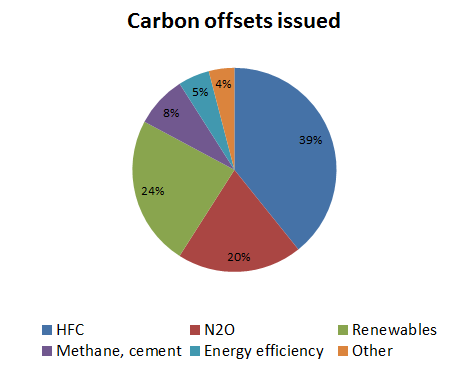
Reached under the auspices of the 1987 Montreal Protocol on Substances that Deplete the Ozone Layer, the agreement would lock in extra protection for stratospheric ozone as well as greenhouse-gas reductions equivalent to 8 billion tonnes of carbon dioxide. That is more than double the annual carbon emissions of the European Union. But more importantly, observers hope that it might mark a new beginning in the long-running bureaucratic battle over how to manage the chemicals that replace HCFCs: hydrofluorocarbons (HFCs), which are ozone friendly but remain potent trappers of heat. In particular, environmental advocates — and a solid majority of countries — hope that China will finally get behind a proposal to shift management of HFCs from the United Nations climate convention, where they now reside, to the Montreal Protocol.

“It’s really too early to tell, but this could be a signal they are going to take a better position with regard to phasing out HFCs,” says Mark Roberts, senior legal counsel for the Environmental Investigation Agency based in Stow, Massachusetts. Roberts notes that China also agreed to manage ongoing HCFC production as well as associated by-products “in accordance with best practices to minimize associated climate impacts”.

The timing is uncanny. In recent years a small cohort of companies in China and a handful of other countries have collected billions of dollars to destroy HFC-23 — a by-product of certain HCFC production that is 14,800 times more potent than carbon dioxide as a greenhouse gas — in exchange for dubious credits under the Clean Development Mechanism, which allows wealthy countries to offset their emissions in developing countries. In just four days, at midnight on 30 April, the European Union will turn off the spigot. Many feared that the companies would respond with the cheapest solution: vent into the atmosphere. China now seems to be suggesting that won’t happen.

Continue reading

Marcia McNutt tapped as editor-in-chief at Science

0402_mcnutt

{credit}Courtesy of Marcia McNutt{/credit}

The American Association for the Advancement of Science has appointed former US Geological Survey (USGS) director Marcia McNutt as editor-in-chief of the its flagship journal, Science.

McNutt headed the USGS under US President Barack Obama before stepping down in February. Before her stint in Washington, she was the chief executive officer of the Monterey Bay Aquarium Research Institute in California. She will assume her new position at Science in June, succeeding biochemist Bruce Alberts, who has held the position since 2008.

McNutt knows the journal well: she served on the senior editorial board from 2000 to 2009, when she had to resign her post to join the Obama administration. The advisory role offered insights into the machinations of the magazine as well as introductions to the staff, but McNutt says that she has no hard agenda coming in. “I think it’s dangerous … to come in with too much of a set agenda, because that can mean that you are speaking too much, and not listening enough,” McNutt says.

McNutt trained as a geophysicist, and she stresses science communication as opposed to the business of publishing. Nonetheless, she ventures into trends toward open-access science and says publications such as Science and Nature will need to adapt to a new world in the years to come, and one where legislators and governments may decide when science must be placed into the public domain. “Regardless of what the journal policy may be, these policies may be dictated to us,” she says.

Soon enough she is talking about different financial models and revenue streams at home and abroad, weighing subscriptions versus ad revenue and online access versus the traditional print publications. She says that the goal is to be at the vanguard of change without leaving the traditionalists behind. By the end, she is starting to sound like a veteran publisher.

“The first job of any editor-in-chief is to make sure that your journal stays in print,” she jokes.

Photo courtesy of Marcia McNutt