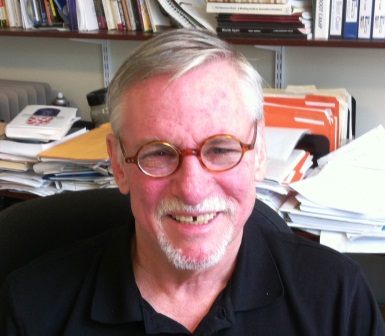
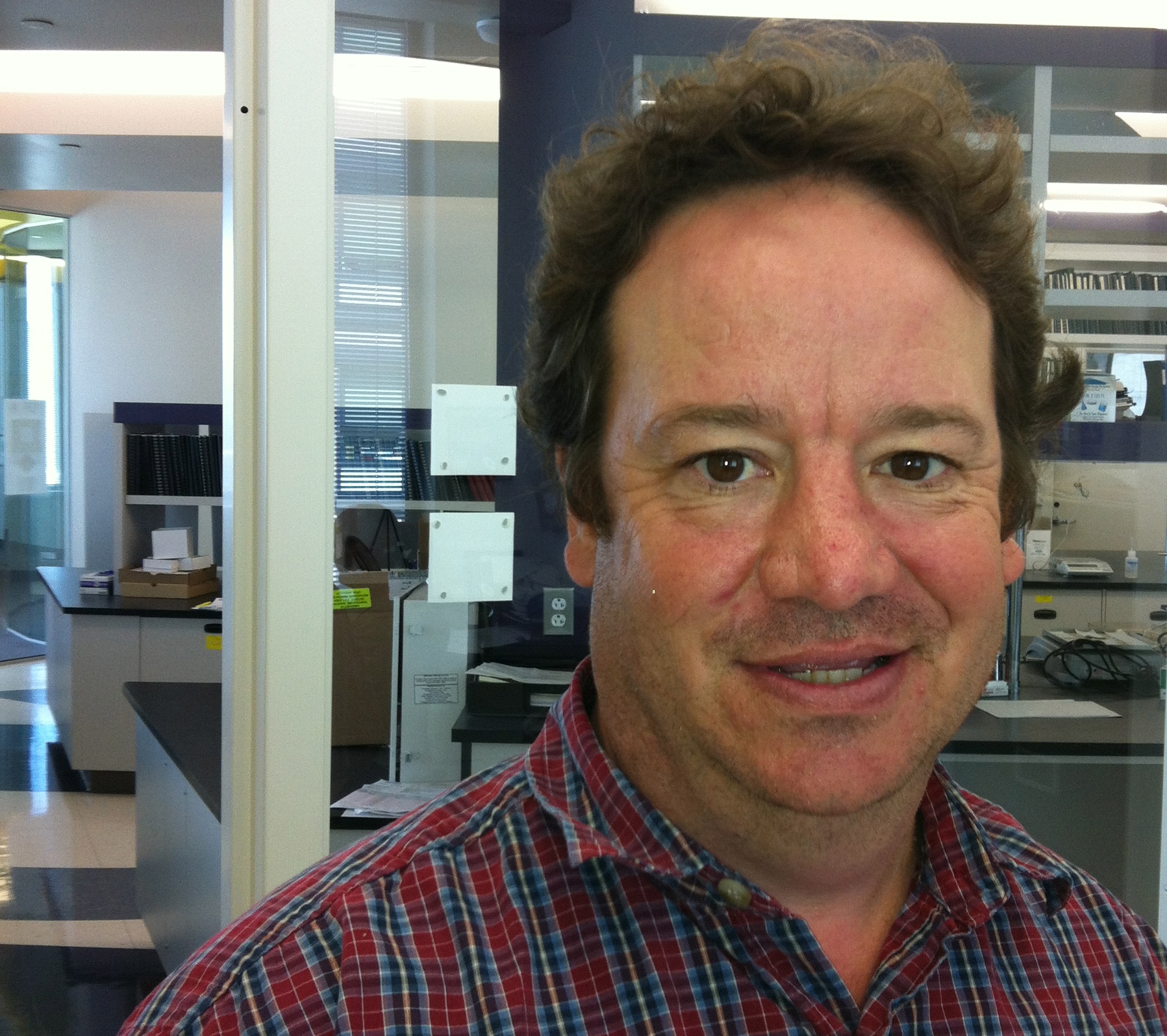
Friday’s inauguration of new MIT president L. Raphael Reif included all the usual pomp, plus some. Music for the event included a piece by a Senegalese drum ensemble and a performance of “A Rhumba for Raphael Reif” written by MIT professor and Pulitzer Prize winning composer John Harbison. More below.
Category Archives: Boston science
Science Journalism Tracker: A virtual water cooler for sciwriters
In addition to training writers from across the globe, the Knight Science Journalism program at MIT keeps an eye on what we all produce. The KS Journalism Tracker web site notes that, for the past six years, its writers have “commented on the effectiveness and balance of thousands of news stories.” The program recently lauched a redesiged web site, but the Tracker’s mission remains the same. Today it counts 30,000 hits a month, including many from Spanish-speaking readers interested in posts on Latin Amerian science journalism. The site hopes to offer the same service to Chinese-speaking science writers.
Earlier this week, Nature Boston talked Phil Hilts, the former New York Times reporter who runs the Knight Science Journalism program at MIT.
What is the thinking behind the Tracker?
(Charlie Petit’s) original idea was just to do a little round up of a bunch of stories. What he noticed was — science writers, while they know each other and see each other at meetings, they don’t really see each other’s work very much.
… He started getting into the idea that you could pick out a couple of good stories and identify them and do a little critique – and once in a while do a critique when something went wrong. (The posts) are all supposed to be relatively short. They’re starting to get a little too long and I’ve started complaining to (the writers.)…I like a mixed length and not too much analysis.
What’s the difference between an analysis and a critique?
My sense of analysis is that it tends to go pretty deep and long. I don’t really want deep and long.
Why not?
This is a blog and … (Readers) go to it because they’re interested in what is going on. … If you give them this large post, it’s going to quickly put them off. Once in a while, a little longer that’s fine. But mainly they want to jump on and see two or three or four items – here are some good stories or everybody is doing this story this way. Continue reading
Voyager time capsule: A bottle in the cosmic ocean
As of April 13, 2012, Voyager 2 was 9.127 billion miles from Earth, beyond the orbit of Pluto. Voyager 2 is leaving the solar system at 36,000 miles per hour, or 1 light year per 18,600 years. So reports the MIT Space Plasma Group.
MIT will be among the institutions celebrating the 35th anniversary of the Voyager mission this week. The ship’s Plasma Science Experiment (PSE) is the work of the MIT group. Thirty-five years ago they put two instruments on Voyager 12 –“Plasma” or “Faraday” Cups. They’ve been collecting data on solar wind speed, density, temperature, and pressure ever since. According to the MIT Museum, the cups have sent data back every 160 seconds of its “Grand Tour” of the planets and beyond. They now post the data on the MIT web site; last year, the team published 8 papers
The site includes an animation of the spherical bubble created by solar wind called the heliosphere, that continually expands over the lifetime of the solar system. The MIT website also describes 1970s era time capsule that went into the ships — a phonograph record with music and images.”selected to portray the diversity of life and culture on Earth.” Continue reading
Arboretum’s “Tree Mob” gathers to learn about oaks, plant collections and tree rings
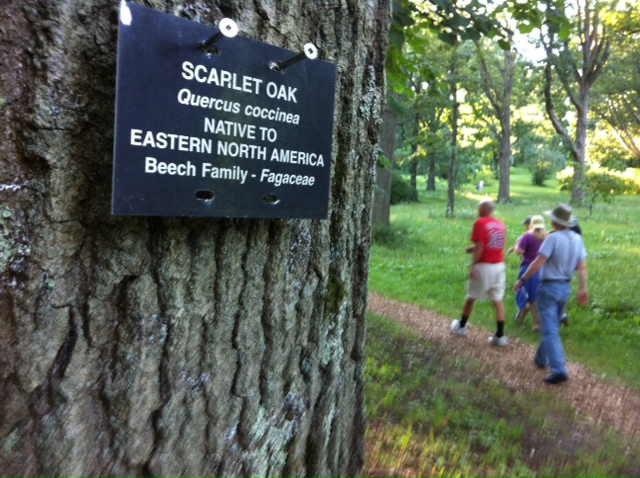
The message seemed kind of cryptic: Meet in the oak collection, north of Valley Road at the northern end of Oak Path. But, the term “collection” was the tip-off that this mob meeting would be more horticultural than clandestine.
The Arnold Arboretum, a 265-acre botanical garden run jointly by Harvard University and the city of Boston, now hosts what it called “Tree mobs.” Late on Thursday afternoon about 50 people wandered into the garden looking for the oaks. Some were guided by signs posted along the way that read “Join our Tree Mob. Casual learning in the landscape.” Others had scanned the QR code on the signs or the arboretum’s website for a GPS map that led the way to the oak-lined path.
(The codes on many of the garden’s plant labels –and the nod to the flash mob concept — reflect the Arboretum’s embrace of digital technology.) Continue reading
Shark attack livens up MV “JawsFest’ for both film buffs and conservationists
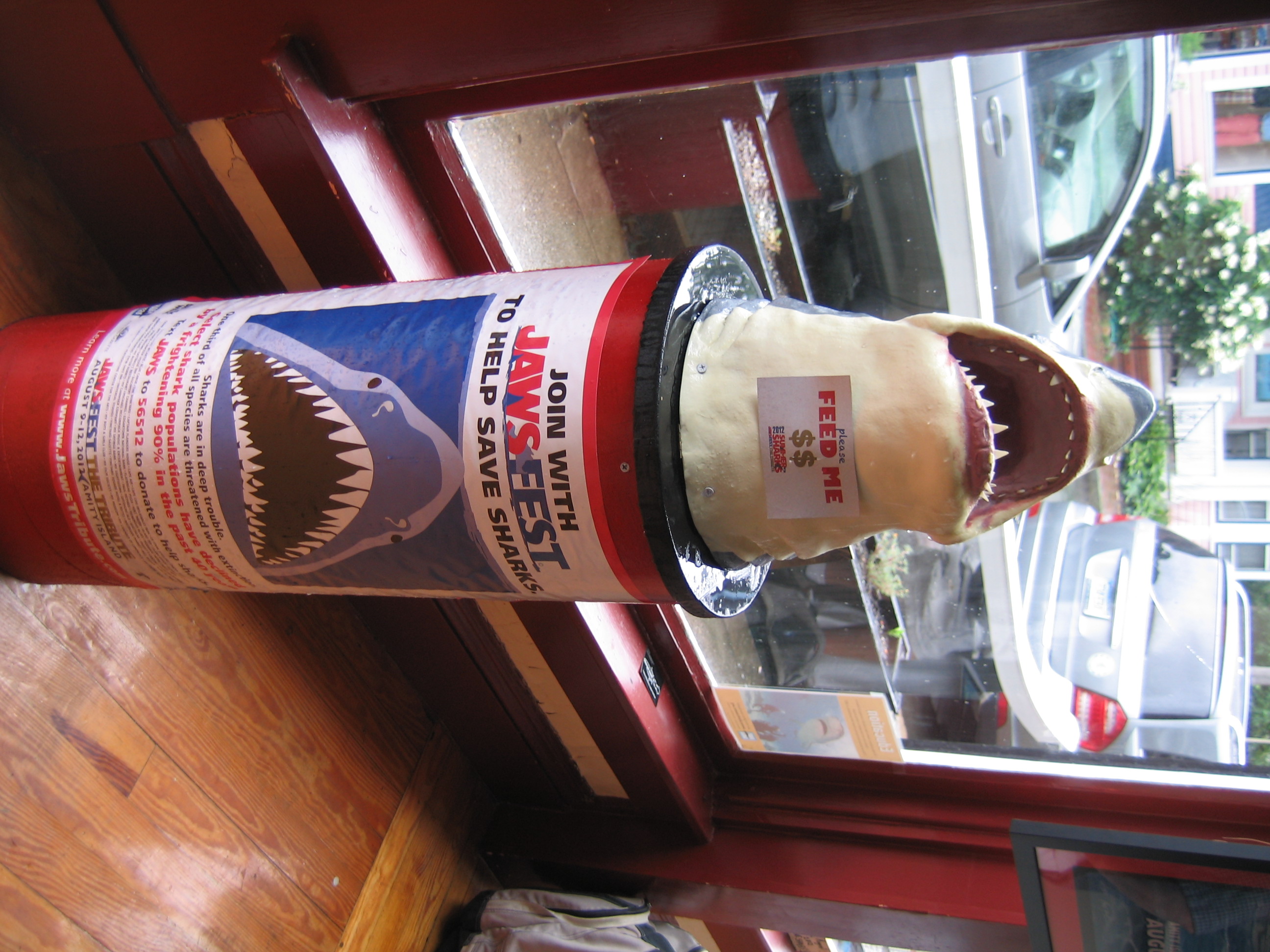
JawsFest on Martha’s Vineyard was a sure sell to “finaddicts” – serious fans of the 1975 shark attack movie. Organizers wanted to appeal to film buffs thrilled by the ferocity of the Great White. But they also threw out some chum to shark enthusiasts trying to save the the big fish.
So, this weekend, Samantha Whitcraft—a member of the Miami–based group Shark Savers — found herself on the island where Jaws was filmed. Standing at a literature-covered table in what was once an Oak Bluffs oyster bar, she said the group’s goal is to protect the shrinking populations of at-risk sharks
About one–third of all shark species are threatened with extinction, Whitcraft said. One major culprit – Chinese chefs who offer shark fin soup. She noted that scientists estimate there are about 3,500 white sharks left on the planet — fewer than that other endangered ferocious creature, the tiger.
But, she noted that solid scientific data on sharks is lacking.
“For many species, we don’t’ even know where they pup or mate,” Whitcraft said. “No one has ever seen the birth of a white shark.”
In addition to lobbying for shark-friendly fisheries management, the group has launched a citizen science project called Sharks Count. They’ve set up a database and are asking recreations divers to log their shark sightings. Continue reading
In Massachusetts, nine NIH-funded research projects in this year’s $10 million club

So far for 2012, the NIH has approved 3,810 grants in Massachusetts – some for new projects, others for familiar, ongoing research centers. The big money is going to genetics, HIV/AIDS and biodefense. Few topped $10 million –according to NIH, the av
erage award amount nationwide was $44,642 for 2011. Among the group – genomics superstar Eric Lander, whose name cam
Here’s a look at the projects that, so far this year, have broken the $10 million mark – and a few that come close.e up during the recent presidential search at MIT and Daniel Kuritzkes at the Brigham, who got a standing ovation at the recent AIDS conference when he annouced findings on two more AIDS patinets who became virus-free after bone marrow transplants. Also note that Harvard Med School dean Jeffrey Flier is listed as the PI on the grant to the troubled primate research center. Continue reading
Summer science events this week in Boston
Monday
The Boston area has Geek Week – comedy – and Nerd Fun – a meet up –and this week, Nerd Night. The lectures – and music – take place at the Middlesex Lounge in Cambridge. The event is described as “ an informal gathering at which nerds get together for nerdery of all sorts (well, mostly presentations and drinking). Nerds and non-nerds alike gather to meet, drink and learn something new.” Monday topics: immunology and the wonders of silk.
Tuesday
Science camps and children events abound this summer, with too many to list here. But, note that the Mass Audubon’s Broadmoor Wildlife Sanctuary in Natick is hosting a night nature program that combines ice cream and critters – frog, fireflies and this week, bats. Registration required.
Wednesday
The last of the Midsummer Nights’ Science lectures covers “Harnessing genomics to decipher fundamental differences” with Stacey Gabriel: “Since the days of the Human Genome Project, the Broad’s Genomics Platform has harnessed DNA sequencing and genotyping technologies …. Stacey Gabriel will discuss the implications of using these techniques to compare DNA from cancerous cells to normal cells, from one person to another, and from humans to other animals.” (Nerd Fun will meet up there.)
Starting out in science: Boston researchers share lessons from their first jobs
Thursday 26th July saw the launch of SciLogs.com, a new English language science blog network. SciLogs.com, the brand-new home for Nature Network bloggers, forms part of the SciLogs international collection of blogs which already exist in German, Spanish and Dutch. To celebrate this addition to the NPG science blogging family, some of the NPG blogs are publishing posts focusing on “Beginnings”.
Participating in this cross-network blogging festival is nature.com’s Soapbox Science blog, Scitable’s Student Voices blog and bloggers from SciLogs.com, SciLogs.de, Scitable and Scientific American’s Blog Network. Join us as we explore the diverse interpretations of beginnings – from scientific examples such as stem cells to first time experiences such as publishing your first paper. You can also follow and contribute to the conversations on social media by using the #BeginScights hashtag.
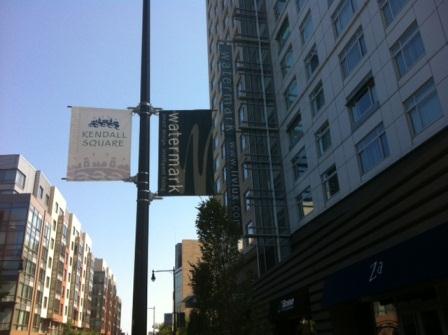
A scientist’s first job can be a thrill, a terror, a challenge, a source of inspiration or the inspiration to do something different. So say some of the researchers whose career paths led them through Kendall Square this week. Conversations inside and outside neighborhood labs and offices explored the question – What lessons did you learn when first starting out?
Some researcher had mentors — or at least people who gave them memorable advice. Jerry De Zutter met his first boss — Gary Barsomian of Genzyme – while playing Ultimate Frisbee. De Zutter interned at Genzyme as an undergrad, worked at the Cambridge-based pharma for a year, and got some advice from Barsomian before heading to graduate school :“The one thing you want to make sure you do when your rise to the level of a PHD science, is to become an expert in something. “
De Zutter focused on the signal transduction processes that underlie neurodegeneration. After several jobs in the pharmaceutical industry, he now runs a team of researchers working on discovery and the pre-clinical pipeline at ALS Therapy Development Institute. The company is one of a growing number of non-profit pharmaceutical development projects.
On a break at a Kendall coffee shop, Deepti Sharma also said she had a supportive boss. Working with LC-MS ( liquid chromatography-mass spectrometry] at Advion, a company in Ithaca, New York, she said her supervisor encouraged her to take on more responsibility: “That gave me a good opportunity to explore the product development platform with full enthusiasm and energy,” she said. Sharma also got the best of both worlds – academic and industry. While at the company, she was able to work with Cornell professor Jack Henion, whom she described as “the father of LC-MS…It was as if I was working as a student but in an innovative, fast-paced environment,” she said.
Not everyone queried in the square remembered an inspiring boss. Chris, a pharma chemist who asked that his last name not be used, said he had a supervisor with “a very serious temper problem” at his first job, which was in an academic lab. But, that isn’t what drove him out of the university setting and into the world of corporate science. Without a PhD, he didn’t see any future in academia.
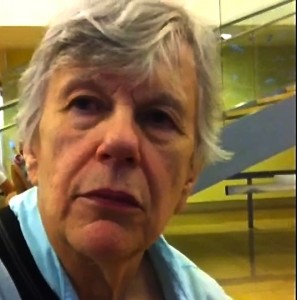
When Kathryn Erat started her career in the 1950’s, she quickly stepped into the future. A degree in math and physics landed her a job with a combustion engineering company working on power systems for nuclear submarines. After struggling for days to solve complex math problems, she suggested to her boss that they might be able to work more efficiently with a new form of technology – the computer. Back then, that meant a mainframe and a trip to New Jersey.
Two chemical engineers lunching outside a local biotech – Tanya and Hong – both faced the same problem when finding their first jobs in the US. The two women – who asked that their last names not be used – had to convince employers that the skills they learned in Communist countries would apply to work in this country. When Tanya, who was trained in the former Soviet Union, got her first job, she was grateful for the chance to prove herself: “For those who are not born in the States and do not have an American education, to find a first job is extremely challenging because you don’t have the right experience in this country. Your experience anywhere else seems to be absolutely irrelevant.”
Hong, who arrived from mainland China 20 years ago, said she had the same problem, but ended up landing a job with a helpful boss. Her first realization was that the U.S. drug development industry worked under a different set of rules.
“Twenty years ago in China, (regulations) were a lot looser,” she said. Here, for example “the regulations about patient safety are very strict.”
Computational biologist Kevin Galinksy spent two years at the J. Craig Venter Institute in Maryland before coming to the Broad Institute. As a young scientist, he’s only worked in a wired world. So, the advice to publish or perish had a different meaning for him – he can post some of the code he’s developed on the web.
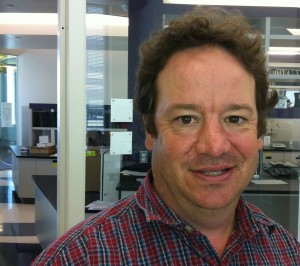
Back at the ALS Therapy Development Institute, Director of Discovery John Lincecum, said he was interested in science and took premed course as an undergrad. But he decided to focus on the liberal arts and leave most of the science for grad school.
He fled the oil bust in his native Texas to look for work in then booming Massachusetts. Lincecum emphasized the science on his resume and was hired as a technician for a company now known as Charm Sciences, which was developing radioimmunoassays to test for penicillin levels in milk.
“I was absolutely terrified because my worry was that they would figure out I really wasn’t a scientist,” he said. “I was English major.”
His fears came true when he spent an entire week pressing the wrong button on a scintillation counter. Instead of carefully measuring ionizing radiation, he was pushing the button for the timer. He expected to get fired. “But they were very patient,” he said. What he found was that the approach he had been counting on paid off: “I felt all I had to do was — ask a lot of questions, be very, very enthusiastic and be willing to admit every mistake I made.”
Gown v. Gown: MIT students, faculty question Kendall Square plan
Kendall Square, once a bleak, industrial backwater, is now a Cambridge hot spot. A dense cluster of biopharma labs has attracted tech giants like Google, “luxury” apartment blocks and restaurants offering oysters, tapas and serious coffee. Last week, The Boston Globe called the neighborhood “a place city dwellers, foodies and beer enthusiasts can enjoy.”
MIT also sees it another way – as an investment opportunity. The school’s Kendall Square Initiative – as outlined to the City Council in in May — calls for remaking one of the neighborhoods area’s last barren spots into “a mixed-use revitalization project.” That includes housing, retail and eight new commercial buildings to house labs and offices, which The Globe values at $2 billion.
But, opposition has emerged. This time, it is not from activist neighbors. Instead, a small group of faculty members and the Graduate Student Council have issued statements questioning the use of one of MIT’s last vacant parcels for commercial development. Continue reading
The Science Club for Girls and the cycle of mentoring
The latest Soapbox Science mini-series focuses on the role of mentors in science. Tying in with this year’s Lindau Nobel Laureate meeting, where almost 600 young scientists have the opportunity to meet each other and 25 Nobel laureates, we’ll be looking at the importance of supportive relationships and role models. We’ll hear from a mix of mentors, mentees and projects set up to support scientists and we aim to explore not just the positive examples of good mentoring but what can happen when these key relationships are absent or break down. For more discussions around this year’s Lindau meeting, check out the Lindau Nobel Community site.
Meghna Marjadi is a Massachusetts Promise Fellow (Americorps) serving as the the High School Programs Coordinator for Science Club for Girls. The Cambridge, Mass. – based group sends volunteer mentor-scientists from local universities, research labs, and companies to area schools. Group members also train teens to serve as “Junior Mentors” to younger girls so they can “ picture themselves in STEM careers. Meghna also runs the herring monitoring program with the Mystic River Watershed Association.
While women comprise nearly half the work force, they fill only 25 per cent of STEM jobs, according to a 2011 report by the US Department of Commerce. The factors influencing underrepresentation of women in science include a dearth of role models, STEM careers that offer little family time and gender stereotyping. For example, earlier this year, the clothing store Forever 21 carried a t-shirt that read, “allergic to algebra.” Continue reading