Week of 8/17: The Ig Nobles and other Boston area events for the scicurious

Monday

They abandoned the titles – such as “The Many Faces of Chocolate” — but they are still promoting the chemistry of cuisine at the Science and Cooking lectures at Harvard. This week sees a return visit from White House Pastry Chef Bill Yosses.

Wednesday

A busy night with a Science in the News lecture on Genetics, a talk on invasive species at the Harvard Museum of Natural History, and a session on “Crowdsourcing Innovation” at the Microsoft NERD Center in Cambridge.

Thursday

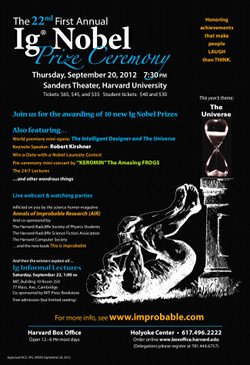
Another jam-packed night, highlighted by the Ig Nobles, the hilarious, quirky annual spoof with skits, music and awards for research like the gas-mask/bra. Sanders Theater at Harvard. Get Iggy and get tickets – if any remain. If not, check out the Quantified Self meet-up at the Asgard Irish Pub & Restaurant 350 Massachusetts Ave, Cambridge.

Saturday

Rockin’ with Raptors Festival – Celebrate the tenth anniversary of the George Robert White Environmental Conservation Center. Hike the trails, enjoy lively entertainment provided by Branches Steel Orchestra, visit the petting zoo, see up close and learn about live raptors from Blue Hills Trailside Museum, and check out the exhibits and displays in Boston’s greenest municipal building.

In Massachusetts, nine NIH-funded research projects in this year’s $10 million club


So far for 2012, the NIH has approved 3,810 grants in Massachusetts – some for new projects, others for familiar, ongoing research centers. The big money is going to genetics, HIV/AIDS and biodefense. Few topped $10 million –according to NIH, the av

erage award amount nationwide was $44,642 for 2011. Among the group – genomics superstar Eric Lander, whose name cam

Here’s a look at the projects that, so far this year, have broken the $10 million mark – and a few that come close.e up during the recent presidential search at MIT and Daniel Kuritzkes at the Brigham, who got a standing ovation at the recent AIDS conference when he annouced findings on two more AIDS patinets who became virus-free after bone marrow transplants.  Also note that Harvard Med School dean Jeffrey Flier is listed as the PI on the grant to the troubled primate research center. Continue reading

Midsummer Nights’ Science: Missed the first two? Still two more

The Broad Institute’s Midsummer Nights’ Science is hugely popular. If you haven’t been able to make it, they’ve already got a video up on the first session– this one is on microfluids.

You can catch the last two live. Or stay tuned to their YouTube site.

Wednesday, July 25th, 6-7pm Regeneration of missing body parts: lessons from flatworms Peter Reddien, Ph.D.
The ability of some animals to regrow missing body parts following injury is one of the great mysteries of biology. Planarians are flatworms that can regenerate new heads, or any other body part, in about a week. Peter Reddien will discuss the fundamentals of planarian regeneration, and new findings that are critical for understanding their dramatic regenerative feats.

Continue reading

Gown v. Gown: MIT students, faculty question Kendall Square plan

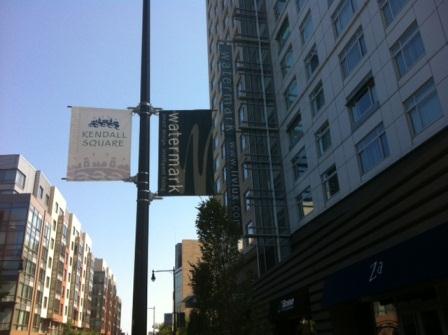
Kendall Square, once a bleak, industrial backwater, is now a Cambridge hot spot.  A dense cluster of biopharma labs has attracted tech giants like Google, “luxury” apartment blocks and restaurants offering oysters, tapas and serious coffee. Last week, The Boston Globe called the neighborhood “a place city dwellers, foodies and beer enthusiasts can enjoy.”

MIT also sees it another way – as an investment opportunity. The school’s Kendall Square Initiative – as outlined to the City Council in in May — calls for remaking one of the neighborhoods area’s last barren spots into  “a mixed-use revitalization project.” That includes housing, retail and eight new commercial buildings  to house labs and offices, which The Globe values at $2 billion.

But, opposition has emerged.  This time, it is not from activist neighbors. Instead, a small group of faculty members and the Graduate Student Council have issued statements questioning the use of one of MIT’s last vacant parcels for commercial development. Continue reading

Science events this week include beer halls and an omics meet

Monday

Monday is “Nerd Nite” at the Middlesex Lounge in Cambridge “featuring Nerd-appropriate tunes by Claude Money” and a $5 cover charge. The lineup: Talk 1. “The Walking Death, Poison Apples, and Tangled Proteins”
by Joe Mazzulli. Talk 2.  “Inhabiting the Global Anonymous (observations on the evolution of cities with a focus on Tokyo)”
by Ishita Sharma.

Tuesday-Thursday

For a fee, join the Omics Evolution 2012,  from May 29-31 at the Hyatt Harborside.The Summit will bring together leading pharmaceutical and diagnostic companies, top scientists and government experts to discuss research and developments in drug discovery, new technologies and the evolving landscape of the industry in genomics, proteomics, RNAi, next-generation sequencing, epigenetics and protein kinases.” Continue reading

Company scientist: It is too early to dismiss the predictive power of the personal genome

Knome, Inc, a Cambridge, Massachusetts company, is famously known for sequencing the genome of hard-living rocker Ozzy Osbourne. Knome bills itself as “the human genome interpretation company” and is credited for being the first to offer personal sequencing services.

So, when scientists from John Hopkins reported earlier this week that personal DNA sequencing fails to powerfully predict disease risk, the company got a lot of calls.
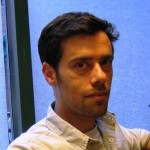
Nathan Pearson, Knome’s research director, shared the stage with Ozzy and Sharon Ozbourne for a 2010 TEDMed talk. So he should be on the defensive. But, he’s not. In a Wednesday interview in Knome’s office in a former furniture factory, Pearson echoed some of the same criticisms that have emerged since the Hopkins twin-study paper hit the news wires earlier this week.

 “Anyone who told you that whole genome sequencing is going to be a silver bullet of medicine would have been pulling your leg. That would be an irresponsible disservice to the public to say that – and to ourselves as scientists. “

Instead he offered that, “genomically personalized healthcare is really integrative.”

 “The thinking is that the whole genome will take the place beside more conventional cornerstones of care,” he said. “Face to face doctor vists. Family history. Lab tests. All of that will continue to be essential. Whole genomes will not replace any of those. They will compliment them.”

From a business point of view, Pearson said, overselling the predictive power of personal genetics won’t do his company any good. Eventually, funders will figure it out and stop paying for the work.

“It is important for us to accurately state what genomic data can tell us about health.”

That said, he has some concerns about the Hopkins study. One – it is old news. Another caveat he said, is that many of the 24 diseases the researchers looked at were cancers.

“We’ve known for a long time that cancer tends to be less genetically heritable than other diseases,” he said. “It’s not surprising that cancer comes in trailing the list of diseases…in terms of predictability.”

Pearson, like others say the study fails to address the anomalies of twin studies – like the impact of environment. Pearson also has problems with the way the study was publicized. While the results were widely reported in the press, the paper was not available to those who didn’t want to pay for it. (Late yesterday, Pearson said that publisher of the paper — Science Translational Medicine —   had dropped their paywall for this study. )

The story makes a big splash,” he said. “They are rehashing old knowledge and yet it propagates quickly ion the blogosphere…Scientific arguments are often made in the media as much as through the literature.’’

The Hopkins paper adds to that literature,  but  is too early to draw conclusion about the predictive power of personal genentics, he said.

“We still understand too little about how the frequency and distribution of disease variants — and their effect on disease risk to make precise model that accurately reflect biological reality.

Until science gets closer to that point, Pearson said speculation on the links between disease and the genome is premature.

“I’m not saying they shouldn’t have published,” he said. “We’ve got to start trying (to explore the genome-disease link) and in some cases, people are faulting these guys for taking a stab. Now there are number up on the board, so let’s continue going forward and see if they are right or wrong.  That’s science, right?”


Science in Boston this week: Baby talk and fuel cells

Patricia Kohl,  of the University of Washington Institute for Learning & Brain Sciences, is known for her work on how early exposure to language alters the brain. She comes to Harvard for two talks this week as part of the  Mind/Brain/Behavior Distinguished Lectures. She begins Tuesday with “The Linguistic Genius of Infants: Early Learning and Brain Plasticity.” 

Timely events  fills out the rest of the week, with talks on nuclear power, climate change and the future of energy.

For more see below:

Say hello to Warp Drive Bio, stay tuned for details

This new company, Warp Drive Bio, is being funded by Sanofi and Third Rock Ventures, a biocoastal venture capital firm with a big footprint in Kendall Square.

The only links on the Warp Drive Bio  web page take you to emails for “careers’ and “contacts.” Here’s the description from the press release.

 About Warp Drive Bio

Warp Drive Bio is driving the reemergence of natural products in the era of genomics to create breakthrough treatments that make an important difference in the lives of patients. Built upon the belief that nature is the world’s most powerful medicinal chemist, Warp Drive Bio is deploying a battery of state-of-the-art technologies to access powerful drugs that are now hidden within microbes. Key to the Warp Drive Bio approach is the company’s proprietary “genomic search engine” and customized search queries that enable hidden natural products to be revealed on the basis of their distinctive genomic signature. Launched in 2011 through a groundbreaking strategic partnership with Sanofi and with financing from Third Rock Ventures and Greylock Partners, the company was founded by renowned scientist Dr. Gregory Verdine, along with Dr. George Church and Dr. James Wells.

Line here to the full press release and a here for a story from the Boston Business Journal.

Here’s a link Third Rock Ventures. If you get dizzy easily, you might want to skip the intro, which zooms into a Google-worldish maps of  “Boston’ — mostly Cambridge, actually — and San Francisco.  One of their Cambridge companies is currently involved in lawsuit over potential cancer cures. More on that here.