Finding job satisfaction as a humanitarian researcher

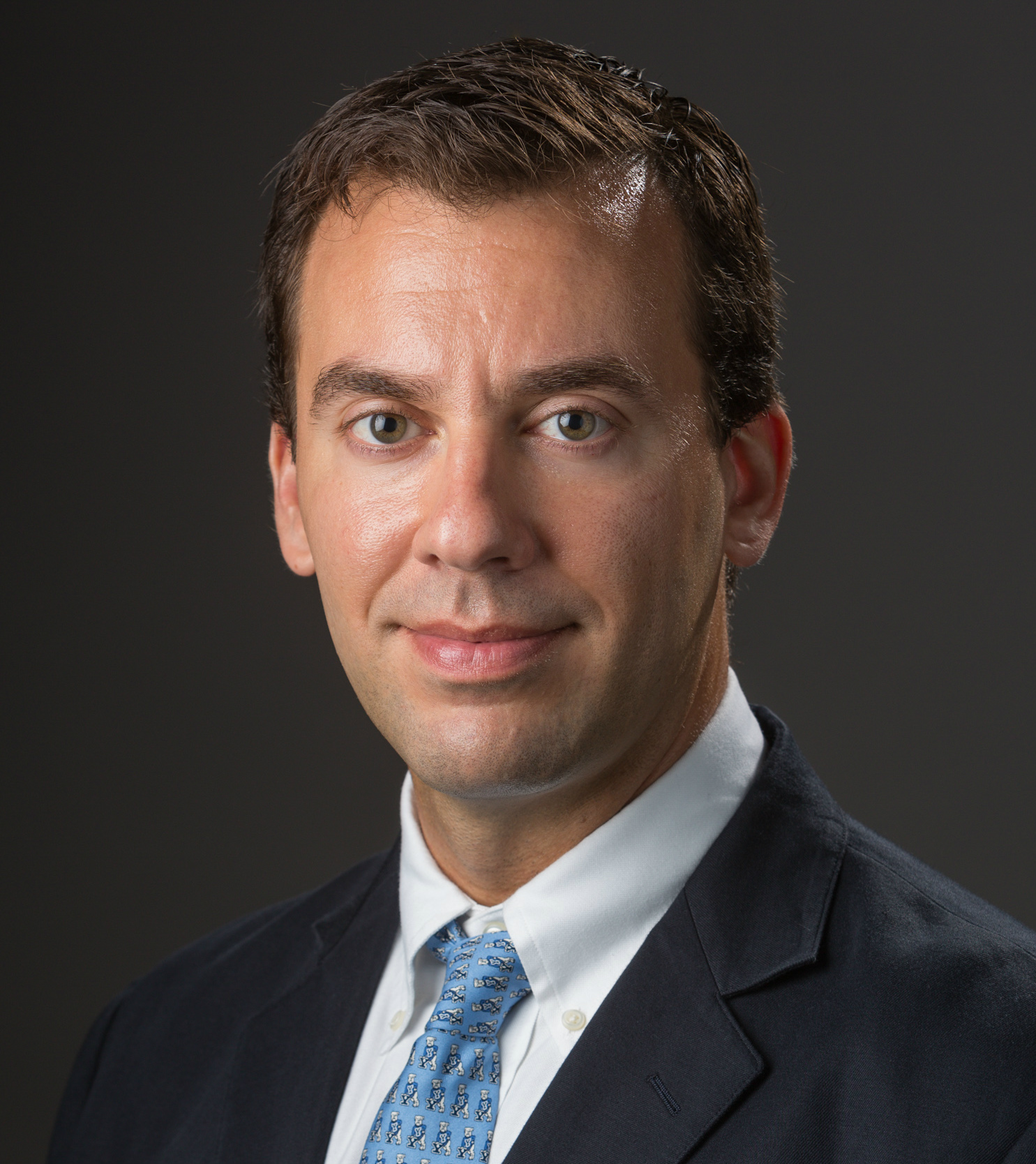
Panagiotis Vagenas left Yale University to advise a non-profit on research design and quality.

What did you do before Yale?

I’m from Greece originally. In 1996 — when I was 17 — I moved to London, UK. I studied biochemistry for my degree and did a PhD in immunology. When I graduated I moved to the Population Council labs at the Rockefeller University in New York to start my postdoc.

pic-smaller-cropped

Panagiotis Vagenas

What did you study?

I worked on basic research in HIV. What’s always motivated me is trying to help people — to have a meaningful career in that sense. So in summer 2010 I moved to Yale School of Public Health and did a master’s in public health (MPH), and went on to join the faculty at the Yale School of Medicine in 2013. Continue reading

Lindau: HIV in Hiding

At this summer’s 64th Lindau Nobel Laureate Meeting, 37 laureates spent a week with 600 young scientists from almost 80 countries to share their ideas, experiences and knowledge. Discussions revolved around global health, the latest findings in cancer and Aids research, challenges in immunology, and future approaches to medical research. All of the lectures can be viewed on Lindau’s Mediatheque website.

Reporter Lorna Stewart was there for Nature Video to capture the unique spirit of the Meeting. In a series of four films, she asks both laureates and young researchers some of the most profound questions in medicine. The first film, HIV in hiding, highlights the research of Françoise Barré-Sinoussi who was awarded the Nobel prize for the discovery of HIV.

HIV in hiding
In 2008, Timothy Ray Brown became the first person to be cured of HIV — or so many claim. Brown is known as ‘the Berlin patient’ and six years on, the virus has still not been detected in his blood. In this Nature Video, Lorna wants to know the implications of his remarkable treatment. But her dreams of an imminent cure quickly fade as Nobel laureate Françoise Barré-Sinoussi, who discovered HIV, brings Lorna back to Earth with a bump.

Nature Outlook also produced a supplement based on the Lindau meetings.


Why the army’s incredible cure claims found ground among Egyptians

Major General Ibrahim Abdul Atti, the inventor behind the new device, told journalists that his invention is "20 years ahead of anything produced in the West."

Major General Ibrahim Abdul Atti, the inventor behind the new device, told journalists that his invention is “20 years ahead of anything produced in the West.”

The Egyptian army’s claim to have invented a device that can detect and cure hepatitis C and AIDS seemed incredulous to many of us when it was first announced in a large press conference, but with every media report it became more absurd and ridiculous.

In a matter of days, it quickly spiralled to become a device (or two) that can use electromagnetic waves to remotely detect, treat and cure HCV and HIV, along with cancer, diabetes, AIDS and any other bacterial or viral infection. These claims were fueled by the person claiming to have invented the device, members of his team, unknown clinical doctors and a host of eager journalists and talk show hosts.

I have discussed the false science behind this device, and the reason why almost everyone in the science community is skeptical about it, in a previous blogpost. There’s absolutely no way this research paper can be taken seriously or be treated as science in the first place due to a host of unforgivable errors.

But maybe this whole debacle is a good chance to look at some of the underlying problems that extend across the Middle East, and not just Egypt, that led to this embarrassing situation:

1) We have a serious problem with media in general, and science journalism in particular. As outrageous as the claim was, none of the journalists who reported it have questioned it. They simply took the story and ran with it, and with every news report the claims became more outrageous. Instead of acting as watchdogs and pursuing their role as searchers for truth, the media outlets chose to be a mouthpiece for the authorities. This could be for various reasons, from political gains of private newspaper owners to lazy journalists willing to take anything they are fed – but whatever the reason, we are left with a disaster, and the public are the losers in this.

Even worse, this points out to the glaring lack of a science editor in these publications, someone with enough scientific information to raise a dozen warning flags before such a story is published. While politics and sports sell most in newspapers, science cannot be ignored, especially with the large number of science-related problems that the region is facing from threats to water and energy security to poor education and a degrading environment.

2) The whole issue points to the most glaring problem: the lack of critical thinking. It is a problem with our school education system, with our universities and with the general upbringing of most people. Children are discouraged from questioning or from analytically thinking and analyzing what they are taught. This very often translates, in adulthood, into a failure to question such “discoveries” – no matter how bizarre the premises is, as long as it is endorsed by the government and media.

The public is desperate for good news, especially in a country in turmoil like Egypt. However, the claims here were too outrageous for anyone to believe – and the least bit of critical thinking and a little research would have quickly shown this to be bogus. But the lack of a culture that supports and promotes either meant this was silently accepted and hailed with much ado about nothing.

3) There is a glaring problem of abuse of public health for the sake of fleeting political gains. Regardless of who is in power, giving false hope to millions of people in danger of death for the sake of some extra votes in an election is a disaster. Health and science should not be political tools, they are basic human rights and should be enshrined as such. The way this whole facade was presented was, obviously, made for political gains. Citizens should be protected from such abuse, where any entity that advertises such false health hopes is harshly punished.

4) Science has no “champion” in Egypt. There is no one to stand up to such claims and call them out as bogus. The few voices who did, such as the Egyptian president’s science advisor and planetary scientist Essam Heggy, were clawed to pieces by the media and politicians who said he was “tarnishing Egypt’s and the army’s international image.”

There is a need in Egypt and in the rest of the Arab world for an independent science body – such as the Royal Society in the UK for example – that can act as a watchdog and advisory to protect the public from such false claims in the name of science. When a handful of us are fighting to strengthen the role of science in society in the Arab world, such claims can wreck what took us years to build in a matter of days, and shake the public’s faith in science.

This entity would protect both the public, and their understanding of science. It would be vocal in fighting such claims and can help the media produce better coverage of science – protecting the public, protecting science, and advising the government on science-related issues independently.

The false science behind Egyptian army’s AIDS and HCV cure

HCV magic device EgyptWhile politics are usually the main topic of discussion in most Arab states, surprisingly, science took the forefront in Egypt over the past few days – for some rather unfortunate reasons, however.

It started with a claim to have discovered a machine that can diagnose HCV, but quickly spiralled to become a machine (or two machines) that can detect, treat and cure hepatitis C virus (HCV) and human immunodeficiency virus (HIV), along with probably cancer, diabetes and AIDS.

Major General Ibrahim Abdul Atti, a doctor working with the military, announced his C-FAST discovery in a government-sponsored press conference. He claimed his discovery cured HIV/AIDS with a 100% success rate and HCV with 95% success rate, with a clear nod at the end to the role of the military and the defence minister in “making his discovery a reality.”

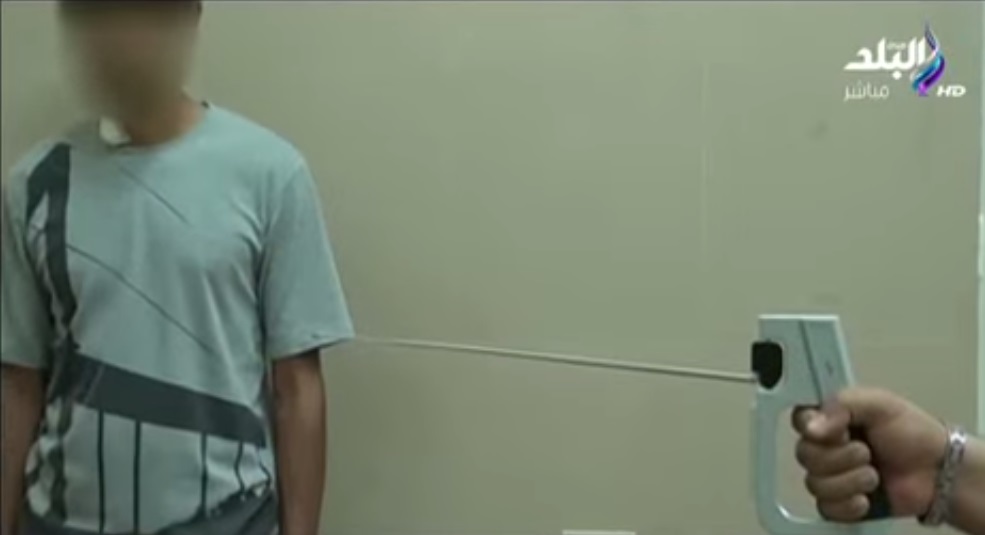
The miracle machine apparently diagnoses and treats patients non-invasively. The videos shown in the press release show a handheld device with a protruding antenna that follows patients as they walk around the room. Abdul Atti says that the device somehow remotely draws blood from the patient, destroys the virus, and returns it as “nutrients” to the patient. “”I will take it away from him as a disease and give it back to him in the form of a cure,” he said.

The media took this and ran with it, along with several doctors and members of the research team, claiming that the machine can treat HCV, HIV and even cancer and diabetes among other diseases. It is being taunted as a magic bullet to solve every problem there is. In fact, when Essam Heggy, a planetary scientist in the Radar Science Group at the NASA Jet Propulsion Laboratory and the Egyptian president’s scientific advisor, was quoted by a private newspaper saying the discovery was “a scientific scandal” for Egypt, many politicians and journalists called on the president to sack him for tarnishing Egypt and the army’s reputation.

Without going into any unnecessary political discussions, I’ll focus more on the science angle of the discovery. Islam Hussein, an Egyptian virologist working in MIT, made a detailed video debunking the science in the piece. The video runs close to 90 minutes though. However, here are several warning bells that leave little room for anything other than skepticism about this claimed discovery.

1) Such a discovery, if it was true, would have possibly been one of the biggest breakthroughs in history. This would have easily been published in one of the highest impact journals, such as Nature, Science or Cell. Instead, this paper appears in a little known journal with no impact factor called World Academy of Science, Engineering and Technology, which is listed as a potential predatory publisher, publishing hoaxes and poorly peer reviewed or non-reviewed papers.

2) The paper is poorly written. The language is poor, details are lacking, there is no proof of principle offered and no logical explanations. They just talk about tests on patients without even outlining the steps taken before starting to experiment on humans. There is no clear explanation of the processes followed either.

3) The researchers claim they have received a patent for their invention. However, a quick search shows that the patent review team commented that the “description undoubtly lacks a clear and complete disclosure of the claimed invention and cannot be allowed under Article 5 PCT.” They claim in the paper that they have patented their invention, but that is a lie.

4) With a little basic understanding of science, one cannot help but be completely skeptic about how the device works due to the large number of question marks surrounding it. The device is claimed to work remotely through electromagnetic waves. Somehow it is  the first process that uses biological electromagnetic frequencies (EMF) to detect signature marks of the viruses. This is something unheard of in any of the past science literature, yet there is nothing offered in the paper on the research or the principles used.

Then, there’s the question of how is the blood drawn out of the body, and then inserted back in again afterwards? How does it recognize the signature of the virus with the incredible 100% accuracy claimed? So many unanswered questions.

All in all, the paper does not follow any scientific methodology, jumping straight to clinical tests that they claim to have performed using the new device.

This is just a few of the problems with the paper, the research, and the methodology attached to this outrageous claims. The research is too poor to even be taken in consideration. This embarrassing event highlights the sad realities in Egypt right now – but I’ll go into those in more details in another blogpost tomorrow.

For now, this is not science. I do not know what this can even be called.

New techniques could improve reprogrammed-immune-cell treatment of HIV and cancer

­­­

Recent experiments exploring the use of patients’ own genetically reprogrammed immune cells toward the treatment of chronic diseases such as HIV and cancer have had encouraging and sometimes high-profile results. Yet, these studies have only been conducted in a limited number of individuals, and outcomes have been inconsistent, ranging from complete remission to complete inefficacy.

Now, two teams of researchers have demonstrated a method of using patients’ cells to create long-lived immune cells that target specific HIV and cancer antigens, and appear to resist degradation over time. Their work was published today in two separate papers in Cell Stem Cell.

“Our method has realized the functional rejuvenation and unlimited production of mature cytotoxic T cells with desired antigen-specificity for the first time in vitro,” says Shin Kaneko a stem cell biologist at Kyoto University in Japan and a co-author of the HIV-related study.

Difficulties in previous attempts to extract and reengineer T cells from patients are thought to be due in part to a phenomenon known as ‘cellular senescence’, a type of aging process. Naïve, quiescent T cells can survive for decades in the body. But active T cells, particularly those expanded outside the body in the laboratory, can gradually lose the ability to proliferate and be effective. This can lead to insufficient numbers of active immune cells to combat disease.

“Replicative senescence is likely to be a major issue for adoptive cell therapy,” says Carl June, an immunologist at the University of Pennsylvania’s Perelman School of Medicine in Philadelphia. “[These papers] address this issue and are exciting demonstrations of the progress in cell and developmental biology.”

Continue reading

Planned cuts to US overseas AIDS programme dismay advocates

US President Barack Obama’s 2013 budget plans include a significant cut to the President’s Emergency Plan for AIDS Relief (PEPFAR), the administration’s signature global AIDS programme.

The 2013 budget request would cut 13%, or $542.9 million, from PEPFAR, leaving total spending for that programme at $6.4 billion. The request, however, does call for an 57% increase in funding, to $1.65 billion, for the Global Fund to Fight AIDS, Tuberculosis and Malaria, a multilateral aid program, in order to fulfill Obama’s pledge to provide that programme with $4 billion during his term.

The planned cut for PEPFAR stunned global health advocates, who were buoyed late last year when administration officials championed the fight against AIDS. In a speech at the US National Institutes of Health on 8 November, Secretary of State Hillary Clinton said that the administration was committed to scaling up treatment and prevention interventions that have been shown to slow the spread of AIDS. On 1 December, World AIDS Day, Obama said that the United States would aim to treat 6 million HIV-positive people around the world, 2 million more than were expected to be treated under PEPFAR’s previous targets.

Overall, the President’s budget request would cut a total of just over $300 million from global health programmes.

“For those of us treating patients in some of the most affected areas, President Obama’s proposed budget cuts to many global health programs – including programs to fight HIV, TB, and neglected diseases – is deeply disappointing and a far cry from what he has promised,” said Sophie Delaunay, Executive Director, Doctors Without Borders, in a statement. “It defies logic that the U.S. global AIDS program, PEPFAR, could treat 40% more people in 2012 with 10% less funding.”

And Judith Aberg, chair of the HIV Medicine Association, called the PEPFAR cut “draconian,” and would comes at an inopportune time: just a year after a landmark clinical trial showed that early HIV treatment helped slow the spread of the virus.

“The $4 billion commitment to the Global Fund must be maintained but not at the expense of the highly successful PEPFAR programs,” Aberg said in a statment. “Now is not the time to retreat on our investment in either of these lifesaving programs.”

Ambassador Eric Goosby, US Global AIDS Coordinator, defended the budget request in a statement posted on the State Department’s web site. 

“In their remarks in late 2011, President Obama and Secretary Clinton put forward the inspiring vision of an AIDS-free generation,” Goosby said. “With this budget, the United States will keep our commitments, and we will meet our ambitious targets.”