Scientific data + effective communication = big changes

The science community should recognize the influence that research has when it’s translated for everyone.

Guest contributor Thais Moraes

2014-06-29 15-smaller

Thais Moraes

The conference comm4science – communicating science beyond the lab – in Heidelberg, on the 6th and 7th of May, put together many popular names involved in science communication both in and outside of Germany. They all highlighted the importance of communicating science. But they also recognized the many problems we face today concerning dialogue between scientists and the public. In my opinion, one critical point is to make scientists understand how essential it is to share their research with society. Continue reading

New techniques could improve reprogrammed-immune-cell treatment of HIV and cancer

­­­

Recent experiments exploring the use of patients’ own genetically reprogrammed immune cells toward the treatment of chronic diseases such as HIV and cancer have had encouraging and sometimes high-profile results. Yet, these studies have only been conducted in a limited number of individuals, and outcomes have been inconsistent, ranging from complete remission to complete inefficacy.

Now, two teams of researchers have demonstrated a method of using patients’ cells to create long-lived immune cells that target specific HIV and cancer antigens, and appear to resist degradation over time. Their work was published today in two separate papers in Cell Stem Cell.

“Our method has realized the functional rejuvenation and unlimited production of mature cytotoxic T cells with desired antigen-specificity for the first time in vitro,” says Shin Kaneko a stem cell biologist at Kyoto University in Japan and a co-author of the HIV-related study.

Difficulties in previous attempts to extract and reengineer T cells from patients are thought to be due in part to a phenomenon known as ‘cellular senescence’, a type of aging process. Naïve, quiescent T cells can survive for decades in the body. But active T cells, particularly those expanded outside the body in the laboratory, can gradually lose the ability to proliferate and be effective. This can lead to insufficient numbers of active immune cells to combat disease.

“Replicative senescence is likely to be a major issue for adoptive cell therapy,” says Carl June, an immunologist at the University of Pennsylvania’s Perelman School of Medicine in Philadelphia. “[These papers] address this issue and are exciting demonstrations of the progress in cell and developmental biology.”

Continue reading

Computer program aims to rank vaccine development decisions

WASHINGTON, DC — Aligning the priorities of all stakeholders involved in vaccine development can be a convoluted and thorny process. An international health organization might emphasize a candidate vaccine’s expected health benefits for disadvantaged populations, a government agency might be more focused on its own backyard, and a drug company could be driven by its monetary bottom line. With so many competing interests, what experimental product does it make the most sense for these partners to pursue?

Soon, a mathematical model that’s particularly good at weighing complex alternatives may be able to help. It’s at the heart of a new computer program, called the Strategic Multi-Attribute Ranking Tool (SMART) for Vaccines, that scores potential avenues for vaccine research and development according to the priorities fed into its algorithm. Members of the US Institute of Medicine (IOM) panel behind the new tool, who discussed the algorithm’s prototype at a meeting here on 2 November, hope it will establish a shared vocabulary that will allow everyone working on preventative vaccines for infectious agents to better understand and share their own perspective. “We’re creating a common language for people to talk with, instead of everyone having their own language,” says IOM committee member Charles Phelps, a health economist at the University of Rochester in New York.

In the past, the IOM simply released reports that encouraged vaccine developers to prioritize tackling certain diseases on the basis of the balance of expected health benefits, the costs of developing and administering the vaccine and the projected savings from the preventative medicine. For instance, in the most recent report, published in 2000, the IOM strongly favored targeting influenza, a virus that kills up to 49,000 people each year in the US at a cost of tens of billions of dollars annually to the country’s economy. In contrast, the bacteria responsible for Lyme disease, a far less prevalent pathogen with a smaller economic burden, fell much lower on the priority list.

The IOM had intended for vaccine developers to take its rankings into account when making decisions. However, according to Paul Offit, chief of infectious diseases at the Children’s Hospital of Philadelphia and a co-inventor of the rotavirus vaccine, such lists tended to justify choices that had already been made. “When the IOM puts a list out,” he says, “[vaccine manufacturers] feel that validates what they’ve done.”

With the SMART tool, any organization can generate its own priority rankings, custom-tailored from a list of 29 different vaccine attributes, including the number of premature deaths expected to be prevented from immunization, the availability of other medical interventions and whether the targeted disease has been stigmatized. A vaccine maker could give more weight to economic considerations such as the costs of clinical trials and licenses, say, whereas a defense-related agency could flag diseases that tend to afflict military personnel serving abroad. Out pops a numerical score for each candidate under consideration, thanks to a computational method also used to weigh complicated options for expanding Mexico City’s airport decades ago. Each score is broken down to reveal how much the chosen priorities contributed to the final number.

Continue reading

Select agent status could slow development of anti-SARS therapies

Saudi Arabian doctors scrambled last month to treat a third person who had fallen ill from a new strain of coronavirus that emerged earlier this year in the Middle East. The man survived with the help of supportive care from his physicians, but one of the other two patients who fell victim to the mysterious virus—a pathogen that resembles the coronavirus responsible for severe acute respiratory syndrome (SARS)—was not so fortunate.

{credit}CDC{/credit}

These recent cases drive home an all too stark reality: a decade on from the SARS outbreak that killed close to 800 people worldwide, scientists still have no proven effective vaccines or drugs that can stop the spread of SARS or SARS-like viruses, let alone mitigate their symptoms. Now, to make matters worse in the face of an emerging threat, a new reclassification of the bioterrorism risk posed by SARS may hamper efforts at novel medical strategies.

“Many labs are going to destroy their [SARS] virus instead of continue to work on it because the burden of regulation is quite high,” says Rachel Roper, a microbiologist at East Carolina University Brody School of Medicine in Greenville, North Carolina.

Roper has worked with SARS since the global pandemic ten years ago. She led the team that sequenced the virus’s genome, and, more recently, she and her colleagues created two experimental vaccines: a whole, killed SARS virus shot and an adenovirus-based vector carrying key SARS structural proteins. Both products elicited some degree of immune response and partially prevented viral replication in mice and ferrets. However, the protection was incomplete.

She had been working to improve both strategies and was already struggling with how she would advance a lead candidate into the clinic in the absence of any natural human SARS challenge against which to test it. Then, on 5 October, the US government announced plans to add SARS to its list of select agents. This reclassification, which goes into effect on 4 December, requires labs to now obtain additional licenses and adhere to stricter levels of biosafety and biosecurity to conduct any experiments with the virus. Although Roper recognizes that the move was made in the interest of protecting public health, for her this was the last straw. She says she no longer plans to work on SARS, opting to destroy her live virus instead of seeking certification for her lab.

Continue reading

Global vaccination coverage improves, but rotavirus gap is wide

Over the past year, Rwanda, Ghana, Malawi and Yemen have all joined the growing list of developing countries that have introduced vaccines against rotavirus as part of their standard national immunization programs. Yet the vast majority of the world’s children still remain at risk of infection by this vaccine-preventable pathogen, which can cause fatal gastrointestinal disease. And the situation isn’t much better for several respiratory diseases, either.

According to the latest global survey of routine vaccine coverage, tens of millions of children last year missed out on some or all of the basic recommended immunizations.

The rotavirus vaccine as well as the pneumococcal conjugate vaccine, which protects against Streptococcus pneumoniae, were administered to less than 15% of all kids outside the Americas and Europe, the report found. Similarly, global coverage of the Haemophilus influenzae type b vaccine, which protects against a bacterium responsible for bacteremia and pneumonia, among other diseases, was only 43% last year among youngsters, despite the shot being recommended in routine childhood vaccination schedules in more than 90% of the world’s nations.

The findings (see chart) were reported today jointly by the World Health Organization (WHO), the US Centers for Disease Control and Prevention and the United Nation’s Children Fund.

There is reason for optimism, though. More than four in five children worldwide now routinely receive the four lifesaving vaccines that the WHO began recommending in 1974. These include the diphtheria-tetanus-pertussis (DTP), bacille Calmette-Guérin, oral poliovirus and attenuated measles vaccines. By comparison, forty years ago less than 5% of all children received a full dose of the DTP vaccine, for example.

“The report offers us gold medals in some places and offers us challenges in others,” says William Schaffner, a vaccine specialist at Vanderbilt University School of Medicine in Nashville, Tennessee.

Efforts are now in place to boost all these numbers. Earlier this year, the WHO’s World Health Assembly adopted a global vaccine action plan that outlines plans to meet certain immunization target levels in every region, country and community in the world by the end of the decade.


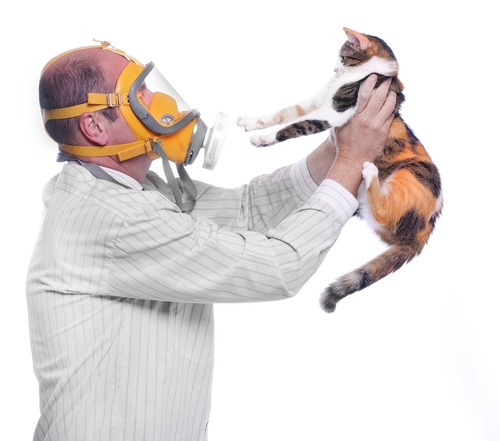
Targeted vaccines against feline dander could be the cat’s meow

A man and a woman walk into a doctor’s office. She has a cat allergy; he has a cat. “They say, ‘You’ve got to do something or we can’t get married,’” says Michael Blaiss. It sounds like the beginning of a bad joke, but it’s actually a typical day at Blaiss’s private allergy practice in Memphis, Tennessee. People often face tough decisions when a loved one cannot cohabit with feline companions.

Cat dander—microscopic pieces of dry cat skin coated with Fel d 1, a protein responsible for most cat allergies that is secreted by cat glands onto the skin and transferred to fur from cat saliva through grooming—elicits a reaction in an estimated 17% of individuals in the US. Antihistamines and steroids can dull the symptoms, but the only disease-modifying therapy currently available is a series of injections made of cat dander extract, a soup of proteins literally washed from cat fur and bottled. Whole allergen treatment is time consuming, involving some 30–80 shots over three to five years, and risky, with the chance of rare life-threatening anaphylactic reactions to the injections.

An Oxford, UK–based company, Circassia, hopes to change all that with its new ToleroMune cat allergy vaccine, a molecular approach to the problem. The vaccine is made of seven synthetic peptides, each only 15–20 amino acids long and derived from Fel d 1. The carefully selected peptides quiet the immune system’s aberrant T cell response but avoid activating mast cells, which cause allergic reactions and anaphylaxis.

“We know exactly what is in every vial,” says Steve Harris, Circassia’s chief executive.

In a recently published phase 2 study, 21 people received four injections of the therapeutic vaccine over a three-month period in which they were exposed to cat dander. A year after starting the treatment, these individuals showed a significantly greater reduction in nose- and eye-related symptoms than 29 participants who received a placebo and the same allergen hazard.

Continue reading