Peanut allergy therapy produces epigenetic changes in immune cells

Earlier this week, news that six months of exposure therapy to peanuts enabled almost 100 children with an allergy to this food to eat the equivalent of ten peanuts stirred a lot of optimism. It was just one of many studies showing that some patients with severe peanut allergies can actually gain the ability to consume small amounts of the food by eating a little bit of this nut each day, gradually increasing the dose over several months.

Scientists may now have a better handle on how this ability to shrug off peanut allergy forms, and why some individuals respond to the treatment while others do not. A study published today in the Journal of Allergy and Clinical Immunology reports that the immune cells of some patients with peanut allergies who became tolerant to peanuts after exposure therapy showed DNA modifications thought to perhaps have a role in defending against allergies. “By understanding what changes occur,” says lead author Kari Nadeau, an immunologist at the Stanford School of Medicine in California, “we can identify targets for new therapy and biomarkers by which we can decide whether or not to keep treating a patient.”
Continue reading

Targeted vaccines against feline dander could be the cat’s meow

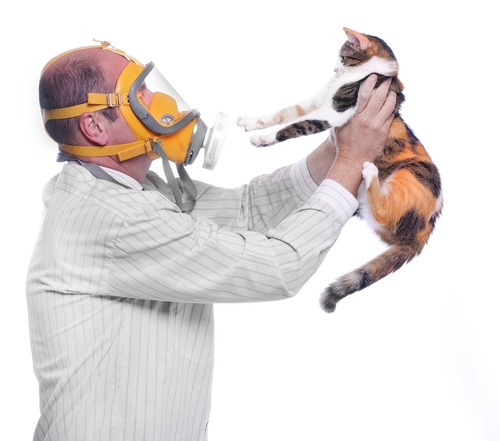
A man and a woman walk into a doctor’s office. She has a cat allergy; he has a cat. “They say, ‘You’ve got to do something or we can’t get married,’” says Michael Blaiss. It sounds like the beginning of a bad joke, but it’s actually a typical day at Blaiss’s private allergy practice in Memphis, Tennessee. People often face tough decisions when a loved one cannot cohabit with feline companions.

Cat dander—microscopic pieces of dry cat skin coated with Fel d 1, a protein responsible for most cat allergies that is secreted by cat glands onto the skin and transferred to fur from cat saliva through grooming—elicits a reaction in an estimated 17% of individuals in the US. Antihistamines and steroids can dull the symptoms, but the only disease-modifying therapy currently available is a series of injections made of cat dander extract, a soup of proteins literally washed from cat fur and bottled. Whole allergen treatment is time consuming, involving some 30–80 shots over three to five years, and risky, with the chance of rare life-threatening anaphylactic reactions to the injections.

An Oxford, UK–based company, Circassia, hopes to change all that with its new ToleroMune cat allergy vaccine, a molecular approach to the problem. The vaccine is made of seven synthetic peptides, each only 15–20 amino acids long and derived from Fel d 1. The carefully selected peptides quiet the immune system’s aberrant T cell response but avoid activating mast cells, which cause allergic reactions and anaphylaxis.

“We know exactly what is in every vial,” says Steve Harris, Circassia’s chief executive.

In a recently published phase 2 study, 21 people received four injections of the therapeutic vaccine over a three-month period in which they were exposed to cat dander. A year after starting the treatment, these individuals showed a significantly greater reduction in nose- and eye-related symptoms than 29 participants who received a placebo and the same allergen hazard.

Continue reading