Finding job satisfaction as a humanitarian researcher

Panagiotis Vagenas left Yale University to advise a non-profit on research design and quality.

What did you do before Yale?

I’m from Greece originally. In 1996 — when I was 17 — I moved to London, UK. I studied biochemistry for my degree and did a PhD in immunology. When I graduated I moved to the Population Council labs at the Rockefeller University in New York to start my postdoc.

pic-smaller-cropped

Panagiotis Vagenas

What did you study?

I worked on basic research in HIV. What’s always motivated me is trying to help people — to have a meaningful career in that sense. So in summer 2010 I moved to Yale School of Public Health and did a master’s in public health (MPH), and went on to join the faculty at the Yale School of Medicine in 2013. Continue reading

A CRISPR screen for HIV targets

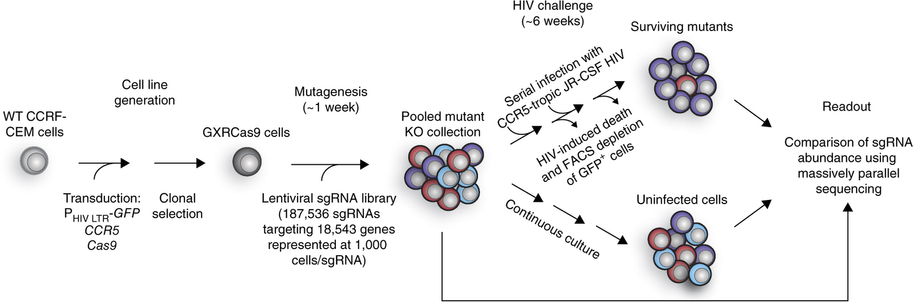
A new study published online this week in Nature Genetics reports the discovery of novel host targets of HIV infection identified from a high-throughput CRISPR/Cas9-based screen. This screen was performed in CD4 + T-cells and was designed to find candidate genes required for successful HIV infection, but whose inactivation did not affect cell viability. In this way, potential drug targets for anti-HIV therapy could be discovered.

Park et al., Nature Genetics 2016

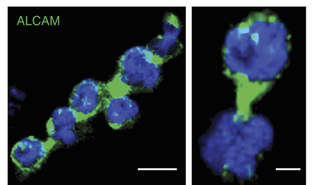
Park et al., Nature Genetics 2016

Park et al., Nature Genetics 2016

Park et al., Nature Genetics 2016


The authors found two known (CCR5 and CD4) and three novel (ALCAM, SLC35B2 and TPST2) cellular factors that, upon abrogation, prevented HIV infection but did not have any negative effects on the cell itself. These new genes are involved in sulfation and cell aggregation pathways and represent candidate targets for interventional HIV therapy.

We spoke with first author Ryan Park to get some background on this research:

 Previous screens for host factors affecting HIV pathogenesis found a high number of hits, with low reproducibility across screens.  With your CRISPR/Cas9 approach, were you expecting similar results? Did the low number of hits in your screen surprise you?

We designed our screen stringently, as the existing literature has not been clear on what genes would potentially serve as good targets for host-directed anti-HIV therapies. Our goal was thus to identify these host factors with high confidence while maintaining an unbiased approach. The very low number of hits was certainly surprising, though, as you note, the limited overlap among the previous screens raised the suspicion of a high false positive rate and/or low reproducibility.

You find three novel genes that are dispensable for cell viability but that are needed for successful HIV infection.  Do you think that there could be natural polymorphisms in these genes in human populations that might mitigate susceptibility to HIV entry and transmission?

In the Exome Aggregation Consortium (ExAC) dataset recently published in Nature, there are individuals with truncations and/or homozygous mis-sense mutations in each of the three genes, as well as ITGAL (the loss of which we find is protective against HIV infection in primary CD4+ T cells). More work remains to be done to determine whether these individuals are relatively less susceptible to HIV infection.

Due to the high mutation rate of HIV and the emergence of resistance to drug therapies, potential targeting of host factors can be a useful strategy.  Do you envision these findings being utilized to develop novel anti-HIV therapies?

Host-targeted HIV therapies are of great interest for multiple reasons. Firstly, as you note, the emergence of drug-resistant HIV strains remains a major issue, particularly in settings where adherence to a daily antiretroviral regimen is challenging. Drug-resistant strains are less likely to emerge in the face of incomplete adherence to host-targeted therapies. Secondly, the identification of host factors may also serve as a basis for gene therapies (in which gene editing is used to produce a population of HIV-resistant target cells) that could result in a permanent HIV cure. As noted above, more work remains to be done to determine whether inactivation of these genes protects against HIV infection at the organismal level without causing detrimental effects.

How might this screen be adapted to find host factors important at other stages of the HIV life cycle and do you have future plans to explore such work?

Our screen captured all but the latest stages of the HIV life cycle (particularly virion assembly, budding, and maturation); this is because HIV Tat, which drives the GFP reporter in our cell line model, is expressed prior to these steps. Development of an alternative reporter system that is activated by virion budding or maturation would allow identification of host factors involved only at these late stages. Because completion of the HIV life cycle is not required for host cell killing by HIV, cells lacking these late-acting host factors may still not be captured in a screen; more importantly, these late-acting host factors may therefore not be attractive therapeutic targets.

Can this screening method be employed to find host factors important for infection by other viruses?  Do you speculate that there would be viruses for which a large number of non-essential host factors would be identified as important for infection?

The key elements of our approach, which include identification of a physiologically relevant cell line and the use of a high-complexity genome-wide sgRNA library, can be readily generalized to identify host factors that are critical to the propagation of any viral pathogen yet dispensable for cell viability. Our findings suggest that the number of non-essential host factors that are critical for HIV infection is quite limited, and that many candidate host factors identified by other screens or targeted studies may not be required for HIV infection or may compromise cell viability. Whether this is the case for other viruses is hard to know, but we have demonstrated that our approach can be quite powerful and specific in identifying the range of potential host targets with high confidence.


Lindau: HIV in Hiding

At this summer’s 64th Lindau Nobel Laureate Meeting, 37 laureates spent a week with 600 young scientists from almost 80 countries to share their ideas, experiences and knowledge. Discussions revolved around global health, the latest findings in cancer and Aids research, challenges in immunology, and future approaches to medical research. All of the lectures can be viewed on Lindau’s Mediatheque website.

Reporter Lorna Stewart was there for Nature Video to capture the unique spirit of the Meeting. In a series of four films, she asks both laureates and young researchers some of the most profound questions in medicine. The first film, HIV in hiding, highlights the research of Françoise Barré-Sinoussi who was awarded the Nobel prize for the discovery of HIV.

HIV in hiding
In 2008, Timothy Ray Brown became the first person to be cured of HIV — or so many claim. Brown is known as ‘the Berlin patient’ and six years on, the virus has still not been detected in his blood. In this Nature Video, Lorna wants to know the implications of his remarkable treatment. But her dreams of an imminent cure quickly fade as Nobel laureate Françoise Barré-Sinoussi, who discovered HIV, brings Lorna back to Earth with a bump.

Nature Outlook also produced a supplement based on the Lindau meetings.


As gene therapy technologies blossom, ddRNAi tries to take root

shutterstock_133184528Before there was Twitter, there was Facebook, and before that, Friendster. And who can forget MySpace? There’s a similar trend of successive usurping technologies in the fast-moving quest to develop therapeutics capable of modifying the genome. Since the late nineties, we’ve witnessed the rise of several gene-silencing approaches, from “antisense” oligonucleotides and RNA interference (RNAi) to the latest targeted genome-editing techniques, such as those based on zinc finger nucleases or CRISPR (Clustered Regularly Interspaced Short Palindromic Repeats) technology. These rapid developments raise the stakes for companies that have wagered on a particular gene-silencing approach.

Take the case of an approach known as DNA-directed RNAi (ddRNAi). In January, Australia-based Benitec Biopharma received a green light from the US Food and Drug Administration to begin the first human trial of an intravenous viral gene therapy based on ddRNAi. The therapy, dubbed TT-034, is essentially a modified form of adeno-associated virus 8, which naturally infects people but is not pathogenic. In TT-034, the viral DNA has been engineered to encode short hairpin RNAs (shRNAs) that silence three different components of the hepatitis C virus (HCV). The approach is referred to ddRNAi because the shRNA that carries out the gene silencing is continually produced by the cell from a DNA vector. Continue reading

Why the army’s incredible cure claims found ground among Egyptians

Major General Ibrahim Abdul Atti, the inventor behind the new device, told journalists that his invention is "20 years ahead of anything produced in the West."

Major General Ibrahim Abdul Atti, the inventor behind the new device, told journalists that his invention is “20 years ahead of anything produced in the West.”

The Egyptian army’s claim to have invented a device that can detect and cure hepatitis C and AIDS seemed incredulous to many of us when it was first announced in a large press conference, but with every media report it became more absurd and ridiculous.

In a matter of days, it quickly spiralled to become a device (or two) that can use electromagnetic waves to remotely detect, treat and cure HCV and HIV, along with cancer, diabetes, AIDS and any other bacterial or viral infection. These claims were fueled by the person claiming to have invented the device, members of his team, unknown clinical doctors and a host of eager journalists and talk show hosts.

I have discussed the false science behind this device, and the reason why almost everyone in the science community is skeptical about it, in a previous blogpost. There’s absolutely no way this research paper can be taken seriously or be treated as science in the first place due to a host of unforgivable errors.

But maybe this whole debacle is a good chance to look at some of the underlying problems that extend across the Middle East, and not just Egypt, that led to this embarrassing situation:

1) We have a serious problem with media in general, and science journalism in particular. As outrageous as the claim was, none of the journalists who reported it have questioned it. They simply took the story and ran with it, and with every news report the claims became more outrageous. Instead of acting as watchdogs and pursuing their role as searchers for truth, the media outlets chose to be a mouthpiece for the authorities. This could be for various reasons, from political gains of private newspaper owners to lazy journalists willing to take anything they are fed – but whatever the reason, we are left with a disaster, and the public are the losers in this.

Even worse, this points out to the glaring lack of a science editor in these publications, someone with enough scientific information to raise a dozen warning flags before such a story is published. While politics and sports sell most in newspapers, science cannot be ignored, especially with the large number of science-related problems that the region is facing from threats to water and energy security to poor education and a degrading environment.

2) The whole issue points to the most glaring problem: the lack of critical thinking. It is a problem with our school education system, with our universities and with the general upbringing of most people. Children are discouraged from questioning or from analytically thinking and analyzing what they are taught. This very often translates, in adulthood, into a failure to question such “discoveries” – no matter how bizarre the premises is, as long as it is endorsed by the government and media.

The public is desperate for good news, especially in a country in turmoil like Egypt. However, the claims here were too outrageous for anyone to believe – and the least bit of critical thinking and a little research would have quickly shown this to be bogus. But the lack of a culture that supports and promotes either meant this was silently accepted and hailed with much ado about nothing.

3) There is a glaring problem of abuse of public health for the sake of fleeting political gains. Regardless of who is in power, giving false hope to millions of people in danger of death for the sake of some extra votes in an election is a disaster. Health and science should not be political tools, they are basic human rights and should be enshrined as such. The way this whole facade was presented was, obviously, made for political gains. Citizens should be protected from such abuse, where any entity that advertises such false health hopes is harshly punished.

4) Science has no “champion” in Egypt. There is no one to stand up to such claims and call them out as bogus. The few voices who did, such as the Egyptian president’s science advisor and planetary scientist Essam Heggy, were clawed to pieces by the media and politicians who said he was “tarnishing Egypt’s and the army’s international image.”

There is a need in Egypt and in the rest of the Arab world for an independent science body – such as the Royal Society in the UK for example – that can act as a watchdog and advisory to protect the public from such false claims in the name of science. When a handful of us are fighting to strengthen the role of science in society in the Arab world, such claims can wreck what took us years to build in a matter of days, and shake the public’s faith in science.

This entity would protect both the public, and their understanding of science. It would be vocal in fighting such claims and can help the media produce better coverage of science – protecting the public, protecting science, and advising the government on science-related issues independently.

The false science behind Egyptian army’s AIDS and HCV cure

HCV magic device EgyptWhile politics are usually the main topic of discussion in most Arab states, surprisingly, science took the forefront in Egypt over the past few days – for some rather unfortunate reasons, however.

It started with a claim to have discovered a machine that can diagnose HCV, but quickly spiralled to become a machine (or two machines) that can detect, treat and cure hepatitis C virus (HCV) and human immunodeficiency virus (HIV), along with probably cancer, diabetes and AIDS.

Major General Ibrahim Abdul Atti, a doctor working with the military, announced his C-FAST discovery in a government-sponsored press conference. He claimed his discovery cured HIV/AIDS with a 100% success rate and HCV with 95% success rate, with a clear nod at the end to the role of the military and the defence minister in “making his discovery a reality.”

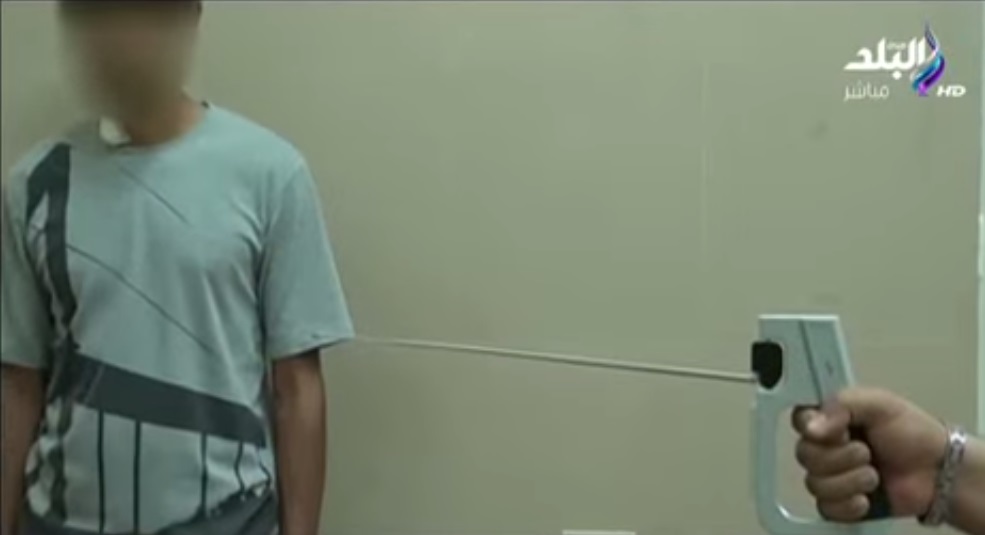
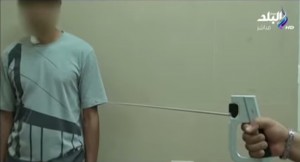
The miracle machine apparently diagnoses and treats patients non-invasively. The videos shown in the press release show a handheld device with a protruding antenna that follows patients as they walk around the room. Abdul Atti says that the device somehow remotely draws blood from the patient, destroys the virus, and returns it as “nutrients” to the patient. “”I will take it away from him as a disease and give it back to him in the form of a cure,” he said.

The media took this and ran with it, along with several doctors and members of the research team, claiming that the machine can treat HCV, HIV and even cancer and diabetes among other diseases. It is being taunted as a magic bullet to solve every problem there is. In fact, when Essam Heggy, a planetary scientist in the Radar Science Group at the NASA Jet Propulsion Laboratory and the Egyptian president’s scientific advisor, was quoted by a private newspaper saying the discovery was “a scientific scandal” for Egypt, many politicians and journalists called on the president to sack him for tarnishing Egypt and the army’s reputation.

Without going into any unnecessary political discussions, I’ll focus more on the science angle of the discovery. Islam Hussein, an Egyptian virologist working in MIT, made a detailed video debunking the science in the piece. The video runs close to 90 minutes though. However, here are several warning bells that leave little room for anything other than skepticism about this claimed discovery.

1) Such a discovery, if it was true, would have possibly been one of the biggest breakthroughs in history. This would have easily been published in one of the highest impact journals, such as Nature, Science or Cell. Instead, this paper appears in a little known journal with no impact factor called World Academy of Science, Engineering and Technology, which is listed as a potential predatory publisher, publishing hoaxes and poorly peer reviewed or non-reviewed papers.

2) The paper is poorly written. The language is poor, details are lacking, there is no proof of principle offered and no logical explanations. They just talk about tests on patients without even outlining the steps taken before starting to experiment on humans. There is no clear explanation of the processes followed either.

3) The researchers claim they have received a patent for their invention. However, a quick search shows that the patent review team commented that the “description undoubtly lacks a clear and complete disclosure of the claimed invention and cannot be allowed under Article 5 PCT.” They claim in the paper that they have patented their invention, but that is a lie.

4) With a little basic understanding of science, one cannot help but be completely skeptic about how the device works due to the large number of question marks surrounding it. The device is claimed to work remotely through electromagnetic waves. Somehow it is  the first process that uses biological electromagnetic frequencies (EMF) to detect signature marks of the viruses. This is something unheard of in any of the past science literature, yet there is nothing offered in the paper on the research or the principles used.

Then, there’s the question of how is the blood drawn out of the body, and then inserted back in again afterwards? How does it recognize the signature of the virus with the incredible 100% accuracy claimed? So many unanswered questions.

All in all, the paper does not follow any scientific methodology, jumping straight to clinical tests that they claim to have performed using the new device.

This is just a few of the problems with the paper, the research, and the methodology attached to this outrageous claims. The research is too poor to even be taken in consideration. This embarrassing event highlights the sad realities in Egypt right now – but I’ll go into those in more details in another blogpost tomorrow.

For now, this is not science. I do not know what this can even be called.

New, intensive trials planned on heels of Mississippi HIV ‘cure’

Deborah Persaud

Deborah Persaud presented her findings at CROI. {credit}Johns Hopkins Medicine{/credit}

ATLANTA — Until recently, the medical community held a consensus that children born with HIV might be obliged to take antiretroviral drugs for the rest of their lives. But the announcement made last week that an infant in rural Mississippi who stopped receiving medicine at 18 months of age and has since lived for a year with no measurable viral RNA in the blood is prompting HIV experts to question the conventional wisdom.

“It’s definitely paradigm shifting,” says Deborah Persaud, a pediatric infectious disease physician at the Johns Hopkins Children’s Center in Baltimore who presented the Mississippi case here at the Conference on Retroviruses and Opportunistic Infections (CROI) on 4 March. However, a trial that involves drug cessation is fraught with ethical and medical difficulties, so the next steps going forward remain unclear.

Persaud and other HIV specialists plan to meet over three days in May at a leadership retreat of the International Maternal Pediatric Adolescent AIDS Clinical Trials (IMPAACT) group, an investigator network funded by the US National Institutes of Health (NIH), to discuss how best to test if and when antiretroviral therapy can be halted for children born with HIV who achieve undetectable levels of the virus in their blood. “We need community input on this,” Persaud says. “If we develop careful strategies, we could probably come up with a consensus approach in a couple of months.”

From Berlin to Mississippi

A prime benefit of going off antiretrovirals is the avoidance of drug-induced side effects, ranging from metabolic complications to bone demineralization to kidney failure. This is especially true for young people who could be on these medications from birth. Yet, before the Mississippi baby, no one had ever achieved a ‘functional cure’ from HIV—meaning undetectable viral replication and no disease progression in the absence of drugs—off the back of antiretroviral therapy alone. (Timothy Brown, the so-called ‘Berlin patient’, achieved this state, but only after a bone-marrow transplant with donor cells invulnerable to HIV replaced all of his native immune cells, a procedure deemed too risky for most HIV-positive individuals.)

The key to the baby’s functional cure, researchers believe, was probably the unconventionally aggressive treatment administered to the newborn in the first days of life: a trio of antiretroviral agents given twice daily starting from around 30 hours after birth. By giving these drugs before the infant had the chance to develop any memory T cells—the place where HIV goes to hide—this may have prevented the virus from establishing the latent reservoir that typically thwarts efforts at fully eliminating HIV from the body.

In contrast, most babies born to HIV-positive mothers today receive only a ‘prophylactic’ course of antiretroviral drugs to prevent infection. This typically involves fewer agents and less frequent dosing. Full treatment regimens are then given only after a positive diagnosis, which can take up to six weeks in many parts of the developing world.

Yet, in the case of the Mississippi baby, Hannah Gay, a pediatric HIV specialist at the University of Mississippi Medical Center in Jackson, put the newborn on the more aggressive regimen even before the tests came back showing that the child was infected. She did so out of the concern over the possibility of mother-to-child transmission, as the mother had never received prenatal care nor antiretroviral treatment. In fact, her HIV-positive status was only revealed to doctors while she was in labor. Following the baby’s diagnosis six days later, Gay maintained this intensive protocol with a slightly different drug cocktail going forward. Drug withdrawal was never planned. But after 18 months on the regimen, the child’s family stopped treatment for unspecified reasons. Surprisingly to Gay and her colleagues, the virus never rebounded.

“It’s always good to have your thinking jolted,” says Katherine Luzuriaga, of the University of Massachusetts Medical School in Worcester, who collaborated with Presaud and Gay in analyzing the Mississippi baby’s blood work.

Could other babies—around 1,000 of whom are newly infected globally each day with HIV—treated in a similar way now be functionally cured of their infection? A month ago, most researchers would have said no. Now, they’re not so sure.

Continue reading

FDA approves landmark HIV prevention drug

The US Food and Drug Administration (FDA) today approved the drug Truvada as a way to reduce the risk of sexually acquired HIV-1 infection. It is the first medication approved to prevent infection in adults who do not have HIV. The drug would be prescribed — along with safer sex practices and regular HIV testing — to people whose partners have HIV and others likely to have sex with infected people.

In a statement, FDA Commissioner Margaret Hamburg called the approval an “important milestone in our fight against HIV”, adding that 50,000 people in the United States are diagnosed with HIV infection each year, despite the availability of effective prevention strategies.

As part of the approval process, the FDA reviewed the results of two large, randomized trials showing that Truvada could be used to prevent infection. One enrolled 2,499 men or transgender women who do not have HIV, have sex with men and are likely to engage in risky sexual behaviour. That study showed that Truvada reduced risk of HIV infection by 42% compared with placebo. The other trial enrolled 4,758 heterosexual couples in which only one partner was infected. In that trial, infection risk in participants taking Truvada was reduced by 75%.

The benefits and risks of the drug were considered by an FDA committee earlier this year.  A chief concern was that people taking the drug to prevent infection would not take it every day and so would develop resistance to Truvada as a therapy if they became infected. (In fact, 6 of 11 clinical participants who tested negative before trials began but positive several weeks later were told that Truvada could not be used to treat their infection.)

When approving the drug, FDA officials also required Truvada’s manufacturer, Gilead Sciences, based in Foster City, California, to collect samples from individuals who become infected while taking the drug and look for signs of resistance. Gilead also developed an FDA-approved education strategy for health-care providers and uninfected individuals. It has also pledged to offer free condoms (used consistently, condoms are better than Truvada in reducing HIV transmission) as well as vouchers for HIV testing.

Truvada was approved in 2004 to treat people already infected with HIV in combination with other drugs, and it is now the most prescribed HIV drug in the United States, according to a statement from Gilead. It is a combination of two drugs that interfere with the enzyme reverse transcriptase, which converts viral RNA into DNA, an essential step in HIV reproduction.

Planned cuts to US overseas AIDS programme dismay advocates

US President Barack Obama’s 2013 budget plans include a significant cut to the President’s Emergency Plan for AIDS Relief (PEPFAR), the administration’s signature global AIDS programme.

The 2013 budget request would cut 13%, or $542.9 million, from PEPFAR, leaving total spending for that programme at $6.4 billion. The request, however, does call for an 57% increase in funding, to $1.65 billion, for the Global Fund to Fight AIDS, Tuberculosis and Malaria, a multilateral aid program, in order to fulfill Obama’s pledge to provide that programme with $4 billion during his term.

The planned cut for PEPFAR stunned global health advocates, who were buoyed late last year when administration officials championed the fight against AIDS. In a speech at the US National Institutes of Health on 8 November, Secretary of State Hillary Clinton said that the administration was committed to scaling up treatment and prevention interventions that have been shown to slow the spread of AIDS. On 1 December, World AIDS Day, Obama said that the United States would aim to treat 6 million HIV-positive people around the world, 2 million more than were expected to be treated under PEPFAR’s previous targets.

Overall, the President’s budget request would cut a total of just over $300 million from global health programmes.

“For those of us treating patients in some of the most affected areas, President Obama’s proposed budget cuts to many global health programs – including programs to fight HIV, TB, and neglected diseases – is deeply disappointing and a far cry from what he has promised,” said Sophie Delaunay, Executive Director, Doctors Without Borders, in a statement. “It defies logic that the U.S. global AIDS program, PEPFAR, could treat 40% more people in 2012 with 10% less funding.”

And Judith Aberg, chair of the HIV Medicine Association, called the PEPFAR cut “draconian,” and would comes at an inopportune time: just a year after a landmark clinical trial showed that early HIV treatment helped slow the spread of the virus.

“The $4 billion commitment to the Global Fund must be maintained but not at the expense of the highly successful PEPFAR programs,” Aberg said in a statment. “Now is not the time to retreat on our investment in either of these lifesaving programs.”

Ambassador Eric Goosby, US Global AIDS Coordinator, defended the budget request in a statement posted on the State Department’s web site. 

“In their remarks in late 2011, President Obama and Secretary Clinton put forward the inspiring vision of an AIDS-free generation,” Goosby said. “With this budget, the United States will keep our commitments, and we will meet our ambitious targets.”