Illustrated books of 2017: the magnificent eight

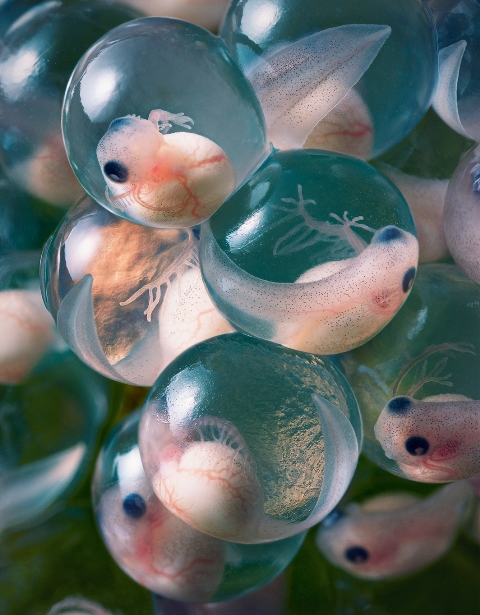
Yellow-eyed tree-frog eggs, from Endangered by Tim Flach, with text by Jonathan Baillie (Abrams).

Yellow-eyed tree-frog eggs, from Endangered by Tim Flach, with text by Jonathan Baillie (Abrams). {credit}© 2017 Tim Flach{/credit}

There’s something about a collection. We seem to harbour an urge to amass and sort as we build menageries, museums, taxonomies. And the illustrated book is a portable simulacrum, a paper cabinet of curiosities, curated for maximum aesthetic punch.

This year, my favourites include coffee-table tomes on the Solar System and early voyages from Europe to Latin America. The rest, as with those I prized most last year, focus on fauna — a reflection of the emphasis on animal intelligence, behaviour, extinction and resurrection in popular-science publishing. Our obsession with Animalia is unstoppable. In some important way, the thread has yet to snap between us and the humans who, 35,000 years ago, layered exquisite images of bison, lion and rhino on the walls of Chauvet cave.
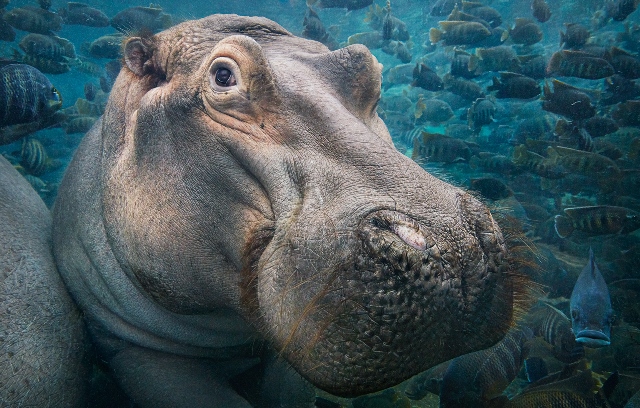
Hippopotamus underwater, from Endangered by Tim Flach, with text by Jonathan Baillie (Abrams).

Hippopotamus underwater, from Endangered by Tim Flach, with text by Jonathan Baillie (Abrams). {credit}© 2017 Tim Flach{/credit}

Among the eight illustrated books that leapt out at me, Endangered (Abrams) won the long jump. On the cover, a crowned sifaka lemur tightly clutches its knees, citrine eyes staring with alien intensity. Inside is a virtuosic gallery of species at the edge: the bulbous topography of a hippo’s face; Mexican free-tailed bats slicing up the sky; a long-range shot of a polar bear curled in snow, white on white. Complementing Tim Flach’s hyper-stylised images are commentary by Jonathan Baillie, the National Geographic Society’s chief scientist, and writer Sam Wells.
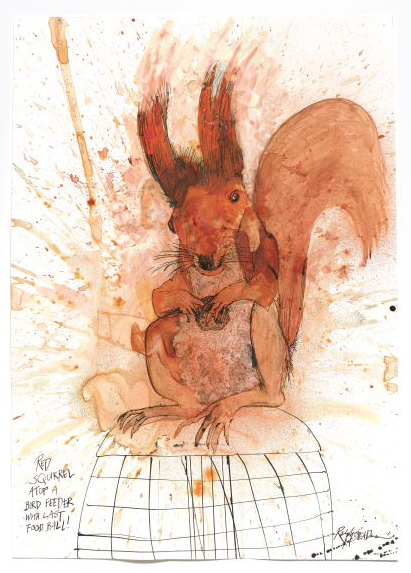
Red squirrel by Ralph Steadman in Critical Critters (Bloomsbury).

Red squirrel by Ralph Steadman in Critical Critters, by Steadman and Ceri Levy (Bloomsbury).{credit}Ralph Steadman and Ceri Levy{/credit}

Biodiversity loss has also gripped self-styled “gonzovationist” and illustrator Ralph Steadman for years, as his 2015 Nextinction showed. Now, in Critical Critters (Bloomsbury), Steadman (with Ceri Levy) pictures another bevy of beasts, exuberantly splatting his way from iconic megafauna such as tigers to dugongs, wombats and a red squirrel in burnt orange, ears aflame. The irrepressible Steadman includes the ‘grunting spiked turt’, a chameleon-like animal that should exist, but doesn’t.
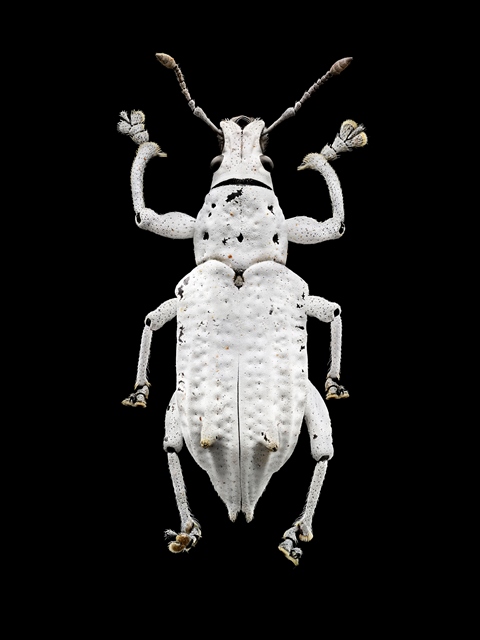
Tortoise beetle, from Microsculpture: Portraits of Insects by Levon Biss (Abrams).

Short-nosed weevil, from Microsculpture: Portraits of Insects by Levon Biss (Abrams).{credit}© Levon Biss{/credit}

Insects that did exist, yet look impossible, feature in Levon Biss’s photographic feat Microsculpture (Abrams). Biss (whose work can also be seen in this film) imaged the world’s oldest insect collection at the Oxford University Museum of Natural History, including specimens bagged by Darwin and Alfred Russel Wallace. Each bravura photograph incorporates some 8,000 separate shots, from the ornate tortoise beetle — a rococo delight — to the ghostly short-nosed weevil.
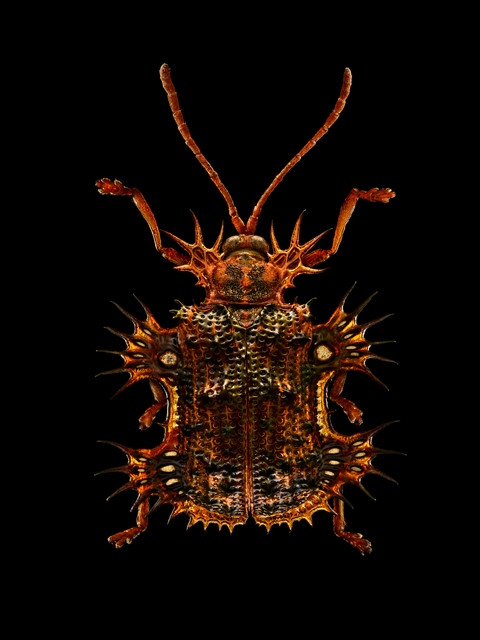
Tortoise beetle, from Microsculpture: Portraits of Insects by Levon Biss (Abrams).

Tortoise beetle, from Microsculpture: Portraits of Insects by Levon Biss (Abrams).{credit}© Levon Biss{/credit}

More entomological glory flutters in Mariposas Nocturnas (Princeton University Press), photographer Emmet Gowin’s hard-won homage to South American lepidoptera. From Brazil to Panama and over two decades, Gowin shot over 1,000 species of nocturnal moths alive. Arranged in typologies of 25, they form a morphologically varied, vividly hued patchwork. As Gowin writes, “By loving the minutiae, we find the whole.”
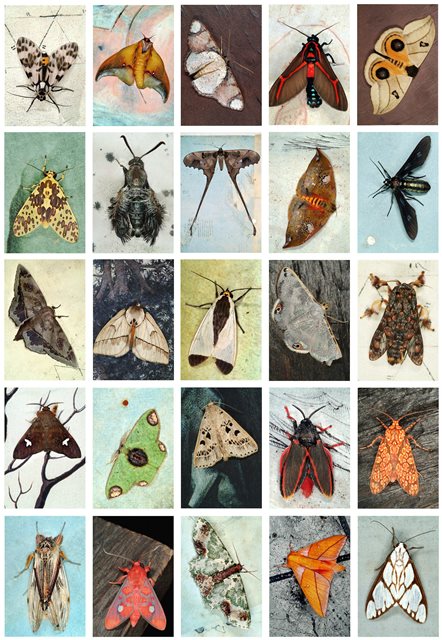
xxx

Index 31, taken in April 2010 in French Guiana, in Mariposas Nocturnas by Emmet Gowin (Princeton University Press){credit}Emmet Gowin{/credit}

Long before photography, engravers and printers battened upon beasts as evocative subjects for artworks and books — not just bestiaries and early natural-history tomes, but also allegories, illustrated tales and even playing cards. Animal (Bloomsbury) tells that story through powerful, often deeply strange works from the fifteenth to the twentieth centuries, deftly curated by editors Rémi Mathis and Valérie Seuer-Hermel from the National Library of France collection.
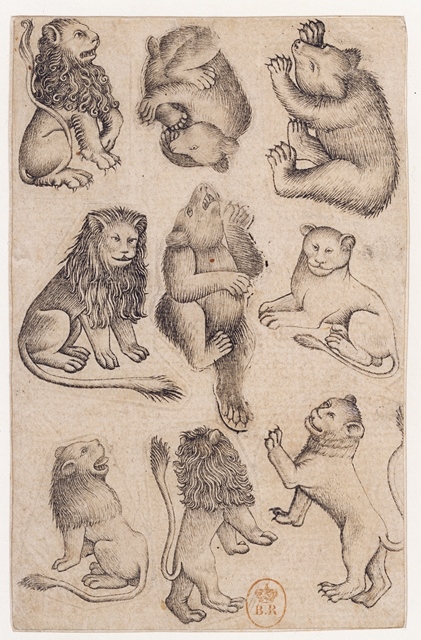
Cards with bear and lion symbols by the Master of the Playing Cards, Upper Rhine Valley, 1435-1445. In Animal, edited by

Cards with Bear and Lion Suit Symbols, by the Master of the Playing Cards,1435-1445, in Animal, edited by Rémi Mathis and Valérie Seuer-Hermel (Bloomsbury). Printed on copper plates, these cards were the first examples of engraving on metal seen in Europe.{credit}National Library of France{/credit}

The cutting-edge imaging technologies of today feature in Dinosaur Art II (Titan Books), edited by artist Steve White. This follow-up to the 2012 Dinosaur Art features works of scientific precision and nuanced beauty by 10 top painters, modellers and digital artists. Among many standouts are Sergey Krasovskiy’s oil painting of the giant-jawed, tiny-limbed Pycnonemosaurus nevesi and a digital portrayal of the mysterious duck-billed Deinocheiris mirificus by Andrey Atuchin.
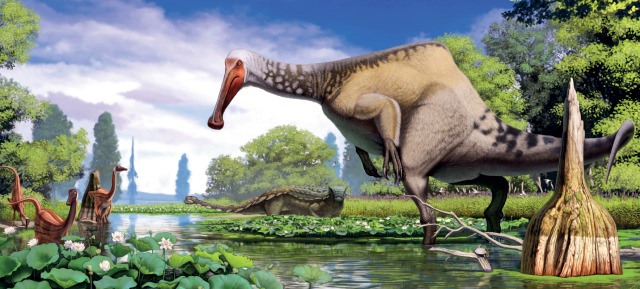
xxxx

The duck-billed dinosaur Deinocheiris mirificus (digital, 2014) by Andrey Atuchin, in Dinosaur Art II, edited by Steve White (Titan Books).{credit}Andrey Atuchin{/credit}

Zooming out from deep time to deep space, The Planets (Chronicle Books) by writer Nirmala Nataraj mines the NASA archives for a thrill-a-minute tour of our cosmic neighbourhood. It’s a handsome array, from the flow of dunes in Mars’s Nili Patera caldera, caught by the HIRISE camera on the Mars Reconnaisance Orbiter, to an opulently hued backlit view of Saturn captured by Cassini’s wide-angle camera.
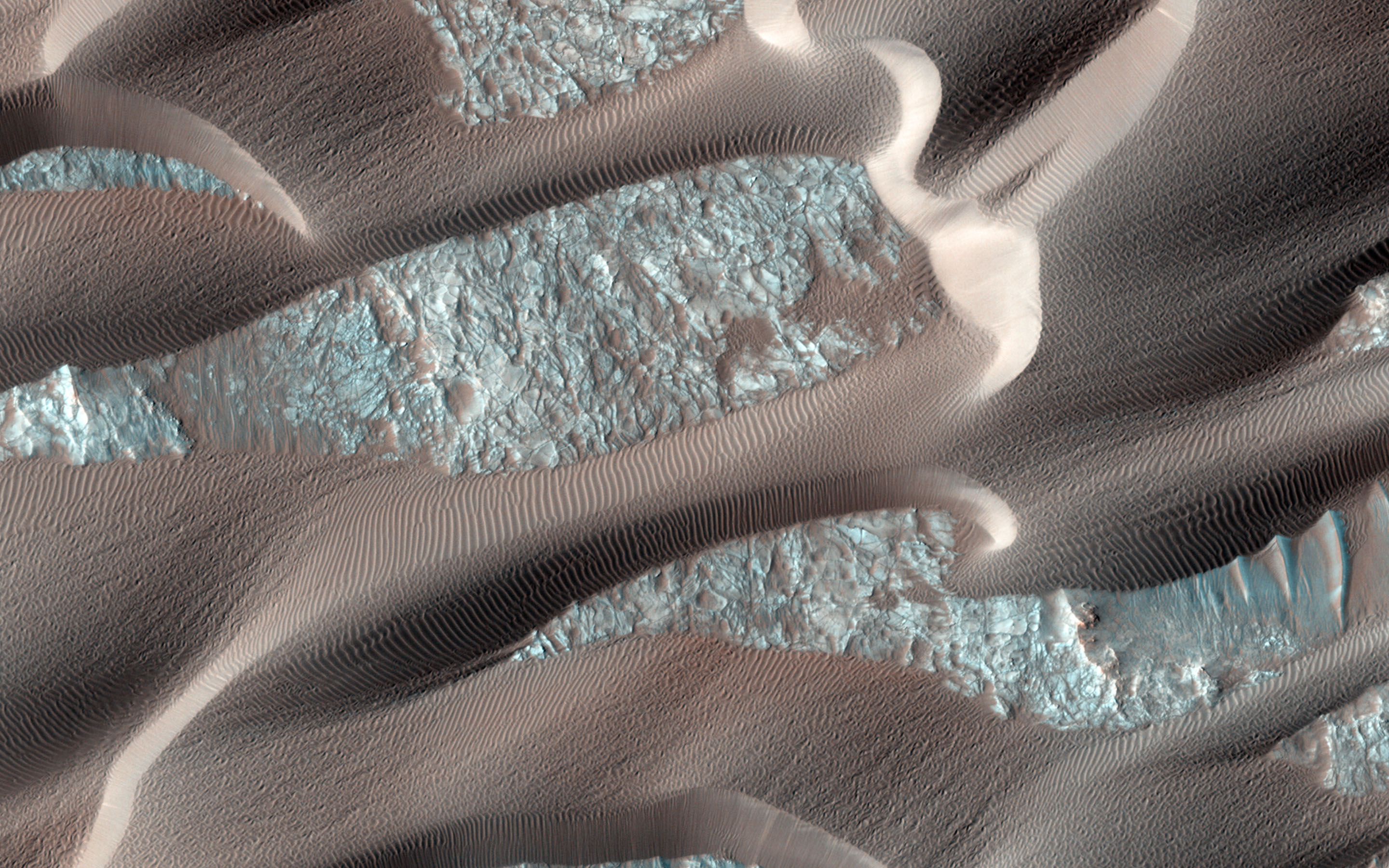
Dunes patterning Nili Patera caldera on Mars, caught by the HIRISE camera on the Mars Reconnaisance Orbiter. From The Planets (Chronicle Books) by Nirmala Nataraj.

Dunes patterning Nili Patera caldera on Mars, caught by the HIRISE camera on the Mars Reconnaisance Orbiter. From The Planets (Chronicle Books) by Nirmala Nataraj. {credit}NASA, JHUAPL, Carnegie Institution of Washington{/credit}
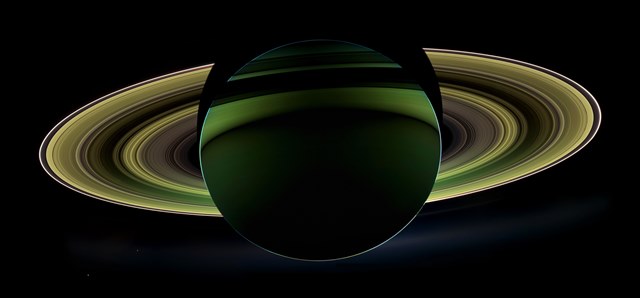
xxx

A back-lit view of Saturn, captured by Cassini’s camera. From The Planets (Chronicle Books) by Nirmala Nataraj. {credit}NASA, JPL-Caltech, SSI{/credit}

In mapping the Solar System, it’s easy to forget that swathes of Earth were uncharted five centuries ago, and indigenous Americans and Europeans had yet to meet. When they did, starting with Columbus’s 1492 voyage, a “vertiginous transformation” began, reminds historian Daniela Bleichmar in Visual Voyages (Yale University Press). It spelt immeasurable devastation for New World peoples even as their knowledge rewrote the Old World’s book of nature. As this fascinating, sensitively written book attests, this revolution, in turn, kickstarted a frenzy of printing and cartography to frame the barrage of botanical, zoological, anthropological and geographic data.

Fruits, Pineapple and Melon, 1640-50 (oil on canvas) by Albert Eckhout, in Visual Voyages by Daniela Bleichmar, Yale University Press.

Fruits, Pineapple and Melon, 1640-50 (oil on canvas) by Albert Eckhout, in Visual Voyages by Daniela Bleichmar, Yale University Press.{credit}National Museum of Denmark{/credit}

For Nature‘s full coverage of science and culture, see https://go.nature.com/2CMOwaL.
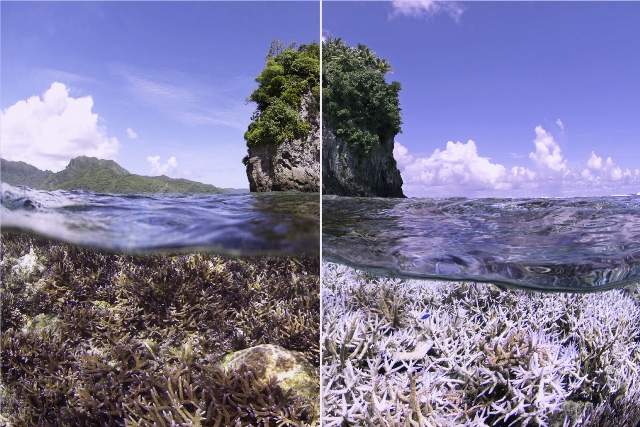
Chasing Coral: beauty and destruction

Posted on behalf of Jeff Tollefson

Images shot by the Chasing Coral crew graphically show the progress of the coral bleaching event in xx over xx days.

Images shot by the Chasing Coral crew graphically show the progress of the coral bleaching event that began in 2014.{credit}Chasing Coral, courtesy of Netflix{/credit}

First we take the plunge, off the boat and into the blue. Once the bubbles clear, wonders emerge. Guided by the camera, the eye is initially drawn to the obvious: turtles, rays, eels, jellies, fish. But the star of this show is a different kind of animal. The focus shifts, and we see a variety of fabulously intricate and colourful structures, some branched like trees, others spiny and globular. Each edifice in this marine metropolis was erected by corals — master builders now under unprecedented threat.

Director Jeff Orlowski begins his latest documentary, Chasing Coral, with this view of living abundance. Soon enough, we see death. Images of reefs left white and mostly lifeless give way to apocalyptic footage of dead corals, covered in algae and disintegrating in murky waters. Orlowski’s film, which launched on Netflix on 14 July, reveals the shocking reality of the global bleaching event that began in 2014, spurred by human-driven climate change and only now coming to an end.

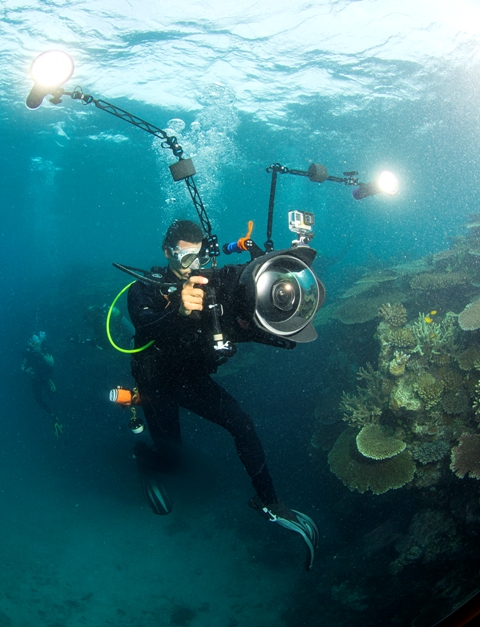
Jeff Orlowski filming corals on the Great Barrier Reef, Australia.

Jeff Orlowski filming corals on the Great Barrier Reef, Australia.{credit}Richard Vevers/Chasing Coral, courtesy of Netflix{/credit}

There are similarities between Chasing Coral and Chasing Ice, Orlowski’s 2012 documentary about melting glaciers, right down to the focus on time-lapse imagery to capture environmental degradation. But where Chasing Ice centres on James Balog, a National Geographic photographer who set up the Extreme Ice Survey to document ice shrinkage, Chasing Coral features, along with leading coral researchers, a curious collection of characters who embark on a technically daunting effort to document the transition from life to illness and death on a coral reef. The result is a fast-paced narrative arc that manages to carry a full-length film about global warming, the ultimate slow-boil.

Orlowski doesn’t hide anything. In fact, he becomes part of his own narrative through that of Richard Vevers, the man driving the project. A former advertising executive turned ocean activist and underwater photographer, Vevers relates how in 2010,  he decided to put his talents to better use: saving corals. After seeing Chasing Ice in 2013, he decided to contact Orlowski, who – in an intriguing meta-moment – makes an appearance in the film to talk about the genesis of the project.

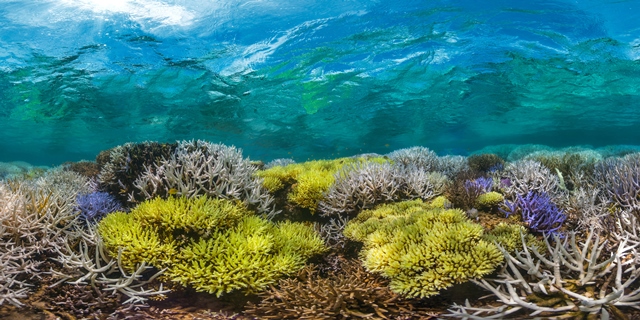
A panoramic view of fluorescing and bleaching corals in New Caledonia in the southwest Pacific, in March 2016.

A panoramic view of fluorescing and bleaching corals in New Caledonia in the southwest Pacific, in March 2016.{credit}The Ocean Agency/XL Catlin Seaview Survey{/credit}

To its credit, Chasing Coral goes beyond personalities and crises and gets into the science – as well as the challenge of communicating that science and raising public awareness. “One of the biggest issues with the ocean is that it is completely ‘out of sight, out of mind’,” Vevers says. “And that is an advertising issue.”

The first step the crew faced was acquiring a high-quality camera capable of operating underwater remotely for weeks at a time. Enter View into the Blue, a company based in Boulder, Colorado, that adapted a high-resolution underwater camera – with its own wiper system to keep the domed-glass housing case clean –  for the project. Step two: figure out where to deploy the camera. Glaciers are easy to identify and visit, and nearly all of them are melting now. But setting up a time-lapse camera to capture the death of a coral reef due to warm ocean currents requires considerable planning and a measure of serendipity.

Mark Eakin, who heads the US National Oceanic and Atmospheric Administration’s Coral Reef Watch, provided forecasts and guidance on where to deploy. Vevers and the team figured out how to power the camera and retrieve data, but an initial deployment in Hawaii failed: the cameras lost their focus after the first shot. A second try on the southern Great Barrier Reef off Queensland, Australia, saw the warm waters (fortunately) failing to arrive.

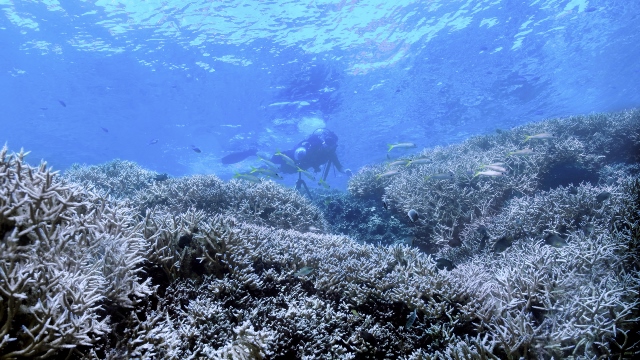
A reef decimated by warm-water currents.

A bleached reef.{credit}Chasing Coral, courtesy of Netflix{/credit}

So the team ditched the automation altogether and moved north to Lizard Island, and on to New Caledonia. Here, they manually photographed dozens of sites each day for 40 days. It worked. At one location after another, we see a rapid decline from vibrant colour and biodiversity to whitening and death. At this point the film switches to the emotional journey of ‘coral nerd’ Zachary Rago. “I’m not even sad that we are leaving, because it’s so miserable here,” Rago says when the job is complete.

Basic science is interwoven throughout. Through coral researchers such as Ruth Gates and Ove Hoegh-Guldberg, we learn about the fascinating lives of corals, which operate as a collective to build and maintain an ecosystem that supports thousands of animals, from clown fish to sharks. We hear about the symbiotic relationship corals have developed with the algae living inside them, which provide their hosts with colour and energy through photosynthesis. And we see what happens when temperatures rise: the algae shut down and corals kick them out.

Chasing Coral also brings home the implications of decades of research. This latest global bleaching event, bolstered by a powerful El Niño in 2015-2016, is the third in recorded history; the first was in 1998. Research suggests that most of the world’s corals could perish within a few decades from rising temperature and ocean acidification without immediate action to halt greenhouse gas emissions.

The film mostly glosses over the scientific endeavour itself, however. After all, Vevers is the executive director of the XL Catlin Seaview Survey, a bonafide research initiative that launched in 2012 to catalogue the world’s corals (as Nature has reported here and here). But it’s a minor point. In the end, the film accomplishes its goals. Nobody knows precisely what an ecological collapse would mean for the oceans, but Chasing Coral makes it abundantly clear that it won’t be pretty. And perhaps that’s enough to inspire action.

Jeff Tollefson is a reporter for Nature based in New York. He tweets at @jefftollef. 


For Nature’s full coverage of science in culture, visit www.nature.com/news/booksandarts.

Snapping Earth for more than seven decades

Posted on behalf of Elizabeth Gibney

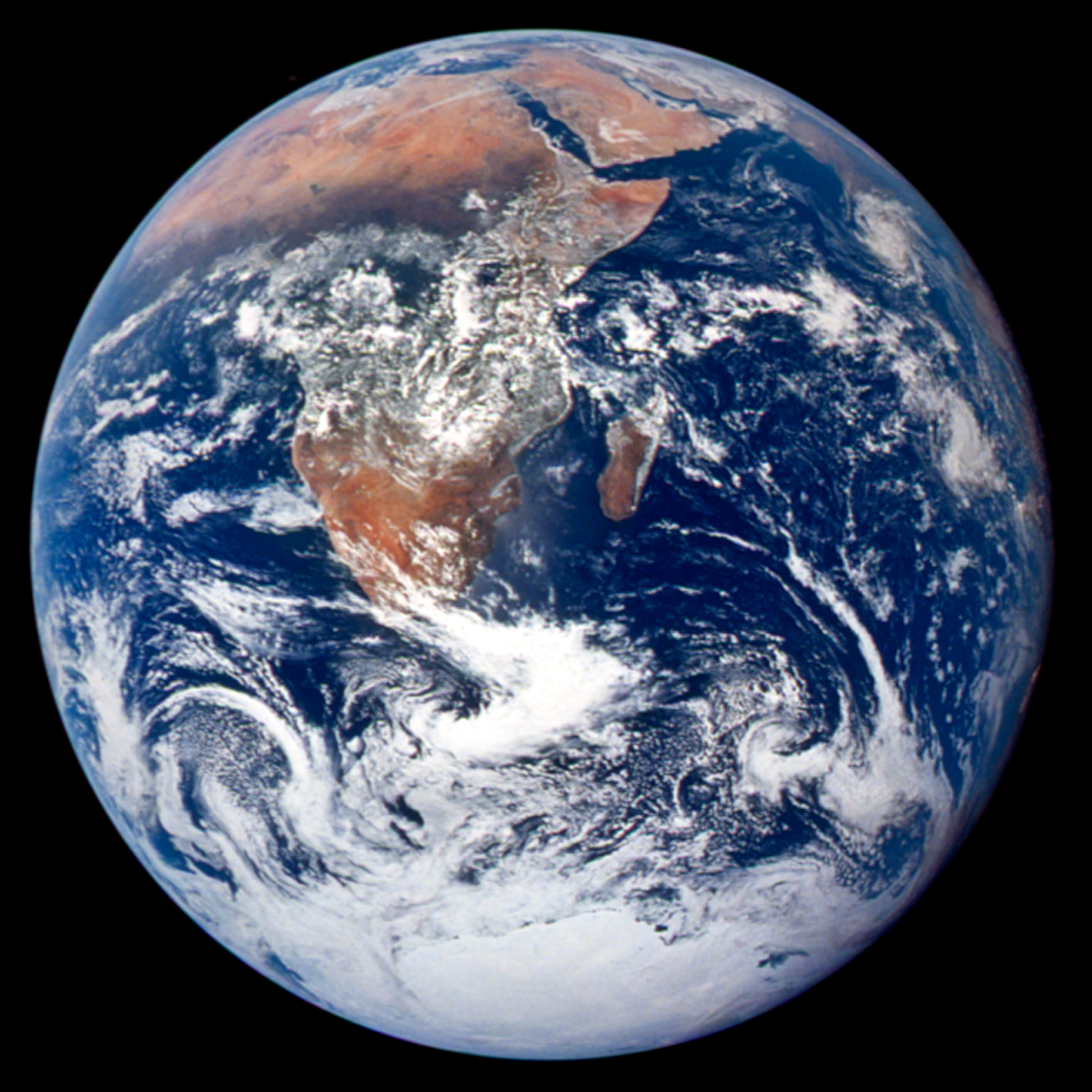
The 'Blue Marble' image of Earth by the Apollo 17 crew in 1972.

The ‘Blue Marble’ image of Earth captured by the Apollo 17 crew in 1972. {credit}NASA{/credit}

For centuries, the only way to ‘see’ Earth whole was through globes and maps; its grandeur was merely glimpsed in mountain vistas or across a stretch of ocean. That changed in the 1940s, when the first images of the planet were snapped from rockets probing the border of space, 100 kilometres up. The imaginable became the visible.

Since then, satellites and spacecraft have beamed down shots from ever greater distances and in growing detail. Now Nature Video has captured the most iconic of these in the film Portraits of a Planet: Earth from Space.

These images have massively boosted science and technology – from weather forecasting to monitoring natural disasters, forest cover and climate change. And they have had a subtler psychological impact. Revealing this majestic, finite, vulnerable entity framed in blackness has elicited deep responses feeding into policy and culture.

Going ballistic

The first images of Earth from space — from 1946 and 1947 — were black-and-white, grainy and remarkable partly for the fact that they happened at all. Both were taken by cameras retrofitted into the empty nosecone of V-2 rockets, long-range ballistic missiles the United States captured from Germany at the end of the Second World War.

In 1946, all that protected the film during the rocket’s crash landing was a steel cassette. When the photos were first projected onto a screen, “the scientists just went nuts”, recalled Fred Rulli, a member of the rocket’s recovery team, in an interview with Air and Space magazine. The following year’s project nudged the rocket further into space to 160 kilometres, bringing more detailed images clearly revealing Earth’s curvature.

Taken in March 1947, these pioneering NASA images of Earth were the first taken from an altitude of more than 100 kilometres. Cameras retrofitted into the empty nosecone of V-2 rockets were deployed to take the shots.

Taken in March 1947, these pioneering NASA images of Earth were taken from an altitude of 160 kilometres – then a record high. Cameras retrofitted into the empty nosecone of V-2 rockets were deployed to take the shots.{credit}Johns Hopkins Applied Physics Laboratory{/credit}

The cold-war space race soon pushed cameras to greater heights. In 1957, the Soviet Union launched its first satellite, Sputnik; the US quickly followed suit. Three years later, the newly formed NASA put TIROS 1, its first weather satellite, into orbit, which sent video back to Earth using dual television cameras. TIROS 1 proved that such images could provide be used to monitor cloud formation, one of the first indications of the potential scientific power of satellites.

In 1960, cameras aboard NASA's first weather satellite TIROS-1 captured Earth.

In 1960, cameras aboard NASA’s first weather satellite TIROS 1 shot Earth.{credit}NASA{/credit}

Human-crewed efforts began with the orbital missions of Yuri Gagarin in 1961 and John Glenn in 1962. But it was not until 24 December 1968 that Apollo 8 astronaut Bill Anders captured arguably the most iconic image of Earth. Later dubbed ‘Earthrise’, it was the first to show the planet from the perspective of another celestial body, as a luminous blue hemisphere rising above the Moon’s horizon. Anders had had to fight to get the long-lens camera on board, and deviated from the craft’s flight plan to get the snap (as he wrote in his obituary of Glenn earlier this year).

That awe-inspiring image was a shot across the bows of the cold war. It was also transformational for earthbound observers: the moniker ‘Spaceship Earth’ gained traction as people fully grasped the planet’s limits. Ultimately, ‘Earthrise’ supercharged the nascent environmental movement in the United States particularly, pioneered by environmentalists, scientists and thinkers such as Buckminster Fuller; and it proved a trigger for the US Earth Day, which launched in 1970.

That grassroots clamour, bolstered by works such as biologist Rachel Carson’s 1962 Silent Spring, had an influence on policy shifts at the federal level. The period from 1970 to 1973 saw the Environmental Protection Agency established and the US Clean Air Act, Clean Water Act and Endangered Species Act passed. Anders notes, “I wouldn’t say [Earthrise] was the only reason, but it certainly was an important reason motivating folks to take better care of our planet.”

'Earthrise' - possibly the most iconic portrait of Earth - was captured by astronaut Bill Anders from Apollo 8, the first crewed lunar mission.

‘Earthrise’ – possibly the most iconic portrait of the planet – was captured by astronaut Bill Anders from Apollo 8, the first crewed lunar mission, in 1968.{credit}NASA{/credit}

The spectacular ’Blue Marble’ (see opening image), shot by the crew of Apollo 17 in 1972, fuelled further activism; it has been recreated by NASA many times over. The photograph captured Earth with the Sun behind the camera illuminating most of the globe, and from a distance (45,000 kilometres from the planet) no one has managed since.

Inspired by the potential of such astounding images, the US Geological Survey and NASA launched the first satellite in the Landsat programme in 1972, to chart Earth’s terrain in detail. Landsat satellites have documented burning oil wells in the first Gulf War, the impact of Hurricane Katrina and deforestation in the Amazon. Landsat’s false-colour rendering of Alaska’s Malaspina glacier, taken with a thermal imaging camera, is mesmerizingly beautiful.

In 1991, Landsat satellites captured lit oil wells in Kuwait , which burned for 10 months.

Landsat satellite images of lit oil wells in Kuwait during the Gulf War, in 1991. They burned for 10 months.{credit}NASA{/credit}


This Landsat image, shot in 200, captures the majestic flow of Alaska's Malaspina Glacier. This false-colour composite was created using infrared, near infrared and green wavelengths.

Shot in 2000, this false-colour composite showing the majestic flow of Alaska’s Malaspina Glacier was created using infrared, near infrared and green wavelengths.{credit}NASA/USGS{/credit}

In recent years, a parade of Earth monitoring and robotic exploration craft have added countless images to the file. In 2012, over 312 orbits, the Suomi National Polar-orbiting Partnership satellite built up a night-side image of Earth and its lit-up cities in ‘The Black Marble’. In 2013, NASA’s Cassini craft turned around in the outer Solar System to capture Earth — a pinprick of light — through the rings and moons of backlit Saturn.

Composite image 'The Black Marble' was taken by Suomi NPP, a joint National Oceanic and Atmospheric Administration and NASA satellite, in 2012

Composite image ‘The Black Marble’ was taken by Suomi NPP, a joint National Oceanic and Atmospheric Administration and NASA satellite, in 2012.{credit}NASA{/credit}

Called ‘The Day the Earth Smiled’, that shot was taken from more than 1.2 billion kilometres away, making it a far cry from the images of our planet revealed some 70 years ago. But while the photographs have become ever more impressive, rarely are they as powerful as those first images of the ‘ground beneath our feet’ in its sublime entirety.

'The Day the Earth Smiled', taken by NASA's Cassini craft in 2013, shows Earth through Saturn's rings. The image spans some 650,000 kilometres and is a mosaic crafted from photographs taken over four hours.

‘The Day the Earth Smiled’, taken by NASA’s Cassini craft in 2013, shows Earth through Saturn’s rings. The image spans some 650,000 kilometres and is a mosaic crafted from photographs taken over four hours.{credit}NASA{/credit}

Elizabeth Gibney is a reporter on physics for Nature based in London. She tweets at @LizzieGibney. 


For Nature’s full coverage of science in culture, visit www.nature.com/news/booksandarts.

Top 20 books: a year that made waves

beach-1836366_960_720This was a year that made waves — some so steep that I found myself reaching for a psychological surfboard. I skimmed along the discovery of gravitational waves (featured in Janna Levin’s Black Hole Blues and Other Songs of Outer Space), and rode the CRISPR tsunami. The political turbulence stateside, in Britain and beyond had me scrabbling for balance — and historical precedents. Yet amid all the Sturm und Drang, it has been a terrific year for science and culture.

In Nature’s first sci-fi special, we celebrated two anniversaries that stand as reminders of profound — and much-needed — humanistic vision. One was the 150th of the birth of H.G. Wells, ‘Shakespeare of science fiction’, prolific author and frequent Nature contributor; the other, the 50th of Gene Roddenberry’s pioneering franchise Star Trek. And as ever I was able to trace bright currents in the bookish deeps.

Oncologist and writer Siddhartha Mukherjee plunged into the genetics riptide with The Gene — fortuitously, in a year when Richard Dawkins’s name-making classic The Selfish Gene hit 40 and a pod of genome-editing studies surfaced. There was a glut of big physics, notably Roger Penrose’s trenchant Fashion, Faith, and Fantasy in the New Physics of the Universe. And forests, earthquakes, biomechanics and military technology were all ‘trending’. But in trawling hundreds of books for my top 20, one of the more astonishing confluences was in the history of women in science — specifically, the ‘computers’ or number-crunchers behind key astronomical discoveries and space missions. (I’ve cheated here by counting three books on this phenomenon as one — as they are both important self-contained stories and part of a great historical trajectory.) The rest are pretty wonderful too. Enjoy.

The Glass Universe: How the Ladies of the Harvard Observatory Took the Measure of the Stars, Dava Sobel. Viking. The science writer traces the stories of pioneering women ‘computers’ who, from the late nineteenth century, made astronomical history at Harvard College Observatory. (Reviewed here.) 
Hidden Figures:
The American Dream and the Untold Story of the Black Women Mathematicians Who Helped Win the Space Race, Margot Lee Shetterly. William Morrow. A historian extols the brilliant African-American women mathematicians at NASA’s Langley Research Center who helped propel postwar America to the Moon and beyond. (Reviewed here.)
Rise of the Rocket Girls: The Women Who Propelled Us, from Missiles to the Moon to Mars, Nathalia Holt. Little, Brown. The HIV researcher on the women at NASA’s Jet Propulsion Lab who from the 1940s number-crunched in near-secrecy to launch missiles and the first US satellite. (Reviewed here.)

Lab Girl, Hope Jahren. Knopf. A palaeobiologist reveals the joy (and strangeness) of field and lab life through the lens of a woman in science. (Reviewed here.)

Half-Earth: Our Planet’s Fight for Life, Edward O. Wilson. Liveright. The eminent biologist issues a compelling call to commit half the planet to the rest of nature. (Reviewed here.)

Reality Is Not What It Seems, Carlo Rovelli. Allen Lane. The theoretical physicist invites us to gaze through a window at a world where space is granular and time does not exist. (Reviewed here.)

The Serengeti Rules: The Quest to Discover How Life Works and Why It Matters, Sean B. Carroll. Princeton University Press. An evolutionary biologist distils a vast body of biological research into six rules of regulation for the restoration of ecosystems and management of the biosphere. (Reviewed here.)

The Shock of the Anthropocene: The Earth, History and Us, Christophe Bonneuil and Jean-Baptiste Fressoz, trans. David Fernbach. Verso. Two historians dig into technological history, economics and climate science to reveal the role of imperialist ideology in today’s planetary crises. (Reviewed here.)

Serendipity: An Ecologist’s Quest to Understand Nature, James A. Estes. University of California Press. An innovative ecologist unpacks his life’s work tracing the top-down control of ecosystems by sea otters as apex predators. (Reviewed here.)

The Life Project: The Extraordinary Story of Our Ordinary Lives, Helen Pearson. Allen Lane. The Nature editor unravels the 70-year history of the British cohort studies and the crucial insights they offer on socioeconomic inequities. (Reviewed here.)

White Trash: The 400-Year Untold History of Class in America, Nancy Isenberg. Viking.  A historian delivers a searing indictment of the US political forces that persistently marginalise poor whites. (Reviewed here.)

Imbeciles: The Supreme Court, American Eugenics, and the Sterilization of Carrie Buck, Adam Cohen. Penguin. The award-winning writer revisits Buck vs Bell, the notorious 1920s case highlighting the dark history of US eugenics. (Reviewed here.)

Weapons of Math Destruction, Cathy O’Neil. Crown. A data scientist and former Wall Street quant uncovers the biases in the algorithmic overlords that micromanage the US economy. (Reviewed here.)

Bellevue: Three Centuries of Medicine and Mayhem at America’s Most Storied Hospital, David Oshinsky. Doubleday. The historian surveys the key advances and bold open-door policy that have made the New York public hospital a medical beacon. (Reviewed here.)

The Cyber Effect, Mary Aiken. John Murray. A forensic cyberpsychologist examines the mental lures built into sociotechnology and their impact on individuals and society. (Reviewed here.)

The Most Wanted Man in China: My Journey from Scientist to Enemy of the State, Fang Lizhi, trans. Perry Link. Henry Holt. The late astrophysicist and dissident on the scientific passion and quest for freedom of expression that drove his extraordinary life. (Reviewed here.)

Marconi: The Man Who Networked the World, Marc Raboy. Oxford University Press.  The communications scholar investigates the complexities of a giant of technology devoted to both science and fascism. (Reviewed here.)

How Not to Network a Nation: The Uneasy History of the Soviet Internet, Benjamin Peters. MIT Press. A communications specialist plumbs the messy and engrossing history of a Soviet technological failure on the grand scale. (Reviewed here.)

The Great Departure: Mass Migration from Eastern Europe and the Making of the Free World, Tara Zahra. W.W. Norton. An accomplished historian busts myths and adds nuance to the story of the 58 million Europeans who poured into the Americas from 1846 to 1940. (Reviewed here.)

Fine Lines: Vladimir Nabokov’s Scientific Art, edited by Stephen H. Blackwell and Kurt Johnson. Yale University Press. In this collection, a Russian scholar and entomologist trace the novelist’s significant contribution to lepidoptery and how that played out through his fiction. (Reviewed here.)

Bone Rooms: From Scientific Racism to Human Prehistory in Museums, Samuel J. Redman. Harvard University Press. A historian harks back to the nineteenth-century ‘skull wars’ and after, which packed US museums with human remains and fired ethical debates that still burn. (Reviewed here.)

The Euro: How a Common Currency Threatens the Future of Europe, Joseph E. Stiglitz. W.W. Norton. The Nobel laureate and economist analyses the failures of eurozone policymakers and the shape radical reform might take. (Reviewed here.)

Listen to my Nature Podcast interview on the top 20 books with Scientific American’s Steve Mirsky here.


For Nature’s full coverage of science in culture, visit www.nature.com/news/booksandarts.

O brave new world of fantastic beasts

Posted on behalf of Stuart Pimm and his research group

Fantastic BeastsFrom the start, European visitors to the New World have celebrated its fantastic biodiversity. What looks like a scarlet macaw embellishes German cartographer Martin Waldseemüller’s 1507 world map, the first to name these lands “America”. Eighty years later the English artist John White, a governor during England’s first attempt at settling North Carolina, was painting fireflies, “which in the night [emit] a flame of fire” (a sight of pure magic on a warm summer’s evening).

And in the 1920s, magizoologist Newt Scamander — with portable menagerie in tow — visited New York with the entirely laudable aim of returning a thunderbird to its home in Arizona. Thus begins Fantastic Beasts and Where to Find Them, the David Yates-directed film based on J.K. Rowling’s book of the same name – one of the set texts her boy wizard, Harry Potter, must study at school.

With my research group, including graduate students Alexandra Sutton, Ryan Huang and Rubén Palacio, I had waited anxiously for this new treatment of Scamander’s classic work on the natural history, biogeography and conservation status of the world’s biodiversity invisible to muggles. (That’s you non-wizards.) We entered the seminar room (transformed to resemble a movie theatre), surrounded by young wizards in Hogwarts’ school uniforms. We had many questions in mind.

Would this hidden biodiversity be as diverse and unexpected as that encountered by the first European settlers in the Americas? How would species be distributed across different biomes? Rowling’s previous accounts of the fauna around Hogwarts have merely hinted at the range of possible species, obviously limited to the school’s location in Scotland. Northern, island ecosystems have few species, albeit a plethora of owls.

Here be dragons

Scamander’s ‘zoo’ fits into a single suitcase, which like Doctor Who’s Tardis is very much larger on the inside. And in we go, where we quickly learn of a wide variety of species mostly unknown to the muggle world. We expected dragons, of course. The theoretical ecologist Robert May and colleagues have discussed them in the pages of this journal and, indeed, predicted their resurgence with global warming (Nature 264, 16-17 (1976); Nature 520, 42-43 (2015).

There are many other species. We see the range of ecosystems occupied, extending beyond the Americas and ranging from frozen Arctic wastes to African savannahs. In the latter, we encounter what could be a horned relative of the gargantuan rhinoceros Paraceratherium, long thought to be extinct. Nor does Scamander neglect those world rulers, the arthropods: there are stag beetles as big as dogs. And a relative of the praying mantis, though it does not pray and, despite exhortations, cannot even be persuaded to smile. Australian fauna are also included, with an engaging duck-billed platypus relative that has a bowerbird’s propensity to collect things — in this case, shiny coins and jewellery.

Dan Fogler as Jacob, Eddie Redmayne as Newt Scamander and a beast called a Bowtruckle in Warner Bros. Pictures' fantasy adventure Fantastic Beasts and Where to Find Them.

Dan Fogler as Jacob, Eddie Redmayne as Newt Scamander and a beast called a Bowtruckle in Warner Bros. Pictures’ fantasy adventure Fantastic Beasts and Where to Find Them.{credit}© 2016 Warner Bros. Fantastic Beasts © JKR{/credit}

Following the presentation, I asked my students: What were the key management issues in the magical world? And how do they compare and contrast to those that muggles experience in their world?

Alexandra noted Scamander’s contradictions: “He’s often the conservationist and he advocates the education of fellow wizards about the value of these magical beasts in their world. But he’s also the collector, keeping wild animals as pets in an environment that’s not necessarily suited to them”. The tension here recalls the species-bagging of early naturalists such as the eccentric Lionel Walter Rothschild, whose vast collection is now held at London’s Natural History Museum.

Species in Scamander’s zoo escape and cause considerable physical damage to New York. It takes much magic to undo the damage, an option unavailable to muggle professionals facing invasive species. As Ryan put it, the movie is also a reminder that “with keeping animals captive comes the callousness by which people traffic in beasts”.

Much of this callousness is borne of our growing separation from the natural world. Rubén reflected: “Some species are mighty, and if not treated correctly, can be dangerous, but this comes from our ignorance. Scamander…understands and engages the animals.” Ryan agreed: “Even though there have been very few wolf attacks on humans, people still fear wolves. Scamander affirms that we humans are the most dangerous beasts of all. When we are scared, we lash out.”

And my view? It tallies with Scamander’s. He asks why “magical beasts, even those that are savage and untameable”, are protected. The answer? To “ensure that future generations enjoy their strange beauty…as we have been privileged to do”.

Stuart Pimm is professor of conservation at the Nicholas School of the Environment, Duke University, Durham, North Carolina, and directs the non-profit SavingSpecies, www.savingspecies.orgHe tweets at @StuartPimm.


For Nature’s full coverage of science in culture, visit www.nature.com/news/booksandarts.

Dov Sax

Brown University, Providence, Rhode Island

A conservation biologist considers the role of nature reserves in a warming world.

Over the next 100 years, climate change is expected to extirpate many species from their current locations. As a scientist who studies these effects, I was surprised by the magnitude of a recent projection. Of the nearly 500 protected reserves in the San Francisco Bay area of California, more than 98% are expected to have entirely different summer temperatures going forwards, with no overlap between the warmest conditions found within these areas now and the coolest conditions in the future.

David Ackerly at the University of California, Berkeley, and his team studied the pace of climate change in the western United States (D. D. Ackerly et al. Divers. Distrib. 16, 476–487; 2010). By mapping current temperatures and those projected by a moderate warming scenario, they found that the geographical locations of specific temperatures will move by as much as 4.9 kilometres per year. This means that conditions currently experienced at a particular location could shift by hundreds of kilometres in just 50 years.

These findings have important implications for the design and management of protected areas. With climate change, most reserves will not maintain conditions that are suitable for the set of species that exists there at present. To survive, many species will need to move, either on their own or with human assistance. Accommodating this will require a major change in the perceived role of nature reserves. Traditionally, these have been managed as ‘museums’ that maintain historically accurate compositions of species and ecosystems. In the future, we may need some reserves to function as ‘way stations’, with transient compositions of species. This may be the only way to promote the long-term conservation of species that can no longer survive in their present locales.

Aaron Clauset

Santa Fe Institute, New Mexico

A theoretician ponders what physics has to offer ecology.

Many species are concentrated in biodiversity hot spots such as tropical rainforests and coral reefs. But our estimates of how many species these and other ecosystems contain are very rough. Conservation efforts and ecological theories would be better served by a more accurate picture.

Our best guesses come from empirical species–area relationships, which count the number of species observed as a function of geographical area. These relationships show sharp increases at local and continental scales, but slow growth at intermediate scales. Despite decades of study, ecologists have no clear explanation of this pattern’s origins or what causes deviations from it.

James O’Dwyer and Jessica Green at the University of Oregon in Eugene recently developed a spatially explicit stochastic model of species birth, death and dispersal that can be solved mathematically using techniques from quantum field theory (J. P. O’Dwyer and J. L. Green Ecol. Lett. 13, 87–95; 2010). Amazingly, the model predicts a species–area relationship that agrees with decades of empirical data, without including ecologically important factors such as body size, predation, habitat or climate.

The work both solves a long-standing mystery and exemplifies a good null model. Because the model includes only neutral mechanisms (birth, death and dispersal), deviations can be interpreted as evidence of non-neutral, ecologically significant processes. It also shows the value of shifting the focus from small-scale, context-dependent processes to large-scale neutral dynamics, a perspective more common in physics than biology.

The model and its shift in perspective could shed light on the immense, important and increasingly studied world of microbial ecologies, which is even more mysterious than those of rainforests and coral reefs.

Corinne Le Quéré

University of East Anglia, UK and the British Antarctic Survey

An oceanographer marvels at the good timing of shrimp.

For many marine organisms, the timing of egg hatching is key to species survival because the time window in which larvae can survive is very short. If eggs hatch too early, they starve before their food source — the spring phytoplankton — blooms. If they hatch too late, they also miss the bloom.

I’m amazed by how often nature gets things right. In most of the North Atlantic, shrimp eggs hatch just a few days before the spring bloom. Peter Koeller of the Bedford Institute of Oceanography in Dartmouth, Nova Scotia, showed that the development and hatching time of shrimp are influenced by local deep-ocean temperature (P. Koeller et al. Science 324, 791–793, 2009). This is not surprising, because eggs develop in the deep ocean and their growth rate depends on temperature.

What is surprising is that the shrimp spawn on the right day of the year across the North Atlantic, even though temperatures in the deep ocean vary from one area to the next and do not influence the timing of the spring bloom. Through evolution, the shrimp have adapted to local temperature patterns to spawn at just the right time.

However, this could prove to be a problem for shrimp and the many other zooplankton, fish and shellfish species that have adapted their spawning habits to local conditions. What will the survival rate of larvae be if deep-ocean temperatures rise, or if the spring bloom occurs earlier? How much time do organisms need to sense and adapt to such changes? These new data will help us to understand the complex interdependence of marine ecosystems, and possibly help to detect potential mismatches between egg hatching and food-source availability.

Colin Prentice

QUEST, University of Bristol, UK

A theoretical biologist suggests that evolution makes plants more predictable.

The debate over how forests respond to rising levels of carbon dioxide has brought home to me how much spin even a dry journal article can contain.

In the mid-1990s, when the forest Free Air Carbon dioxide Enrichment (FACE) experiments began, I thought that we were poised to learn how trees really respond to carbon dioxide. In these experiments, carbon dioxide is pumped over forests to simulate future conditions.

Unfortunately, years of data collection and scores of papers later, we still haven’t reached agreement. Using the same data, researchers conclude that carbon dioxide either fertilizes forests or it doesn’t (or the effect is small, or it goes away, or will soon go away…)

The situation would be helped if we had better theories of how trees might be expected to react to changes in their resources. It was refreshing, therefore, to encounter an elegant analysis of plant behaviour (O. Franklin New Phytol. doi:10.1111/j.1469-8137.2007.02063.x; 2007).

Plants, subject to selective pressure, have to optimize what they can. This is a basic principle of evolutionary biology, too often disregarded in experimental contexts.

Theoreticians have long known that an individual leaf in high carbon dioxide will maximize the amount of carbon it fixes — a measure of its growth success — if it lowers its nitrogen content to optimize the balance between photosynthesis and respiration.

Franklin extends this nitrogen optimization principle to the whole plant, a significantly more complex problem. His model predicts 83% of the variation in plant growth enhancement seen across FACE studies, explains the observed relationship between plant growth and canopy nitrogen content, and does much else besides. It is a welcome step forwards.

Bonnie Jacobs

Southern Methodist University, Dallas, Texas, USA

Fossils from ancient forests in Africa provide a palaeobotanist with insight into past climates.

I have spent many years collecting and studying fossil plants from regions in or near eastern Africa’s rift valley, which runs southwards from Ethiopia to Kenya, and beyond.

These fossils provide evidence of ancient forests that once linked their living counterparts, the forests that today lie to the east and west of the rift. They also highlight past shifts in the region’s climate, thought to be a driver of human evolution in the area, as grasslands became more common.

But were regional climatic changes mainly the result of changes in global climate? Or were they more to do with the development of the rift itself?

From Kenya’s arid rift, I have studied 12.6-million-year-old fossils of Cola and Dioscorea (wild yam), plants that today grow side-by-side in much wetter African environments. The rift is an obvious culprit for drying here: the valley lies in the rain shadow of the rift’s elevated margins.

More recently, my students and I have found much older examples of the same plant genera on the northwestern Ethiopian plateau, which has a long dry season.

The plateau is not in a rain shadow, but a recent modelling study (P. Sepulchre et al. Science 313, 1419–1423; 2006) surprised me by demonstrating that even moderate elevational changes could account for today’s drier climate here, too.

It suggests that the high Ethiopian plateau acts as a barrier to incoming moist air masses, and need only have been 400–1,000 metres lower than today for the plants we found fossilized there to have flourished.

Other factors would surely have played an important part, but this work highlights palaeoaltitude as a significant driver of the region’s climate.